
The way most people plan second looks is inefficient and expensive.
If you are going to stack multiple second looks into one trip, you need to run it like a military operation. Tight sequencing, brutal prioritization, and almost no wasted motion. Let me walk you through exactly what that looks like on a real-world timeline.
6–8 Weeks Before Your Trip: Decide If Stacking Even Makes Sense
At this point you should be asking one question: Does stacking second looks give me leverage in my rank list, or just burn my energy and money?
You stack a multi-visit trip if:
- You have 3–6 programs in the same region or along a logical flight path.
- These programs are in your top 1–2 tiers (real rank list movers, not “nice to see”).
- You can reasonably get there with:
- One round-trip flight, plus
- Regional trains / short flights / rental car hops.
If instead your favorites are scattered (Seattle, Miami, Denver, Boston), stacking is a bad idea. Do not build a cross‑country tour just to feel busy.
At 6–8 weeks out you should:
1. Lock your priority programs.
Make a hard list:
- Tier A: “Could become #1–3 if second look goes well”
- Tier B: “Need more info, but not likely #1–3”
Anything outside those buckets does not deserve a second look.
2. Identify geographic clusters.
Example clusters:
- Northeast: Boston – Providence – New Haven – NYC
- Midwest: Chicago – Milwaukee – Madison
- Texas: Dallas – Houston – San Antonio
- SoCal: San Diego – Orange County – LA
3. Estimate how many days you actually have.
Be honest about your schedule:
- M4 elective/AI schedule?
- Step 2 CS-equivalent travel?
- Family stuff already on calendar?
- Rough-cut your trip type.
Decide which one this is going to be:- 3–4 day “punchy” loop – hits 2–3 programs, minimal time off.
- 5–7 day “deep dive” – hits 3–5 programs with breathing room.
- Weekend + weekdays split – 2 trips combined with pre‑existing travel (less common but sometimes smart).
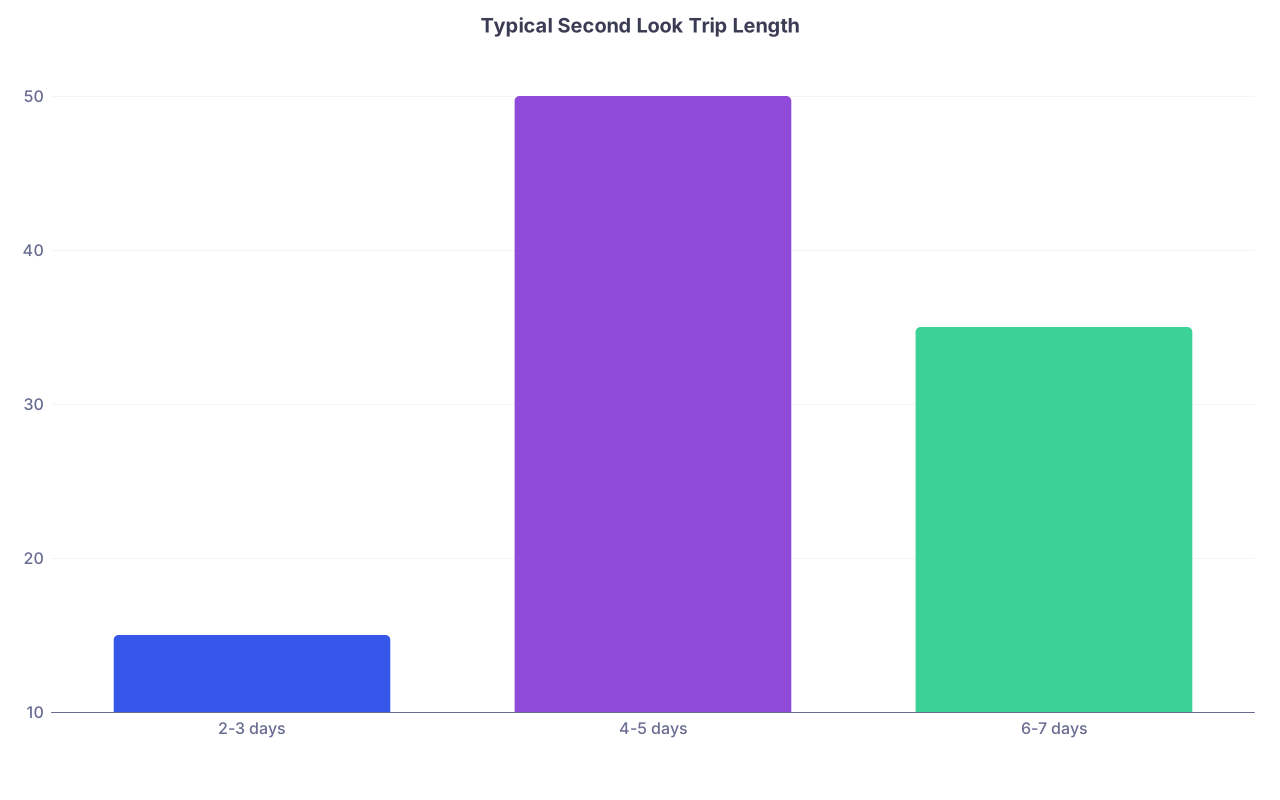
| Category | Value |
|---|---|
| 2-3 days | 15 |
| 4-5 days | 50 |
| 6-7 days | 35 |
If you cannot get three meaningful second looks out of this, stacking probably is not worth the logistics.
4–5 Weeks Before: Build the Skeleton Route and Contact Programs
At this point you should be converting “idea” into “itinerary framework.”
Step 1: Draft a Tentative Route
Use a real map. Not your imagination.
- Start with:
- Arrival city
- Final departure city
- Then draw a linear or near‑linear path. Circles are expensive.
Example Northeast 5‑day loop:
- Day 0: Fly into Boston
- Day 1: Second look – Boston program
- Day 2: Train to Providence, second look
- Day 3: Train to NYC, informal meetings + dinner
- Day 4: Second look – NYC program
- Day 5: Fly out of NYC
You want one major inbound flight and one outbound. Everything else by train, bus, or short hops.
Step 2: Email Programs for Target Dates
Now you test if your skeleton is even possible.
Your email (short, direct):
- Subject: “Second Look Visit – [Your Name], [Specialty] Applicant”
- Ask for 1–2 specific dates that fit your route, not “anytime in March.”
Send these at least 4 weeks out if you can. Some program coordinators are magicians. Others are overwhelmed and slow.
You should:
- Prioritize Tier A programs first.
- Give them a 3–5 day window where you could be in their city.
- Explicitly say you are stacking several visits in one trip (this explains why you are date‑constrained without sounding entitled).
3–4 Weeks Before: Lock Dates, Book Transit and Lodging
Now it gets real. This is where people either save hundreds of dollars or set money on fire.
At this point you should have tentative confirmations from at least 2–3 programs.
Step 1: Lock Core Visit Days
Put the program visits on a calendar:
- One column per day.
- Color code by:
- AM hospital time
- PM social / neighborhood scouting
- Transit between cities.
You are checking for:
- Impossible turnarounds (finishing at 5 pm and then a 3‑hour drive in winter).
- Overlapping commitments (one program wants you on a Wednesday that another already claimed).
Step 2: Book The Backbone Travel
Book in this order:
- Main round-trip flight (home ↔ region)
- Inter-city transit (train / regional flights / rental car)
- Lodging near each cluster of programs
Do not book hyper‑rigid nonrefundable everything. Some flexibility is worth the cost, especially on the main flights.
Step 3: Choose Lodging Like a Resident, Not a Tourist
You are not on vacation. You are recon for your future life.
Pick lodging:
- Within a 30–40 minute door‑to‑door commute to hospitals.
- Near realistic resident housing neighborhoods, not tourist centers.
- With easy morning transit (walkable, reliable bus/metro, or quick Uber).
| Priority | Reason |
|---|---|
| Commute time | Simulates realistic resident life |
| Safety at night | Late call / weekend coverage reality |
| Food options | Quick meals between long days |
| Transit access | Flexibility across multiple sites |
You want to wake up and commute the way you would as a resident. If that feels miserable now, it will feel worse on a post‑call day.
10–14 Days Before: Fine‑Tune Each Day and Set Objectives
Stacking second looks without clear goals is how you come home exhausted and still unsure about your rank list.
At this point you should have every day roughly scheduled. Now you layer detail.
Step 1: Define a Purpose for Each Program’s Visit
For each second look, write down:
- 2–3 key unknowns that could change your rank.
- 1–2 people you absolutely want to talk to (chief, PD, specific subspecialist).
- 1 concrete “lifestyle” thing to observe (parking, traffic, call room, daycare, whatever matters to you).
Example for a big‑name IM program:
- Unknowns:
- Are residents happy or just prestigious and tired?
- How malignant are the ICUs really?
- People:
- Night float senior
- A PGY‑3 who matched cards fellowship
- Lifestyle:
- Commute from the neighborhood where most PGY‑2s live.
Step 2: Lock Times and Details with Coordinators
7–10 days out you should:
- Confirm arrival times, dress code, and what you are allowed to attend (morning report, rounds, didactics, social).
- Ask explicitly:
- “Is there any resident I could shadow for a few hours?”
- “Are there any conferences or clinics I should aim to see?”
Many coordinators appreciate precision. Vague “I’ll just come by” makes you look unserious.
Step 3: Build a One‑Page Daily Plan
One page per day, printed or in a notes app:
- Addresses
- Transit (train time, platform, backup route)
- Key people / questions
- Backup food options near the hospital
- End‑of‑day “must jot down” items (fit, red flags, standout moments)
Do not rely on your fried brain to remember the PGY‑2 who said “we never actually leave by 5 like they tell applicants.”
Sample 5‑Day Stacked Second Look Timeline
Let me give you a concrete structure. Assume three programs in one region.
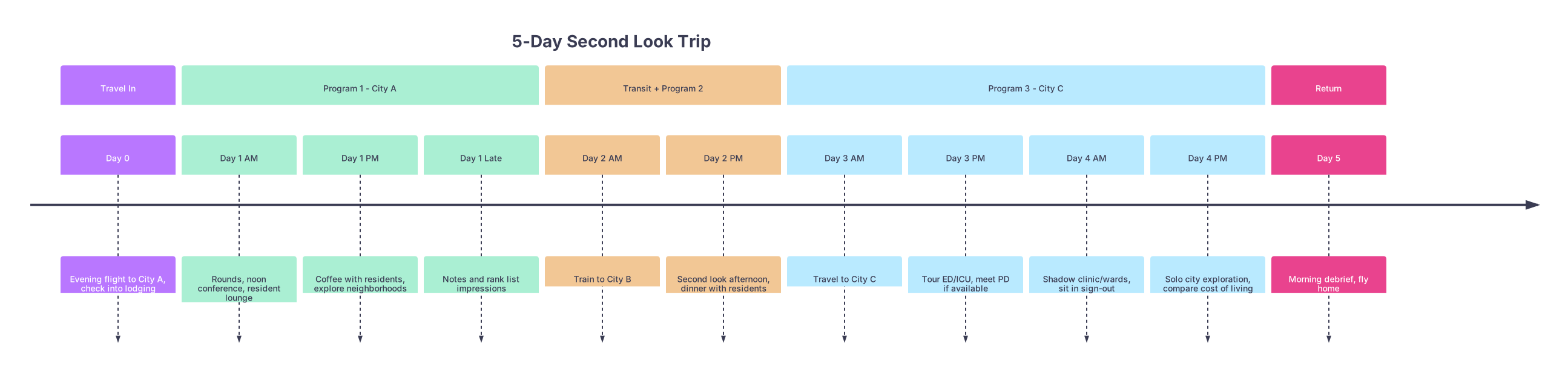
| Period | Event |
|---|---|
| Travel In - Day 0 | Evening flight to City A, check into lodging |
| Program 1 - City A - Day 1 AM | Rounds, noon conference, resident lounge |
| Program 1 - City A - Day 1 PM | Coffee with residents, explore neighborhoods |
| Program 1 - City A - Day 1 Late | Notes and rank list impressions |
| Transit + Program 2 - Day 2 AM | Train to City B |
| Transit + Program 2 - Day 2 PM | Second look afternoon, dinner with residents |
| Program 3 - City C - Day 3 AM | Travel to City C |
| Program 3 - City C - Day 3 PM | Tour ED/ICU, meet PD if available |
| Program 3 - City C - Day 4 AM | Shadow clinic/wards, sit in sign-out |
| Program 3 - City C - Day 4 PM | Solo city exploration, compare cost of living |
| Return - Day 5 | Morning debrief, fly home |
This is aggressive but realistic. You are moving almost every day. That is why pre‑planning matters.
During the Trip: Day‑by‑Day Execution
Now you are in it. Your job is to collect high-yield signal without burning out halfway through.
Every Evening Before: 10‑Minute Prep
At this point each night you should:
- Re‑check:
- Tomorrow’s start time and exact location.
- Transit route and backup (Uber if train fails).
- Lay out clothes, badge, notebook.
- Set 2 alarms. Travel brain is unreliable.
Day of Each Second Look: AM Structure
Morning rhythm:
1. Commute like a resident.
Aim to arrive when most residents arrive. If that means a 6:30 bus, you take the 6:30 bus. You are test‑driving your future life.
Check in and observe silently first.
Do not come in like a circus act. Watch:- Who looks exhausted vs content.
- How attendings talk to residents.
- Whether people laugh or only complain.
Hit your pre‑planned questions with residents.
Rotate who you ask; do not grill one captive PGY‑1 for 45 minutes.
Midday: Capture Real Culture, Not the Brochure
Lunch and conferences are where the mask slips a little.
You should be asking, conversationally:
- “What changed your rank list after you did your second looks?”
- “If you had to pick again knowing what you know now, would you still rank this first?”
- “What is the one thing you wish you had understood about this place before matching?”
You are not interrogating. You are collecting patterns. If three people apologize for the call schedule without being asked, believe them.
Late Afternoon / Evening: City and Life Fit
After hospital time, you still have work.
You should:
- Walk or ride the route between hospital ↔ likely housing areas.
- Check:
- Grocery store / pharmacy near those apartments.
- Safety vibe after dark.
- Transit frequency in the evening.
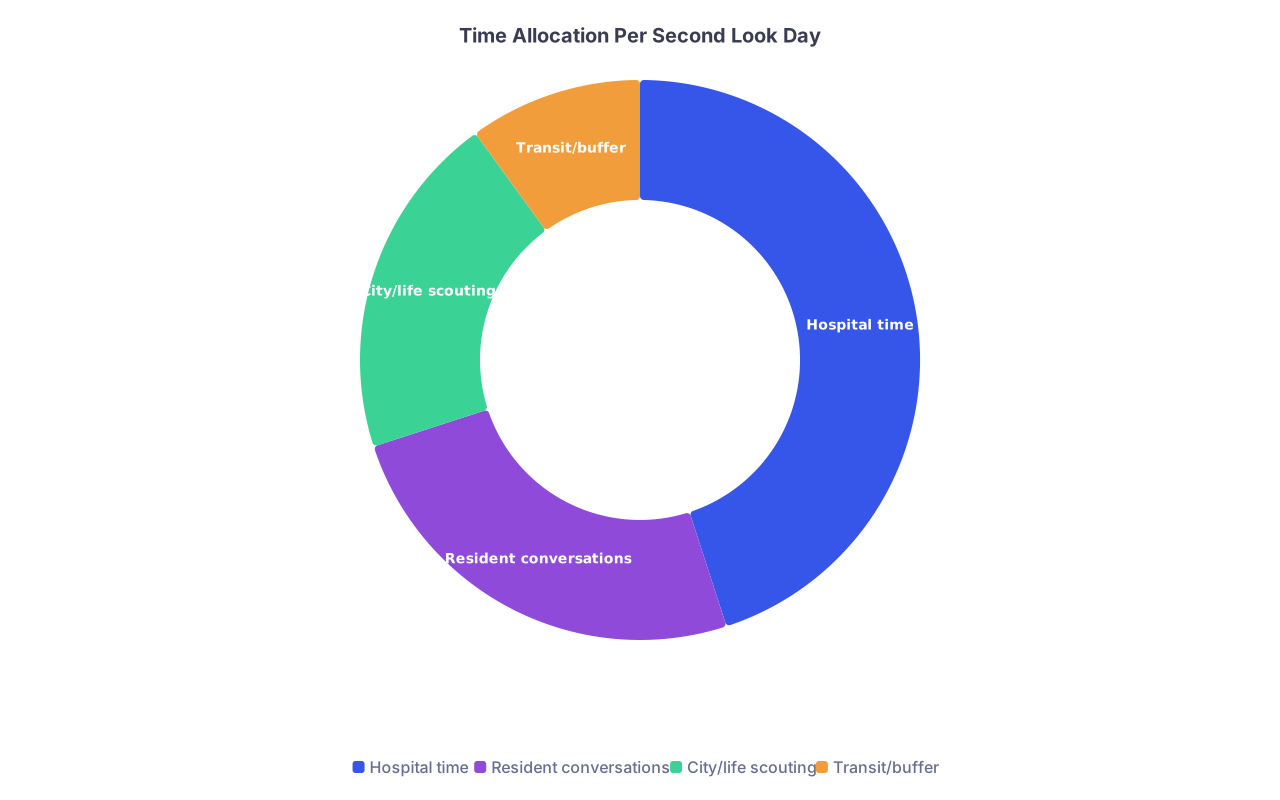
| Category | Value |
|---|---|
| Hospital time | 45 |
| Resident conversations | 25 |
| City/life scouting | 20 |
| Transit/buffer | 10 |
This sounds trivial. It is not. I have watched interns melt down six months in because they never tested what an 11 pm ride home from the hospital felt like in that neighborhood.
End of Each Day: 15–20 Minute Debrief
Before you touch your phone or Netflix:
- Write 5 bullet points:
- 3 pros
- 2 cons
- Rank the program relative to the others you have seen so far. Not in isolation.
You are building a dynamic rank list as you move through the trip. Do not wait until you are home and everything has blurred together.
Between Cities: Travel Days Without Losing Your Mind
Stacking means you will spend hours on trains, planes, and in Ubers. Use them intelligently.
At this point, on transit days, you should:
- Morning: Pack the night before, leave more buffer than you think. Missing one train can wreck two second looks downstream.
- On the train/plane:
- Debrief the last program.
- Update a running comparison table (call schedule, vibe, cost of living).
- Draft thank‑you emails while details are fresh.
- Evening in new city:
- Quick neighborhood walk.
- Check commute to hospital for next morning in real time.

This is also when exhaustion will start to nibble at you. If you planned 5 cities in 5 days, you will feel it here. This is why I tell people: 3 serious second looks in one trip is usually the upper limit before the quality of your impressions drops.
2–3 Days After Returning: Consolidate and Rank
If you do not process quickly after you get home, your brain will revise history to match whichever program feels most prestigious or familiar. Do not let that happen.
At this point you should block off one quiet evening for:
Step 1: Immediate Gut Ranking
Without looking at notes:
- Write down your instinctive order of the programs you just visited.
- If there is a “I cannot stop thinking about this place” program, mark it.
Your first impression, captured quickly, is often more honest than the over‑analyzed version you build a week later.
Step 2: Structured Comparison
Now pull your notes and build a simple comparison table. Nothing fancy.
| Factor | Program A | Program B | Program C |
|---|---|---|---|
| Resident vibe | Warm | Mixed | Tired |
| Call schedule | Heavy | Moderate | Light |
| Cost of living | High | Moderate | Low |
| Training rigor | Strong | Strong | Moderate |
Look for alignment with your priorities, not what your classmates care about.
Step 3: Adjust Your Overall Rank List
This is the uncomfortable part. You have to actually move programs up or down.
Common scenarios I have seen:
- Famous Program moves down because residents are clearly burned out.
- Mid‑tier regional program jumps way up because culture, support, and life fit are excellent.
- Two programs that looked identical on paper now separate cleanly because of one or two big factors (fellowship match data, PD transparency, or real autonomy).
Update your rank list that week. Do not wait “until I have more time.”
Common Pitfalls When Stacking Multiple Second Looks
Let me be blunt about where people screw this up.
Overbooking
Four second looks in four different cities in five days is technically possible and practically useless. You will be too tired to read nuance by city three.Treating it as an audition
Second looks, especially stacked ones, are for you to evaluate them. Over‑performing, over‑apologizing for “taking their time,” or trying to re‑interview can backfire.Ignoring cost creep
Every extra city is:- Another night’s lodging
- More Ubers
- More food on the road
The bill adds up fast.
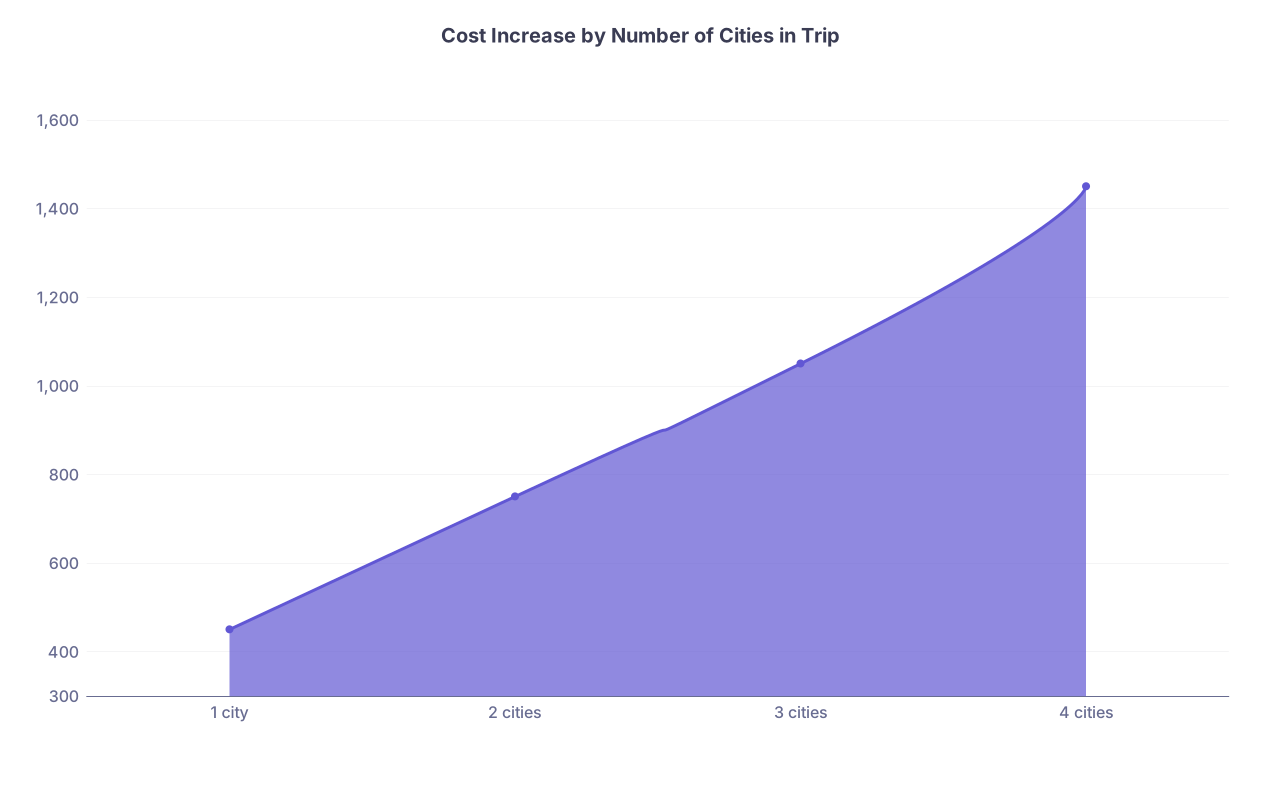
| Category | Value |
|---|---|
| 1 city | 450 |
| 2 cities | 750 |
| 3 cities | 1050 |
| 4 cities | 1450 |
No recovery time
Landing at midnight and trying to second look at 7 am the next morning? You will look and feel rough. Programs will notice, even if they are polite about it.Failing to capture specifics
“Vibe was good” is not useful 3 weeks later. You need specifics:- Exact comment that reassured you.
- Concrete red flag.
- Real commute time you observed.

When Stacking Is Clearly the Wrong Move
You should not stack multiple second looks in one trip if:
- You are already confident about your top 1–3 and nothing will realistically displace them.
- Your bank account is thin and travel costs will increase stress more than clarity.
- Programs are signaling that second looks are unnecessary or tightly restricted (some explicitly say they will not factor them into ranking).
Sometimes the correct answer is one targeted second look at the program that might genuinely dethrone your current #1. That is it.
Quick Summary
- Stack only when the geography and your priorities make it efficient, not because everyone else seems to be flying around.
- Treat a multi‑program trip as a structured field mission: tight logistics, clear daily objectives, ruthless note‑taking.
- Rank while the impressions are fresh, using what you actually saw and heard, not what the brochure or your ego tells you.