
The worst fourth-year mistake is pretending second looks are an afterthought. They are not. If you care about your rank list—or about not burning out—you build your entire late-interview-season schedule around them.
You are not just “fitting in” second looks. You are designing a fourth-year calendar that makes space for travel, sleep, and clear thinking when you are making the most consequential decisions of medical school.
Here is how the timeline should look.
12–9 Months Before Rank List: Global Strategy (Spring of MS3 – Early MS4)
At this point you should not be choosing dates. You should be deciding how much room you want for second looks in your fourth year.
March–April of MS3: Set the framework
At this stage:
- You have a sense of specialty.
- You may have a rough list of target programs.
- You are scheduling core MS4 requirements and audition rotations.
Your priorities:
Block out the “decision window.”
That is late January through late February of your application year. Protect it.- Aim to keep:
- 1 light elective in January.
- 1 very light elective or vacation in February.
- Absolutely avoid:
- ICU, ED, night float, or ward sub-I during that stretch.
- Any rotation where missing days is a hassle or politically dangerous.
- Aim to keep:
Decide your second-look “budget.”
Not just money. Time and energy.Ask yourself:
- How many programs might realistically be in play for a second look?
For most: 2–4. More than 5 and you are kidding yourself. - What is your financial ceiling for extra travel/hotels?
- How much time off can your school realistically approve in Jan–Feb?
That decision will drive how aggressively you need vacation and flexible electives in winter.
- How many programs might realistically be in play for a second look?
Align away rotations with likely second-look targets.
Example: You think University A and B are top choices.- Schedule away/audition rotations there in:
- July–September (for early impact), or
- October (if the specialty interviews later).
- That way:
- You may not even need a second look.
- Or your second look can be a short, targeted day, not a full deep dive.
- Schedule away/audition rotations there in:
Rough structure of MS4 year
Here is what a sane year looks like when you are making second looks a priority:
| Timeframe | Ideal Rotation Type |
|---|---|
| Jul–Oct | Sub-I and away rotations |
| Nov–Dec | Lighter electives + interviews |
| Jan | Very light elective |
| Feb | Light elective or vacation |
| Mar–Apr | Remaining requirements |
If your school forces fixed blocks, you negotiate now, not in January when everything is frozen.
6–4 Months Before Rank List: Hard Scheduling (Summer – Early Fall of MS4)
At this point you should be locking in specific blocks for interviews and potential second looks.
July–August: Build interview and second-look “corridors”
Reserve an interview block.
Most specialties interview between October and January.- Carve out:
- 1–2 “easy” rotations in peak interview months (often Nov–Dec).
- Prefer pass/fail electives with understanding attendings.
- Goal: You can miss multiple days without drama.
- Carve out:
Lock in January–February as low-intensity time.
This is where second looks live.Strong moves:
- January: Reading elective, outpatient clinic, research, teaching elective.
- February: Vacation or similarly low-intensity elective.
- Communicate to your dean’s office:
- “I expect interviews and follow-up visits during this period; I need flexibility.”
Clarify your school’s policies on time away
Do not wait to “figure it out later.” Ask explicitly:
- How many days can I miss from:
- A 4-week elective?
- A required sub-I?
- Can I stack personal days + interview days?
- Does the school formally approve second looks as “interview-related,” or will they be unpaid days off?
You build your rotation choices around those answers.
3–2 Months Before Rank List: During the Interview Season (Nov–Dec)
This is when students start to blow their schedule. They travel nonstop, accept every invite, and then have no bandwidth for real second looks later.
At this point you should be editing, not expanding.
November: Triage your programs
You cannot second-look everywhere. Nor should you.
Create tiers after your first 4–6 interviews
- Tier 1: Real contenders (2–5 programs)
Places you would be happy to rank #1–3. - Tier 2: Solid but not special (several programs)
You might go there, but they are not your dream. - Tier 3: Backups only
Second looks only belong in Tier 1. Maybe one Tier 2 if lots of uncertainty.
- Tier 1: Real contenders (2–5 programs)
Set a target number of second looks
By late November you should decide:
- Max: 3–4 second looks.
- Often: 2–3 is enough.
If you plan more than that, your rank list probably is not thought through.
Check each program’s stance on second looks
Programs vary:
- Some explicitly discourage them.
- Some allow visits but ignore them in ranking.
- Some quietly love them for borderline candidates.
How to find out:
- Ask residents during social events.
- Read interview day FAQ slides.
- Email the coordinator with a very short, respectful query.
If they say “we do not consider second looks for ranking,” believe them and do not waste a trip unless you personally need the visit for your own confidence.
8–6 Weeks Before Rank List: Pencil in Second Looks (Early–Mid January)
Now you are past the bulk of interviews. You know who is serious and where you realistically see yourself.
At this point you should be turning vague intentions into dates on a calendar.
Early January: Decide where and why
Ask yourself, program by program:
- Do I have unanswered questions about:
- Day-to-day workflow?
- Resident culture?
- City/lifestyle fit?
- Do I have a realistic shot there?
- Decent interview vibe?
- No obvious red flags in feedback from residents?
If the answer is “I think I would rank it top 3 but I am still not sure,” that program is a strong second-look candidate.
Programs that usually justify a second look:
- Highly competitive dream programs where you felt “on the bubble.”
- Places where the structure is complex (multi-site systems, weird call setup).
- Cities you have never actually experienced outside an interview hotel and Uber route.
Programs that do not justify a second look:
- Safety programs you will only rank if everything else explodes.
- Places that already felt clearly wrong.
- Programs that state explicitly they do not record second looks.
Mid-January: Book your dates and cluster your travel
This is where schedule mapping matters.
Your goals:
Minimize back-and-forth travel
Example:
- Second look at Midwest Program A and Midwest Program B.
- Plan a 3–4 day trip rather than two separate flights a week apart.
- Schedule:
- Mon: Travel in.
- Tue–Wed: Second looks at both programs.
- Thu: Buffer / travel home.
Protect your sleep and rotation responsibilities
In reality:
- Do not land at midnight and show up at rounds at 6 a.m. the next day.
You will be useless. Or unsafe. - Build 1 buffer day around big trips when possible.
- Do not land at midnight and show up at rounds at 6 a.m. the next day.
Coordinate with your school and rotation director
You send concise, professional notice:
- At least 2–3 weeks before each second look.
- Include:
- Exact dates you will miss.
- Which program you are visiting (optional but helpful).
- Plan for making up missed time/assignments if required.
Do not spring this on anyone last minute. That is how you get a reputation.
4–3 Weeks Before Rank List: Execution Week-by-Week (Late January – Early February)
Here is what your life realistically looks like.
Week 1: First Wave of Second Looks
At this point you should be balancing three things at once:
- Second looks.
- Finishing any remaining interviews.
- Starting to structure your rank list.
Monday–Tuesday
- On-service: solid performance, do not slack.
- Evenings: outline remaining questions about your top 3–5 programs.
- Confirm logistics for this week’s second look (transport, housing, dress).
Wednesday–Friday: Trip 1
- Wed:
- Travel to Program X city.
- Walk the surrounding neighborhood for 30–60 minutes.
- Evening: quick review of your interview notes from that program.
- Thu:
- Second-look day:
- Attend noon conference or morning report if allowed.
- Shadow a resident on a normal day.
- Ask targeted questions: shift schedules, off-service rotations, wellness, fellow presence.
- Evening: jot down impressions while they are fresh.
- Second-look day:
- Fri:
- Travel home.
- Light prep for next week’s responsibilities.
- Start rough draft of rank list reflecting any new impressions.
Week 2: Adjust and Refine
At this point you should be cutting, not adding.
Reassess:
- Did that first second look change anything?
- If it did not move the needle, you probably do not need 3 more.
Use this week for:
- Any remaining single-day, local second looks.
- Long conversations with mentors.
- Honest talks with your partner/family about city priorities.
Do not spontaneously add a “maybe” program to second-look plans now. You are too close to rank list submission to keep expanding the field.
2–1 Weeks Before Rank List: Final Second Looks and Rank Lock (Mid–Late February)
This is the critical window. Your schedule must be brutally protected.
At this point you should be focusing almost entirely on:
- Final 1–2 second looks.
- Finalizing your rank order.
Week 3: Last planned second looks
Structure the week like this:
- Mon–Tue: On-service days
- Show your face.
- Be reliable.
- Tie up clinical tasks before leaving.
- Wed–Thu: Final second look trip
- Treat this like a diagnostic exam:
- Can you picture yourself on night float here?
- Are the chiefs people you trust?
- How do PGY-2s look—exhausted and bitter, or busy but functional?
- Treat this like a diagnostic exam:
- Fri: Debrief day
- Sit down, undistracted, and write:
- 3 concrete pros.
- 3 concrete cons.
- Where it currently falls on your rank list and why.
- Sit down, undistracted, and write:
If you are still tempted to add brand-new trips at this stage, that is almost always anxiety talking, not strategy.
Week 4: Rank consolidation and no more travel
Last week before submission (or very close depending on specialty).
At this point you should not be traveling at all unless there is a truly exceptional reason.
Use your time to:
- Re-read notes from all interviews and second looks.
- Revisit your priorities:
- Geography.
- Program culture.
- Training intensity.
- Lock your list at least 48–72 hours before the actual submission deadline.
People who tinker until the last hour usually just reshuffle out of panic.
Daily Logistics During a Second Look
Second looks are not mini-interviews. But they can absolutely hurt you if you behave like a tourist.
Here is how each day should run.
The night before
- Check dress code expectations:
- Usually business casual or clinic-appropriate attire.
- Print or download:
- Schedule (if they provided one).
- A short list of your questions (on paper or phone notes).
Sleep. You do not impress anyone by bragging about your 3 a.m. arrival.
Morning
- Arrive 10–15 minutes early.
- Re-introduce yourself to:
- Coordinator.
- Any residents or faculty you met previously.
Be curious but not performative. You are there to see the unpolished version of the program.
During the day
Your priority questions should be:
- How do residents actually speak about:
- Leadership.
- Ancillary support.
- Duty hour violations (yes, ask indirectly).
- What does the physical environment feel like:
- Workrooms.
- Call rooms.
- Clinics.
Avoid:
- Giving a second “interview pitch.”
- Fishing for reassurance about your rank status. It is unprofessional and rarely honest.
Evening
Before you touch your phone for doom-scrolling:
- Write a short, blunt summary:
- “I would / would not be happy here because…”
- “Red flags I cannot ignore are…”
- “This moved up/down to spot #__ on my list.”
That reflection is the real value of the second look. Not being “seen” by the PD.
Common Scheduling Mistakes And How the Timeline Prevents Them
I have watched these same errors play out every year.
Stacking second looks on top of a sub-I
- You miss multiple days.
- You burn bridges at your home institution.
- You are exhausted and learn nothing meaningful.
The fix happened months earlier: never schedule high-stakes rotations in Jan–Feb.
Last-minute scrambling
Students who have no January–February plan end up:
- Begging for emergency days off.
- Buying absurdly expensive last-minute flights.
- Panicking into extra visits that do not change their rank list.
Cure: Decide your maximum number of second looks by December, cluster them, and book in early January.
Using second looks as validation instead of information
Some students travel just to feel “wanted.” That is a terrible reason.
Second looks should answer unanswered questions. Your timeline forces you to consciously decide “why this program” weeks before you buy tickets.
Visual: Global Timeline for Fourth Year With Second Looks
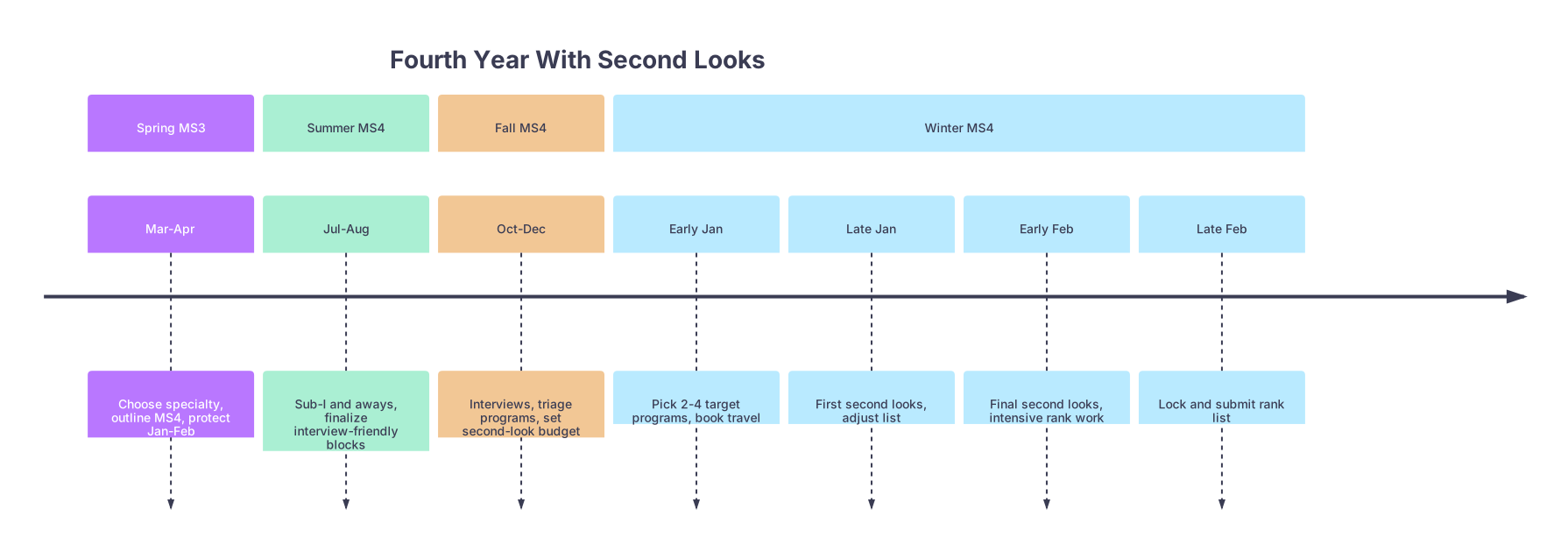
| Period | Event |
|---|---|
| Spring MS3 - Mar-Apr | Choose specialty, outline MS4, protect Jan-Feb |
| Summer MS4 - Jul-Aug | Sub-I and aways, finalize interview-friendly blocks |
| Fall MS4 - Oct-Dec | Interviews, triage programs, set second-look budget |
| Winter MS4 - Early Jan | Pick 2-4 target programs, book travel |
| Winter MS4 - Late Jan | First second looks, adjust list |
| Winter MS4 - Early Feb | Final second looks, intensive rank work |
| Winter MS4 - Late Feb | Lock and submit rank list |
How Many Second Looks Actually Matter?
To keep this honest, you should know what second looks tend to do for you.
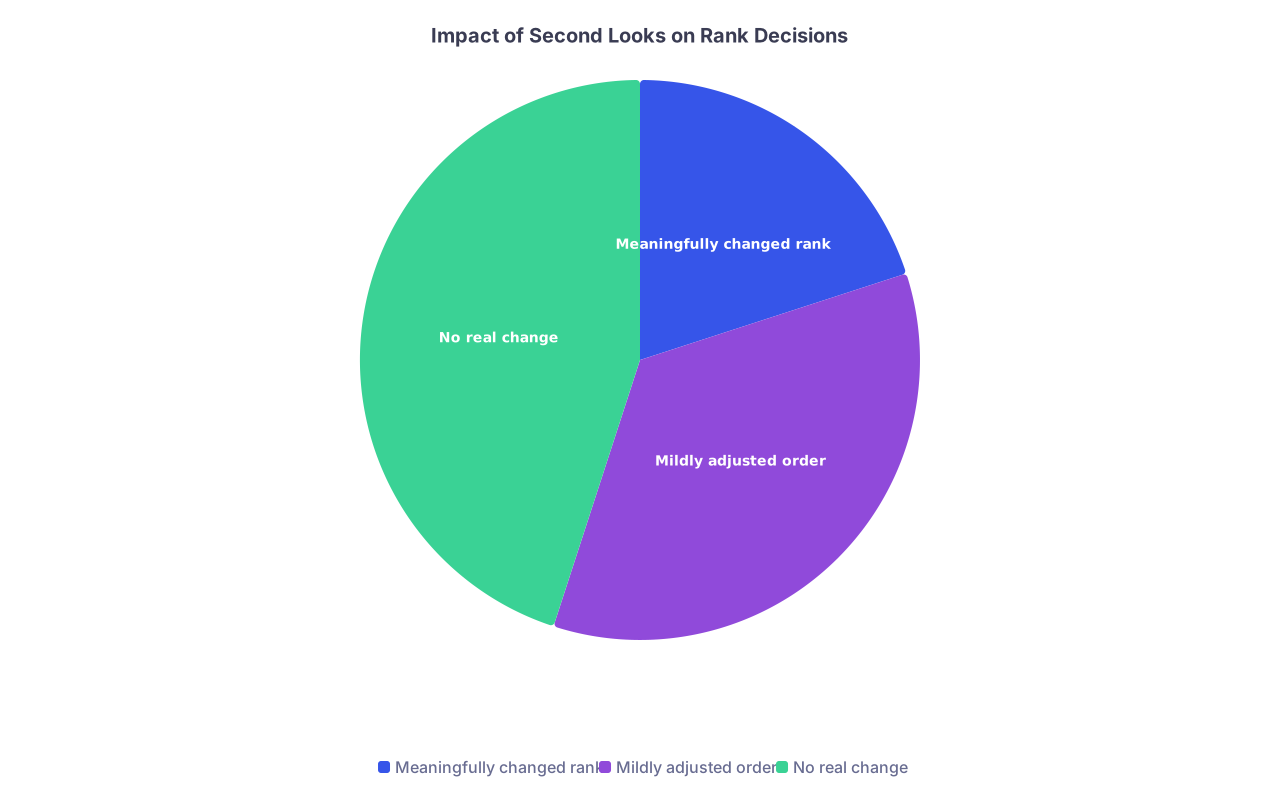
| Category | Value |
|---|---|
| Meaningfully changed rank | 20 |
| Mildly adjusted order | 35 |
| No real change | 45 |
From what I have seen:
- About 1 in 5 second looks truly reshapes a student’s rank list.
- Another chunk provide minor reordering or confidence.
- Almost half just confirm what you already knew.
Your schedule should reflect that reality:
- Build space for the few that matter.
- Do not sacrifice an entire winter just to wander through hospitals “just in case.”
Final Snapshot: What You Should Have Done By Each Point

By the time you hit each stage:
End of MS3:
- Decision window (Jan–Feb) protected with light rotations or vacation.
- Rough idea of how many second looks you can afford (time and money).
Summer MS4:
- Interview-heavy months have flexible electives.
- Your school’s time-off rules are clear in your head.
December MS4:
- Programs sorted into tiers.
- Hard cap on second looks decided (usually 2–4).
Early January:
- Target programs for second looks chosen.
- Travel clustered and tentatively scheduled.
Late February:
- All second looks completed.
- Rank list locked with confidence, not guesswork.
The Core Takeaways
- You do not “fit in” second looks; you design your entire winter schedule so they are possible without chaos.
- Decide early how many second looks you will do, which tier of programs deserve them, and protect January–February with light rotations.
- Use each second look to answer specific questions and refine your rank list, not to chase reassurance or impress anyone a second time.