
The way most people schedule second looks between January and February is backwards.
They start with whatever flimsy “availability” programs throw at them… then try to cram those dates into an already brutal rotation schedule. That’s how you end up begging a chief at 10 p.m. to swap call so you can fly across the country for a 6‑hour campus tour you barely remember.
Let’s flip it.
You’re in January now (or close enough). Match lists are looming. Rotations and call are not optional. Second looks are. So the timeline has to start with your actual life and work, then layer second looks on top—surgically.
This is your week‑by‑week, then day‑by‑day guide to slotting second looks around rotations without torching your reputation on service or sabotaging your energy.
Big Picture: January–February Second Look Window
At this point in the cycle:
- You’ve already interviewed.
- You’ve got at least a rough rank list in your head.
- Programs are mostly doing “optional” second looks or informal visits.
- You’re in the thick of M4 rotations—often sub‑Is, EM, ICU, or random electives.
Reality check:
You do not need a second look at every program. In fact, more than 3–4 is usually a waste of time and money.
Use second looks for:
- Tiebreakers between otherwise similar programs
- Places you only saw virtually and still feel serious about
- Programs where you need to clarify a big concern (malign vibes, workload, fellowship support)
- A single “reach” or “dream” program where face time might actually help (not guarantee, just help)
Skip second looks for:
- Programs clearly below your top tier
- Places where your gut is already a hard “no”
- Programs that explicitly say “no second looks” or “will not affect ranking” and seem to mean it
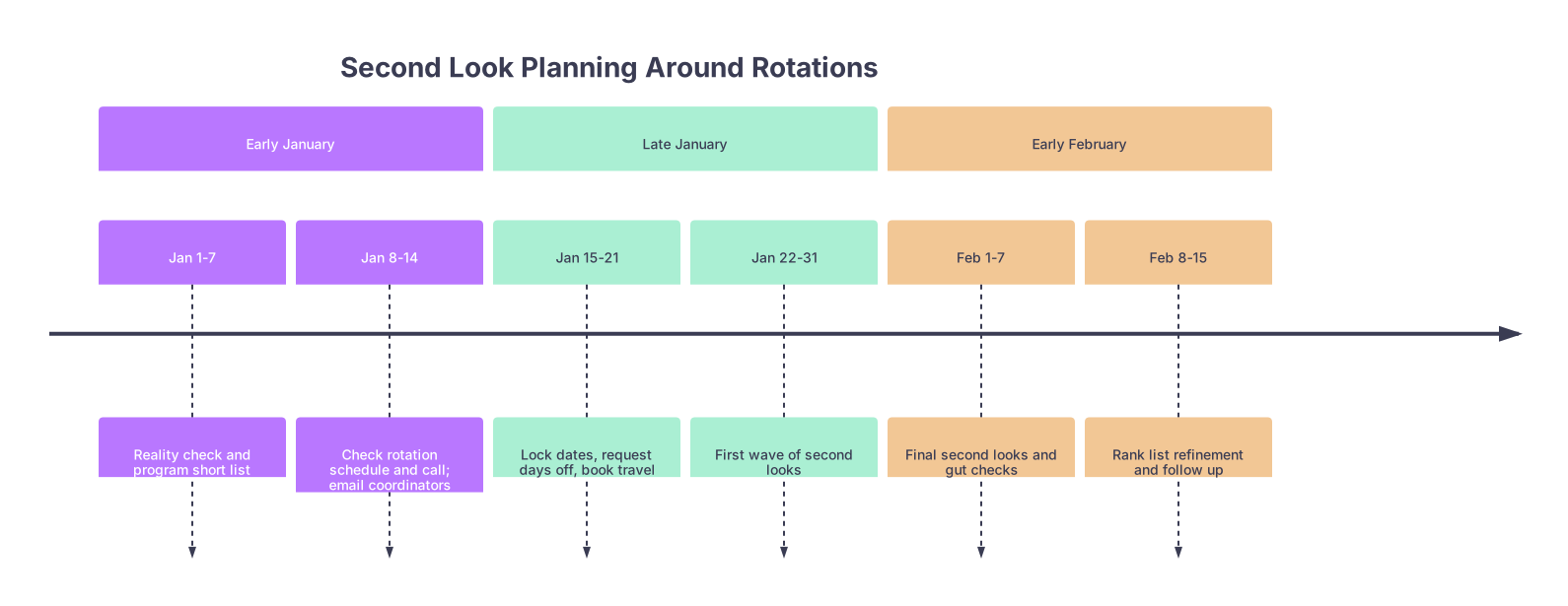
| Period | Event |
|---|---|
| Early January - Jan 1-7 | Reality check and program short list |
| Early January - Jan 8-14 | Check rotation schedule and call; email coordinators |
| Late January - Jan 15-21 | Lock dates, request days off, book travel |
| Late January - Jan 22-31 | First wave of second looks |
| Early February - Feb 1-7 | Final second looks and gut checks |
| Early February - Feb 8-15 | Rank list refinement and follow up |
Early January (Jan 1–14): Decide If You’re Even Doing Second Looks
At this point you should stop drifting and make a conscious decision: am I doing second looks at all?
Step 1: Build a ruthless short list (1–2 days)
Sit down with your interview list and ask three questions for each program:
- Could I realistically match here?
- Would I actually be happy here?
- Am I still confused enough that a second look could change my rank?
Score each program 0–2 for each question, quick and dirty. Anything that doesn’t hit at least 4/6 total? Off the second‑look list.
You want 2–4 target programs max.
Step 2: Overlay your actual schedule (1 day)
Pull out:
- Your January and February rotation schedules
- Call calendar (golden weekends, nights, 24‑hour calls)
- Any known exam dates or big deadlines
Then mark:
- Protected: exam days, critical call shifts, key teaching days (like required presentations)
- Flexible: elective days, outpatient days with easy coverage, admin time
- Impossible: 24‑hour call followed by flight, back‑to‑back 6 a.m.–7 p.m. shifts with travel squeezed in
The usual safe windows:
- Friday afternoons → Sunday nights
- One weekday off sandwiched by less‐intense days (e.g., clinic–off–clinic)
- Elective blocks with lighter clinical responsibility
Now you’re not just saying “I’ll do second looks in late January.” You’re circling specific 24–48‑hour windows.
Step 3: Check each program’s second look culture (2–3 days)
Do this before you start emailing coordinators.
- Re‑read the program’s post‑interview emails and website
- Check if they:
- Explicitly offer second looks with set dates
- Say “no additional visits” (often for equity reasons)
- Are in a region with bad winter travel (Midwest, Northeast) that may cluster dates
If a program says: “Second looks are optional and will not impact ranking,” assume:
- For big academic places: that’s mostly true, but second looks can help you clarify fit.
- For smaller or mid‑tier programs: they might not use it for ranking, but having faculty remember you positively never hurts.

Mid‑January (Jan 8–21): Contact Programs and Lock Dates
At this point you should be transitioning from “thinking” to “booking.”
Step 4: Email coordinators with your proposed windows (Jan 8–14)
Do not send a vague “I’d love to do a second look sometime.” That just creates back‑and‑forth hell.
Send something like:
- Your name, school, and interview date
- That you remain very interested
- That you’d like to visit for a second look
- Two or three specific windows that work around your rotations
Example structure (keep it short):
- “I’m on an ICU rotation with call on X/Y/Z; I’m available Fri pm–Sun on [dates]. Would any of those align with resident clinic or a typical teaching day?”
You’re signaling three things:
- You’re serious.
- You respect their time.
- You’re a functioning adult who understands scheduling.
Step 5: Prioritize “content days,” not just any day (Jan 10–18)
Once they offer dates, pick days that give you actual signal:
Higher yield:
- Regular teaching conference days
- Resident clinic or continuity clinic
- Normal inpatient or ED days where people aren’t on holiday skeleton crews
Lower yield:
- Day before a major holiday
- Random half‑day where only one attending is around
- Program’s “second look social” with 80 applicants herded through the same room
If you can, aim for:
- One “normal weekday” per program, not just weekend tours
- A 6–8 hour window: pre‑rounds/rounds, conference, some informal time
Step 6: Get local sign‑off early (Jan 12–21)
Now the friction point: your current rotation.
The worst way to do this: “Hey, I need Friday off… this Friday.”
The better pattern:
- As soon as a program offers a date that fits your windows, pencil it in, then:
- Talk to your chief/senior or rotation director within 24–48 hours.
- Offer solutions, not problems:
- You’ve already swapped call with X.
- You’re happy to come in early/stay late the day before or after.
- You’ll pre‑chart or pre‑round for someone.
I’ve watched students get labeled “checked out” three weeks before graduation because of sloppy second look requests. That stuff spreads. Protect your reputation.
| Rotation Type | Best Second Look Window | Usually Bad Idea |
|---|---|---|
| ICU / CCU | Fri pm–Sun, post‑call days with clear sign‑off | Mid‑week 24–48 hr trips |
| Inpatient Wards | Golden weekends, light clinic days | Days after overnight call |
| EM | Between shifts with at least 24 hr buffer | Back‑to‑back with night shifts |
| Outpatient / Elective | Mid‑week single day off | First week of rotation |
| Research | Any 1–2 days cleared with PI | Days with scheduled presentations |
Late January (Jan 22–31): Execution Week by Week
By this point you should have at least 1–2 second looks scheduled and travel booked.
Now we shift to how to structure the actual visit around your rotation duties.
Week of First Second Look: 7‑Day Micro‑Plan
Let’s say you’re on wards and you’ve scheduled a Friday afternoon to Saturday evening second look.
Monday–Tuesday
- Pre‑confirm coverage: make sure whoever’s covering knows what they’re taking.
- Tell the attending casually but clearly: “I’ll be out Friday afternoon with approved time off for a residency visit; I’ll pre‑round and update signouts before I leave.”
- Start a running note of questions you want to ask at the second look so you’re not winging it on the day.
Wednesday–Thursday
- Load your hospital work front‑heavy. Do more notes, more discharges, more follow‑ups now.
- Finish any lingering evaluations or small tasks for your rotation. You want zero loose ends when you leave.
- Confirm flights / train / driving plans with realistic buffers. Winter delays are not a theory.
Friday Morning
- Show up. Early.
- Round like normal. Volunteer for a bit extra.
- Before you leave:
- Clean sign‑out
- Brief the resident on every active issue
- Thank the attending and senior for the flexibility
Then you switch modes.
Friday Afternoon–Saturday: At the Program
At this point, your priority is signal collection, not performance theater.
Focus your time on:
- Residents without leadership titles. They’ll tell you the truth about workload, culture, and support.
- Recent grads or senior residents. Ask about fellowship placement, board pass rates, and autonomy.
- Program director or APD, briefly. Reinforce your genuine interest and where you see yourself fitting.
Core questions to hit:
- “What surprised you the most after you started here?”
- “If you had to choose again, would you pick this program?”
- “What does a bad day here look like? How often is that the norm?”
- “How are nights really? Who has your back?”
Take quick notes on your phone or a small notebook during breaks, not in front of them.
Sunday
Travel back with a buffer. Don’t cut it so tight that a 2‑hour flight delay has you stumbling into Monday pre‑rounds half‑awake.
Sunday night, 20‑minute debrief:
- Write 5 bullets:
- 2 things you loved
- 2 things that worried you
- 1 concrete memory that captures the vibe (e.g., interns laughing in workroom at 7 p.m. vs everyone silent and dead‑eyed)
You’ll forget the details by February 20th if you don’t.
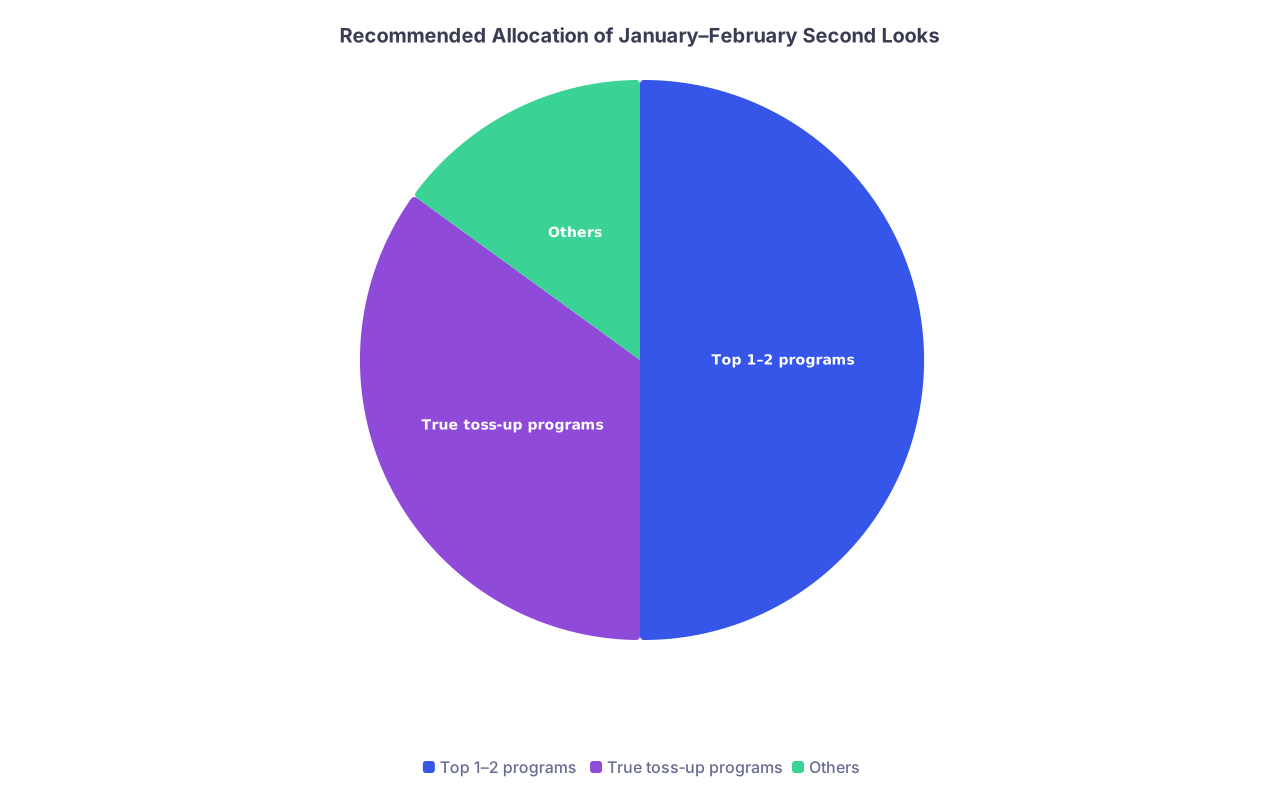
| Category | Value |
|---|---|
| Top 1–2 programs | 50 |
| True toss‑up programs | 35 |
| Others | 15 |
Early February (Feb 1–7): Final Second Looks and Gut Checks
By early February, most people are either:
- Still scheduling frantic last‑minute visits, or
- Burned out from travel and no clearer about their rank list
You’re going to be neither.
At this point you should:
- Have completed at least one second look
- Have one more scheduled if needed
- Be narrowing your rank list, not expanding it
Micro‑planning a weekday second look
Suppose your second look is a single mid‑week day on an outpatient rotation.
1 week before
- Confirm clinic schedule; ask preceptor which day is least disruptive to miss.
- Email: “I have an approved residency visit next Wednesday; could we shift my clinic time that week to Monday/Friday?”
- Arrange to pre‑call or follow‑up on any complex patients so you’re not dumping work.
Day before travel
- Lay out: clothes (yes, business casual still), notebook, program notes, travel documents.
- Re‑review your original interview day impressions so you’re not asking questions they already answered.
Visit day structure
Aim for:
- 1–2 hours: shadowing on rounds or in clinic
- 1 hour: resident room time (closed‑door if possible)
- 30–60 minutes: conferences / noon report
- 10–15 minutes: PD/APD check‑in
You’re no longer trying to show you’re impressive. That ship sailed with your interview. You’re trying to answer: “Can I live this life for 3–7 years?”
Watch for:
- How people talk about each other when someone leaves the room
- Whether interns feel safe asking dumb questions
- How late the workroom is full for a “normal” day
Mid‑February (Feb 8–15): Converting Visits into a Rank List
At this point you should stop visiting and start deciding.
Second looks are a tool. Not a lifestyle.
Step 1: Synthesize, don’t over‑interpret
Right after your last second look, sit with:
- Your original interview notes
- Your second look notes
- Your gut
For each program you visited, ask:
- Did the second look move this program up, down, or no change?
- Why? (Force yourself to name the real reason: “residents looked exhausted,” “PD seemed defensive about attrition,” “people actually seemed happy.”)
If every program moves up because “I liked them, they were nice,” you’re not being honest. Some programs will feel worse under fluorescent lights on a Tuesday in February. Pay attention.
Step 2: Guard against recency bias
The last second look you did will feel the “freshest” and often artificially better.
To counter that:
- Re‑read your notes from the first second look and your earlier interviews before finalizing your list.
- Ask a trusted mentor to pressure‑test your top 5–7 programs against your stated priorities (location, fellowship, culture, partner/family needs).
I’ve seen people flip their whole list in favor of the last place they saw, then regret it 6 months into intern year.
Day‑of Logistics: How to Not Blow Up Your Rotation
A few very practical, time‑sensitive rules that matter more than people admit.
Travel buffers
- Outbound: Plan to arrive in the city the evening before your second look, not same‑day. January blizzards and “maintenance delays” are not rare.
- Return: Build at least 12–18 hours between landing and your next clinical obligation.
If you land at midnight and have 6 a.m. pre‑rounds, that’s your fault.
Communication timing
- Tell seniors/attendings 1–2 weeks in advance.
- Remind them 2–3 days before.
- Text your coverage person the morning you leave: “Headed out for the visit today; everything is set for you. Thanks again.”
This is basic, but I’ve watched people skip it and get labeled unreliable.
Documentation and evaluations
- Try to clear any eval requests before your second look week.
- Do not make your residents chase you during the same week you’re asking for schedule favors.
Email and Follow‑Up Timing Around the Visit
You don’t need a baroque post‑visit strategy. You do need clean timing.
24–48 hours before the visit:
- Confirm with the coordinator that you’re still coming, especially if there’s weather.
24–72 hours after the visit:
- Send a short thank‑you email:
- To the coordinator
- Optionally to PD/APD if you had a meaningful conversation
- Maybe to one resident who spent extra time with you
No essays. Just:
- One sentence of thanks
- One or two specifics you appreciated
- One line reaffirming that you’re very interested and the visit helped clarify fit
Then stop. You don’t need weekly touch‑base emails.
If You’re Not Doing Second Looks at All
Some of you shouldn’t be doing second looks, period.
If:
- You’re on a brutal rotation where leaving would genuinely hurt patient care
- Travel money is tight and you’re already stressed
- Your interview impressions are clear and stable
Then your January timeline is simpler:
- Jan 1–15: Re‑review your interview notes and update your rank draft
- Jan 16–31: Have 1–2 mentor conversations about your list
- Feb 1–15: Minor adjustments, no extra visits
You’re not “behind” if you skip second looks. You’re behind if you blow up your current responsibilities for marginal gains.
The Core Moves, In Order
You do not have to overcomplicate this. If you remember nothing else:
- Start with your rotation schedule, not the programs’ calendars. Protect your reputation on service and pick realistic 24–48‑hour windows first.
- Use second looks for targeted clarification, not validation. 2–4 programs max, focused on true toss‑ups and places you could actually rank highly.
- Debrief immediately and then stop visiting. Take structured notes, adjust your rank list once, and resist the urge to keep shopping for a perfect program that does not exist.
If you hit those three on time—early January planning, late January execution, early February synthesis—you’ll slot second looks around rotations without wrecking either.