
Twenty to forty percent of applicants who match at a given program never set foot there after interview day. Programs still rank – and match – them just fine.
So no, there isn’t some hidden blacklist for people who skip second looks. The mythology around this is way louder than the reality.
Let’s walk through what actually happens, what little data we have, and what program leaders quietly admit when they’re not performing for applicants on Zoom socials.
What Second Looks Actually Are (Versus What People Pretend They Are)
Second looks are optional post‑interview visits. Usually loosely structured, often resident‑driven, sometimes glorified tours with a few hallway consults thrown in. They are not part of ERAS. Not part of NRMP. Not in any ACGME requirement.
They’re essentially a marketing and fit‑checking tool.
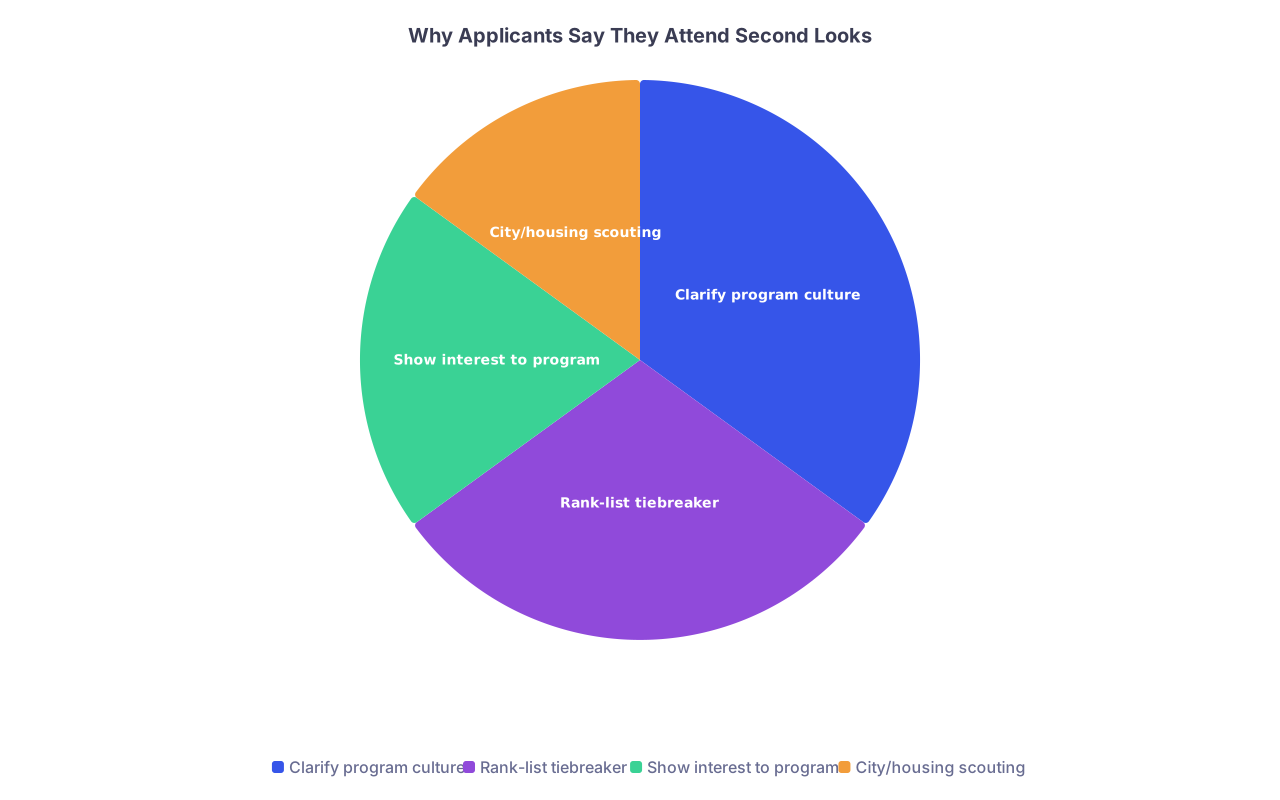
| Category | Value |
|---|---|
| Clarify program culture | 35 |
| Rank-list tiebreaker | 30 |
| Show interest to program | 20 |
| City/housing scouting | 15 |
The big misconception: “Programs use second looks to see who’s really committed and then lower the rank of people who don’t come.”
Reality: The people doing the ranking usually understand three things very well:
- Second looks are self‑selected and heavily biased by money and geography.
- Any attempt to make attendance “required” runs straight into NRMP rules.
- They’d be shooting themselves in the foot if they rigidly punished non‑attenders.
I’ve heard PDs say this out loud: “We like when people come, but I can’t tell who’s rich, who’s on nights, and who’s just burned out. I’m not going to throw away great applicants over that.”
They’re not saints. They’re just not stupid.
What The Rules Actually Say (And How Programs Work Around Them)
If you want to separate myth from reality, start with the rulebook.
NRMP and AAMC: The Boring but Important Part
NRMP Match Participation Agreement and AAMC guidance are clear on a few things:
- Programs cannot require second looks as a condition for ranking.
- They cannot ask you to reveal your rank list or exact intentions.
- They cannot offer incentives (like “priority ranking”) in exchange for a visit.
Is there a clause that literally says, “You may not lower someone on the rank list if they do not attend a second look”? No. The NRMP doesn’t micromanage thought processes. But it absolutely frowns on using post‑interview contact as a de facto barrier or pressure point.
This is where fear creeps in. Applicants hear “we can’t require it” and translate it to “so they’ll secretly require it.”
Let me be blunt: If a program actually built a rank list by punishing everyone who skipped second look, they’d destroy their own competitiveness. They know that.
What Programs Actually Care About When Ranking You
Look at what programs say moves the needle. Not random anecdotes – actual surveys.
The NRMP Program Director Survey (latest versions for different specialties are consistent over the last decade) asks PDs to rate factors they use to rank applicants.
| Factor | Importance (PD Survey Rank) |
|---|---|
| Interview performance | Very high |
| Clinical grades / MSPE | Very high |
| Letters of recommendation | High |
| USMLE/COMLEX scores | High–moderate |
| Perceived “fit” | High |
| Second look attendance | Not listed |
You will not find “second look attendance” in those tables. At all.
Does that mean no program on earth ever glances at a second look list? Of course not. Some do, informally. But when PDs are given a list of ~30 factors and asked what they systematically use, second looks don’t even make the cut.
What they do look at:
- Interview day performance and interpersonal vibe
- Faculty and resident feedback from the actual interview
- Your written application, scores, letters, MSPE
- Serious red flags (unprofessionalism, major gaps, etc.)
Second looks sit in the gray zone labeled “soft signals” or “extra data,” which brings us to the nuance.
The Real Role of Second Looks: Signal, Not Requirement
Here’s the uncomfortable truth people hate because it’s not binary: second looks generally help you more than they hurt you, but lack of a second look is almost never a penalty by itself.
Think of it as a positive signal, not a default expectation.
When a Second Look Might Slightly Help You
From program conversations and back‑channel comments, here’s what second looks are actually used for:
Breaking ties between very similar applicants. “We had three people we all liked equally. Two showed up for second look, one didn’t. Guess who we felt more confident about?” Not always, but often.
Clarifying question marks about “fit.” If someone interviewed well but came off a bit stiff, seeing them in a more casual resident‑run setting can reassure people. Or confirm doubts.
Demonstrating interest in hard‑to‑recruit locations. Rural programs, lower‑reputation hospitals, or places in less desirable cities may weigh a second look more, because they’re legitimately worried about attrition and people bolting after intern year.
But notice the pattern: These are marginal situations. Tie‑breakers. Gray areas. Not “we auto‑drop everyone who didn’t fly in for our Saturday brunch.”
When Second Looks Do Basically Nothing For You
If you:
- Had a mediocre interview
- Have weak letters
- Have clear professionalism concerns
…no second look is rescuing you. A program isn’t going to ignore real red flags because you came back for another tour and free coffee. The same way showing up at office hours doesn’t convert a C into an A on its own.
Programs sometimes oversell “We’d love to see you again!” because they’re marketing themselves. They want to recruit you. That’s not the same as, “We will punish you if you don’t come.”
Who Actually Loses If Second Looks Become “Required”? Programs.
Imagine a program unofficially deciding: “We’ll rank anyone who comes to second look higher. Everyone else drops.”
Here’s who they instantly disadvantage:
- Students with no money to fly again
- Couples Match pairs trying to visit two cities in the same weekend
- Applicants on heavy call rotations or night float
- IMGs or DOs already stretched by visa and exam costs
You know who fits into those groups disproportionately? Exactly the same people programs are being pushed – publicly and by accrediting bodies – to recruit more of: diverse, non‑traditional, socioeconomically disadvantaged applicants.
Accrediting organizations are already hyper‑focused on equity and bias. Programs are not eager to hand them a smoking gun of “we only rank people who can afford a second trip.”
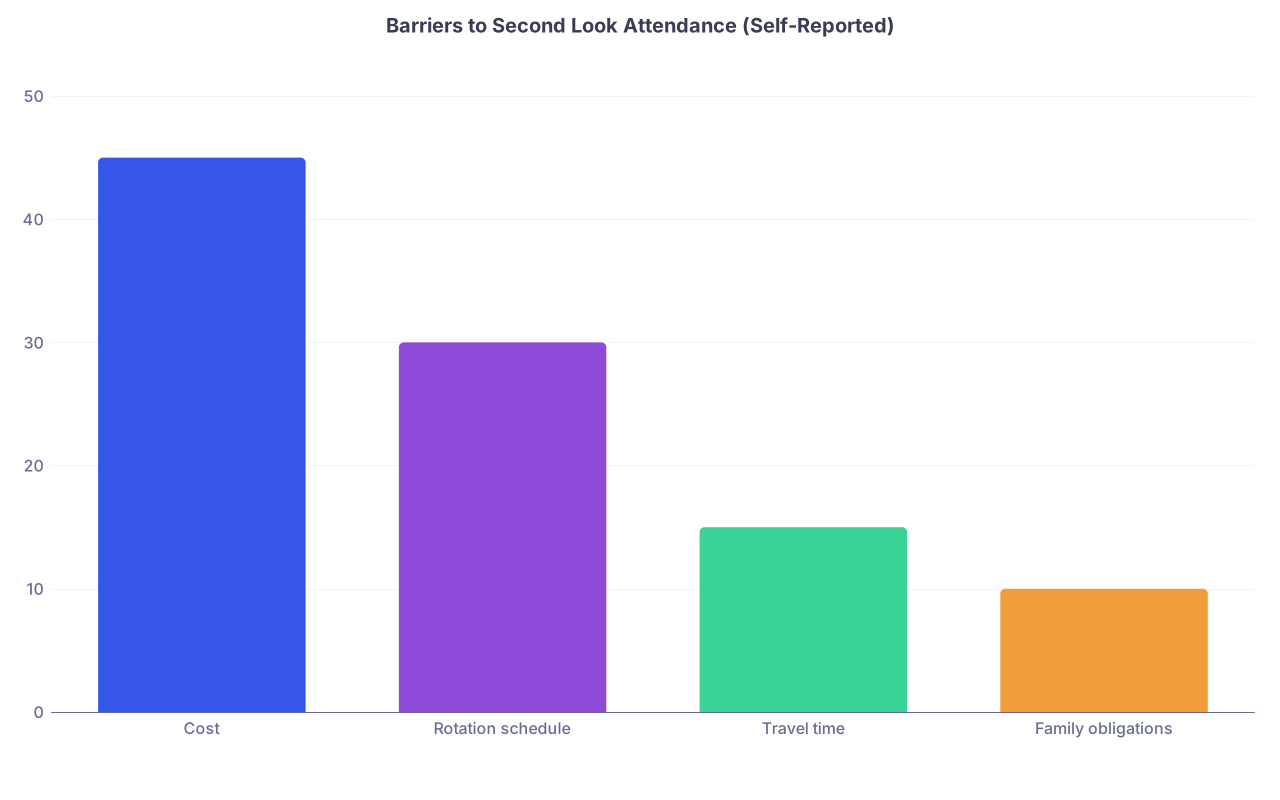
| Category | Value |
|---|---|
| Cost | 45 |
| Rotation schedule | 30 |
| Travel time | 15 |
| Family obligations | 10 |
So you get a weird tension:
- Publicly, programs must insist second looks are optional and not tied to ranking.
- Privately, many still like when strong applicants show up.
The net effect in most places: you get a small bump if you come, in very specific circumstances, but zero formal penalty if you do not.
Virtual Era, Hybrid Visits, and the Future of Second Looks
The pandemic accidentally ran the experiment for us. Virtual interviews, dramatically reduced travel, and either no second looks or virtual ones.
Did programs collapse because they couldn’t see who was “interested enough” to fly in twice? No. Most matched just fine. Many even expanded their interview pools beyond their usual geographic bubbles.
What changed post‑COVID:
- A lot of programs now offer virtual second looks (resident panels, Q&A, city tours on Zoom).
- Some do optional in‑person visits with explicit, sometimes over‑lawyered disclaimers: “Attendance will not be used in ranking decisions.”
- Applicants are more skeptical and more vocal about cost and equity. Programs have heard that loud and clear.

| Step | Description |
|---|---|
| Step 1 | Interview Complete |
| Step 2 | Skip second look |
| Step 3 | Join virtual events only |
| Step 4 | Consider in person second look |
| Step 5 | Attend second look |
| Step 6 | Still unsure about program? |
| Step 7 | Can afford time and travel? |
| Step 8 | Is program high on list? |
If second looks were actually mandatory in disguise, you’d have seen programs panic and start writing more desperate “we really value second looks” emails once everything went virtual. That didn’t happen at scale.
What you saw instead was quiet acceptance: apparently we can rank and match people just fine without an extra in‑person visit.
How Programs Informally Use Second Look Information
Here’s the part nobody likes but you should understand.
Residents Talk. A Lot.
Most second looks are resident‑heavy. Residents are asked: “What did you think of the people who came back?” Sometimes on a form, sometimes in a hallway.
What comes back to PDs:
- “She was engaged, asked thoughtful questions, seemed like she’d fit.”
- “He spent half the time on his phone and didn’t talk to anyone.”
- “Honestly, I don’t remember them.”
If you come and behave poorly, that can hurt you. But that’s not a penalty for “skipping” the second look. That’s a penalty for providing additional negative data.
If you don’t come at all, there’s simply no extra data point. You’re judged on the same stuff as everyone else: interview, letters, file.
Rare Exception: Programs on the Edge
A few programs, particularly those that feel chronically burned by people ranking them but then dropping out or being miserable, may lean harder on interest signals. For example:
- Small community IM or FM programs in less popular areas
- Very niche fellowships
- Newer programs worried about filling
They might say something like, “We really look for people who show commitment to our area” during Q&A. Do I believe some of them nudge people who never engage post‑interview a little lower? Yes.
But this is not “secret massive penalty.” It’s more like: if you’re already on the fence for them, being invisible after interview doesn’t help.
Even then, you don’t need a second look to show interest. Thoughtful follow‑up emails, attending virtual sessions, asking program‑specific questions – those all count too.
How You Should Decide on a Second Look (Without Fear‑Driving the Choice)
The smarter way to think about second looks is selfishly: what do you get out of it?
Here’s the rough decision rule that actually matches reality:
- You’re ranking a program in your top 3–5 and you’re genuinely unsure how it feels on the ground.
- You can reasonably afford the time and cost without wrecking your life.
- You want more data on culture, call burden, resident morale, and city logistics.
Then yes, a second look can help you make a better rank list. That’s the real value.
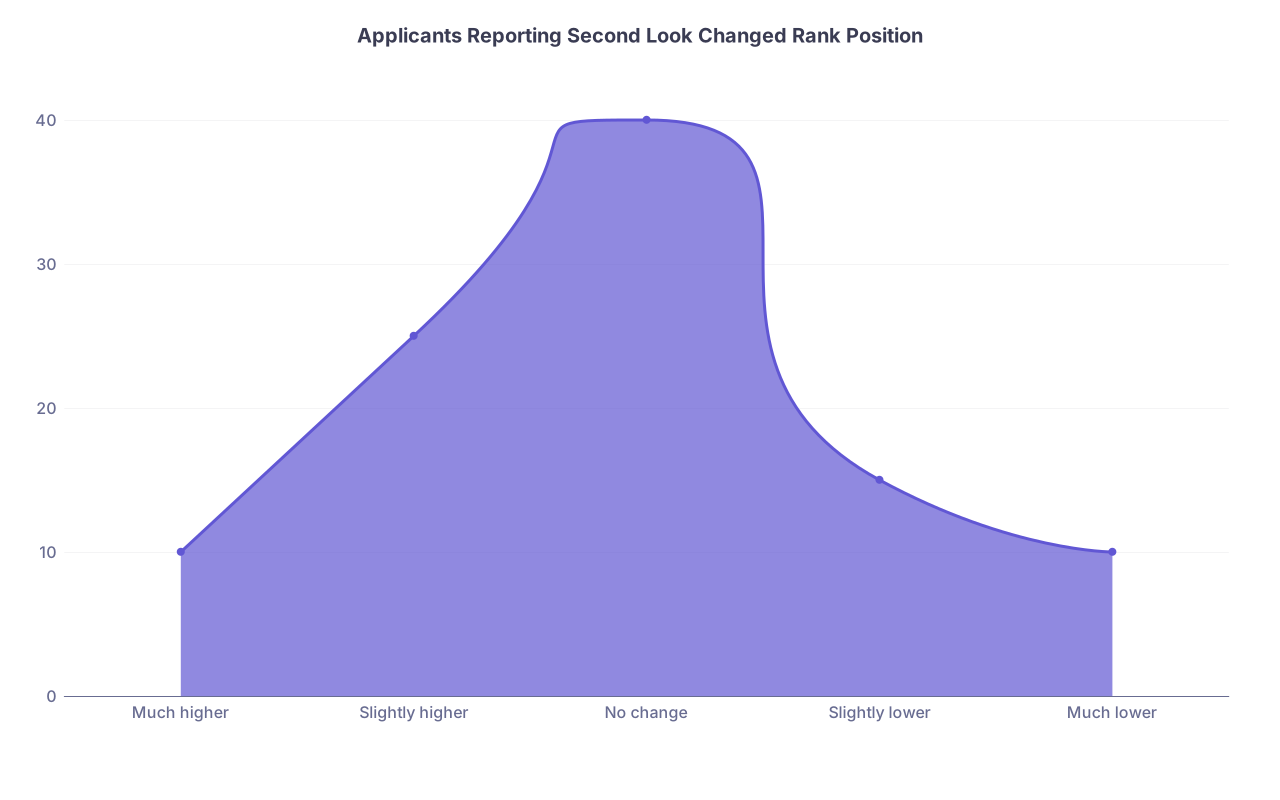
| Category | Value |
|---|---|
| Much higher | 10 |
| Slightly higher | 25 |
| No change | 40 |
| Slightly lower | 15 |
| Much lower | 10 |
If instead:
- The program is middle of the pack on your list
- You already have a solid sense of what you want
- Going would mean missing key clinical days, spending money you do not have, or juggling family/visas/jobs
Then skipping it is completely rational. Programs will not universally punish you for that, and the data on outcomes simply doesn’t show second looks as a make‑or‑break factor.
Myth vs Reality: Do Programs Secretly Penalize You?
Let me answer the title question directly.
Do programs have some hidden line on their rank worksheet: “Second look: Y/N – drop if N”? No. That fantasy mostly exists in anxious group chats and Reddit threads.
Do individual human beings within programs sometimes feel more excited about applicants who bother to come back and engage? Of course. Humans like feeling chosen. That’s not a conspiracy; that’s basic psychology.
The critical difference: that marginal warm‑and‑fuzzy advantage is nowhere near strong enough – or universal enough – to justify bankrupting yourself or blowing off critical responsibilities for a second look.
If a program truly made second looks a secret requirement, they would:
- Systematically bias their class toward wealthy and geographically local students
- Damage their diversity and equity metrics
- Reduce their overall competitiveness compared to peers who simply rank the best candidates
They know that. You should, too.
The Short Version
- Second looks are optional signal, not hidden requirement. Skipping them does not automatically tank your rank at the vast majority of programs.
- Programs rank you primarily on interview performance, letters, file strength, and perceived fit – not on whether you could afford a second plane ticket.
- Use second looks for your benefit – to clarify your own rank list – not out of fear of a secret penalty that the data and behavior of programs simply do not support.