The myth that you “must” do a second look at your top residency program is wrong. And in 2026, it’s starting to look not just wrong, but borderline outdated.
You’re being sold a ritual that often benefits programs way more than it benefits you. Let’s walk through what the data, policies, and actual match outcomes show—rather than what anxious applicants repeat to each other on Reddit at 1 a.m.
What a “Second Look” Really Is (Not the Fantasy Version)
Second looks are simple: you visit a program again after your interview. You see the hospital, maybe meet more residents, “show interest,” and allegedly improve your shot at matching there.
That’s the fantasy version.
In reality, post-interview communication and visits are tightly constrained by NRMP rules. Programs can’t legally:
- Ask your rank position
- Promise you a spot
- Condition ranking on whether you show up again
Yet every year I hear the same lines:
- “If you don’t second look, they’ll think you’re not serious.”
- “My friend matched at MGH because she did a second look.”
- “Top programs expect it.”
You’ll notice something: all vibes, zero data.
Most of the “evidence” people cite is purely anecdotal, and even then, usually misattributed. Someone matches at their top choice and back-fills the story: “It must’ve been that second look.” Or someone doesn’t match, and their attending tells them, “You should’ve done a second look.” No one is looking at denominators, confounders, or what NRMP data actually shows.
What the Rules and Data Actually Say
Let me be blunt: in the modern Match framework, second looks are structurally overrated.
NRMP and AAMC: The Guardrails
NRMP Match Participation Agreement and communication guidelines are clear about post-interview behavior:
- Programs can’t ask you for “commitments”
- They can’t require additional visits as a condition for ranking
- They can’t pressure you into more contact after interview
Second looks are optional by design. If a program hints that your ranking depends on coming back, they’re skating on thin ice.
AAMC and NRMP post-interview guidelines (updated and reinforced especially after the explosion of virtual interviews) basically say: interviews should be enough for programs to rank you. Everything else is extra.
Match Outcomes: Where Is the Second Look Effect?
Now, the NRMP does not publish a “second look vs no second look” match rate table (because it would be a nightmare to collect). But we do have enough peripheral data to make some reasonable inferences:
- Programs overwhelmingly report ranking decisions based on standardized things: interview performance, letters, Step scores, clerkship grades, perceived fit, and sometimes home institution status.
- Post-interview visits barely show up as a formal variable in any of the NRMP’s Charting Outcomes in the Match reports, program director surveys, or applicant surveys.
When program directors are surveyed about what matters most for ranking decisions, “post-interview contact/second look” typically sits near the bottom of the list. Not at the top. Not center stage. Near the noise floor.
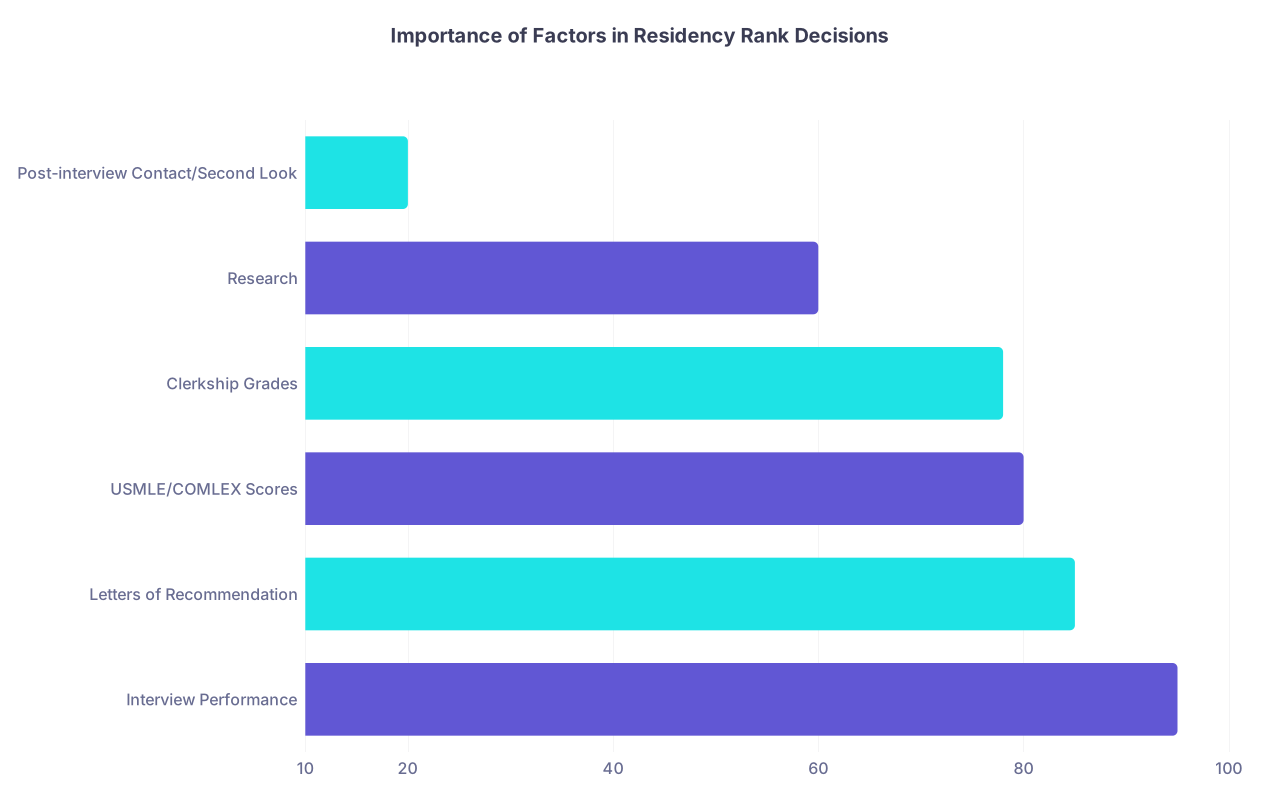
| Category | Value |
|---|---|
| Interview Performance | 95 |
| Letters of Recommendation | 85 |
| USMLE/COMLEX Scores | 80 |
| Clerkship Grades | 78 |
| Research | 60 |
| Post-interview Contact/Second Look | 20 |
Are there programs where a second look nudges someone a slot or two higher? Sure. Humans are biased and impressionable. But as a systemic effect across thousands of programs and tens of thousands of applicants? There’s no robust evidence this is a major driver of match outcomes.
What matters far more is how well you performed on interview day. That’s the honest truth most people do not want to hear because you can’t fix a mediocre interview with a charming second look lap around the wards.
Who Actually Benefits from Second Looks?
Here’s the part almost no one says out loud: second looks are structurally tilted to benefit programs and already-advantaged applicants.
Programs Get Free Extra Data and Free Marketing
From the program side, second looks are:
- Free recruitment
- A second chance to sell their brand/hospital
- An informal “vibe check” on who’s still interested
That last one matters. Not because they “need” to know you’re interested to rank you. But because programs like to avoid ranking people who clearly aren’t going to rank them highly. It’s psychological, not logical.
But notice: the direction of benefit is mostly them → not you. They already know your file. They already interviewed you. At best, you’ll get a marginal boost if they were on the fence. At worst, nothing changes.
Second Looks Magnify Inequity
The real problem: second looks reward the applicants with money, time, and geographic flexibility.
If you’re:
- On a shoestring budget
- Working nights/weekends
- An international med grad with visa constraints
- A caretaker for family
Then flying back across the country or driving 8 hours just to walk the same hallways again is not just annoying; it’s structurally unfair.
Virtual interviews were supposed to reduce this inequity. Second looks reintroduce a backdoor version of the old problem: expensive, optional in theory, socially expected in practice.
When a Second Look Actually Makes Sense (For You, Not Them)
So does that mean second looks are always useless? No. Just rarely necessary, and almost never the make-or-break factor people pretend they are.
There are a few scenarios where I think a second look can be rational:
1. You Truly Cannot Differentiate Two Top Programs
You did virtual interviews only. You have two programs in your top three that feel tied on paper and in your head. You’ve never physically seen one city or hospital.
In that scenario, a second look is not about impressing them. It’s about you collecting sensory data: commute, hospital layout, resident energy at 6 a.m., how faculty talk to the nurses. The stuff that does not show up in glossy brochures.
If going there will realistically change your rank list, it might be worth the trip.
2. You Have a Major Life-Limiting Factor to Clarify
You or your partner has a specific disability, childcare issue, or other life detail where you absolutely must see whether the environment will support you.
You’re not going to solve that over email. Walking the space, talking to residents who are parents, checking parking options – that’s real-world intel.
3. You’re Trying to Confirm a Red Flag
Sometimes you get that weird feeling. Overly polished answers. Residents who glance at each other before responding. A line like, “We really value resilience,” repeated three times.
You suspect there’s a workload, culture, or support issue. A second look – especially one where you meet residents without faculty hovering – might confirm or refute your suspicion.
That still won’t guarantee your safety. But it’s not irrational.
What a Second Look Won’t Fix
Here’s where people fool themselves.
A second look won’t:
- Compensate for a weak interview
- Magically turn “we’re not ranking you” into “we’ll rank you to match”
- Override your academic record or letters
I’ve sat in rank meetings where someone says, “They came for a second look; nice person,” and the committee nods politely and returns to the spreadsheet: scores, comments, group fit impressions from interview day. The second look mention lasts 10 seconds. The numerical and narrative file lasts the whole meeting.
In other words: if the foundation is shaky, another visit is a decorative plant in the lobby. Not a structural beam.
The Future: Second Looks vs Virtual-First Recruiting
We’re in a weird, transitional era. Virtual interviews are here to stay for many specialties, but institutions are still figuring out how much in-person contact they want.
The trajectory, though, is clear: more standardization, more equity language, more scrutiny of anything that creates hidden expectations.

| Step | Description |
|---|---|
| Step 1 | Current State - Optional In Person Second Looks |
| Step 2 | More Structured Open Houses |
| Step 3 | Formal Post Interview Policies |
| Step 4 | Group Visit Days Instead of One Off Second Looks |
| Step 5 | Clear Messaging - Not Required or Expected |
| Step 6 | Less Pressure to Individually Show Up |
| Step 7 | Equity and Cost Concerns Grow |
I would not be surprised if in 3–5 years, many specialties have:
- Standardized regional or national “second look” days that are group-based, transparent, and explicitly non-evaluative
- More programs outright stating: we do not consider second looks in ranking
- Increased virtual “open house” formats instead of ad hoc in-person drop-bys
A few programs are already doing this. They announce: “Second looks are for your information only. Attendance will not affect ranking.” Some actually mean it and document that policy. A few say it but quietly ignore their own rule.
But the trend line is toward transparency and away from “unspoken expectations.”
How to Decide: Should You Do a Second Look?
Forget the folklore. Run a simple test.
I use a three-question filter when people ask me this in real life:
If this visit changed nothing about your rank list, would you regret spending the money and time?
If yes, skip it.Are you secretly hoping this visit will “fix” a bad interview or weak file?
If yes, skip it. That’s magical thinking.Is there a concrete, specific question about fit or logistics that you truly cannot answer via email, Zoom, or talking to current residents?
If no, skip it.
If you can genuinely say, “I have a specific decision problem and this visit will probably solve it,” then go. But walk in with the right goal: clarify my rank list, not save my application.
| Situation | Recommendation |
|---|---|
| Need to break a true tie in top 2-3 | Consider second look |
| Trying to fix weak interview | Do not second look |
| Major life/logistics questions | Consider second look |
| Just “showing interest” | Usually skip |
| Money/time strain to travel | Skip |
How to Do a Second Look Without Playing the Game
If you decide to go, don’t turn it into a desperate performance.
A few practical points:
- Be explicit: You’re there to learn, not to lobby.
- Ask residents the questions you were too polite or rushed to ask on interview day: actual call volume, how often they moonlight, what happens to people who struggle.
- Watch how attendings interact with nurses and ancillary staff. You’ll learn more in 10 minutes of hallway interaction than 30 minutes of polished Q&A.
- Leave gracefully. No “this is my number one” speech unless you genuinely mean it and would say the same in an email anyway.
And do not, under any circumstance, bankrupt yourself or skip critical rotations to attend a second look. If the cost is high enough that you’re asking strangers online whether it’s “worth it,” it probably isn’t.

Common Myths About Second Looks – Debunked
Let’s shoot down a few greatest hits.
“Top-tier programs expect you to do a second look.”
Some individual faculty may personally like seeing second look visitors. But there is no broad, validated pattern that “top-tier” equals “second look required.” Many of the most competitive programs are oversubscribed with applicants and don’t need extra signals of interest.
“Second looks are how you show they’re your number one.”
If a program cares about this, a clear, concise post-interview email saying “You are my true first choice and I will rank you first” is far cheaper and logistically simpler than a cross-country flight. Some programs ignore these emails; some don’t. But that’s still more rational than an expensive in-person gesture with no guaranteed impact.
“Everyone else is doing them.”
No. A nontrivial number of people do zero second looks and match at their top choice. Every year. You just do not hear from them as much because they’re not agonizing online about it.
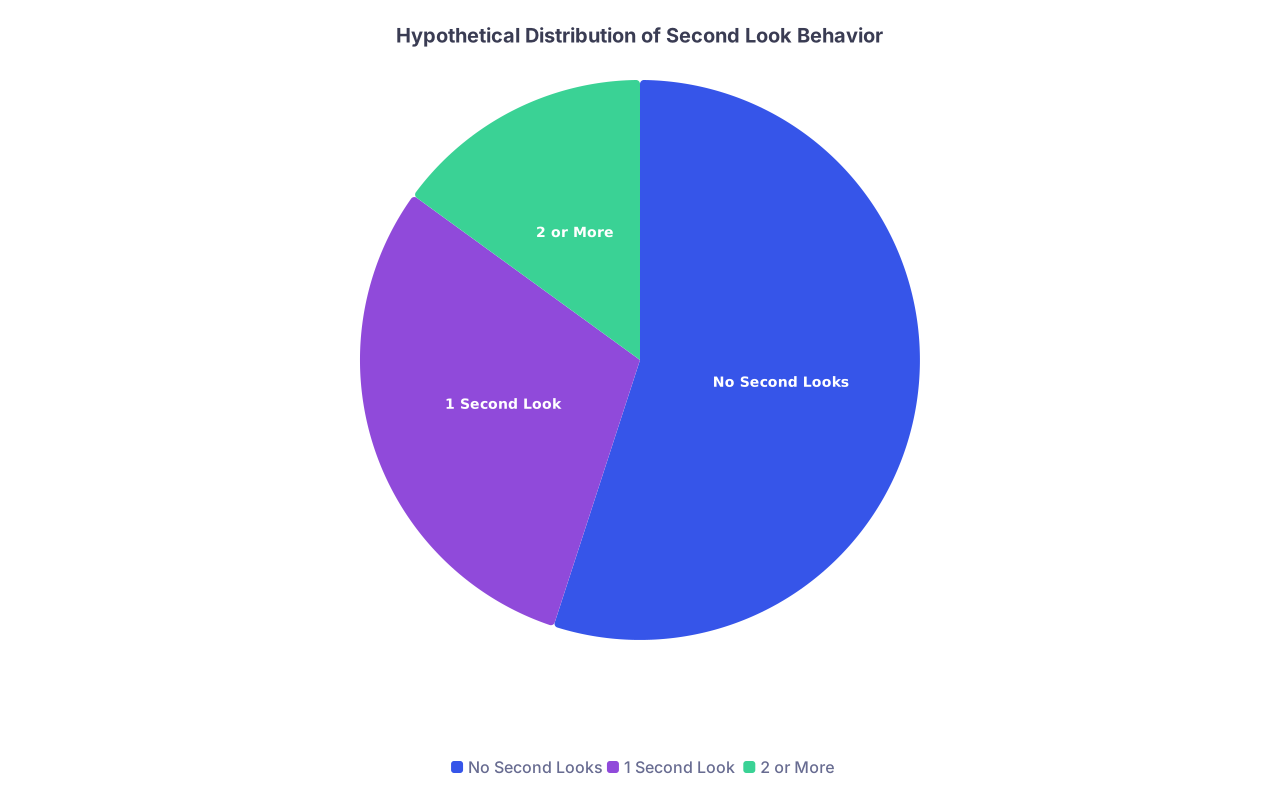
| Category | Value |
|---|---|
| No Second Looks | 55 |
| 1 Second Look | 30 |
| 2 or More | 15 |
The loudest voices are often the most anxious, not the most representative.
FAQs
1. Can doing a second look ever hurt my chances?
Yes, indirectly. If you come across as pushy, demanding, or trying to “re-interview” everyone, you can annoy people. You also risk revealing red flags you managed to hide on interview day. More contact equals more chances to misstep. It’s rare, but I’ve seen it happen.
2. Should I tell a program I’m coming for a second look or just show up?
Coordinate. Email the coordinator or program office. “I’m strongly considering ranking your program highly and would love to visit once more to better understand X and Y, if that’s allowed and not used for evaluation.” If they sound lukewarm or rigid, that’s data about culture too.
3. If I can’t afford second looks, am I at a big disadvantage?
No. You’re at a slight disadvantage only at programs that still mentally overvalue in-person signals. System-wide, your interview performance, letters, and academic record swamp any marginal effect of second looks. Focus your money on things that actually move the needle: good housing, reliable internet for virtual interviews, and not burning out.
4. Should I do a second look if I already know they’re my number one?
Usually not. If your rank list is already locked and they’re truly number one, a second look is optional at best. If you want to see the city or clarify logistics, fine. But don’t do it thinking it will “secure” your match there. The algorithm already favors you ranking them first if they rank you anywhere reasonably high.
5. Do second looks matter more in small or community programs?
Sometimes a bit more, but still not as much as people claim. Smaller programs might lean on “fit” and local ties, and a second look can signal genuine interest in that specific location. But again: if your file and interview didn’t convince them, your smiling face on a second trip is not going to overhaul their rank list.
The Bottom Line
You don’t “have” to do a second look at your top program. That’s myth, not mandate.
Two key points to remember:
- Second looks rarely move the needle as much as a strong interview, solid letters, and a coherent application. They are optional tools for you to gather information, not compulsory performances to impress them.
- Only do a second look when it will genuinely help you refine your rank list or clarify nontrivial life logistics. Anything else is just feeding an old culture that confuses effort with value.