
Only about 13–20% of applicants who do second look visits end up moving on a program’s rank list because of that visit.
Let me translate that: in the vast majority of cases, your second look does not change how a program ranks you. At all. But it can absolutely change how you rank them. And that asymmetry is the core myth people keep getting wrong.
The Myth: “Second Looks Help You Match Higher”
You hear the same lines every season:
“Everyone in my class is doing second looks; I can’t afford not to.”
“My advisor said programs like to see ‘continued interest.’”
“A second look can bump you up the rank list.”
Sounds plausible. Also mostly wrong.
The data we do have — and yes, it’s limited, but it’s better than rumor — points to a consistent pattern:
- Second looks rarely move the needle on how programs rank you.
- Second looks frequently move the needle on how you rank programs.
- The primary “effect” of second looks is financial and psychological, not match probability.
Let’s get concrete.
What The Data Actually Shows
We don’t have randomized controlled trials of “second look vs no second look” (no IRB on earth is wasting time on that), but several specialties and multi-program surveys have asked PDs directly what second looks do to ranking.
Across multiple survey-based studies from the 2000s up through the early 2020s (EM, IM, peds, surgery, some multi-specialty NRMP-affiliated work), you see roughly the same ranges:
- A minority of programs report ever changing rank order due to a second look.
- Those that do change it only do so for a subset of visitors.
- The direction of change is not always positive.
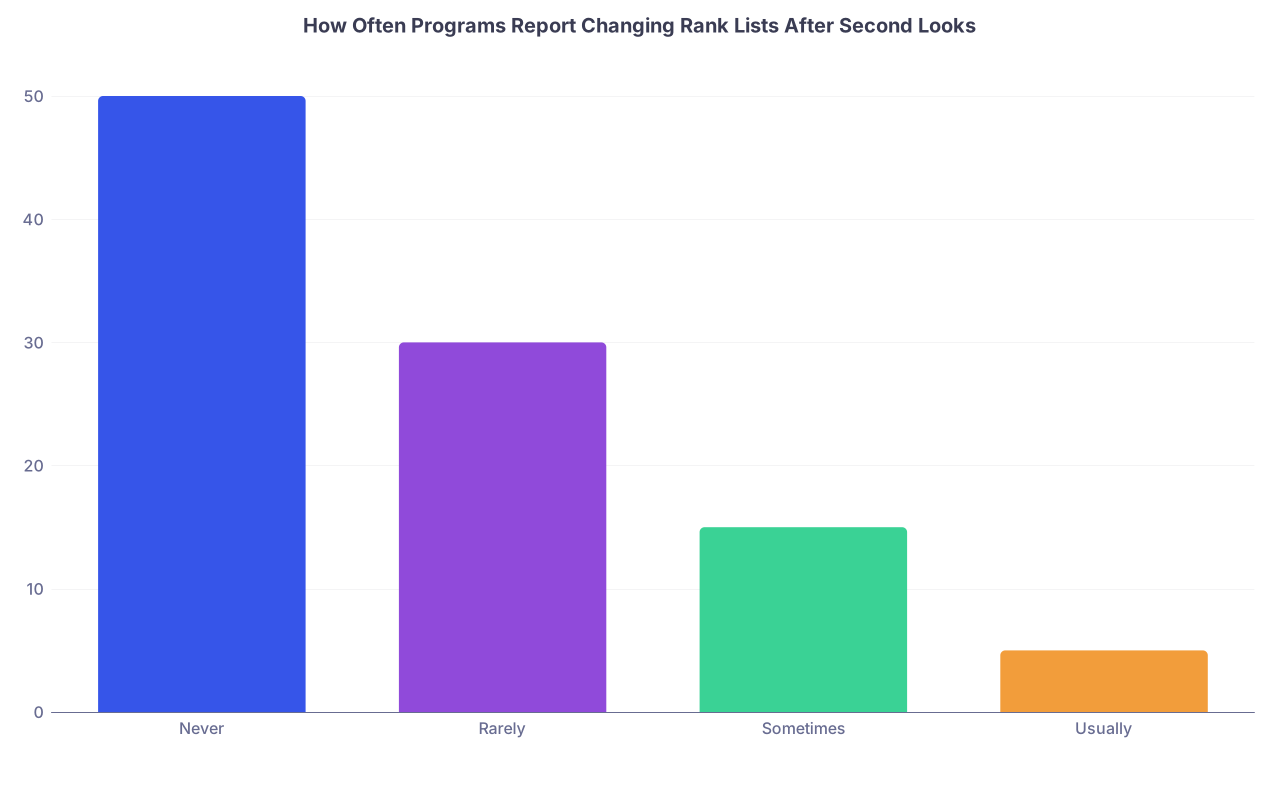
Here’s a rough synthesis of what keeps coming up:
| PD Response Category | Approximate Proportion of Programs |
|---|---|
| Never change rank list due to second look | 40–60% |
| Rarely change rank list | 25–35% |
| Sometimes change rank list | 10–20% |
| Routinely/usually change rank list | <5% |
So if you imagine a fantasy world where second looks are like an informal second interview that reliably boosts you — that world does not exist.
To visualize this more bluntly:
| Category | Value |
|---|---|
| Never | 50 |
| Rarely | 30 |
| Sometimes | 15 |
| Usually | 5 |
The central point: for at least half of programs, your second look literally cannot help your position — by policy. They’ve decided it’s unethical, or too noisy, or too biased, and they lock their list.
Now let’s flip to where second looks do matter.
What Second Looks Actually Affect
Second looks have three consistent effects — only one of which has any real upside.
- They change your rank list. A lot.
- They drain your time, money, and energy.
- They create more opportunity to hurt yourself than to help yourself.
1. They change your rank list
This part is real and actually valuable.
I’ve seen students walk into a second look at what they thought was their #1, spend 4 hours with current residents, and walk out moving that program to #5. Because the vibe was off. Or everyone looked exhausted. Or the “we’re a family” pitch on interview day turned out to mean “we eat all of our nights and weekends together in the hospital.”
Second looks are often the first time you see:
- How residents behave when they’re not in full recruitment mode.
- The true call-room, not the showcase one.
- Genuine interactions between residents and faculty.
Applicants consistently report that second looks sharpen their preferences. Not always in the direction they expected.
And here’s the key: in the NRMP algorithm, your rank list is more powerful than their rank list unless you completely overreach. If a second look prevents you from over-ranking a toxic, malignant, or chronically understaffed program, that indirectly affects your match outcome in a very real way: less chance of landing somewhere you’ll hate.
But that’s not the same as “second looks help you match higher.” They help you match smarter.
2. They burn money and time you don’t have
Most applicants I’ve worked with are already:
- Bleeding cash on interview travel, or
- Burning PTO and their sanity while on sub‑Is or heavy rotations
Now layer on “optional” second looks that cost a flight, a hotel, rideshare, and lost time.
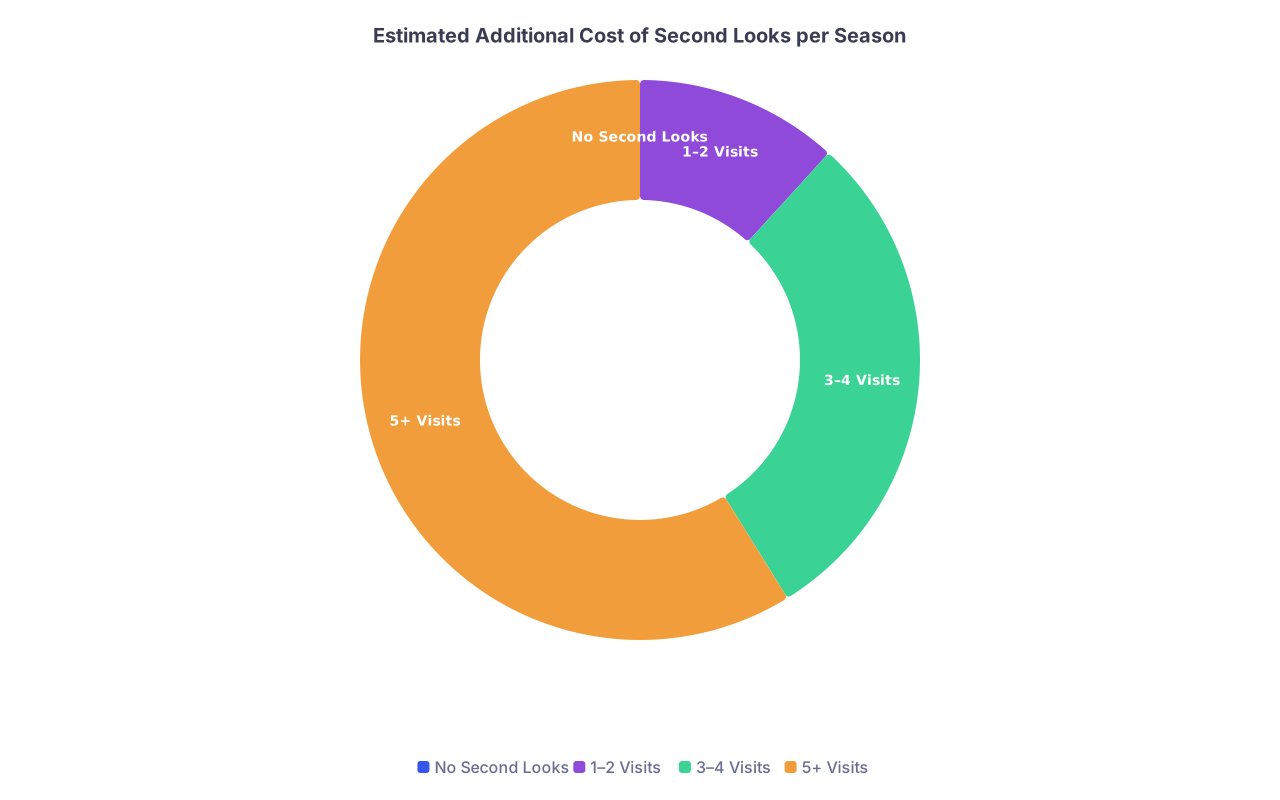
The EM and IM literature that looked at costs of interviews+second looks pegged out-of-pocket expenses for some applicants in the $5,000–$10,000 range for the season. Second looks can easily push you into that upper band.
| Category | Value |
|---|---|
| No Second Looks | 0 |
| 1–2 Visits | 600 |
| 3–4 Visits | 1500 |
| 5+ Visits | 3000 |
Are these exact numbers? Of course not. But they’re in the right ballpark. I’ve literally seen students put second look flights on credit cards at 23% APR because “this could help me match.”
For what? For an event that most PDs say doesn’t move your ranking.
If you’re doing second looks, do them because they’re worth that cost to you in clarity — not because you think they’re a ticket up the list.
3. They open more ways to hurt than to help
This part rarely gets said out loud, but PDs will tell you behind closed doors.
A second look does not create many opportunities to look dramatically better than you did on interview day. You’re not doing a grand rounds, you’re not showing new research, and you’re not suddenly a different human.
What it does do:
- Adds more hours where you can come across as entitled, needy, weirdly intense, or disinterested.
- Lets over‑eager people “over-sell” and come off as desperate or performative.
- Exposes you to more chances to say something dumb when you’re tired, anxious, and overcaffeinated.
Again, look at PD survey data: a decent chunk of the “we changed the rank list because of a second look” stories are negative changes — people moved down because of poor fit signals, lack of professionalism, or obvious disinterest.
So even within that 10–20% of programs that sometimes change your position, second looks are a two-edged sword.
Specialty Differences: Does It Matter More in Competitive Fields?
Here’s where people try to argue with the data: “Sure, for IM maybe it doesn’t matter, but for derm/ortho/plastics it must help, right?”
Short answer: there’s no good evidence that second looks systematically boost outcomes even in hyper‑competitive fields. What you see instead:
- Some smaller or niche programs use second looks to confirm mutual interest when they’re unsure.
- Some programs in less-desirable locations value any sign that you might actually come.
- Some PDs explicitly state “we don’t count second looks at all; too biased toward people with money and flexible schedules.”
That last point matters.
Programs are increasingly aware that second looks skew toward:
- Applicants with more financial resources
- Applicants without dependents or caregiving responsibilities
- Applicants with more flexible rotations or supportive home institutions
Using second looks as a major ranking factor is a great way to bake socioeconomic bias into your match list. Many PDs know this and actively try not to reward the behavior.
Do some individual PDs still lean on “the ones who showed up again must really want us”? Of course. There’s always noise in the system. But as a strategy, you’re betting on outliers.
How Programs Actually Use Second Looks
Let me strip the romance away and walk through what a second look usually looks like from the program side. I’ve watched this in real time.

| Step | Description |
|---|---|
| Step 1 | Interview Season Ends |
| Step 2 | Preliminary Rank List Drafted |
| Step 3 | Lock Rank List |
| Step 4 | Note Visitor Names |
| Step 5 | Discuss at Final Rank Meeting |
| Step 6 | No Change to Rank |
| Step 7 | Minor List Adjustment |
| Step 8 | Program Policy on Second Looks? |
| Step 9 | Strong Positive or Negative? |
In English:
- Many programs have already built a pretty solid draft of their rank list before most second looks even happen.
- Some lock their list by policy and don’t revise for visits.
- Others keep track of who showed up but only move people for clear, strong, often negative impressions.
That “minor list adjustment” at the end? That’s your 13–20% of applicants with any rank movement at all. Usually just a nudge. Not a catapult.
And just to break another myth: most programs do not see second looks as a binding proxy for commitment. They’ve been burned by people who did second looks and then ranked them low. So many PDs will explicitly tell residents: “Enjoy hosting them, but don’t assume this means we’re their #1.”
Match Algorithm Reality Check: Who Actually Holds the Power?
The NRMP algorithm is applicant-favoring. The person whose choices matter most is you, assuming you rank programs honestly by preference and don’t wildly over-reach.
If a second look:
- Firms up your sense that Program A is genuinely where you’d be happiest, or
- Exposes serious red flags that move Program B down five spots
…then yes, the second look just changed your match likelihood at each of those programs. Not because they ranked you differently, but because you changed your own list.
Remember: the match doesn’t reward “clever strategy.” It rewards truthful preferences.
The overrated fantasy is: “I’ll go back, charm them, show them I really love them, they’ll bump me way up, and I’ll jump people with better scores.” That’s TV medicine, not real life.
The underrated reality is: “I’ll go back, gather information that interview day couldn’t give me, and use that to write an honest rank list I can live with for the next 3–7 years.”
So When Is a Second Look Actually Worth It?
Not “in theory.” In practice. Here’s when I’ve seen second looks legitimately pay off for applicants — not necessarily by boosting rank, but by improving real outcomes.
- You’re truly torn between 2–3 top programs that are realistic for you, and you need deeper data on culture, call, or mentorship.
- You interviewed virtually (post‑COVID reality) and have never physically seen the hospital or city. One in-person look can prevent nasty surprises.
- You have major life constraints — partner job, kids, visa — and you need to verify that the program’s promises are real, not sales pitch.
In those cases, one or two well‑chosen second looks make sense. More than that, and you’re mostly treating your anxiety, not improving your match.
And when should you not kid yourself?
- Doing a second look at a mega‑competitive program where you’re already a long-shot on paper, hoping “interest” outweighs their Step or clerkship filters. It won’t.
- Doing second looks at 6–8 programs because “everyone else is.” That’s herd behavior and financial self-harm.
- Doing a second look at a place clearly lower on your list than multiple others, just to “keep options open.” That’s sunk-cost thinking.
Use second looks like a scalpel, not a shotgun.
The Future: Second Looks Are Quietly Getting Less Important
As interviews have shifted heavily virtual and the equity conversation has gotten louder, a lot of programs are rethinking second looks:
- Some explicitly ban post‑interview visits from influencing the rank list.
- Some organize optional open house days after rank lists are certified, for people who match or are strongly considering ranking them high.
- Some are moving toward standardized virtual second looks — same content for everyone, no individual schmoozing, minimal bias.
In other words, the culture is moving away from “show up in person if you really care” and toward “we know travel is expensive and unfair; we’ll try not to make that a requirement.”
Applicants are slower to adjust because the myths linger longer than policies do. Your classmates will still tell each other, “You have to show face if you want to match there.” Many of them are reciting advice that was already outdated five years ago.
Bottom Line: What the Data Really Says
Strip away the anxiety, the folklore, and the “a chief resident once told me…” stories, and you’re left with this:
Second looks rarely change how programs rank you. Most programs never or only rarely adjust their list based on post‑interview visits. When they do, the effect is usually small and not always positive.
Second looks mainly change how you rank programs. That can indirectly change your match outcome by steering you toward or away from certain places, which is valuable — but it’s not the same as impressing your way up the list.
The real question isn’t “Will this help me match?” It’s “Is this visit worth the money, time, and risk for the information I’ll gain?” If the answer is yes for one or two programs, fine. Beyond that, you’re paying a premium to feed your anxiety, not your odds.