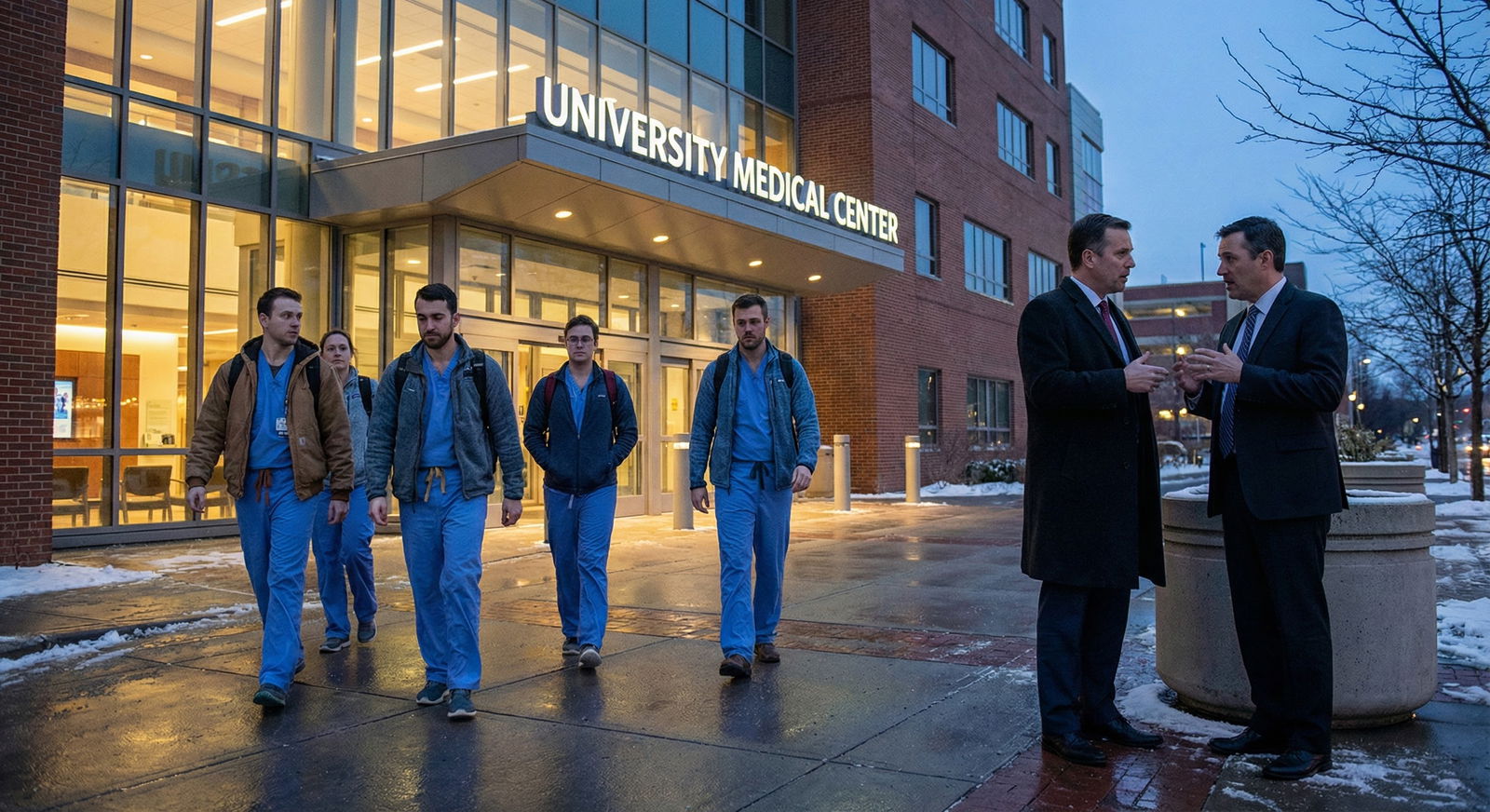
What exactly do you think that post–second look “love letter” is going to do for you in a system that already ranked you before you even got on the plane home?
Let’s puncture this cleanly: the vast majority of residency programs have their rank lists basically set—or entirely finalized—before your second look… and definitely before that late-night “you’re my top choice” email you agonize over. The belief that a gushing post–second look message will dramatically move you up the rank list is mostly fantasy, sustained by anecdotes, rumor, and a complete misunderstanding of how programs actually function.
You are not crazy for wanting to send one. The incentives push you there. But if you want to act like an adult in this process, you need to know what is myth, what is marginally real, and why everyone keeps pretending these letters matter so much.
What Second Looks Actually Are (Not What You’re Told)
Second looks are marketed to you as chances to “show continued interest,” “demonstrate fit,” and “connect more deeply with the program.” Sounds flattering. Also sounds like something a hotel says about the “optional resort fee.”
Here’s what I see over and over:
- Residents whisper: “Honestly, by the time you’re here for second look, the list is 90% done.”
- PDs (program directors) say in closed meetings: “We use second looks mostly for applicants to sort themselves, not to change our rankings.”
- Coordinators privately admit: “We track who comes, but it usually doesn’t move people much unless we had a big question mark.”
Second looks serve three main functions—for you, not for them:
- You reality-check the vibe: residents’ morale, workload, genuine teaching versus brochure talk.
- You compare programs with fresh eyes now that interviews are over.
- You confirm or change your rank list.
For programs, second looks are mostly:
- Mild PR.
- A retention tool: get you excited so you rank them higher.
- Occasionally a tie-breaker or reassurance visit for a “borderline” candidate.
Notice what’s missing: “Core determinant of rank position.”
Most programs—especially large academic ones—build their tentative rank lists shortly after interview season ends. Some have a formal rank committee that meets once, maybe twice. By the time second looks happen, touching the list is work, politically annoying, and rarely justified by a few hours of extra face-time.
Do small or community programs sometimes adjust based on second looks? Yes. But it’s rare and usually only relevant for a tiny subset of applicants already near the “we like them, but not sure” zone.
So when you send that breathless “I fell in love with your program on my second look” email, you’re not “changing the game.” You’re mostly decorating the margins.
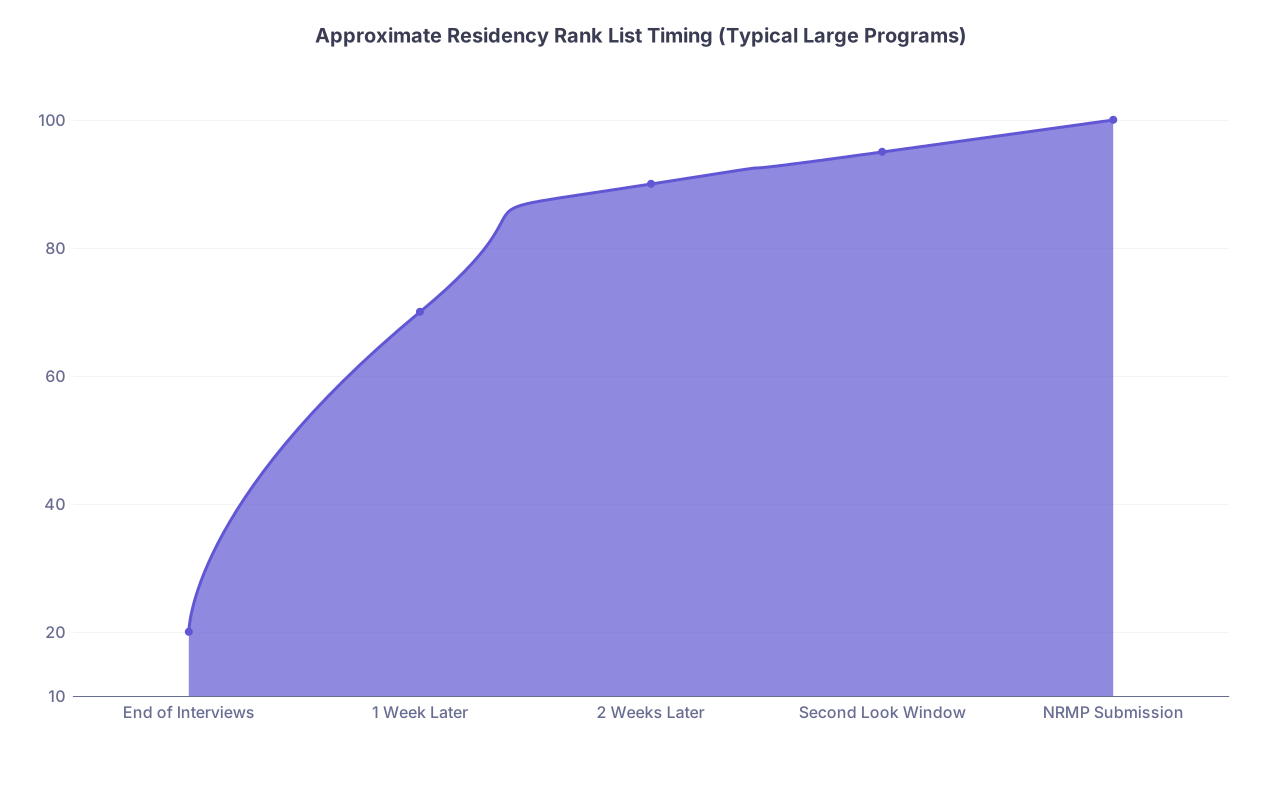
| Category | Value |
|---|---|
| End of Interviews | 20 |
| 1 Week Later | 70 |
| 2 Weeks Later | 90 |
| Second Look Window | 95 |
| NRMP Submission | 100 |
(Values represent rough percentage of the rank list that is already decided. Not exact, but much closer to reality than the fairy tale you’re sold.)
The Love Letter Itself: What Programs Really Do With It
There are three broad categories of “love letters” I see after second looks:
The traditional gush:
“Thank you so much for the opportunity to visit again. After my second look, I am absolutely certain your program is my top choice. I would be honored to train there and will rank you #1.”The hedged politician:
“Your program remains one of my top choices and I could see myself happily training there for residency.”The trying-too-hard resume 2.0:
“Since interviewing, I have presented at [conference], submitted a manuscript, and continued leadership in [thing you don’t care about]. I wanted to keep you updated and reiterate my strong interest.”
Here’s what actually happens inside a lot of programs:
- Emails get filtered into a folder or spreadsheet.
- Coordinator flags explicit “rank #1” statements, sometimes for NRMP compliance review.
- PD scans them quickly, mostly to see if any star candidate (already ranked high) is likely to rank them high too.
- For 90% of applicants, those messages do not meaningfully move the needle.
You know where they do matter, occasionally? When a borderline-but-promising applicant:
- Had a late interview.
- Was uneven on paper but impressed in person.
- Comes back for a second look, asks sharp, mature questions, gets strong resident feedback, and sends a thoughtful, specific note.
Even then, they might move you from rank 32 to rank 27. Not from “we’re not ranking them” to “top 5.” That jump is a fantasy people tell themselves later if the match happened to align.

The NRMP Elephant in the Room
Programs are constrained—on paper—by NRMP rules about coercion and misleading communication. They’re not supposed to:
- Promise you a rank position.
- Pressure you for commitment.
- Use your post-interview communication to manipulate you.
You, on the other hand, can blurt out “I am ranking you #1” to anyone who’ll listen. Many do. Programs know this and discount it heavily. They assume some fraction of “You’re my #1” letters are lies or half-truths, especially in competitive specialties.
So the idea that your love letter is some rare precious signal? No. It’s one data point drowning in a sea of similar signals, many of which conflict.
Why the Myth Refuses to Die
If love letters after second look barely move the needle, why does every cycle feel like a panic-fueled arms race of increasingly dramatic declarations?
Because the system pressures you into magical thinking, and nobody profits from telling you the truth.
1. Survivorship Bias and Storytelling
You will hear this story every year:
“I didn’t think I’d match there. But I went to second look, sent a really heartfelt email, and then I matched! So it must have helped.”
Or from the other side:
“The PD told us they ranked a couple of people higher because they showed ‘extra interest’ with a second look and follow-up.”
What you don’t hear:
- How high the applicant was already ranked before any of that.
- Whether the program would have matched with them anyway.
- The fact that the applicant also applied broadly, did well on interviews, and had a solid application.
Humans are wired to connect outcome A (matched where I wanted) with action B (I wrote a love letter). Even if action B was irrelevant. It gives you a sense of control in a process that feels like lottery plus vibes.
2. Program Incentives: They Want You Attached
Programs benefit when you:
- Feel flattered and emotionally invested.
- Rank them higher out of loyalty or ego (“they really wanted me”).
- Come to second looks, boosting their image and internal morale.
So they’ll rarely say, “Look, second looks are for you, we won’t change our rank list much, send a note if you want but it probably won’t matter.” A few very honest PDs say this quietly on podcasts or behind closed doors. Most… don’t.
3. Peer Group Pressure and Reddit Folklore
You see people posting draft emails in GroupMe and Discord. Threads on Reddit: “Please help me with my love letter wording.” People share templates, claim “This is what got me into [Big-Name Program].”
The more people talk about it, the more real it feels. Nobody can tolerate believing that something they’re spending hours on is meaningless. So the community builds a shared myth: “It counts. It must count.”
The reality is more boring and more brutal: Your Step scores, letters of recommendation, interview performance, and institutional fit are 95% of the game. The other 5% gets stuffed with rituals like love letters so you feel like you’re still playing.
| Factor | Real Impact (Typical) | Student Obsession Level |
|---|---|---|
| Interview performance | Very high | High |
| Letters of recommendation | High | Moderate |
| Board scores / academics | High (screening) | High |
| Institutional / sub-I connections | Medium–high | Moderate |
| Second look attendance | Low–medium | Very high |
| Post–second look love letters | Low | Extremely high |
When a Post–Second Look Letter Can Make Sense
Now the nuance. I’m not telling you to never send a message. I’m telling you to stop pretending it’s a golden ticket.
There are some situations where a focused, honest follow-up is rational:
- You truly clarified your rank list at second look and want to communicate that you will rank them highly (ideally, #1) and would be thrilled to match there.
- You had a meaningful conversation with specific residents or faculty that materially changed your view of the program, and you can articulate why.
- You had a previous red flag—late application, awkward interview moment, missing piece—that you feel you addressed in person, and you want to briefly reinforce that.
Key word: briefly. Half a page, not your personal statement 2.0.
And in some scenarios, especially smaller or less rigid programs, clear sincerity does matter. I’ve seen a PD say in a meeting: “They came back for second look, asked all the right questions, and sent a thoughtful note. Bump them up a few spots.”
Notice: a few spots. That is the realistic ceiling most of the time.

| Step | Description |
|---|---|
| Step 1 | Interview Completed |
| Step 2 | Program Drafts Rank List |
| Step 3 | Second Look Option |
| Step 4 | Rank List Mostly Unchanged |
| Step 5 | Resident and PD Impressions |
| Step 6 | Post Second Look Email |
| Step 7 | Minor upward adjustment |
| Step 8 | Final Rank List |
| Step 9 | Borderline or special case? |
How to Write One Without Drinking the Kool-Aid
If you choose to send a post–second look letter, at least do it like someone who understands reality.
A few ground rules:
Be specific or do not bother.
“Your program is amazing” is noise. “Talking to Dr. X about the structure of your night float and how seniors are shielded for dedicated operative days made me realize this is where I’d grow fastest as an independent surgeon” is signal.Keep it short.
PDs are not reading 800-word essays in late February. They’re tired. They’re in clinic. Think 2–3 short paragraphs.Don’t overpromise or lie.
If they’re truly your #1, say so. If not, don’t claim it. You’re not scoring integrity points by playing politician.Don’t sound desperate.
“I will do anything to train at your program” reads poorly. Confidence plus genuine enthusiasm beats begging.Understand the likely impact.
You’re not rewriting your fate. You’re putting a small, possibly useful thumb on the scale where you already stand.
The Dark Side: How Love Letters Backfire
Here’s the part people gloss over.
I’ve watched love letters blow up in applicants’ faces:
- Programs cross-reference: Two different PDs at a conference realize the same applicant told both they were “my clear #1.” Word travels.
- Tone mismatch: The letter sounds overly intense, oddly personal, or borderline unprofessional. That sticks in their memory… not in a good way.
- NRMP complaints: In trying to “signal interest,” an applicant indirectly pressures the program or implies a quid pro quo, which makes everyone nervous.
Most committees are too busy to punish minor awkwardness. But a wildly over-the-top letter from someone already on the fence can absolutely nudge you downward.
If you’re already ranked high? You don’t need theatrics. If you’re already ranked low? A desperate essay will not save you.
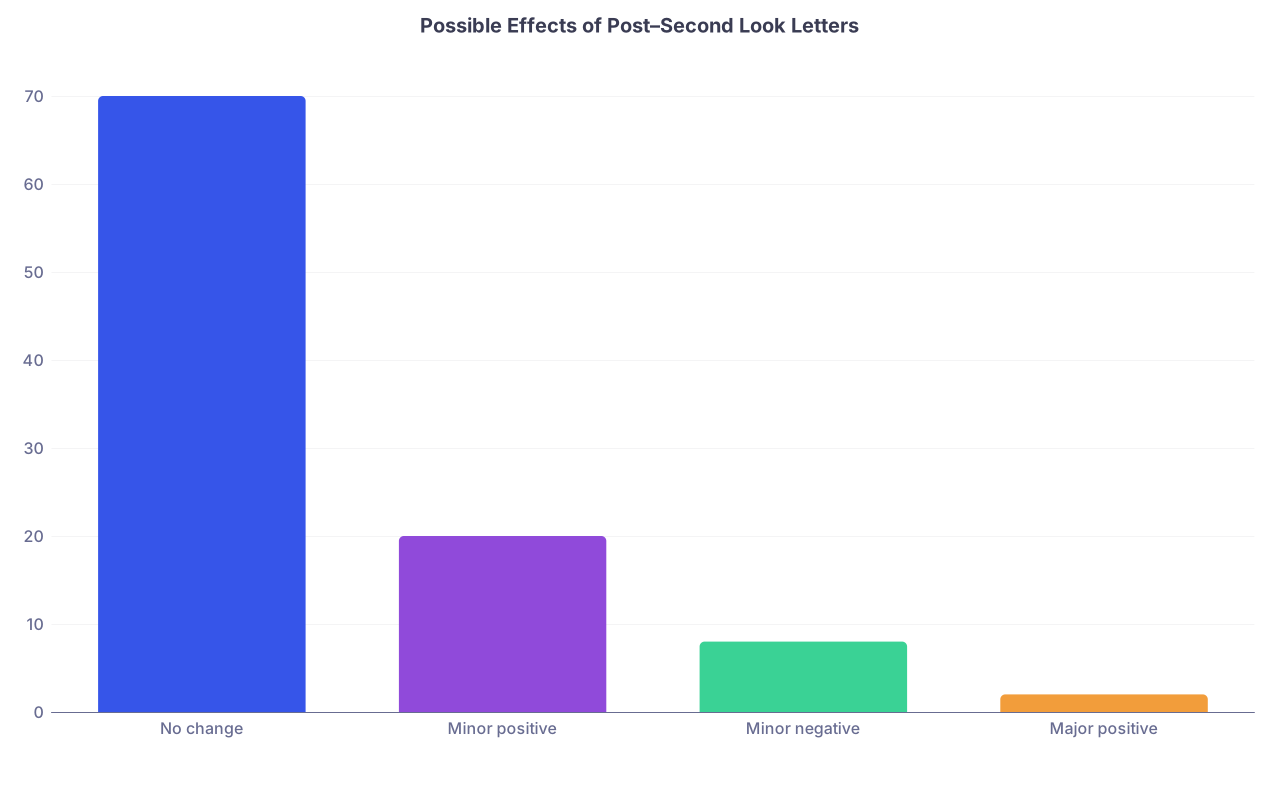
| Category | Value |
|---|---|
| No change | 70 |
| Minor positive | 20 |
| Minor negative | 8 |
| Major positive | 2 |
Rough reality: Most letters do nothing. Some help a little. A few hurt. Almost none totally transform your outcome.
The Part Nobody Likes Hearing: Where Your Energy Actually Belongs
By the time you’re considering a love letter after second look, the high-yield work is mostly done. What’s left:
- Carefully constructing your rank list based on where you’d actually be willing to train.
- Being brutally honest about your preferences: geography, call load, support, fellowship prospects.
- Letting go of the illusion that one more performative gesture will save or sink you.
Use second looks for what they’re good at: exposing culture cracks, confirming red flags, clarifying where you’d be happy making coffee at 3 a.m. as an exhausted PGY-2. That matters far more to your life than whether someone nudged you three slots up or down on a list.
Love letters? At best, they’re a polite, small extra nudge in a process dominated by things you already did months or years ago. At worst, they’re busywork you inflict on yourself because everyone else is panicking.
You do not control the match. But you do control whether you spend your final weeks acting like a rational adult or a superstition-driven gambler.
Years from now, you won’t remember the exact wording of the email you almost didn’t send. You’ll remember whether you ended up at a place that treated you like a human being—and how clear-eyed you were about the difference between real influence and comforting myth.