
It’s late February. Your second-look day is over. You smiled until your face hurt, asked what felt like smart questions, laughed at the right times during happy hour. You’re on the plane home replaying every conversation, wondering, Did they like me? Did I help my rank list or hurt it?
You know program leadership has their own process. But here’s the part nobody tells you: after you leave, there’s a much quieter, much more honest ranking that happens.
Among the residents.
And no, it’s not formal, and it’s not written anywhere. But it absolutely influences how the program thinks about you. Residents don’t hold the pen for the official rank list at most places—but they definitely move the needle.
Let me walk you through what really happens on the inside.
What Actually Happens After You Leave
(See also: The Unspoken Rules of Second-Look Dinners and Social Events for more.)
There’s this myth that second-look days don’t matter. “The rank list is basically set.” You’ll hear that line from PDs and coordinators.
Half-true. The order may be mostly set. But borderline decisions, tie-breakers, and “gut feel” choices? That’s where your second look and the resident grapevine come in.
Here’s the typical sequence at medium to large programs:
- You leave the social/hospital tour.
- A few hours later or next day, residents are back in the workroom, call room, or sign-out room.
- Someone says, usually while scrolling Epic or crushing cold pizza:
“So…what did you all think of the second-look people?”
And then it starts.
Not a formal vote. Not a survey. Just short, unfiltered impressions. “I liked her.” “He felt off.” “That couple was intense.” Those lines will travel.
If there’s a resident rep to the selection committee, they’re mentally cataloguing this as data. When rank-list meetings happen, they’ll say things like:
- “Our residents really loved her.”
- “Multiple people thought he was arrogant.”
- “She came off super genuine on second look.”
And that’s enough to nudge you up or down, especially if your file is otherwise middle-of-the-pack.
The Quiet Criteria: What Residents Are Actually Scoring You On
No one sits there with a rubric and a clipboard. But they’re all making the same mental calculations. I’ve seen this at university programs, community programs, and big-name places like MGH, Hopkins, and UCSF. The words change, the calculus doesn’t.
They’re asking three questions—sometimes consciously, usually not.
1. Are You Someone I’d Want to Be Stuck On Night Float With?
This is the core test.
Residents are not thinking about your AOA status. They’re thinking about a 3 a.m. septic shock admission when everyone’s exhausted and the EMR is crashing.
They’re scanning for:
- Emotional tone. Do you radiate “I’m here to learn, I’m a normal human,” or “I’m performing for you right now”?
- Entitlement. Did you drop your med school name constantly? Subtle flexes?
(“At [Top 5 med school] we always…” — that line gets you quietly buried.) - Flexibility. If plans shifted, schedule changed, or something ran late, did you roll with it or show irritation?
I’ve sat in workrooms after second look and heard:
- “She was super low-key, we could hang with her on nights for sure.”
- “No way I’m doing cross-cover with that guy, he talked over everyone.”
That’s your real score.
2. Will You Make My Life Easier or Harder?
Residents are brutally practical. When they’re sizing you up, they’re not thinking “future academic leader”; they’re thinking:
- “Will this person help with sign-out or create chaos?”
- “Will they follow through on tasks, or will I be re-ordering everything after them?”
- “Will they be pleasant to teach, or combative and defensive?”
Little things on second look get magnified:
- You listened when someone else talked, or you kept cutting in.
- You asked questions that showed you understood hierarchy and teamwork, or you sounded like you were interviewing them for a job.
- You were curious about how they actually live—schedules, workflow, culture—rather than only asking about “prestige metrics.”
Residents are essentially ranking your projected work of onboarding you.
Low work? You rise.
High work? You sink.
3. Are You a Culture Fit—For Real, Not the Website Version?
Every program has a “we’re a family” line on the website. Residents know the real culture.
They’re comparing you to that internal template.
- At hardcore academic powerhouses, they want people who are hungry, intellectually alive, and still somehow not toxic.
- At chill community programs, they want people who are competent but not hyper-intense, who won’t burn themselves (and everyone around) out.
- At malignant places (yes, they exist), they look for who will tolerate the grind without imploding.
Second look is where you either click naturally or you obviously mismatch.
If you’re trying too hard to mold yourself to whatever you think they want, residents sense it. The line I’ve heard again and again:
“She was nice, but felt…performative. Couldn’t tell who she actually is.”
That’s a bad review, even if they can’t articulate why.
What Residents Say About You: The Actual After-Second-Look Conversations
Let’s get specific. Here’s the type of thing that gets said, almost verbatim, behind closed doors.
You: Strong paper app, great interview, solid second look.
Residents later:
- “The guy from Michigan? Loved him. Chill, asked good questions, felt like one of us.”
- “Yeah, he hung out after the formal stuff to talk about real life here, not just fellowships.”
That “felt like one of us” line? That’s gold.
You: Step scores great, research fantastic, second look slightly awkward, too polished.
Residents later:
- “She’s obviously super smart but I couldn’t read her at all.”
- “I felt like I was on an interview again talking to her. She kept dropping her research like she was still trying to sell herself.”
That usually lands you in “we respect her but she’s not a favorite” territory. Enough to hurt in a tight cluster.
You: Average stats, humble, easy laugh, asked resident-focused questions.
Residents later:
- “Honestly, I don’t care about his scores. He’d be good to have on our team.”
- “Like, he actually asked about how we’re supported on bad days. That felt real.”
That’s how mid-tier-on-paper applicants quietly leapfrog “perfect” applicants on some rank lists.
How Programs Use Resident Input (And How Much It Matters)
Every program handles resident input differently, but the patterns are predictable.
| Program Type | Resident Influence Level | How Feedback Is Used |
|---|---|---|
| Big-name university | Medium | Tie-breakers, red-flag confirmation |
| Mid-size academic/community | High | Strong weight for culture fit |
| Small community | Very High | Residents often drive final ordering |
| Malignant/hierarchical | Low (officially) | Informal, back-channel only |
At the rank-list meeting, you don’t get “Resident Score: 8/10” written down. What you get is something more dangerous: narrative.
And narrative sticks much harder than numbers.
Comments like:
- “Residents universally loved her.”
- “Got weird vibes from him.”
- “Second-look feedback was mixed at best.”
Those phrases get put in the PD’s head. They may not remember your Step 2 score. They remember “universally loved” or “weird vibes.”
In borderline cases, the PD is thinking:
“I have 8 people clustered together. Similar stats. Who do my residents actually want?”
That’s where the second-look impression—and the informal resident ranking—becomes the quiet tiebreaker.
What You’re Being Judged On (That Nobody Admits Publicly)
Let me lay out the invisible rubric residents are using when they talk about you after second look. Not the fake, polished version. The real one.
Authenticity vs. Performance
This is number one.
Residents live under performance pressure constantly. They can sniff out when someone is still “on” for interview mode. It’s exhausting to be around.
You’re being judged on:
- Whether your answers sounded rehearsed or like a normal conversation.
- Whether you admitted not knowing something or tried to spin it into a flex.
- Whether your personality on second look matched the vibe from interview day.
I’ve watched residents tank applicants for being too “on” the whole time. Not because they’re unqualified. Because no one wants to train someone who treats daily life like an OSCE.
Curiosity About Real Life vs. Just Optics
Second-look days sort applicants into two buckets very fast:
- People who want to know what the program really is.
- People who want a few more data points to justify ranking a brand name higher.
Residents clock this instantly by your questions.
If your questions are all:
- “How do your match lists compare to X program?”
- “What’s your fellowship placement in cardiology?”
- “How do chiefs get chosen?”
…you sound like you’re still shopping for prestige.
When you ask:
- “What’s a bad day actually like here?”
- “How does the program respond when someone is struggling?”
- “What’s something you wish leadership understood from your level?”
…that reads differently. That reads like you’re trying to decide if this is a place you can actually live in for 3-7 years.
Residents reward that.
Common Ways Applicants Quietly Hurt Themselves on Second Look
Second looks don’t usually save a weak application. But they can absolutely hurt a strong one.
Here are the mistakes that get you downgraded in resident conversations.
Over-claiming “You’re My #1”
You tell three different residents some version of: “You’re my absolute top choice. I’m ranking you #1.”
Guess what happens?
Residents cross-talk. On group chat. In the workroom. Walking to the parking lot.
It takes exactly one “Wait, she told you we’re her number one? She told me we’re her number one too” for your credibility to evaporate.
They’ll report back: “She was telling everyone we’re her top. Felt disingenuous.”
That single line sticks much more than you being “enthusiastic.”
Better move:
Express strong interest specifically, but don’t make prom-night style promises to everyone.
Treating Residents as Stepping Stones to Leadership
You spend second look tracking down the PD, APD, chair. You’re half-present when residents talk, reflexively scanning the room for “more important” people.
Residents notice. They also remember.
I’ve literally heard:
“He barely talked to us, he was just chasing attendings the whole time. Hard pass.”
Are programs going to bump you sixteen slots down for that? Maybe not. But in a close cluster, you just lost your resident advocates.
Talking Too Much, Asking Too Little
Another quiet killer: monologuing.
Applicants who:
- Explain their entire CV again.
- Tell residents how things “usually are” at their med school.
- Use every question as an excuse to talk more about themselves.
You think you’re coming off as interesting. You’re actually coming off as exhausting.
Remember: these people are post-call, hungry, or both. If you drain them during a 30-minute second-look conversation, they’re imagining you in July on rounds. And not in a good way.
Subtle Things That Help You More Than You Think
You want the concrete levers? Here are the small moves that help you in those resident-only conversations later.
Remembering Names and Callbacks
You talked to a resident during interview day and then referenced something they said on second look—accurately.
That gets brought up.
“He remembered I was into health policy and asked how that’s going. That felt really genuine.”
Shows you were paying attention. Shows you care about human beings, not just spots.
Showing You See Them as Humans, Not Gatekeepers
The applicant who asks, “What do you do on your golden weekends?” or “How do you unwind after wards?” stands out more than the one who only asks about rotation structure.
You’re signaling: I see you. Not just your role.
Residents are far more likely to advocate for someone who treated them like people rather than information terminals.
The Back-Channel Stuff No One Talks About
This is the part applicants really don’t see.
Residents are in group chats with alumni now at other programs, with med students from your school, with fellows who might have worked with you.
If someone gets a weird vibe from you, it’s not uncommon for a resident to text:
“Anyone know this applicant from [Med School]? Got any intel?”
Sometimes the reply is:
“Super solid. Quiet at first but great on the team.”
You just got rescued.
Sometimes:
“Brilliant but tough to work with. Very defensive.”
Now that “weird vibe” has validation. You just dropped a tier in their heads.
Residents talk. Across programs. Across years. Across specialties.
And on the flip side, if you had a phenomenal sub-I there months before and everyone remembers you fondly, your second look barely has to be perfect. You’ve already been pre-sold to them.
How Second Look Fits in the Bigger Timeline
To orient you, here’s roughly how second look and ranking intersect for most programs:
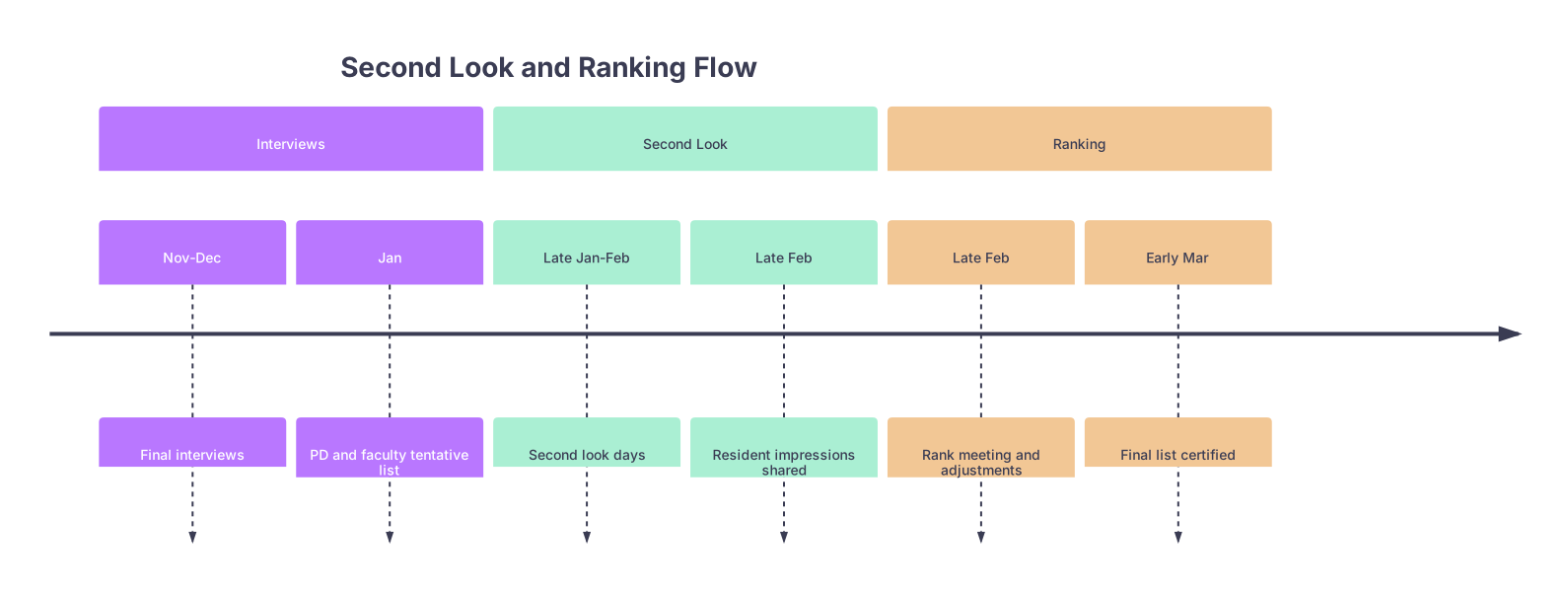
| Period | Event |
|---|---|
| Interviews - Nov-Dec | Final interviews |
| Interviews - Jan | PD and faculty tentative list |
| Second Look - Late Jan-Feb | Second look days |
| Second Look - Late Feb | Resident impressions shared |
| Ranking - Late Feb | Rank meeting and adjustments |
| Ranking - Early Mar | Final list certified |
Residents know—by the time you come for second look, the skeleton of the rank list exists. But it’s still flexible at the margins.
Where you land in those margins can absolutely be shifted up or down by resident feedback.
How To Approach Second Look Strategically (Without Being Fake)
You’re not going to “game” residents. They exist in B.S.-detection mode 24/7. The goal is not performance; it’s alignment.
Here’s the mindset that works:
- Go in assuming every interaction counts, but none should feel like an interview.
- Ask questions you actually care about. If you fake interest in “work-life balance” but only ever ask about research, they’ll pick that up.
- Be specific in your interest:
“I really liked how everyone on interview day seemed to know each other by name in the ICU. That’s unusual. I wanted to see if that’s real or just a good day.”
That’s way better than, “I just love the culture here.”
One mental trick:
Imagine you already matched there, and you’re hanging out with your future seniors and co-interns. How would you act? That’s usually your best version of authentic.
A Quick Reality Check: What Second Look Cannot Fix
Before you spin yourself into anxiety: there are limits.
Second look will not:
- Convert a low-tier file into a first-rounder at a hyper-competitive program.
- Overwrite catastrophic red flags in your application.
- Reverse an already firm “do not rank” decision.
What it can do:
- Solidify you as a “resident favorite” within a tier.
- Bump you up within a cluster of similar applicants.
- Prevent you from sliding down due to avoidable bad impressions.
That’s enough to matter in close calls. And a lot of decisions at the top and mid sections of rank lists are exactly that: close calls.
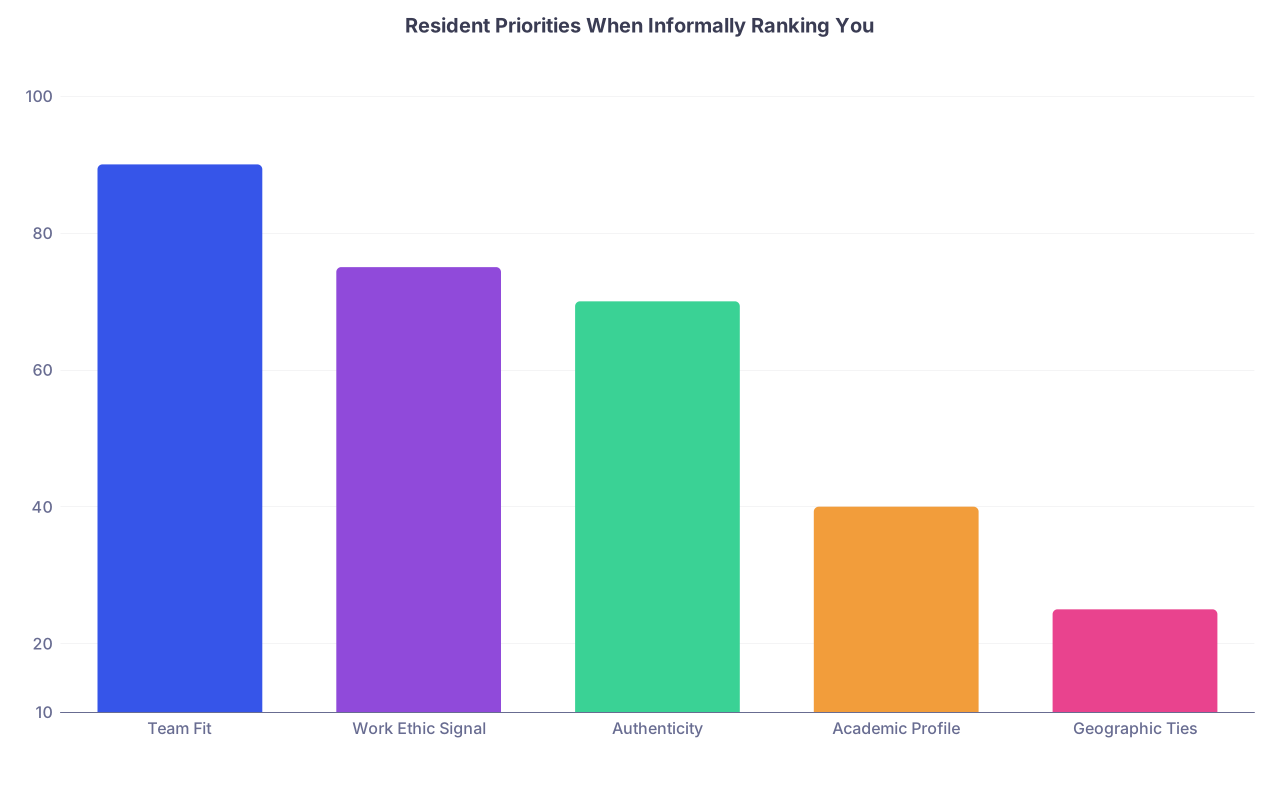
| Category | Value |
|---|---|
| Team Fit | 90 |
| Work Ethic Signal | 75 |
| Authenticity | 70 |
| Academic Profile | 40 |
| Geographic Ties | 25 |
The chart above reflects what I’ve consistently seen: team fit and how you feel as a colleague dominate resident discussions. Your academic record matters, but by second look, that’s already priced in.
FAQ: How Residents Quietly Rank You After Your Second-Look Day
1. If I skip second look, will residents hold it against me?
Usually no, as long as the program explicitly says second looks are optional and you’re not doing something bizarre like attending second look at all of their direct competitors while publicly saying they’re your top choice. Many residents never even see the “did/did not attend second look” column. What matters more is whether you already built a strong impression on interview day or a sub-I. Second look is an opportunity, not a mandatory test—unless the culture at that specific program treats it as “who’s really serious,” which residents will sometimes say out loud on interview day.
2. Should I tell residents they’re my top choice during second look?
Be precise, not dramatic. “I’m very interested in this program and you’re near the top of my list” is honest and safe. “I’m ranking you number one” to multiple people is how you get labeled inauthentic. If you truly know they’re your number one, you can say that once, clearly, to someone who actually feeds into decision-making (resident rep, APD, PD)—and then let the rest of your behavior show it rather than repeating the line all day.
3. Do residents ever intentionally tank an applicant they don’t like?
Bluntly: yes, it happens. Not cartoon villain style, but through framing. A resident rep might say, “I had some concerns—came off arrogant, and a few of us got that vibe,” which is enough for cautious PDs to slide you down rather than take a chance. The opposite is also true: residents can and do rescue applicants by actively advocating for them. Your goal at second look is simple—give them zero reason to argue against you, and every reason to say, “We’d be happy if they matched here.”
Key Points to Walk Away With
Residents are quietly ranking you after second look, not with numbers, but with stories. Those stories shape how hard they push for—or against—you in rank meetings. Your stats are largely set; second look is about one thing: would they actually want you on their team at 3 a.m. on a bad call night? Act accordingly.