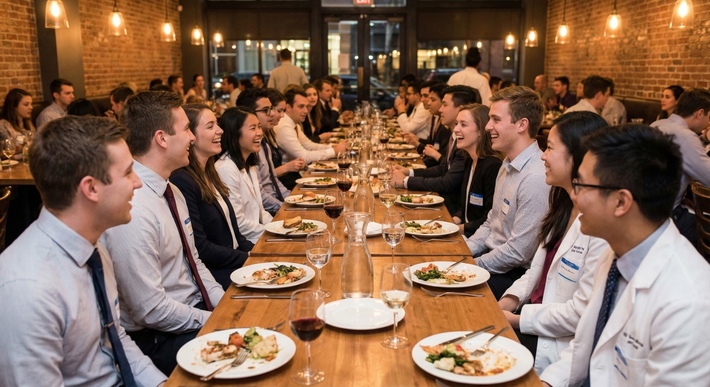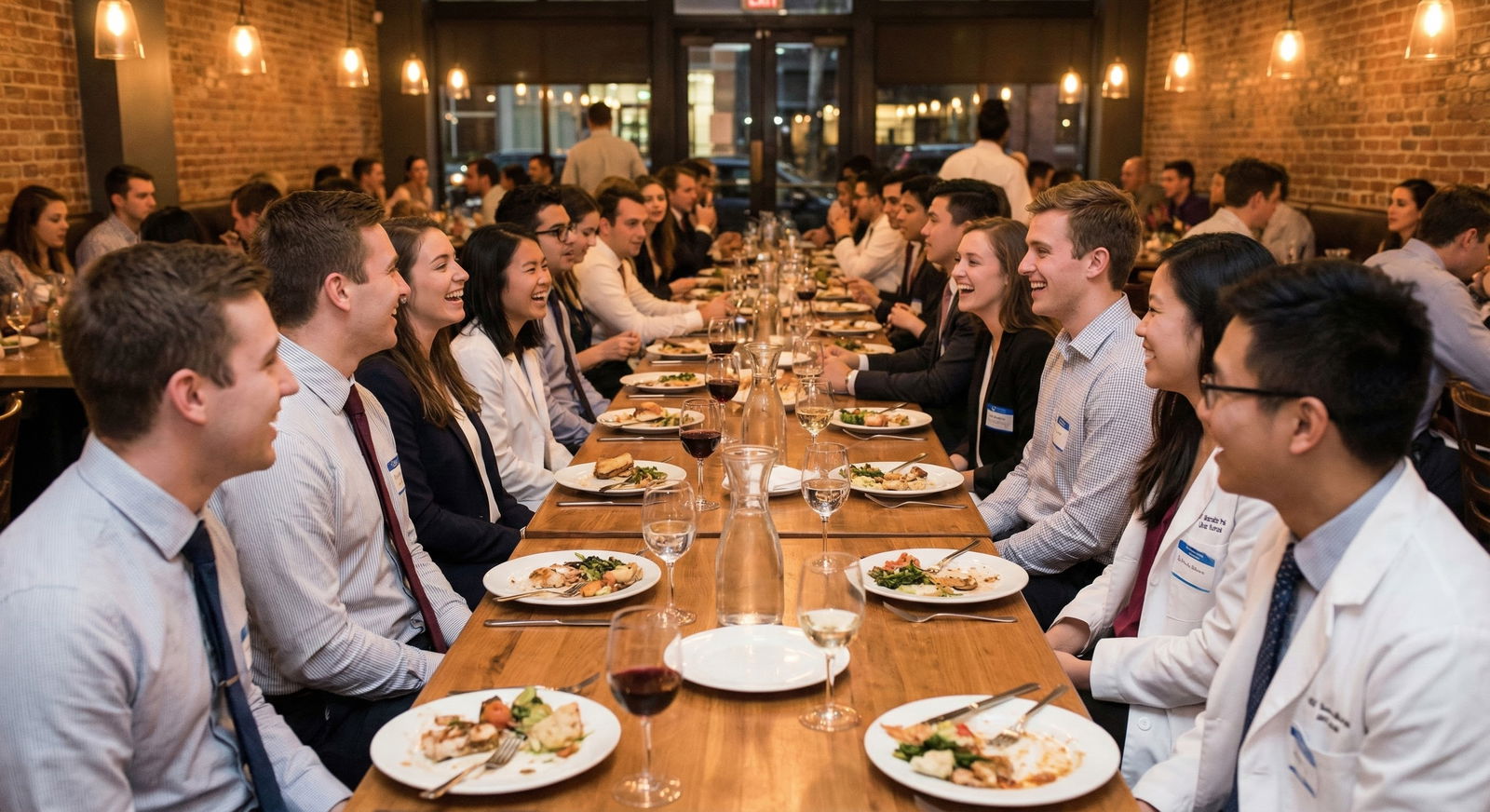
The formal interview day is theater. The second-look dinner is surveillance.
That’s the part no one says out loud. Your file is already scored, your interview is already documented, and the “official” process is technically over. But at second-look dinners and social events, programs watch how you behave when you think it doesn’t count. It absolutely counts.
Let me walk you through how this actually works behind the scenes.
What Second-Look Events Really Are (From the Program’s Side)
Second-look visits are not primarily about “showing you the city” or “helping you decide.” Those are the lines they feed you. The real purpose varies by program, but it usually falls into a few buckets:
- Confirming (or correcting) their gut feeling about you
- Testing how you behave in unstructured, semi-social situations
- Sorting the “safe to work with at 3 a.m.” from the “this might blow up on us”
- Letting residents vent quietly about any red flags
And yes, the rank list can shift after these events. I’ve watched it happen in real time:
“Honestly, after seeing him at the dinner, I’m not comfortable putting him that high.”
“She was incredible with the interns – I’d bump her up a few spots.”
It’s subtle movement, but when you’re clustered with 10 other similar applicants, that one comment can drop you below or above the line.
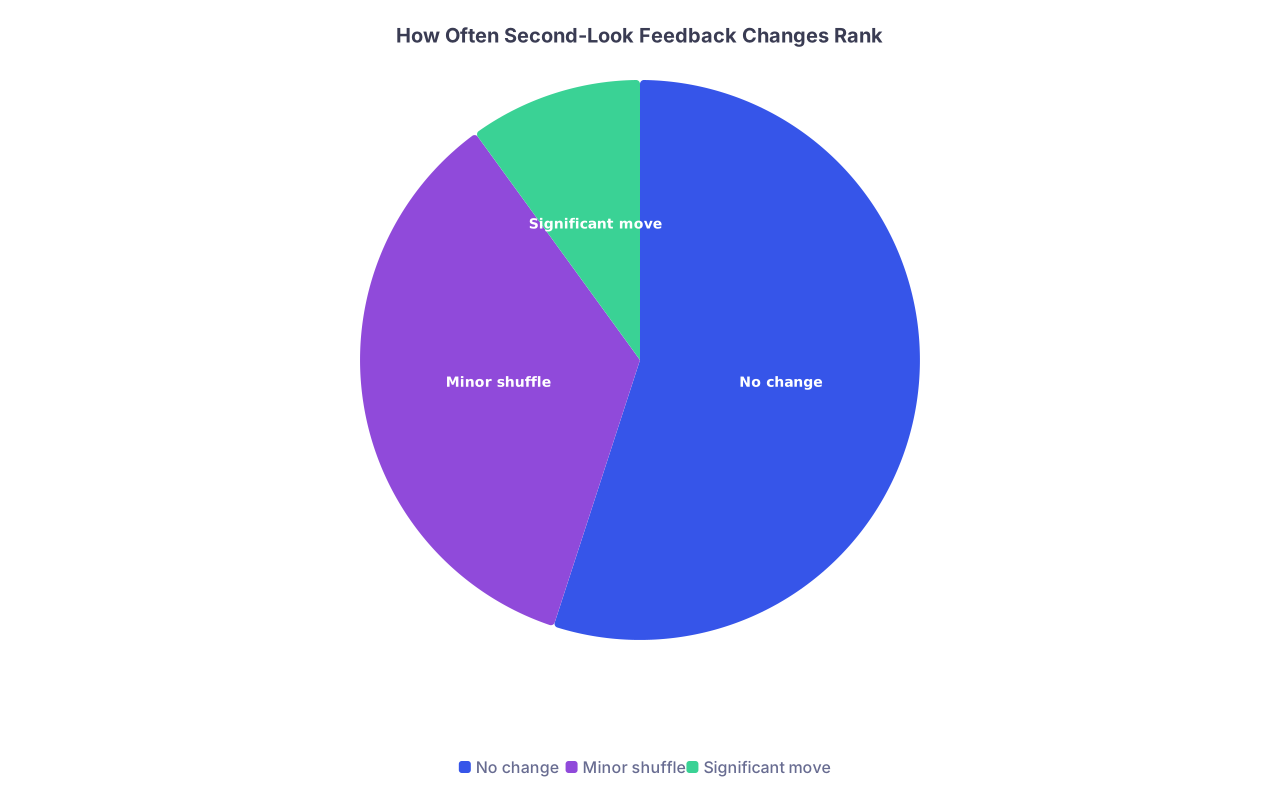
| Category | Value |
|---|---|
| No change | 55 |
| Minor shuffle | 35 |
| Significant move | 10 |
Those numbers are based on what PDs and chiefs actually admit in closed-door meetings, not what they say on panels.
Who’s Actually Evaluating You (And How)
You think the program director is the main person to impress. Wrong event for that. At dinners and socials, the real power shifts.
Here’s who matters:
- The chief residents and senior residents
- The loud, socially dominant PGY-2/3 who everyone defers to
- The program coordinator who notices everything
- Occasionally, the PD who quietly asks, “So, what did you think of them?”
Attendings are usually half-distracted, making small talk, or ducking out early. Residents stay. And they talk. A lot.
The next morning, it goes something like this over coffee or in the workroom:
“So, who was there last night?”
“What did you think?”
“Anyone weird? Anyone awesome?”
They’re not filling out formal rubrics. It’s vibe-based. That’s the danger for you.
The Real Scoring System at Dinners and Socials
They’re not grading your fund of knowledge. They’re grading your “would I want this person next to me when everything is on fire” factor.
Behind closed doors, the categories sound like this:
- “Would be fun on call. Chill.”
- “Little intense. Does not read the room well.”
- “Seems arrogant for an MS4.”
- “Super kind to the interns; that stood out.”
- “Talked about themselves for three hours.”
- “Fine, but forgettable.”
You want to land in the “chill, competent, non-problematic” bucket. If you’re memorable, make it for something like clear kindness or groundedness, not for dominating the room or making people uncomfortable.
The Single Biggest Unspoken Rule: You’re Always On
You are never “off the record” at a second-look event. Not in the car ride. Not at the bar after the official dinner. Not walking back to the hotel with a couple residents.
Programs have been burned enough times. Now they listen carefully to what comes out of these half-social encounters.
I’ve seen people sink themselves with:
- One sloppy drink order that turned into obvious intoxication
- A cruel joke about patients that a resident quietly noted later
- Complaining non-stop about their home program, med school, or “annoying classmates”
- Visible flirting with a resident in a way that made everyone uncomfortable
- Talking trash about another program that someone in the room had rotated at
They might smile. They might even laugh politely. Then the next morning: “Yeah, I would not rank them.”
You do not have to be stiff or robotic. You just have to remember: every single person at that table can influence your fate.
Alcohol: How Much Is Too Much?
This one gets people every year.
Residents will say, “Get what you want! It’s relaxed! We’re off-duty!” And some of them will drink heavily. You cannot mirror them.
Here’s the actual standard that gets used in post-event chatter:
- Water or soda all night: “Totally fine, maybe a little reserved, but safe.”
- One drink, slow: “Normal.”
- Two drinks, spaced, no visible change: “Still fine.”
- Buzzed, louder, or looser: “Yeah, they got a bit drunk…”
- Drunk, slurry, or obviously disinhibited: “Absolutely not.”
There is zero upside to more than one drink if you’re unsure of your tolerance under stress and low sleep. None. Residents don’t reward you for “keeping up.” They flag you as a risk.
I’ve watched candidates get moved down the list based on a single night of trying to impress people with social “confidence” fueled by alcohol.
If you know you’re small, tired, or haven’t eaten? Order a club soda with lime and call it a night. Nobody cares. They only notice if you become a story.
The Conversation Traps That Burn Applicants
You’ll be stuck at a table for hours. At some point, the usual topics come up. Here are the ones that quietly hurt people every year.
Trash-talking other programs
You think you’re bonding by saying, “At [Other Program], the residents just seemed miserable.” The resident sitting across from you rotated there as a student. The chief’s best friend trains there. The PD used to be faculty there.
You can say you’re glad to see supportive leadership or good morale here. Do not frame that as “unlike X place where everyone looked dead inside.”
Over-sharing your rank list
Residents will absolutely ask some version of: “So, where else are you looking?” or “Do you think we’ll be high on your list?”
They are not always being manipulative. Sometimes they’re just curious. But what you say can still cause problems.
If you sound like you’re just using them as a backup, some programs really will move you down: “If they’re not serious about us, let’s not waste a high spot.”
Better line:
“I really liked a few places for different reasons, but I can honestly say your residents and culture have stood out.”
Then shut up.
Do not name exact rank positions. Do not lie. Stay vague but appreciative.
Complaining as your default setting
You’re tired. You’ve been on the interview trail. But if 70% of the words out of your mouth are complaints, here’s what residents think: “This is going to be the intern who whines all year.”
I’ve heard the exact phrase: “They’re going to be exhausting on wards.” That person did not get ranked where their numbers said they “should.”
What Residents Actually Report Back
Let’s be blunt: they’re not writing novels. The debrief usually sounds like a series of quick impressions on 5–10 people.
Roughly, you get filtered into categories:
| Category | Resident Translation |
|---|---|
| Green Light | Would enjoy working with them |
| Yellow Light | Fine, but something felt off |
| Red Flag | Please do not rank this person high |
| Ghost | I barely remember them |
Ironically, “Ghost” is often safer than “Yellow Light.” Mildly weird, intense, or arrogant gets talked about far more than the quiet, polite person who didn’t dominate the dinner.
That said, being genuinely warm and easy to talk to can absolutely bump you into the Green Light pile, which matters if the program director is on the fence.
How to “Show Interest” Without Looking Desperate or Fake
Residents know when you’re laying it on too thick. PDs too. There’s a line between genuine enthusiasm and transparent flattery.
What reads as genuine:
- Asking residents about what surprised them in PGY-1
- Remembering something from interview day and following up thoughtfully
- Saying, “I could see myself being really happy here,” once, not five times
- Asking about their lives outside the hospital, not just the program brochure
What reads as fake:
- “You’re my number one” said to three different programs
- Laughing too hard at mediocre jokes
- Over-agreeing: “Yes, that’s exactly what I’m looking for” to every comment
- Excessive gushing: “This is literally my dream program” said on repeat
Residents are allergic to desperation. They see it all season.
Social Dynamics: Where Candidates Quietly Win or Lose
There are a few micro-moments that reliably change how residents feel about you. You probably won’t even notice them while they’re happening.
How you treat the “lowest status” people in the room
Program coordinator walks in. Server sets down your plate. An intern stumbles in late, looking destroyed.
Residents watch who you look at, who you ignore, and how you respond.
The candidate who thanks the coordinator sincerely, makes friendly eye contact with the server, and asks the intern, “Rough day?” with actual empathy? That person gets talked about later as “really kind.”
Programs are desperate for non-toxic people. Genuine basic decency stands out.
Group conversation awareness
If you hijack every topic and turn it into your personal monologue about your research, your away rotations, your hobbies, residents notice. And they’re blunt about it after:
“Smart, but they love hearing themselves talk.”
“Dominated the whole table.”
“Didn’t ask a single question about us.”
You do not need to perform. You just need to engage like a normal, curious adult. If you talk for three minutes, you should probably ask someone else a question next.
Should You Even Go to Second-Look Events?
There’s a quiet debate on the program side about this too.
Some programs swear second looks help applicants and don’t change rank lists at all. Others openly admit they use them to reshuffle.
From your side, here’s the honest breakdown:
- They help most if you’re genuinely torn between 2–3 programs
- They’re neutral to mildly helpful if you’re socially competent and not exhausted
- They can hurt you if you’re awkward under social pressure, burnt out, or trying to fake enthusiasm you don’t feel
If traveling back costs you time, money, and energy you do not have, and the program is already low on your list, you skip it. There is no magic extra point for showing up. The “interest” bonus is usually smaller than people think.
Where it matters most: mid-tier or smaller programs where they know every applicant by name and the resident cohort is tight-knit. At those places, a strong second-look impression can absolutely push you into a “we really want them” zone.
Future of Second Looks: Where This Is Heading
This part almost no one on the applicant side hears.
Program directors are already talking about how messy and inequitable second looks can be. Travel costs, social pressure, and the potential for bias all make them nervous.
What you’ll likely see over the next few years:
- More “virtual social hours” to replace or supplement in-person
- Structured resident-only Q&As to reduce the “drinking at a bar” vibe
- Some programs explicitly declaring: “Second looks do not affect ranking”
Here’s the punchline, though: even when they say second looks don’t affect rank, the residents still talk. Those impressions still color next year’s recruitment, word of mouth, and even how they treat you if you end up matching there.
The power of second-look events may shrink on paper, but socially it isn’t going away. Medicine runs on informal networks and impressions. That’s not changing.
Practical, Non-Embarrassing Ways to Handle These Events
Let me give you a simple mental playbook, because checklists won’t save you here.
Walk in with three goals:
- Don’t be a story
- Get a feel for whether you’d be happy with these people at 2 a.m.
- Leave residents thinking, “They’d fit in here”
To get there:
- Eat. Do not drink on an empty stomach after traveling all day.
- Order one drink max unless you are absolutely sure you’re fine.
- Ask residents more questions than you answer.
- Don’t complain as your main conversational style.
- Stay off your phone. Checked once or twice, fine. In your hand the whole time? You look disengaged.
- Say a real goodbye to one or two residents and the coordinator: “Thanks for organizing tonight; I appreciated hearing about X.”
You’re not there to perform some fake version of yourself. You’re there to show the best version of your real self that you can sustain for two hours.
Because they assume that how you are for two hours at dinner is how you’ll be for 12 hours on wards when everyone’s tired and behind.