
The fastest way to tank a second look is to ask the wrong questions.
Not weak questions. Not awkward questions. Red‑flag questions. The kind that make residents side‑eye each other and quietly move you from “probably rank” to “absolutely not.”
You’re not just gathering information on a second look. You’re being evaluated again. Every question you ask is a signal: about judgment, self‑awareness, professionalism, and whether anyone wants to work nights with you.
Let’s make sure you don’t blow it.
What Second Look Actually Is (And Why Your Questions Matter)
Second look is not:
- A casual revisit where you’re “off the clock”
- A free‑for‑all Q&A to ask anything you forgot
- A chance to renegotiate the interview you wish you’d had
Second look is:
- A soft re‑interview for borderline and “maybe” candidates
- A way for programs to see how you behave when you think the pressure is lower
- A stress test of professionalism, social skills, and fit
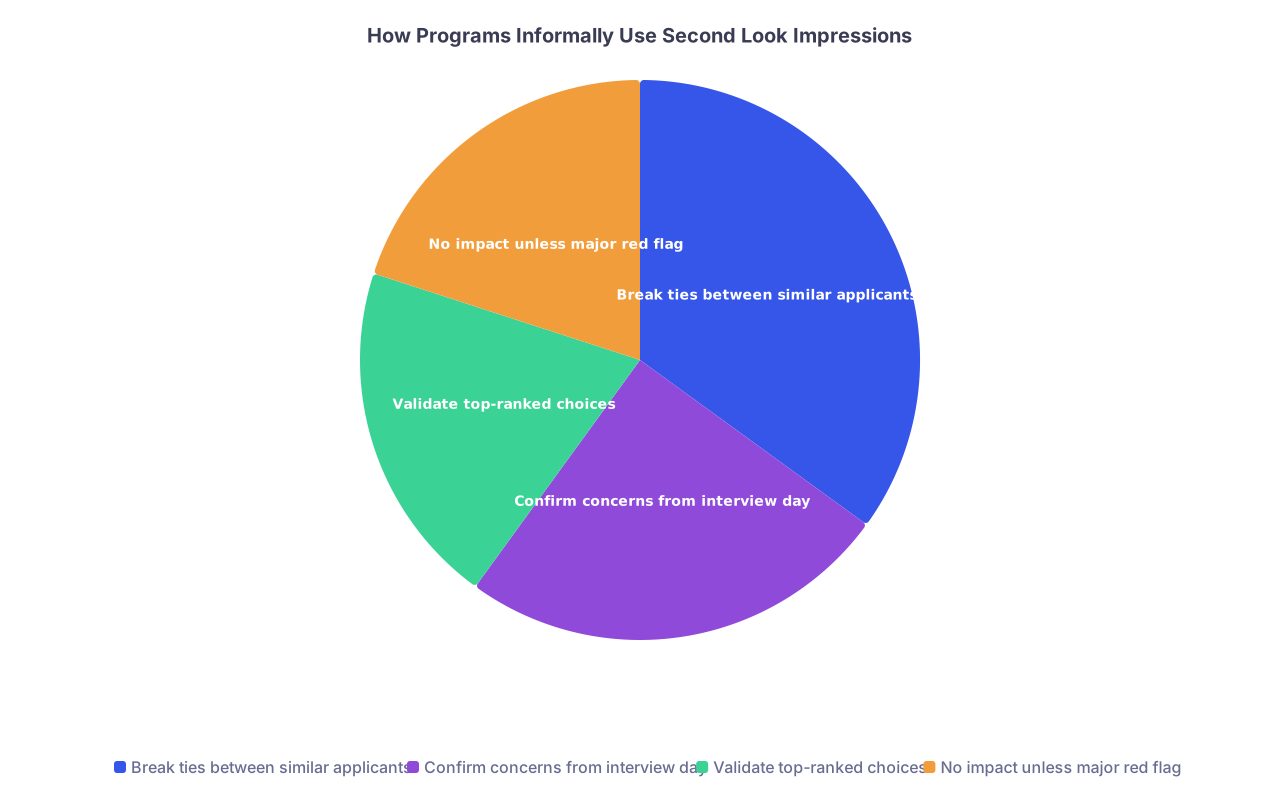
| Category | Value |
|---|---|
| Break ties between similar applicants | 35 |
| Confirm concerns from interview day | 25 |
| Validate top-ranked choices | 20 |
| No impact unless major red flag | 20 |
I’ve watched it happen: student shows up, looks fine on paper, decent interview… then starts asking questions that scream:
- “I care more about lifestyle than responsibility”
- “I don’t understand boundaries”
- “I might be a headache for the program director”
You don’t get a warning light. Nobody says, “Hey, maybe don’t ask that.” They just write it in the notes afterward.
So let’s walk through the categories of questions that do real damage.
1. Questions That Scream “I Want the Easiest Ride Possible”
You absolutely should care about wellness, call, and burnout. But second look is where many people cross the line from reasonable concern to red flag for laziness or entitlement.
Here’s the distinction:
Dangerous versions of schedule/workload questions
Questions that come off badly:
- “How often can you get out early if it’s not busy?”
- “How strictly are duty hours really enforced? Like, if I want to leave right at 5, is that okay?”
- “Do people ever just not show up for conferences if they’re tired?”
- “How easy is it to switch out of tough rotations?”
- “If I have a side business / startup / social media brand, are people okay with me focusing on that too?”
These land as: I’m looking for loopholes.
Better versions (still getting the info, without sounding lazy):
- “How does the program support residents when services are consistently overwhelmed or understaffed?”
- “How are duty hour concerns handled when they come up?”
- “What have residents found most challenging about the schedule, and how has the program responded?”
If your question can be translated as “how little can I do and still get by,” don’t ask it.
2. Money, Moonlighting, and “What Can I Get Out of You?”
Programs expect you to care about salary. They’re not offended by basic compensation questions. The red flag is how you frame it and what it reveals about priorities.
Problematic money questions
Avoid these (or anything that sounds like them):
- “What’s the average moonlighting income your residents pull in?”
- “Is there a way to start moonlighting as interns if we feel ready?”
- “How much can I make in total if I max out moonlighting?”
- “Do you pay for all conferences? Flights, hotel, food, everything?”
- “Do you pay for Step 3 and board prep, and if not, why not?”
This gives off: I’m here for the paycheck and perks first, training second.
Safer way to ask:
- “At what level of training do residents typically become eligible for moonlighting, and how is that balanced with educational priorities?”
- “What professional development expenses does the program usually support (conferences, board prep, etc.)?”
The scholarship/bonus trap
Some students bluntly ask:
- “Are there any signing bonuses or incentives if we match here?”
This sounds like you think you’re negotiating an attending contract. You are not. That’s a red flag for maturity and perspective.
If this matters to you (and in some places, it does), ask current residents privately after you’ve established some rapport, and phrase it as, “Are there any institutional benefits that surprised you once you started here?”
3. Questions That Try to Game the Match (And Expose Your Ethics)
Programs are extremely sensitive to anything that smells like:
- Match rule ignorance
- Rank list manipulation
- Competitive gossip
Examples that instantly make people uncomfortable:
- “Where would I stand on your rank list if I came here?”
- “Do you rank people higher if they come to second look?”
- “How many people ahead of me would you need not to match for me to get a spot?”
- “Do you ever go off the Match for positions?”
- “If I tell you I’ll rank you number one, will that help me?”
These are hard no. They suggest poor understanding of ethics and NRMP rules. People start wondering: will this person cut corners in patient care?
If you’re honestly trying to understand how much second look matters, use something neutral:
- “How much weight, if any, do you typically give second look visits compared to the interview day?”
That’s fine. Anything that pushes for rank details is not.
4. Trash‑Talking Other Programs or Cities
This one gets people in trouble more often than you’d think. Especially when they’re trying (badly) to flatter the program they’re visiting.
Huge red flags:
- “Your program seems so much better than [nearby program]; what do you think they’re doing wrong?”
- “I was really turned off by [X program]. Why are you guys so much better?”
- “Honestly, I thought [city] was kind of a dump when I interviewed at [other hospital]. Do you feel your hospital is in a better part of town?”
Residents and faculty don’t think, Wow, they really love us. They think, If they talk like this about other programs, they’ll talk like this about us too.
You can absolutely ask comparison‑type questions without sounding petty:
- “What do you think distinguishes your program from others in this region?”
- “For residents who ranked you highly, what seemed to be the main deciding factor?”
No trashing, no baiting them into gossip.
5. Questions That Expose Poor Professional Boundaries
This is where people really show lack of judgment. Second look isn’t therapy. It’s not a vent session. It’s not a place to overshare.
Red‑flag style questions:
- “Do attendings ever date residents here?”
- “How strict are the rules about dating co‑residents or nurses?”
- “If you really don’t like an attending, can you refuse to work with them?”
- “If I have major issues with a co‑resident, can I request they be moved services?”
Or inappropriate personal probes like:
- “Does Dr [X] still lose it on residents like I heard?”
- “I’ve heard rumors about a resident getting fired here—what really happened?”
These questions make you look like:
- Someone who invites drama
- Someone who may overstep boundaries
- Someone who trades in gossip
Better: stay process‑focused, not person‑focused.
- “How does the program handle conflicts between residents and faculty?”
- “What structures are in place for residents to safely provide feedback about faculty or the program?”
Same topic. Completely different read.
6. “So, How Much Do You Actually Work?” – Asking About Effort the Wrong Way
Everyone wants to know the truth about workload. But second look is where people get a little too honest in what they want to ask:
- “Do people actually read outside of work, or is everyone too burnt out?”
- “Day to day, how much stuff can you realistically defer to the next team?”
- “How often do you cut corners to get out on time?”
These questions don’t just make you sound lazy. They make people question your clinical judgment and integrity.
Instead, if you’re genuinely trying to understand culture and expectations:
- “What does a typical day look like on your busiest service from arrival to sign‑out?”
- “What do successful residents here do to stay on top of learning while managing clinical duties?”
- “Are there unspoken expectations (like staying late regularly) that new interns should be aware of?”
That last one is honest and still professional.
7. Asking About “Problem Residents” or Weaknesses Like a Gossip Columnist
You should ask about weaknesses. You should ask about program challenges. Just don’t do it with tabloidy energy.
Red‑flag versions:
- “Have you ever had to fire a resident? What did they do?”
- “Who are the weakest residents in your program? What goes wrong for them?”
- “Do you have any toxic attendings I should watch out for?”
These make people extremely cautious around you. They signal poor discretion.
Safer, mature versions:
- “What qualities have you seen in residents who struggle here?”
- “What kind of resident tends not to be a good fit for this program?”
- “What’s something the program leadership is actively trying to improve in the next few years?”
You still get what you need—without waving a huge red flag.
8. Future‑of‑Medicine Questions That Make You Sound Out of Touch
Because your category is “Miscellaneous and Future of Medicine,” let’s talk about the kind of futuristic or “big picture” questions that play poorly.
There’s a smart way and a cringey way to do it.
The cringey, red‑flag versions
- “Do you think AI will replace most of what we do so residency will get easier?”
- “With telemedicine and automation, do you think residents can eventually do more work from home?”
- “Is the program planning to cut back on in‑person clinical time as technology improves?”
- “Given where healthcare is going, do you think hands‑on exam skills will even matter in 10 years?”
These sound naive at best, dismissive of patient care at worst. Faculty hear: I’m more interested in shortcuts and toys than real medicine.
Smarter, grounded versions

| Step | Description |
|---|---|
| Step 1 | Future of Medicine Topic |
| Step 2 | Will tech make residency easier |
| Step 3 | Can we work from home more |
| Step 4 | How will tech change training |
| Step 5 | How do residents adapt |
| Step 6 | Bad framing |
| Step 7 | Good framing |
Examples that land well:
- “How is the program incorporating AI and decision support tools into resident education, while still emphasizing core clinical reasoning?”
- “What changes do you anticipate in this specialty over the next 5–10 years, and how is the program preparing residents for that?”
- “Have you adjusted curriculum or clinic structures to reflect the rise of telemedicine, and how do residents learn to balance that with in‑person care?”
These show curiosity, maturity, and awareness that tech complements, not replaces, your responsibility.
9. Questions That Reveal You Haven’t Done Basic Homework
Few things annoy programs more than questions that are obviously answered:
- On the website
- In the interview day info packet
- In the email you were sent last week
Classic offenders:
- “Do you have a night float system?” (It’s on the schedule handout.)
- “Do you have a research requirement?” (There’s a full page about it.)
- “Are there fellowships here in [X]?” (They’re literally listed on the same page you applied through.)
Programs read this as laziness or disinterest.
Before second look, you should at least know:
| Area | What You Should Already Know |
|---|---|
| Basic schedule | Call vs night float, block length |
| Program size | Number of residents per class |
| Major tracks/focus | Research, global health, primary care, etc. |
| Key strengths | What they brag about publicly |
| Location realities | City, cost of living basics |
Then your questions can be built on top of that:
- “How has the call system evolved in recent years, and have residents been happy with the current structure?”
- “What kind of mentorship is available for residents interested in [subspecialty]?”
You sound prepared, not clueless.
10. Overly Personal Future Plans That Raise Commitment Concerns
Being honest about your goals is good. But second look is not the right place to float every hypothetical that makes programs doubt your staying power.
Dangerous examples:
- “If I match here, how easy would it be to switch to [completely different specialty] later?”
- “If my partner doesn’t like the city, is it possible to transfer to another program after PGY‑1?”
- “If I decide to go part‑time during residency for family reasons, is that allowed?”
These questions tell them: I may not finish here or I might require major schedule restructuring.
If you have real constraints (family, health, visa issues), those conversations are best had one‑on‑one, thoughtfully, and ideally before rank lists are set—often via email or private meeting, not as a casual group question at second look.
If you’re just curious, keep it general:
- “How does the program support residents through major life events (having children, family illness, etc.)?”
That’s a reasonable question that doesn’t sound like you’re already halfway out the door.
11. How to Pressure‑Test a Question Before You Ask It
Use this quick mental filter before any question comes out of your mouth:

| Step | Description |
|---|---|
| Step 1 | Think of question |
| Step 2 | Do not ask |
| Step 3 | Rephrase or skip |
| Step 4 | Safe to ask |
| Step 5 | Probably skip |
| Step 6 | Already online or in handouts |
| Step 7 | Could this sound lazy, entitled, or gossipy |
| Step 8 | Does it focus on learning, culture, or support |
And a few hard rules:
- If it directly asks about rank lists → don’t ask
- If it’s about “how little can I do” → don’t ask
- If it requires trashing other people or programs → don’t ask
- If it makes you sound like you want residency to be remote, shorter, or optional → probably don’t ask
12. Example “Safe” Question Bank You Can Steal
To protect you from blank‑brain moments on second look, here’s a list of solid, non‑red‑flag questions that still get you real information.
Use them as is or adapt:
- “What do you wish you had known about this program before you started intern year?”
- “When residents struggle here, what does the program do well to support them—and where is it still working to improve?”
- “How has the program changed in the last 5 years, and where do you see it going next?”
- “Can you tell me about a recent resident‑driven change that leadership implemented?”
- “How do graduates from this program typically fare in fellowship or job placement?”
- “For residents interested in health policy / AI / global health / medical education, what concrete opportunities have current residents taken advantage of?”
These questions make you look like:
- You’re serious about training
- You understand the future of medicine without fantasizing about escaping work
- You’re thinking long‑term
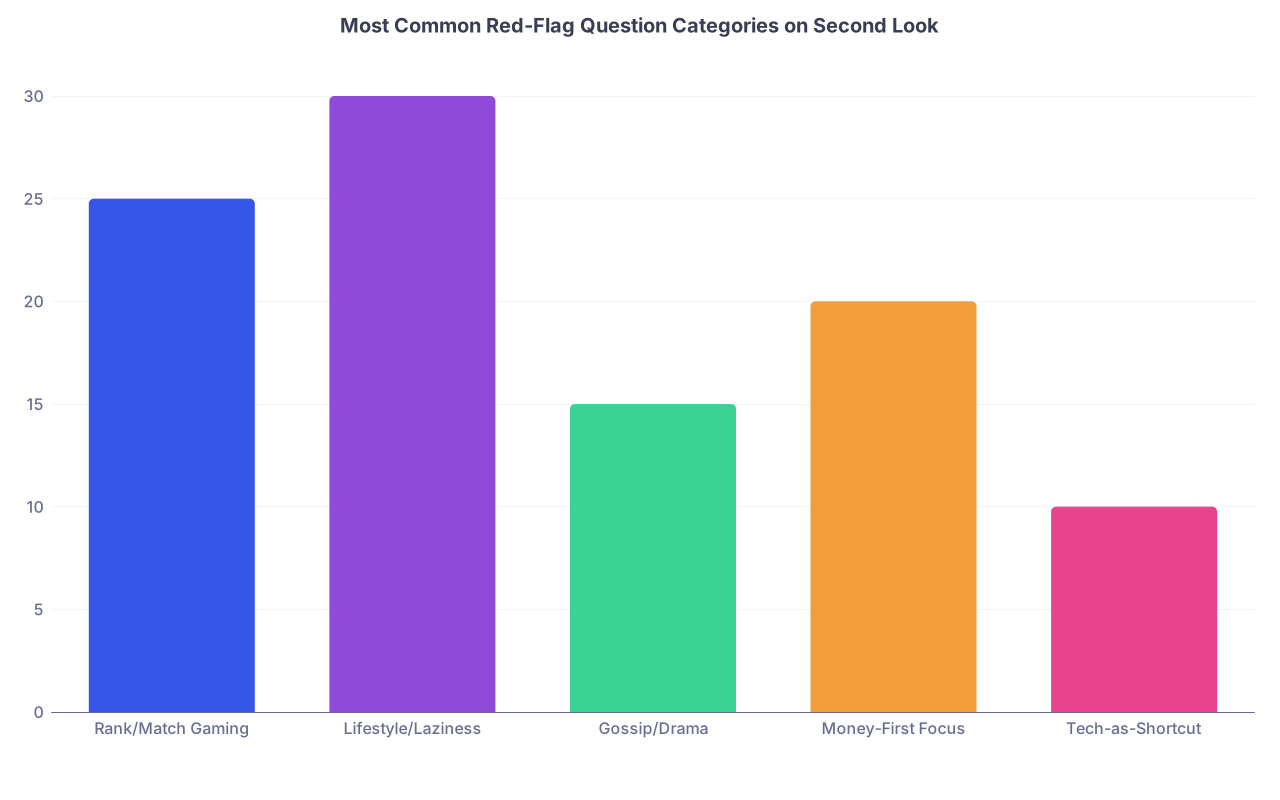
| Category | Value |
|---|---|
| Rank/Match Gaming | 25 |
| Lifestyle/Laziness | 30 |
| Gossip/Drama | 15 |
| Money-First Focus | 20 |
| Tech-as-Shortcut | 10 |
FAQ (Exactly 3 Questions)
1. Does asking a single awkward question really hurt my chances?
Sometimes no, sometimes absolutely yes. If everything else about you is strong and your question is just mildly clumsy, people usually let it slide. But if you ask something that clearly shows poor judgment—like probing rank lists, trashing other programs, or implying you want to avoid work—it can be the deciding factor between you and someone similar on paper. Programs remember what feels off.
2. Can I ever ask honestly about burnout and workload without raising red flags?
Yes, if you keep the focus on systems and support, not on loopholes and shortcuts. “How does the program respond when services are consistently overwhelmed?” or “What wellness resources do residents actually use?” are very different from “How early can I usually get out?” or “How often do people violate duty hours but not report it?” The content overlaps, but the framing is what signals your intent.
3. Should I skip second look entirely if I’m worried I’ll say the wrong thing?
No. Second look, done right, can help both you and the program confirm fit. The key is preparation: read the website, talk to a current resident beforehand if possible, and bring a short list of thoughtful, safe questions. If you’re unsure whether something is appropriate, err on the side of not asking it. Silence is rarely a red flag. Certain questions are.
Remember:
- Second look is still an audition—your questions are part of your interview.
- Anything that sounds like gaming the match, dodging work, or stirring drama is radioactive.
- When in doubt, focus on learning, culture, support, and the future of the specialty—not on how little you can get away with doing.