
What will you do when an attending corners you during second-look rounds and starts trash-talking another program… while your top choice is still deciding whether to rank you?
Second-look days feel casual. Tours, lunches, a bit of shadowing, maybe some “low-key” rounds with an attending or two. That’s where people let their guard down. That’s also where careers quietly get torpedoed.
You’re not just “hanging out.” You’re being evaluated. And just as important: attendings are being evaluated too. The worst mistake is forgetting that both of you are under the microscope simultaneously.
Let me walk you through the landmines I’ve seen over and over during second-look rounds—and how to avoid becoming the cautionary story people repeat for years.
1. Forgetting This Isn’t Social Hour
On second look, attendings often say some version of: “Relax, this isn’t an interview anymore.” Do not believe that.
The big mistake: treating rounds like a casual meet-and-greet instead of a professional interaction.
How this looks in real life:
- Showing up without a notebook or pen
- Standing at the back, arms crossed, like an observer instead of a participant
- Chiming in with half-baked ideas “to show enthusiasm”
- Whispering side comments to another applicant in front of patients or nurses
What attendings actually notice:
- Do you respect the patient’s time and privacy?
- Do you listen more than you speak?
- Do you seem curious and appropriately restrained?
You step into a patient’s room with the team. The attending is introducing the group. You wave and say, “Hi, I’m Alex, I’m interviewing here today!”
The patient becomes a prop for your application.
That’s not charming. It’s self-centered. The polite move is to:
- Let the attending or resident introduce you if needed
- Offer a brief nod/“Good morning” if acknowledged
- Stay in the background unless directly invited to speak
Second look rounds are not about you “shining.” They’re about you not doing anything dumb enough to knock yourself off the list.
2. Overstepping in Front of Patients
This is the fastest way for an attending to decide you’re unsafe.
Common oversteps:
- Asking the patient your own follow-up questions that slightly change the history
- Offering explanations of disease or testing to “help” the patient understand
- Suggesting alternate diagnostic ideas on the spot in front of the patient
- Leaning on the bed, touching the chart, adjusting devices without being part of the actual care team
Here’s the ethical and etiquette problem: during second look, you are not credentialed, not responsible, and not part of the team. Patients didn’t consent to be teaching props for you.
A safer rule set:
- Only ask patient questions if the attending explicitly says something like, “Why don’t you ask about X?”
- Never contradict or “clarify” what the attending or resident just said, especially in front of the patient
- Physically keep your distance from the bed/equipment unless invited closer
If you have a burning clinical thought?
You keep it in your head, or ask quietly outside the room:
“Dr. Reyes, I was wondering—would this be a situation where you’d also consider checking ___? Just trying to understand how you’re thinking through it.”
That’s curiosity, not arrogance.
3. Trying Too Hard to Impress the Attending
This one is painful to watch.
The insecure move:
- Quoting guidelines unprompted
- Name-dropping your research mentors and institutions
- Dropping Step scores, class rank, or publications into casual rounding conversation
- Interrupting residents so you can answer the attending’s questions
You think you’re signaling: “I’m smart, pick me.”
What the attending hears: “I’m exhausting, and I’ll be a problem on day one.”
I’ve seen this particularly when an attending cold-calls a resident:
Attending: “What are the main side effects of this medication?”
Resident: starts to answer
Applicant: interrupts halfway with “Oh, and also—” and finishes confidently
Even if you’re right, you just humiliated the resident in front of their evaluator. The attending notices that dynamic more than your knowledge.
Better strategy:
- If you must answer, wait for a direct question to you
- If no question is directed at you, stay quiet and follow the reasoning
- When given space to speak, be concise. “I’m not sure” is better than guessing wildly.
A clean model response if asked something you don’t know:
“I’m not sure. On my medicine rotation we mainly saw ___, but I didn’t get much exposure to this condition. I’d probably start by looking up ___.”
That sounds like someone who understands their limits and how to learn. Very different energy from the try-hard attending-pleaser.
4. Oversharing About Other Programs or Your Rank List
This mistake is more common than you think—and it can absolutely come back to bite you.
Danger phrases:
- “I really liked [competitor program], but I’m trying to decide between you and them.”
- “You’re probably my top choice, but I still have one more second look.”
- “I loved [prestigious place], but I think they’re a reach. So this is my realistic option.”
You might think you’re being “honest.” What you’re actually doing:
- Turning the attending into a therapist for your ranking anxiety
- Forcing them into a weird comparative conversation they shouldn’t have
- Risking violation of NRMP communication expectations if the line blurs
Also, attendings talk. They mention things at CCC meetings, in the work room, or to the PD over coffee:
“That applicant from yesterday said we’re basically their backup if they don’t get into ___.”
People remember that sentence when they’re staring at the borderline section of the rank list.
Safer script when asked a loaded question like “So where are you leaning?”:
“I’ve really enjoyed getting to know different programs. I’ve been especially impressed by the teaching culture here and how the residents talk about support. I’m still putting everything together, but this visit has definitely been helpful.”
Positive. Non-committal. Doesn’t sound like a politician, just like someone with boundaries.
5. Mishandling “Spicy” Attending Conversations
Some attendings love to test you by being provocative:
- Complaining about ACGME or duty hours
- Trashing other institutions
- Oversharing their political or social views
- Fishing for whether you’ll gossip about your home institution
You know what not to do?
Take the bait and start unloading your own hot takes.
Bad responses:
- “Oh yeah, my home program is a mess, let me tell you—”
- “Honestly, I think residents these days are too soft about duty hours.”
- “Yeah, I interviewed at [X program], their residents seemed miserable.”
You think you’re “bonding.” You’re not. You’re just proving you’re comfortable trash-talking colleagues and systems behind their backs.
The attending may nod along in the moment. Then go tell the PD: “That applicant really dumped on their home program. Felt… off.”
A stronger approach when people get spicy:
- Listen, don’t mirror
- Offer careful, neutral observations if absolutely needed
- Redirect toward learning, not venting
Example:
Attending: “Residents now just game the system to get out early. Did you see that at your med school?”
You: “Honestly, I saw a lot of people really trying to balance patient care with not burning out. I think scheduling and culture play a big role in whether people feel they have to game the system.”
You didn’t endorse their complaint. You didn’t argue. You set a boundary.
6. Blurring Professional Boundaries with Residents in Front of the Attending
Second look often includes relaxed time with residents that flows into rounds. That’s where you must be careful.
Common slip-ups:
- Acting like “one of the gang” in front of attendings after a friendly pre-rounds chat
- Making inside jokes you just picked up from residents about consultants or admin
- Letting residents’ frustration color how you talk about the program
The worst version:
- Resident quietly vents about a toxic rotation or specific attending
- Two hours later, different attending asks, “What questions do you have about our training?”
- You say, “I heard your ICU rotation is pretty malignant—how is that being fixed?”
Now you’ve:
- Exposed that residents are venting to applicants
- Put someone on the spot
- Shown that you spread complaints without context
Better move:
“I’m curious how you all approach feedback when a rotation feels especially intense. How receptive is leadership to adjusting things when residents raise concerns?”
Same core question. Without throwing anyone under the bus.
Remember: second look is not the time to play investigative journalist. You’re trying to understand culture, not build a legal case.
7. Being Weird About Patient Confidentiality and Social Media
You’d think this doesn’t need saying. Then you see a second-look visitor:
- Taking selfies in the hall with patient doors and names visible
- Filming a “Day in the Life – Second Look!” TikTok walking down patient corridors
- Posting a group shot with residents in scrubs and badges clearly identifiable—during an active clinical day—without asking
I’ve literally heard attendings say, “We can’t rank them. They were taking hallway pictures with room numbers visible.”
Programs are terrified of HIPAA violations. Rightfully so.
Hard rule set:
- Phone stays in pocket on rounds, period (unless there’s a clear, explicit reason not to)
- No photos in clinical areas. None. Even “just the team” can catch identifiers
- Ask explicit permission from residents before posting anything that includes them, even outside clinical space
If you absolutely must document the visit:
- Do it in clearly non-clinical areas (conference room, lobby, outdoor sign)
- Keep badges, screens, whiteboards, room numbers out of frame
- Post after you’ve left, not in real time
This stuff screams judgment and professionalism (or lack of it) much louder than your Step score.
8. Misreading When to Speak and When to Shut Up
There’s a rhythm to rounds. Second-look visitors often slaughter it.
Two main errors:
- Talking too much – random questions, tangents, personal stories
- Talking not at all – even when asked something directly
Attending etiquette is about being low-friction:
- You don’t slow down patient care
- You don’t hijack teaching moments
- You don’t make residents explain obvious workflow things three times
Questions that work:
- Focused, after the main plan is set
- Ask for reasoning, not trivia
- Respect time pressure
Example:
Walking between rooms, you ask, “Can I ask a quick question about that last plan, or would you rather I save it for later?”
If they say “Later,” you don’t push. If they say “Ask now,” keep it under 20 seconds.
On the flip side, if you freeze every time they ask, “Any questions?”—that also sends a signal. One or two thoughtful questions over the entire rounding block show that you’re engaged without being needy.
9. Misjudging Attending Hierarchy and Influence
Not every attending on second look is equal.
Some:
- Are heavily involved in the program leadership or CCC
- Have strong informal influence because residents trust them
- Are “protected” faculty that people tolerate but don’t take too seriously
You don’t know who is who. You also don’t know which ones the PD trusts most.
The mistake:
- Treating some attendings as “less important” because their rounds feel chiller
- Being more “real” or off-guard with one attending than another
- Assuming that the friendly, joking attending isn’t going to give pointed feedback about you
Quiet reality: sometimes the least flashy attending is the one the PD calls and says, “What did you think of them?”
So your standard should be:
- Same professionalism with everyone
- Slightly more caution with attendings who seem to enjoy gossip or drama
- Assume every attending can and will share impressions
| Attending Type | Common Applicant Error |
|---|---|
| PD / APD | Oversharing rank thoughts |
| Core Clinical Faculty | Over-trying to impress with knowledge |
| Chill Teaching Attending | Dropping guard, joking inappropriately |
| Research-heavy Faculty | Name-dropping CV endlessly |
| Visiting/Adjunct | Acting like their opinion “won’t matter” |
Treat them all as if they’ll be in the room when your name comes up.
10. Turning Second Look into a Performance Instead of an Observation
Last big mistake: treating second look as one more stage where you’re supposed to be “on” every second.
That leads to:
- Forced enthusiasm (“This is AMAZING!” every five minutes)
- Nervous over-engagement
- Zero real listening
Attendings smell this from a mile away.
Better mental frame:
“I’m here to see what it would actually feel like to work here—and to make sure I don’t behave in a way that makes them worry about working with me.”
Your job on second look rounds:
- Watch how attendings treat residents, nurses, and patients
- Notice how conflict or uncertainty is handled
- Observe workload, teaching style, and emotional tone
Then, if given a quiet moment with an attending, that’s where you ask the real questions:
- “What kind of resident tends to thrive here and what kind tends to struggle?”
- “If you could change one thing about this program, what would it be?”
- “How does the program react when residents are in real trouble—burnout, family crises, health issues?”
These questions tell you more about the future of medicine in that program than any glossy PowerPoint. And they don’t make you look needy; they make you look serious.
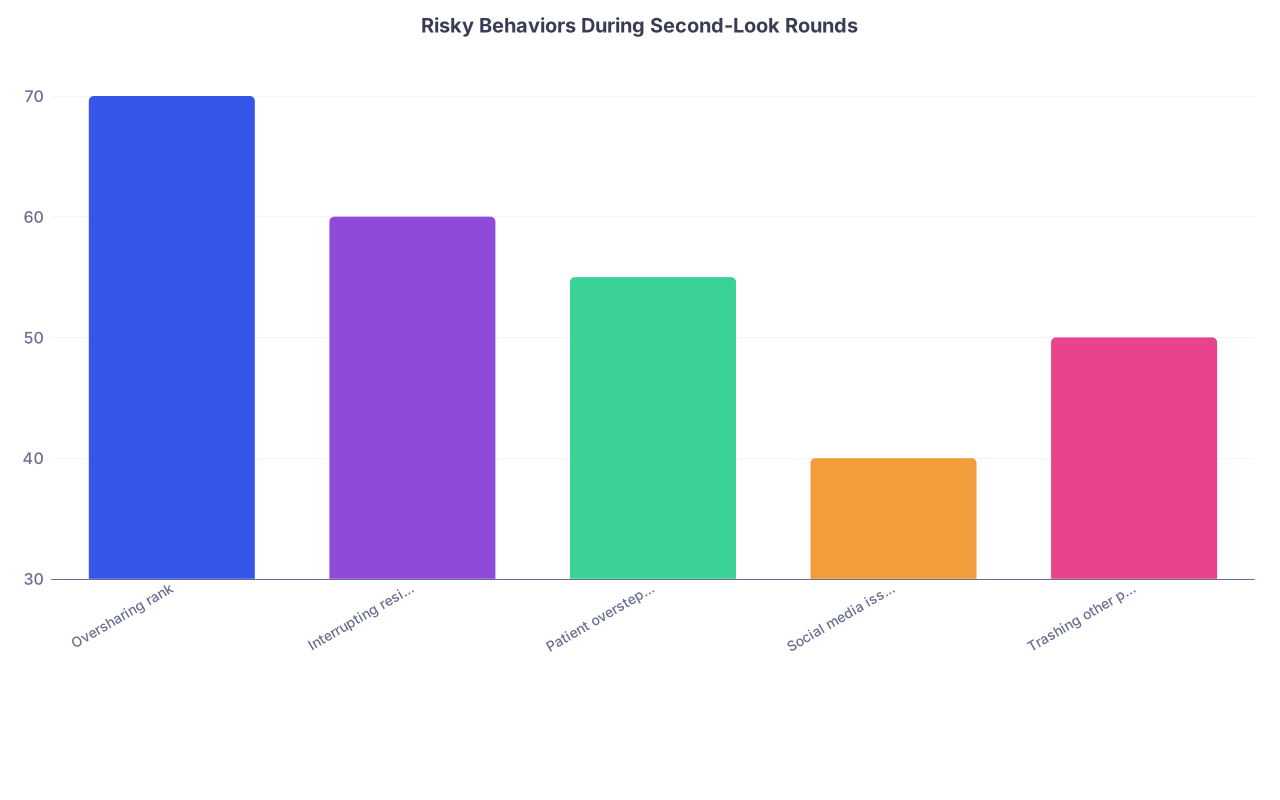
| Category | Value |
|---|---|
| Oversharing rank | 70 |
| Interrupting residents | 60 |
| Patient overstepping | 55 |
| Social media issues | 40 |
| Trashing other programs | 50 |

| Step | Description |
|---|---|
| Step 1 | Join Rounds |
| Step 2 | Stay Back, Listen |
| Step 3 | Answer Briefly or Admit Limits |
| Step 4 | Observe Interaction |
| Step 5 | Stay Neutral, Avoid Gossip |
| Step 6 | Ask Focused Program Questions |
| Step 7 | Keep Low Profile |
| Step 8 | In Patient Room |
| Step 9 | Asked Question? |
| Step 10 | Attending Talks Social or Spicy |
| Step 11 | Time for Questions |

Quick Red-Flag Checklist: Don’t Do These on Second-Look Rounds
If you remember nothing else, remember this list. If you’re about to do any of these, stop:
- Introduce yourself to patients as an “interviewee” or talk about your match
- Ask patients your own questions without being invited
- Correct residents or attendings in front of patients
- Voluntarily share where you’re ranking the program
- Gossip about other programs or your home institution
- Take ANY photos in patient-care areas
- Interrupt when attendings are questioning residents
- Use residents’ complaints as ammunition in questions to attendings
- Repeatedly check your phone on rounds
- Try to be “friends” with attendings instead of professionally cordial

FAQ (Exactly 3 Questions)
1. If an attending directly asks where I’m ranking their program, what do I say without lying?
You do not owe anyone your rank list. A clean response:
“I’m still finalizing my list, but this program is absolutely one I could see myself at. The teaching and resident culture have stood out to me.”
If they push, you gently repeat:
“Out of respect for the process, I’m trying not to give specifics anywhere, but I’ve been genuinely impressed here.”
That’s honest. And it protects you.
2. What if a resident starts trashing an attending or rotation while we’re walking to rounds?
You don’t join in. You don’t collect quotes. You listen, store it as data about culture, and if you want to probe, do it safely:
“Sounds like that was a tough experience—do you feel heard when you bring those concerns to leadership?”
Then let it go. Don’t repeat any names, stories, or complaints to other attendings. Ever.
3. How much should I speak on rounds versus just watching silently?
Default: 70% listening, 30% speaking at most. Speak when:
- You’re directly asked a question
- There’s a clear pause and you have a concise, relevant question
- You’re outside the patient room and the pace is relaxed
If you’re unsure, you probably don’t need to say anything. Silence rarely sinks you. Inappropriate or poorly timed comments can.
Open your notes app right now and write a one-sentence rule for yourself for second-look rounds (for example: “I will not discuss my rank list or other programs with any attending”). That single boundary will save you from at least half of the common etiquette errors.