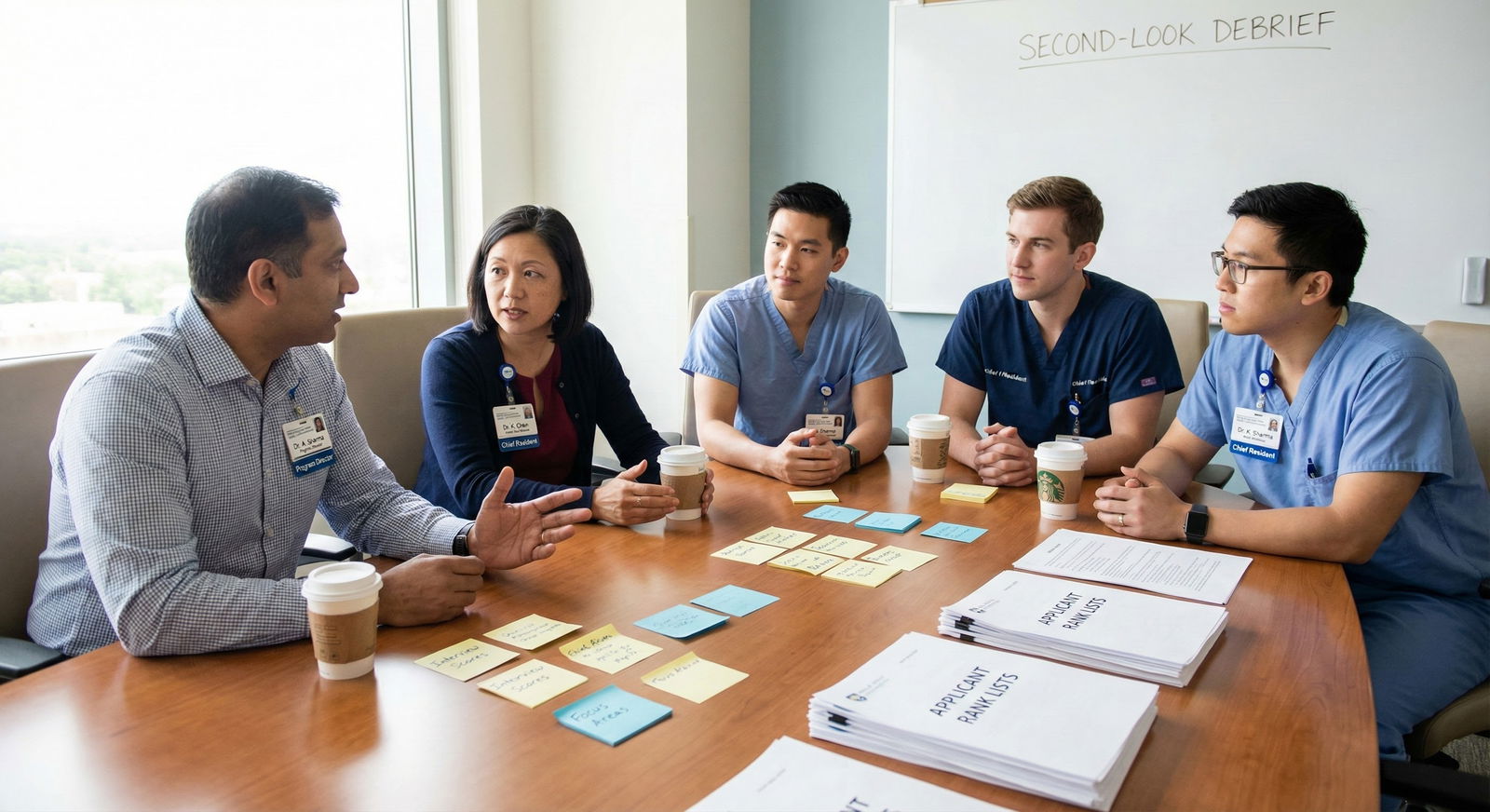
The superficial stuff on second look will seduce you. The conference room spread. The chief’s PowerPoint. The tour that magically avoids the bad call rooms. Ignore most of that. The real program is hiding in three places: the workrooms, the notes, and the handoffs.
Let me break this down very specifically, because this is where you separate “great website” from “great training.”
1. Workrooms: Where the Culture Actually Lives
If you only do one thing on second look, do this: plant yourself in a resident workroom for an hour and just watch.
Not the fake “recruitment” workroom they sometimes show you with snacks and smiling PGY‑3s. The actual operative workroom. The one with patient lists taped to the wall, empty coffee cups, and at least one broken chair.
What a high-functioning workroom actually looks like
You are not judging aesthetics here. You are judging system and culture. The best workrooms I have seen share a few patterns:
- Clear organization of physical and digital space
- Predictable, shared tools
- Psychological safety you can feel in the throwaway comments
The physical environment
You want to see evidence of work, not chaos.
- Resident computers: Are there enough terminals for the people actually working? If there are 6 people and 3 computers, that is not a “resource issue.” That is an institutional decision to waste resident time and push charting late into the evening.
- Patient lists: Do you see one or two standardized list formats that everyone seems to know, or a random pile of personalized Excel masterpieces? Too much “personalized system” usually means the program has never taught or enforced a standard method.
- Whiteboards or status boards:
Are they updated? Do they match what residents are talking about? If there is an “admit board” that is clearly out of date, that tells you everything about how seriously they take communication.
You do not need a renovated space. You need a usable one. I would pick an ugly, cramped, but clearly functional workroom over a “refreshed” showpiece that nobody seems to actually use.
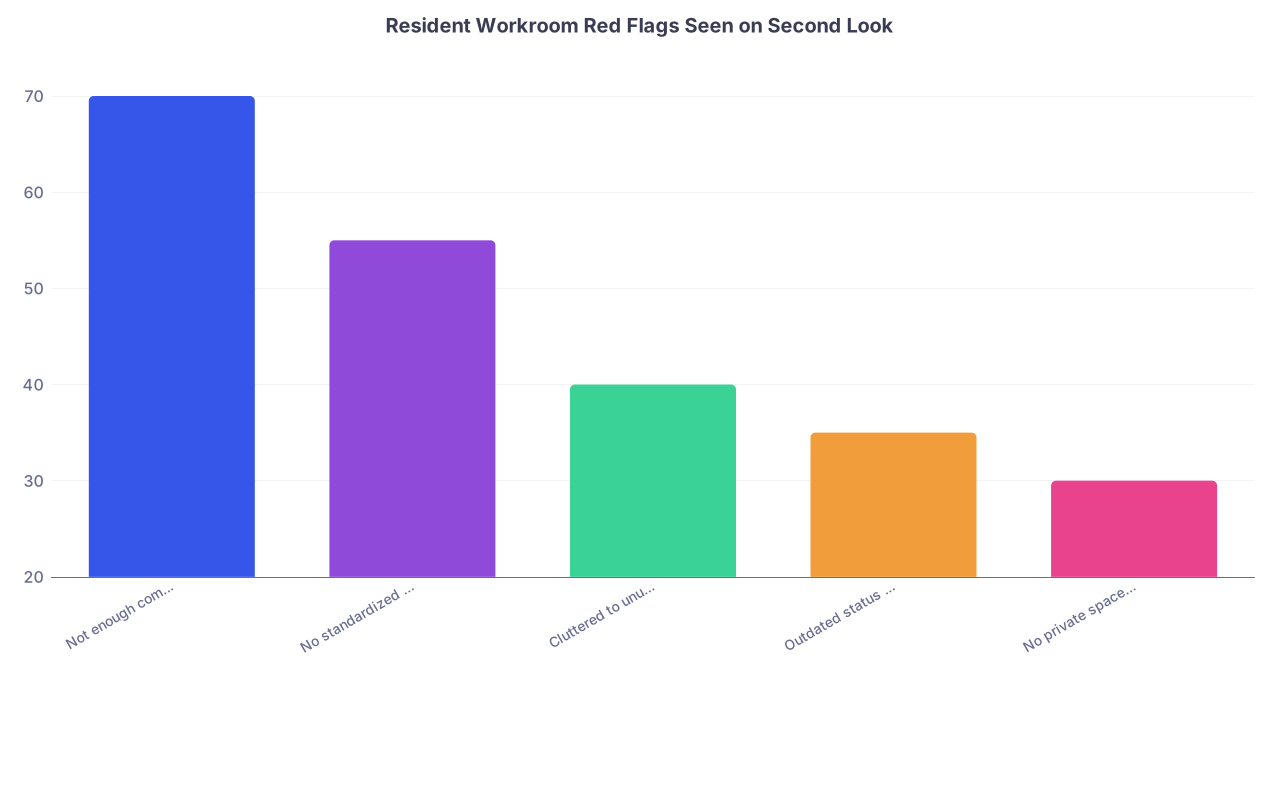
| Category | Value |
|---|---|
| Not enough computers | 70 |
| No standardized list | 55 |
| Cluttered to unusable | 40 |
| Outdated status board | 35 |
| No private space for calls | 30 |
Those percentages are not exaggerations; those are the frequencies I have seen across multiple programs over the years.
The noise and the talk
Sit in the room. Listen. Not creepily. Just exist in the corner and let the room forget you.
Pay attention to:
- Background tone: Constant sarcasm and contempt is not “dark humor.” It is burnout leaking into patient care.
- Question tolerance: When an intern asks something basic, does the senior sigh and answer, or do they explain and teach? Or do they make a joke that gets a laugh, while the intern shrinks? That one interaction tells you more about teaching than any “we value education” slide.
- How they talk about nurses and consultants:
- “Cards is being ridiculous again” vs
- “Let me call cards again and see what they are thinking. There might be something I am missing.”
That difference matters.
When I talk to students later, they almost always remember some throwaway comment more vividly than the structured Q&A. The PGY‑2 muttering, “I don’t bother paging X service after 4 pm, they never call back.” That is a cultural artifact. And a systems warning.
Laptops versus desktops versus wandering residents
Watch who is actually working where.
- Are juniors chained to fixed desktops while seniors roam with laptops or tablets? Fine. That can be senior privilege.
- Or is everyone working in a hallway because the “workroom” is taken over by attendings doing personal email? That tells you about your future autonomy and where residents sit in the power structure.
Also: do residents feel like they can pause and think? Or does everyone look like they are one passive-aggressive email away from imploding? Even a busy service has micro-moments of regrouping if the system is sane.
2. Notes: How They Think and How They Are Trained
The note templates a program uses are the DNA of its cognitive style. You are not just reading documentation. You are reading how they teach clinical reasoning.
You must ask (politely): “Could I see what a typical daily progress note looks like on this service?” If they hesitate, that is revealing.
Anatomy of a good resident note on second look
You are not checking for literary flair. You are checking for:
- Signal-to-noise ratio
- Ownership and forward plans
- Integration of nursing, consultant, and family input
A solid, teachable note usually has:
- Concise one-line summary that reflects the current problem frame
- Focused overnight events and relevant objective data
- Problem-based assessment with clear decisions and rationale
If what you see instead is: “Continue present management” repeated 10 times with lab dumps, that is not just a bad note. That is a bad thought process.
What to actually look for in the EMR
If they let you, stand behind a resident and scan a few anonymized notes (or have them scroll while you look from a distance). You are not there to memorize patient details. You are there to pattern-match.
Red flags:
- Template abuse:
Twenty-line ROS on a stable post-op day. Systems listed as “WNL” with no context. Past medical history re-pasted daily. That is computer compliance, not clinical thinking. - Copy-forward disasters:
- The same creatinine for 3 days in a row while the labs clearly changed.
- Old consultants’ recommendations still in today’s plan.
That means no one is routinely scrutinizing documentation quality.
- “Plan” sections that are just restatements of the problem:
“AKI – creatinine uptrending. Will monitor.” That is not a plan. That is a shrug. Good programs teach interns early that vague plans get patients hurt.
Now, contrast this with the best notes I have seen: short, crisp, and obviously updated each day. The kind of note where you can tell the resident wrote it from scratch mentally, even if a template shell exists.
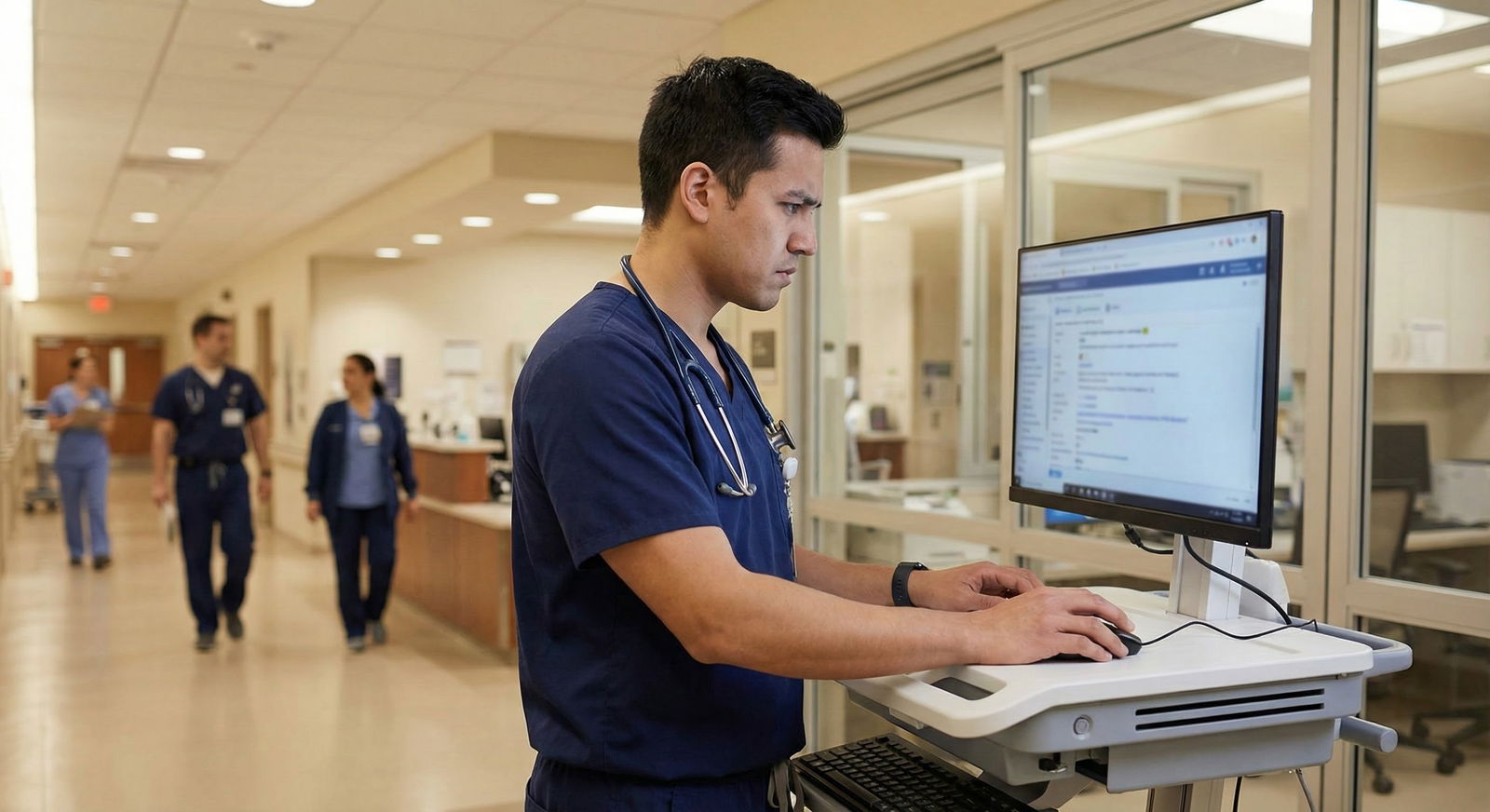
Do notes match what they said on rounds?
This is a powerful cross-check. On second look, if you can, do this:
- Go on morning rounds with a team.
- Listen carefully to the active plans.
- After rounds, when appropriate, ask the resident: “Would you mind showing me how that ends up in the note?”
If they struggle to align the beautifully articulated plan from rounds with a clunky, generic note template, you have learned something important: there is a gap between what is said and what is documented. That gap shows you how much the program cares about closing the loop.
When I see a resident say on rounds, “We are going to de-escalate antibiotics today, narrow to ceftriaxone,” and then the note later says “Continue vanc/zosyn,” I know two things:
- The system makes it easy to be sloppy.
- No one is systematically reading notes and giving feedback.
Who owns the note?
Another detail: ask, “Who usually writes the notes for this service?”
Listen to their answers:
- “Intern does the first draft, senior reviews and edits, attending co-signs and occasionally comments.” Good. That is a teaching structure.
- “The intern does all the notes. Senior just signs off. Attending signs 30 at a time at 10 pm.” Translation: educational supervision is probably thin.
You want a place where notes are part of how they teach. “Pull up yesterday’s note; why did you phrase it this way?” is a question I want to hear seniors ask juniors.
3. Handoffs: The Most Important 15 Minutes You Will Never See on the Website
If you are not paying attention to handoffs on second look, you are missing the most critical safety and lifestyle window into the program.
Handoffs tell you:
- Whether off-service residents feel abandoned
- Whether seniors protect or dump on juniors
- Whether cross-cover is systematically taught or left to improvisation
Watch an actual sign-out. Not the polished version.
Ask ahead of time if you can quietly observe evening sign-out, even if just for 10–15 minutes. You do not need to hear patient identifiers; you need to see the structure.
What to watch for:
- Is there a standard tool? (IPASS, SIGNOUT, whatever) Or is it chaos and storytelling?
- Does the outgoing resident glance at a checklist or just rattle off from memory while packing their bag?
- Do people sit, turn away from distractions, and focus? Or is half the room answering texts and grabbing their coats?

| Step | Description |
|---|---|
| Step 1 | Pre-round work |
| Step 2 | Update sign out list |
| Step 3 | Evening huddle |
| Step 4 | Discuss contingency plans |
| Step 5 | Standard sign out |
| Step 6 | Cross cover clarifications |
| Step 7 | Night resident questions |
| Step 8 | Sign out complete |
| Step 9 | High risk patients? |
On a good service, that “night resident questions” box is not rushed. The night person actually speaks. They ask clarifying questions. They do not get mocked for it.
Micro-signs inside the handoff
Here are specific things to look for that many applicants miss:
Contingency language
Do you hear phrases like:- “If the BP drops below X, please do Y before calling me.”
- “Family is anxious, if they call overnight, this is what we discussed.”
That means residents are taught to anticipate, not just react.
Ownership across shifts
When the day resident signs out a trainwreck, do they sound apologetic and offer help, or do they just dump?- “I am sorry, this is messy, I will keep my phone on if you need anything.” versus
- “Good luck, they are a disaster.”
Those two lines describe two totally different cultures.
Use of the EMR sign-out tool
Many systems have a dedicated handoff module. Is it populated with meaningful, updated data or just “stable, no issues” on every patient?
I have seen programs with strong reputations where sign-out is essentially: “He is fine, she is fine, this whole list is fine, okay bye.” That is how you get burned at 3 am by a “fine” patient.
4. How to Actually Do This on Second Look Without Being Awkward
You cannot walk in and say, “I would like to audit your handoff quality and documentation practices.” You will sound like a problem. But you can absolutely structure your day to see what matters.
Build your day around the right questions
Examples of questions that open doors:
- “Could I spend some time in the main resident workroom just to get a feel for the day-to-day flow?”
- “Would it be possible to see what your sign-out process looks like, even briefly?”
- “Could someone show me a typical note for this service, just so I understand how you think about documentation?”
If anyone acts offended by those questions, you have your answer. Programs that are secure and well-run are proud of their systems. They want to show them off.
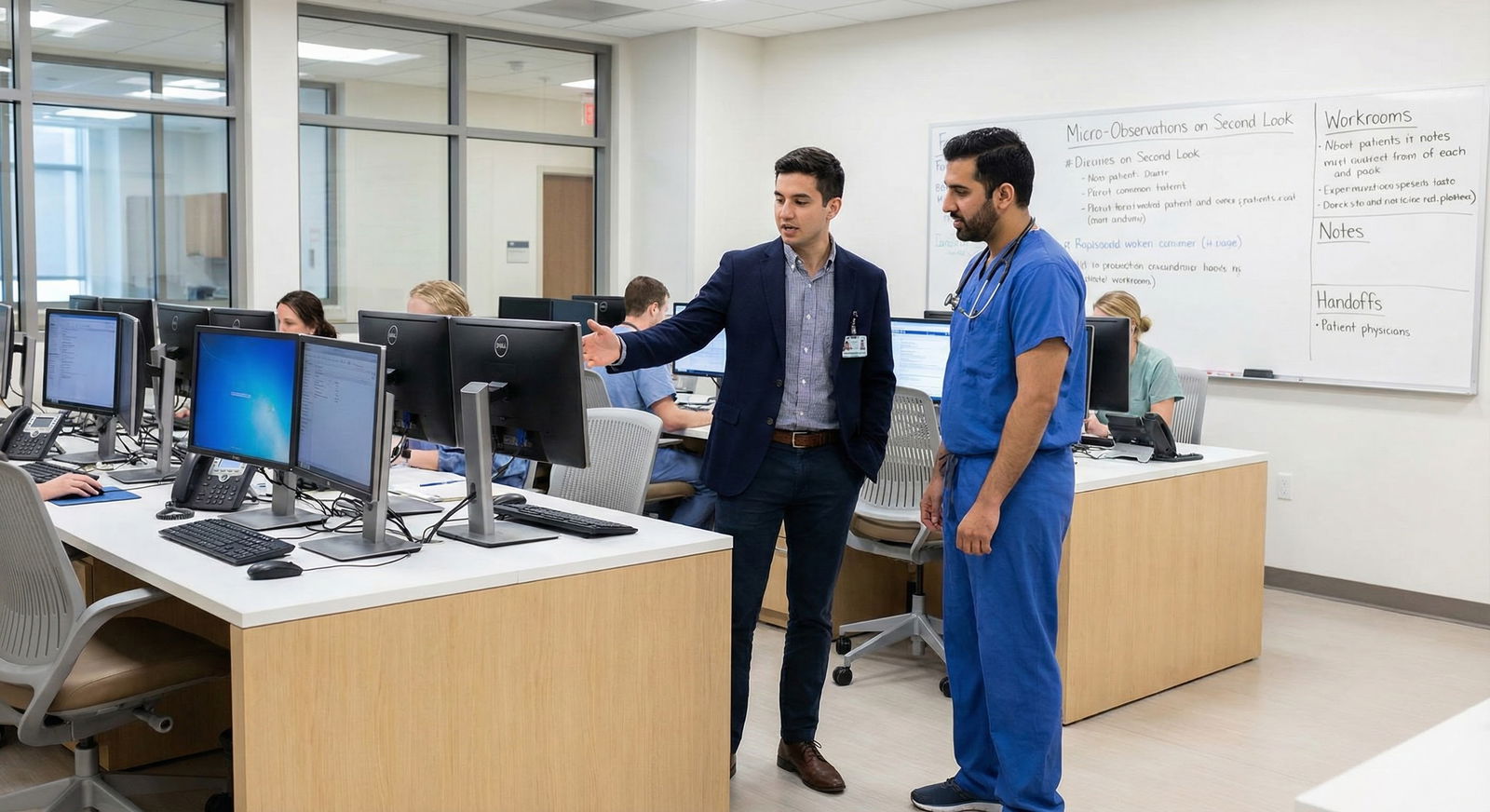
What to do during downtime
You will have dead time. Use it intelligently:
- Sit in the workroom with a resident and say:
“Walk me through a typical admission from the moment the ED calls to when you sign them out. Where do bottlenecks usually happen?”
Then shut up and listen. - Ask different PGY levels the same question:
“What part of your workflow improved the most from PGY‑1 to PGY‑2?”
Seniors will often talk about cognitive efficiency; interns will talk about survival. Both are useful.
You are trying to build a mental model of how work really flows hour by hour. Not the brochure version.
5. Interpreting What You See: Patterns That Actually Matter
You will not get perfect clarity. Programs are messy organisms. But certain patterns repeat.
Program that looks shiny but is structurally weak
This is more common than anyone likes to admit.
Features you will see:
- Beautiful resident lounge, terrible workrooms
- Emphasis on wellness days, no evidence of operational wellness (broken systems that waste hours)
- Notes that are long and meaningless, handoffs that are ad hoc
- Residents who are superficially “happy” but make side comments about staying late every day to “fix the list”
Here is the internal monologue I have heard in these programs: “We do great here because we have to be self-reliant; no one will fix it for you.” That is marketed as resilience. Usually it is just institutional neglect.
Program that looks rough but trains assassins (in a good way)
Then there is the opposite: somewhat ugly facilities, maybe an aging EMR, but:
- Clear, standardized note templates that actually help thinking
- Handoff culture that is obsessive and structured
- Workrooms that are cluttered but obviously functional and shared
- Residents who complain about hours but light up when they talk about how prepared they feel to practice independently
These places often undersell themselves on interview day. You see the truth on second look. And it is usually in the micro-observations.
| Domain | Strong Program Signal | Weak Program Signal |
|---|---|---|
| Workroom | Updated lists, enough computers, active whiteboard | Clutter, outdated boards, residents charting in hallways |
| Notes | Concise problem-based plans, minimal copy-forward | Long boilerplate, vague plans, obvious copy errors |
| Handoffs | Standardized process, clear contingencies | Informal, rushed, “everyone is fine” language |
| Culture | Questions welcomed, interns supported | Questions mocked, interns blamed for system issues |
6. Future of Medicine, Seen Through These Tiny Windows
You are not just evaluating how your life will look next July. You are watching how this program is adapting to where medicine is actually headed.
Workrooms, notes, and handoffs are where that shows up first.
Is the program EMR-literate or EMR-crushed?
Future-ready programs:
- Teach residents explicit EMR skills: smart phrases, efficient order sets, keyboard shortcuts, appropriate use of AI-assisted documentation where available.
- Have thought-through charting expectations that do not rely on martyrdom (“Just finish notes at home if you need to” is not a system. It is a coping mechanism.)
If residents talk casually about hacks they have discovered independently, but no one ever taught them systematically, that is a missed opportunity. The future of medicine is not less digital.
How do they think about handoffs in a world of shift-based care?
Medicine is not going back to the era of the always-in-house physician. Hand-offs are here to stay, and complexity is only increasing.
Programs that take this seriously:
- Run explicit handoff curricula beyond “here is IPASS.”
- Audit handoffs after bad events and change the system, not just blame the night intern.
- Treat cross-cover shifts as a skill, not just the dump shift.
Listen for this language on second look:
- “We built our sign-out templates after a couple of near-misses. Now we always include X and Y.”
- “We realized the night resident was getting hammered with trivial calls, so we changed pre-call expectation and nursing escalation pathways.”
That is a program adapting to reality instead of clinging to nostalgia.
7. Concrete Second Look Playbook: Hour-by-Hour
You want practical? Here is a straightforward structure you can adapt.
Morning
Pre-rounds / early workroom time
Sit in workroom, observe how people start their day. Ask one PGY‑2: “If you could fix one thing about this room or the systems you use in it, what would it be?”Rounds
Pay attention to whether the plans voiced out loud translate into EMR actions later. Watch how much junior input is invited, not just tolerated.
Midday
Documentation window
When residents sit to write notes, ask to see an example. Watch their body language. Does note-writing feel like an integrated part of thinking, or a painful afterthought?Informal conversations
Pull one resident aside and ask: “How did the way you write notes change from PGY‑1 to now?” The quality of that answer tells you how much they feel they have grown and how much the program shaped that.
Evening
Pre-sign-out tension
The hour before sign-out is usually peak workload. Observing it will tell you whether this place lives in controlled chaos or pure entropy.Actual handoff
Observe structure. Listen for contingencies. Note whether night residents leave sign-out feeling oriented or already underwater.
If you walk out of second look with clear mental images from these windows, you will be ahead of most of your peers who only remember the cafeteria.
Key Takeaways
- The resident workroom, not the tour route, is where the real culture lives. Sit in it, listen, and look for functional systems rather than decor.
- Notes and handoffs are x-rays of cognitive and safety culture; concise, problem-based notes and structured, contingency-rich handoffs signal a program that actually teaches thinking.
- Programs that handle workrooms, notes, and handoffs deliberately are the ones preparing you for the future of medicine, not just surviving the present.