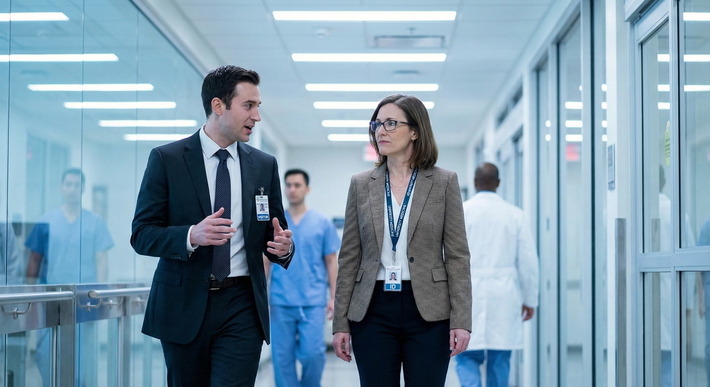
Understanding Second Look Visits in Residency
Second look visits—also called “revisit days” or simply “revisits”—are optional, usually informal return visits to a residency program after your initial interview day. They are designed to help you gather more information, clarify fit, and compare programs before you submit your rank list.
They can be valuable, but they are also time‑consuming, expensive, and sometimes misunderstood. Many applicants ask: “Should I do a second look?” or “Will not doing a second look hurt my ranking?” This guide walks you through what second look visits are, when they’re worthwhile, how to use them strategically, and how to avoid common pitfalls.
We’ll focus on:
- When a second look residency visit actually helps
- How to plan and structure your revisit
- Professional etiquette and ERAS/NRMP rules
- Cost, equity, and virtual alternatives
- Sample emails, questions to ask, and red flags to watch for
Category: SECOND_LOOK_VISITS
Phase: RESIDENCY_MATCH_AND_APPLICATIONS
What Is a Second Look Visit (and What It Is Not)?
A second look is a post‑interview, pre‑rank-list visit to a program, organized either formally by the program or informally by your request. It usually includes additional time with residents, observing educational activities, and experiencing the hospital and local environment more fully than on the structured interview day.
Goals of a Second Look
From the applicant’s perspective, a second look is primarily for:
- Clarifying fit: Do you see yourself training with these people in this environment?
- Gathering missing information: Schedule details, mentorship, research, fellowships, wellness, childcare, call burden, etc.
- Comparing “tied” programs: When you’re struggling between two or three programs that feel similar on paper.
- Understanding the city: Neighborhoods, commute, cost of living, partner/family considerations.
From the program’s official perspective (and in line with NRMP guidelines):
- It should not be used as a formal evaluation tool.
- It should not be expected or required.
- It should not influence your rank negatively if you do not attend.
However, informally, some programs may use the second look to confirm their impressions of you or sense your interest—though they cannot explicitly state this.
What a Second Look Is Not
- Not another interview day. You’re not expected to redo your “pitch” or be formally reevaluated, though professionalism absolutely still counts.
- Not mandatory. Programs cannot legally require second looks, and many strongly discourage them to promote equity.
- Not a secret strategy to jump up the rank list. Enthusiasm helps, but there are no guarantees; your original application and interview remain primary.
- Not the right time to negotiate. You should not ask for preferential ranking, guaranteed fellowship positions, or promised rotations.

Should You Do a Second Look? A Strategic Framework
The core question: “Should I do a second look?” There’s no universal answer. Use this framework to decide.
Step 1: Check the Program’s Policy
Before planning anything, review:
- Interview day announcements or handouts
- Program website (often under “Interview Day” or “For Applicants”)
- Post‑interview emails
Programs commonly fall into one of three categories:
Discourages second looks
- Explicit statements like:
- “We do not offer second look visits.”
- “Second looks will not affect ranking and are not necessary.”
- Action: Respect this and don’t push for an in‑person revisit. If you’re uncertain about something, request a virtual follow‑up meeting instead.
- Explicit statements like:
Neutral but permissive
- No strong statement either way; may say, “You’re welcome to visit the area again, but it is not required.”
- Action: Reasonable to consider a second look if you have a specific purpose and logistical feasibility.
Offers structured revisit days
- “We host optional second look days in February.”
- Action: If the program is high on your list and cost/logistics are manageable, attending can be useful. But still not mandatory.
Step 2: Ask: What Decision Will This Change?
Make second looks decision‑driven, not fear‑driven.
You probably should consider a second look residency visit if:
- You are genuinely torn between 1–3 programs that are otherwise similar on:
- Location
- Reputation and training quality
- Case volume and fellowship placement
- You left the interview with incomplete or conflicting impressions:
- Discrepancy between resident and faculty narratives
- Short or rushed interview day
- Unexpected concerns you want to clarify
- You have family/partner questions:
- School districts, job market, neighborhoods
- Housing feasibility and commute
- The program is in a region you’ve never lived in, and you need to understand:
- Climate, culture, safety, infrastructure
- Support systems for your life outside the hospital
You probably should not prioritize a second look if:
- The program is already clearly low on your rank list.
- You’re only going because others are, out of FOMO.
- The program explicitly discouraged second looks.
- It would create financial strain or major logistical distress.
- You’re hoping a second look alone will “bump you up” dramatically in ranks.
Step 3: Consider Cost, Time, and Wellness
Residency interview season is physically, mentally, and financially draining. A second look takes:
- Time: Travel, logistics, and a full day (or more) on site.
- Money: Flights, gas, housing, meals, maybe childcare.
- Energy: Being “on” again in a high‑stakes environment.
Ask yourself:
- Will this visit meaningfully clarify my rank list?
- Can I afford this without causing significant hardship?
- Am I sacrificing study time, rotations, or mental health?
If your answer is no to any of these, consider alternatives:
- Virtual second look (Zoom Q&A, meeting with PD/Chair/residents)
- Phone or email follow‑ups with residents and alumni
- Watching any recorded program videos or virtual open houses
Planning and Requesting a Second Look Visit
If you decide to revisit programs, be deliberate and professional.
When to Schedule Your Second Look
Timing varies by specialty, but generally:
- After you’ve completed all (or most) of your interviews
- You’ll have better context to compare and ask deeper questions.
- Before rank list certification deadlines
- Typically late February to early March for NRMP; check official timelines.
- Try to avoid:
- Major exam weeks or high‑intensity rotations
- Holiday surges (travel complications, less staff available)
How to Request a Second Look
If a program has structured second look days, follow their instructions. If not, a concise, respectful email works best.
Who to contact:
- Usually the program coordinator (CC the program director if appropriate)
- If residents specifically invited you to follow up, you can loop them in later
Sample Email:
Subject: Optional Second Look Visit Inquiry – [Your Name]
Dear [Program Coordinator/Dr. Last Name],
Thank you again for the opportunity to interview with [Program Name] on [date]. I greatly appreciated meeting the residents and faculty and learning more about your training environment.
As I finalize my rank list, I am very interested in further exploring whether [Program Name] is the right fit for my training, especially with respect to [specific focus: e.g., research opportunities in cardiology, support for physician‑parent trainees, or the inpatient curriculum].
If your program offers optional second look or revisit opportunities that are in line with NRMP guidelines, I would be grateful for the chance to spend additional time observing the clinical environment and speaking with residents.
I understand that second look visits are not required and will not affect ranking. If such visits are available, I am currently flexible on dates between [date range], but I am happy to work around the program’s schedule.
Thank you for your time and consideration.
Sincerely,
[Your Full Name, Degree]
[Medical School]
AAMC ID: [XXXXXXX]
Phone: [XXX‑XXX‑XXXX]
Keep it:
- Specific: Briefly state what you’re hoping to learn.
- Respectful of rules: Acknowledge that revisits don’t affect ranking.
- Flexible: Show openness to their schedule.
What a Second Look Might Include
Depending on the program and specialty, a revisit day might involve:
- Attending morning report, grand rounds, or didactics
- Shadowing rounds (often as an observer only, not participating clinically)
- Meeting informally with:
- Current residents (preferably without faculty present)
- Chief residents
- Program leadership or core faculty
- Touring:
- Inpatient units, ED, ICU, ORs (if feasible)
- Clinics and resident workrooms
- Call rooms, lounges, wellness spaces
- Exploring the surrounding neighborhood/housing options (often on your own time)
Clarify in advance whether:
- The visit is purely observational
- You need to complete any paperwork or clearances (usually not, but some hospitals require a visitor badge)
- There is a set agenda or if you should propose what you’d like to see

How to Make the Most of a Second Look
Once you’ve committed the time and expense to revisit programs, be intentional.
Dress, Demeanor, and Professionalism
- Dress code:
- Business casual is usually appropriate (e.g., slacks/chinos/skirt + collared shirt/blouse, optional blazer).
- Ask the coordinator if you’re unsure.
- Professional behavior:
- Be punctual and respectful to everyone (including staff and coordinators).
- Avoid complaints, gossip, or negative comments about other programs.
- No photos in clinical areas unless explicitly permitted.
You are not formally reinterviewing, but you are still being observed—particularly for how you interact with others and fit culturally.
Key Questions to Ask on a Second Look
Come prepared with focused questions, especially ones you couldn’t answer from the website or interview day. Tailor to your interests, but consider:
For Residents
- “What surprised you (good or bad) about this program after you started?”
- “If you had to choose again, would you stay here? Why or why not?”
- “How are night shifts and call structured across PGY years?”
- “How approachable are attendings for real‑time teaching or feedback?”
- “How does the program handle residents who struggle academically or personally?”
- “Have you seen the program respond to resident feedback with actual changes?”
- “How are vacation schedules made? How easy is it to attend weddings/family events?”
- “What does a typical week look like on your hardest rotation vs your easiest?”
For Program Leadership / Core Faculty
- “What do you see as this program’s biggest strengths and growth areas in the next 3–5 years?”
- “How do you support residents interested in [fellowship X/academic medicine/community practice]?”
- “Can you describe your approach to wellness and duty hour monitoring?”
- “How are residents involved in program or curriculum changes?”
- “What differentiates your graduates in the fellowship or job market?”
For Yourself (Observation)
- How do residents interact with each other and with staff?
- Do residents seem burned out, or generally supported and engaged?
- How do people speak about leadership when leadership is not in the room?
- Do you feel comfortable in the physical spaces—workrooms, lounges, on the wards?
Red Flags to Watch For
A second look can sometimes reveal things that weren’t obvious on interview day:
- Major discrepancy between what was advertised and what you see:
- Promised didactics not in attendance or regularly canceled.
- Heavy service burden with limited teaching.
- Resident morale issues:
- Multiple residents quietly advise you to “be careful” or “consider other places.”
- High PGY‑2+ attrition that wasn’t acknowledged.
- Culture problems:
- Disrespectful interactions between physicians, nurses, or staff.
- Residents repeatedly mention fear of retaliation for raising concerns.
- Lack of transparency:
- Evasive answers about case volume, board pass rates, or remediation support.
- No clear system for feedback or resident input.
On the flip side, green flags include:
- Residents openly acknowledging challenges and describing concrete improvements.
- Visible, organized education (scheduled teaching actually happening).
- Clear sense of camaraderie among residents and staff.
- Leadership who appear accessible and engaged with trainees.
Take Notes and Debrief Promptly
After each second look, write down:
- 3–5 things that excited you
- 3–5 things that concerned you
- How you felt emotionally leaving the hospital and the city
- Any “intangibles” (vibes, culture, how you saw yourself fitting in)
Do this the same day before impressions blur with other programs.
Ethics, Equity, and NRMP Rules Around Second Looks
Understanding the rules and ethical context will help you avoid missteps.
NRMP and AAMC Guidance
Key principles (paraphrased; always check current official policies):
- Second looks must be voluntary. Programs may not require or coerce revisits.
- Programs should not state or imply that second looks are necessary to be ranked or will substantially influence rank position.
- Applicants should not be asked to disclose their rank list or ranking intentions.
- No offers or guarantees: Programs cannot promise ranking outcomes; applicants cannot ask for or rely on such promises.
If during a revisit someone says anything like:
- “We rank people who do a second look higher.”
- “If you rank us first, we’ll rank you to match.”
- “We expect all serious applicants to come back for a second look.”
Keep a factual record, and consider:
- Asking for clarification in a neutral way.
- Reporting serious violations to your dean’s office or directly to NRMP, if warranted.
Equity and Financial Considerations
Second looks can unintentionally amplify inequities:
- Students with more financial resources can visit more programs.
- Those with family obligations or visa constraints may have less flexibility.
- Applicants from lower‑resourced schools may feel pressure to overextend themselves.
Programs aware of this often:
- Provide virtual second look options.
- Explicitly discourage in‑person revisits.
- Offer group revisit days, reducing variability.
For your own planning:
- Never feel obligated to match the travel volume of your peers.
- One or two targeted second looks—if needed—are often more than enough.
- Use virtual alternatives and phone calls liberally; they’re absolutely valid.
Virtual Second Look Alternatives
If in‑person logistics are tough, you can ask for:
- A Zoom call with 2–3 residents (without faculty present)
- A brief follow‑up meeting with the PD or APD
- A virtual walk‑through of clinics or workspaces (some programs have video tours)
- Contact information for:
- Alumni now in your subspecialty of interest
- Residents with similar life situations (parents, dual‑career couples, IMGs)
These can give you much of the same insight without travel.
Integrating Second Look Insights Into Your Rank List
After revisiting programs, you still face the central question: Where should I rank them?
Ground Rules for Ranking
- Rank programs in the true order of your preference, not based on:
- Where you “think you’ll match”
- Hints or comments from programs
- Peer pressure or prestige alone
- Use the second look as one piece of data, not the entire foundation of your decision.
Practical Ranking Tips
Create a comparison grid
For your top few programs, list factors like:- Training quality/case volume
- Fellowship/job outcomes
- Resident happiness/culture
- Support systems (wellness, mentorship)
- Location, family/partner considerations
- Cost of living/housing
- Your “gut feeling”
After your second looks, score or rank each factor.
Separate attraction from anxiety relief
Ask yourself:- Am I ranking this place higher because I actually want it more?
- Or because the second look made me less anxious, even if the fit is worse?
Debrief with trusted advisors
Talk through:- Mentors who know your goals
- A dean or advisor experienced with your specialty
- Loved ones impacted by your relocation
Describe specific second look impressions rather than just “vibes.”
Accept that no program is perfect
Every program has tradeoffs. Second looks are about clarity, not perfection. Rank where you believe you’ll grow, learn, and live well for 3–7 years.
FAQ: Second Look Visits for Residency Applicants
1. Will not doing a second look hurt my chances of matching?
In the overwhelming majority of cases, no. Many applicants never do a second look and match at top programs. NRMP rules prohibit programs from requiring or implicitly penalizing the lack of a revisit. Your application, interview performance, letters, and overall fit matter far more.
Some programs might notice extra enthusiasm from applicants who revisit programs, but they also know that travel is expensive and inequitable. If a program implies that a second look is required to be ranked highly, that is concerning from both an ethical and regulatory standpoint.
2. How many second looks are reasonable?
For most applicants, 0–2 second looks are plenty. A small number of very conflicted applicants might go to 3–4, but beyond that, the marginal benefit drops sharply relative to cost and fatigue. Focus on programs where:
- You’re seriously considering ranking them near the top.
- You have specific questions that only an in‑person or extended visit can answer.
3. What if I loved my interview day—should I still do a second look?
Not necessarily. If you feel confident about a program based on:
- A strong interview experience
- Positive conversations with residents
- Clear information about training, location, and lifestyle
Then a second look may not add much. Many applicants match at their #1 choice having visited only once. Don’t let peer pressure push you into unnecessary travel.
4. Can I change a program’s mind about me with a second look?
A second look might subtly reinforce a positive impression—especially if you demonstrate professionalism, curiosity, and alignment with the program’s values. But it’s unlikely to fundamentally change your standing if your application or interview had major issues.
You should treat the second look as an opportunity to evaluate the program, not as a way to “fix” your candidacy. Focus on asking good questions, observing culture, and deciding where you want to be. The rank algorithm favors your authentic preferences when you construct your list honestly.
Using second look visits wisely means aligning them with your real decision needs, your resources, and the ethical framework of the Match. For some applicants, they are incredibly clarifying; for others, they’re unnecessary. Be intentional, protect your time and finances, and use every interaction to move closer to a rank list that truly reflects where you’ll thrive.