
The data shows that your real estate choice is not a cosmetic decision. It is a margin decision, a cash-flow decision, and in many cases a survival decision during the first 24 months of practice ownership. I have seen new attendings obsess over logo design and EHR templates while signing the wrong lease. That is backwards. Location format shapes rent, build-out, patient flow, staffing efficiency, and even the kind of medicine you can profitably practice.
A Medical Office Building, or MOB, usually gives you stronger infrastructure, cleaner patient signaling, and better long-term positioning for higher-acuity or higher-revenue services. A retail strip mall usually gives you cheaper entry, more visibility, and better walk-in economics. Neither is universally better. But one is often clearly wrong for your specialty.
This article is for educational purposes only. It is not financial advice, not legal advice, and not tax advice. Figures vary, and you should consult a qualified professional.
Executive Summary: The Data Landscape
The two dominant outpatient real estate models are straightforward.
Medical Office Building (MOB):
- Purpose-built or medically oriented space
- Common proximity to hospitals, imaging, labs, and specialists
- Higher rent, stronger infrastructure
- Better fit for procedural, specialty, or referral-heavy practices
Retail Strip Mall:
- Consumer-facing storefront space
- Strong road visibility and easier impulse access
- Lower rent, more flexible branding
- Better fit for primary care, urgent care, pediatrics, and cash-pay convenience models
The capital expenditure pattern is where the contrast gets interesting. On paper, retail often looks cheaper because the rent is lower. In reality, the initial construction burden can flip that assumption. The data shows MOBs often reduce build-out costs by 20% to 30% because you are plugging into a building already designed for clinical use. Shared HVAC zones, medical-grade plumbing pathways, sufficient power, and elevator access are not glamorous. They are expensive to recreate from scratch.
Retail, meanwhile, wins on flexibility. You control frontage. Signage is stronger. Consumer convenience is better. If your strategy depends on volume, same-day visits, and neighborhood visibility, that matters more than marble lobbies and physician directories.
So here is the real trade-off:
- MOB: higher monthly overhead, lower infrastructure friction, stronger professional signaling
- Retail: lower barrier to entry, better foot traffic, more construction surprises, and often more operational improvisation
The mistake I see most often? A physician chooses based on personal preference rather than specialty economics. A pain practice, GI clinic, or fertility office in low-grade retail space can cap its own pricing power. A straightforward primary care office that overbuys prestige in an MOB can suffocate under fixed costs. The building does not just house the practice. It shapes the business model.
Rent Per Square Foot: The Monthly Variable
Rent is the number physicians notice first, and often the number they misunderstand most.
The market ranges in your outline are directionally consistent with what operators see:
- MOB: roughly $25 to $45 per square foot
- Retail strip mall: roughly $15 to $25 per square foot
The midpoint comparison tells the story clearly. A 2,500-square-foot suite at:
- $35/sq ft in an MOB = $87,500 annual base rent
- $20/sq ft in retail = $50,000 annual base rent
That is a $37,500 annual spread, or about $3,125 per month before you even start talking about pass-throughs, CAM charges, taxes, or utilities. For a young practice, that is not trivial. That is one staff salary, a large chunk of debt service, or the difference between positive and negative monthly cash flow in year one.
But base rent is only half the story. Retail leases frequently come with **Triple Net (NNN)** charges. That means you are paying your share of:
- property taxes
- insurance
- common area maintenance
A retail quote of $20 per square foot can become an effective occupancy cost of $26 to $32 after NNN expenses, depending on market and center quality. Physicians ignore this all the time. Then six months later they act shocked that the "cheap" retail location is not actually cheap.
MOB leases can also include operating expenses, but many have more predictable structures, especially in professionally managed medical properties. Predictability has value. Your lender thinks so too.
Then there are the quiet annoyances. In larger medical buildings, you may absorb indirect costs tied to:
- structured parking or garage maintenance
- valet or patient drop-off management
- shared lobby or security staffing
- parking validation in hospital-adjacent settings
These do not always show up as dramatic line items during the tour. They show up later, in reconciliations and operating statements. I have reviewed enough physician P&Ls to say this plainly: occupancy surprises are a sign of poor lease review, not bad luck.
The data-backed takeaway is simple. Retail usually wins on sticker price. MOBs often win on predictability and patient-fit. If your practice can generate higher revenue per visit, paying more rent for the right environment is rational. If your margin depends on throughput and convenience, overspending on an MOB is dumb. Harsh, but true.
Build-Out Costs & Infrastructure (CapEx)
This is where many first-time owners get ambushed.
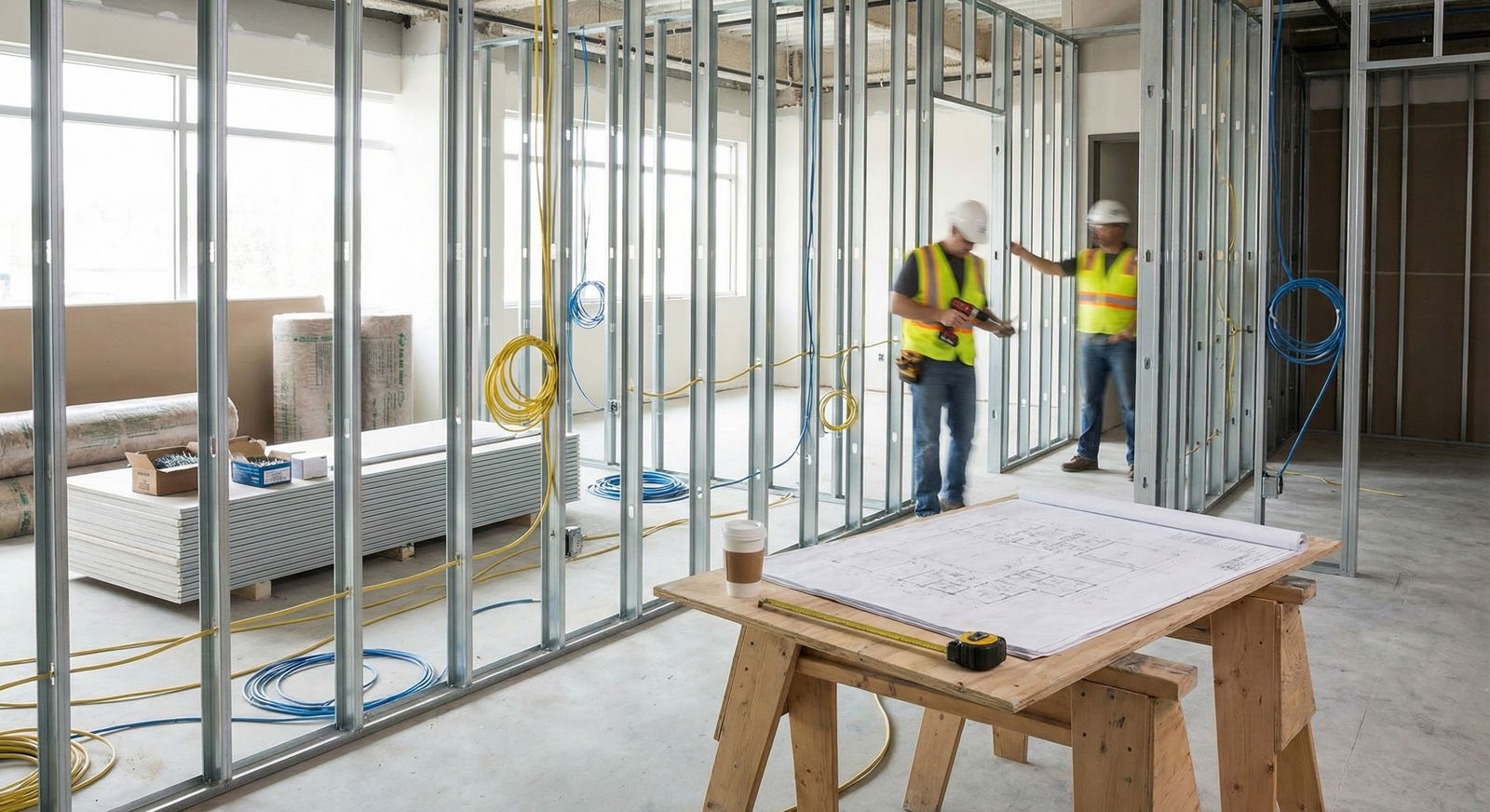
A raw retail box looks spacious and affordable. Then the bids come in. Suddenly you are paying for electrical upgrades, medical gas planning, plumbing trenching, ADA restroom modifications, dedicated IT closets, sound attenuation, and a waiting room layout that does not fight the fire code. Cheap space turns expensive fast.
The data shows MOBs often reduce build-out costs by 20% to 30% because core medical infrastructure is already there or easier to extend. Typical advantages include:
- shared or medically appropriate HVAC capacity
- existing plumbing stacks near exam-room layouts
- adequate power loads for diagnostic equipment
- elevators and ADA access already aligned with clinical use
- preexisting infection-control and life-safety design assumptions
Retail space often requires more standalone solutions. You may need:
- upgraded electrical service
- new rooftop HVAC units or re-zoning
- slab cutting for sinks or procedure room plumbing
- enhanced ADA path-of-travel corrections
- additional exterior work to meet accessibility and ingress standards
That difference matters because CapEx is front-loaded pain. Rent hurts monthly. Construction can crush you before opening day.
A useful way to think about this is Shell and Core vs Tenant Finish.
Shell and Core costs are the bones:
- structure
- utilities to the space
- mechanical capacity
- code baseline
- envelope and common systems
Tenant Finish costs are the clinical conversion:
- walls, flooring, millwork
- exam rooms
- nurse stations
- break rooms
- lighting, finishes, and specialty equipment tie-ins
In MOBs, shell and core often do more of the heavy lifting for you. In retail, the shell may be perfectly fine for a nail salon or sandwich chain but poorly optimized for a medical practice. That gap becomes your problem. And your invoice.
I have seen this play out in plain numbers. A pediatric practice in second-generation MOB space reused plumbing lines and saved months of coordination. A family medicine startup in retail had attractive rent but spent heavily on utility upgrades and entry reconfiguration because the original tenant was a clothing store. Different sticker price. Very different reality.
Tenant improvement allowances can soften the blow in both settings, but MOB landlords often understand medical build-outs better and structure concessions accordingly. Retail landlords may offer dollars, but not always enough to cover the hidden complexity of clinical conversion.
My position is direct: if your specialty needs procedure capability, diagnostic equipment, or premium patient perception, underestimating build-out complexity in retail is one of the costliest mistakes you can make.
Operational Efficiency: Parking & Accessibility
Operations are where spreadsheets meet human behavior. Patients do not care about your lease abstract. They care whether they can find you, park, walk in, and feel comfortable.
Retail usually wins on convenience. The data shows 15% to 25% higher foot traffic for non-acute and convenience-oriented care models in retail settings. That is logical. Patients are already there. They are picking up prescriptions, shopping, grabbing groceries, and they see your sign. For urgent care, retail medicine, cash-pay weight loss, allergy shots, simple pediatrics, and straightforward primary care, that visibility converts.
MOBs, however, tend to perform better for planned medical encounters. A patient seeing cardiology, endocrinology, fertility, rheumatology, or outpatient procedural care often expects a professional medical setting. That expectation changes behavior, tolerance, and perceived value.
Parking ratios reinforce the difference:
- MOB: about 1 space per 200 sq ft
- Retail: about 1 space per 300 sq ft
At first glance, MOBs look better because they require more parking support. In practice, many MOBs feel tighter because those spaces are heavily used by multiple practices with synchronized clinic hours. You have probably seen it: 10:30 a.m., every close spot is gone, and your elderly patient is circling a garage level while your front desk gets the angry phone call. Retail lots often look less elegant but function better. More surface parking. Easier turns. Less elevator dependence.
Insurance is another overlooked variable. The data suggests retail locations often carry higher fire and general liability premiums than MOBs. Shared tenant mixes matter. A practice next to a restaurant, salon, or high-turnover retailer may see different underwriting assumptions than one in a medically concentrated building. It is not always dramatic, but it is persistent.
Operationally, here is the clean summary:
Retail advantages
- higher visibility
- easier walk-in capture
- usually simpler surface parking
- stronger consumer convenience
Retail disadvantages
- more variable neighboring tenants
- potentially higher insurance costs
- weaker prestige for complex care
- more dependence on frontage and signage quality
MOB advantages
- stronger medical brand alignment
- better referral adjacency
- cleaner expectations for specialist care
- often better suited for scheduled, longer visits
MOB disadvantages
- tighter parking experience in some markets
- more expensive occupancy
- less flexibility on signage and branding
- more dependence on shared building operations
If your model depends on spontaneous patient acquisition, retail has a measurable edge. If your model depends on referrals, case complexity, and patient confidence before a high-ticket visit, MOBs usually outperform.
ROI Projections: The 5-Year Horizon
Now the part everybody really cares about. Does the more expensive option actually pay off?
Usually, yes, but only for the right specialty.
The data shows MOBs typically require 18 to 24 months to recoup higher build-out and occupancy burdens through stronger revenue quality. That return comes from:
- higher reimbursement-associated service mix
- better conversion of referred patients
- stronger patient trust for complex care
- greater long-term valuation appeal
Retail spaces often produce faster early traction because the entry costs are lower and patient volume ramps more quickly. That makes retail attractive for physicians coming out of training with limited capital and a need to reach cash-flow neutrality quickly.
But five-year economics are not just about volume. They are about revenue per visit and exit value.
A specialty clinic in an MOB may see fewer total visits than a high-traffic retail clinic, yet generate more contribution margin per encounter. Meanwhile, retail may outperform in gross visits but underperform in net profitability if payer mix is weaker, staffing needs are heavier, or no-show management becomes more chaotic.
The crossover often occurs around year 4, where MOB economics can surpass retail on cumulative net profit. Then there is the exit strategy. Practices associated with stronger medical real estate and stable specialty revenue often command better resale multiples than similar operations in generic retail settings. Buyers care about durability. So do lenders.
My view is blunt:
- High-ticket specialties: choose the MOB unless the retail site is truly exceptional.
- High-volume primary care, urgent care, and convenience medicine: retail often wins.
- If you are trying to force prestige medicine into discount real estate, or commodity medicine into premium real estate, you are fighting your own unit economics.
Key Takeaways
The data points to a clear pattern.
- Medical Office Buildings offer lower relative build-out friction, stronger professional signaling, and better long-term valuation. The price is higher monthly overhead.
- Retail Strip Malls offer a lower barrier to entry, better visibility, and stronger walk-in volume. The trade-off is higher infrastructure risk, potentially higher insurance, and a ceiling on perceived sophistication.
- Specialty fit decides the winner. MOBs are the better statistical fit for higher-acuity, higher-revenue specialties. Retail is the better fit for volume-driven, convenience-centered practices.
If you are just out of residency, do not pick the prettier lobby. Pick the model your margins can support. The building is not background. It is strategy.