
The lease you sign can matter more than your clinical skill. I have seen excellent physicians trapped in bad leases that quietly drained them for a decade.
You are not opening a coffee shop. You are opening a regulated, equipment-heavy, patient-dependent medical practice. That makes you a perfect target for landlords who know you are unlikely to move once you are in. And many of them write their leases accordingly.
Let me walk you through seven lease clauses that routinely cripple new medical practices—and how to avoid stepping on them.
1. Personal Guarantees That Never End
This is the first landmine many new physicians step on.
You think: “Standard paperwork, they just want reassurance I will pay.”
Reality: You have just signed up your future income, savings, maybe even your house, as collateral for the landlord’s investment.
A personal guarantee means if your practice cannot pay the rent, you personally are on the hook. That part is obvious. The danger is in the details:
- No end date to the guarantee
- No “burn-off” after a few years of on-time payments
- The guarantee survives sale or transfer of the practice
- You are liable even after you leave the practice
Here is the mistake pattern I see:
- A new attending signs a 7–10 year lease with a full personal guarantee.
- Year 3, reimbursement changes or a key referral dries up. Cash gets tight.
- The practice closes or is sold for less than expected.
- The landlord pursues the physician personally for the remaining rent.
Some get sued for hundreds of thousands of dollars. Long after the practice is dead.
How to avoid this trap
You are not powerless. You negotiate this before you sign, not after.
Non‑negotiated (dangerous) language:
- “Tenant and Guarantor shall be jointly and severally liable for all obligations under this Lease for the entire Term and any extension thereof.”
Safer approaches to demand:
- A limited guarantee
- Cap the total amount (e.g., 12 months’ rent)
- Or cap it to the landlord’s unamortized build‑out cost
- A burn‑off schedule
- Personal guarantee decreases after each year of on‑time payment
- Full release after 3–5 years of good history
- A good-guy guarantee
- You remain personally liable only while occupying the space
- If you give proper notice and vacate in good standing, liability stops going forward
If a landlord flatly refuses any limit or burn‑off, that is not just tough negotiating. That is a red flag. You are about to become their insurance policy, not their tenant.
2. Hidden Rent Escalations That Outrun Your Reimbursement
Base rent is never the full story. You look at “$30 per square foot” and think you got a decent deal. Five years later your effective rent is $42 and you are wondering what happened.
There are three common rent-escalation mistakes:
- Automatic annual increases that compound faster than your revenue
- Uncapped “operating expense” passthroughs (taxes, insurance, CAM)
- Ambiguous “base year” language in full-service or modified gross leases
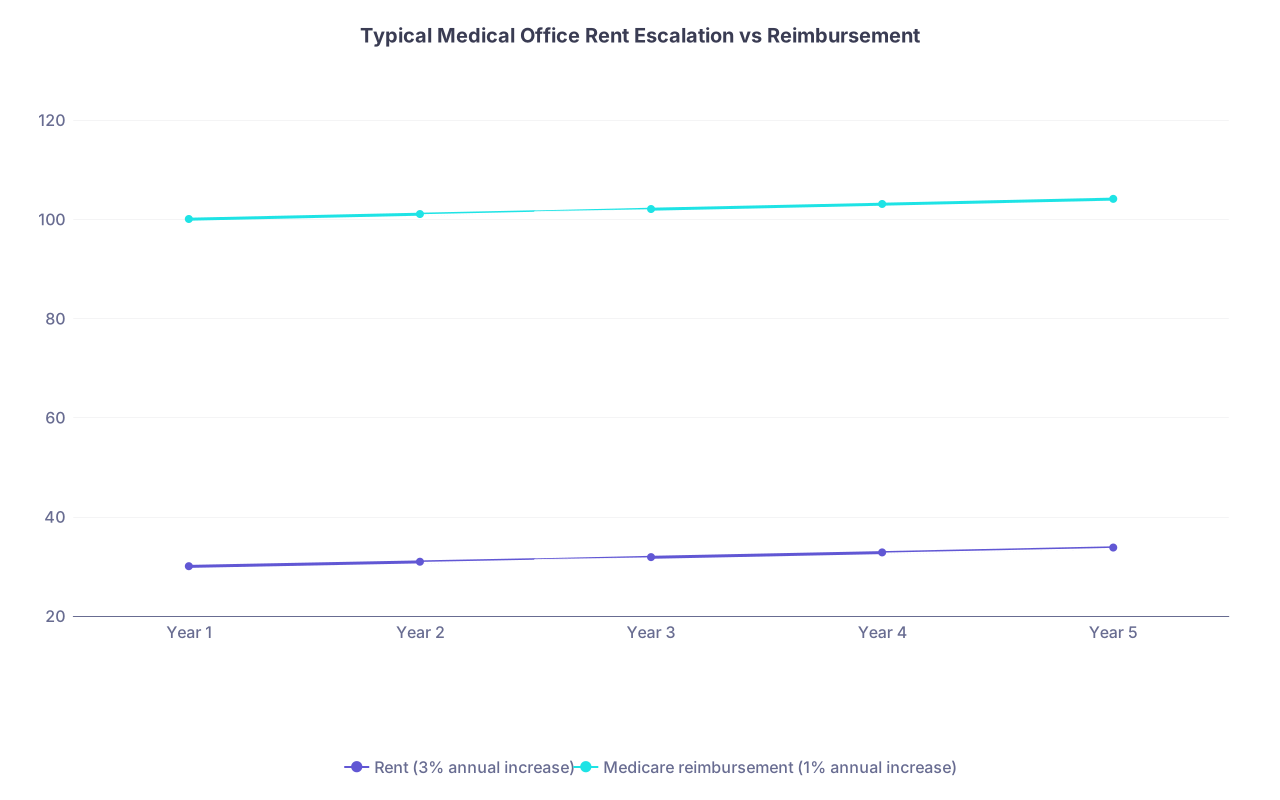
| Category | Rent (3% annual increase) | Medicare reimbursement (1% annual increase) |
|---|---|---|
| Year 1 | 30 | 100 |
| Year 2 | 30.9 | 101 |
| Year 3 | 31.83 | 102.01 |
| Year 4 | 32.78 | 103.03 |
| Year 5 | 33.76 | 104.06 |
The math is unforgiving:
- 3% annual rent increases over 10 years = roughly a 34% total increase
- Your major payer’s reimbursement may be flat or rising <1% per year
I watched one small specialty group sign a 10‑year lease with:
- 3% annual rent bumps
- Uncapped CAM and tax passthroughs
- A vague “as reasonably determined by Landlord” clause
Year 1: rent was 7% of collections.
Year 7: rent was nearly 13% of collections. Same number of providers. No major volume growth. Profit margin evaporated.
How to avoid this trap
Focus on three things:
- Cap annual increases
- Try for 2% or tie to CPI with a maximum (e.g., “CPI, not to exceed 2%”)
- Avoid “whichever is greater” language combining CPI and a fixed %
- Control operating expense passthroughs
- Demand an annual cap on controllable expenses (e.g., 5–7%)
- Exclude capital improvements, landlord’s legal/accounting costs, marketing
- Require detailed annual statements with the right to audit
- Clarify base year
- If it is a full-service or modified gross lease, nail down the exact base year and what is included
- Ensure the lease clearly distinguishes:
- Taxes
- Insurance
- CAM (common area maintenance)
Do not rely on verbal reassurances like “We never increase that much.” People change. Markets change. The lease does not.
3. Restrictive Use Clauses That Kill Your Future Options
Use clauses sound harmless: “Premises shall be used solely for the operation of a dermatology practice.”
The word “solely” is your enemy.
Why? Because your practice is not static. Five years from now, you might want to:
- Add an ancillary service (infusion, imaging, PT, cosmetic procedures)
- Bring in a different specialty partner
- Sell to a hospital or larger group with broader services
- Sublet to a complementary provider
I have seen deals collapse because the lease prohibits:
- “Any procedure requiring moderate or deep sedation”
- “Imaging services”
- “Laboratory services”
- “Retail or pharmacy services”
Meanwhile, those are the exact services that would have made the practice economically viable.
How to avoid this trap
Your goal is flexibility without triggering the landlord’s fear that you will turn the space into a nightclub.
Push for language like:
- “General medical and surgical practice, including any services customarily provided in such practices and related ancillary services not contrary to applicable law.”
Then, explicitly allow broad categories you might want later:
- Imaging
- Laboratory
- Infusion
- Physical therapy
- Telemedicine rooms or call center use
- Minor procedures and office-based surgery (if applicable)
Do not ignore landlord‑imposed limitations on:
- Hours of operation
- Number of patients in the waiting room
- “No procedures under anesthesia” (define exactly what they mean)
If you plan any kind of office‑based surgery or sedation, spell it out early and in detail. I have watched landlords try to shut down established procedure rooms because the lease did not clearly permit them.
4. Assignment and Sublease Clauses That Trap You in Place
You plan to succeed, grow, and maybe sell your practice someday. Good. Your landlord’s lease is often written to block that.
The assignment and sublease provisions determine whether you can:
- Bring in a new partner as an owner
- Sell your practice to a hospital, PE‑backed group, or local group
- Sublet unused space if your panel shrinks or you go part‑time
- Exit gracefully without a financial bloodbath
The killer language looks like this:
- “Landlord may withhold consent for any reason in its sole discretion.”
- “Any assignment or sublease shall not relieve Tenant or Guarantor of liability.”
- “Landlord may recapture the premises upon request for assignment or sublease.”
Let me translate that:
- They can simply say “No” to your sale or sublease.
- Even if they say yes, you still stay liable for everything.
- Or they can take the space back and lease it to someone else, leaving you with no asset to sell.
I have seen late‑career physicians forced to walk away from otherwise sellable practices because the buyer refused to touch their toxic lease.
How to avoid this trap
You want:
- Landlord consent not to be unreasonably withheld, delayed, or conditioned
- A clear list of conditions that, if met, must lead to approval:
- New tenant of equal or higher financial strength
- Same or medically related use
- Acceptable insurance
- Automatic consent for:
- Assignment to a hospital system or large health group
- Assignment or merger into an entity that buys the entire practice
- A release of your personal guarantee upon assignment
- Or at least after a specified transition period
Do not accept language that:
- Lets the landlord hike rent as a condition of consent (“profit sharing” on subleases)
- Charges excessive “review fees” to even consider an assignment
- Gives the landlord unilateral “recapture” rights with no compensation to you
If your exit depend on selling your charts but not your lease, your practice value plummets.
5. Repair, Maintenance, and Build‑Out Clauses That Bleed Cash
Medical build‑outs are expensive. X‑ray shielding, leaded doors, oxygen lines, specialized flooring, backups, ADA compliance. If you do not spell out who pays for what, you will pay for everything.
The recurring nightmare scenario:
- You sign a lease that says “Tenant accepts premises as‑is.”
- You spend $300k–$700k on build‑out, much of which permanently improves the landlord’s property.
- HVAC fails in year 4. The roof leaks. Plumbing issues.
- The lease quietly says you are responsible for all interior systems and sometimes even portions of structural repairs.
So your practice hemorrhages cash on capital items that should have been the landlord’s problem.

Where practices get burned
- HVAC responsibility
- Many leases make you responsible for repair/replacement even though the system serves multiple suites
- Plumbing/electrical
- “All systems serving the Premises” can mean major upgrades at your cost
- Code compliance
- Language requiring you to comply with “all future codes” can force you to pay for building‑wide upgrades triggered by your medical use
- Tenant improvements
- No clear tenant improvement (TI) allowance, just “market standard” promises from the broker
How to avoid this trap
You want clear, unambiguous allocation of responsibility:
- Landlord responsibilities:
- Structure, roof, exterior walls, parking
- Base building systems (main plumbing, main electrical, main HVAC units)
- Major capital repairs and replacements
- Tenant responsibilities:
- Cosmetic finishes (paint, carpet, fixtures)
- Interior non‑structural partitions
- Your specialty medical equipment and dedicated lines
And on build‑out:
- Get a specific TI allowance in writing:
- E.g., “Landlord to provide a tenant improvement allowance of $60 per rentable square foot.”
- Have detailed work letters describing:
- Who manages construction
- Timelines
- What counts as reimbursable improvement vs. your own equipment
Do not gloss over phrases like:
- “As reasonably determined by Landlord”
- “Including replacements as necessary”
- “All systems exclusively serving the Premises”
Those vague words have very expensive consequences later.
6. Relocation and Exclusive Use Clauses That Undercut Your Patient Base
There are two separate traps here that both mess with your stability.
A. Relocation Clauses
Buried in many leases is language allowing the landlord to move you to a “comparable” space elsewhere in the building or complex.
On paper: “Landlord shall pay reasonable moving expenses.”
In reality:
- Disruption to your patient flow
- Downtime while IT, phones, and equipment are reinstalled
- Confusion among referring providers
- Staff frustration
I watched one primary care group get relocated down a hallway with less visibility and worse access. Foot traffic plummeted. Their no‑show rate actually went up. They had zero leverage because the relocation clause was airtight.
B. Lack of Exclusivity Protections
If you are in a medical building or mixed‑use development, you also need to think about who else your landlord might bring in next.
Imagine you sign a lease in a new development as the first pediatrician. Great location, lots of families. Two years later, your landlord leases the suite next door to another pediatrics group. Then an urgent care with heavy pediatric volume downstairs.
You funded their pre‑leasing. They are now letting your competition piggyback on the demand you helped create.
How to avoid these traps
Relocation:
- Try to strike the relocation clause entirely.
- If the landlord insists:
- Require relocation only to equal or better size, configuration, visibility, and access
- Explicitly include:
- Build‑out to the same or better medical standard
- IT and cabling
- Specialty equipment moves
- Downtime compensation or rent abatement for disruption
Exclusivity:
- Ask for an exclusive use clause:
- “Landlord shall not lease any space in the building/complex for primary use as [your specialty].”
- Or at least protection against:
- Directly adjacent competing practices in the same specialty
- Similar retail‑medicine uses if you are in a mixed‑use site
Landlords will push back. That is expected. The mistake is to accept vague promises instead of enforceable lease language.
7. Default and “Remedy” Clauses That Turn a Bad Month into a Death Sentence
Here is where I have seen dreams die quietly.
Medical practices often have lumpy cash flow:
- Payer delays
- Credentialing issues
- EMR changes
- A partner leaving
You miss a rent payment by 5–10 days. Under a fair lease, you get notice and a reasonable chance to cure. Under a predatory one, you get:
- Late fees + interest
- Landlord’s legal fees tacked on
- Event of default triggered
- Acceleration of all remaining rent on the lease
| Clause Type | Low Risk Version | High Risk Version |
|---|---|---|
| Cure Period | 10–15 days after written notice | 3–5 days, or no notice required |
| Late Fees | Reasonable flat or % with cap | High % plus daily interest |
| Acceleration | Only after uncured serious default | Automatically on any default |
| Attorney’s Fees | Mutual, reasonable | Tenant pays all landlord costs always |
I watched a solo specialist practice get hit with:
- One missed payment
- A 5‑day cure period they never saw (address error)
- Automatic default
- Landlord accelerated 7 years of rent
- Practice could not recover, physician ended up in personal bankruptcy
Yes, that is extreme. No, it is not rare.
How to avoid this trap
You want:
- Written notice and reasonable cure periods
- 10–15 days for monetary default
- 20–30 days (or longer) for non‑monetary defaults
- Late fees that are:
- Modest (e.g., 3–5% of the overdue amount)
- No stacking daily penalty on top of high interest
- Acceleration language either:
- Removed entirely, or
- Limited and only after material, uncured default and with explicit landlord duty to mitigate damages (re‑lease the space)
Mutual attorney’s fees:
- If they insist you pay their legal fees when you default, insist on reciprocity: if they breach, they pay yours if you prevail.
And one more point: watch for cross‑default provisions linking your lease to other agreements (like loans or equipment leases). You do not want a hiccup with your line of credit to automatically trigger a lease default.
Practical Timeline: When to Start Lease Negotiations
Most physicians start far too late. They find space, fall in love with it, then accept the landlord’s lease with minor tweaks because they feel rushed.
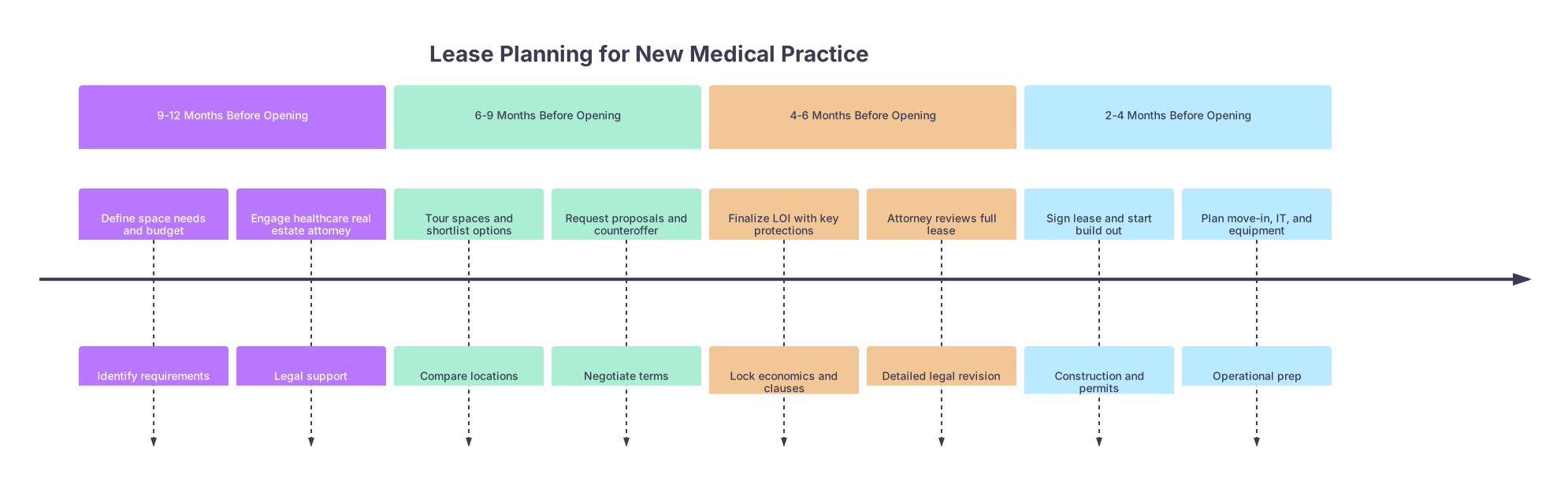
| Period | Event |
|---|---|
| 9-12 Months Before Opening - Define space needs and budget | Identify requirements |
| 9-12 Months Before Opening - Engage healthcare real estate attorney | Legal support |
| 6-9 Months Before Opening - Tour spaces and shortlist options | Compare locations |
| 6-9 Months Before Opening - Request proposals and counteroffer | Negotiate terms |
| 4-6 Months Before Opening - Finalize LOI with key protections | Lock economics and clauses |
| 4-6 Months Before Opening - Attorney reviews full lease | Detailed legal revision |
| 2-4 Months Before Opening - Sign lease and start build out | Construction and permits |
| 2-4 Months Before Opening - Plan move-in, IT, and equipment | Operational prep |
You should:
- Engage a healthcare-focused real estate attorney before you sign the LOI (letter of intent), not after the full lease is drafted.
- Use the LOI to lock in:
- Rent, term, TI allowance
- Basic assignment, use, and guarantee concepts
- Treat the full lease as risk management, not just a formality.
And no, your friend who “does some commercial real estate” is not enough. Medical practice leases have unique pitfalls—HIPAA, imaging, biohazards, waste handling, special wiring, sedation, etc. A landlord’s form lease rarely addresses those in your favor.
Visual Snapshot: Most Common Dangerous Clauses
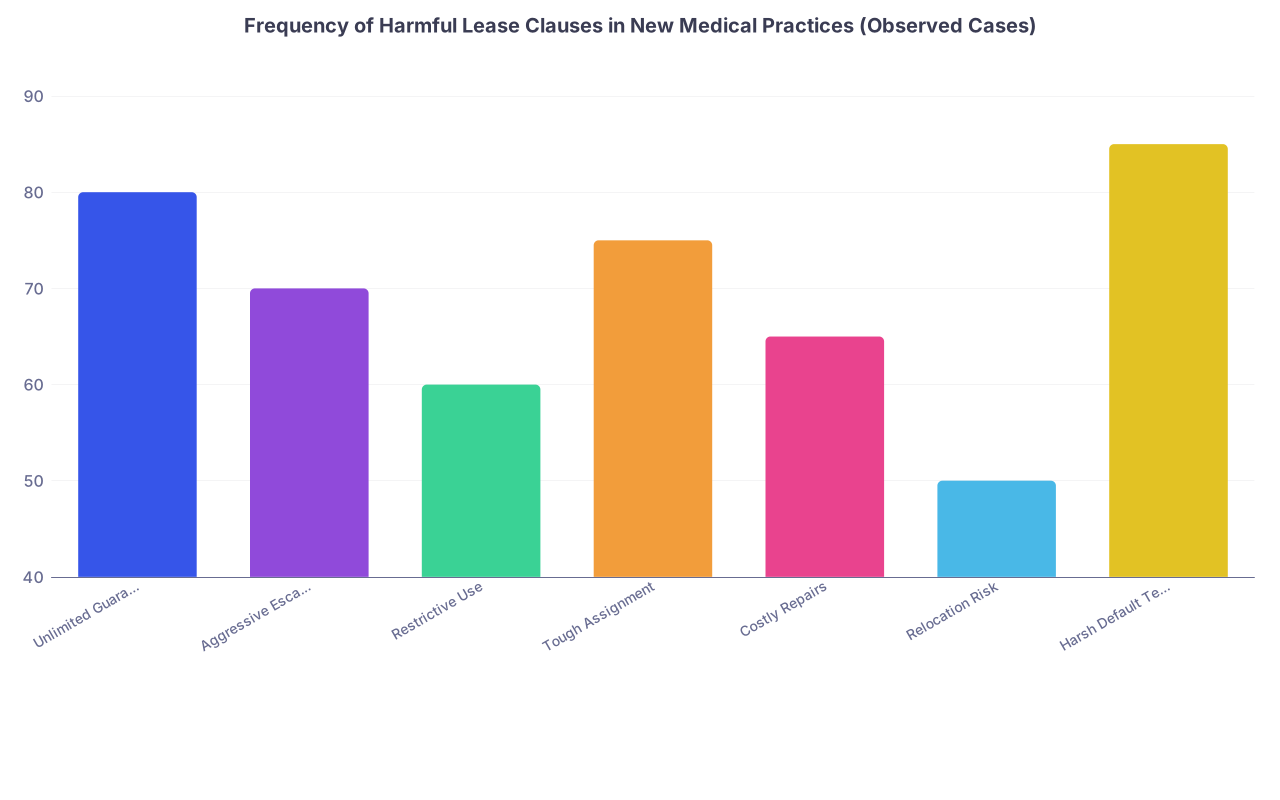
| Category | Value |
|---|---|
| Unlimited Guarantee | 80 |
| Aggressive Escalations | 70 |
| Restrictive Use | 60 |
| Tough Assignment | 75 |
| Costly Repairs | 65 |
| Relocation Risk | 50 |
| Harsh Default Terms | 85 |
These numbers are not from a national registry. They reflect what I repeatedly see in deals handed to me “just for a quick look.” Most are fixable—before you sign. Almost none are fixable after.
Three Things to Remember Before You Sign Anything
- A medical office lease is not just “rent.” It is a 7–10 year financial instrument that can either support or strangle your practice.
- The ugliest damage comes from fine‑print clauses, not the headline rent number: personal guarantees, escalation formulas, assignment limits, default remedies.
- If you would not read and negotiate a complex employment contract alone, do not do it with your lease. Get a healthcare real estate lawyer, early, and let them be the bad cop.
Avoid these seven clause mistakes, and your lease becomes what it should be: a stable, predictable platform for patient care—not a financial trap waiting to spring the first time something goes wrong.