
The glossy fantasy of private practice is a lie—at least the version you’re sold during residency.
Everyone talks about “autonomy,” “owning your schedule,” and “building equity.” Attendings glamorize it on rounds. Recruiters hint that you’re leaving money on the table if you join a hospital. What almost no one tells you—intentionally, by the way—is how many hidden, non-obvious costs will quietly eat your time, your income, and in some cases, your sanity.
I’ve listened to partners argue in closed-door meetings, heard program directors quietly warn their favorites about specific groups, and watched wide‑eyed new grads get crushed under things they didn’t even know to ask about. Let me walk you through the parts no one explains when they’re trying to get you to sign on the dotted line.
The Time Tax You Never See on a Spreadsheet
Here’s the first truth: private practice will charge you a second, invisible full-time job. You won’t see it in the contract. It shows up in your evenings, your weekends, and that “flexibility” people keep bragging about.
In residency, your time is scheduled for you. In private practice, your clinical time is scheduled—and then everything else gets shoved into the crevices.
I’ve seen this play out over and over:
You think you’re signing up for:
- 4 days of clinic.
- One surgery day.
- “Minimal call.”
What actually happens: You’re finishing charts from 7–9 pm. You’re answering portal messages at 10:30 pm so RVUs don’t get clawed back. You’re doing partnership track “committee work” on your supposed day off.
The hours on your contract are fiction. The real job includes:
- Vendor meetings about EMR “upgrades” that never work right the first time.
- Arguing with billing about denials on cases you did 3 months ago.
- Reviewing contracts for new hires, new PAs, new equipment service plans.
- Compliance modules, OSHA stuff, HIPAA audits—your name is on the door now, not some hospital administrator’s.
You don’t clock that as “cost” when you sign. But your spouse and kids will.
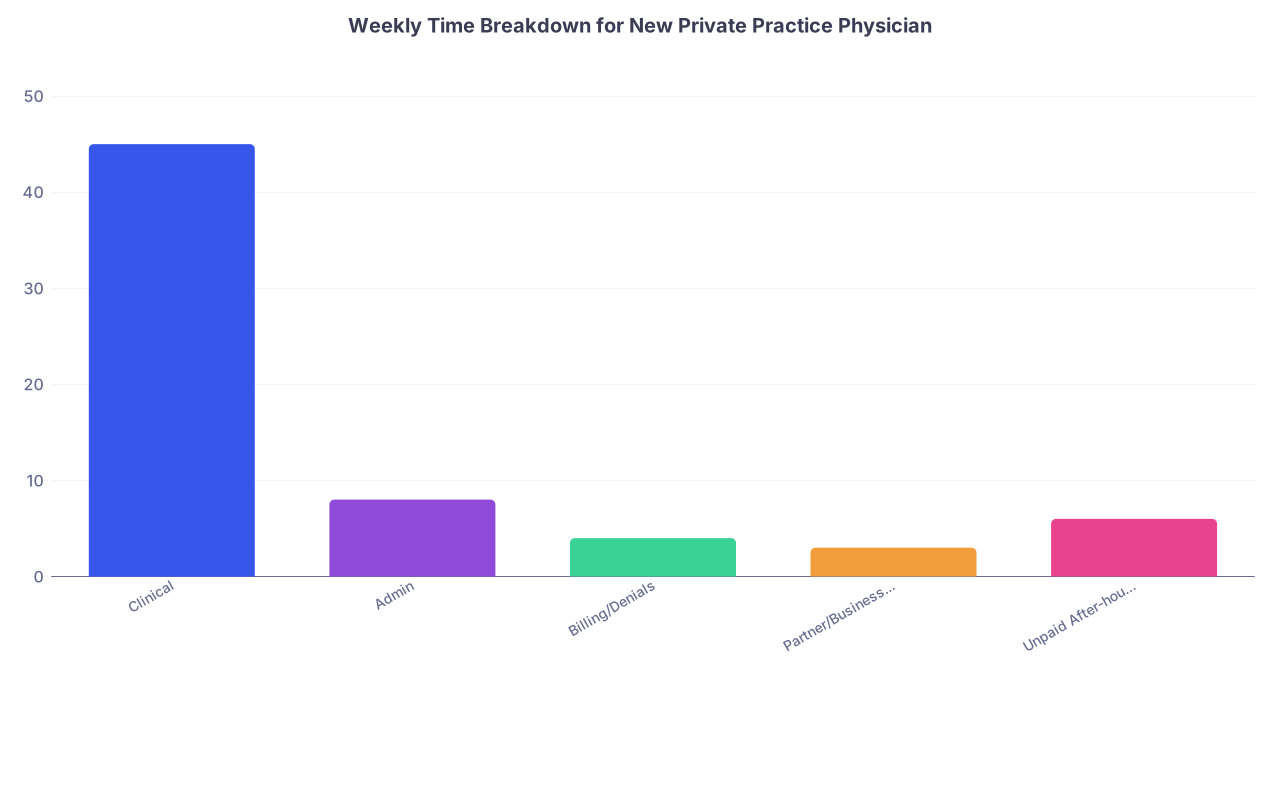
| Category | Value |
|---|---|
| Clinical | 45 |
| Admin | 8 |
| Billing/Denials | 4 |
| Partner/Business Meetings | 3 |
| Unpaid After-hours Tasks | 6 |
Those last three categories? That’s the shadow load. Nobody showed you that graph in residency because it would kill half the recruitment pitches on the spot.
The Emotional Overhead of Being the Final Stop
In residency, there’s always someone above you. An attending. A department. A hospital legal team.
In private practice, the final stop is you. And that has a specific emotional cost that almost no one warns you about.
I’ve watched a new partner in a GI group realize—too late—that the “brand new endoscopy center” they proudly marketed to him sits on a loan he’s now personally guaranteeing. When reimbursement dipped and volumes slowed, guess whose anxiety spiked every time he saw an empty slot on the schedule?
Private practice doesn’t just give you autonomy. It gives you:
Personal responsibility for staff jobs.
That MA you love? When volumes dip and you look at payroll, you’re deciding who feeds their family and who doesn’t.Direct exposure to patient anger.
In a hospital, “billing” is some faceless office. In private practice, they yell at your front desk, leave your practice one‑star reviews, and demand to talk to you because it’s “your office.”Constant low-level legal fear.
Your name is on the forms. Your group is the entity. It’s your malpractice renewal, your charting litigation risk, your signature on those controlled prescriptions.
The unspoken reality: many private docs start living with a background hum of stress they didn’t feel as employees. They earn more on paper, but the psychic load quietly takes its cut.
The “Free” Help That Isn’t Free
You’re told: “Don’t worry, we have billing. We have front office. We have an office manager. You focus on medicine.”
That line is half-true. And dangerously incomplete.
Let me tell you how this actually works.
Billing staff cost money. Good billing staff cost a lot of money. Most groups are cheap. They think they’re being “lean.” So you inherit:
- Undertrained billers who don’t understand nuanced coding.
- One overworked coding specialist for 10+ physicians.
- Front-desk staff who don’t verify insurance well, creating denials you’ll feel three months later.
Here’s the trick: every weak link in that chain converts directly into your unpaid labor.
When billing is incompetent, you end up:
- Rewriting notes to support codes you already performed correctly.
- Writing appeals and peer-to-peers for obvious indications.
- Calling payers during your lunch breaks because the office “doesn’t have clinical staff time” to handle it.
I’ve watched a new cardiologist lose $40–50k in his first year because his group’s billing company miscoded new patient visits and follow-ups. He only realized when he started tracking his own EOBs (which 90% of new grads don’t do consistently).

And that “office manager” you’re leaning on? In a lot of private practices, they’re glorified traffic controllers, not strategic operators. Many are loyal to the founding doctors, not to the long-term financial health of the group or new partners.
You’ll be told: “That’s how we’ve always done it.”
Translation: “We’re not changing the broken process that quietly drains your revenue because it works well enough for the senior partners.”
The Partnership Mirage and Buy-in Games
This is the dirtiest little secret of private practice: “partnership track” is often less about partnership and more about subsidizing senior partners’ exit plans.
I’ve reviewed contracts from every flavor: cards, ortho, GI, anesthesia, outpatient psych. Same themes keep showing up.
You’re sold:
- “Two-year track to partnership.”
- “Equal voting rights.”
- “Share in ancillaries.”
What you’re not told up front:
- The “buy-in” number is often squishy, and it creeps up right when you’re eligible.
- Ancillary income (imaging, lab, PT, ASC) is often walled off behind separate LLCs controlled by founding partners.
- Voting rights are technically equal—but big decisions are made in pre-meetings where you’re “not needed yet.”
Here’s a typical structure I’ve seen:
Year 1–2: You’re a junior associate. You get a base + RVU-based or production-based bonus. You carry heavy call, get the worst clinic templates, and are “proving your value.”
Year 3–4: Partnership “offer.” Suddenly you’re shown financials. They look impressive. But to become a partner, you’re expected to:
- Buy into accounts receivable.
- Buy into equipment.
- Buy into the office real estate.
- Buy into the surgery center or imaging center—separate entity.
That’s a huge debt stack if you’re not careful.
| Component | Common Range |
|---|---|
| Practice equity | $100k – $300k |
| AR (accounts rec.) | $50k – $150k |
| Equipment share | $25k – $100k |
| Real estate stake | $100k – $400k |
| Ancillary LLCs | $50k – $250k+ |
These numbers get pitched as “investments.” And sometimes they are. But here’s the part they do not put in the slideshow: you’re often buying into yesterday’s good deals at today’s inflated valuations.
The shadow cost: you’re funding the retirement or de-risking of people who built the group in a very different reimbursement era, under very different costs. You’re inheriting their structure at exactly the moment insurers are tightening the screws.
Ask an older partner how much they paid for their buy-in 15 or 20 years ago. Watch their face when you quietly say, “So why am I paying 3–4x that for the same share?”
The Illusion of “More Money” vs. Actual Take-Home
Residency teaches you nothing about how to read a pro forma or understand collections vs. billed charges. That’s by design. Clueless doctors sign faster.
Most new grads look at offered salary, compare that to hospital offers, and think they’re doing well. That’s like comparing menu prices without knowing about taxes, fees, and tip.
You should be comparing net after everything:
- Malpractice coverage (occurrence vs claims-made, and who pays the tail).
- Health insurance premiums.
- Retirement match or lack of it.
- CME funds, licensing, DEA, boards.
- Disability and life insurance.
- Call pay (or no call pay).
- Expected RVU or revenue targets to “hit bonus.”
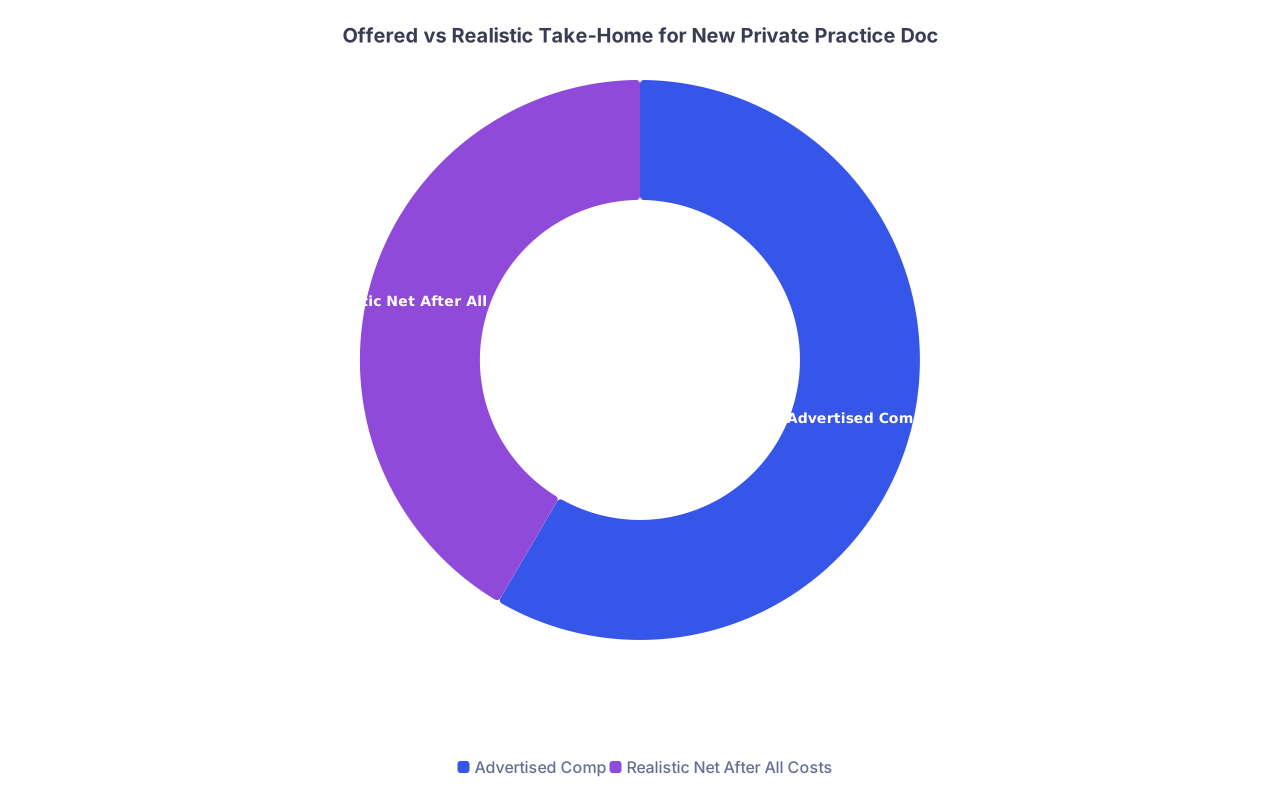
I’ve seen private groups quote “$450k+ potential” when the realistic number for a new grad without established referrals is more like $280–320k for the first few years.
They’re quoting what their busiest partner did in their peak years, with full ancillaries, packed panels, and optimized scheduling. Not what you will realistically see in Year 1–3.
| Category | Value |
|---|---|
| Advertised Comp | 450 |
| Realistic Net After All Costs | 320 |
The spread between those numbers? That’s composed of:
- Overoptimistic volume assumptions.
- Denials and write-offs you didn’t anticipate.
- Unpaid after-hours work you can’t bill.
- Ancillary income that’s “coming” but never seems to materialize at the level promised.
Hospital employment has its own traps, sure. But the fantasy that private practice always means “way more money” is outdated in a lot of markets. In many metro areas, the real advantage now is control, not cash. And even that control is limited by payers and referral patterns.
The Culture Tax: Politics, Power, and Inherited Dysfunction
Residency has hierarchy, but it’s open. You know who’s chief, who’s PD, who’s chair.
In private practice, hierarchy is disguised as “collegiality.”
You join a group that’s been together 10, 15, 20 years. They pitch “we’re a family.” What they actually are is a complex political ecosystem with history you’re not privy to.
You don’t know:
- Which partner is checked out and coasting on name recognition.
- Which partner is the unofficial power broker who controls referral streams.
- Which partner technically has the same vote but in reality never crosses the founding trio.
- Which revenue streams are sacred and off-limits for reallocation.
I’ve seen new grads walk into groups where:
- They’re sent to satellite locations no one else wants.
- They’re handed the worst payer mix with the line, “We’re expanding your panel!”
- They’re “volunteered” for every thankless committee—IT, compliance, outreach—while senior partners show up only to sign off on decisions.
That’s a culture tax. You’re paying with your time, reputation, and leverage. And the cost doesn’t show up until you’ve been there long enough to realize the scoreboard is rigged.
You also inherit old patterns. That front desk person who’s rude to patients? They’ve been there 18 years and are “like family.” That outdated EMR? “We survived with it this long.” That insane call structure? “We all did it when we were young.”
Translation: your pain is part of the business model.
Hidden Legal and Compliance Landmines
No one in residency teaches you how terrifyingly easy it is to accidentally violate Stark, anti-kickback laws, or simple employment regulations in private practice.
You think you’re just:
- Referring to your in-house PT.
- Ordering labs from the practice-owned lab.
- Having a pharma rep bring lunch.
Behind the scenes, lawyers and compliance people (the ones you don’t have yet) are sweating those relationships.
Common shadow costs here:
Legal fees for contract review, lease agreements, and HR issues.
If you’re smart, you’re paying $300–600/hour for someone good. If you’re not, you’re winging it from template contracts and hoping for the best.HR and employment law headaches.
Staff pregnancy, FMLA, workplace injury, harassment complaints—from people you supervise. Screw that up and it’s not just “an email to GME.” It’s a lawsuit.Regulatory changes.
Surprise: your state just changed rules on telemedicine, prescribing, or supervision. You’re supposed to know and adapt. No one emails you a handy summary like in residency.

| Step | Description |
|---|---|
| Step 1 | Residency |
| Step 2 | Employed Physician |
| Step 3 | Associate in Private Practice |
| Step 4 | Partner |
| Step 5 | Owner of Ancillaries |
You can outsource some of this to management companies or consultants. But those folks are not cheap either, and not all of them are competent. Hiring the wrong consultant is another shadow cost; you pay them and then still do half the work yourself.
The Lifestyle Hit No One Admits Publicly
Here’s what attendings rarely confess in front of residents: many of them feel trapped by the very practices they brag about building.
I’ve sat in back offices and heard lines like:
- “If I could go back, I’d just take a hospital job.”
- “I can’t afford to retire until we sell the building.”
- “We’re stuck with this EMR because switching would be a $400k hit.”
The lifestyle cost shows up in subtle ways:
Vacations that aren’t really vacations.
If you’re out, revenue drops. Staff still need to be paid. Your call coverage favors the senior doc. So you “check in” from the beach and answer messages from your phone.Guilt about saying no.
You’re not just saying no to a hospitalist asking you to see a consult. You’re saying no to income that contributes to fixed costs. After a while you just stop saying no.Commuting gymnastics.
To “expand the practice,” you’re driving 40 minutes to a satellite clinic twice a week. Those hours are unpaid but chew up your day.
The mythology is: private practice = control = better lifestyle.
The honest version: private practice gives you levers to adjust your lifestyle, but every lever has a revenue consequence. And many docs never actually feel free to pull them.
How to Go In With Your Eyes Open
I’m not telling you to avoid private practice. I’m telling you to stop walking into it blind.
Some of the happiest physicians I know are in well-run private groups. They share profits transparently, they’ve modernized their operations, they invest in good people, and they protect their younger partners because they remember being in that position.
You want to find those practices, not the ones coasting on nostalgia and exploiting naivety.
At minimum, before you sign anything:
- Get three years of group-level financials, not just your projected salary sheet.
- Ask how much current partners paid for their buy-in, and when.
- Ask who actually owns the real estate, imaging, lab, ASC, and how distributions work.
- Ask who has left the practice in the last 5–10 years and why. Then quietly call one of them.
And for your own sanity, budget emotional and time costs, not just cash. If the opportunity is financially great but requires 60 clinical hours plus 10–15 administrative hours weekly, be honest with yourself: is that the life you want for the next decade?
Years from now, you won’t care which recruiter’s pitch sounded the shiniest. You’ll care whether you built a career where you’re not constantly trading your evenings, your sleep, and your principles just to keep a shaky business model afloat.