
Last week I got an email from a brand‑new attending who’d just signed the lease on her first clinic. She walked into her beautiful, freshly painted space on day one, turned on the lights, sat at the front desk… and no one came. Not one phone call. Not one walk‑in. Just the hum of the HVAC and her own heart pounding.
You can probably feel that in your stomach already, because it’s exactly the nightmare you’re playing on a loop: What if I open… and nobody shows up?
The ugly truth first: yes, the empty days happen
Let me rip the band‑aid off. Yes, you will probably have days – especially in the first few months – where your schedule looks embarrassingly empty. The EMR template will show 8–10 open slots and maybe one lonely follow‑up at 3:15 pm. You’ll start asking yourself if you’ve just made a catastrophically stupid decision.
This is not a sign your clinic is doomed. It’s a sign you’re in year one.
The fantasy is: “If I hang my shingle, they will come.” The reality is more: “If I hang my shingle, tell 10,000 people about it, annoy the hell out of insurance directories, shake hands with everyone in a 10‑mile radius, fix my website three times, and manage not to burn out… then they will slowly, inconsistently, and somewhat unpredictably come.”
Here’s what people don’t tell you when they post those smug “panel full in 6 months!” screenshots on Facebook: they either had a massive feeder source (hospital system, spouse’s practice, prior panel they took with them) or they worked like maniacs behind the scenes.
And even then, the first 3–6 months looked sparse.
What “normal” growth looks like (not the Instagram version)
Let’s put some actual numbers to this because your brain is probably going to worst‑case, apocalyptic zero forever.
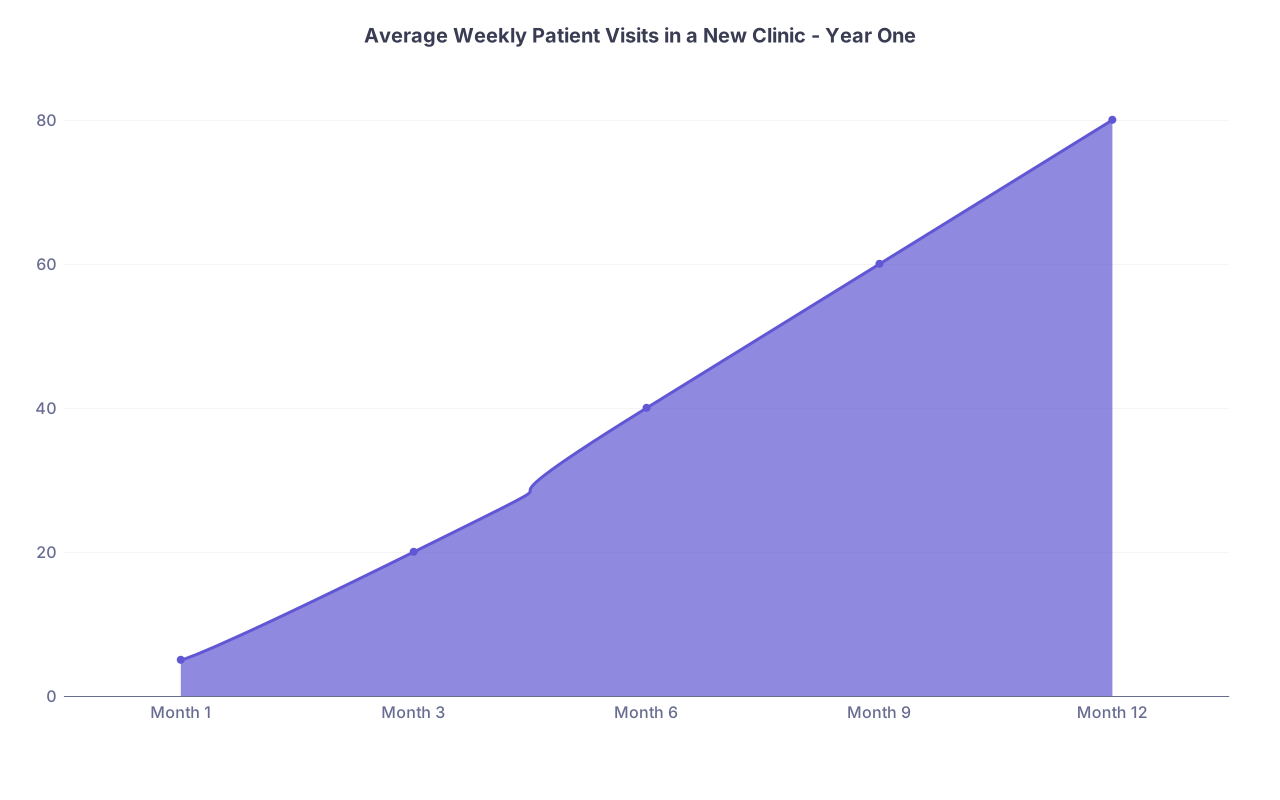
| Category | Value |
|---|---|
| Month 1 | 5 |
| Month 3 | 20 |
| Month 6 | 40 |
| Month 9 | 60 |
| Month 12 | 80 |
That’s more realistic than “booked out three months in 8 weeks.”
Month one: You might see 1–3 patients a week. Maybe 5–10 if you already have relationships in the community or a referring doc vouching for you. It feels like you’re paying rent to sit in a nice office and refresh your email.
By month three: If you’ve been even minimally proactive, you can often get to 15–25 visits a week. That’s still not full time. It’s still anxiety‑inducing. But it’s clearly not “no one is coming.”
By month six to twelve: Many primary care, psych, and some procedurally light specialties can reach 50–80 visits a week, assuming you’re in a reasonably populated area, paneled with big payers, and not hiding from the world.
Are there horror stories? Yes. I’ve seen:
- The internist who opened in a wealthy suburb saturated with concierge practices, didn’t take insurance, had no online presence, and was shocked they were seeing 2–3 patients a week at month nine.
- The psychiatrist who signed a triple‑net lease in a medical building with zero walk‑by traffic, delayed getting paneled with major insurers, and then wondered why referrals were trickling instead of flooding.
But those were not “no patients ever” stories. They were “slow growth because of very specific, fixable mistakes” stories.
The real reason nobody shows up at first: lag, not rejection
The nastiest mind‑game is the gap between you doing things and you seeing results.
You submit insurance paneling in July. You might not be live in their directory until October. The PCP down the street meets you in August. Their first referral might not land until November because they already filled September/October with other people.
There’s almost always a 2–4 month lag from when you start pushing to when it shows up in your schedule.
So those first quiet months? That’s not the market deciding you’re a failure. That’s just physics. Administrative physics.
I’ve watched this exact pattern enough times that I’d bet money on it:
- Month 1–2: Panic. You obsess over your EMR schedule screen. You question everything.
- Month 3–4: First wave hits. One insurance goes live. A couple of local therapists start sending you people. You see little clumps of patients.
- Month 6–9: Second wave. Word of mouth starts kicking in. Your name is now recognizable to front‑desk staff at PCPs and specialists. Your online reviews begin to show up.
- Month 9–12: You suddenly realize you actually need to start controlling your schedule so you don’t get overwhelmed, because the trickle has quietly turned into a stream.
The problem is you’re mentally living in Month 1 forever. You’re catastrophizing as if that snapshot is the movie. It isn’t.
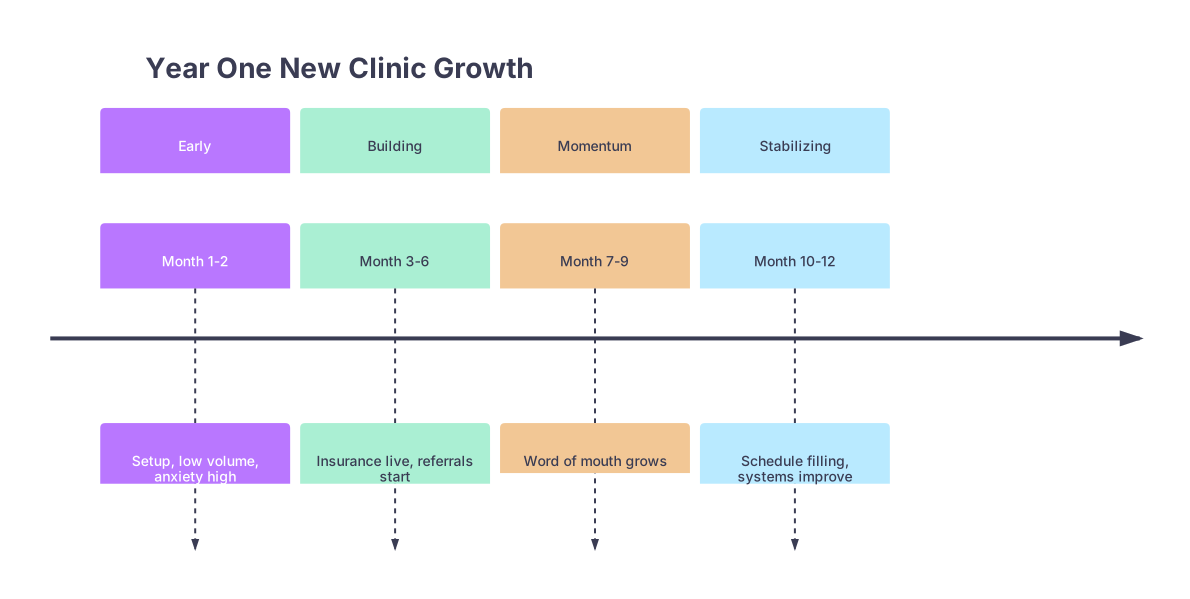
| Period | Event |
|---|---|
| Early - Month 1-2 | Setup, low volume, anxiety high |
| Building - Month 3-6 | Insurance live, referrals start |
| Momentum - Month 7-9 | Word of mouth grows |
| Stabilizing - Month 10-12 | Schedule filling, systems improve |
What to do when your schedule is a ghost town
You’re not doomed. But you can’t just sit there either. The empty days can actually be the most valuable time you’ll ever have in this business if you don’t spend it frozen in dread.
Here’s what actually moves the needle, from the “I’m going to throw up because no one is booked next week” place:
Use mornings to push visibility, afternoons to build systems.
Visibility means:
- Get every major insurance panel you can reasonably stand, at least for year one. I know the rates suck. But “I’ll start out cash‑only and then maybe add insurance” is how a lot of new clinics end up suffering. You can always step back later when you’re full.
- Claim and aggressively clean up your online listings: Google Business Profile, Healthgrades, Psychology Today (for mental health), Zocdoc if it makes sense in your market. Make sure hours, phone, address, and conditions treated are crystal clear.
- Make it obscenely easy to book. Online booking, short contact forms, a phone number that gets answered by a human or a genuinely responsive service.
Systems means:
- Nail your intake workflow while volume is low. Scripts for your front desk (even if that “front desk” is just you answering a cell phone), new patient packets, consent forms, no‑show policies.
- Set up simple but clean processes for refills, result notifications, and urgent issues. When people do come, how they feel treated in the first 2–3 interactions is what determines if they come back and if they tell their friends.
And yeah, get out of the damn office.
I’ve seen docs sit in their beautiful, silent suite for 8 hours a day “being available,” when the best thing they could do for their future schedule was walk three doors down to the busy pediatrician or psych NP and say, “Hey, I’m Dr. X, I just opened down the hall, here’s what I treat, here’s my card.”
Is that awkward? Yes. Is it effective? Also yes.
How much runway you actually need (money and time)
This is the part you’re probably waking up at 3 am panicking about: “What if patients don’t show up fast enough and I run out of money?”
You’re not wrong to obsess over this. Blind optimism is how people get wrecked.
Here’s a blunt, conservative view for a solo, office‑based practice (primary care, psych, many IM subspecialties):
| Expense Category | Approximate Monthly Cost |
|---|---|
| Office Lease | $2,000–$4,000 |
| Malpractice | $500–$1,000 |
| Staff (1 FTE) | $3,000–$4,500 |
| EMR/Billing/Phone | $500–$1,000 |
| Utilities/Supplies | $300–$700 |
So you’re easily staring at $6,000–$11,000/month before you pay yourself a dime, depending on your market and how lean you go. That’s why people say, “Have 6–12 months of personal and business expenses covered before you open.”
Do many people ignore that? Yes. Do some still make it? Also yes, but the stress ages them 10 years.
The combination that usually works:
- 6+ months of personal expenses saved
- 3–6 months of business overhead saved or on a line of credit
- Some kind of part‑time income (urgent care, telehealth, hospital coverage) in the first year
You don’t have to choose between “all in, no backup plan” and “never start.” The smartest new clinic owners I’ve seen kept one foot in a stable income source the first 6–12 months and dialed it down only when clinic volume made it safe.
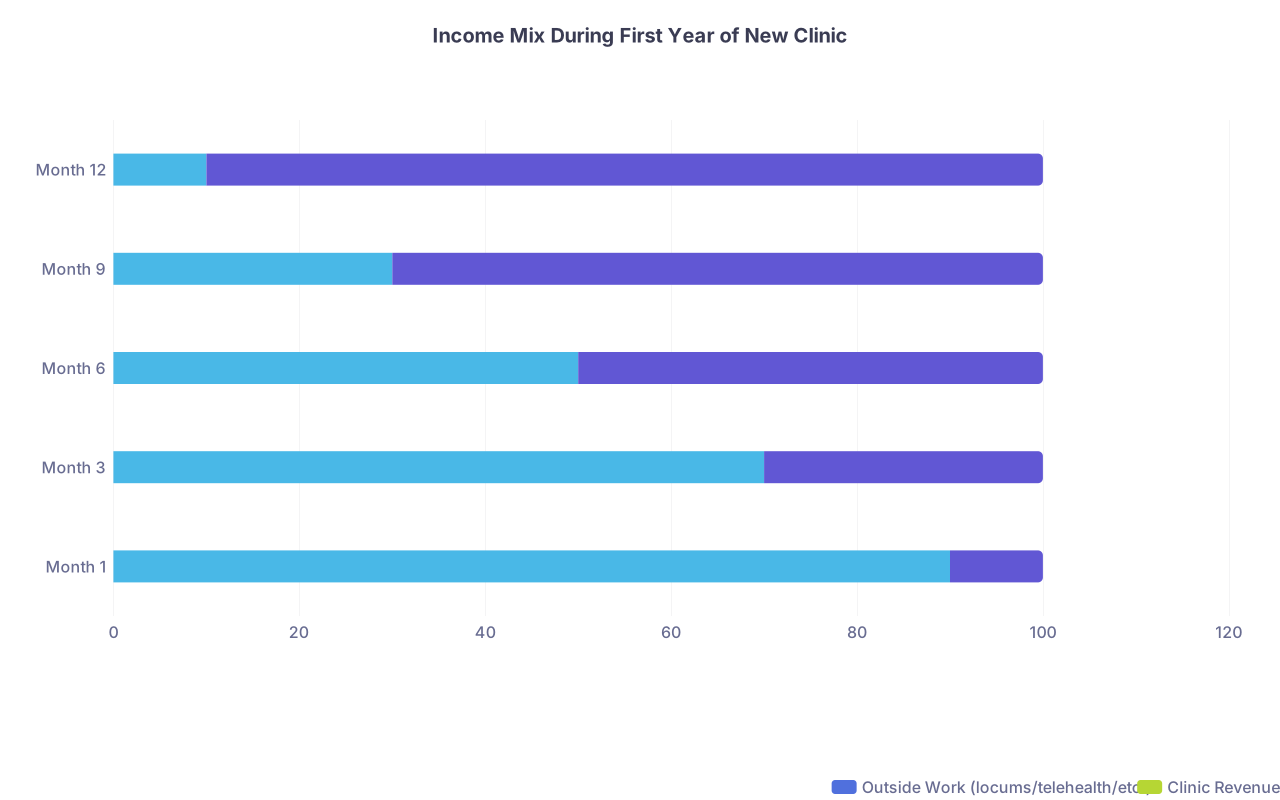
| Category | Outside Work (locums/telehealth/etc.) | Clinic Revenue |
|---|---|---|
| Month 1 | 90 | 10 |
| Month 3 | 70 | 30 |
| Month 6 | 50 | 50 |
| Month 9 | 30 | 70 |
| Month 12 | 10 | 90 |
If you’re opening with literally no savings, no line of credit, no backup job, and an expensive lease, then yes, your “no patients show up” fear is not overreacting. It’s your brain screaming that the margin for error is too small. Listen to it and adjust your plan before you sign anything.
But what if it actually fails? Like, really fails?
This is the dark corner you keep going back to. “What if I do everything right, and it just doesn’t work, and I’ve destroyed my career and my finances and I never recover?”
Let’s drag that into the light.
I’ve seen practices fail or semi‑fail. Almost always for one of these reasons:
- Overbuilt and overspent: Fancy buildout, way too much square footage, brand‑new furniture, top‑shelf everything on day one. High fixed costs + slow ramp‑up = disaster.
- Wrong location and stubborn pride: Opened in a saturated or inconvenient spot and refused to move or pivot services.
- No consistent outreach: Assumed “being a good doctor” was enough to grow. Never met referrers, never touched their online presence, barely answered the phone.
- Burned out and checked out: Owner so resentful and exhausted they became unpleasant to staff and patients. Word spread.
But notice what’s missing: “No one ever came, at all, forever, because they were just intrinsically unworthy.”
That’s the story your anxiety is whispering. It’s not how this actually plays out.
Worst case real‑world scenario looks more like:
- You open. It’s slower than you planned.
- You pick up more outside work to cover the gap.
- You give it 12–24 months, actively tweaking location, services, hours, payers, marketing.
- At some point you decide: either it’s growing enough to keep, or the financial/emotional cost isn’t worth it.
- If not worth it, you close or sell the charts, go to a job, maybe try again later with all the lessons learned (and there are a lot of them).
Does that suck? Yes. Is it career‑ending? No. Employers do not view “I tried private practice and it wasn’t for me” as a scarlet letter. Half their own attendings tried it at some point.
The “I will never recover” narrative is anxiety lying to you. The worst realistic case is: you lose time, some money, and a chunk of ego. You gain hard skills you literally cannot learn any other way.
How to know if your year‑one growth is actually on track
You want a litmus test. Some way to distinguish “normal slow” from “we’re in trouble.”
Here’s a rough, anxiety‑calming guideline for a general outpatient clinic in a decent‑sized city or suburb, assuming you’re paneled with at least a few major insurers:
| Timepoint | Weekly Visits That Are Usually OK | Red Flag Zone |
|---|---|---|
| Month 3 | 10–20 | < 5 |
| Month 6 | 25–40 | < 15 |
| Month 12 | 50–80 | < 30 |
If you’re at or above the “OK” column, you’re fine. Anxious, maybe, but fine.
If you’re in the red‑flag numbers, then it’s not “you’re a failure,” it’s “something concrete is blocking growth.” That something is usually:
- Insurance panels still pending or you never applied to the ones that matter most locally
- Phones not getting answered / long waits for appointments / weird voicemail
- Your online presence makes it hard to tell what you actually do
- Local referrers don’t know you exist or don’t know what kinds of patients you want
Those are solvable. Annoying, but solvable.
| Period | Event |
|---|---|
| Early - Month 1-2 | Setup, low volume, anxiety high |
| Building - Month 3-6 | Insurance live, referrals start |
| Momentum - Month 7-9 | Word of mouth grows |
| Stabilizing - Month 10-12 | Schedule filling, systems improve |
What to tell yourself on those silent days
There will be a day – probably a Tuesday – where you sit in your empty exam room at 11:30 am and feel physically sick, convinced you’ve made a life‑ruining mistake.
On that day, here’s what I want you to remember:
First, emptiness is not data about your worth as a physician. It’s data about your marketing, your systems, your timing. All of which can be changed.
Second, this is a long game. A clinic is not an exam where you either pass or fail on a single day. It’s a relationship with a community that builds slowly, then all at once.
Third, you are allowed to protect yourself while you build this thing. Keeping a per diem gig or telehealth nights doesn’t mean you “failed at being an entrepreneur.” It means you’re not suicidal with your finances.
Lastly, most people you admire who “made it” in private practice had months where no one showed up and they quietly freaked out just like you. They just don’t put that part on their website.

Quick mental checklist for when your brain goes to hell
If you’re spiraling, run through this, out loud if you have to:
- Are there actual patients on the schedule this month, even if it’s not as many as I want?
- Have I applied to the main insurance panels in my area?
- Can a random stranger clearly find and understand what I do in under 30 seconds online?
- Have I personally talked to at least 5–10 local clinicians who see the same population?
- Do I have at least 3–6 months of runway (cash + side income) to keep going?
If most of those answers are yes, you’re not in a “no one will ever come” situation. You’re just in the part of the movie that feels terrible but looks totally boring and expected to anyone who’s seen enough of these stories.
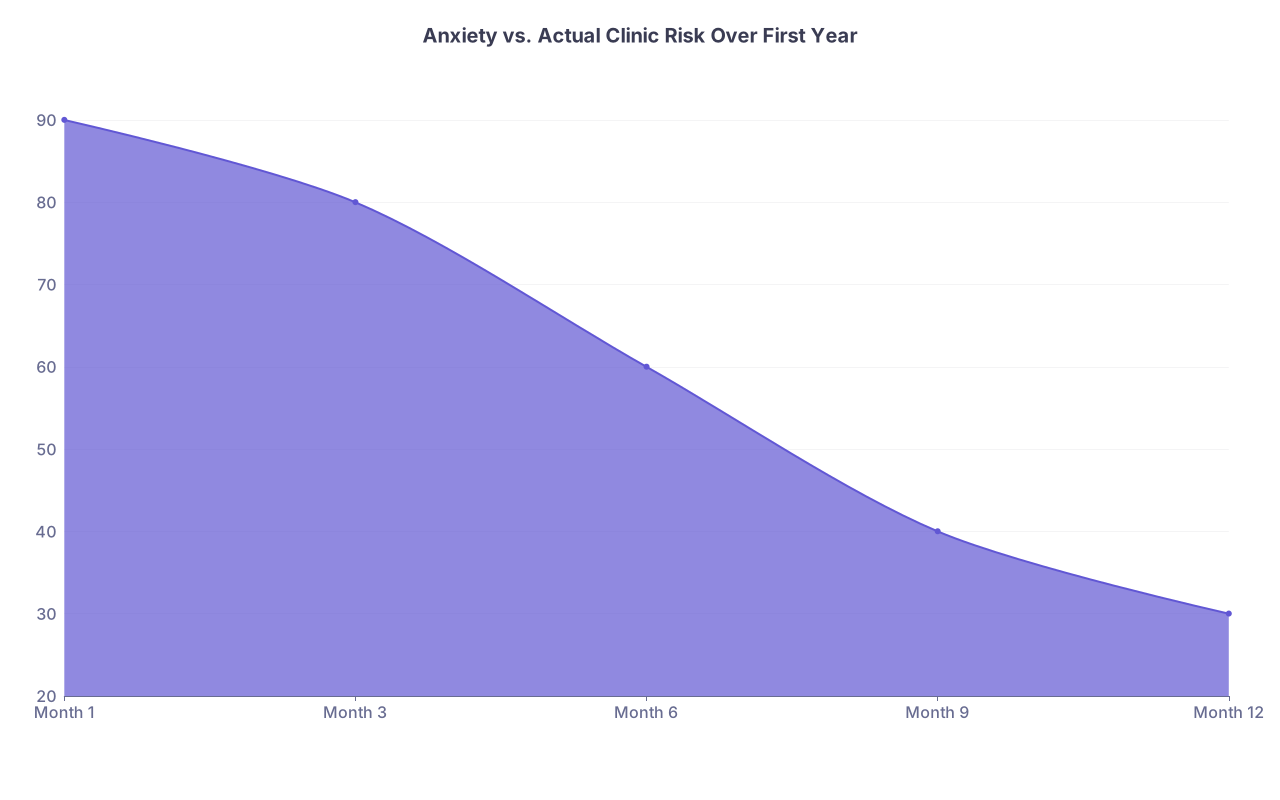
| Category | Value |
|---|---|
| Month 1 | 90 |
| Month 3 | 80 |
| Month 6 | 60 |
| Month 9 | 40 |
| Month 12 | 30 |
Your anxiety usually starts near 90 the day you open. The real risk curve, if you’re working the problem, drops much faster than your fear does.

FAQs
1. How long should I give my new clinic before deciding it’s not working?
Honestly? At least 12 months of genuinely trying. Not 12 months of sitting and hoping. If after a full year of active outreach, proper paneling, and system fixes you’re still under ~30 visits a week, start asking hard questions and possibly give it another 6–12 months with real changes: different location, expanded hours, new services, or shifting your payer mix. But three quiet months is not a failure. That’s just early.
2. Is it a bad sign if I have literally zero patients booked for my first week?
Uncomfortable, yes. Fatal, no. Most people don’t schedule with a brand‑new, unknown clinic the same week it opens. Some clinics start with a soft opening: they see friends/family (if allowed), former patients who follow them, or they push opening back until a few insurance contracts go live. Use that empty first week to slam through every visibility and setup task. The goal isn’t a full first week. The goal is a full first year.
3. What if I’m terrible at “selling” myself and hate networking?
You don’t have to turn into a car salesman. But you can’t be invisible. Think of it less as selling and more as telling the truth to the right people: what you’re good at, which patients you help, how to reach you. A short, honest email to local clinicians, a simple website, and dropping by a few offices with your card is enough to start. If you absolutely freeze in person, consider hiring a part‑time practice marketer who can do some of this legwork while you focus on care.
4. Should I delay opening until I’m paneled with all insurances?
You won’t be paneled with “all” of them at once; it’s messy and staggered. But yes, it’s smart to time your “big opening” push to the first 1–2 major insurers going live. You can technically open your doors before that and see cash‑pay or out‑of‑network patients, but don’t panic if volume is low. The real ramp usually starts once you hit the big local payers’ directories. Plan financial runway as if the first 3–4 months will be leaner than you want, even after paneling.
Key things to hold onto: Year one feels worse than it looks from the outside. Empty days are normal early on, not a verdict on your worth. And almost everything that slows growth is fixable, not fatal.