
The fantasy that your first staff hire will “just work out” is dangerous.
It’s the same fairy tale people tell new attendings: “Hire a good front-desk person and biller and you’re golden.” As if the entire success of your brand‑new practice can be built on vibes and a handshake.
You and I both know the nightmare version your brain keeps replaying: you hire someone, they’re awful, they alienate patients, screw up money, maybe even sabotage you—and because you’re new, one person’s chaos takes down your practice before it even gets going.
Let’s walk straight into that fear. Assume the worst: your first staff hire is a disaster.
Now what?
The ugly scenarios your brain is already playing out
You’re not imagining random stuff. The specific disasters you’re afraid of are real because they’ve happened to people.
I’ve seen:
- A brand‑new solo psych doc whose front-desk person “forgot” to submit claims for three months. Zero cash flow. She almost closed before month four.
- A family med practice where the first MA was openly rude on the phone. “If you’re going to be this picky about appointment times, maybe we’re not the right office for you.” Google review bloodbath.
- A front-desk person who pocketed copays in cash, then “fixed” it in the EHR by writing off balances. The owner found out when the accountant asked, “Why do you have so many write-offs but low deposits?”
So yes, worst-case scenarios happen. But here’s the part nobody tells you when you’re doomscrolling practice-owner Reddit at 1 a.m.:
You can survive a bad first hire—if you act like an owner, not like a scared resident who doesn’t want to upset anyone.
How bad can one person really hurt a new practice?
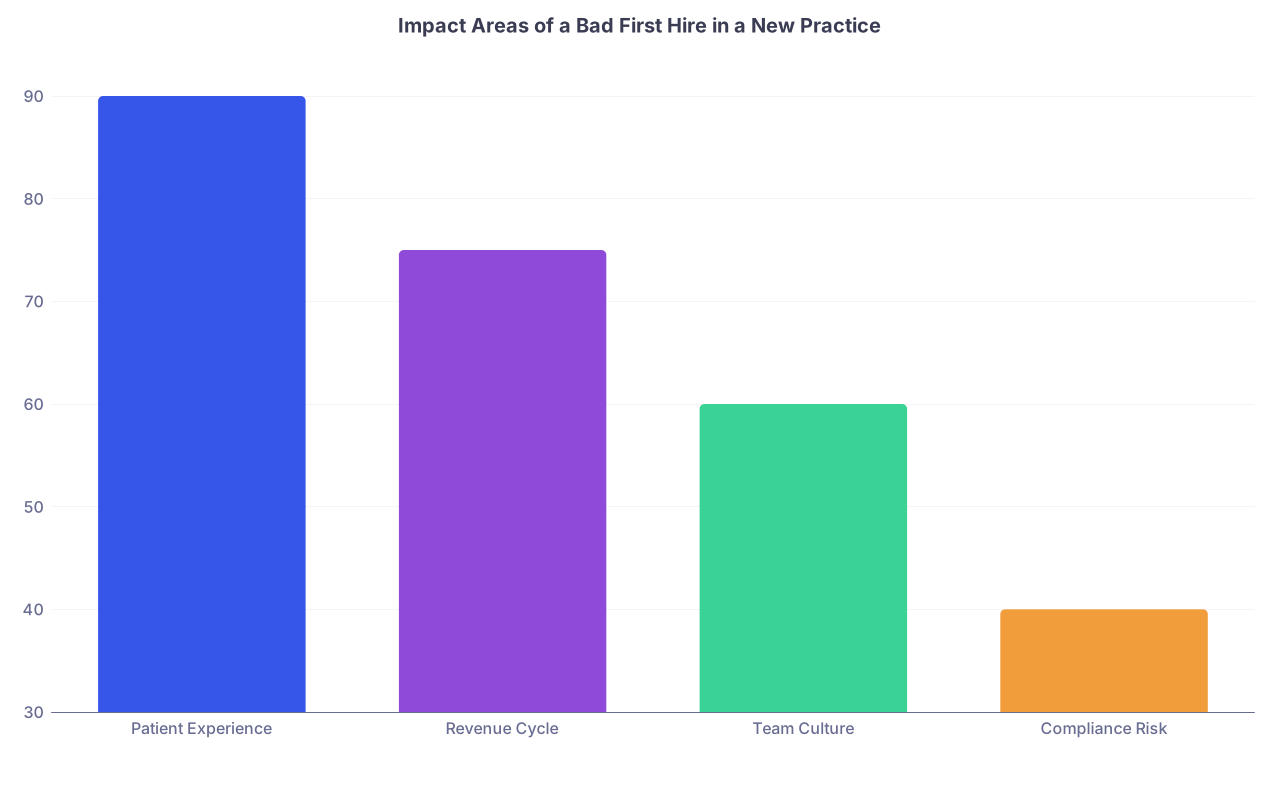
Let’s quantify your fear a bit, because “this will ruin everything” is not actually a helpful risk category.
| Category | Value |
|---|---|
| Patient Experience | 90 |
| Revenue Cycle | 75 |
| Team Culture | 60 |
| Compliance Risk | 40 |
If your first hire is terrible, damage tends to concentrate in four places:
- Patient experience: phones, check-in, tone, empathy—or lack of it.
- Revenue: authorizations, claims, copays, no-show policies.
- Culture: gossip, drama, fear, passive-aggressive sabotage.
- Compliance: HIPAA, documentation, weird shortcuts that could get you audited.
Your brain tells you: “If they mess up even one of these, I’m finished.”
Reality: it’s more like a bleeding wound. Painful, scary, but stoppable—if you notice it and stop the bleeding fast instead of saying, “Maybe it’ll get better?” for six months.
The real disaster isn’t the bad hire. It’s the slow, conflict-avoidant non-response.
Before the fire: build a disaster‑recovery mindset into your practice
You can’t make yourself lucky. You can make yourself resilient.
You know how in residency they tell you “assume complication until proven otherwise”? Same thing here: assume your first hire might not work out, and build your system so that if they’re awful, they can’t quietly wreck everything.
1. Never let one person own a whole critical process
Your first instinct: “I’ll hire someone experienced so I don’t have to worry about billing/front desk/authorization.” You want to hand it off and never think about it again.
That’s how people get blindsided.
From day one, you need visibility into:
- How many calls come in and how many are answered.
- How many new patients scheduled, rescheduled, no-showed.
- How many claims submitted, denied, reworked.
- How much money collected vs. expected.
You don’t need to run the front desk yourself. But you do need to see the dashboard. Weekly. Religiously.
If your EHR/practice management doesn’t have reports you can read, fix that before you hire anyone.
2. Write the bare-minimum “this is how we do things here” manual
You’re not building Mayo Clinic’s ops binder. You just need something so that if you fire your first hire on a Tuesday, your second one isn’t trying to mind-read your preferences on Wednesday.
Make a simple, living document (Google Doc is fine):
- How phones should be answered (actual script).
- Basic scheduling rules (visit types, how long, what’s double-bookable).
- Copay/collections expectations.
- How soon messages to you must be relayed.
- How no-shows and late cancels are handled.
You can literally draft this in an afternoon. It doesn’t have to be perfect. It just has to exist, so your operations don’t live inside one employee’s head.
Red flags within the first 30 days: don’t talk yourself out of them
The pattern I see over and over: the owner sees the red flags. Their stomach drops. Then they tell themselves a story about why they should “give it time.”
Here’s the hard line: your gut in the first month is usually right. Especially if you already survived residency and know what competent support looks like.
Common early signs this hire is going to be a problem:
- They blame “the system” for basic mistakes: “The software is confusing” after four weeks, when everyone else you ask says your EHR is fine.
- They resist transparency: they don’t like you looking at call logs, don’t want to show you how they’re logging payments, get defensive when you ask to see workflows.
- They bad-mouth patients or your consultants to you: “Your patients are really difficult” becomes a recurring theme.
- They constantly bring you drama from their personal life… and it’s bleeding into work. Chronic lateness, missed calls, constant “emergencies.”
A single rough day? Normal.
A pattern in the first 2–4 weeks? That’s your early warning system. Don’t mute it.
When you realize: “Oh no, this was a mistake”
Let’s say your worst fear comes true. You’re a few weeks or months in and you realize: this hire is actively harming the practice.
Not just “not perfect.” Harmful.
This is where new owners freeze. You’re scared of:
- Firing them and having no one at the front desk.
- Legal trouble if they claim wrongful termination.
- Them bad-mouthing you in the community.
- Being “the bad guy” this early in your career.
Let’s run an actual playbook instead of spiraling.
Step 1: Pause the panic, pull the data
Your emotions are screaming; your decisions need evidence.
Look at:
- Call logs: unanswered vs. answered, average wait times.
- Schedule: no-show rates, cancellations, weird gaps.
- Deposits: are daily/weekly deposits matching what your system says was collected?
- Claim reports: are claims going out daily? Denials climbing?
You’re not trying to build a lawsuit here. You’re trying to confirm: are my feelings backed by facts? They almost always are.
If it’s more behavioral (rudeness, attitude), document specific examples: dates, what was said, who reported it. Doesn’t need to be a novel; bullet points are enough.
Step 2: Very short, very clear corrective talk
You don’t jump straight to firing unless they did something obviously fireable (HIPAA breach, theft, screaming at a patient).
You do one, maybe two, direct conversations. No vague “we value teamwork” fluff.
You say something like:
“I’ve noticed X, Y, and Z. These are specific examples from the past two weeks. This can’t continue. Here’s exactly what needs to change and by when.”
And then you write it down. Email yourself a summary of the conversation the same day. If you want to be more formal, you literally hand them a one-page improvement note and have them sign it.
If they respond with:
- defensiveness,
- excuses,
- or crying + nothing changes,
you already have your answer.
Step 3: Decide faster than feels comfortable
New owners wait way too long. You’re scared of the fallout. You’re scared of making a wrong call.
Here’s what you need to internalize: keeping a toxic or incompetent person is the wrong call. Every time. For a new practice, especially.
If you’re hesitating, flip the question: “If this person resigned today, would I fight to keep them?”
If the honest answer is no, you’re done. You just don’t want to go through the pain of replacing them. That’s not a good reason to keep someone who’s poisoning your first year of practice.
How to actually fire someone without blowing up your life
The word “termination” makes new docs think of lawsuits and horror stories. Most of the time? It’s much more boring than that.
I’m not your lawyer, so yes, you confirm your state’s laws and any contracted terms. But the basic structure goes like this:
- You set a short, private meeting. Never in front of patients. Never at the very start or end of the day when they could walk out angry and leave you uncovered.
- You script it. Literally. You’re already anxious; don’t wing it.
Something like:
“I’ve decided to end your employment here, effective [date]. We’ve discussed concerns about [brief summary]. The changes I needed to see haven’t happened. Here’s what your final paycheck will include. We’ll collect your keys and deactivate your login today.”
What you don’t do:
- Apologize for making the decision.
- Argue about details.
- Get dragged into debates (“That’s not what happened!”) in that moment.
Short, calm, firm. If you’re really worried about drama, have a neutral third party present—HR consultant, your practice manager (if you somehow already have one), even your accountant if they play that role.
Protect digital and financial access the same day
People worry about keycards and forget logins.
The second you terminate someone, you:
- Remove their EHR/practice management access.
- Remove access to bank accounts, merchant services, and billing systems.
- Change passwords for shared email accounts, Wi-Fi if they knew it, any portals they used.
If they were the only person with billing or portal access (and yes, this happens a lot with first hires), you’ll probably feel very stupid for about ten minutes. That’s fine. Change it now. You won’t make that mistake twice.
Keeping the practice running the next day (even if it’s just you)
Here’s the real fear: “If I fire them, I won’t be able to function. I’ll be at the front desk, answering phones, verifying insurance between patients. It’ll look unprofessional. Patients will leave.”
Short answer: you will be tired. It will be chaotic for a bit. But it’s survivable, and it’s better than slow sabotage.
You’ve got a few emergency options:
Go “minimalist operations” for 2–4 weeks
You scale back the machine on purpose so you don’t break yourself.
- Limit new patient slots temporarily.
- Shorten clinic hours if needed so you have admin time daily.
- Push non-urgent follow-ups out a bit further (within reason).
You’re buying breathing room to fix the staff problem without burning yourself out.
Use temporary help, even if it’s ugly
This part feels embarrassing, but I’ve seen it work:
- Family member or trusted friend at the front desk for a week or two. Yes, your mom/sibling/cousin can answer phones and check people in. Patients will survive.
- Remote answering service for overflow calls. Not perfect, but better than nothing.
- Virtual assistant for basic tasks like reminders, callbacks, and intake.
It won’t be smooth. But you’re not building your forever system. You’re plugging holes while you find a better permanent hire.
Hiring again without repeating the same mistake
This is where your anxiety spikes: “What if my second hire is just as bad? Maybe I’m the problem. Maybe I don’t know how to read people.”
You will get better. But only if you change how you hire.

| Step | Description |
|---|---|
| Step 1 | Define Role Clearly |
| Step 2 | Write Must Haves and Red Flags |
| Step 3 | Structured Interview with Same Questions |
| Step 4 | Skills Test or Working Interview |
| Step 5 | Reference Checks Focused on Behavior |
| Step 6 | Short Probation Period with Metrics |
Make the role brutally clear
Your first ad probably said something vague like “busy clinic, must be a team player.”
Your next one needs to be very specific:
- “Must be comfortable calling insurance companies daily.”
- “Must handle high call volumes with a calm and courteous tone.”
- “Must collect copays and explain balances clearly and assertively.”
You’re not trying to sound nice. You’re trying to repel the wrong people.
Stop hiring off “vibes” alone
“Seems nice” is how a lot of bad hires happen.
For front desk/MA roles, do something practical before you hire:
- Have them do a mock phone call: pretend you’re an angry patient, or a confused new patient. See how they handle it.
- Have them enter a fake patient in the EHR (HIPAA-safe test environment) to see how they deal with software.
- Ask very specific behavioral questions: “Tell me about a time you made a mistake at work and how you handled it.”
If they can’t give a clear example where they owned a mistake? That’s a pretty loud warning.
Use a probation period like you mean it
You can legally structure a 60–90 day introductory period where you’re explicitly evaluating fit. The key is: use it.
Set actual, measurable expectations for that period:
- Phone response time.
- No-show rescheduling rates.
- Patient feedback on front-desk interactions (you can literally ask new patients, “How was your experience checking in today?”).
If they’re not meeting those by week 4–6, don’t drag it to month 9 hoping for magic.
What about the reputational damage?
Your nightmare script: the fired employee trashes you online, bad-mouths you to every pharmacy and specialist, and your little new practice becomes “that place” everyone avoids.
Reality is usually milder:
- They complain to a few people.
- Maybe one passive-aggressive Google review from a “friend.”
- Then everyone moves on.
You can counteract this by deliberately building goodwill elsewhere:

- Be visibly kind and competent with patients. They will notice the difference after you remove toxic staff, and some will even comment that things feel “so much better.”
- Communicate briefly but confidently to existing patients if there’s sudden turnover: “We’ve made some staffing changes to improve your experience here. Thank you for your patience during the transition.”
- Keep doing solid clinical work. Clinics don’t live or die on one disgruntled ex-employee’s opinion.
Money fears: can a bad hire actually bankrupt you?
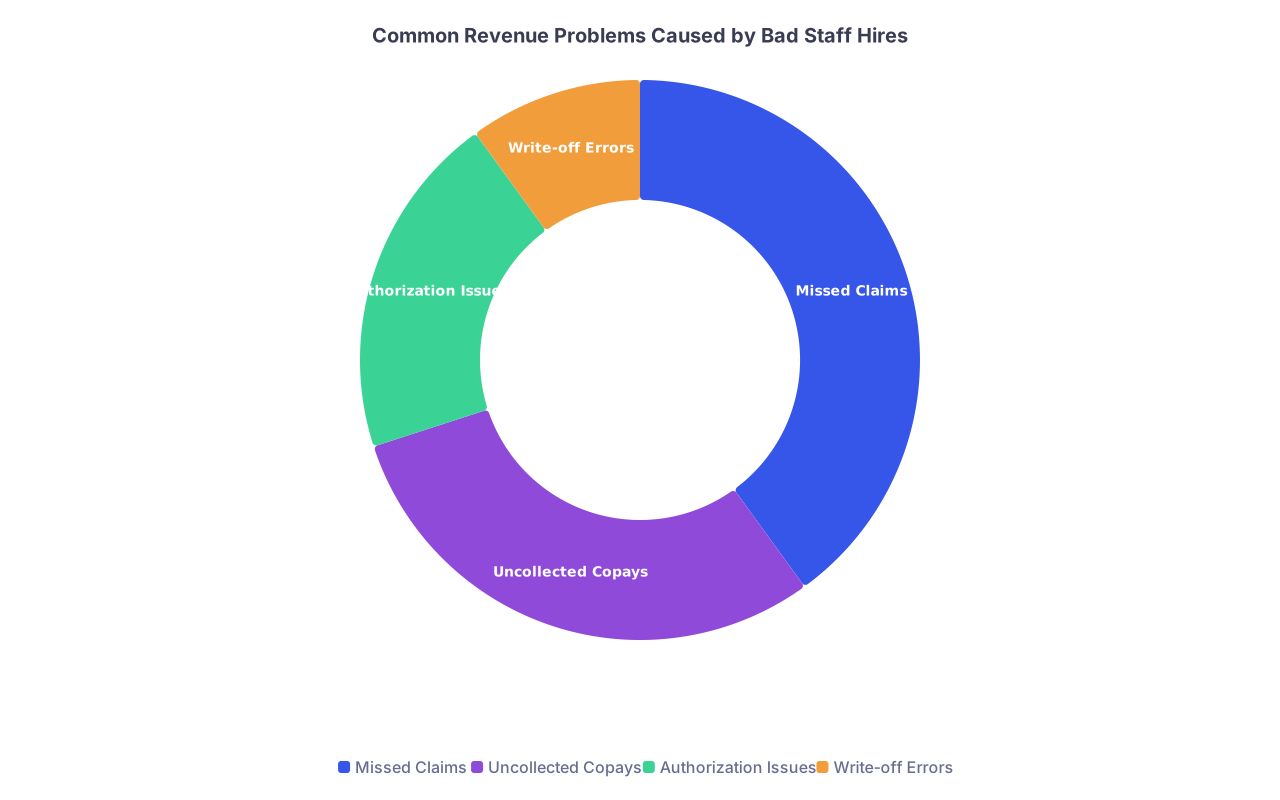
The money anxiety is real: “What if they screw up billing so badly I can’t recover? What if cash flow dies before I even realize it?”
Some truths here:
| Category | Value |
|---|---|
| Missed Claims | 40 |
| Uncollected Copays | 30 |
| Authorization Issues | 20 |
| Write-off Errors | 10 |
- Yes, they can delay payment.
- Yes, they can cause chaos with authorizations.
- Yes, they can under-collect or mis-code things.
But the revenue cycle is a machine. Broken machines can be fixed.
Once you’ve removed the problematic person, you bring in expert help for a short, intense clean-up:
- A reputable billing company or consultant to audit your last 3–6 months.
- Your accountant to review deposits vs. expected receivables.
- Your EHR support to pull denial and error reports.
Worst case, you spend some money on cleanup and lose some income you should’ve gotten. That’s painful, not fatal.
The thing that becomes fatal is continuing with bad processes because firing feels scarier than bleeding income.
Tools and structures that make you less fragile
There are a few things that make a new practice dramatically less vulnerable to one bad person:
| Safeguard | Why It Helps |
|---|---|
| Weekly metrics check | Catches problems early |
| Written workflows | Makes replacement easier |
| Segregated financial duties | Reduces theft risk |
| Offsite backup support | Gives emergency coverage |
| 60–90 day probation | Lowers cost of reversing a mistake |
None of this is fancy. None of it requires an MBA.
But it does require you to stop thinking like “the nice young doctor who doesn’t want anyone upset with them” and start thinking like “the owner whose job is to protect this practice, these patients, and myself.”
Emotionally: how do you not let this break you?
I’m not going to sugarcoat this: your first bad hire, especially the first one ever, feels like a personal failure.
You’ll think:
- “I’m not cut out for leadership.”
- “I must give off some weird vibe that attracts chaos.”
- “If I can’t even hire a decent front-desk person, how am I supposed to run a whole practice?”
Some of the most competent attendings I know—people running thriving multi-provider clinics now—started with an absolute disaster of a first hire. One told me her first MA literally no-showed three days in a row and then asked for a raise.
What mattered wasn’t that it happened. It was that she responded quickly, learned from it, and tightened her systems.
You’re allowed to feel nauseous signing a termination letter. You’re allowed to feel stupid for missing red flags. You’re allowed to sit in your office after they leave and think, “I hate this part of the job.”
What you can’t do is let that discomfort convince you to tolerate people who are bad for your patients and bad for your practice.

What if this happens again?
Here’s the last ugly thought in your head: “What if I fix this, hire again, and it’s STILL bad? What if I’m just not meant to be a practice owner?”
Bad hires are like complications in medicine. You minimize the risk, you learn from each one, but you never get the rate to zero. Ever.
The goal isn’t “I will never hire the wrong person again.”
The goal is:
- I will spot the wrong person faster.
- I will correct decisively.
- I will reduce the damage each time, because my systems don’t put any one person in control of everything.
Over time, your batting average improves. You start seeing patterns. You trust your internal “this feels off” radar more quickly. You ask better interview questions. You stop second-guessing obvious calls just because you don’t like conflict.
And eventually, someone great sticks. The front-desk person who anticipates what you need, patients love them, your life gets easier. That happens too. It just probably won’t be hire number one. And that’s okay.

If your first staff hire is a disaster, remember:
- The disaster isn’t hiring the wrong person. It’s keeping them because you’re scared to act.
- You can fire someone, protect your practice, and rebuild—using temporary fixes and better systems—without losing everything.
- Every bad hire, especially the first, is painful tuition in becoming an actual owner instead of just a doctor with a shingle on the door.
You’re allowed to be scared. Make decisions like the owner anyway.