
Most of the nightmare stories you’ve heard about “insurance denying everything” are exaggerated, misunderstood, or just badly managed billing.
Let me say the hard thing plainly: if “most” of your claims are getting denied in a normal outpatient practice, something is very wrong with your setup, not the entire healthcare system. And that’s actually good news, because systems can be fixed.
You’re not crazy for being scared, though. The thought spiral is real:
“What if I open my own practice, see a full day of patients, and… nothing gets paid? What if BCBS just decides I don’t get paid this month? What if I can’t cover rent or staff because some backend clearinghouse glitch nukes all my claims?”
I’ve watched new attendings go through this exact panic during the first year of private practice. I’ve seen people refreshing portal dashboards like it’s their ERAS status page. Same energy, different horror.
Let’s walk straight into the fear and dissect it.
How Often Do Claims Actually Get Denied?
Short answer: first-pass denial rates are not zero, but they’re nowhere near “most” if you’re even moderately competent about billing.
For context, in a reasonably functional outpatient practice:
- Clean claims first-pass denial rate often lands around 5–15%.
- High-functioning practices with good billing workflows can be in the 3–8% range.
- Practices with sloppy front-desk processes, missing authorizations, or bad coding habits can see 15–25% on first pass. That’s when people start saying, “Insurance denies everything.”
But here’s the part nobody emphasizes: “denied once” is not the same as “never paid.”
A denial is often:
- A missing modifier
- Wrong insurance ID
- Patient’s coverage changed and front desk didn’t catch it
- Pre-auth missing
- Diagnosis–procedure mismatch
Annoying. Time-consuming. But many of those get corrected and paid on appeal or resubmission.
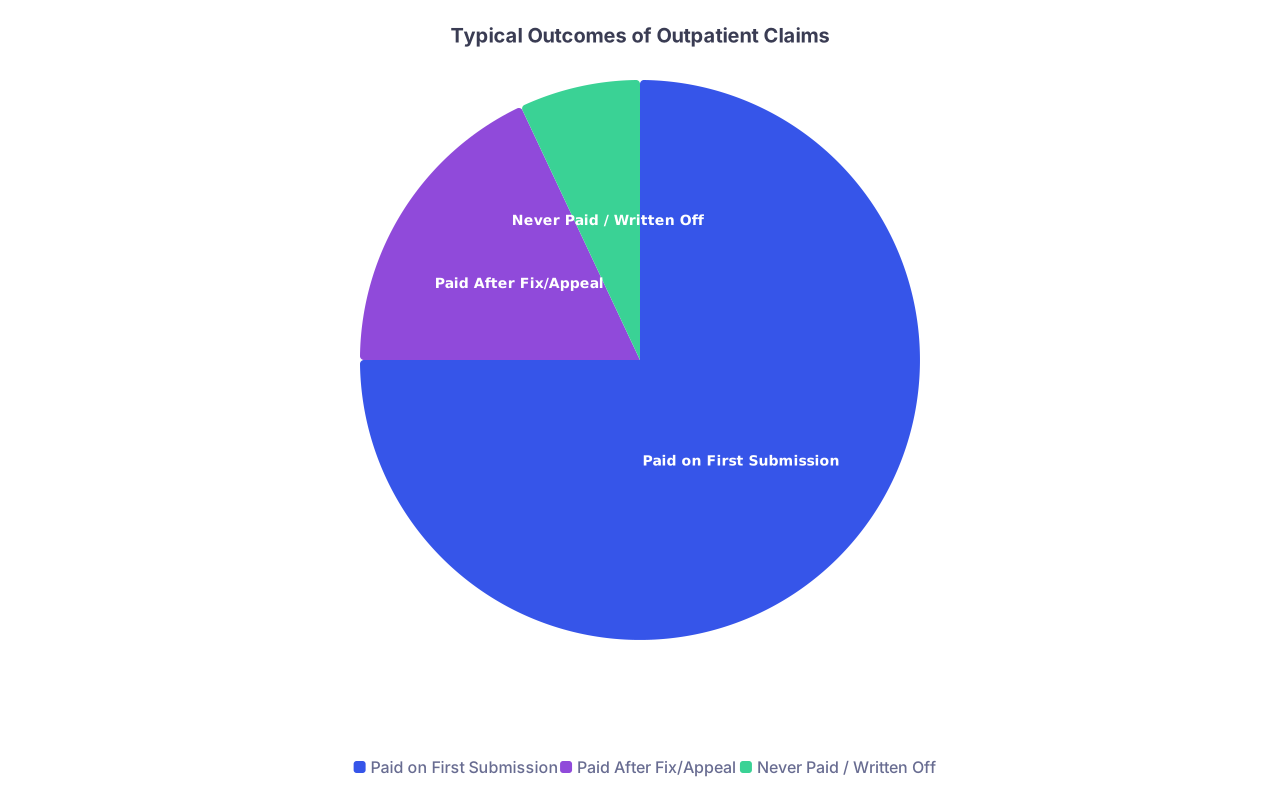
| Category | Value |
|---|---|
| Paid on First Submission | 75 |
| Paid After Fix/Appeal | 18 |
| Never Paid / Written Off | 7 |
So when people say, “Insurers deny half of what we send,” they often mean:
“Half of what we send gets some kind of edit/denial/tweak before it’s finally paid.”
Not the same level of disaster.
“What If They Deny Most of My Claims?” — When That Actually Happens
Let’s talk about the nightmare scenario you’re rehearsing in your head: you submit your first month of claims and like 60–80% come back denied.
Can that happen? Yes.
Does it “just happen” randomly to careful practices? No.
When denial rates explode, there’s almost always a cause you can identify and fix.
Here are the usual culprits:
Credentialing or enrollment screwups
- You thought you were “in-network” but your effective date isn’t what you think.
- Your NPI, tax ID, or group vs. individual billing setup is wrong in the payer’s system.
- You’re billing under your new group NPI but the insurer still has you as solo.
Front desk insurance capture errors
- Wrong payer selected (patient switched plans on Jan 1, you’re still billing the old one).
- Missing referral or pre-auth on plans that require it.
- Name/DOB/ID number mismatch causing automatic rejections at the clearinghouse.
EMR or clearinghouse configuration issues
- Your EMR is set to send claims under the wrong taxonomy or rendering provider.
- Place of service codes misconfigured (billing as telehealth when it was in-person).
- The clearinghouse is returning rejections you’re not even seeing because nobody’s checking the right work queue.
Coding practices that trigger edits
- Under-documentation for higher-level codes, leading to medical necessity denials.
- Using the same diagnosis codes for everything (payers get suspicious, auto-flag).
- Using non-covered codes or unlisted procedures frequently.
In other words: “Most of my claims are getting denied” is almost never “insurance hates me.”
It’s “my system is misaligned with payer rules.”
And I get it — that doesn’t feel much better when you’re trying to make rent. But it’s fixable. Way more fixable than “the system is inherently unpayable.”

What Realistic Denial Risk Looks Like in Your First Year
Your anxiety is not: “Will I get some denials?”
You already know the answer is yes. You’re really asking:
“Could this become catastrophic enough to sink my practice?”
Let’s quantify that a bit.
Assume:
- You see 15–20 patients per day
- You’re open ~20 days/month
- You’re billing, on average, let’s say $150/visit in allowed amounts (this varies a ton but go with it)
That’s something like:
20 patients × 20 days × $150 = $60,000 in potential allowed charges per month.
Now imagine:
- 10% of your claims denied on first pass, but half of those fixed and paid later → maybe 5% truly lost or written off.
- 20% denied on first pass in a messy startup phase, with half saved on appeal → 10% truly lost.
So you’re realistically looking at:
- In a decent, improving practice: maybe $3–6k lost per month in denials/write-offs at first.
- In a very poorly managed one: maybe $8–12k lost per month — and that’s the “fire alarm” zone where you must fix things quickly.
That’s painful, but it’s not “zero income” or “I can’t pay my staff at all.”
| Scenario | True Denial Rate | Revenue Lost on $60k Allowed |
|---|---|---|
| Well-managed, modest denials | 5% | $3,000 |
| Typical new practice | 8–10% | $4,800–$6,000 |
| Poorly managed, high denials | 15% | $9,000 |
If your inner catastrophizer is saying “What if it’s 40–50% lost?” — that’s no longer a “denial rate problem,” that’s a “you’re billing wrong or not actually credentialed” problem.
That’s how specific the fear really is:
It’s not just “denials.” It’s: “What if I set this up wrong and don’t notice until I’m bleeding money?”
Valid fear. But again: fixable if you’re paying attention.
Early Warning Signs Your Denials Are a System Problem
One of the worst feelings in early private practice is the lag. You see patients now, but you don’t fully feel the financial consequences for 30–90 days. That’s a long time to unknowingly make the same mistake on every claim.
This is why the new-attending horror story often goes like this:
Month 1: “Seems fine, seeing patients, I’ll worry about money later.”
Month 2: “Huh, checks are smaller than I expected but maybe it’s timing.”
Month 3: “Wait. Why is revenue half what I projected?”
Month 4: Organ-level panic.
To avoid becoming that story, you need very boring, very unsexy habits in the first 3–6 months:
- Weekly check of: claims submitted, rejection/denial rate, and amounts paid.
- Actually reading denial codes (CO-16, CO-97, etc.) instead of just sighing and moving on.
- Asking: “Is this the same denial type over and over?”

| Step | Description |
|---|---|
| Step 1 | Submit Claims |
| Step 2 | Wait 7-10 Days |
| Step 3 | Check Clearinghouse Reports |
| Step 4 | Review Common Error Codes |
| Step 5 | Monitor Weekly |
| Step 6 | Investigate System Setup |
| Step 7 | Address Case by Case |
| Step 8 | High Rejection Rate? |
| Step 9 | Same Code Repeating? |
If you’re seeing lots of:
- “Provider not eligible to bill this service”
- “Member not covered on date of service”
- “Rendering provider not recognized”
- “Out-of-network provider”
…you’re looking at systemic enrollment/credentialing/front-desk issues.
This is not the time to shrug and say “insurance sucks.” This is the time to stop everything and fix the pipeline.
How Do You Keep Denials from Blowing Up Your Life?
You can’t eliminate denials. You can prevent them from becoming an existential threat.
Here’s what people who don’t end up in meltdown mode tend to do:
Hire or outsource billing from day one — not “later when I’m busy.”
The “I’ll just learn enough CPT/ICD-10 and click submit in my EMR” fantasy is how a lot of smart physicians bleed cash.
You don’t need a million-dollar RCM firm, but you need someone whose job is literally: watch your claims like a hawk.Make credentialing someone’s explicit responsibility.
Not vague. Not “the office manager is kind of doing it.”
One person or one company whose deliverable is:- Correct NPI/Tax ID/group alignment
- Confirmed participation status
- Written list of “go-live” dates by payer
Set a denial threshold for panic.
Example: “If my true denial/write-off rate creeps above 10–12% for more than one month, we stop and do a root-cause review.”
If your first-pass denial rate is >20–25% and not dropping by month 3, that’s also a hard red flag.Front-desk training like it actually matters. Because it does.
I’ve seen highly trained specialists losing $5–10k/month because the receptionist doesn’t double-check the insurance card or eligibility.
You need:- Real-time eligibility checks
- Standard scripts for “We need a referral/pre-auth for your plan”
- A system when a card doesn’t work (don’t just “bill it and see”)
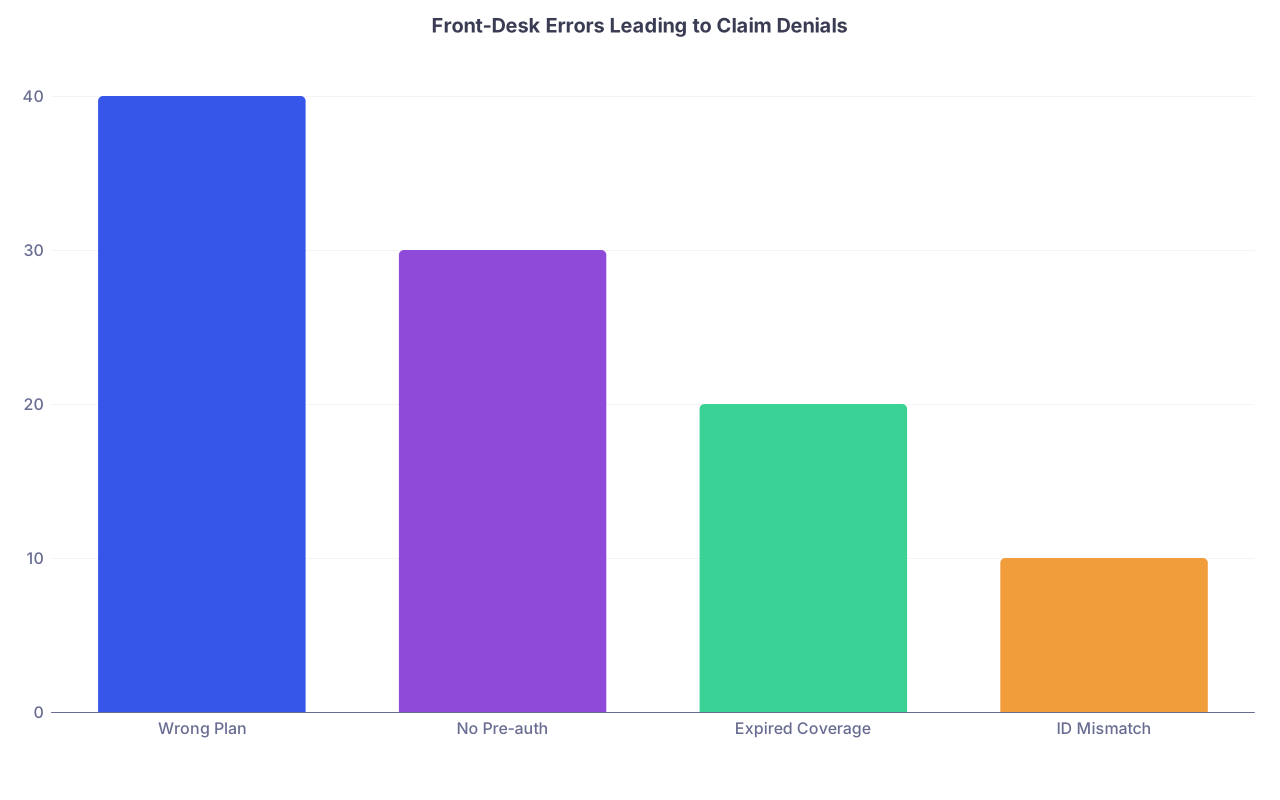
| Category | Value |
|---|---|
| Wrong Plan | 40 |
| No Pre-auth | 30 |
| Expired Coverage | 20 |
| ID Mismatch | 10 |
Those four front-desk categories account for a stupidly large chunk of preventable denials.
The Emotional Part Nobody Preps You For
You’re not just worried about numbers. You’re imagining:
- Telling staff, “We might not make payroll.”
- Calling your landlord about being late on rent.
- Feeling like you made a terrible mistake by not just signing a safe employed job contract.
Here’s the ugly emotional truth: the first 6–12 months of private practice often feel worse than they really are financially. Because everything is lagged, confusing, and opaque. You never fully know if the money coming in now reflects your current work or your past mistakes.
So your brain does the worst-case arithmetic:
“If 3 visits didn’t get paid, maybe none of them will.”
“If this denial happened on one code, maybe every code is wrong.”
What I’ve seen, over and over, is something more like this:
Month 1–2: Chaos, confusion, few denials visible yet.
Month 3–4: First wave of denials/hiccups → panic spike.
Month 5–6: You adjust systems, staff gets smarter, denial patterns drop noticeably.
Month 9–12: Things are… boring. The money is predictable. You’re no longer checking portals at midnight.

The people who don’t make it to that boring stage are usually the ones who:
- Ignored denial patterns for months, or
- Tried to DIY billing on top of seeing patients full-time, or
- Refused to invest in competent help because they were trying to “save money”
You’re already ahead of that curve because you’re worrying about this before you start. That’s not comfortable, but it’s protective.
What You Can Do Right Now If You’re Terrified About Denials
If you’re pre-launch or early and can feel your chest tighten thinking about claims, here’s a very concrete sanity plan:
Ask any billing company or biller you’re considering to show you:
- Their average first-pass denial rate for similar specialties
- Their average time-to-payment
- How often they appeal vs. just write off
Get very basic KPIs in writing from day one:
- “We will send you a monthly report with:
- Number of claims submitted
- First-pass denial rate
- Top 5 denial codes and root causes
- True write-off percentage”
- “We will send you a monthly report with:
Plan for a revenue cushion. If you’re depending on 100% of projected revenue to survive, you’re going to be panicking constantly.
Realistic aim: can you survive if 80–85% of what you think you’ll collect actually comes in for the first 6 months? Build that slack in now if you can.Schedule time with someone who’s done this already. Not a random Facebook group. Someone with a practice somewhat like the one you want — same specialty, same general payer mix. Ask them bluntly:
- “What’s your true denial rate?”
- “What almost killed your cashflow in year one?”
- “If you restarted, what would you lock down before seeing a single patient?”

You’re not trying to eliminate risk. You’re trying to keep risk from being opaque.
The Bottom Line You Can Hang Onto
You’re right: insurers will deny some of your claims. It will feel personal, even though it isn’t.
But here’s what the data and real-world experience actually say:
- In a halfway competent outpatient practice, the majority of your claims will get paid, especially after a few months of cleanup.
- When “most” of your claims are denied, it’s almost always a fixable system problem — credentialing, front-desk intake, EMR setup — not a cosmic punishment.
- The real disaster isn’t denial itself. It’s not watching the numbers, not asking questions, and not getting help early.
If you can commit to those three things — watching your denial patterns, treating revenue like a real clinical vital sign, and investing in actual billing expertise — the horror-movie version in your head almost never plays out.
Uncomfortable? Yes.
Unsurvivable? No.