
The myth about “build it and they will come” is responsible for more failed clinics than bad billing or high rent. Patients don’t just appear. They’re routed. Through invisible referral networks you’re not being taught about.
Let me show you how those networks actually work when you finish residency and hang your own shingle. Because what you see from the outside (“Dr. X is so busy”) is not how that clinic got full.
How patients really flow in a city
Post-residency, you think patients will find you because:
- You’re good.
- You care.
- You’re in-network with big insurers.
That’s not what moves volume.
Patients move along paths of least resistance that are already carved into the system. The three dominant pipelines in most markets are:
- Primary care → specialist chains (and back)
- Hospital/ED → outpatient “preferred partners”
- Employer/insurance steering → “tiered” clinics
Everything else—Google reviews, fancy website, social media—is a secondary layer. Helpful, but not what fills a schedule fast.
Here’s the uncomfortable truth: in many markets, 60–80% of new specialist clinic volume comes from referral relationships, not random walk-ins or SEO. For some primary care and psychiatry clinics, you can invert that. But referral networks still shape who grows and who starves.
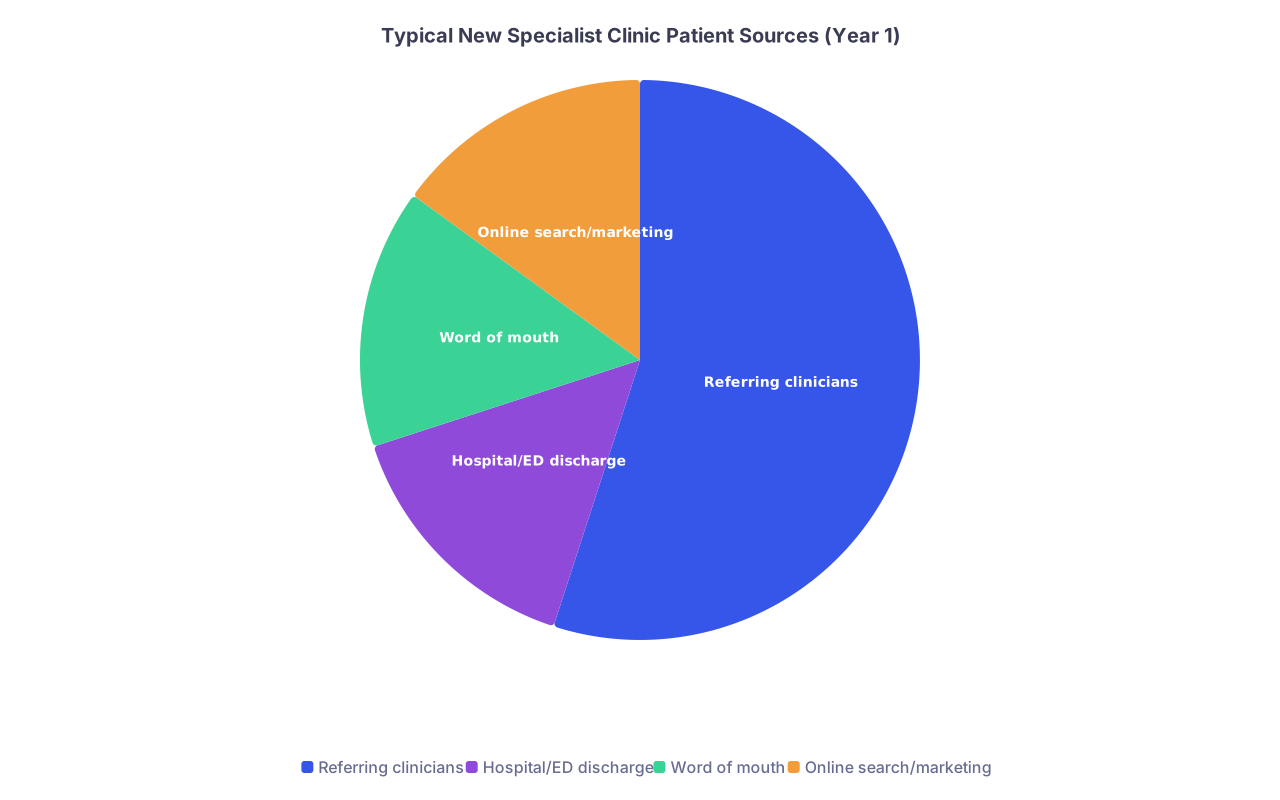
| Category | Value |
|---|---|
| Referring clinicians | 55 |
| Hospital/ED discharge | 15 |
| Word of mouth | 15 |
| Online search/marketing | 15 |
If you do not intentionally plug into those networks, you’re relying on patient luck and Yelp. That’s not a strategy; that’s a prayer.
How established referral networks are built (the part nobody spells out)
People imagine referrals are some noble, pure “patient first” process. Sure, clinical need matters. But the pattern of who gets picked for that need is political and personal.
Behind closed doors, this is how networks actually form.
1. The residency effect: your first real pipeline
Your first and best referral network is not the random local community. It’s your training ecosystem.
I’ve watched this exact scenario play out:
- New cardiologist, just out of fellowship, opens a clinic 10 miles away.
- Every internal medicine attending who liked working with them starts sending consults there.
- Those attendings tell their colleagues, “Use Dr. K, they’re fast and actually answer messages.”
- Within a year, that new cardiologist’s panel is 70% fed by people at the teaching hospital they left.
Meanwhile, another equally competent cardiologist across town, who stayed quiet and never cultivated those relationships, is begging for referrals.
You know all those “grab coffee with attendings before you graduate” suggestions? They’re not just nostalgia. Many attendings mentally file you as “my person for X.” Some will default to you for years—if you’ve bothered to keep the connection alive.
Here’s what faculty actually say in offices:
“We have to send this EP case out. Who do you like?”
“Honestly, I just use my old fellow, she’s now at Valley Heart. She texts me back.”
That one line—“she texts me back”—is more powerful than your CV.
2. The “good citizen” factor inside hospitals
Hospital-employed groups and private practices are not playing the same game.
Hospital-employed:
- Often are expected to keep referrals “in system.”
- ED, hospitalists, and employed PCPs are subtly or explicitly nudged to use in-house specialists.
- Getting volume from them as an independent clinic can be painful. Sometimes impossible.
Private groups:
- Care a lot less about system loyalty.
- Care obsessively about access, responsiveness, and being treated well when they send you a patient.
Every month, behind closed doors, there are conversations like:
“Stop sending to that ortho group. They never send clinic notes back and they’re booking out 3 months.”
“Use Dr. L’s clinic. They saw Mrs. J in 3 days and actually called me.”
Referrals flow toward three traits:
- Speed of access
- Communication back to referrer
- Perception that you “took care” of their patient
Notice what’s missing: logos, your fellowship brand, your Instagram.
3. The “friend-of-a-friend” reality
I’ve watched a completely unknown new GI clinic explode in volume because:
- One PCP group of 8 partners started using them exclusively.
- That group’s med director played pickleball with the GI doc’s spouse.
- The GI clinic prioritized that group’s patients ruthlessly.
Friendship, proximity, and trivial social connections steer thousands of visits. Nobody puts that in their marketing deck, but it’s how mid-sized communities really work.
You either accept that and play the relationship game ethically, or you pretend meritocracy alone will save you. It won’t.
The first 50 referrers you actually need (and where to find them)
You don’t need the whole city. You need the right 30–50 humans who see your ideal patients before you do.
Let’s be specific.
Map the real upstream sources
For different specialties, your upstream looks different:
| Your Clinic Type | Main Upstream Referrers |
|---|---|
| Cardiology | IM, FM, ED, hospitalists |
| Endocrinology | IM, FM, OB-GYN |
| Psychiatry | PCPs, therapists, ED |
| GI | IM, FM, ED |
| Sports Ortho | PCPs, urgent care, PT |
Your job in month one is to build a list of:
- Every independent PCP group within 15–20 minutes of your clinic
- Relevant urgent cares
- High-volume NPs/PA clinics
- Select therapists / PT groups (if they see your target patients first)
- Any non-employed hospitalists or ED groups (in some markets they still exist)
You’re not spamming them. You’re identifying your true top 50.
That list is often more valuable than your first EMR choice. I’m not exaggerating.
What outreach that actually works looks like (and what screams “rookie”)
The fake version of “building referral networks” is printing glossy brochures and dropping fruit baskets at the front desk.
Here’s what referrers say when you leave:
“Another new clinic. Great. Trash.”
Let me walk you through what actually moves the needle.
1. Your script when you visit a potential referrer
You walk into a busy PCP group. They’re behind. They do not care about your pamphlet.
You get exactly 3–5 sentences to matter. Use them.
Something like this:
“I’m Dr. S, new rheumatologist two blocks over. I’m capping new outside clinics at about 40 good referring providers, and I’d like your group to be one of them.
What makes life hell for you when you refer to rheum right now?”
That last sentence is the key. You’re not selling. You’re asking them where they’re bleeding.
They’ll tell you:
- “We can’t get anyone in under 3–4 months.”
- “We never get notes back.”
- “Our patients call us because they can’t reach anyone after they’re referred.”
You respond with specifics, not vague promises:
“Here’s what I’ll do differently:
- 2-week or less access for your patients, with a direct line to our scheduler just for your group.
- Same-day note faxed or sent via portal.
- If you flag ‘urgent’ on the referral, I’ll personally review and we’ll squeeze them in.”
Then you back that up. Religiously.
2. The “one level up” relationship
You don’t just meet random clinicians. You meet the decision-maker.
In almost every sizable practice there is:
- A managing partner
- A lead NP/PA
- A practice manager or office manager
Those three people can push the whole group to start “trying” your clinic. Or not.
Your job is to get 15 minutes with at least one of them, not five seconds at the front desk.
What they really want to know:
- “Will you make my doctors’ lives easier?”
- “Will my patients complain more or less?”
- “Can my staff reach anyone when things go wrong?”
Sell to those questions only.
3. The completely underused move: follow-up feedback
Most new clinics show up once, then vanish.
The smart ones do something like this:
- After the first patient a clinic refers, you send a short personal message to the referrer:
“Thanks for sending Mr. J. Dx RA, started methotrexate, will manage and keep you posted. Let me know if there’s ever a problem reaching us.”
Or you call. Yes, actually pick up the phone. Two minutes.
You do that for the first 5–10 patients each new group sends you. Then you stop, because the relationship is established. But those first touches cement you as “our person.”
Inside the PCP office, the comment becomes:
“Dr. S actually calls. Keep using them.”
That phrase is your marketing campaign.
Digital referrals, “open access,” and why 1–2 staff members will make or break you
Here’s the part most residents do not understand until it’s too late: your referral network lives or dies on your front-desk and referral-coordination staff.
They are either friction… or force multipliers.
1. The front desk test
I’ve sat with PCPs while they tried to refer to a new clinic and watched everything fall apart because:
- Phone tree hell
- Nobody answers
- Confusion about fax vs portal vs email
- Rude scheduler
That PCP never referred again.
If you do nothing else, mystery shop your own clinic at least once a month for the first year. Call like a referrer. Fax a referral. See what happens. You’ll be horrified at least once. Then fix it.
You want:
- A dedicated direct line for referring clinics (not the patient line)
- A simple referral form that your staff can complete for them if needed
- A clear, repeatable process: “Referral received → triaged → patient scheduled → confirmation back to referrer”

| Step | Description |
|---|---|
| Step 1 | Referrer decides to send patient |
| Step 2 | Fax or portal referral |
| Step 3 | Clinic staff logs referral |
| Step 4 | Physician reviews same day |
| Step 5 | Scheduler contacts patient |
| Step 6 | Urgent slot booked within 48h |
| Step 7 | Next available within 2 weeks |
| Step 8 | Note and appt confirmation to referrer |
| Step 9 | Urgent? |
If that flow breaks at any point, the referrer feels it. And they quietly stop using you.
2. Portals and EHR integration: overrated and underrated
Everyone obsesses over being on the same EHR as the local hospital. Sure, that helps, but it’s not the magic switch.
What referrers actually care about:
- Can they send something quickly (fax, portal, secure message)?
- Do they get something back without chasing you?
- For urgent issues, can they bypass the machine and talk to a human?
Fancy integration isn’t required to win. Organized reliability is.
Hospital relationships: when you’re not in the club
If you’re independent and the big system across town owns everything, you’re already feeling the squeeze. The system will absolutely push ED and hospitalist referrals to their own clinics.
But that doesn’t mean you’re blocked out everywhere.
Where independents still win
- Outpatient PCP groups that are not employed
- Areas where the system clinics are full or slow (common)
- Niche services the system does poorly or slowly (e.g., ADHD, infertility, particular procedures)
The insider truth: many employed clinicians quietly hate how long their own system takes to see patients. They’ll sometimes refer “off the record” to external clinics they trust, especially for friends, staff, complex cases.
What convinces them to do that?
- You demonstrate reliable faster access
- You give them direct contact info
- You don’t flood them with marketing BS; you simply solve a pain point
I’ve seen hospitalists say:
“Technically we’re supposed to send to our group, but if you want her seen this month, send to Dr. C across town.”
Be Dr. C.
Timeframes and realistic expectations: how long until patients actually show up?
New clinic owners wildly underestimate the lag between shaking hands and seeing consults.
Let me give you a realistic cadence.
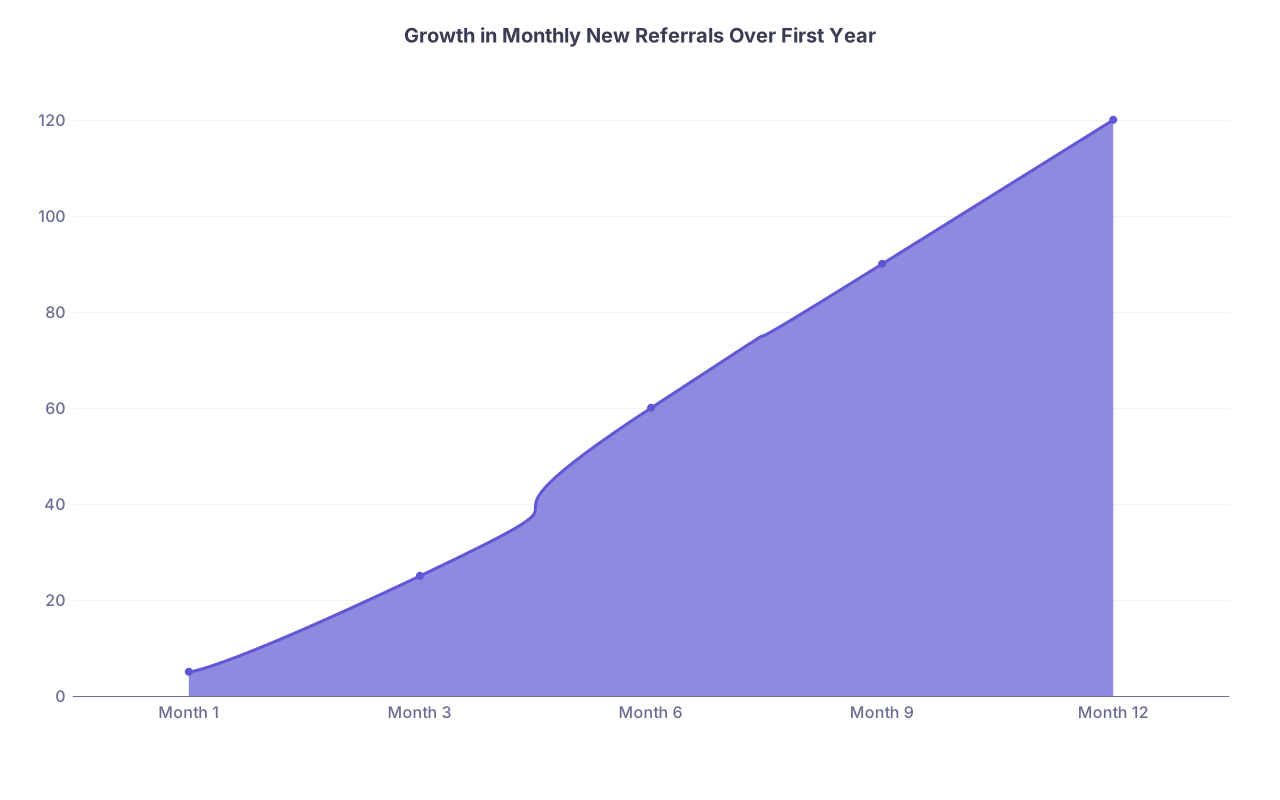
| Category | Value |
|---|---|
| Month 1 | 5 |
| Month 3 | 25 |
| Month 6 | 60 |
| Month 9 | 90 |
| Month 12 | 120 |
You spend:
- Month 0–2: Mapping, outreach, meeting key referrers, tightening internal processes.
- Month 2–4: First trickle of patients, mostly from training connections and 1–2 early-adopting PCPs.
- Month 4–8: Volume starts compounding as word-of-mouth within clinics spreads:
“Hey, have you tried that new clinic? They get people in fast.” - Month 8–12: You’ve got a core panel of 20–40 active referrers. You’re no longer terrified about rent.
If you’re six weeks in and panicking because you’re not booked out, that doesn’t mean it’s failing. You’re still in the invisible phase of the pipeline.
The mistake I see: people give up on outreach just as the network starts to take shape.
The politics you don’t see: who you anger, who you impress
Referrals are not purely additive. Sometimes you grow by taking patients from someone else. That creates friction.
Who you will annoy (and why it’s manageable)
- Legacy specialists who’ve coasted on automatic referrals for years
- System-owned clinics when independents start steering away from them
- Groups that rely on volume but treat referrers like garbage
They will notice. They might:
- Cut you out of social circles
- Trash-talk you subtly: “They’re new; we don’t know how good they are.”
- Try to tighten policies to keep referrals “in network”
Stay boringly professional. Don’t engage in gossip wars. Just be relentlessly good and responsive. Over time, referrers care more about the experience they and their patients have with you than about behind-the-scenes grumbling.
Who you absolutely must not burn
There are three categories you treat like gold:
- The first 5–10 clinicians who “took a chance” on you early
- Office managers who control front-desk behavior in upstream clinics
- Any clinician who heavily influences others (informal leaders)
If you mess up:
- Call them personally.
- Own it directly: “We dropped the ball on this one.”
- Tell them what you changed to prevent a repeat.
I’ve watched referrers increase their use of a clinic after a mistake, simply because the clinic handled it like an adult.
Patient-directed vs clinician-directed flow: knowing your specialty’s reality
Not all practices depend on referrals equally. And this affects how much time you spend on these networks versus direct-to-patient channels.
Roughly:
- High-referral dependence: most specialties (cards, GI, rheum, ortho, ENT, neurology)
- Mixed: psychiatry, dermatology, pain, endocrinology
- Lower-referral (more patient-driven): aesthetics-heavy derm, some psych, cash-pay services
If you’re in a high-referral specialty and you’re spending more time perfecting your Instagram grid than visiting PCP offices, your priorities are upside down. Harsh but true.
You need both eventually. But in year one, get clinician trust first. Patients will follow that trust.

A concrete 90-day plan to plug yourself into the network
Let me give you something you can literally put on your calendar.
Weeks 1–2: Map and prep
- Map every upstream clinic and categorize: A (high priority), B, C.
- Build a simple 1-page referral sheet and process diagram for your staff.
- Train your front desk on how to handle referrers differently from patients.
Weeks 3–6: Initial outreach
- Aim for 3–5 in-person visits a week to A-level clinics.
- Schedule brief meetings with at least one decision-maker at each.
- After each visit, send a short thank-you email recap with your direct contact info and a concrete “here’s how to try us with your next case.”
Weeks 7–10: Reinforce and refine
- Personally call or message referring clinicians for the first 5–10 patients from each new clinic.
- Audit your referral process weekly. Fix bottlenecks ruthlessly.
- Ask 2–3 referrers for blunt feedback: “What’s one thing that would make it easier for you to send patients to us?”
Weeks 11–13: Double down on what’s working
- Identify the top 10 referrers by volume. Thank them. Ask what else they need.
- Consider a focused lunch conference only for those groups, centered on solving a pain point (“Practical ADHD management in primary care,” “Workup before referring to rheum,” etc.).
- Tighten no-show policies and confirmation processes; no-shows at your end reflect on the referrer, and they remember that.
By the end of 90 days, you won’t be fully booked. But you will have the beginnings of a real network instead of hoping the internet will save you.
FAQ: Backstage Truths About Referral Networks
1. Do I really need to do in-person visits, or can I just email/fax info?
If you rely solely on email and fax, you’ll be invisible. The clinics drowning in faxes literally ignore most of them. In-person is where you become a real human, not a logo. You do not have to wander around with doughnuts every week, but those first face-to-face introductions matter far more than another PDF attached to an email.
2. How aggressive is “too aggressive” when asking for referrals?
Chasing individual clinicians weekly is obnoxious. Asking once, showing up in person, then proving yourself with fast access and good communication is the right level of “aggressive.” You’re not demanding volume; you’re saying, “Try me with a few patients and see if your life gets easier.” If you keep asking before you’ve delivered, they’ll write you off as desperate.
3. What if the big hospital system tells its docs they can’t refer to me?
The official policy and actual behavior often diverge. Many employed clinicians still send complex cases, staff, or family to outside clinics they trust, especially when access is better. You are not going to win their entire panel, but you can absolutely become their “escape hatch.” Focus on solving problems the system is slow or bad at, and give them clear, discreet pathways to reach you.
4. Should I pay for referral dinners and fancy events?
You don’t need to go full pharma-rep. Most clinicians are more impressed by responsiveness than shrimp cocktails. A focused lunch talk that helps them manage common problems is fine, especially if you’re actually teaching and not just pitching. Blow-your-budget steak dinners? Wasteful early on. Put that money into staff who answer the phone and get patients in quickly.
5. How do I protect my referrer relationships once I’m busy and no longer desperate?
This is where people shoot themselves in the foot. They get busy, access gets worse, notes go out late, and the exact behaviors that earned them referrals disappear. Protect urgent slots for your core referrers. Keep a direct line open for them. Periodically check in: “Are we still making it easy for you?” If you start acting like the legacy clinics they fled, they’ll quietly move on to the next hungry new doc.
With this behind-the-scenes view of how referrals really move, you’re no longer a spectator to the game. You’re designing your own network. Once that machine starts humming and your clinic is consistently full, you’ll face a different set of problems—capacity, hiring, saying no. But that’s a story for another day.