
It’s your third week after opening your new clinic.
Your EMR calendar is a depressing field of white space. The phone rings, but half the calls are “Do you take my insurance?” followed by silence when your front desk answers honestly. A couple of online reviews have trickled in—one is fine, the other says, “Doctor was okay, but front desk was rude and they kept trying to sell me stuff.”
You tell yourself, “It’s just early days. Word-of-mouth takes time.”
That’s partly true. But I’ve watched too many smart new clinicians destroy their reputation in the first 90 days with avoidable marketing mistakes.
You’re not just fighting for patients. You’re fighting against their suspicion, their memory of bad care elsewhere, and their habit of going to the big system down the road.
Let’s walk through the ways new clinics quietly poison their own brand—and how to avoid doing the same.
1. Confusing “Marketing” With “Looking Busy”
The first mistake: thinking marketing is about activity rather than strategy.
I’ve seen this pattern over and over:
- You pay someone’s cousin’s “marketing agency” $2,000/month.
- They set up a Facebook page, post generic health tips, maybe run a few badly targeted ads.
- You print 5,000 glossy flyers and leave them in coffee shops.
- You go to one networking breakfast, hate it, and never go back.
You’re “doing marketing.”
But your schedule is still empty, and worse—none of this says anything meaningful about who you are or why a patient should trust you.
The damage this does:
- You burn cash with no real return.
- You look scattered and generic online.
- You convince yourself “marketing doesn’t work,” then stop altogether just when you need to be building a real strategy.
Do not:
- Outsource your entire brand voice to people who don’t understand medicine or your community.
- Approve anything you haven’t read yourself. Your name is on it.
Do instead:
- Spend one evening writing down three things:
- Who you actually want as patients (age, insurance, geography, main problems).
- What you do better/differently than the big nearby systems.
- How you want patients to feel after visiting you (reassured, respected, efficient, etc.).
Your marketing exists to communicate those three things consistently. Everything else is noise.

| Step | Description |
|---|---|
| Step 1 | Define Ideal Patient |
| Step 2 | Clarify Core Offer |
| Step 3 | Choose 2-3 Channels |
| Step 4 | Create Simple Content |
| Step 5 | Collect Feedback |
| Step 6 | Refine Message |
If a tactic doesn’t serve that flow? Skip it. You’re not a hospital with a PR department. You’re one clinic with limited time and money.
2. Sloppy Online Presence: The Silent Reputation Killer
Your website and Google profile are often the first impression—long before anyone meets you. Most new clinics under-respect this, then wonder why they’re stuck.
Common screw-ups I keep seeing:
Inconsistent basic info
- Your Google Business Profile says you’re open until 6 pm.
- Your website says 5 pm.
- Your voicemail says 4:30 pm.
- Patients show up at 5:15 pm to a locked door. Then they leave a 1-star review.
Stock-photo fakery
- Your homepage is full of generic smiling models who clearly aren’t your patients or your staff.
- Your “About” page barely mentions who you are.
- Patients get the message: this is just another interchangeable clinic.
Slow, broken, or outdated site
- Mobile view is unreadable.
- Online forms don’t submit.
- “Request appointment” links to nowhere.
- Last blog post is “Flu Season 2019.”
Every one of these screams: “We don’t have our act together.”
Here’s the basic standard you must hit, bare minimum:
| Element | Must-Have Standard |
|---|---|
| Google Business Profile | Accurate hours, phone, address, photos |
| Website Speed | Loads in < 3 seconds on mobile |
| Mobile Usability | Text readable, buttons tappable |
| Contact Options | Visible phone, form, and address |
| About Page | Real photo + 1-paragraph bio |

Don’t make this mistake: delegating all digital work to someone and never checking it yourself. Once a week for the first six months, go through your own:
- Google search result
- Website (on your phone)
- Online forms and phone line
Act like a suspicious patient. Try to break things. Then fix what you find.
3. Playing Games With Pricing and Insurance
You will destroy trust fastest by being vague or slippery about money.
Patients can forgive a longer wait. They don’t forgive financial surprises.
Common early mistakes:
Hiding self-pay pricing
“Call for pricing” might as well say “We’ll charge whatever we think we can get.” That’s how it reads to patients.No clarity on insurance
Your website doesn’t clearly say what plans you accept. Your staff says “We think we take that plan.”
Translation: “We don’t know, and you’ll find out when a bill shows up.”Surprise fees
- “Oh, by the way, the form you asked for is $50.”
- “There’s a $25 admin fee for same-day appointments.”
- “That was an extended visit so it costs more.”
Patients talk. This is how reputations die locally.
Here’s where most clinics misjudge: they think clear pricing will “scare people away.” Actually, the opposite. People are used to getting screwed in healthcare. Transparency is a differentiator.
Make these non-negotiable:
- A simple “Pricing & Insurance” page:
- Which major plans you take.
- Clear note if you’re out-of-network for some big local plans.
- Clear self-pay prices for:
- New patient visit
- Follow-up visit
- Common procedures you do a lot
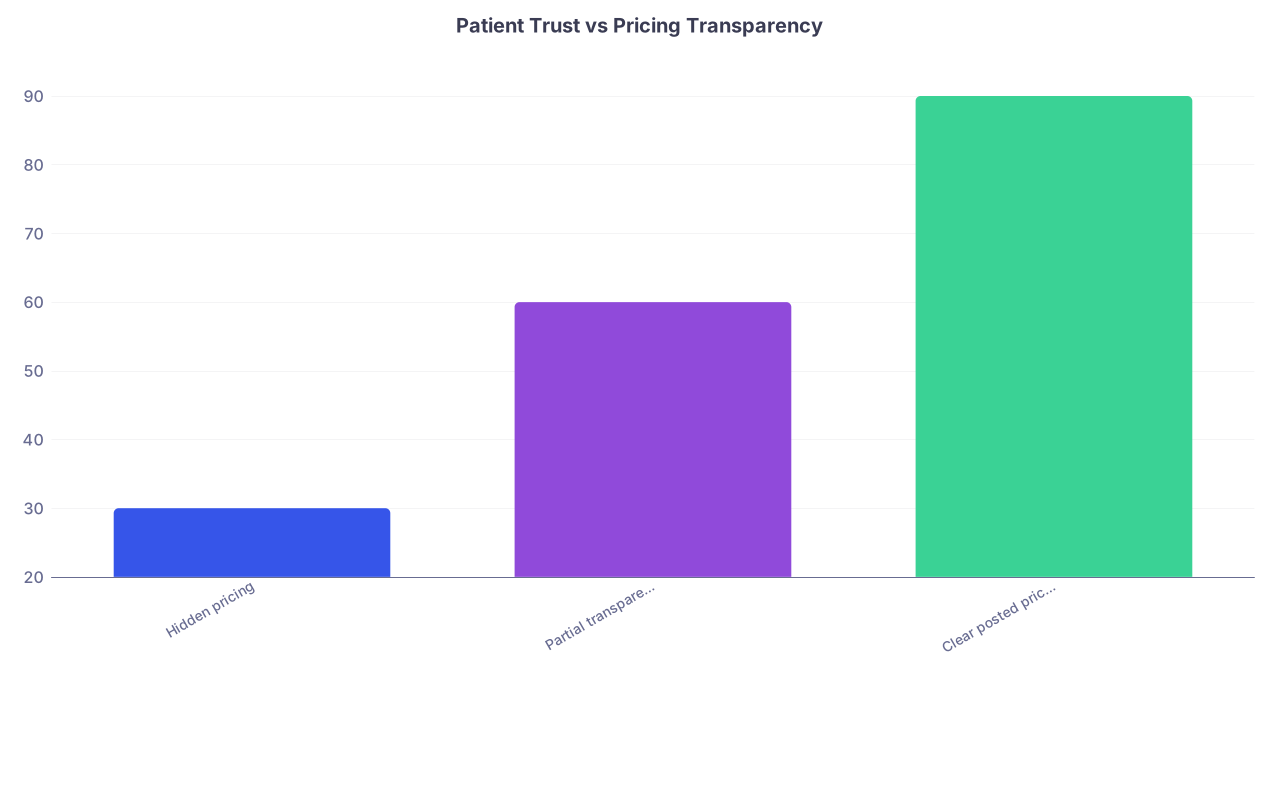
| Category | Value |
|---|---|
| Hidden pricing | 30 |
| Partial transparency | 60 |
| Clear posted pricing | 90 |
- Train staff on one-line, honest answers:
- “We accept X, Y, Z plans. We’re out-of-network for A and B.”
- “New patient self-pay is $, follow-up is $.”
Do not let your front desk wing it. “I’m not sure, but you can come in and we’ll see” sounds like bait-and-switch.
4. Overpromising Care You Cannot Deliver
Early on, you’re hungry for patients. The temptation is to promise the moon:
- “Same-day appointments guaranteed!”
- “We always run on time!”
- “We’re different from every other practice!”
Then reality:
- You get a small rush of new patients.
- Your 15-minute slots turn into 40-minute visits.
- You start running 45 minutes behind.
- Staff is overwhelmed and snapping.
- Those “different” claims start looking like lies.
Patients don’t expect perfection. They expect honesty and consistency.
Don’t make claims you cannot sustain when:
- Flu season hits.
- Your MA is out sick.
- You’re dealing with one true crisis visit that blows up your morning.
Instead:
Underpromise, then overdeliver.
- Say: “We often have same-week availability for established patients” rather than “Same-day always.”
- Say: “We work hard to minimize waiting and respect your time.”
Post a simple, honest “What to expect” section on your site:
- New patient visit usually lasts X minutes.
- You may be asked to arrive 10–15 minutes early for paperwork.
- There can be occasional delays due to emergencies, and staff will keep you updated.
The mistake to avoid: trying to compete with urgent care speed and concierge-level attention while charging standard rates and having a tiny team. That mismatch erodes trust fast.
5. Ignoring Reviews—Or Worse, Fighting Patients Online
You will get reviews. Some will be unfair. Some will be painfully accurate.
Two reputation-killing responses I see:
Ignoring all reviews
You never claim your Google profile. You never respond. Patients think:- “They don’t care.”
- “They’re not listening.”
Getting defensive or argumentative
I’ve watched clinic owners write multi-paragraph, emotional replies to a 2-star review, basically calling the patient a liar. It might feel good in the moment. It looks terrible publicly.
What to actually do:
- Claim your Google Business Profile immediately.
- Read every review. Yes, every one.
- Respond briefly, professionally, and without PHI.
Template that works:
For a fair negative review:
“We’re sorry you had this experience. This is not the standard we aim for. Please call the clinic and ask for [manager name] so we can discuss this directly.”For an obviously unfair/unhinged review:
“We take all feedback seriously and are sorry to hear you were dissatisfied. Due to privacy laws, we can’t discuss specifics here, but we invite you to contact our office so we can talk about this together.”
Never:
- Mention details of their visit.
- Argue point by point.
- Accuse them of lying.
Use feedback patterns, not one-offs. If you’re seeing several reviews saying “front desk is rude” or “they never answer the phone,” that’s not a patient problem. That’s a systems problem.
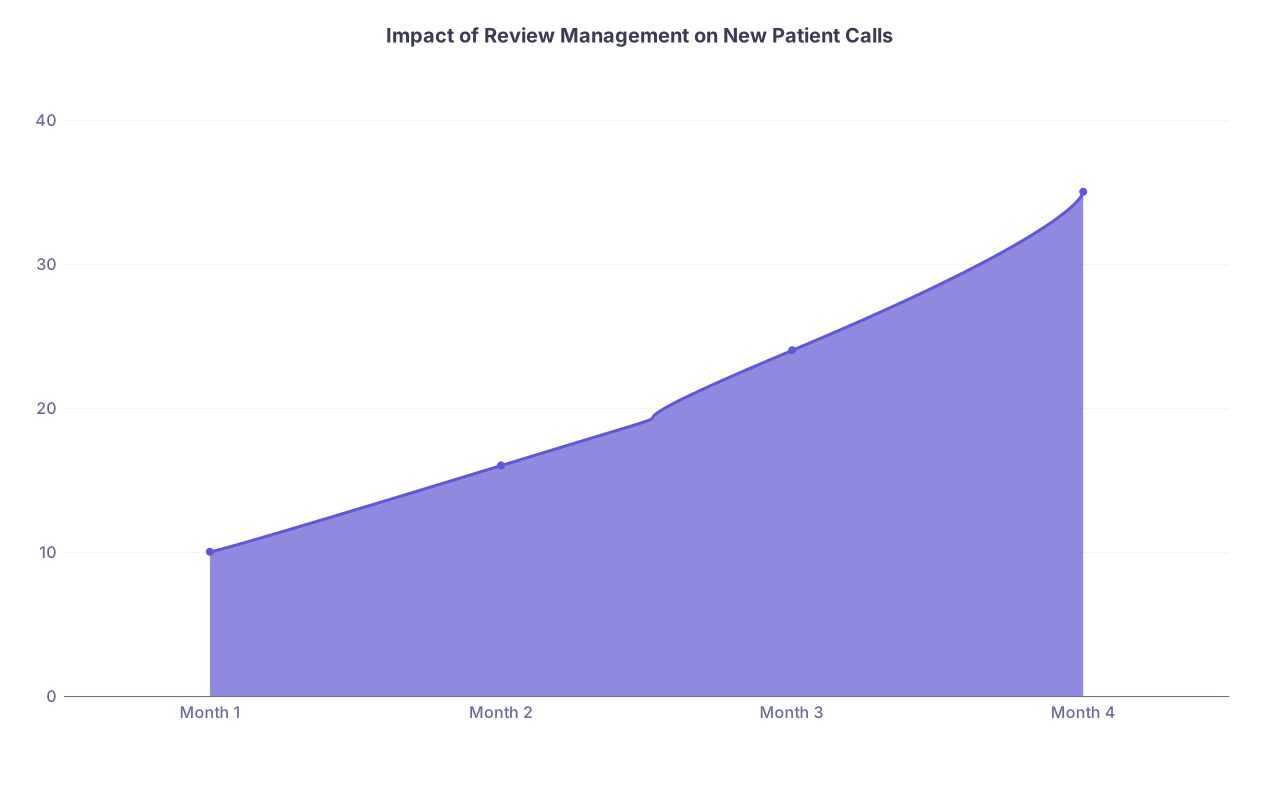
| Category | Value |
|---|---|
| Month 1 | 10 |
| Month 2 | 16 |
| Month 3 | 24 |
| Month 4 | 35 |
I’ve watched clinics who simply added: (1) better phone training, (2) a polite review response policy, and (3) faster voicemail callbacks, and their new patient calls doubled in three months.
6. Treating Staff Behavior as “Not Marketing”
Here’s the part a lot of physicians resist: your staff is your marketing.
Your MA’s tone on the phone, your receptionist’s face when a patient arrives late, the way billing explains a claim denial—patients experience all of that as you.
Big mistake: obsessing over logos and taglines while:
- Front desk sounds annoyed every time the phone rings.
- No one smiles or makes eye contact at check-in.
- Staff vents about difficult patients where others can hear.
- Patients on hold listen to 3 minutes of silence or loud static music.
Patients may not understand medicine. But they’re experts at detecting whether they’re respected.
I’ve literally heard front desk staff say on the phone (in earshot of other waiting patients), “Ugh, she always calls and complains, just tell her we’re full.” That physician had a 3.1-star rating and couldn’t figure out why.
Train your staff like this matters—because it does:
Simple phone script:
- “Good morning, [Clinic Name], this is [Name]. How can I help you?”
- End with: “Is there anything else I can help you with today?”
Clear rules:
- No patient bashing. Ever. Not even in the back hallway.
- No rolling eyes, sighing, or visible frustration at the front desk.
- If you’re overwhelmed, step away briefly rather than snapping.

You don’t need a customer service seminar. You need basic human decency, made explicit. Assume nothing. Spell it out.
7. Copying Hospital Marketing Instead of Owning “Small and Local”
New clinics often try to look like mini-hospitals. Big sterile language. Slick but generic branding. They think it seems “professional.” It actually makes you forgettable.
Hospitals can run vague campaigns like “Excellence in care close to home.” You can’t. You’re not spending six figures on billboards and TV spots.
Your advantage is the opposite:
- You are small.
- You are specific.
- You are reachable.
Don’t waste that by sounding like a committee wrote your website.
You destroy your differentiation when:
- Your homepage says: “Our mission is to provide comprehensive, patient-centered, evidence-based care for the community.”
- Your bio is a laundry list of degrees with zero human detail.
- Your social media is just reposted CDC infographics.
Instead, lean into being real:
Specific problems you focus on:
- “We help busy professionals manage their blood pressure without constant office visits.”
- “We see kids with asthma quickly so parents aren’t stuck in the ER.”
Personal touches:
- A single photo of you in the actual clinic, not a studio shot in a suit.
- One sentence like: “I grew up in this area and I know how hard it is to get timely appointments.”
Patients are not judging your graphic design. They’re asking:
“Is this someone I can trust with my health who will actually see me when I need them?”
Answer that clearly.
8. Spamming Instead of Communicating
There’s a fine line between staying visible and being annoying. New clinics cross it all the time.
Common spammy moves:
- Buying email lists and blasting people who never asked to hear from you.
- Sending weekly generic newsletters with canned health tips.
- Over-texting: reminders, promotions, surveys, all stacked within days.
Patients are hypersensitive to feeling “marketed at” in healthcare. Once they mentally file you under “spam,” they tune everything out—including the messages that actually matter (lab results ready, follow-up reminders, etc.).
Use communication channels like this:
- Text: for appointments, crucial reminders, and rare important announcements.
- Email: for established patients who opted in, maybe monthly at most, with:
- Real updates (new hours, new service, scheduling changes).
- One useful piece of content directly relevant to your actual patient population.
Measure your own annoyance threshold: would you be irritated receiving what you’re about to send? If yes, don’t send it.
9. Not Tracking What’s Actually Working
Final big one. New clinics throw time and money at “marketing” and then never track a single result. It’s like adjusting medications without ever checking labs.
You do not need complex analytics platforms. You need two numbers:
- Where new patients say they heard about you
- How many of those sources are bringing in repeat, good-fit patients
Every new patient intake should have one question:
- “How did you hear about us?” with:
- Google search
- Insurance directory
- Friend/family
- Another doctor
- Social media
- Drive-by / saw sign
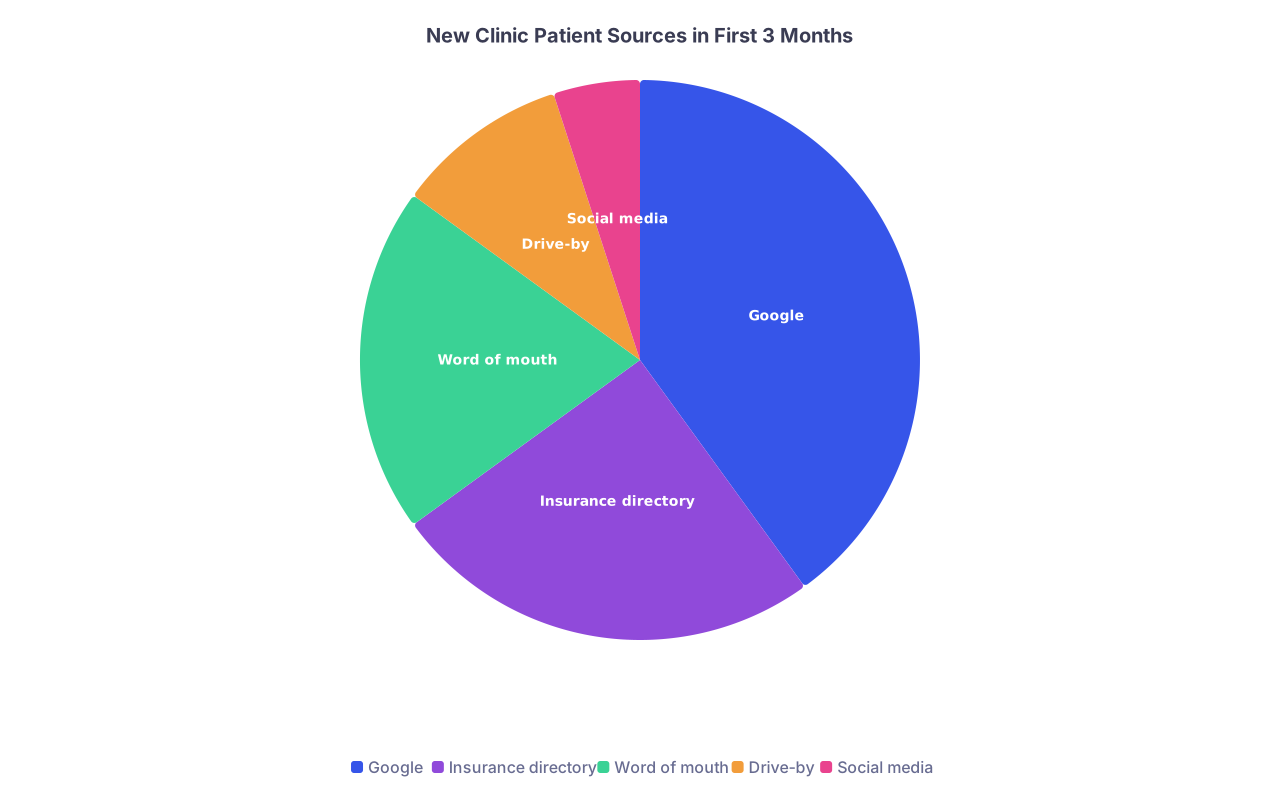
| Category | Value |
|---|---|
| 40 | |
| Insurance directory | 25 |
| Word of mouth | 20 |
| Drive-by | 10 |
| Social media | 5 |
If after three months you see:
- 40% from Google → your online presence matters. Invest there.
- 25% from insurance directory → make sure that profile is perfect.
- 5% from social media → maybe stop wasting hours there.
The mistake to avoid: blindly continuing expensive tactics because “we already signed the contract” with some marketing firm. You are allowed to cut off what doesn’t work.
FAQ (Exactly 4 Questions)
1. How early should I start thinking about marketing my new clinic?
Before you open. By the time your doors open, you should already have:
- A clean, functioning website
- A fully set-up Google Business Profile with photos and correct hours
- Claimed profiles on major insurance directories
- Basic scripts for your front desk on how to answer “Do you take my insurance?” and “Are you accepting new patients?”
If you wait until the clinic is open and empty to start, you’re already behind and more likely to panic-buy bad marketing services.
2. Do I really need a professional website designer, or can I use a template?
You don’t need a $10,000 custom site at the beginning. A well-done template with:
- Clear information
- Fast loading
- Mobile-friendly design
- Easy contact options
is far better than a fancy, slow, confusing site. The danger is thinking “template” means “I don’t need to think.” You still need to write your own copy, choose real photos, and proofread everything. If you’re not comfortable with tech at all, hire someone—but stay involved in every decision.
3. Should I offer big discounts or promotions to attract patients early on?
Be careful. Deep discounts can backfire in healthcare. You’re not a gym membership. If you constantly shout “$X off your first visit!” you train people to see your care as a commodity and attract price-shoppers who will leave as soon as someone else is cheaper. Limited, clear offers (e.g., transparent self-pay rates, bundled physical exam + labs) are fine. Just don’t build your identity around being “the cheapest doctor in town.”
4. How long does it take for marketing to start working for a new clinic?
Assuming you avoid the major mistakes above and get the basics right, you usually see:
- 4–6 weeks: First trickle of patients from Google and insurance directories
- 2–3 months: Noticeable word-of-mouth if your service is good
- 6–12 months: A stable base of recurring patients and referrals
If you’re three months in with almost no growth, that’s not “word-of-mouth is slow.” That’s a sign something is broken—often your online presence, phone experience, or insurance/pricing clarity. Fix those before throwing more money at ads.
Key takeaways, no fluff:
- Your reputation starts before anyone meets you—online mistakes, sloppy info, and money surprises do the most early damage.
- Staff behavior, clear pricing, and honest expectations are marketing, whether you like it or not. Treat them that way.
- Keep it simple, track what works, and stop doing tactics that don’t produce good, returning patients—no matter how shiny they look.