
The fastest way to get your brand‑new private practice audited is to treat billing like an afterthought.
You survived residency. You learned to manage septic shock, not CPT modifiers. But if you get sloppy in year one, payers will happily teach you billing the hard way—with recoupments, audits, and frozen cash flow.
Let me walk you through the traps I see over and over with new practices. These are not theoretical “risks.” These are the exact patterns that set off payer algorithms and land young physicians in audits within their first 12–18 months.
1. Copy‑Pasting Someone Else’s Billing Setup
The worst billing setup mistake? Copying what your friend, mentor, or old employer did and assuming it’s “fine.”
Different specialty. Different payer mix. Different contracts. Different state rules. And yet people still grab:
- Another practice’s fee schedule
- Old superbill from residency clinic
- Generic EHR templates with pre‑loaded codes
…and plug them into their brand‑new practice like it’s a universal answer.
That’s how you get:
- Systematic overcoding vs your region’s norms
- Wrong modifiers for your specialty
- Missing codes for services you actually perform—so staff “make do” with inappropriate codes
Payers do not care that “this is how we did it at my last job.” They care that your patterns look out of line with peers.
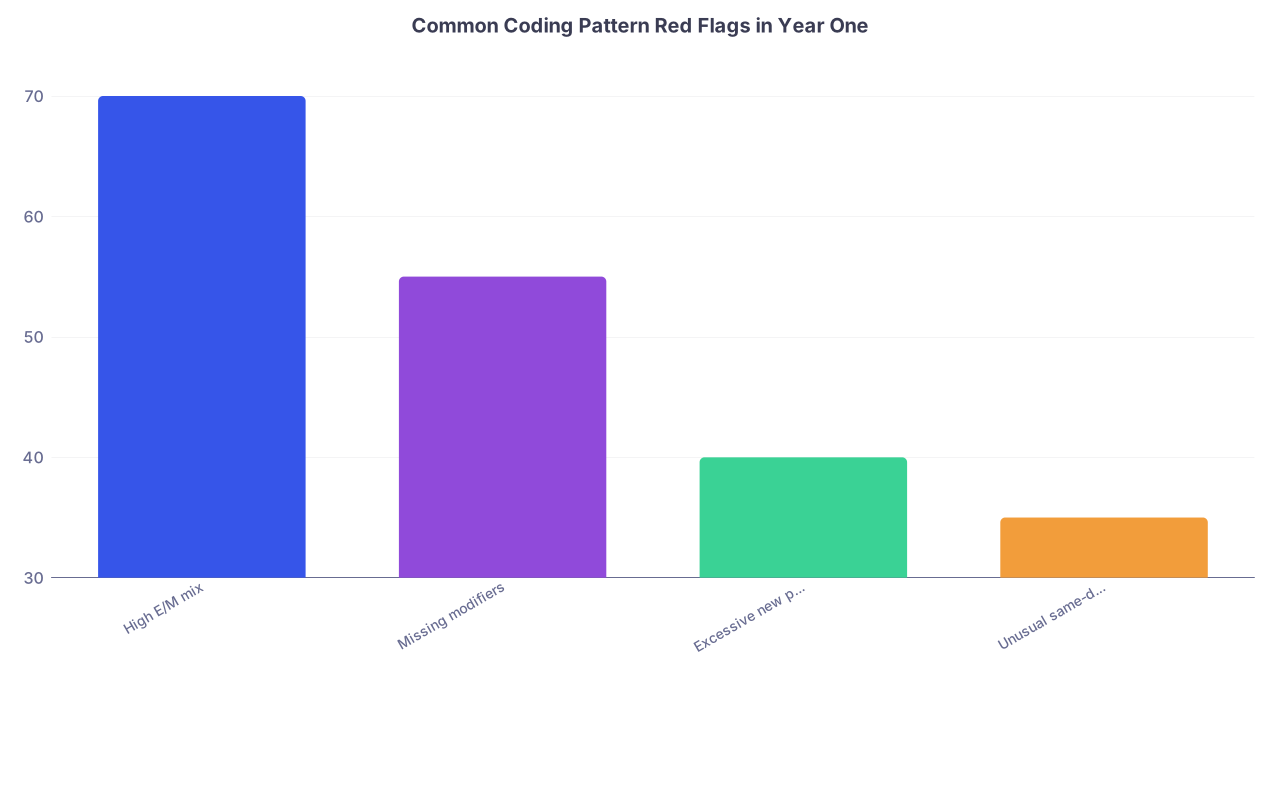
| Category | Value |
|---|---|
| High E/M mix | 70 |
| Missing modifiers | 55 |
| Excessive new patient codes | 40 |
| Unusual same-day services | 35 |
If you inherit a fee schedule or superbill from anyone, you must:
- Strip it down and rebuild: remove codes not relevant to your actual services
- Compare E/M levels and procedure frequencies to specialty benchmarks
- Verify every code against current year CPT and payer policies
Do not trust what you “inherited.” That’s how you inherit someone else’s bad habits—and their audit profile.
2. Sloppy NPI, TIN, and Enrollment Setup
A shocking number of first‑year audits start from one simple thing: identity and enrollment chaos.
You think you’re submitting under the right NPI and tax ID. The payer sees a mess of:
- Claims under your personal NPI but wrong group TIN
- Claims under your supervising doctor’s NPI “until ours is ready”
- Multiple addresses and place‑of‑service types with no clear pattern
That inconsistency alone can trigger reviews. Payers treat conflicting enrollment and claim data like smoke—where there’s smoke, there might be fraud.
Common missteps:
- Billing under the group NPI before your individual NPI is fully linked in payer systems
- Changing tax ID or business structure mid‑year without properly updating enrollments
- Using one taxonomy code for all payers even though some require a more specific one
- Submitting claims from a new location before credentialing that site
You want boring, consistent data:
- One clear group TIN
- Correct group NPI (if you have one)
- Correct individual NPI for each provider
- Matching addresses and place‑of‑service codes
Anything else looks like you are gaming the system—even if you’re just disorganized.
3. Ignoring Place‑of‑Service and Telehealth Rules
Telehealth and offsite visits are an audit magnet when set up wrong. New practices screw this up constantly.
People think: “It’s still me providing care, who cares where the patient is?” Payers do.
Big mistakes that light up payer systems:
- Billing telehealth as in‑office (POS 11 instead of required telehealth POS)
- Using the wrong telehealth modifiers or no modifiers at all
- Billing incident‑to or split/shared services via telehealth in ways that are explicitly not allowed
- Using facility POS for a non‑facility setting to increase payment
If you’re doing:
- Telehealth
- Remote patient monitoring
- Home visits
- Nursing home / SNF work
- Hospital follow‑ups from clinic
…you absolutely must have your place‑of‑service codes and modifiers locked down. Wrong POS + wrong modifier = aberrant billing pattern. That’s audit bait.

One more thing people skip: checking payer‑specific telehealth policies during setup. Medicare, Blue Cross, and a local HMO may all want different:
- POS codes
- Modifiers
- Documentation standards
If your year‑one claims show heavy telehealth use with coding that doesn’t match their rules, they’ll look closer. And they’ll ask for charts.
4. Over‑Reliance on Default EHR Billing Settings
“I thought the EHR handled that.”
I’ve heard that line from more physicians during audits than I can count. They assumed:
- Auto‑suggested E/M levels were accurate
- Prebuilt templates were compliant
- Default modifiers were correct for their specialty
The EHR is not your compliance officer. It’s a tool someone configured—often in a hurry.
Common traps:
- E/M “wizards” that consistently push you toward higher levels
- Default “new patient” visit type for everyone, even when they clearly meet established criteria
- Templates that auto‑populate more systems and exam elements than you actually performed
- Auto‑applying modifier -25 to every visit with a procedure
Those patterns look exactly like upcoding to a payer, because that’s how actual upcoding operations work: automation and templates.
You should be checking:
- Your E/M level distribution vs peers in your specialty
- How many visits use modifier -25, -59, etc. in a given month
- How often you’re billing high‑level E/M + procedures together
When an algorithm sees a new practice with an unusually high proportion of 99214/99215, or frequent procedure bundling, it doesn’t say “Smart use of EHR.” It says “Possible upcoding—review.”
5. Misusing Incident‑To, Split/Shared, and Supervision Rules
If you hire an NP, PA, or use ancillary staff, this is where you can blow yourself up fast.
Payers are already suspicious of practices that heavily bill non‑physician work under physician NPIs. In year one, that looks even worse.
Typical errors:
- Billing “incident‑to” when the incident‑to rules are absolutely not met
- Supervising physician not actually in the office suite when required
- No established treatment plan documented by the physician
- Split/shared rules misapplied in outpatient settings where they don’t even apply
- Staff performing services outside their licensure and then billing under your NPI
You might rationalize it:
“We’re small, we’re figuring it out.”
“It’s all supervised, it’s fine.”
Payers do not care. If your billing shows:
- High volume
- Limited physician availability
- Heavy use of midlevels
…they may check whether your supervision and incident‑to documentation matches your billing. If it doesn’t, they can reclassify a year’s worth of visits and demand massive recoupments.
| Scenario | Audit Risk Level |
|---|---|
| Heavy NP billing under MD NPI | High |
| True incident-to, well documented | Moderate |
| NP billing under own NPI | Lower |
| Split/shared incorrectly applied | Very High |
If you’re going to use these models, get written protocols. Train your staff. And document like someone will question it—because they might.
6. Fee Schedules That Scream “Outlier”
New practices often guess at fees. Or they:
- Copy Medicare and multiply by 3 “because that’s what someone said”
- Use hospital system charge masters that are absurd for a small office
- Set identical fees for codes that should vary significantly
Here’s the problem: Payers compare your allowed amounts, billed amounts, and patterns to norms. A new practice with:
- Extremely high usual and customary fees
- Aggressive use of multiple procedures per encounter
- Inconsistent discounts and write‑offs
…looks like a billing mill, not a cautious new office.
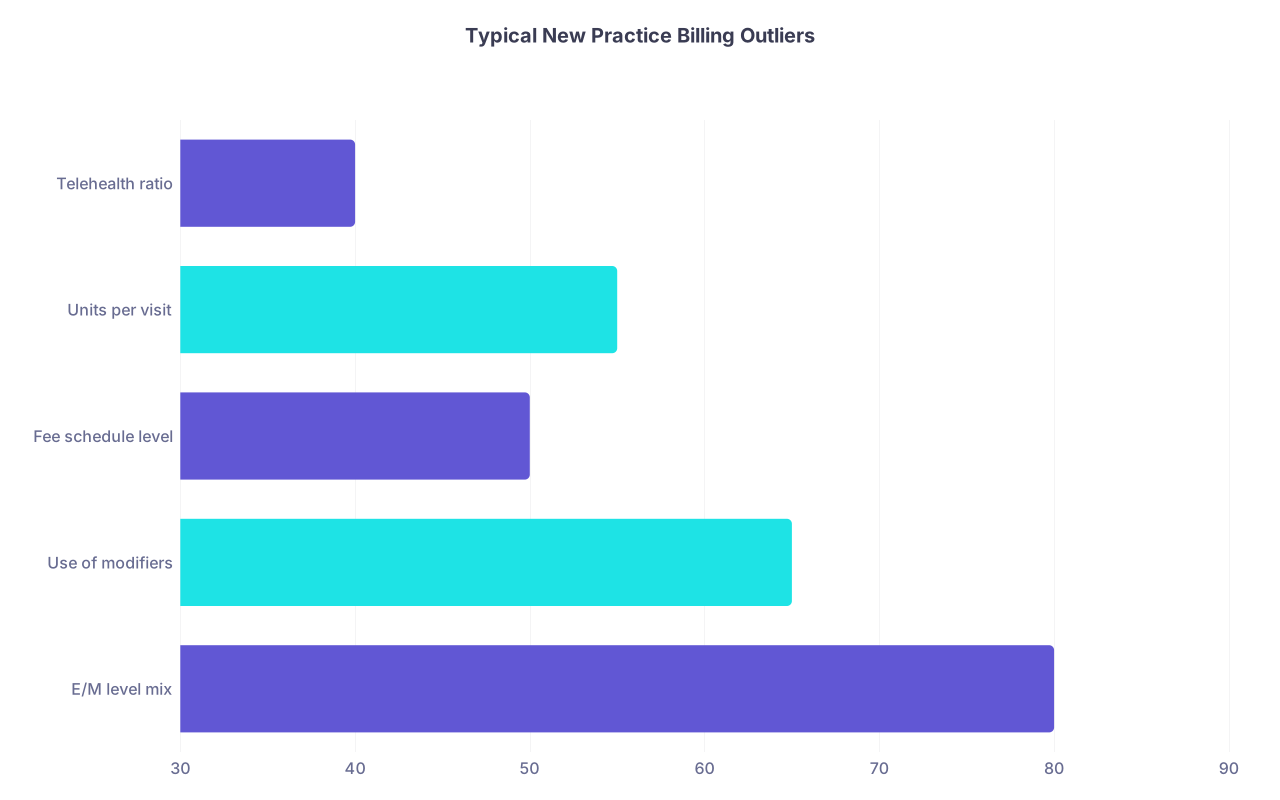
| Category | Value |
|---|---|
| E/M level mix | 80 |
| Use of modifiers | 65 |
| Fee schedule level | 50 |
| Units per visit | 55 |
| Telehealth ratio | 40 |
And here’s the kicker: once an auditor is inside your books, they don’t only care about what they originally flagged. They’ll browse. They’ll notice everything.
You want your fee schedule:
- Rational
- Defensible
- Aligned with regional norms
If your 99213 is priced at 5x local rates and you’re writing off 80% “as a courtesy,” that pattern alone can draw attention.
7. Wrong Ownership and Financial Relationships on Paper
Payers look very closely at ownership and compensation structures, especially right after you open. They’re hunting for kickbacks, sham relationships, and improper referrals.
New practices make dangerous mistakes like:
- Listing a referring specialist as a “silent partner” but also billing their referrals
- Structuring medical director fees that are obviously disproportionate to work performed
- Using a management company that takes a percentage of collections without a clear services contract
- Not disclosing real owners to payers during enrollment
That’s how you accidentally trip Stark Law or anti‑kickback statute territory, even if you weren’t trying to be shady.
In year one, your practice is simple. Or it should be.
If you have:
- Complicated ownership
- Referral relationships tied to money
- Side agreements with DME, imaging, or labs
…you absolutely need compliance review before claims start going out. Auditors love catching “improper remuneration” in new setups. It pads their stats.
8. No Denial Tracking or Pattern Recognition
Some audits don’t start with your codes. They start with your chaos.
If your billing setup produces:
- High denial rates
- Frequent resubmissions
- Constant corrected claims
…you look either incompetent or deceptive. Neither is good.
I’ve seen payers trigger reviews on practices that:
- Repeatedly submit the same wrong code with different modifiers hoping something sticks
- Rapidly adjust and re‑bill high‑value codes after partial denials
- Show bizarre ICD–CPT pairings that never get fixed, just resubmitted
That “spray and pray” approach to billing is a red flag. It tells payers: This office doesn’t know what it’s doing. That’s exactly the type of practice where audits pay off.
You should be tracking:
- Denial rates by payer
- Top 10 denial reasons
- Time from DOS to clean claim payment
If you aren’t reviewing those monthly in year one, you are flying blind. And a blind practice will stumble into audits.
9. Weak Credentialing and “Just Bill It Under Someone Else”
Early on, when credentialing is delayed, people get creative. That creativity is how you end up explaining yourself to auditors.
Classic “shortcuts” that are actually big problems:
- Billing your services under a partner’s NPI because your contract isn’t loaded yet
- Using a locum tenens or PRN model that doesn’t match actual work patterns
- Having a supervising physician “cover” multiple locations or services that are physically impossible based on their schedule
Payers know the credentialing lags. They also know who is actually credentialed. When they see claims for your NPI before your effective date—or suspicious spikes under someone else’s NPI—they start asking questions.
Use correct effective dates. Don’t see insured patients under plans where you’re not yet in‑network unless you’re transparent and bill them correctly. Don’t try to “squeeze it through” the system.
You might get paid for a while. Then one day you’ll get a letter asking for all of it back.
10. No Written Compliance Plan in Year One
Some new physicians think “Compliance program? That’s for big groups and hospitals.”
Wrong. That mindset is exactly how small practices get hammered. Because you don’t have layers of admin to buffer you. When something goes wrong, it lands straight on your license and your bank account.
You don’t need a 100‑page binder. But you do need a living, written plan that covers:
- Who is responsible for billing accuracy
- How you train staff on coding and documentation
- How you handle overpayments and refunds
- How often you’ll audit charts internally

| Step | Description |
|---|---|
| Step 1 | Set Billing Policies |
| Step 2 | Train Staff |
| Step 3 | Monthly Denial Review |
| Step 4 | Quarterly Chart Audit |
| Step 5 | Fix Patterns and Retrain |
When auditors see evidence you have:
- Policies
- Training
- Internal audits
- Corrective actions
…you look like someone trying to do the right thing. That matters. It doesn’t make problems disappear, but it can change tone and outcome dramatically.
Running without any compliance structure screams: “We don’t check ourselves. Ever.” That’s an invitation.
11. Treating Coding Education as Optional Admin Work
Last thing, and it’s the one new attendings hate to hear: you cannot delegate all coding judgment away and expect to stay safe.
Many first‑year practice owners:
- Outsource everything to a billing company and never look at reports
- Let front‑desk staff pick visit types based on “how long it took”
- Assume their MA or nurse “knows how we bill it”
Then they’re shocked when:
- Their E/M levels are way above specialty norms
- Modifiers are applied in ways they never understood
- Documentation doesn’t support billed services
You don’t have to become a certified coder. But you do need:
- A basic understanding of E/M guidelines for your most common visit types
- Clarity on which modifiers you use and why
- Awareness of what services are high‑value and high‑risk under audit
If your name and NPI are on the claim, it’s your problem. Not your biller’s.
FAQs
1. Is using a reputable billing company enough to prevent audits?
No. A good billing company reduces certain risks—like missing charges or obvious coding errors—but they’re not a shield. They work with what you give them: your documentation, your policies, your workflows. If those are weak or inconsistent, your claims can still look suspicious. You need oversight: monthly reports, random chart reviews, and clear agreements on how they handle modifiers, E/M leveling, and unusual scenarios.
2. How soon after opening can a payer realistically audit my practice?
They can flag and review claims from day one. In practice, you often see inquiries or probe audits starting around 6–18 months, once there’s enough data to see patterns. But don’t get comfortable in month three thinking “If there was a problem they’d have said something.” Audits are often retrospective, covering 6–36 months of billing. Year one sloppiness can haunt you in year three.
3. What’s one thing I should do this month to lower my audit risk?
Pick your top 20 paid encounters from last month—across different payers and visit types—and audit them yourself or with a trusted coder. Ask: Does the documentation truly support the level and services billed? Are modifiers justified? Are diagnoses appropriate and specific? That tiny sample will usually expose at least one pattern (overcoding, misuse of -25, wrong POS, telehealth issues) you can fix now, before it becomes a year‑long habit.
Key points:
- Most year‑one audits are triggered by patterns—coding, POS, modifiers, ownership—not single claims.
- Blindly trusting inherited setups, EHR defaults, or billing vendors is how smart physicians end up looking like fraudsters.
- A simple, intentional compliance structure in year one is far cheaper than explaining a reckless billing pattern to an auditor two years from now.