
The fastest way to hate your first attending job is to ignore credentialing until it’s too late.
You can be an excellent clinician and still not get paid for months because of paperwork you assumed “someone in admin” was handling. I’ve watched brand‑new attendings float credit cards, borrow from family, and even delay loan payments because their credentialing was a mess.
Let me walk you through the landmines so you do not become that story.
The First Big Lie: “Credentialing Is Just Paperwork”
This is the first mistake: treating credentialing like a simple HR form instead of a multi‑step, time‑sensitive, failure‑prone process.
Here’s what’s actually going on behind the scenes when you “start a job” or open a practice:
- Hospital privileges
- State license(s)
- DEA and state controlled substance registration
- CAQH profile
- Payer enrollment with each insurance panel (Medicare, Medicaid, commercial plans)
- Group enrollment / reassignment of benefits
- PECOS (for Medicare)
- Malpractice policy issuance with correct dates and locations
- NPI 1 (individual) and NPI 2 (group, if you’re private practice)
Every one of those has its own timeline, its own quirks, and its own ability to stall your income.
Mistake #1: Starting Credentialing Too Late
The most common, most expensive mistake: waiting until you’ve moved, finished orientation, or “settled in” to start credentialing.
By then, you’re already behind.
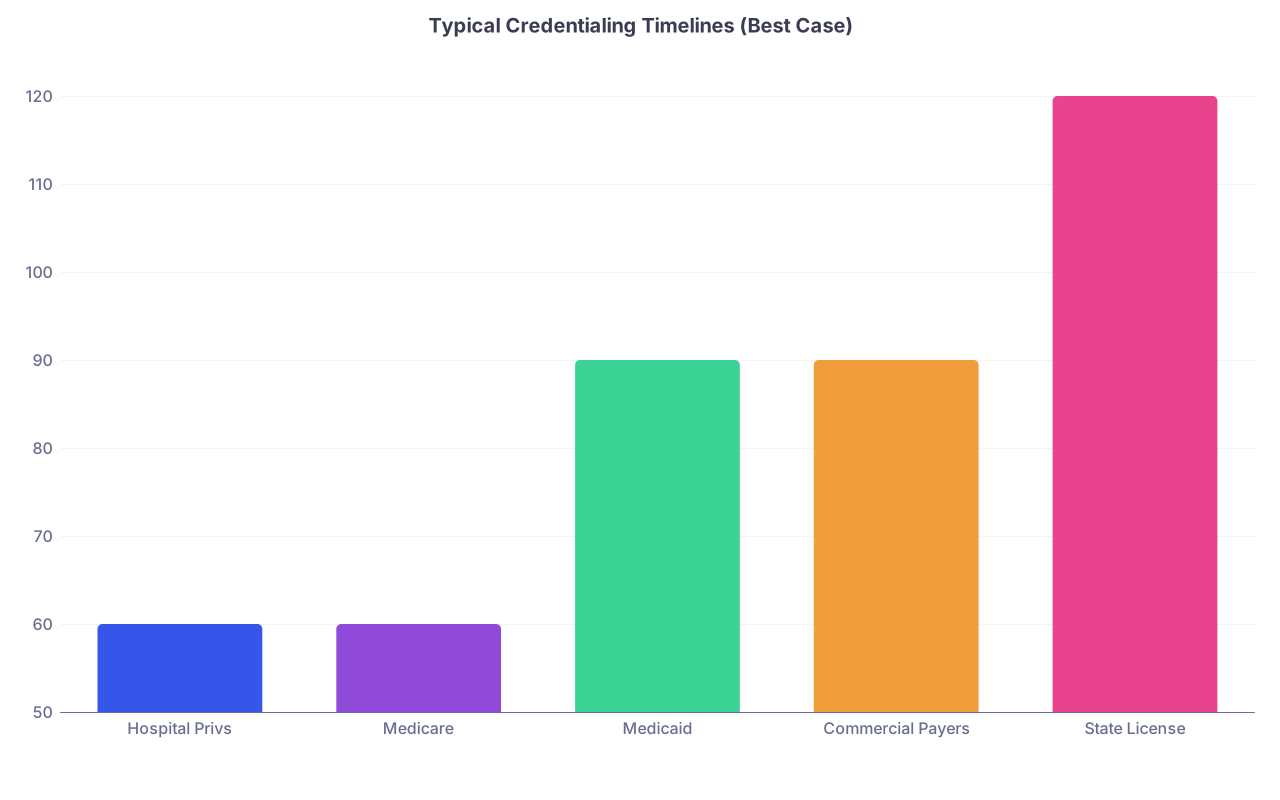
| Category | Value |
|---|---|
| Hospital Privs | 60 |
| Medicare | 60 |
| Medicaid | 90 |
| Commercial Payers | 90 |
| State License | 120 |
Those numbers are best-case. I’ve seen Medicaid take 6+ months. Some commercial plans go 120+ days if there’s any error.
You delay starting by 30–60 days? Congratulations, you just pushed your first real paycheck out another month or two.
How to avoid it:
- Start credentialing the moment you sign an offer or entity paperwork for your practice, not when you start seeing patients.
- Ask every payer and every hospital for their current average processing time; then assume it’ll be longer.
- Back up from your desired start date and build a real timeline. If you want to see insured patients on August 1, you should be submitting full, clean packets in April–May.
If your practice manager or recruiter says, “Oh, we’ll take care of credentialing,” your response should be: “Send me the timeline, what you’re filing, and when.” Blind trust here is how you end up unpaid in October.
Sloppy Data: Tiny Inconsistencies, Massive Delays
Credentialing is unforgiving. It’s all about matching. If your name, dates, or addresses don’t line up perfectly, things grind to a halt.
Mistake #2: Inconsistent Identity Across Documents
You’d be shocked how often this happens:
- “John A. Smith, MD” on your license
- “John Smith” on your DEA
- “John Andrew Smith” on your malpractice policy
- Different addresses on your NPI vs tax forms vs CAQH
To you, those are obviously the same person. To a payer’s system, that’s three different people and a red flag.
Red flags that stall files:
- Nicknames vs legal names
- Missing middle initials
- Old addresses still showing as “primary practice”
- Different tax IDs (SSN vs LLC) across forms
- Name change from marriage/divorce halfway through the process
Once one system kicks back the app as “incomplete” or “unable to verify,” no one calls you immediately. It just sits. And your paycheck sits with it.
How to avoid it:
Create a mini “credentialing identity sheet” and lock it in:
- Exact legal name (and how it appears on license)
- Degree and suffix (MD/DO, Jr/Sr, etc.)
- Chosen consistent professional name
- Primary practice address
- Mailing and billing addresses
- Specific tax ID you’re using for clinical work
- Phone, fax, and email for credentialing
Use that sheet for everything. If something changes (you move, your practice expands, you change business structure), update every system systematically: NPI, CAQH, state board, DEA, payers.
CAQH and NPI: The “Easy” Steps People Still Screw Up
People love to say, “Just fill out your CAQH. It’s quick.” That’s how I know they either had someone else do it or they forgot the pain.
Mistake #3: Incomplete or Stale CAQH Profile
A half‑filled CAQH profile is as bad as no CAQH.
Common screwups:
- Expired documents uploaded (old malpractice certificate, expired license)
- Employment history with unexplained gaps
- Missing training information or incomplete program dates
- References who do not respond or whose contact info is wrong
- Not re‑attesting every 90 days
Plans pull from your CAQH. If your profile is “80% complete,” that does not mean “good enough.” It means “this will sit idle.”
How to avoid it:
- Sit down with your full CV, certificate PDFs, and contact list. Plan for a solid, uninterrupted hour or two.
- Fill every field. Don’t skip work history or gaps. Better to document a “gap” than leave blank space.
- Put your CAQH reminders in your calendar for re‑attestation every 90 days.
- Keep a folder (physical or digital) with updated PDFs: license, DEA, malpractice, CV, board cert, photo ID.
Mistake #4: Messing Up NPI Numbers
Two NPIs matter for private practice:
- NPI 1 – you, as an individual provider
- NPI 2 – your organization (LLC, S‑corp, etc.) if you’re billing as a group
Common ways people delay payments:
- Billing under the wrong NPI (submitting under your individual when the contract is with your group or vice versa)
- Forgetting to update practice location and taxonomy codes
- Not linking your NPI to the correct tax ID in payer systems
How to avoid it:
Once your practice structure is set, decide which NPI goes on which claim line (billing vs rendering). Then be absolutely consistent. And make sure every payer has the correct mapping of NPI → tax ID → address.
Ignoring Medicare, Medicaid, and Commercial Payers’ Rules
Here’s where a lot of new attendings get blindsided. Each payer has its own hoops. You miss one hoop, you wait.
Mistake #5: Assuming “I’m Credentialed” Means “I Can Bill”
There’s a dangerous gray zone between:
- “We received your application”
- “You’re credentialed”
- “You’re loaded in the system and can be paid for dates of service”
Many people stop asking questions once a rep says, “You’re approved.” Then they find out two months later that claims are denied because:
- The effective date is wrong
- They’re not actually linked to the group’s tax ID
- The payer applied an incorrect specialty or service location
| Status Message | What It Really Means |
|---|---|
| Received | They got your forms, nothing more |
| Under review | Being checked, can be stalled |
| Approved | Credentialed, not always billable |
| Loaded in system | Can usually bill from this date |
| Linked to group tax ID | Group claims should now pay |
How to avoid it:
For each payer, ask clearly:
- “What is my credentialing effective date?”
- “What is my billing effective date?”
- “Am I linked to [GROUP NAME] and tax ID [X]?”
- “From what date will claims be payable under this contract?”
Document who you spoke with, on what day, and their answers.
Mistake #6: Not Understanding Retroactive Billing Limits
You cannot assume you’ll be able to back‑bill months of visits once credentialing is done.
Some payers will backdate. Many won’t. Some states prohibit billing for services before you were an enrolled provider. I’ve watched new docs see patients for 6–8 weeks and discover that a whole block of work is simply not billable.
How to avoid it:
Before you see a single insured patient:
- Ask every major payer: “Will you retroactively pay claims back to my start date if my credentialing is in process?”
- Get that answer in writing if possible (email from provider rep).
- Decide your policy: self‑pay only until credentialed? Delayed scheduling of certain patients? This is uncomfortable, but not as uncomfortable as working for free.
Hospital Privileges and The “You Can’t Work Here Yet” Nightmare
If your practice involves hospital work, credentialing is a two‑headed beast: hospital and payers. New attendings often underestimate hospital timelines and politics.
Mistake #7: Underestimating Hospital Medical Staff Committees
Most hospitals don’t grant privileges instantly. There’s a whole process:
- Application + primary source verification
- Med staff office review
- Department chair review
- Medical executive committee (MEC) meeting
- Board approval
If the MEC meets monthly and your file misses the cutoff by a week, you can lose another month.
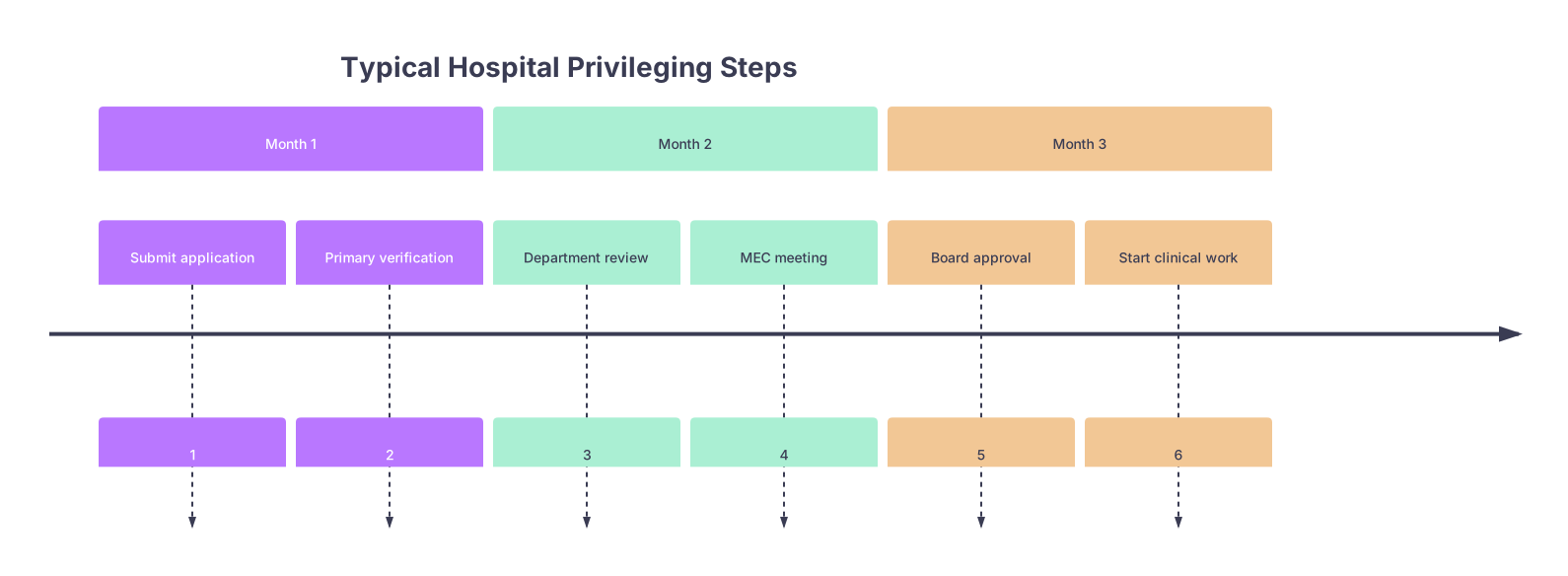
| Period | Event |
|---|---|
| Month 1 - Submit application | 1 |
| Month 1 - Primary verification | 2 |
| Month 2 - Department review | 3 |
| Month 2 - MEC meeting | 4 |
| Month 3 - Board approval | 5 |
| Month 3 - Start clinical work | 6 |
How this delays paychecks:
- You can’t take call
- You can’t admit patients
- Sometimes you cannot even be listed as attending
- RVUs or collections tied to hospital work are zero
How to avoid it:
- Find out the MEC meeting calendar the day you sign.
- Ask the med staff office: “What’s the latest date I can submit a complete application to be on the next agenda?”
- Respond instantly to requests for more info. A missing document can bump you to the next meeting cycle.
Malpractice and Gaps: The Quiet Credentialing Killer
Payers and hospitals care about one thing: risk. Unexplained gaps and messy malpractice histories are bright red flags.
Mistake #8: Poorly Documented Gaps and Liability Issues
Big stalls often come from:
- Unexplained time off between residency and practice
- Extended international travel with no clear timeline
- Prior claims or board actions with vague descriptions
- Inconsistent dates between your CV, applications, and CAQH
Reviewers hate feeling like you’re hiding something. When they suspect that, they slow everything down.
How to avoid it:
- Update your CV so there are no unexplained time gaps longer than 1–2 months. “Studying for boards,” “Family leave,” “Relocation,” “Travel” are all fine. Just document it.
- For malpractice claims or board actions, prepare a clear, concise, factual explanation (and use the same one everywhere):
- What happened
- Your role
- Outcome
- Any resulting changes or education
Do not improvise each time you’re asked. Inconsistency is what gets files stuck.
Private Practice Specific Disasters
If you’re starting or joining a small private practice, you do not have a massive credentialing department to cover your mistakes. You are the department.
Here’s where I see practices bleed cash quickly.
Mistake #9: Not Aligning Entity Setup With Credentialing
People set up LLCs, S‑corps, or partnerships with zero thought for how it interacts with credentialing and billing.
Common issues:
- Applying for payer contracts under the wrong tax ID
- Forgetting to get an NPI 2 for the group
- Changing entity name after contracting starts
- Opening or changing business bank accounts after enrollment
Every time you change a fundamental detail (entity legal name, tax ID, address, bank info), you trigger updates with every payer. That means more delay, more risk of checks going to the wrong place, or EFTs failing.
How to avoid it:
Lock in these items before payer applications go out:
- Legal entity name (exact spelling, punctuation)
- Tax ID (EIN)
- Practice locations (where you’ll see patients)
- Billing/service addresses
- Bank accounts and routing numbers for EFT
Then do not change them mid‑credentialing unless absolutely necessary. If you must, track which payers have been notified and confirm the changes took.
Mistake #10: Assuming “The Biller Will Fix It”
This one’s brutal.
You hire a billing company. They smile and say, “We do credentialing too.” You breathe out and stop thinking about it.
Six months later:
- Claims are being submitted to payers you were never actually enrolled with
- Remits show denials for “provider not credentialed”
- No one can tell you the exact status with each payer
The billing company blames the payer. The payer blames “incomplete info from provider.” And you’re the one not getting paid.
How to avoid it:
You do not need to do every form yourself, but you must own the process.
For each payer, insist on:
- A copy of the submitted application (or at least a status sheet)
- Date submitted
- Tracking of follow‑ups (who called, when, what was said)
- Written confirmation when credentialed and when billing is live
If a biller cannot give you a simple, up‑to‑date grid of payers, effective dates, and billing status, they are not protecting your cash flow.
Hidden Administrative Missteps That Cost You Months
There are a few quieter mistakes that don’t sound dramatic but wreck your timeline.
Mistake #11: Slow Responses and Lost Paperwork
Credentialing offices still love fax, snail mail, and poorly formatted email attachments. Things get lost. Constantly.
Typical scenario:
- Payer asks for “one more document”
- Fax is sent, never received
- Clock restarts on review
- You find out 45 days later when you call to check status
How to avoid it:
- Use trackable methods whenever possible (secure email portals, upload links, confirmation pages).
- Keep a simple log: date you sent something, how you sent it, confirmation if available.
- Set a reminder to follow up 10–14 days after sending critical items. Do not assume they have it; verify.
Mistake #12: Not Matching Start Date With Credentialing Reality
A lot of new attendings pick a start date based on lease dates, family schedules, or when residency ends. They do not match it to payer/hospital timelines at all.
Result: you’re physically in the office, maybe even seeing patients, but financially stuck.

How to avoid it:
When picking a start date, ask:
- What is the realistic latest date by which we’ll have major payers live?
- What if one or two key plans run 30–60 days late?
- Do I have cash reserves to survive 3–4 months of partial or no payment?
If the math doesn’t work, push the opening date or arrange bridge income (locums, per diem hospital work where you’re already credentialed, etc.).
Practical Damage Control If You’re Already Stuck
If you’re reading this late and your paycheck is already delayed, don’t just “wait a bit longer.” Waiting is how you lose another month.
Here’s the triage:
- Make a master list of:
- Every payer
- Hospital(s)
- Status (received, under review, approved, loaded)
- Dates of each step
- Call and confirm:
- Is anything missing or unclear?
- What’s the specific hold‑up?
- What date can they realistically finalize?
- Escalate smartly:
- Ask for a provider rep or supervisor
- Use any internal contacts from your practice or hospital
- Protect current work:
- Clarify what can and cannot be billed retroactively
- Adjust scheduling and patient mix accordingly if necessary
And yes, tighten personal finances temporarily. It’s better to cut discretionary spending early than scramble when you realize you’re three months in with half the income you were expecting.

A Simple Visual: What You Want to Avoid
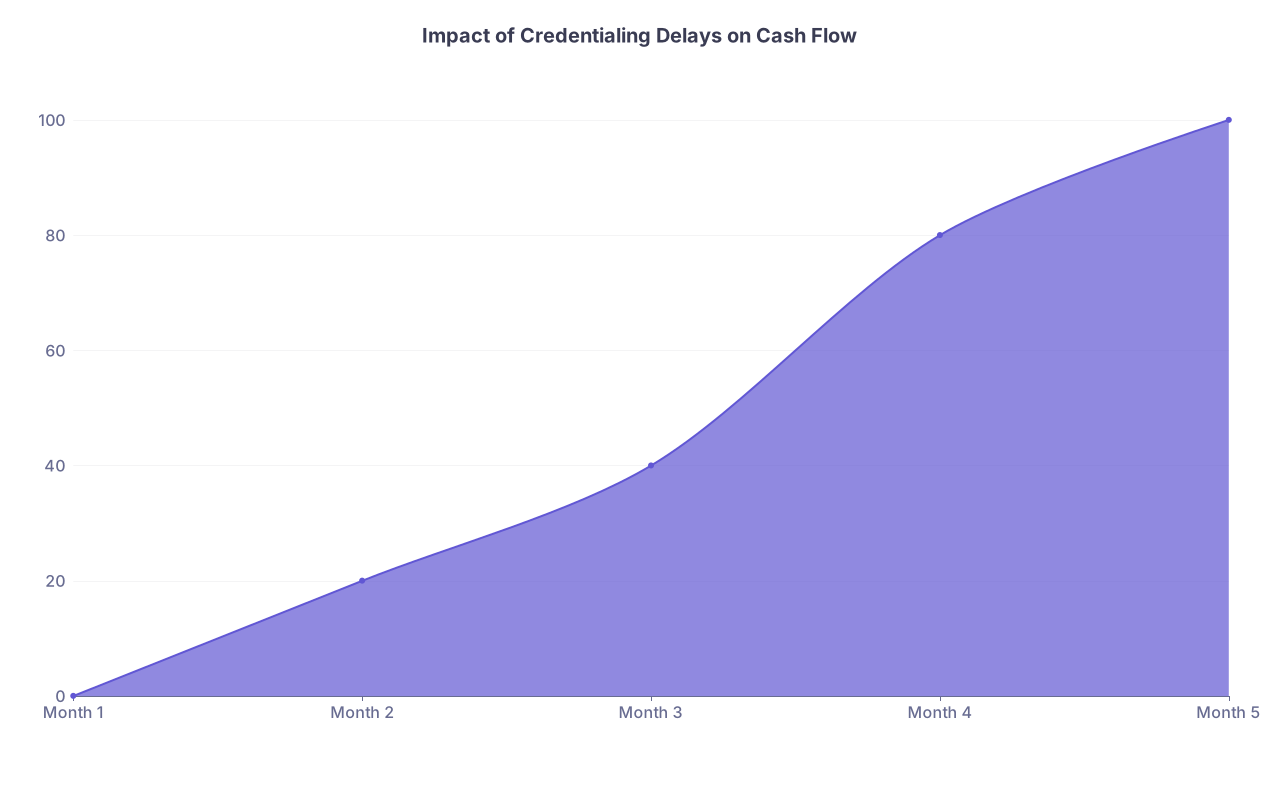
| Category | Value |
|---|---|
| Month 1 | 0 |
| Month 2 | 20 |
| Month 3 | 40 |
| Month 4 | 80 |
| Month 5 | 100 |
That “0–40% income” window is exactly where poor credentialing dumps you. You’re working nearly full speed, but only a fraction of it is actually collectible.

If You Remember Nothing Else
Do not make these three mistakes:
- Starting credentialing late. Begin the moment you sign anything—offer letter, lease, or incorporation documents. Not when you first walk into the office.
- Treating credentialing as “set it and forget it.” Track every payer, every status, every effective date. Verify, don’t assume. Inconsistency and silence are what delay checks.
- Letting others “handle it” without oversight. Whether it’s a recruiter, biller, or office manager, you still own this process. Ask questions. Demand timelines. Get proof.
You worked too hard to practice medicine just to donate your first months of work to insurance bureaucracy. Guard your credentialing like you’d guard your license—because your paycheck depends on it.