
It’s late. You just finished another brutal call month, and you’re scrolling through commercial listings between consult notes. There it is: “Perfect medical office – turnkey – near hospital – won’t last long.”
You can see it already. Your name on the door. Your own staff. No more “per hospital policy.” You book a tour, the broker is charming, the space looks clean enough, the landlord “has worked with many doctors.” They push a 7‑year lease across the desk and say, “Honestly, this is pretty standard.”
You’re exhausted, excited, and a little scared. You sign.
Five years later you’re stuck in 1,200 square feet that’s too small, with a rent escalator you never really understood, paying for the plumbing to fix the neighbor’s dental chair, and you discover the urgent care down the hall is getting half your patient traffic because they got exclusive rights to “walk‑in clinic” in the building.
That’s the story I’ve seen, in some version, over and over.
Let me walk you through what senior physicians quietly complain about over drinks, what they wish someone had shoved in their face before they put ink on that first lease.
The Power Dynamic: You Think You’re The Client. You’re Not.
Here’s the first truth: the commercial real estate game doesn’t care that you have an MD.
Landlords and brokers see “physician tenant” and they think: sticky, low‑risk, higher‑than‑average rent, low default rate. You’re the golden goose. But you walk in like a deer in headlights because nobody trained you on triple‑net, TI allowances, CAM charges, or personal guarantees.
And they know that.
They also know you’re under time pressure: job start date approaching, hospital medical staff application ticking, credentialing delays if you don’t have an address. You’re vulnerable.
What senior physicians tell me later is not “I wish I’d understood real estate law.” It’s “I wish I’d realized I was a high‑value tenant and acted like it.”
You can negotiate. On more than you think. Base rent, free rent months, TI (tenant improvement) dollars, renewal options, even the personal guarantee. The answer is not always “yes,” but the people who ask get better deals. The ones who sign the first PDF get buried.
The Rent Trap: Base, Triple‑Net, and Escalators
Most attendings will admit they only looked at the one number on the flyer: “$28/sq ft.” They didn’t understand what that meant in practice.
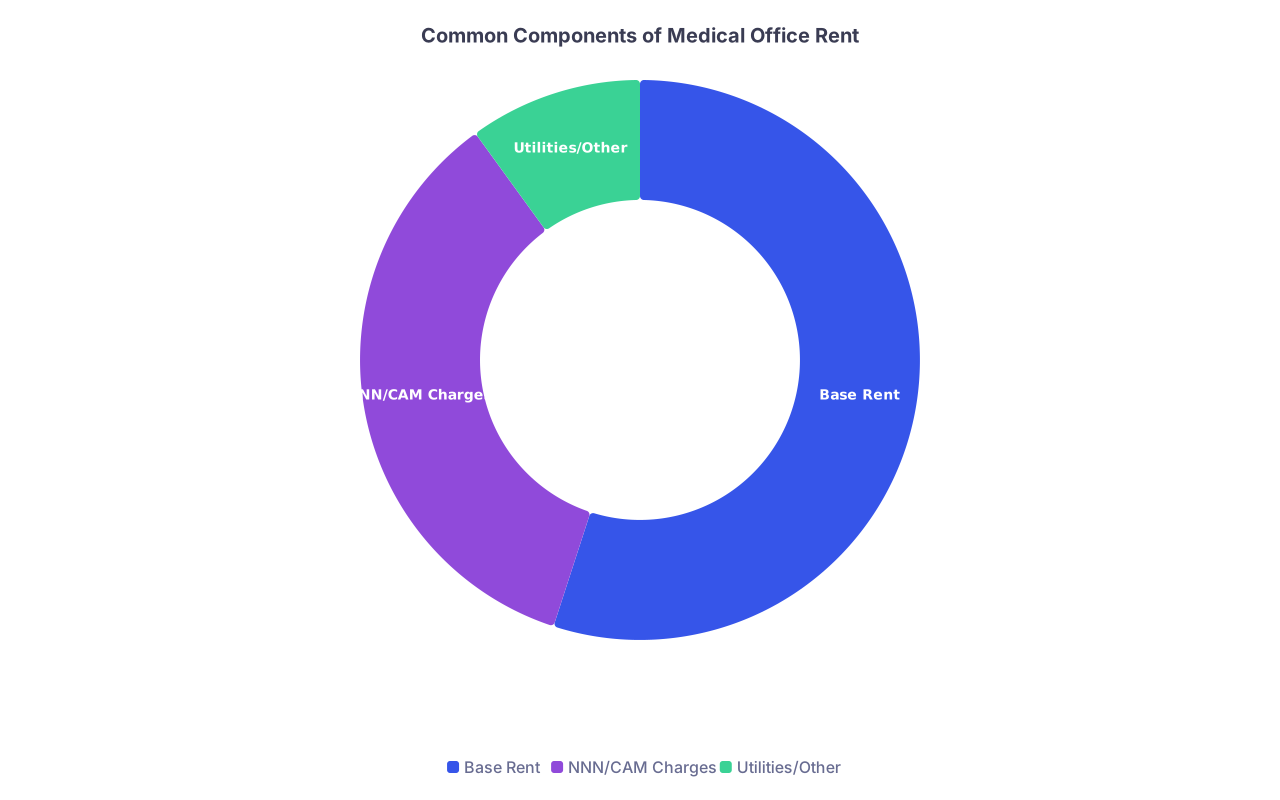
| Category | Value |
|---|---|
| Base Rent | 55 |
| NNN/CAM Charges | 35 |
| Utilities/Other | 10 |
That pie is what your monthly payment smells like once you’re in too deep.
Base rent is the pretty number. NNN (triple‑net) or CAM (common area maintenance) is where you get quietly bled:
- Property taxes
- Building insurance
- Hallway lighting, lobby cleaning, landscaping
- Management fees that magically inflate every year
Here’s what senior docs wish they’d done:
They wish they’d insisted on seeing a 3–5 year history of CAM charges. Line‑item. They wish they’d asked, “How often do you reconcile CAM? Do you return overpayments? Who audits this?” They wish they’d capped CAM increases in the lease at a fixed percentage per year.
And the escalator clause. This one kills people.
That “3% annual increase” sounds harmless when you’re signing. But compound that over a 10‑year term at a high starting rent and watch what happens.
Second thing they wish they knew: you can negotiate the escalator. Maybe it’s 2% instead of 3%. Maybe it only applies to base rent, not CAM. Maybe you tie increases to CPI with a cap. The point is: it’s not sacred text.
The TI Mirage: Tenant Improvements That Aren’t Really Free
Every doctor I know got dazzled at least once by a “$50 per square foot TI allowance!”
They pictured free exam tables and sleek lighting. What they got was a GC (general contractor) quote that was double that number, a landlord pushing their “preferred contractor,” and a build‑out process that took six months instead of three.
TI dollars are just a loan in disguise. You’re paying it back in rent. Senior physicians will tell you three things they learned too late:
First, TI does not cover everything. It might be enough for paint and some walls. It doesn’t magically cover med‑gas, extra plumbing lines for procedure rooms, lead shielding for imaging, upgraded HVAC for a surgery center, or the soundproofing you should have had between the waiting room and exam rooms.
Second, “building standard finishes” are cheap and ugly. If you want higher‑end flooring, cabinetry that won’t disintegrate in three years, extra electrical, or custom millwork, you’re paying the overage. Out of pocket or amortized into rent.
Third, delays cost real money. You will still be making loan payments, EHR subscriptions, malpractice premiums, and possibly staff salaries while you have zero revenue because you can’t see patients in a construction zone. The schedule the landlord throws out (“12 weeks, tops!”) is marketing, not reality.
What senior docs wish they did: bring in their own contractor early, before signing, to walk the space and give a realistic build‑out budget and timeline. And then push for rent abatement (free rent) that covers not just construction but at least 1–2 months after move‑in while volume ramps.
The Personal Guarantee: The Clause That Keeps You Up At 3 a.m.
Here’s the part most new attendings don’t fully process: the landlord is not leasing to “Your Future Practice, LLC.” They are leasing to you, personally, unless you fight that.
That personal guarantee means if your practice fails, consolidates, or you need to move cities for your spouse’s job, they can come after your personal assets for the remaining lease term. Yes, including that townhouse you just bought.
Senior physicians tell me this is the #1 thing they wish they’d negotiated harder.
A few things I’ve seen smart people do, which nobody tells you in residency:
They push for a “good guy guarantee.” That means your personal guarantee is contingent on you paying rent up to the date you vacate and leaving the space in good condition. After that, you’re off the hook (sometimes with some notice requirement). Landlords in big markets know this term; in smaller markets you may need to explain it.
They negotiate a burn‑off. For example, the personal guarantee drops off after year 3 if all rent has been paid on time. Or it caps your liability to a fixed number of months of rent rather than the entire remaining term.
They use a separate legal entity (PC/PLLC) and push to limit the guarantee to that entity only. Not always possible with a new practice and no operating history, but often you can at least soften the edges.
The senior docs who didn’t do any of this? They’re the ones who had to write six‑figure checks to get out of dead spaces that no longer fit their practice.
The Use Clause: The Fine Print That Quietly Limits Your Future
The “Permitted Use” section feels like boilerplate. It’s not.
I’ve watched cardiologists get burned because their lease said “cardiology clinic” and didn’t explicitly include noninvasive imaging or cardiac rehab. When they tried to add a treadmill room and echo suite, the landlord claimed that was an expansion of use and demanded more rent.
Orthopods realized too late their “office use only” clause didn’t allow for on‑site PT. GIs discovered they couldn’t open an ASC in a building that had another surgery center with an exclusivity clause.
What senior physicians wish they did: they wish they’d written the use clause as expansively as possible. Something like “general medical practice, including but not limited to diagnosis, treatment, minor procedures, imaging, laboratory, and ancillary services customarily provided in a medical practice of this type.”
They also wish they’d asked flat‑out: do any other tenants have exclusivity clauses that could block my future services? Imaging centers, labs, PT groups, surgery centers all try to lock that down. And if you’re “the new doc on the fifth floor,” you have no idea what’s buried in those other leases unless you ask.
Hidden Costs: Parking, Build‑Out Surprises, and The “Medical Surcharge”
Certain landlords have figured out that physicians are desperate and bad at reading fine print. So they sneak in what senior doctors half‑jokingly call the “white coat tax.”
You see it in:
- Above‑market parking fees for your staff or patients
- Required use of pricey building telecom or security vendors
- After‑hours HVAC charges that punish late clinics or Saturday procedures
- A “medical use surcharge” buried in CAM because “your patients are harder on the elevators and bathrooms”
Senior attendings, especially the ones in older medical office buildings near big hospitals, will tell you they were blindsided by parking. Thirty bucks a month per staff member sounds fine when you have three employees. Not when your practice grows to twelve.
Bring a calculator to the table. Do the math on a full staff, full schedule, and 5–10 years.
Here’s a simple way they wish they’d compared spaces:
| Factor | Space A (Closer, Higher Rent) | Space B (Farther, Lower Rent) |
|---|---|---|
| Base Rent (per sq ft) | $32 | $26 |
| NNN/CAM (per sq ft) | $12 | $8 |
| Parking (monthly) | $80/space | Free |
| TI Allowance | $40/sq ft | $20/sq ft |
| Free Rent | 3 months | 1 month |
If you only stare at base rent, you pick Space B. If you include build‑out costs, CAM history, and real parking numbers, sometimes the “expensive” one wins over a 10‑year horizon.
Term Length and Exit Strategy: You Will Not Be The Same Practice In 10 Years
When you’re starting out, long‑term stability sounds great. The landlord loves 10‑ or 12‑year leases. The bank might like seeing that term if you’re financing build‑out.
But your practice will change. Your life will change.
Senior physicians almost unanimously say this: “I wish I had more flexibility.”
Some grew faster than expected. They needed twice the space in 4 years and then were stuck limiting growth or juggling a satellite office because they couldn’t get out of the original lease.
Others shifted models. They went concierge, cut down panel size, subleased rooms to a therapist or dietitian. Then the landlord blocked it because the lease restricted subletting to “landlord’s sole discretion.”
Some changed cities. Spouse matched somewhere else. Kids’ schools became an issue. Elderly parents. You know the drill.
What they wish they’d done:
They’d push for a 5‑year initial term with renewal options, not a straight 10. That way they lock in priority but can re‑negotiate when they have data on how their practice actually functions.
They’d carve in an early termination clause, even if it cost them. For example: after year 3, they can terminate with 9–12 months’ notice and a penalty of 3–6 months’ rent. Ugly? Yes. Better than writing a check for 4 years of remaining rent? Absolutely.
They’d insist on clear, reasonable sublease language. Something like “Landlord shall not unreasonably withhold, condition, or delay consent to any sublease.” Without that phrase, the landlord can effectively veto your exit strategy.
Location, Referrals, and The Hospital Shadow
Doctors drastically overestimate how much “being across from Big Academic Hospital” matters to patients. They underestimate how much it matters to hospital politics and referral patterns.
Here’s what senior docs tell me over and over:
They wish they’d mapped their actual referral sources and payer mix before choosing a location.
If 70% of your patients will be commercial PPO families from two suburbs north of the hospital, signing a lease downtown because “that’s where the doctors are” is a financial own‑goal. Your patients care more about parking, traffic, and not missing half a day of work.
Also, hospitals play games. Some hospital‑owned groups get sweetheart deals on hospital‑owned real estate. Independents pay more for worse space. I’ve seen hospital‑based systems quietly pressure employed PCPs to “keep referrals in the building,” which magically doesn’t include your beautifully renovated suite two blocks away.
Senior independents wish they had:
- Talked to actual front‑desk staff at referring offices. “Where do patients complain about parking? Which locations do they no‑show the most?”
- Looked at drive‑time more than straight‑line distance
- Checked visibility: can patients actually find you without circling the block three times?
And they wish they’d thought about “Plan B” if their hospital relationship sours. If your lease is inside a hospital‑owned MOB and your relationship with that health system deteriorates, you’re in a political minefield. Moving out becomes both a real estate move and a referral move. That’s not fun.
The Compliance Landmines: Stark, AKS, and “Free Rent”
Senior physicians in high‑reg markets (think primary care, cardiology, ortho) wish they’d been a little more paranoid about one thing: leases that don’t pass fraud and abuse smell tests.
If your landlord is a hospital or health system, and they are giving you:
- Below‑market rent
- Extra TI allowance that isn’t explained
- Free rent tied to your referrals
…you are in dangerous territory.
I’ve seen young attendings sign below‑market leases in hospital MOBs, then get dragged years later when the system gets audited. Suddenly your sweetheart deal is Exhibit C in a Stark/AKS investigation.
Senior docs wish they’d insisted on something very simple: a lease that explicitly states rent is at fair market value, not determined in a way that takes referrals into account, and is consistent with similar tenants. And then they’d actually ask to see a third‑party FMV opinion if the deal looks too generous.
This isn’t academic. OIG settlements have literally itemized “improper below‑market office leases to referring physicians.” You do not want your name in that PDF.
Who Should Actually Read the Lease: Spoiler, Not Just You
Almost every attending I know read about three pages of their first lease and then got glassy‑eyed.
Here’s what the experienced ones wish they’d done differently:
They’d have paid for two kinds of help:
A healthcare‑savvy real estate attorney. Not your cousin the divorce lawyer. Not your friend from college who “does corporate.” Someone who has seen medical office leases, Stark/AKS issues, TI work letters. The $2–5k you spend here is some of the cheapest risk mitigation you’ll ever buy.
And a tenant‑side commercial broker who represents you, not the landlord. Their commission usually comes from the landlord’s side of the deal, but they only get paid when you sign, so yes there’s bias. Still, a good tenant rep knows local comps, what other docs are paying, which landlords are notorious for CAM games, and what terms are realistically on the table.
The older docs will tell you: “I tried to save money. I signed something I didn’t understand. It cost me six figures later to unwind.”
Pay up front. Bleed less later.
Timeline Reality: Everything Takes Longer Than They Tell You
Let me spell out the process like it actually plays out, not how the glossy brochure says it will.
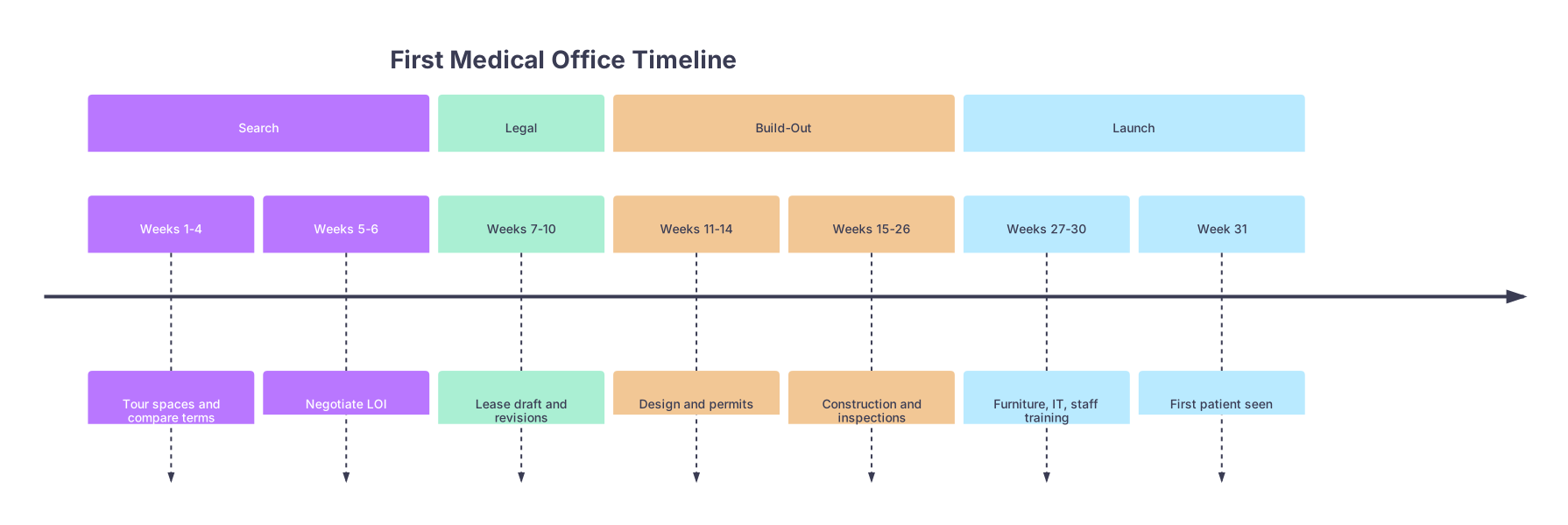
| Period | Event |
|---|---|
| Search - Weeks 1-4 | Tour spaces and compare terms |
| Search - Weeks 5-6 | Negotiate LOI |
| Legal - Weeks 7-10 | Lease draft and revisions |
| Build-Out - Weeks 11-14 | Design and permits |
| Build-Out - Weeks 15-26 | Construction and inspections |
| Launch - Weeks 27-30 | Furniture, IT, staff training |
| Launch - Week 31 | First patient seen |
Every phase slips.
Landlord’s attorney takes two weeks to respond. City planning sits on your permit for an extra month. The contractor discovers plumbing that’s not up to code behind the walls. The med‑gas vendor can’t schedule installation for six weeks.
Senior physicians will tell you the painful truth: your “we’ll open in July” often becomes “we saw our first patient in November.”
So they wish they had:
- Built 3–6 extra months of runway into their financing and personal budget
- Delayed hiring full‑time staff until construction was 80–90% complete
- Negotiated rent commencement tied to certificate of occupancy, not lease execution date
If you let rent start before you can actually see patients, you’re just lighting money on fire.
FAQ: What Senior Docs Ask Themselves Looking Back
1. Is it ever smart to start with a shorter‑term, “starter” space?
Yes, and more senior physicians now say they’d do this. A 3‑year “starter” suite with flexible terms can let you prove your panel, understand your patient flow, and refine your space needs. The trade‑off is you may move twice in 7–10 years. But a controlled second move is better than a decade trapped in the wrong footprint.
2. Should I ever buy instead of leasing for my first practice?
Sometimes. Buying too early is a flex that can sink you. Senior docs who are glad they bought had three things: stable community roots (not moving cities), clear vision of their practice size, and enough cash to cover down payment plus build‑out without starving operations. If you’re not sure you’ll be there in 7–10 years, leasing is usually safer.
3. How much space do most senior physicians wish they’d taken?
Most regret undersizing more than oversizing—within reason. A solo doc often needs 1,200–1,800 sq ft. If you think you’ll add a partner within 3–5 years, many wish they’d sized up a bit and built a flex room or two that could later convert to additional exam rooms. Paying for 10–20% extra capacity is often cheaper than moving or adding a satellite.
4. What’s the fastest way to spot a “bad” medical landlord?
Ask other tenants off the record. Do CAM charges jump unpredictably? Do they fix HVAC and plumbing quickly? Do they nickel‑and‑dime on parking and after‑hours access? Senior docs learn more from a 10‑minute hallway conversation with the office manager down the hall than from any glossy marketing packet.
5. What’s the one clause I absolutely should not skim?
The default and remedies section. That’s where you’ll find what happens if you’re late on rent, if you violate use, if you try to sublet, if construction is delayed. Senior physicians who got burned almost always say, “I skimmed that part. I figured I’d never default.” Then life happened.
If you remember nothing else:
Your first lease is not a formality. It’s a seven‑figure decision spread over years.
You have more leverage than you think as a physician tenant, but only if you treat this like a real negotiation, not a permission slip.
And the senior docs you admire? Most of them paid tuition to the “bad lease” school at least once. Your job is to learn from their scars instead of earning your own.