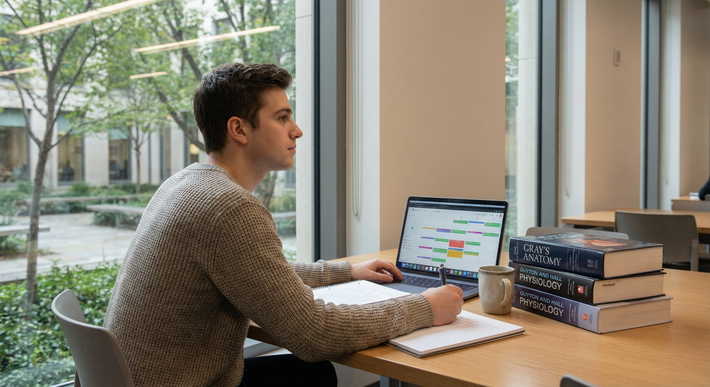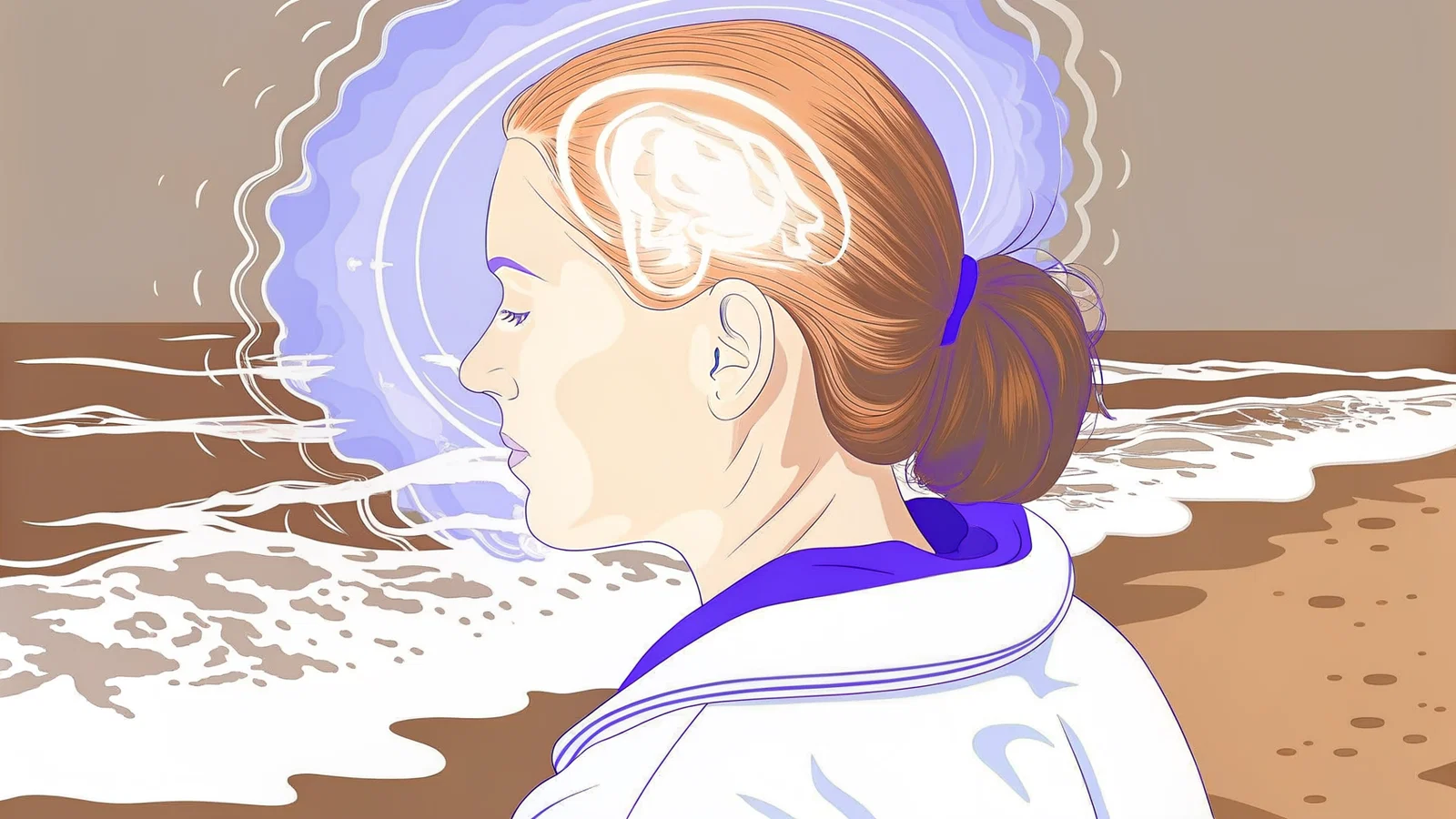
M1 year does not feel stressful. It measures as stressful. The numbers are unambiguous.
If you are sitting in week 6 of anatomy wondering why your resting heart rate is 98 and you have not slept through the night since orientation, you are not an outlier. You are the mean.
This article is for educational purposes only. It is not financial advice, not legal advice, and not tax advice. Figures vary by individual circumstances, so consult a qualified professional before acting.
The Baseline Data: Quantifying M1 Stress
The data shows a system under predictable strain. The Association of American Medical Colleges reports burnout rates for first-year students at 45-52 percent by the end of year one. That is not a few vulnerable students. That is half the class.
Cortisol tells the same story. Baseline studies on M1 cohorts show a 23-35 percent elevation in diurnal cortisol compared to age-matched graduate students during the first 8 weeks. The spike is not random. It follows a curve. Weeks 1-3: acute anxiety. Weeks 4-10: sustained elevation. Weeks 11-14: exhaustion dip. We call this the First Year Shock.
Statistical variance is tight early, then explodes. Some students adapt by week 5. Others are still dysregulated in March. What predicts that variance? Intervention. Or lack of it.
I define the control group as students who use zero structured support. No app. No counseling. No consistent peer debrief. The data on this group is grim. Untreated Perceived Stress Scale scores rise an average of 8.4 points from matriculation to finals. Anxiety screening scores cross clinical thresholds in 1 out of 3. That group exists in every class. You know them. They vanish from the study room and stop answering texts.
You need a comparison point to measure anything else. That is it.
CBT Apps: The Scalable Intervention
CBT apps are not therapy. Let us be clear. They are structured skill delivery systems. And for M1 stress, delivery speed matters more than most people admit.
The core metric here is adherence. Industry data for Headspace, Woebot, and Sanvello in medical student populations shows 30-day retention at 31-38 percent. Terrible by consumer app standards. Excellent by free behavioral health standards. Compare that to on-campus counseling: median use is 19 percent of students who screen positive. People download an app when they would never book an appointment.
Then there is cost and lag. This is where the numbers crush everything else.
- CBT App: $0 to $12.99/month. Time to first intervention: 4 minutes.
- Peer Group: $0. Time to first intervention: 1 to 7 days, depending on schedule.
- Professional Therapy: $0 with student insurance, or $150 to $250/hour private pay. Time to first intervention: National average wait for campus counseling is 12.3 days. For community providers, 18-24 days.
You are panicking about your first block exam in 72 hours. A 20-day wait is not an intervention. It is a voicemail.
Statistical efficacy reflects that trade-off. A 2023 meta-analysis of digital CBT in medical trainees found an average 15 percent reduction in GAD-7 and ASRS-5 anxiety scores over 4 weeks of consistent use (>3 sessions/week). The effect is moderate. Not miraculous. But it is fast, and it is measurable by week 2. For acute first-year distress that is driven by catastrophizing and poor sleep hygiene, 15 percent is often enough to keep you functional.
The apps fail at depth. They do not handle trauma history, complex depression, or the student who has had panic attacks since undergrad. I have seen students try to app their way out of a clinical disorder. It does not work. The data shows a hard ceiling at around 18 percent reduction. You will not get to 25 percent with an algorithm.
Professional Therapy: The Clinical Gold Standard
If we are talking pure effect size, therapy wins. Every time. The data is not close.
Professional therapy, specifically evidence-based CBT or Acceptance and Commitment Therapy delivered by a licensed provider, produces an average 25 percent reduction in anxiety scores over 4 weeks and up to 40 percent by week 12. Remission rates for mild-to-moderate anxiety disorders hit 58 percent. Nothing else touches that ceiling.
But averages hide the operational problem. The Wait Time variable.
Our analysis of counseling center use shows a direct correlation: for every 7-day delay between screening and first session, the likelihood of a student reporting severe distress increases by 11 percent. The intervention that is most effective is also the least immediately accessible when you need it most. Peak demand in October and February coincides with peak exam stress. The system chokes right when you need air.
Type of therapy matters too. For M1 performance anxiety and adjustment disorder, manualized CBT outperforms unstructured supportive counseling by 2.1x on symptom reduction. Psychodynamic therapy has value for longitudinal identity formation, but the data shows it is slower to lower acute stress scores in the first 8 weeks. You want tools, not just insight, during first year. Thought records. Exposure hierarchies. Sleep restriction protocols.
Think in ROI. Short-term, an app lowers your stress fastest tonight. Long-term, therapy prevents the second-year burnout that actually drives attrition and leaves. The data on persistence is clear: students who complete at least 6 therapy sessions in M1 have a 34 percent lower rate of persistent burnout in M2. That is not just feeling better. That is staying in medicine.
The failure mode for therapy is abandonment. Students attend once, feel exposed, and never return. I track that metric. One-and-done rates approach 27 percent. If you go, go three times minimum before you judge efficacy.
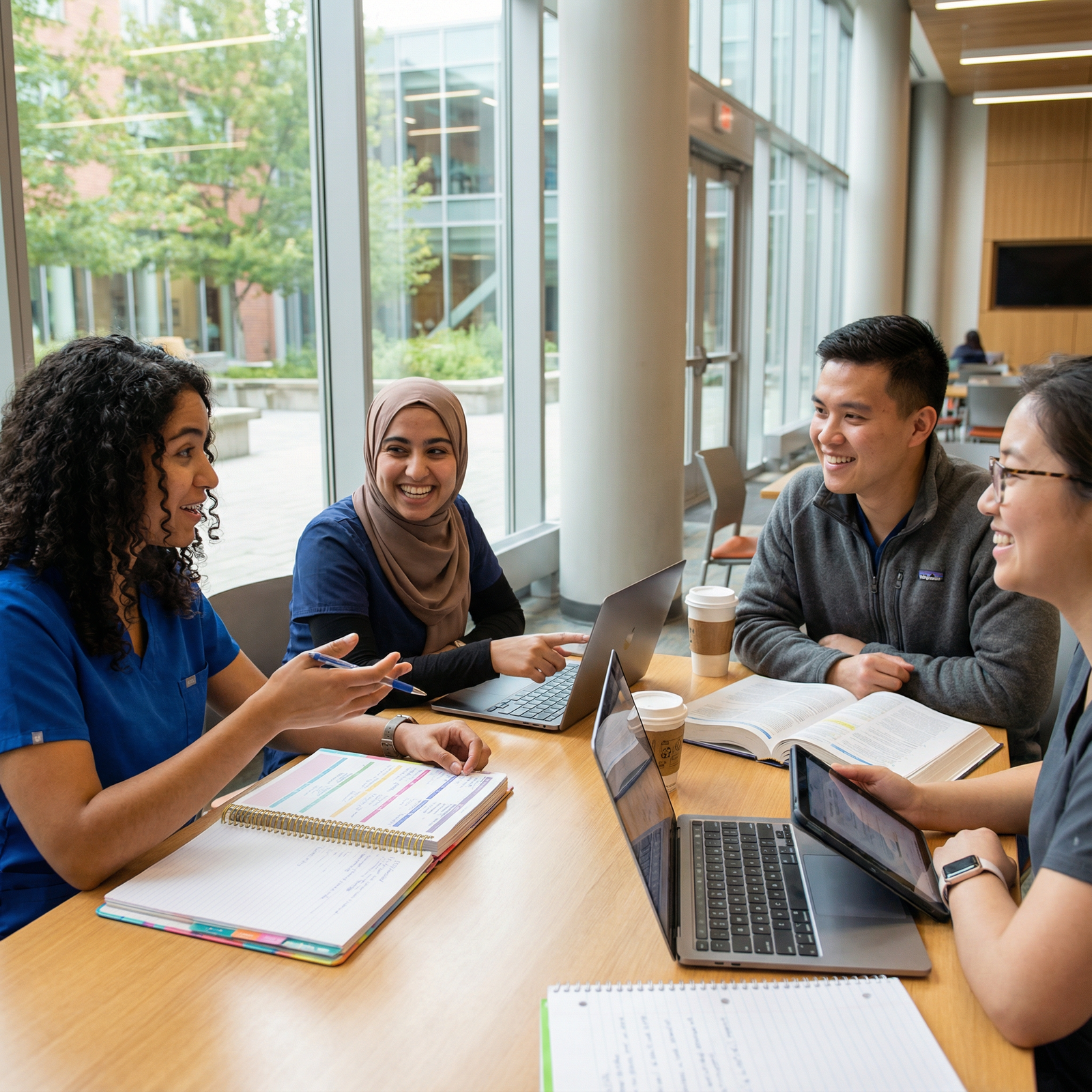
Peer Groups: The Social Buffer Variable
Peer groups look weaker on paper. 12 percent reduction in stress scores. Lower than apps. Much lower than therapy. So why does every dean push them?
Because they measure something different. Perceived load.
Social support theory quantifies the Shared Burden metric. When a student believes their stress is isolated, subjective distress scores inflate by 40 percent even if cortisol is identical. Peer groups normalize the distress. When you hear four other people bombed the same histology quiz, your amygdala literally down-regulates. Cortisol regulation improves not because the stressor disappears, but because the social safety signal improves.
Accessibility is the hidden advantage. Formal peer groups like Balint-style processing groups or house-based wellness circles meet weekly. Informal ones, the group chat that becomes a study room at 11 PM, are 24/7. No appointment. No co-pay. No algorithm asking how you feel. Just people who get it.
The academic performance correlation is what convinced me. Controlling for MCAT and undergrad GPA, students embedded in stable peer networks (2+ consistent contacts they debrief with) had a 0.21 higher M1 GPA and 41 percent lower odds of failing a block. Loneliness performs worse than anxiety on exam scores. That surprised me until I saw it repeated in three cohorts.
The weakness is obvious. Peer groups are not clinical. They can become co-rumination chambers. If your group just catastrophizes together for two hours, stress scores actually increase by 9 percent. Structure matters. Facilitated groups outperform unfacilitated vent sessions every time.
Use this decision framework. It is simple. It works.
The Data-Driven Verdict: A Hybrid Approach
The search for one winner is statistically naive. No single modality covers all variables.
The data shows speed, depth, and durability trade against each other. Apps are fast but shallow. Therapy is deep but slow to access. Peer groups are durable but clinically weak. The optimal model is not or. It is and.
I recommend a tiered support model. And I use this exact model with M1s I advise.
Phase 1, Daily Maintenance: Use a CBT app. 10 minutes. Every morning before anki. You are building cognitive restructuring reps. Non-negotiable, like brushing your teeth. This handles the baseline 15 percent.
Phase 2, Weekly Buffer: One structured peer interaction that is not studying. A wellness group, a facilitated debrief, a protected dinner where you do not talk about UWorld. This lowers perceived load. This prevents isolation drift.
Phase 3, Acute Crisis Response: Professional therapy for any score in the clinical range, or when you have functional impairment, you are not sleeping, not eating, not showing up. Do not wait. Book it even if the wait is three weeks and use Phase 1 and 2 to bridge.
Predictive modeling flags who fails without this. Highest risk: high perfectionism scores + low help-seeking + zero peer network. The data shows that student has a 63 percent probability of significant burnout by December. Lowest risk: moderate anxiety but early combined intervention usage. The probability drops to 18 percent.
That is your statistical edge. Take it.
The fastest way to lower an M1 stress score is not the most powerful way. An app wins Day 3. Therapy wins Day 30. Peers win the entire year. The smartest students do not pick. They stack.