The secret shopper audit isn't a rumor. It's a real mechanism telemedicine medical directors use to filter out providers who can't deliver consistent, compliant, and clinically competent care through a screen. If you're reading this, you probably just signed a contract, onboarded onto a platform, and heard a vague warning about "quality monitoring." Here's the part nobody explained: that monitoring often includes a paid actor booking an appointment under a fabricated patient profile, recording how you perform across a standardized rubric, and sending that report straight to your medical director.
You won't know when it's coming. You won't recognize the patient. And if you fail, your contract renewal gets harder than it needed to be.

Disclaimer: The following content is for educational purposes only and is not financial advice, not legal advice, and not tax advice. Figures vary by platform, state, and contract structure. Consult a qualified professional before making employment decisions based on audit scoring systems.
The 30-Day Countdown: Month-Out Preparation for Your Secret Shopper Audit
At this point, you should treat your first 30 days on the platform as your probation window, because that's exactly what your medical director is doing.
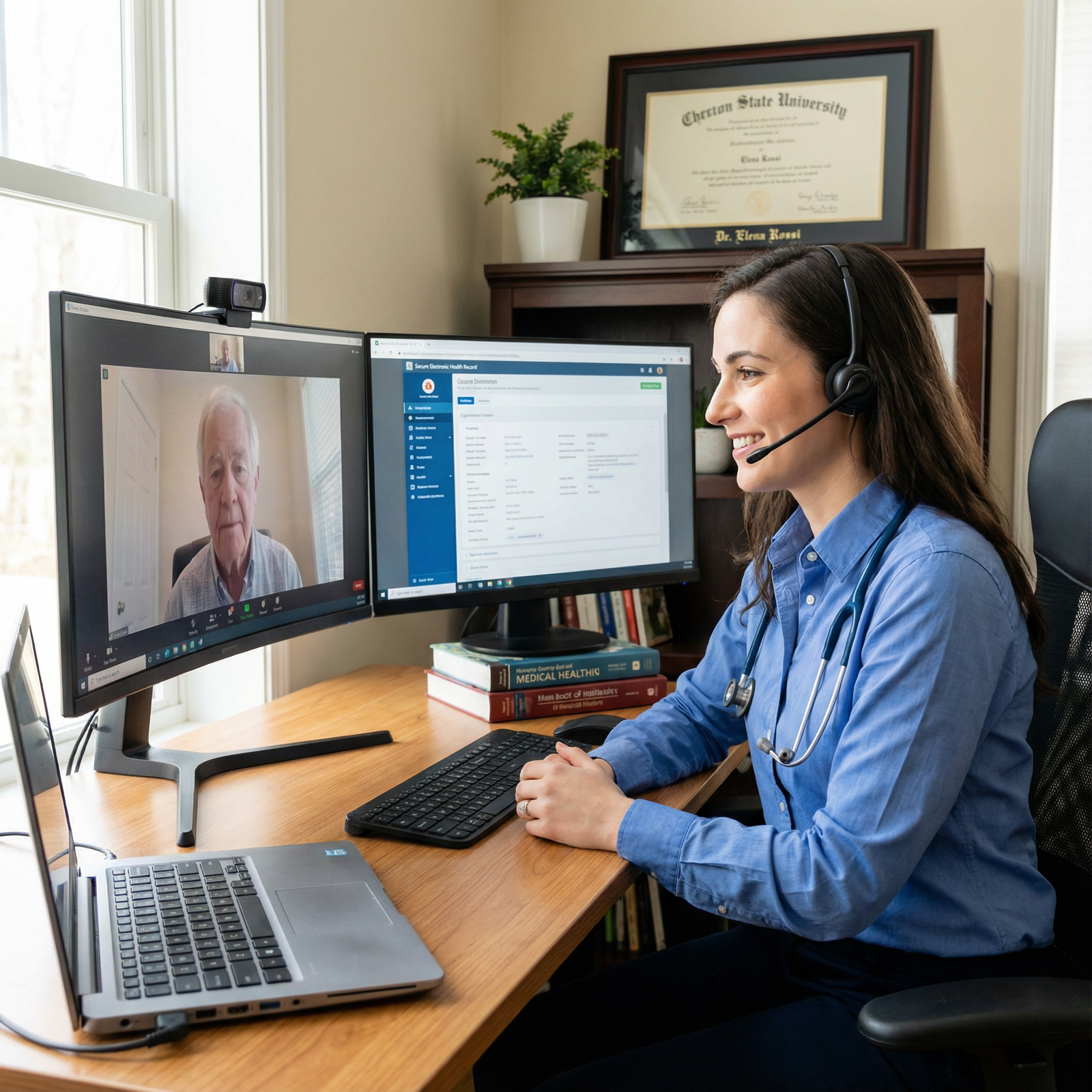
Start with a complete technology and lighting audit of your virtual office setup. I've watched brilliant clinicians tank their first audit because their webcam sat six inches below eye level, casting unflattering shadows and forcing them to break camera contact. You need three things dialed in:
- Webcam positioning. Eye-level. Centered. Test it with a recording.
- Lighting. A soft key light facing you, no bright window behind you. Shoppers score harshly on glare and backlight.
- Audio. A dedicated USB microphone or quality headset beats your laptop mic every time. Muffled audio = perceived incompetence.
Next, review your state licensing compliance and background documentation exactly 30 days prior. Medical directors use secret shoppers to confirm you're actually practicing within the state you've claimed, with the credentials you've uploaded, on the schedule you've published. Cross-license issues, expired DEA registrations, and outdated malpractice certificates are silent killers. Pull every credential. Verify every expiration date. Upload every required document even if the platform says it's optional.
The third reality nobody mentions: these audits test baseline digital bedside manner and punctuality, not your clinical knowledge. The shopper isn't there to see if you can diagnose a rare dermatologic condition. They're scoring whether you log in on time, greet them warmly, verify their identity, and close the encounter with proper documentation.
The 7-Day Sprint: Fine-Tuning Your Virtual Workflow and Clinical Pacing
At this point, you should shift from setup to simulation. The week before any potential audit is your dress rehearsal.
Begin by rigorously tracking your patient check-in times and average encounter duration. Run a stopwatch on yourself for three consecutive days. How long does it take from the moment a patient enters the virtual waiting room until you click "Join"? How long does each visit run? Shoppers carry stopwatches too. The platform's acceptable window is usually 3-5 minutes for login and 12-18 minutes per encounter. Exceed those numbers consistently, and your score suffers before you ever say "Hello."
Then, practice delivering bad news and handling non-compliant patients through a screen. This sounds obvious. It isn't. Body language cues disappear through a webcam. Your tone has to carry the entire emotional weight. Record yourself. Listen back. Notice where you stumble, where your empathy sounds scripted, where you default to jargon when the patient clearly doesn't understand you. A shopper playing a non-adherent diabetic patient will absolutely push you on these moments.
Finally, audit your EHR documentation macros to ensure you are capturing all required compliance elements within 5 minutes of visit closure. This is where most physicians hemorrhage points. You're not being graded on whether your note is medically elegant. You're being graded on whether it contains:
- Confirmed patient identity and date of service
- State-mandated telehealth consent language
- Provider location and patient location documented
- Chief complaint, ROS, and assessment
- A clear follow-up plan with time-specific instructions
If your note closure takes you 12 minutes, you will fail the documentation speed metric on every audit. Build macros. Use templates. Close notes within five minutes, full stop.
Day-Of Execution: Surviving the Unannounced Virtual Patient Encounter
At this point, you must treat every single morning login as a potential audit candidate. Not the fourth Friday of the month. Not the Tuesday after a holiday. Every. Single. Login. Audits are randomized precisely to catch you off-guard.
The first 60 seconds of your encounter are worth more than the remaining 17 minutes combined. I call this the Golden 60 Seconds. Execute these elements without exception:
- Prompt video connection. Click join within 90 seconds of the patient entering the waiting room.
- Crisp audio check. "Good morning, can you hear me clearly?" Said once, professionally.
- Professional greeting. Full name, title, smile. No rushed "Hi, what's going on?"
- Explicit identity verification. Full legal name. Date of birth. Confirmed match against your screen. Spoken aloud.
Miss any of these and you've already lost 15-20% of your total score before the clinical portion even begins.
Avoid the common pitfalls that destroy otherwise competent clinicians. Multitasking is the number one killer. Shoppers can see your eye movement shift. They can hear your typing patterns. If you're answering messages while "listening," your score will reflect it. Breaking eye contact with the camera, not the screen, is the second most damaging mistake. Look at the lens, not the patient's face on your monitor. And do not, under any circumstances, rush the patient through their chief complaint. Shoppers are trained to add a second or third concern at the 12-minute mark. If you cut them off to wrap up, you've failed the empathy metric.
Post-Audit Breakdown: Analyzing the Feedback and Fixing Red Flags
At this point, you should schedule a debrief with your medical director to review the scored rubric. If you passed cleanly, congratulations. Now protect your status. If you failed, the clock starts on a 30-day corrective window.
Address any soft-skill deductions immediately with targeted communication courses or peer roleplay. Don't waste time defending your performance. The rubric is the rubric. If "warmth of verbal introduction" scored a 2 out of 5, you fix that exact thing. Bad scores aren't personal attacks. They're diagnostic tools. Use them.
Implement a self-audit schedule every 90 days to maintain elite scoring tier status. The physicians who keep getting high-value contracts are the ones who never let their first audit be their last evaluation. Run mock encounters with colleagues. Record yourself quarterly. Update your macros when platform requirements shift. The doctors who treat quality monitoring as an ongoing practice rather than a one-time obstacle are the ones who get promoted, retained, and recommended.

Your Action Steps Going Forward
Here's what you do next, in order:
- Audit your physical setup today. Webcam, lighting, microphone. Don't wait for the countdown.
- Verify every credential in your platform profile. Every license, every certification, every expiration date.
- Build your documentation macros this week. Close every note within five minutes of visit closure.
- Run a mock encounter with a colleague. Time it. Record it. Grade it against the rubric I outlined above.
- Schedule your first self-audit 90 days from your platform start date. Lock it in your calendar.
- Stop assuming you're safe on any given login. Every patient is a potential shopper until proven otherwise.
Secret shopper audits are not designed to trick you. They're designed to confirm you can deliver the same standard of care through a webcam that you would in an exam room. The providers who treat that expectation as reasonable, rather than insulting, are the ones who build sustainable telemedicine careers.