
The nastiest surprise in telemedicine isn’t a rude patient. It’s realizing your “dream remote job” might be a scam.
And yeah, that fear is not paranoia. It’s rational.
You’ve spent a decade training, you finally finish residency or you’re burned out from clinic, and suddenly there’s this shiny telemed offer: flexible hours, great pay, work from home, minimal call. And your brain goes: “What if this is fake? What if I lose my license? What if I don’t get paid? What if they use my NPI for fraud and I don’t find out until it’s too late?”
You’re not overreacting. I’ve watched smart, careful physicians get burned because they trusted a logo, a recruiter, or the words “we’re expanding rapidly.”
Let’s walk through how bad this can realistically get, how to spot red flags early, and how to protect yourself without turning into a paranoid hermit who never signs anything.
The worst-case scenarios (yes, they actually happen)
Let me just say the ugly stuff out loud so your brain stops looping through it alone at 2 a.m.
Here’s what “telemedicine scam” or “telemedicine mess” can look like in reality:
- You see patients for weeks or months and… never get paid. The company disappears, or stalls, or claims some “billing issue.”
- Your NPI or license is used for fraudulent billing or prescriptions (especially DME, pain meds, weight loss meds, or behavioral health).
- You’re asked to prescribe controlled substances or expensive devices with basically no clinical justification.
- You’re told “we’ll take care of the documentation” and later realize your charts were altered.
- You’re pressured to see unsafe patient volumes or ignore standard of care because “it’s just telehealth” or “we’re more efficient here.”
- You get reported to your state board, or flagged by payors, for practices you thought were legit at the time.
- You sign an awful contract and can’t get out without paying back “bonuses” you didn’t understand.
None of these are hypothetical. I’ve seen versions of every single one.
Now the part your anxiety never believes: you can dramatically lower your risk if you treat telemedicine like what it is—a real medical practice with your name and license on the line, not a cute side gig you casually click “accept” on.
Step one: Assume you’re the target until proven otherwise
If a telemedicine company wants you, your default mindset should be: “Prove to me you’re legitimate.”
Not “Wow, they like me, I’m so grateful.”
Telemed recruiters are very good at making you feel chosen. “We love your background.” “You’re exactly what we’re looking for.” “We’re moving fast—can you sign by Friday?” That urgency and flattery are textbook sales tactics.
Here’s a harsh but accurate rule: any company offended by basic due diligence isn’t safe to work for.
Start with the basics.
| Check | What You Want To See |
|---|---|
| Website & address | Professional site, real physical address |
| Corporate registration | Listed in state business registry |
| NPI / group info | Searchable, matches company name |
| Leadership | Real people with verifiable histories |
| Reviews | Mixed but real, not all 5-stars from “new” profiles |
If you’re thinking, “That sounds like a lot,” good. You’re putting your license in their hands.
How to vet a telemedicine job before you hand over your soul (and NPI)
1. Do a background check… on them
Not the “vibe check.” Actual digging.
- Look up the company in state business registries (for the state they list as HQ).
- Google:
Company Name + telemedicine + lawsuit,Company Name + fraud,Company Name + Better Business Bureau. - Search the company name in LinkedIn. Are there actual employees? Does the CMO have a real background or did they appear last year out of nowhere?
Then take it one level deeper.
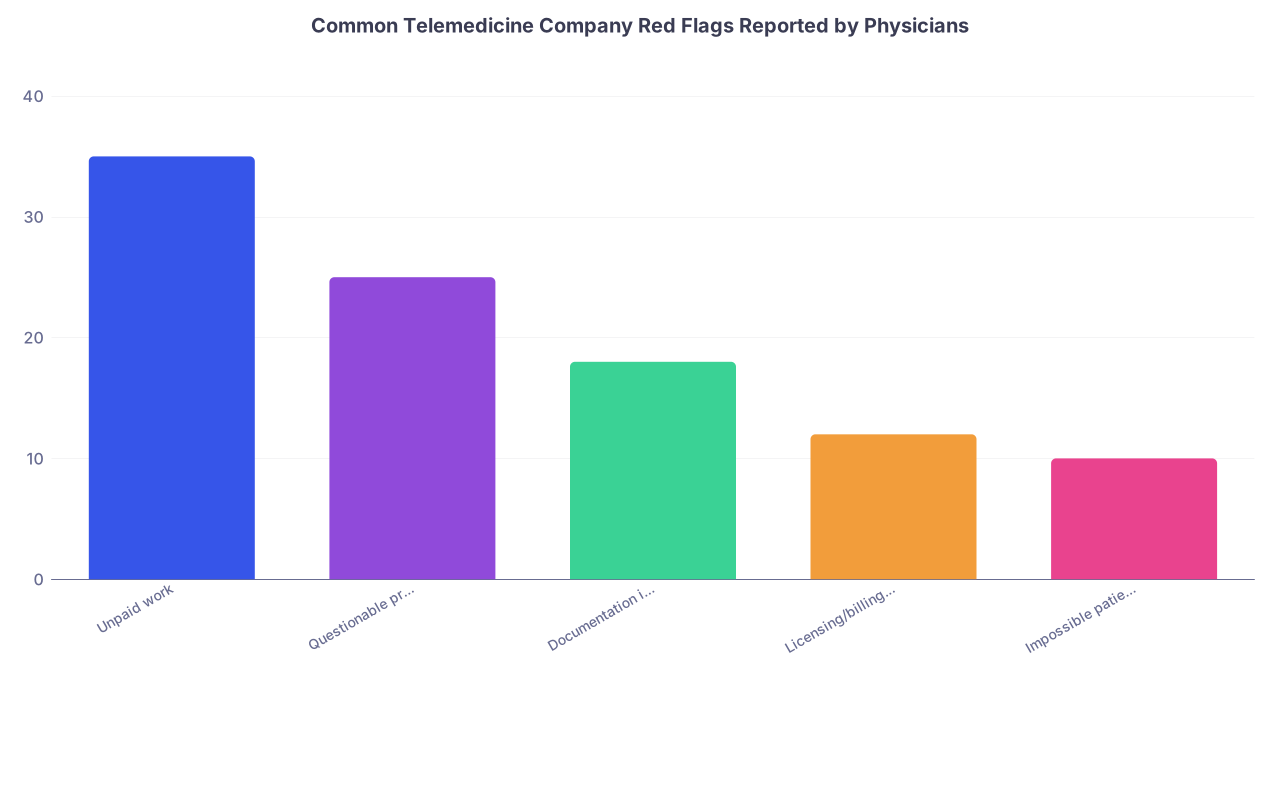
| Category | Value |
|---|---|
| Unpaid work | 35 |
| Questionable prescribing | 25 |
| Documentation issues | 18 |
| Licensing/billing misuse | 12 |
| Impossible patient volume | 10 |
Unpaid work and sketchy prescribing are the big two patterns. If multiple online reviews or Reddit threads mention either, don’t rationalize it. That’s not “disgruntled employees.” That’s your warning.
2. Talk to actual physicians working there
Not just the recruiter. Not just “provider relations.” An actual MD/DO currently employed. Ideally more than one.
Questions to ask (and yes, you can ask this bluntly):
- Have you always been paid on time and in full?
- Have you ever seen charts changed after you signed?
- What’s the typical patient volume per hour? Is it pressure or optional?
- Any pressure to prescribe specific meds, devices, or order certain tests?
- What happens when you decline an inappropriate request?
If they hesitate long enough that the silence gets weird? Trust that feeling.
Contract traps that will wreck you later
Your anxiety here is dead-on: the contract is where a lot of physicians quietly get screwed.
I’ve seen telemedicine contracts that:
- Claim ownership over “all clinical documentation and intellectual property” with zero clarity
- Allow them to terminate you instantly “with or without cause” but require you to give 90–180 days’ notice
- Include non-competes that block you from doing any telehealth in huge geographic areas or across the whole platform type
- Make you personally liable for billing issues they created
If you skim and sign because you just want to “get started,” you’re playing Russian roulette with your future self.
Here’s a simple way to triage:
| Clause Type | Red Flag Language |
|---|---|
| Termination | "With or without cause, effective immediately" |
| Non-compete | Large radius or nationwide telehealth bans |
| Indemnification | You indemnify them broadly for billing issues |
| Payment | Vague formulas, unclear timing, “subject to adjustment” |
| Documentation | Company can modify charts unilaterally |
If any of that shows up, don’t just ask the recruiter. They’ll say, “That’s standard; we never enforce it.” You want a healthcare attorney to say, “This is either fixable or run.”
Yes, it costs money. Yes, it’s annoying. But paying $400–$800 now is nothing compared to losing tens of thousands in withheld pay or getting sucked into an OIG or board investigation.
The “I don’t want to be used for fraud” checklist
This is the nightmare scenario everyone is secretly terrified of: your NPI is tied to things you didn’t do, or didn’t fully understand.
Here’s how to reduce that risk aggressively.
1. Understand what you are actually responsible for
If your name, NPI, or license is on:
- Prescriptions
- Orders (labs, imaging, DME)
- Billing (even under a group NPI in some cases)
…you’re potentially on the hook.
If the platform says, “Don’t worry, we handle billing and documentation,” that is not reassuring. That’s a red flag. You’re still responsible for what goes out under your credentials.
2. Avoid these specific landmines
Scammy or high-risk telemed operations often center around:
- Durable medical equipment (braces, orthotics, etc.) with very scripted visits
- Weight loss meds or “hormone optimization” with almost no in-person follow-up
- Pain management / opioid prescribing without robust evaluation and follow-up
- Behavioral health meds with minimal assessment and no collateral info
(See also: telemedicine QA review for what happens behind the scenes.)
Is every telehealth job in those areas evil? No. But if they’re combined with rushed visits, heavy scripting, or bonuses tied to prescribing or ordering, I’d be extremely cautious.
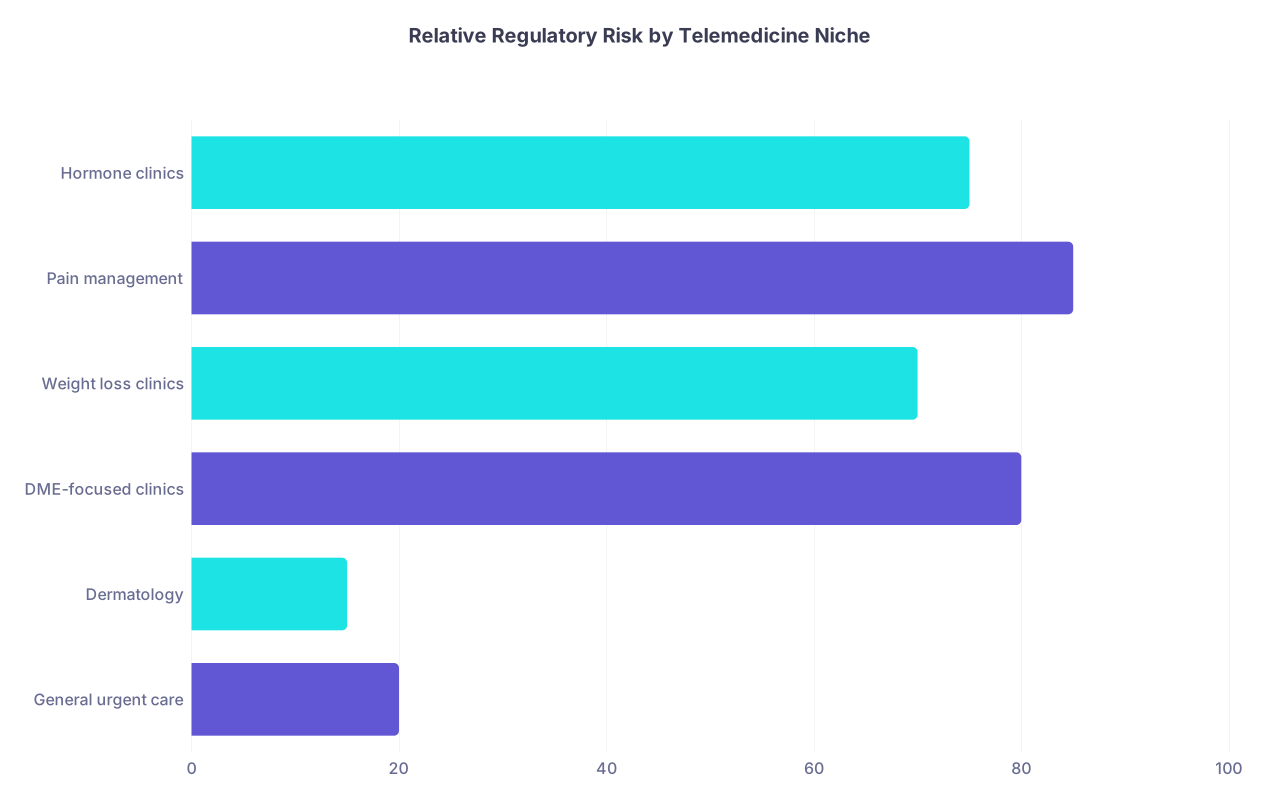
| Category | Value |
|---|---|
| General urgent care | 20 |
| Dermatology | 15 |
| DME-focused clinics | 80 |
| Weight loss clinics | 70 |
| Pain management | 85 |
| Hormone clinics | 75 |
If you’re just starting out in telemed, you don’t need to test your luck with the highest-risk models first.
Practical boundaries to protect your license and sanity
Let’s assume you do take a job. You’ve vetted, you’ve signed, but your brain still whispers, “What if…?”
Good. Keep a little of that paranoia. Channel it into habits.
1. Don’t let them rush your clinical judgment
If the platform pushes you to do obviously unsafe things—like prescribing a controlled substance with essentially no history, no PDMP check, minimal documentation—you say no. Every single time.
If the culture is “fast fast fast, close the visit, don’t overthink it,” that’s not telemedicine. That’s a liability factory.
2. Keep your own records
This one’s huge and so underrated.
- Save a PDF of your contract and any amendments.
- Keep your own log of shifts, patient volumes, and compensation owed.
- Periodically export or save key notes (redacted/secure, of course) for any cases that felt borderline or where the company’s policies felt off.
You’re building a defensive trail in case, three years from now, someone asks, “Why did you prescribe this?” or “Did you actually see these patients?”
3. Say no early and clearly
You’re allowed to push back:
- “I’m not comfortable prescribing X under these conditions.”
- “This documentation policy puts my license at risk.”
- “I need to personally sign what goes out under my NPI.”
If their response is basically, “Well, that’s how we do it, maybe this isn’t a fit,” that’s your answer. Take the out. Don’t cling to a bad job because you’re scared you won’t find another.
How to not get stiffed on payment
Let’s talk about the other fear: working hours and hours and getting… nothing.
Some telemedicine companies are chaotic, not malicious. Some are straight-up shady. From your vantage point, the result is the same: no check.
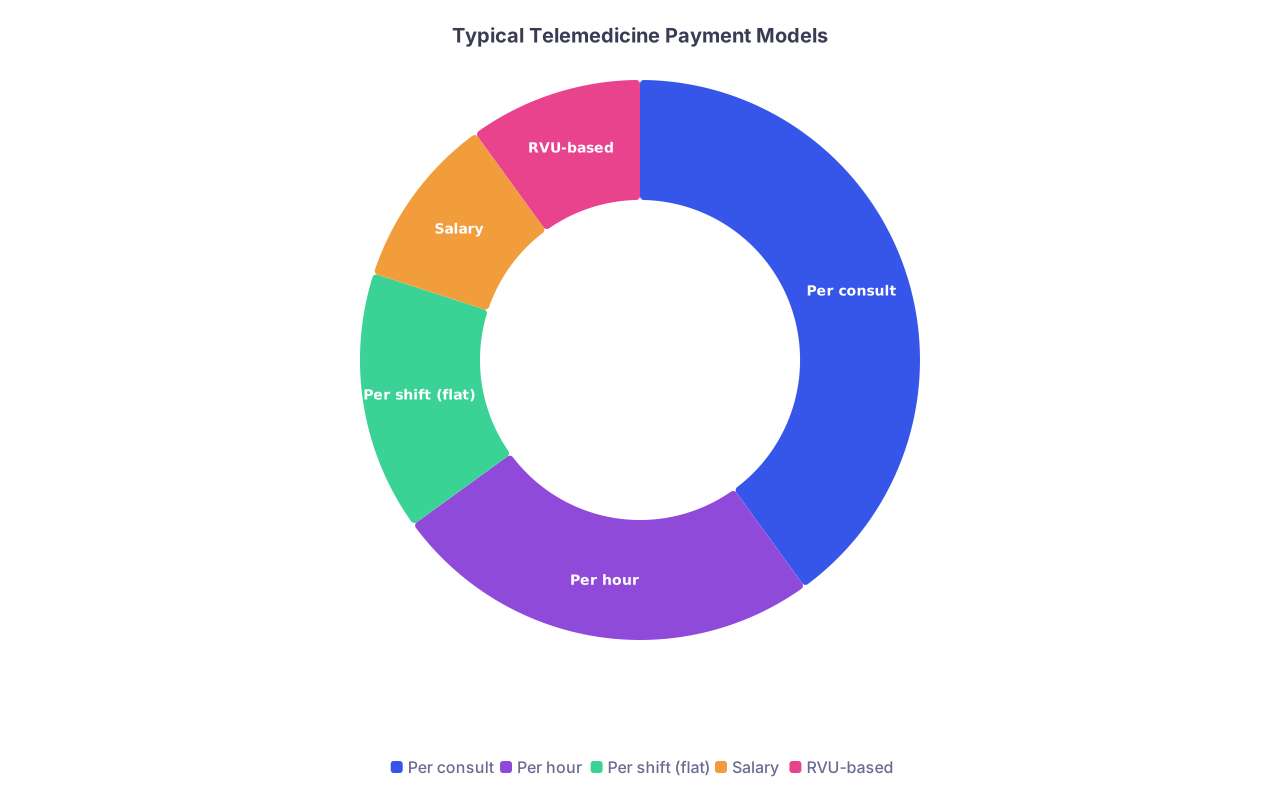
| Category | Value |
|---|---|
| Per consult | 40 |
| Per hour | 25 |
| Per shift (flat) | 15 |
| Salary | 10 |
| RVU-based | 10 |
Each of these can be fine or a disaster depending on transparency.
Watch for:
- Vague wording like “Payment subject to company’s collection” without any details. Are you paid regardless of whether they get reimbursed, or only if they do?
- No clear payment schedule (e.g., “monthly” vs. “within 90 days after end of month” vs. “after claim adjudication”).
- Zero visibility into how many visits were billed under you and at what rate.
(See also: Backup plans for technology glitches for practical backup strategies.)
Bare minimum you want:
- Explicit rate (per consult/hour/etc.)
- Explicit payment timeline (e.g., “By the 15th of the following month”)
- Access to some type of dashboard or report showing your work and expected pay
And yes, keep your own file: date, hours, # of visits, any bonuses promised. If pay is late more than once, stop adding more shifts until they fix it. Don’t let “it’ll get sorted out next cycle” stretch into months.
A visual sanity check: your decision flow
Sometimes it helps to see your decision-making laid out.

| Step | Description |
|---|---|
| Step 1 | Telemedicine Job Offer |
| Step 2 | Walk away |
| Step 3 | Get legal review |
| Step 4 | Negotiate or decline |
| Step 5 | Start with limited hours |
| Step 6 | Pause shifts and escalate |
| Step 7 | Resign and document concerns |
| Step 8 | Expand hours if desired |
| Step 9 | Look for better option |
| Step 10 | Company checks out? |
| Step 11 | Contract reviewed by attorney? |
| Step 12 | Any high risk clauses? |
| Step 13 | Paid correctly and on time? |
| Step 14 | Clinical practices safe? |
If at any point your gut is screaming “this is off,” you do not need more data. You need distance.
When you already started and now you’re worried
Maybe you’re reading this too late. You already signed. You’re already seeing patients. And now some things feel… wrong.
Here’s your damage-control plan:
- Start a private, time-stamped log of every concerning incident. Dates, details, names.
- Download/print your contract and any communication where they explained expectations.
- Slow down your participation—don’t pick up new shifts while you sort this out.
- Ask direct questions in writing (email, not chat only): billing, prescriptions, documentation changes.
- If you see clear signs of fraud or unsafe behavior, talk to a healthcare attorney before you report anything or resign dramatically.
You’re not the first physician who’s had the “oh no, did I just sign up for something illegal?” meltdown. There are people whose entire job is to walk doctors through this.
You’re not crazy to be scared. You are allowed to be careful.
Telemedicine is not inherently sketchy. There are excellent, ethical, patient-centered telehealth companies out there. There are also ones I wouldn’t let my worst enemy moonlight for.
Your anxiety is trying to protect you from:
- Losing your license over someone else’s shady “business model”
- Doing hours of emotional labor and clinical work for free
- Being trapped in a contract that punishes you for leaving something unsafe
- Waking up one day to a board letter asking about patients you barely remember
If you use that anxiety as fuel to vet companies hard, read contracts like they’re binding (because they are), and hold firm on clinical boundaries, your chances of getting scammed drop way down.
You’re not powerless here. You’re the one with the license. That’s the asset everyone else is chasing.
FAQ (exactly 5 questions)
1. How big a deal is it if my telemedicine company changes my documentation “for billing”?
Big deal. Very big. Minor formatting edits or adding standard codes is one thing; changing diagnoses, adding services you didn’t perform, or rewriting your clinical judgment is something else entirely. If they can change your notes without your review and signature, your name can be tied to things you didn’t actually do, and you’ll have a hard time proving it later. I’d push for a policy where you approve any substantive change. If they refuse or say “that’s just how telehealth works,” I’d start planning my exit.
2. Is it safe to work for a telemedicine startup that’s only a year or two old?
“Startup” isn’t automatically bad, but it raises the bar for how careful you should be. A younger company means less track record, less online feedback, and often more chaos. If you go that route, I’d: keep your hours limited at first, demand crystal-clear payment terms, document your own work, and avoid taking on anything that smells like “grey zone” medicine (DME mills, aggressive prescribing, etc.). A stable, boring company is a better first telemed job if you’re already anxious.
3. What if I already signed the contract and only now noticed a horrible clause?
You’re not doomed, but don’t ignore it. Get a healthcare attorney to review exactly what it says and how enforceable it actually is in your state. Some terrifying-looking clauses are poorly drafted and wouldn’t hold up. Others are absolutely enforceable. Depending on what they find, you might: negotiate an amendment, strategically reduce involvement, plan a clean exit before you trigger any penalties, or, in some cases, just walk if staying puts your license or finances at serious risk.
4. Do I really need a lawyer for a part-time telemedicine job?
Need? No. Should you? I’d say yes if: you’re signing anything long-term, there’s a non-compete, they handle billing under your NPI, or the pay structure is complicated. This isn’t a $200 locums shift in a hospital with standard contracts. Telemedicine companies have very different levels of ethics and sophistication. Spending a few hundred dollars now is a lot cheaper than fighting a clawback, a withheld bonus, or a restrictive covenant later.
5. What’s the single biggest sign that I should run from a telemedicine offer?
For me, it’s the combo of urgency and opacity: they want you to sign fast, won’t let you talk to current physicians, get vague or defensive when you ask about documentation or billing, and brush off your concerns as “overthinking it.” That pile-up of behavior says, “We need your license more than we need your trust.” I’d rather walk away unemployed than tie my entire future to people like that.
Key points:
- Treat every telemedicine job like a real medical practice carrying real legal risk, not a casual side hustle.
- Do aggressive due diligence on the company and the contract before you hand over your NPI and time.
- Once onboard, protect yourself with clear clinical boundaries, your own records, and a low tolerance for sketchy behavior.