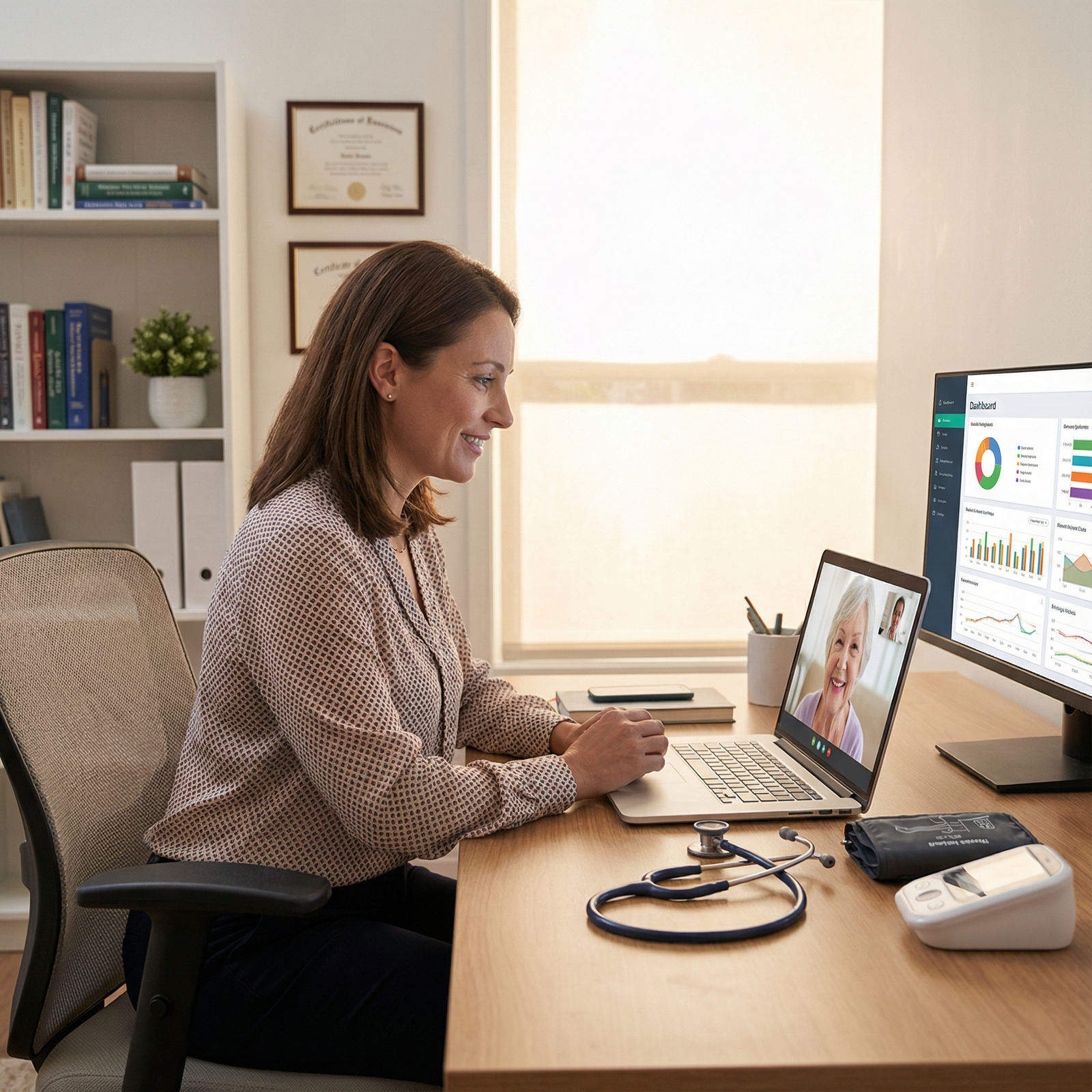
Yes, telemedicine can absolutely count toward board recertification and CME — but only if you play by each board’s rules.
Let me be blunt: the old model of “CME = fly to a hotel ballroom and sit through PowerPoints” is dying. Your certifying boards and state medical boards know you are practicing virtual care. They are already giving credit for it — just not always in the way people assume.
If you’re post‑residency and building a telemedicine‑heavy career, here’s how to make your virtual work pay off in CME and recertification terms instead of being “extra” unpaid labor.
1. The Core Question: Does Telemedicine “Count” for CME and Recertification?
Here’s the clean answer.
Telemedicine counts in three main ways:
Telemedicine CME activities
Online CME courses, webinars, modules, and live virtual conferences about telehealth or held via telehealth platforms.
These almost always count as Category 1 CME if accredited (ACCME, AMA PRA, AAFP, AOA, etc.).Performance improvement / practice assessment tied to telemedicine
Many boards let you complete MOC/CC quality improvement (QI/PI) projects using your telemedicine practice:
– Tele‑ED throughput
– Virtual chronic care management outcomes
– No‑show reduction with telehealth
These count toward ongoing certification requirements, even if you never set foot in a clinic.Telemedicine clinical work as “practice hours”
Some boards and payers require active clinical practice for recertification or for privileging/credentialing.
Most of them now explicitly recognize telemedicine encounters as clinical practice, if:
– You are delivering real patient care
– You’re licensed in the patient’s state
– You’re practicing within your specialty scope
Here’s what does not happen (despite what a few telehealth recruiters like to imply):
- Simply seeing patients on a telemedicine platform does not automatically produce CME hours.
- A “busy telehealth shift” is not CME unless it’s part of a structured, accredited educational or QI activity.
So yes, telemedicine is compatible with CME and recertification. But you have to be intentional.
2. How Different Boards Treat Telemedicine (Big Picture)
There are dozens of boards. But their patterns are similar.
| Requirement Type | Does Telemedicine Count? |
|---|---|
| Category 1 CME hours | Yes, if activity is accredited |
| MOC Part II (Lifelong Learning) | Yes, via online CME, webinars |
| MOC Part IV / Practice Assessment | Yes, if QI uses telehealth data |
| Practice hours requirement | Usually yes, if direct care |
| Simulation/skills labs | Sometimes, if accredited virtual formats |
Four common use cases:
ABIM (Internal Medicine and subspecialties)
– Online CME, virtual conferences, and telehealth‑specific courses: count for MOC points + CME.
– QI projects based on telemed (e.g., improving remote BP control) can meet Part IV.
– Telemedicine visits count as practice for general certification, as long as they’re legitimate patient care.ABFM (Family Medicine)
– Strongly supports online CME and group virtual learning.
– They explicitly accept telehealth QI projects (access, continuity, chronic care management, etc.).
– Pure telemedicine jobs can still qualify as a “practice” for certification—assuming scope matches.ABEM, ABP, OB/GYN, Psych, etc.
Pattern is similar:
– Accredited virtual CME = fine.
– Telehealth‑based QI = typically fine if structured and documented.
– Telemedicine clinical work = usually acceptable as part of practice, especially for fields where telehealth is common (psych, derm, PM&R, etc.).Osteopathic and non‑ABMS boards
– DO boards and others also recognize online CME and telehealth practice; the trick is matching them with their Category 1‑A vs 1‑B classifications and any state‑specific rules.
You don’t guess here. You:
- Check your exact board’s Maintenance of Certification / Continuing Certification page, and
- Look for language about “online activities,” “performance improvement,” “practice assessment,” or “telehealth.”
3. CME from Telemedicine: What Actually Qualifies
Most people asking this question are really thinking: “Can I turn the telemedicine work I’m already doing into CME without going to a conference?”
Here’s how that actually works.
A. Telemedicine‑Specific CME Activities
Anything with all three of these will typically count as Category 1 CME:
It’s produced or hosted by an accredited provider
Think: ACCME‑accredited hospitals, medical schools, specialty societies (ACP, AAFP, APA, ACOG), major CME platforms.It clearly states:
– “AMA PRA Category 1 Credit(s)™ available”
– or AAFP/AAOS/ACOG/etc. equivalentYou complete the evaluation/attest and get a certificate.
Common examples:
- Virtual symposium on “Best Practices in Telepsychiatry”
- Online course: “Legal and Regulatory Essentials of Telemedicine”
- Live webinar series: “Telehealth in Chronic Disease Management”
- Virtual annual meetings moved entirely online (plenty since 2020)
Those hours count exactly the same as in‑person CME for both boards and state licenses.
B. Turning Telemedicine QI into MOC Credit
This is the part most docs either underuse or overcomplicate.
You can usually turn telemedicine quality work into MOC/QI credit if you:
– Choose a measurable problem in your telehealth practice
– Implement a change
– Measure again
Examples that boards routinely accept:
- Increase percentage of tele‑diabetes patients with documented A1c in past 6 months
- Reduce 72‑hour tele‑ED revisit rate
- Improve documentation of suicide risk assessment in tele‑psych
- Improve BP control in remote hypertension clinic via home monitoring
You submit:
- Baseline data
- Intervention (new workflow, checklist, reminder, template, etc.)
- Follow‑up data
- Reflection / summary
Many large telemedicine companies and health systems now package this into a structured MOC activity. Ask your medical director or CME office directly:
“Do we have approved MOC Part IV or PI activities based on our telehealth metrics?”
If they do, that work absolutely counts.
4. Does Telemedicine Clinical Work Count as “Practice” for Recertification?
Different question. Different answer.
Some boards, hospitals, and insurers require a minimum level of active clinical practice in your specialty. They are not asking about CME credit here; they’re asking whether you’re really practicing medicine.
Telemedicine almost always qualifies if:
- You’re diagnosing, treating, prescribing, or managing patients
- The visits are documented in a medical record
- You’re licensed where the patient is
- You’re within your certified specialty (ex: a board‑certified internist doing tele‑IM, not tele‑cosmetic dermatology beyond their training)
Where it gets grey:
- Pure asynchronous “chart review only” gigs
- High‑volume tele‑urgent‑care with minimal continuity (some boards still accept this; a few are cautious)
- Very narrow niche work outside your original training
If you’re planning to go 100% remote, do this now, not later:
- Email or call your board and straightforwardly ask:
“Will full‑time telemedicine within [my specialty] meet your practice requirements for maintaining certification?”
Keep that response.
5. State CME Requirements: Virtual vs In‑Person
Your state medical license has its own CME rules. These are often less picky about in‑person vs online than people think.
Most states:
- Accept online CME and virtual conferences as Category 1, as long as it’s accredited
- Don’t care whether the topic is telemedicine vs non‑telemedicine
- Do care about required topic buckets: opioid prescribing, ethics, pain management, implicit bias, etc.
A few states used to restrict the percentage of online CME. COVID forced them to loosen those rules, and many have not gone back.
You still need to check your board of medicine’s website, but for a modern post‑residency telemedicine career, this is usually not your biggest problem.
6. How to Build a Telemedicine‑Friendly CME/Recert Strategy
Here’s the practical playbook I recommend to physicians who are 50–90% telehealth.
Step 1: Map your obligations
List:
- Your primary board (and subspecialty boards, if any)
- Each state license you hold
- Any hospital privileges that require specific CME topics
Then look up:
- CME hours per cycle
- Any mandates (opioids, ethics, cultural competency, etc.)
- MOC/CC requirements: CME, self‑assessment, QI, exams
Step 2: Cover most of your hours with asynchronous online CME
Pick 1–2 high‑quality CME platforms and stick with them. Filter for:
- AMA PRA Category 1 Credit
- Topics that actually help your telemedicine work:
– Remote chronic disease management
– Tele‑behavioral health
– Billing and regulatory updates in telehealth
– Remote exam techniques and documentation
Do them in small chunks between tele‑visits or on lighter days.
Step 3: Add 1–2 structured telehealth QI projects per cycle
This is where your telemedicine practice becomes your recertification engine.
Examples you can realistically execute:
- Tele‑HTN clinic: improve BP documentation and control
- Tele‑peds: improve vaccination follow‑through after virtual visits
- Tele‑urgent care: reduce inappropriate antibiotic prescribing
Use your platform’s reporting tools, or pull simple manual data. Many boards do not require a randomized trial. They want to see: “You measured, you intervened, you measured again.”
Step 4: Keep proof
For everything:
- Save certificates as PDFs in cloud storage
- Export confirmation emails of MOC/QI completion
- Keep a simple spreadsheet: date, activity, hours, category
Do not rely on a random email search five years from now when a state audits you.
7. Common Pitfalls and Bad Assumptions
I see the same mistakes:
“My telemedicine shifts should count as CME on their own.”
No. They count as practice. Not CME. Unless your company has specifically structured them into an accredited learning activity.“All online material I consume is CME.”
Reading UpToDate or watching YouTube is not CME unless there’s a formal credit‑granting process wrapped around it.“Boards don’t like telemedicine, so I should hide how much I do.”
This was 2012 logic. In 2026, a lot of board members themselves practice telehealth. Honesty plus clarity about your scope is better.“I’ll just worry about MOC at the end of the cycle.”
That’s how people end up paying for expensive crash courses and panicking. With telemedicine you can drip‑feed CME and MOC into your normal year.
8. Example: A 100% Telepsychiatry Doc
Just to make this concrete.
You’re a board‑certified psychiatrist doing full‑time tele‑psych from home.
You could:
Get 20–30 CME hours a year from:
– Online psych updates
– Virtual APA or state psychiatric society meetings
– A couple of tele‑behavioral health–focused webinarsDo a QI project on:
– Improving antidepressant follow‑up visit adherence in tele‑patients
– Increasing completion of standardized rating scales (PHQ‑9, GAD‑7) in your platformConfirm with ABPN that your tele‑psych hours count as practice for recertification (they will).
All of that counts. You never had to travel.
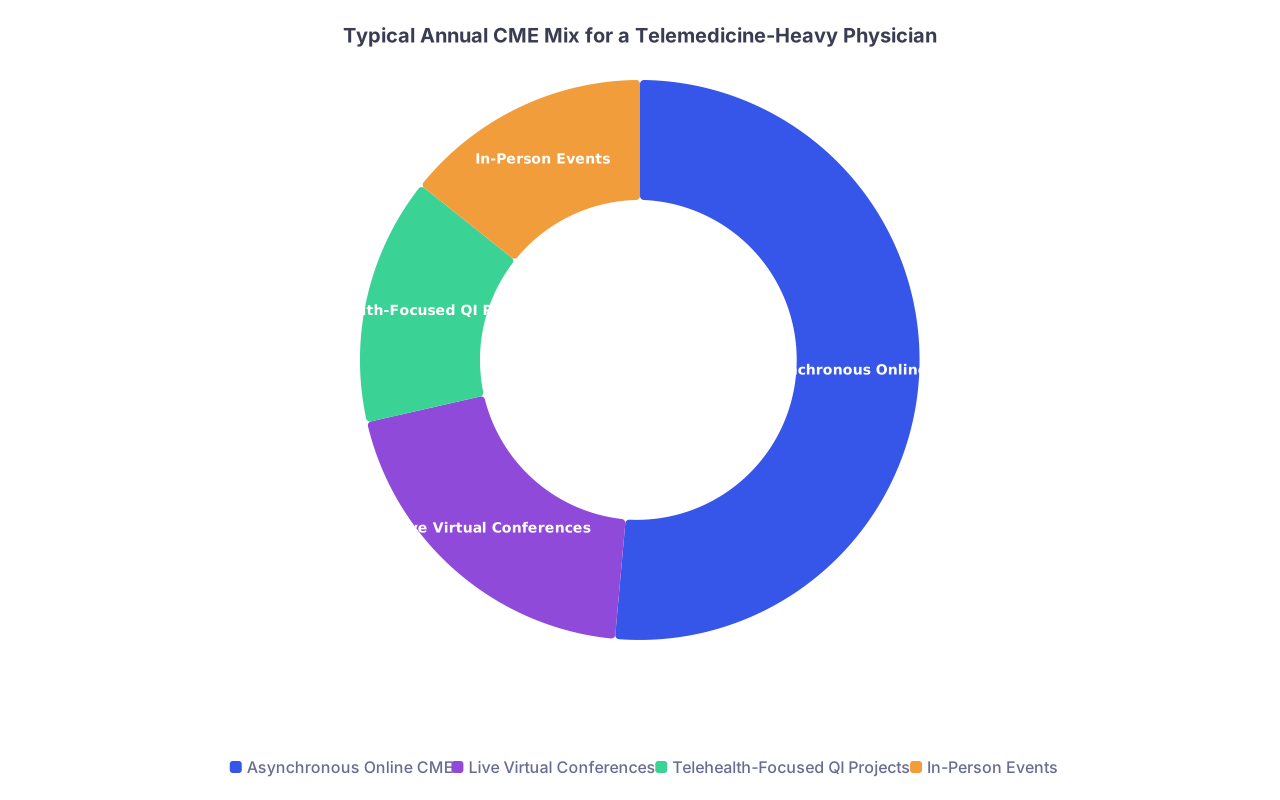
| Category | Value |
|---|---|
| Asynchronous Online CME | 18 |
| Live Virtual Conferences | 7 |
| Telehealth-Focused QI Projects | 5 |
| In-Person Events | 5 |

| Step | Description |
|---|---|
| Step 1 | Identify board and state requirements |
| Step 2 | Confirm telehealth counts as practice |
| Step 3 | Choose online CME platforms |
| Step 4 | Plan 1-2 telehealth QI projects |
| Step 5 | Track CME and MOC completions |
| Step 6 | Submit documentation before cycle ends |
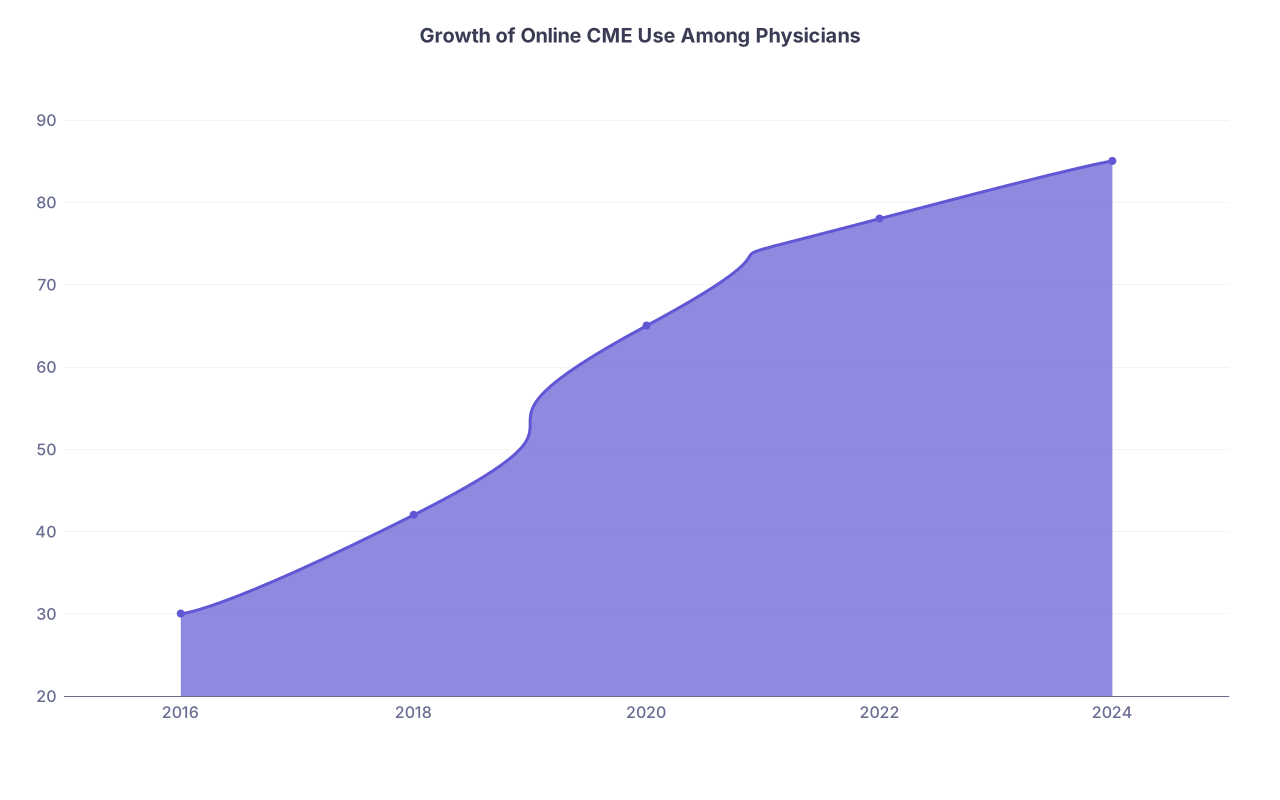
| Category | Value |
|---|---|
| 2016 | 30 |
| 2018 | 42 |
| 2020 | 65 |
| 2022 | 78 |
| 2024 | 85 |

FAQ: Telemedicine, CME, and Recertification
1. Can my regular telemedicine clinic shifts be logged directly as CME hours?
No. Routine patient care — in‑person or virtual — is not CME by itself. For something to count as CME, it has to be an accredited educational activity with stated objectives, a credit designation, and usually an evaluation. Your tele‑visits are clinical work. They can help you qualify as “in active practice,” but they are not CME unless they’re part of a structured, accredited program.
2. Do online CME courses about telemedicine count the same as in‑person CME for my board?
Yes, almost always. If the course is from an accredited provider and offers AMA PRA Category 1 Credit (or equivalent for your specialty), boards and state medical boards treat those credits the same as in‑person hours. Many boards even expect a substantial chunk of your CME to be online at this point.
3. Can I base my MOC/QI project entirely on telemedicine data?
Yes. That’s actually one of the easiest ways to turn your virtual work into MOC value. You can use telehealth metrics like follow‑up rates, blood pressure control, depression scores, antibiotic prescribing, or no‑show rates. Just structure it as a before‑and‑after improvement cycle and submit through your board’s QI or Part IV pathway.
4. Does a fully remote telemedicine job satisfy “active clinical practice” for recertification?
Usually yes, if you’re providing direct patient care in your certified specialty, properly licensed in the patient’s state, and working within scope. The exact wording varies by board, so you should confirm once in writing. But in 2026, most major boards recognize full‑time telemedicine as real clinical practice.
5. Do states limit how much of my CME can be done online or via telehealth?
Most states now accept online CME without strict percentage caps, especially after COVID. A few still have quirks, but they’re increasingly rare. What matters more is that the CME is accredited and that you hit any required topic buckets (opioids, ethics, etc.). Always verify on your state medical board website, because those rules do change.
6. What’s the simplest way to make sure my telemedicine career fully supports my CME and recert needs?
Three moves: first, pick 1–2 reputable online CME platforms and lean on them for most of your hours. Second, plan one telehealth‑based QI project every few years that you can submit for MOC/Part IV. Third, confirm with your board (and keep proof) that your telemedicine hours count as clinical practice. If you do those three, you’re covered.
Key points: Telemedicine itself doesn’t magically generate CME, but accredited online and telehealth‑focused activities absolutely do — and boards accept them. Your virtual practice can also fully satisfy “active practice” and QI requirements if you structure it correctly. Plan deliberately, document everything, and your telemedicine career will support your board certification instead of fighting it.