Most intensivists are underusing tele‑ICU—and it is costing them leverage, lifestyle, and longevity in the field.
You can either let hospital administrators define tele‑ICU for you (usually as “extra shifts from home”), or you can understand the workflows, monitoring protocols, and staffing models well enough to shape your own career with it. I strongly prefer the second option.
Let me break this down the way people actually practice it—not the marketing slide version.
Tele‑ICU Basics: What the Job Really Is
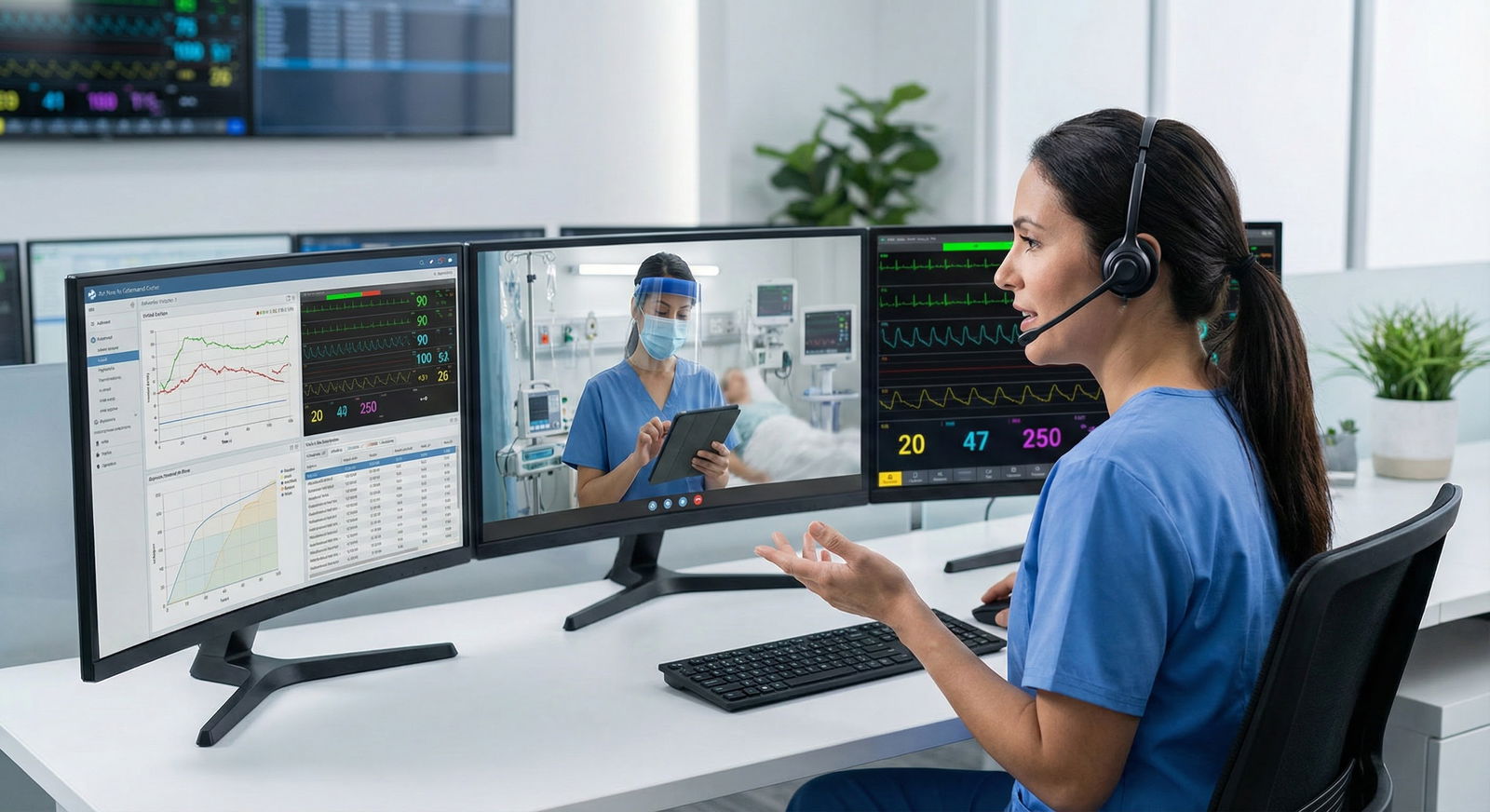
Tele‑ICU is not “FaceTime with ICU patients.” It is a structured, protocol‑driven remote critical care service that sits on top of on‑site care.
Core realities:
- You are not replacing bedside intensivists in most U.S. models. You are augmenting them.
- Your main value is:
- Continuous monitoring and early detection of deterioration
- Standardizing evidence‑based ICU care
- Off‑hours coverage and backup for community or low‑volume ICUs
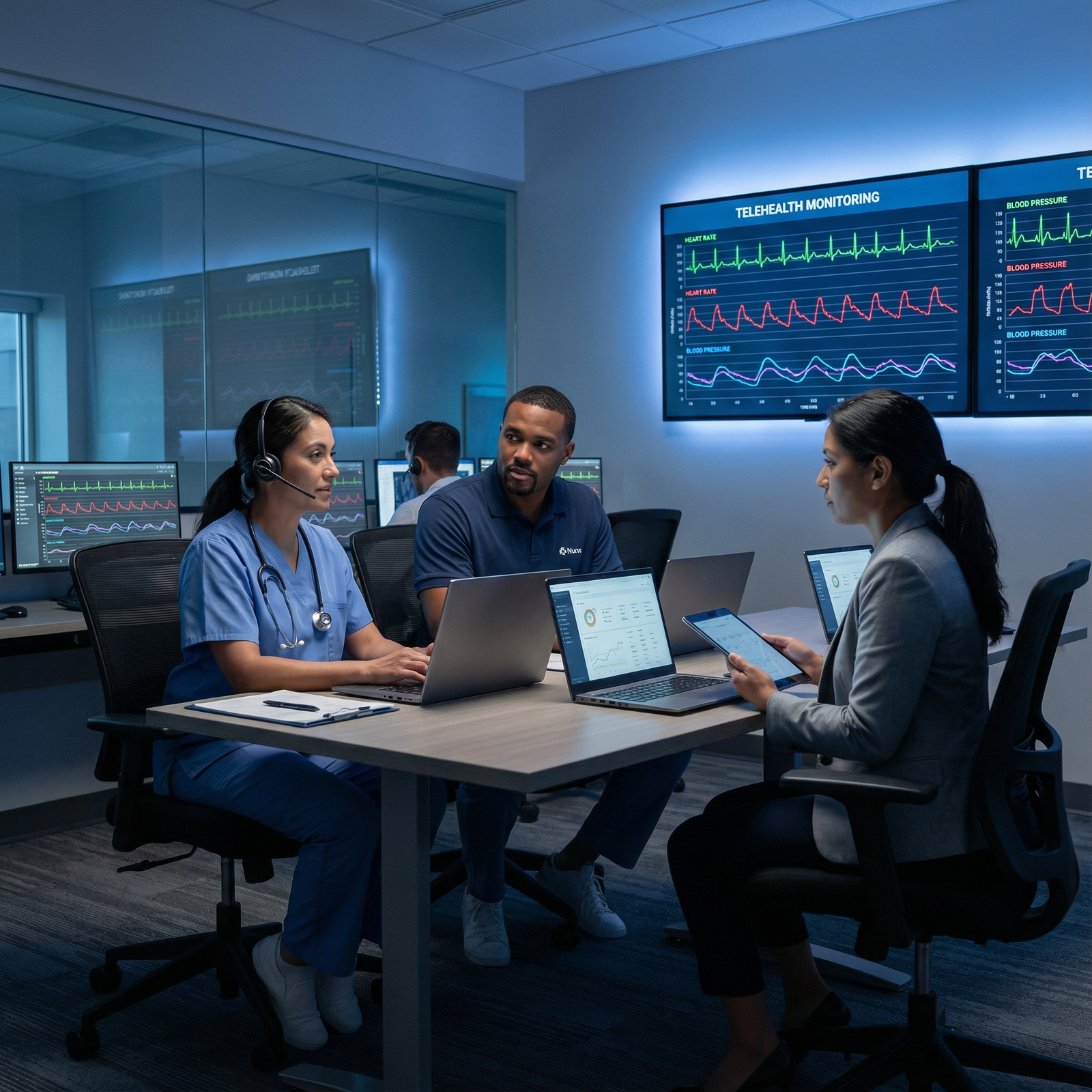
- You live in dashboards and protocols, not just “Zoom rounds.”
Typical platform stack:
- Live audio/video to each ICU room
- Streaming physiologic monitors (EKG, pulse ox, A‑line, ICP if present, etc.)
- Ventilator interface (mode, volumes, pressures, FiO2, waveforms)
- Direct integration with EHR (labs, meds, notes, orders)
- Alert engine (custom rules, sepsis bundles, hypotension triggers, etc.)
Think air‑traffic control for the ICU, not “virtual clinic.”
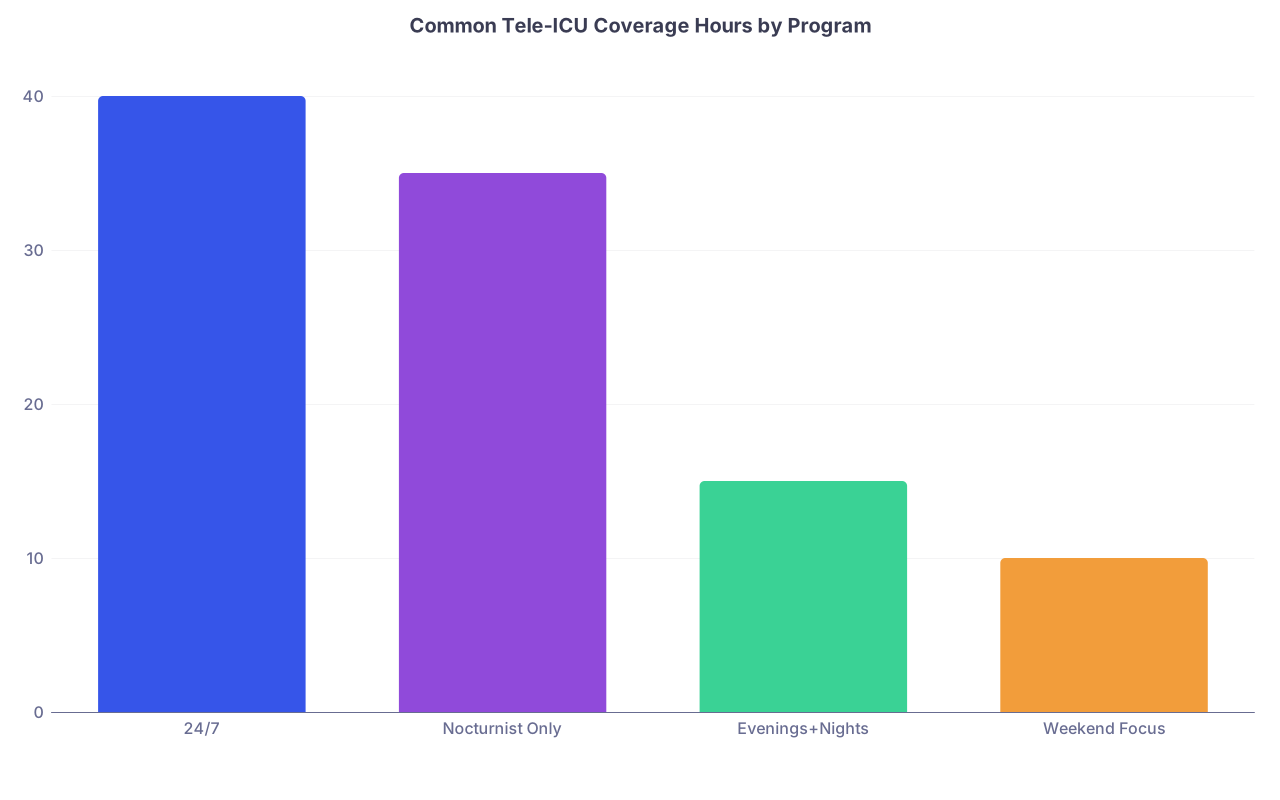
| Category | Value |
|---|---|
| 24/7 | 40 |
| Nocturnist Only | 35 |
| Evenings+Nights | 15 |
| Weekend Focus | 10 |
Daily Workflow: What Your Shift Actually Looks Like
1. Pre‑Shift Setup
You log in 10–15 minutes early. If you are serious, you do this every time.
You check:
- Census by site and by ICU type (medical, surgical, CVICU, neuro, mixed)
- Acuity indicators (vented vs non‑vented, vasopressors, RRT, ECMO flags if integrated)
- Any “watch list” patients handed off from prior shift
- System issues: any cameras down, any sites with partial connectivity, known EHR slowness
You should know, before minute 1 of your shift, which 5–10 patients you are most likely to get called about.
2. Handoff from Outgoing Tele‑ICU Team
This is not social rounding. You want a structured, consistent handoff.
Common pattern:
- Start with “red” / highest‑concern patients:
- New septic shock on escalating pressors
- Unstable arrhythmias
- Difficult vent (refractory hypoxemia, high driving pressures)
- Post‑op fresh hearts or high‑risk neurosurg
- Then “yellow” / moderate concern:
- Borderline pressures with high fluid balance
- Rising creatinine, lactate drift, new troponin bump
- Borderline oxygenation but stable ventilator
- Finally “global” site issues:
- Busy ED boarding in hospital X, likely ICU admits soon
- Short staffed on‑site nights at hospital Y
- New protocols going live
If your incoming tele‑ICU shift is not using a simple risk tiering system, you are flying more blind than you need to.
Core Workflows: How You Spend the Shift
Breakdown of what you actually do, hour after hour.
A. Proactive Rounds / Surveillance
Most programs run some version of proactive review, not just reactive calls.
Typical structure:
- Scheduled “proactive scans”:
- Every 2–4 hours: review vital trends, pressors, vent settings, new labs for all patients or at least high‑acuity cohorts.
- Structured “bundle rounds”:
- Once per day per patient: review sedation, delirium, nutrition, VTE prophylaxis, central line necessity, mobility, etc.
In practice, a 12‑hour tele‑ICU shift often includes:
- 1–2 full “sweeps” of the entire census
- Multiple targeted re‑checks on higher‑risk patients
- Ad‑hoc reviews driven by alerts
You live in trend views, not single datapoints: 4 hours of creeping pressor dose or slowly dropping MAP tells you more than a single “BP 88/52” snapshot.
B. Reactive Events
This is where on‑site teams remember you exist.
Common triggers:
- Nurse‑initiated tele‑ICU alert (“patient looks bad” calls, new chest pain, new altered mental status)
- Alert engine triggers:
- Hypotension beyond threshold
- Sustained tachycardia
- Worsening hypoxemia
- Rising lactate, AKI criteria, sepsis bundles
- Bedside physician requests: “Can you take a look at this vent?” or “Can you help manage this shock patient overnight?”
Your standard response pattern:
- Open the chart, check last 6–12 hours of vitals, labs, meds, vent.
- Open the camera feed, assess:
- Work of breathing, mental status, skin color, agitation
- Line and tube placements visually if possible
- Any obvious clues: blood on sheets, line tugged out, etc.
- Clarify with bedside nurse:
- What changed? Over how long?
- Recent meds (bolus, sedation, vasopressor changes)
- Urine output trends, intake, any new bleeding or procedures
- Decide:
- Manage remotely with orders and coaching.
- Escalate to bedside physician or rapid response team.
- Recommend transfer or higher level of care if at a small hospital.
This is where your communication skills matter more than your calcium chloride dosing.
C. Protocol‑Driven Interventions
Most robust tele‑ICU programs combine physician judgment with highly structured protocols. If you ignore protocols, you reduce your value and increase your risk.
Common bundles you are responsible for enforcing or at least reviewing:
- Sepsis bundles:
- Lactate measurement and re‑measurement
- Blood cultures before antibiotics
- Appropriate fluid resuscitation
- Timing of broad‑spectrum antibiotics
- Ventilation:
- Low tidal volume ventilation for ARDS
- Plateau pressure checks
- PEEP–FiO2 tables
- Daily weaning assessments
- Sedation / delirium:
- Target RASS
- Sedation vacations
- Antipsychotic usage appropriateness
- VTE prophylaxis, ulcer prophylaxis, line and catheter necessity
In practice, a tele‑ICU physician might:
- Message bedside team: “Plateau pressures have not been measured in 24h on this ARDS patient; recommend check and adjust tidal volume/PEEP accordingly.”
- Adjust orders directly if privileged: change sedation regimen, adjust vent settings, start or escalate pressors per standing protocols.
Monitoring Protocols: How the System Decides Who Is Sick
The sexy marketing term is “predictive analytics.” The reality is usually a combination of:
- Rule‑based alerts
- Modified early warning scores (MEWS, NEWS, etc.)
- Custom ICU‑focused scores
- Sometimes vendor‑branded proprietary risk scores (some good, some noisy)
Common Monitoring Streams
- Physiologic data:
- HR, BP, MAP, RR, SpO2, CVP, ICP, A‑line, etc.
- Trends and variability over time
- Respiratory / vent data:
- Mode, set and measured volumes, pressures, FiO2, PEEP
- Waveform analysis for patient–ventilator dyssynchrony (if platform supports)
- Lab and metabolic:
- Lactate, creatinine, K/Na, bilirubin, WBC, CRP/procalcitonin
- Troponin, ABGs / VBGs, Hgb, platelets
- Therapeutic intensity:
- Number and dosage of vasopressors/inotropes
- Dialysis / CRRT presence
- ECMO (if flagged)
- Structured scores:
- Sepsis alerts, AKI alerts, shock scores, deterioration scores
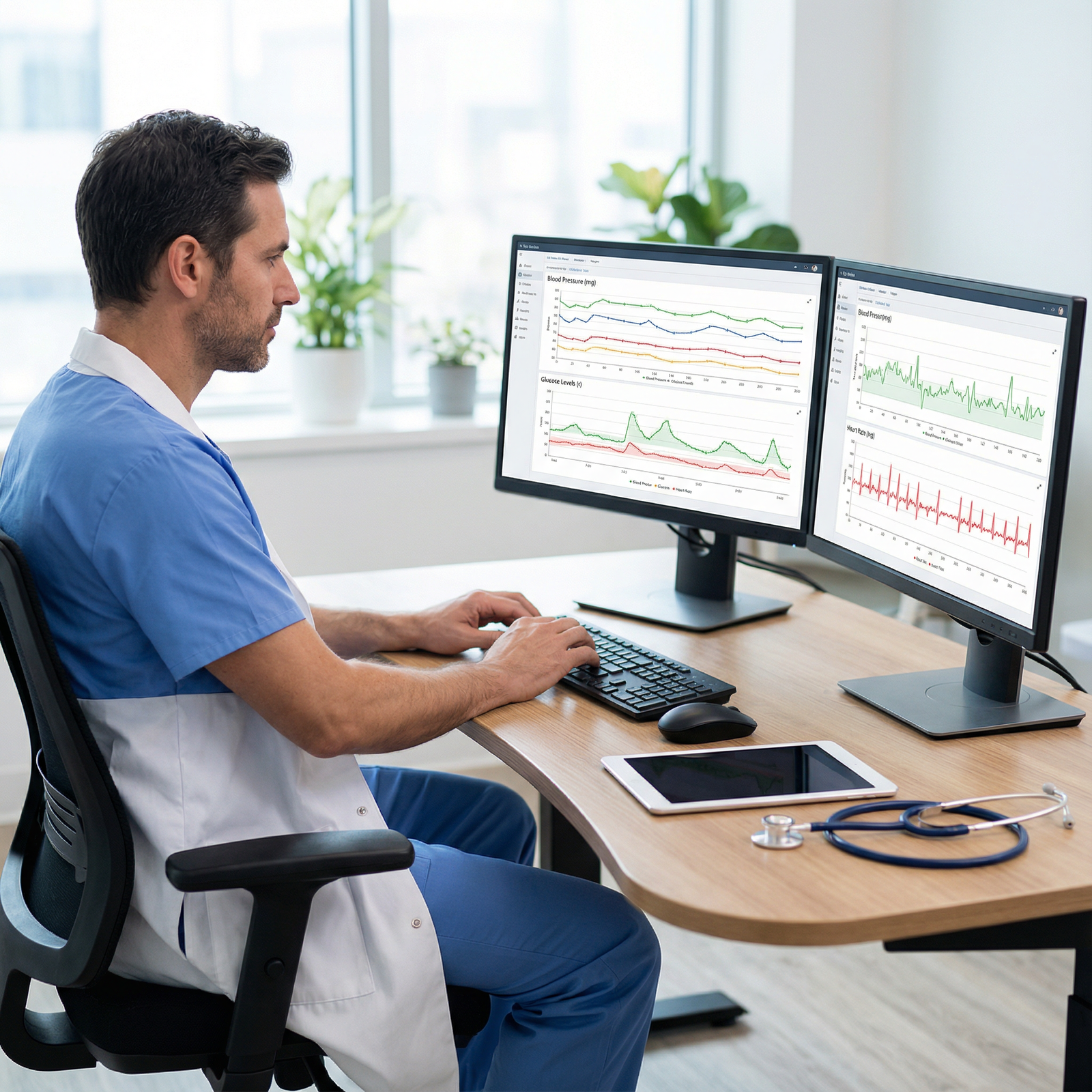
A decent tele‑ICU platform lets you sort your census by risk score, by number of active alerts, or by “deterioration risk” index.
How Alerts Are Typically Structured
You cannot respond meaningfully to 500 alerts per night. Good programs fight alert fatigue aggressively.
Common tiers:
- Soft alerts: Appear in dashboard only. No direct notification.
- Medium alerts: Visual + subtle audio cue; tele‑ICU nurse screens first.
- Hard alerts: Pop‑up + audible tone; require documented response.
Example set:
- Soft:
- Single low MAP (55–60) but stable over last hour.
- Mild tachycardia without BP change.
- Medium:
- MAP < 60 for > 10 minutes or drop > 20 from baseline.
- SpO2 < 90% for > 5–10 minutes.
- New creatinine rise > 0.3 in 48h.
- Hard:
- MAP < 55 sustained.
- SpO2 < 85% sustained.
- New lactic acid > 4 or rapid upward trajectory.
- Vent alarms for extreme pressures or disconnects (depending on integration).
The key for you: push to refine and narrow these rules based on actual performance. If 80% of hard alerts are benign, the system is poorly tuned.
Typical Tele‑ICU Staffing Models
This is where the job either becomes sustainable, or becomes another burnout machine.
1. Centralized Hub‑and‑Spoke
Classic model used by large systems (think health system hub in a city covering regional hospitals).
- One or more central “hubs” staffed by:
- Intensivists
- Tele‑ICU nurses (RN with ICU background)
- Respiratory therapist (sometimes)
- Support / tech roles
- Multiple “spoke” hospitals:
- Mix of academic, community, and critical access
- Variable on‑site intensivist staffing
Coverage:
- Often 24/7, but heavy tele‑ICU focus on nights.
- Nights: 1 tele‑ICU intensivist for 50–120 beds is common (too wide in my opinion beyond ~80).
- Tele‑ICU nurses: 1 RN for 15–25 patients is usual.
Workflows:
- Tele‑ICU nurses handle:
- First look at alerts
- Protocol screens (sepsis, VTE prophylaxis, ventilator bundle queues)
- Routine quality checks
- Physicians handle:
- Higher‑acuity events
- Vent, shock, and complex decision‑making
- Family discussions in some systems (video family conferences)
| Role | Typical Ratio |
|---|---|
| Tele-ICU Physician | 1 per 60–80 beds |
| Tele-ICU RN | 1 per 15–25 beds |
| Tele-ICU RT | 1 per 40–60 vented pts |
| Support/Tech | 1 per hub per shift |
2. Decentralized / Hybrid
Common in academic centers that want to keep strong on‑site presence but extend tele‑ICU support.
Patterns:
- On‑site intensivist in main hospital ICU during day.
- Tele‑ICU coverage at night for satellite ICUs or partner hospitals.
- Sometimes the same group rotates between in‑person ICU weeks and tele‑ICU weeks.
This hybrid can work well for lifestyle:
- Mix of high‑intensity bedside weeks and more predictable tele‑ICU weeks.
- Easier to maintain clinical skills while still having remote flexibility.
3. Nocturnist‑Heavy Models
Some systems use tele‑ICU largely as nocturnist coverage for:
- Small community hospitals without 24/7 intensivist
- Units staffed only by hospitalists with limited critical care backup
Here, your role looks like:
- You are the de facto night intensivist for multiple small ICUs.
- Bedside teams call you for:
- Intubation decisions (procedures done locally, decisions made with you)
- Pressor initiation and titration guidance
- Transfer decisions to tertiary centers
- High impact but can be high cognitive load if ratios are bad.
4. Vendor‑Run vs In‑House
Two major flavors:
- In‑house tele‑ICU program:
- Staffed by the health system’s own intensivists.
- Better integration with local culture and protocols.
- More opportunity for you to influence workflow and QI.
- Vendor‑run tele‑ICU (e.g., large national tele‑critical care providers):
- You work as employed or contracted tele‑intensivist.
- Cover multiple unrelated hospitals in different regions.
- Protocols more standardized; relationship with local teams can be more transactional.
Both have pros and cons. Vendor models often give more geographic freedom but less direct local power.
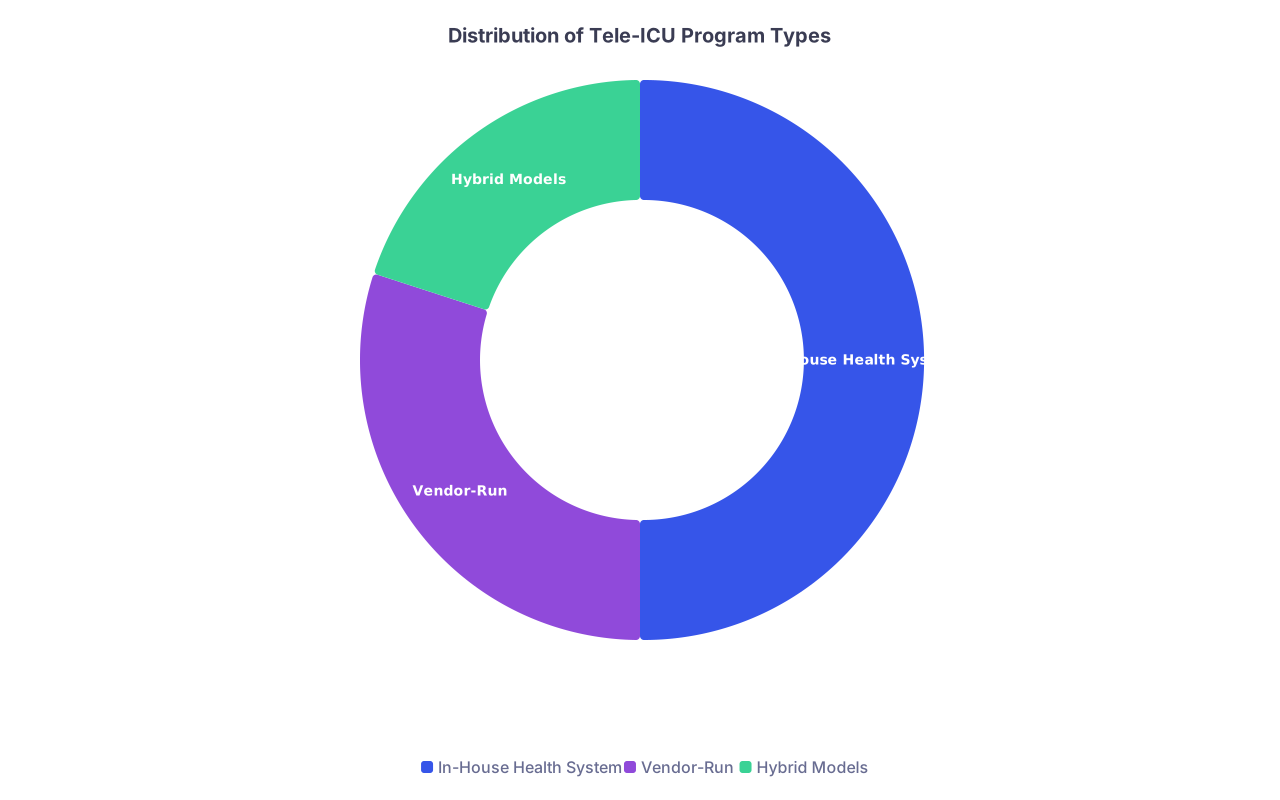
| Category | Value |
|---|---|
| In-House Health System | 50 |
| Vendor-Run | 30 |
| Hybrid Models | 20 |
The Tele‑ICU Team: Who Actually Does What
Tele‑ICU Physician (You)
Core responsibilities:
- Lead high‑acuity event management remotely.
- Interpret complex data, integrate across sites, and make actionable recommendations.
- Conduct virtual rounds (independent or joint with bedside teams).
- Document tele‑ICU interventions in EHR (note type varies by program).
- Educate bedside staff during calls—this is quietly one of your biggest levers.
What you must be good at:
- Pattern recognition from trends rather than at‑bedside exam.
- Extremely clear, concise communication. No rambling.
- Comfort practicing within pre‑defined protocols while knowing when to deviate.
Tele‑ICU Nurse
Tele‑ICU works or fails based on the quality of its nurses. Period.
Their typical tasks:
- First‑line triage of alerts and alarms.
- Continuous review of vitals and labs.
- Running checklists:
- CLABSI bundles
- Foley catheter necessity
- Turn and mobility compliance
- Escalating to tele‑ICU physician when concern threshold met.
- Directly collaborating with bedside nurses—sometimes more frequently than you do.
In many strong programs, the tele‑ICU nurse speaks with bedside staff first; you join only if needed. That saves your bandwidth.
Respiratory Therapist (Tele‑RT)
Not universal, but increasingly common.
Roles:
- Monitoring ventilator parameters and trends.
- Suggesting or making vent changes under protocols.
- Conducting remote wean screens.
- Coaching bedside RTs in small hospitals.
If your tele‑ICU program runs without RT support but covers many vented patients, your night shifts will be heavier and slower. You will feel it.
Local Bedside Team
You are an augmentation, not the entire show.
- ICU / hospitalist physicians:
- May vary widely in comfort with critical care.
- Some welcome tele‑ICU, others see it as interference.
- Bedside RNs:
- Usually your closest allies if you respect their judgment and time.
- RTs, APPs:
- Often facilitate your orders and help translate them into local workflows.
Your success in tele‑ICU depends heavily on trust with bedside staff. If they feel second‑guessed or micromanaged, they stop calling until everything is already on fire.
Scheduling, Lifestyle, and Pay: The Unofficial Stuff People Actually Care About
I will not pretend this does not matter. It does.
Schedule Patterns
Common configurations:
- 7‑on / 7‑off nights (pure tele‑ICU nocturnist)
- Mixed:
- 1–2 weeks of traditional ICU + 1 week of tele‑ICU in a block
- Part‑time tele‑ICU “add‑on” shifts:
- Extra nights from home layered on top of your regular ICU job (this is where burnout creeps in if you are not careful)
Tele‑ICU nights are often:
- Less physically demanding (no procedures, no walking all over a hospital).
- Often more cognitively dense with rapidly shifting priorities.
- Potentially more flexible between surges when census is quiet.
Compensation
Very rough patterns (varies hugely by region and program):
- Tele‑ICU full‑time intensivist:
- Often at or slightly below traditional in‑person ICU salary.
- Sometimes with lower RVU pressure and more shift‑based comp.
- Per‑shift tele‑ICU work:
- Can be $150–$275/hour range depending on demand and your leverage.
- Nights and weekends at the higher end.
What people forget: remote work reduces commute, relocations, and can let you live in lower‑cost‑of‑living areas. Total life‑adjusted value can be high even if headline salary is similar.
Tele‑ICU as a Career Play: Where It Helps, Where It Hurts
Advantages
- Geographic freedom:
- Live where you want; cover ICUs across the country.
- Late‑career sustainability:
- When in‑person nights and procedures become tougher to sustain physically, tele‑ICU is a realistic pivot.
- Portfolio career:
- Mix ICU weeks, tele‑ICU shifts, and nonclinical work (admin, education, industry).
- Scale of impact:
- Your decisions can standardize care across dozens of ICUs.
- QI projects can affect hundreds of beds.
Risks and Downsides
- Desk medicine:
- If you do only tele‑ICU, procedural and bedside skills erode.
- Some intensivists feel disconnected from “real medicine” after a while.
- Misalignment with bedside teams:
- Political friction if tele‑ICU is imposed on hospitals that did not ask for it.
- Alert fatigue and cognitive overload:
- Poorly configured systems turn into nonstop noise.
- Depersonalization:
- You see more data than faces. Some clinicians find that draining over time.
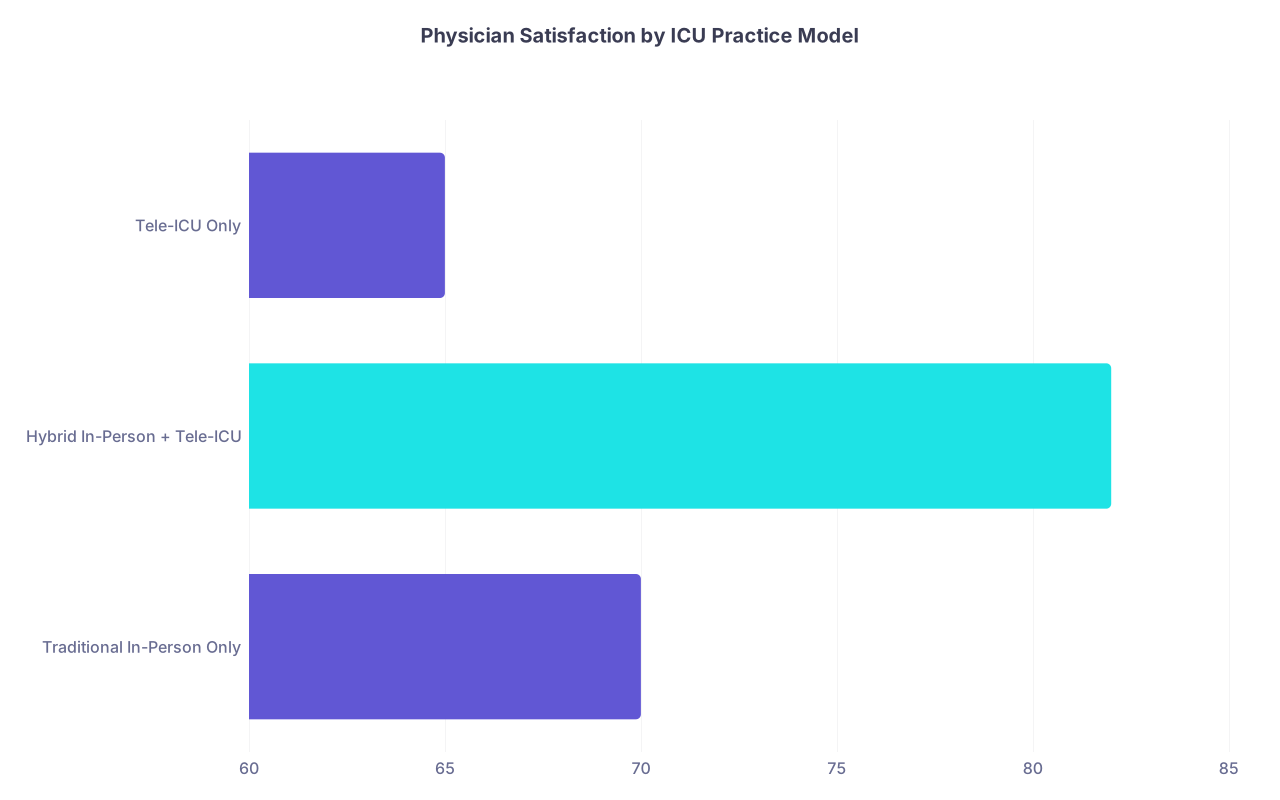
| Category | Value |
|---|---|
| Traditional In-Person Only | 70 |
| Hybrid In-Person + Tele-ICU | 82 |
| Tele-ICU Only | 65 |
How to Prepare for a Tele‑ICU Career Post‑Residency/Fellowship
If you are finishing IM/Anesthesia/EM and CCM fellowship and thinking about this, you need to be deliberate.
Skills That Translate Best
- Solid fundamentals in:
- Shock, sepsis, and vasoactive drug use
- Ventilator management across ARDS, COPD, post‑op, neuro
- Renal replacement decisions, AKI management
- Comfort with protocols:
- Bundles should be your friend, not your enemy.
- Systems thinking:
- You must care about throughput, ICU capacity, and variability across sites.
Interviewers will sniff out quickly if you just see tele‑ICU as “easier ICU from home.”
Red Flags When Evaluating Tele‑ICU Jobs
I start asking more pointed questions when I hear:
- “We cover about 120–150 beds with one doc most nights.”
- “Our alert system is still being tuned; you get used to the noise.”
- “The bedside teams were not very excited at first, but admin really wanted this.”
- “We don’t have dedicated tele‑ICU nurses yet, that’s coming later.”
Ask bluntly:
- Ratios by shift.
- Number and type of ICUs covered.
- Role clarity with bedside intensivists and hospitalists.
- Who owns and revises protocols.
- How they handle disagreements between tele‑ICU and local teams.
If they dance around these questions, move on.

| Step | Description |
|---|---|
| Step 1 | Tele-ICU Job Offer |
| Step 2 | Decline or Negotiate |
| Step 3 | Consider Strongly |
| Step 4 | Reasonable Ratios? |
| Step 5 | Dedicated Tele-ICU RN Team? |
| Step 6 | Clear Protocols and Roles? |
FAQs
1. Do I need formal critical care fellowship to work in tele‑ICU?
For serious, high‑quality tele‑ICU programs: yes, or at least strong equivalent experience. Most reputable systems staff tele‑ICU with board‑certified intensivists (IM‑CCM, Anes‑CCM, Surgical CCM, EM‑CCM). Some smaller community setups use hospitalists with tele‑ICU support from external intensivists, but if you want to be the one making the tough vent and shock calls remotely, fellowship‑level training is the standard.
2. How much of tele‑ICU work is nights versus days?
A large portion is nights, because that is when bedside coverage is thinnest and deterioration is common. Many programs are 60–80% night‑heavy, especially early on. Mature systems often move toward balanced 24/7 coverage with more structured daytime proactive work (quality, bundle adherence, complex case reviews) and more reactive rescue at night. If you want mostly days, ask explicitly; do not assume.
3. Can I do tele‑ICU part‑time on top of my regular ICU job?
Yes, and many people do, but this is exactly how some burn out. A common pattern is a full ICU load plus 4–6 tele‑ICU night shifts per month “for extra income,” which slowly erodes recovery time. If you want to do it, structure it: either trade some on‑site FTE for tele‑ICU FTE or cluster tele‑ICU shifts into defined blocks with real off time in between.
4. How different is clinical decision‑making when you are not at the bedside?
You rely much more on trend data, pattern recognition, and trusted bedside assessments. You cannot percuss a chest, but you can see respiratory rate spikes, rising peak pressures, and falling sats over the last two hours. You are forced to be explicit with your mental model: “Given X trend, Y exam from nurse, and Z labs, I think this is cardiogenic versus distributive.” It sharpens some skills and dulls others; that is why many good tele‑intensivists still keep some on‑site practice.
5. What are realistic patient loads for safe tele‑ICU coverage?
Personal opinion, backed by what I have seen: more than 80 ICU beds per tele‑ICU physician on a busy night is asking for missed deterioration, unless acuity is unusually low and you have an excellent RN/RT team. Sweet spot for sanity and quality is often 40–70 beds with strong tele‑ICU nurses. If someone quotes ratios above 100 as “standard and safe,” be skeptical.
6. Is tele‑ICU a good long‑term career path or just a side gig?
It can absolutely be a primary career path if structured well. There are intensivists who have built stable, satisfying tele‑ICU‑heavy careers—especially combining clinical shifts with leadership in protocol design, QI, analytics, and education. It is also a strong late‑career pivot when full in‑person call becomes grueling. The trap is treating it only as a side hustle without boundary control; the opportunity is shaping it into a balanced, deliberate part of your critical care career.
Key points to walk away with:
- Tele‑ICU is structured, protocol‑driven critical care at scale—not just “ICU via Zoom”—and your value lies in proactive surveillance, rapid event management, and standardizing high‑quality care across sites.
- Staffing ratios, alert design, and team composition (tele‑ICU RNs, RTs, bedside alignment) will make or break both patient safety and your job satisfaction.
- As a post‑residency intensivist, tele‑ICU can be a powerful tool for lifestyle, leverage, and longevity—if you choose programs with sane workloads and real collaboration rather than just plugging yourself into a bad dashboard with a stethoscope logo.