
The biggest lie in telemedicine is that you’re being judged only on “patient care.” You’re not. You’re being scored—quietly, relentlessly—on a set of clinical and operational metrics most physicians never see until it’s already affecting their schedule, their pay, or whether they get renewed.
Let me walk you through how this actually works behind the scenes.
The Hidden Scorecard Every Telehealth Physician Has
Here’s the part nobody tells you during recruiting: from your very first shift, a shadow profile starts building on you. Not just how many patients you saw, but how you work, how you document, how you prescribe, and how “profitable” you are.
Internal dashboards track you across five main buckets:
- Speed and throughput
- Clinical decision patterns
- Documentation quality and “compliance risk”
- Resource utilization (labs, imaging, referrals, ED sends)
- Patient “experience” and complaint profile
Publicly, companies will talk about “quality” and “patient-centered care.” Internally, what gets discussed in ops huddles and medical leadership meetings is more blunt:
“Why does Dr. K average 24 minutes per video visit when the group median is 11?”
“Why is Dr. S’s antibiotic rate 2x the cohort?”
“Why does Dr. M send 7% of respiratory visits to ED when peers are at 1.5%?”
Those conversations drive decisions about who gets more shifts, who’s “high risk,” and who is quietly phased out.
To understand how you’re actually being evaluated, you need to know what they measure, what thresholds they care about, and what trips their internal alarms.
Metric #1: Visit Length, Throughput, and “Handle Time”
Visit duration is the first number everyone looks at. It’s the telehealth equivalent of “RVUs per hour,” and it’s tracked obsessively.
Typical internal dashboards show:
- Average visit length (per modality: video vs chat vs phone)
- Patients per hour
- Time from patient “check-in” to first provider interaction
- Time from start to chart completion
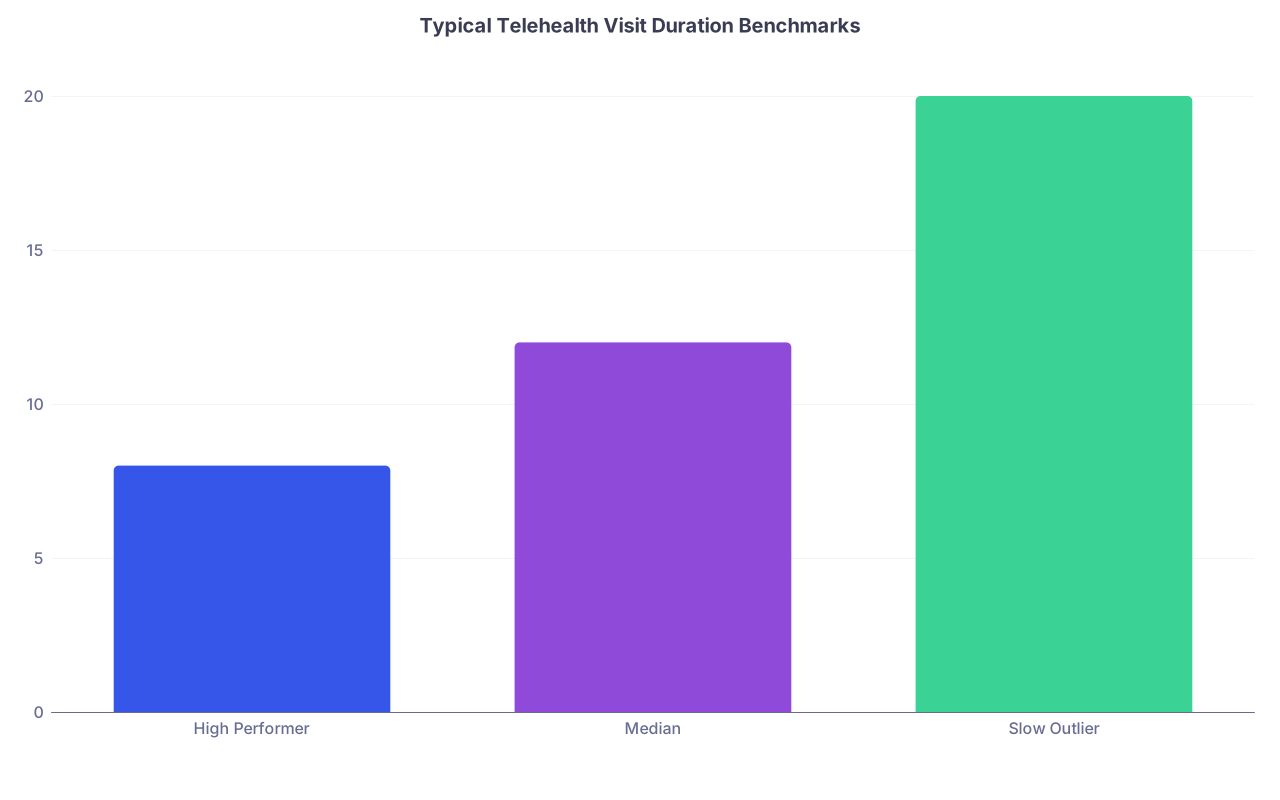
| Category | Value |
|---|---|
| High Performer | 8 |
| Median | 12 |
| Slow Outlier | 20 |
Now, here’s the truth you won’t hear in orientation:
Nobody wants a physician who spends 25 minutes with each sinusitis patient. That’s not “thorough” to them. It’s operational drag.
In internal meetings, I’ve seen language like:
- “Outlier on cycle time”
- “Not scalable at current utilization”
- “Too high touch for this product line”
If you’re chronically above the 75th percentile in visit length, three things usually happen over time:
- Your shifts get filled last.
- You become a topic in “performance review” conversations.
- If there’s a downturn, you’re one of the first quietly de-prioritized.
At the same time, going too fast raises a different flag. If you’re banging out 5-minute visits, especially in complex areas (urgent care, psychiatry, complex chronic), you trigger quality concerns. The pattern leadership hates is the “fast and risky” doc: super short visits, high prescribing, thin documentation.
The sweet spot is being fast enough to be efficient, but not so fast you look unsafe.
Metric #2: Prescribing Patterns (Especially Antibiotics and Controlleds)
Nothing gets more internal scrutiny than your prescribing behavior. This is where state boards, payors, and corporate compliance all converge.
Here’s what’s tracked, usually with very precise dashboards:
- Overall antibiotic rate
- Antibiotic rate for specific diagnoses (URI, sinusitis, bronchitis, pharyngitis, otitis media, UTI)
- Use of specific antibiotic classes (broad vs narrow spectrum)
- Controlled substance prescribing (especially for telepsych and pain)
- Benzo + opioid combos
- Quantity and frequency of refills
For primary/urgent care telehealth, I’ve seen acceptable antibiotic rates in the low 20% range depending on case mix. Once someone hits 40–50%, they end up on what’s effectively a “watch list.”
| Diagnosis | Preferred Antibiotic Rate | Trigger for Review |
|---|---|---|
| Viral URI | < 5% | > 10% |
| Bronchitis | < 10% | > 20% |
| Sinusitis | 20–30% | > 40% |
| Pharyngitis | 20–30% | > 45% |
| Nonspecific cough | < 10% | > 25% |
Executives don’t care about your “clinical style.” They care about risk. High prescribers are:
- A malpractice risk
- A regulatory risk (especially across state lines)
- A brand risk (“XYZ company just hands out Z-paks!”)
There are real conversations like:
“Dr. R is at 63% antibiotic rate. That’s not tenable. Flag for coaching. If no change in 60 days, consider offboarding.”
For telepsych, the scrutiny is even harsher. Controlled substances are a lightning rod. They measure:
- Stimulant starts per new patient
- Dose escalation frequency
- Number of active controlled scripts per 100 patient encounters
- How often you override internal “guardrails”
You don’t see that dashboard. But it absolutely exists.
Metric #3: Documentation: Not Just “Complete,” But Legally Defensible
Your notes are not just for billing. They’re for:
- Audit defense
- Malpractice defense
- Licensing board defense
- Payer contract defense
Telehealth companies run internal audits on charts. Some do 1–3% random sampling monthly per provider. Others target outliers: high prescribing, high ED transfer, high complaint docs.
What they look for:
- Clear virtual-appropriate exam
- Explicit safety language: red flags assessed, ER precautions, follow-up plan
- Rationale for key decisions (why you did or did not prescribe)
- Documentation that matches the diagnosis and billing code
- Telehealth consent and location documentation
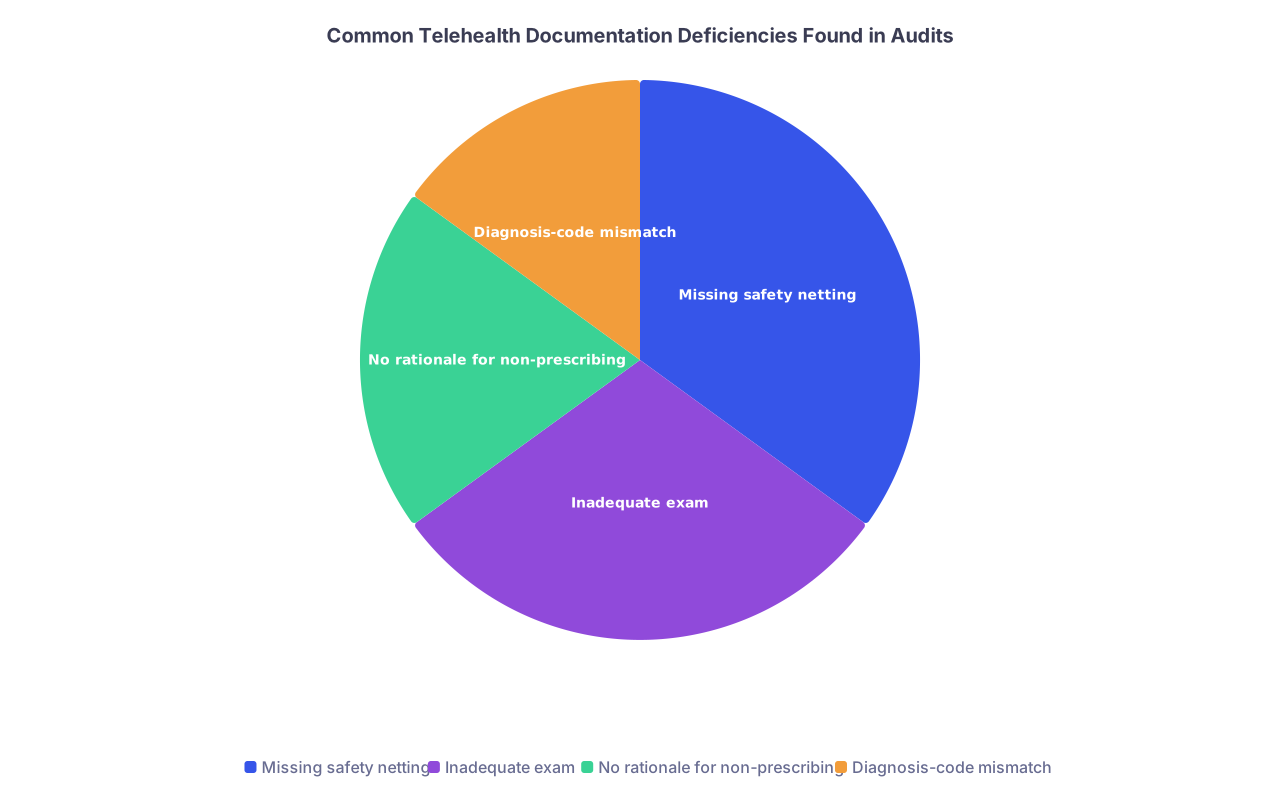
| Category | Value |
|---|---|
| Missing safety netting | 35 |
| Inadequate exam | 30 |
| No rationale for non-prescribing | 20 |
| Diagnosis-code mismatch | 15 |
Here’s the quiet part: companies assign you an internal “documentation risk” rating based on audit findings. They won’t call it that to your face. They’ll call it “opportunities for improvement” or “supportive feedback.”
But behind closed doors:
- High-risk docs get limited in certain visit types.
- They get excluded from new product lines.
- If legal/compliance gets nervous enough, they’re simply not renewed.
If you ever get an email that sounds like, “We’d like to schedule a call to review your documentation and prescribing,” that is not a friendly educational chat. That’s the tip of a performance iceberg with months of metrics behind it.
Metric #4: Resource Utilization and Disposition Patterns
Telehealth is supposed to be cheap for the system. If your practice style generates a lot of downstream cost, leadership notices.
They track:
- Percentage of visits referred to: ED, urgent care, in-person PCP
- Percentage with imaging ordered (when permissible)
- Percentage with labs, especially high-cost tests
- Percentage of “unable to complete visit”
You’ll hear phrases like:
“Dr. T is sending 6% of back pain to ED vs company average of 1.2%.”
“Dr. L orders imaging on 35% of headache visits.”
There’s a balancing act here. Too few ED transfers and they worry you’re missing stuff. Too many and they see you as revenue-negative and risk-averse to a useless degree.
This is where clinical nuance gets flattened into ratios. A doc might be appropriately conservative, especially in states with restrictive telehealth rules or with poor access to follow-up care. But the metric doesn’t capture that context. The spreadsheet just shows you as an outlier.
That outlier label sticks.
Metric #5: Patient Experience, Complaints, and “Friction”
Everyone loves to talk about “patient satisfaction.” Internally, it’s more transactional than idealistic.
What companies track:
- Post-visit star ratings
- Net Promoter Score (NPS) by clinician
- Complaint rate per 100 encounters
- Specific complaint categories: “rude,” “did not listen,” “would not prescribe,” “misdiagnosis,” “billing issue” (even when that’s not your fault)
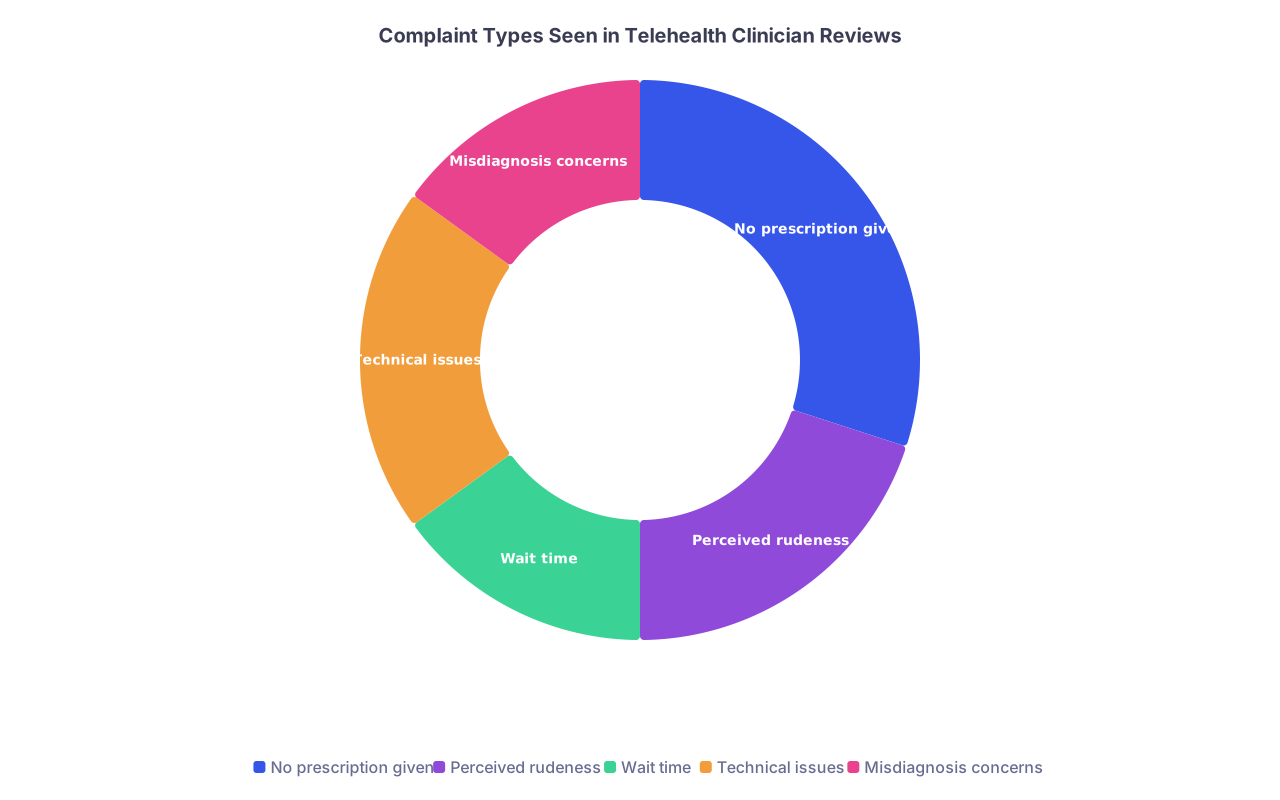
| Category | Value |
|---|---|
| No prescription given | 30 |
| Perceived rudeness | 20 |
| Wait time | 15 |
| Technical issues | 20 |
| Misdiagnosis concerns | 15 |
Here’s the dirty truth:
Patients often give poor ratings for good medicine. No antibiotic for viral symptoms? One star. Decline an inappropriate anxiolytic refill? Complaint filed. Refuse controlled substances for a brand-new, five-minute video visit? “Doctor didn’t help me.”
Execs and medical leadership know this. But operations teams are under pressure to show happy customer metrics to payors and investors. So a tug-of-war plays out.
- If you’re clinically conservative and articulate, you’ll get some bad reviews but you can defend your charts.
- If you fold to every “I need a Z-pak” request, your short-term ratings look fine—until your prescribing dashboard lights up red.
The long-term winners are the docs who:
- Explain decisions clearly and efficiently
- Preempt complaints by setting expectations
- Document refusal when patients push for unsafe care
Because when there is a complaint escalation, the company pulls your chart. That’s when your documentation either saves you—or confirms their fears.
How Companies Combine Metrics Into Quiet “Risk Profiles”
You’re not evaluated on any single metric in isolation. The real judgment comes from patterns.
Think of it as a silent risk matrix:
- High speed + high antibiotic + thin documentation = “High risk, high volume”
- Slow speed + low prescribing + detailed documentation = “Safe but not scalable”
- Medium speed + appropriate prescribing + solid notes + low ED sends = “Ideal profile”

| Step | Description |
|---|---|
| Step 1 | Clinician Metrics |
| Step 2 | High risk high volume |
| Step 3 | Watch list |
| Step 4 | Preferred profile |
| Step 5 | Safe but low throughput |
| Step 6 | More shifts and new programs |
| Step 7 | Audit review and coaching |
| Step 8 | Limited shifts in downturn |
| Step 9 | Speed |
| Step 10 | Prescribing |
| Step 11 | Prescribing |
| Step 12 | Prescribing |
Behind closed doors, medical leadership uses language like:
- “This doc is solid—keep feeding them volume.”
- “This one’s risky—limit to lower liability product lines.”
- “If we need to cut, this group is where we start.”
You see this only indirectly:
- Your shifts mysteriously fill slower.
- You stop getting invited to new initiatives.
- You get more “feedback” calls that feel less like mentoring and more like documenting a paper trail.
That’s your internal risk profile working against you.
What Strong Telehealth Clinicians Do Differently
The physicians who thrive long-term in telehealth understand they’re in a metrics-driven environment and adapt without selling out their ethics.
They do a few things very consistently.
They master efficient, defensible documentation
Not novels. Not three-line fluff. Tight, structured notes that hit the key audit and medicolegal buttons:
- Clear HPI tailored to telehealth limitations
- Focused yet credible exam wording (no ridiculous “normal exam” for things you obviously can’t assess)
- Explicit safety-netting: warning signs, follow-up timing, ED triggers
- Short rationale lines: “No abx indicated: afebrile, clear lungs, no SOB, viral presentation explained to patient.”
Those one-sentence rationales are gold when your chart lands on an auditor’s desk.
They manage expectations up front
They don’t wait for conflict. They start visits with something like:
“I’ll do my best to help today, and I’ll be honest—there are some things telehealth is great for and some things it’s not. If it’s something that needs in-person evaluation, I’ll tell you that and we’ll talk next steps.”
That one line reduces downstream complaints and gives you cover for appropriate non-prescribing or referrals.
They know where the internal lines are
Nobody hands you a document saying, “Here’s the exact antibiotic rate that will get you flagged.” But you can reverse-engineer the culture:
- Ask how often charts are audited and what the common findings are.
- Pay attention to what leadership emphasizes in emails and town halls.
- If you get any metrics feedback, treat it as the visible tip of a larger, ongoing evaluation.
The smart ones adjust slightly—they don’t change their entire practice to chase metrics, but they smooth off the outlier edges.
How This Affects Your Money, Schedule, and Future Options
Telehealth companies rarely say, “We’re cutting your shifts because your metrics are bad.” They’ll blame “reduced demand” or “scheduling optimization.”
The reality:
- High-performing metrics → more shifts, better time slots, inclusion in higher-paying contracts or specialty lines
- Mediocre metrics → you float in the middle, stable until there’s a downturn
- Outlier metrics → you’re the first to feel “volume constraints” and “market softening”
The other angle is referenceability. Digital medicine is a small world. Medical directors move between companies. If your name is associated with “high risk doc,” that follows you.
I’ve been in calls where another company asked, “Any concerns about Dr. X?” The answer was something like, “Solid clinically but a bit heavy on antibiotics, needed a fair amount of coaching.” That matters.
—
Reading Between the Lines: How to Tell If You’re on Their Radar
You won’t get raw dashboards. But there are subtle tells.
Warning signs:
- Sudden “random” chart reviews focused heavily on prescribing
- Repeated “education” emails sent only to a subset of clinicians
- 1:1 scheduled “performance conversation” with a medical director you’ve never spoken to before
- Being steered away from certain visit types “for now”
Positive signs:
- Being invited to pilot new programs or workflows
- Asked to help onboard or mentor new clinicians
- Leadership asking your input on protocols or scripts
If you see the warning signs, assume the internal conversation about you has already happened.
Practical Moves If You’re Already in the System
If you’re post-residency and already working telehealth—or about to start—treat this like a game with rules. You do not have to like the rules. But pretending they don’t exist is how people get blindsided.
A few concrete moves:
Ask explicitly (once you’re hired):
“What metrics do you look at for clinicians on the backend?”
Watch what they emphasize. That tells you everything.After any feedback call, send a short follow-up email summarizing what you heard and what you’ll adjust. That creates a paper trail that you took remediation seriously.
Build a few canned phrases for your notes:
- “Discussed why antibiotics not indicated; patient verbalized understanding.”
- “Reviewed limitations of telehealth exam and red flag symptoms requiring ED evaluation.”
If you want to know where you stand, ask your medical director:
“Am I an outlier on anything—speed, prescribing, ED send-outs, complaints?”
The answer will be diplomatic, but the content will still be useful.
Telehealth can be a fantastic post-residency career layer: flexible, decent pay, remote. But only if you understand that you’re working inside a machine that’s constantly measuring you, whether you see the numbers or not.