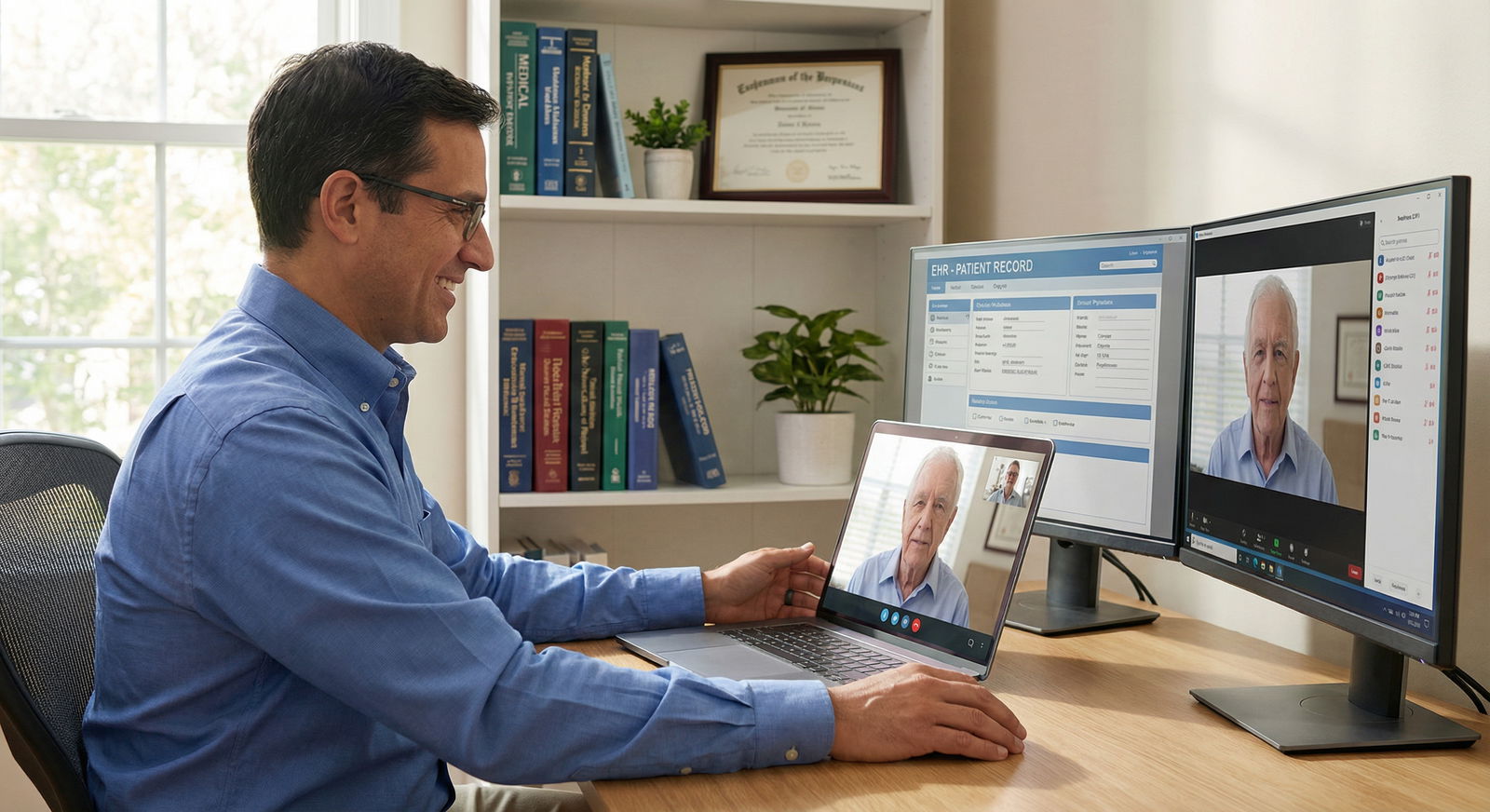
Building a Career in Telemedicine: What You Need to Know
Telemedicine has moved from being a niche offering to a core component of modern healthcare delivery. For residents, early-career physicians, NPs, PAs, and other clinicians thinking about their next steps, telemedicine and telehealth are no longer “side gigs”—they are viable primary career paths with growing long‑term potential.
This guide walks you through what telemedicine is, why it matters for your Career Development, which Healthcare Careers are thriving in this space, and how to develop the Telehealth Skills and experience you need to succeed in a Remote Work–friendly clinical world.
Understanding Telemedicine and the Evolving Telehealth Landscape
Telemedicine is commonly defined as the delivery of clinical services—assessment, diagnosis, treatment, and follow‑up—using telecommunications technologies such as video, phone, secure messaging, and remote monitoring tools. It is a core component of the broader field of “telehealth,” which also includes non‑clinical services such as patient education, care coordination, and administrative encounters.
Core Modalities of Telemedicine
Modern telemedicine typically includes a mix of:
Synchronous video visits
Real‑time audio‑video encounters that mirror traditional office visits, used for primary care, urgent care, mental health, dermatology, follow‑ups, and more.Audio‑only visits (telephone visits)
Still common for patients with limited broadband access or digital literacy; regulatory and reimbursement rules vary by region and payer.Asynchronous (store‑and‑forward) care
Patients submit data (photos of rashes, symptom questionnaires, vitals) through secure portals or apps; clinicians review and respond later.Remote patient monitoring (RPM)
Continuous or periodic data from connected devices (BP cuffs, glucometers, pulse oximeters, wearables) integrated into clinical workflows.E‑consults and provider‑to‑provider telemedicine
Asynchronous or synchronous specialty consults between clinicians, enhancing access to subspecialty expertise.
Key Features and Benefits of Telemedicine
Improved accessibility
Patients in rural, underserved, or mobility‑limited settings can access specialists and primary care without extensive travel.Convenience for patients and clinicians
Reduced travel, flexible scheduling, and more efficient follow‑up visits.Cost‑effectiveness
Lower overhead for virtual practices, potential savings for health systems and payers, and often lower visit costs for patients.Continuity and population health
Easier chronic disease management, behavioral health follow‑up, medication reconciliation, and preventive care outreach.Scalability and reach
Ability to serve larger patient panels, extended hours, and cross‑regional coverage (where licensing allows).
For postgraduate clinicians considering long‑term Healthcare Careers, understanding how these modalities fit into care delivery is now essential, even if you plan to remain primarily in brick‑and‑mortar practice.
Why Telemedicine Deserves a Place in Your Career Strategy
Telemedicine is not a pandemic‑only phenomenon. It represents a durable change in how care is delivered, reimbursed, and evaluated. Thinking proactively about telemedicine can significantly shape your Career Development after residency or fellowship.
1. Persistent and Growing Demand for Telehealth Services
While telehealth use surged during COVID‑19, utilization has stabilized at levels far higher than pre‑pandemic:
- Many systems now routinely offer video visits as a first‑line option for follow‑ups, behavioral health, and minor acute care.
- Payers and health systems increasingly build telehealth into value‑based care models, remote monitoring programs, and hospital‑at‑home initiatives.
- Patients who have experienced high‑quality virtual care often prefer a hybrid model—mixing in‑person and remote visits.
This sustained demand means that telemedicine expertise is a marketable skill and can differentiate you in a competitive job market.
2. Diverse Career Paths Across Clinical and Non‑Clinical Roles
Telemedicine touches almost every corner of healthcare. Potential roles include:
Direct clinical care
- Telehealth primary care, urgent care, internal medicine, pediatrics
- Tele‑psychiatry and teletherapy (psychologists, LCSWs, counselors)
- Tele‑dermatology, tele‑endocrinology, tele‑cardiology, and other subspecialties
- Remote ICU (tele‑ICU) coverage and hospital consults
Telehealth leadership and operations
- Telehealth medical director or program director
- Virtual care service line leader for a health system
- Telehealth clinic manager or operations lead
Health informatics and digital care design
- Clinician informaticist focused on telemedicine workflows
- Product manager or clinical advisor for digital health companies
- Quality and outcomes specialist for virtual care programs
Technical and support roles
- Telehealth coordinator (scheduling, patient onboarding, workflow design)
- Technical support specialist dedicated to virtual care
- Implementation specialist helping clinics adopt telehealth platforms
For clinicians exploring blended or alternative Healthcare Careers, telemedicine is often a gateway to broader digital health, health tech, and policy roles.
3. Enhanced Work–Life Balance and Remote Work Options
Telemedicine offers one of the most realistic Remote Work options within clinical medicine:
- Flexible scheduling: Many telehealth companies offer evening/weekend shifts, part‑time options, or adjustable hours.
- Location flexibility: Within licensing constraints, you may live in one city or state while serving patients in others.
- Reduced commute and burnout risk: Less time commuting and more control over your work environment can improve well‑being.
This flexibility can be especially attractive for:
- Dual‑career households
- Clinicians with caregiving responsibilities
- Physicians transitioning to semi‑retirement while maintaining part‑time clinical practice
- Residents and fellows picking up telehealth shifts (where allowed) to supplement income and gain experience
4. Opportunities for Innovation and Leadership
Because telemedicine workflows, regulations, and technologies are still evolving, early adopters can:
- Help design new models of hybrid care
- Lead quality improvement and patient safety initiatives for virtual care
- Contribute to research on outcomes, utilization, and equity in telehealth
- Shape institutional and national telehealth policy
Clinicians who understand both clinical medicine and digital tools are in a strong position for leadership roles at the intersection of technology and care delivery.
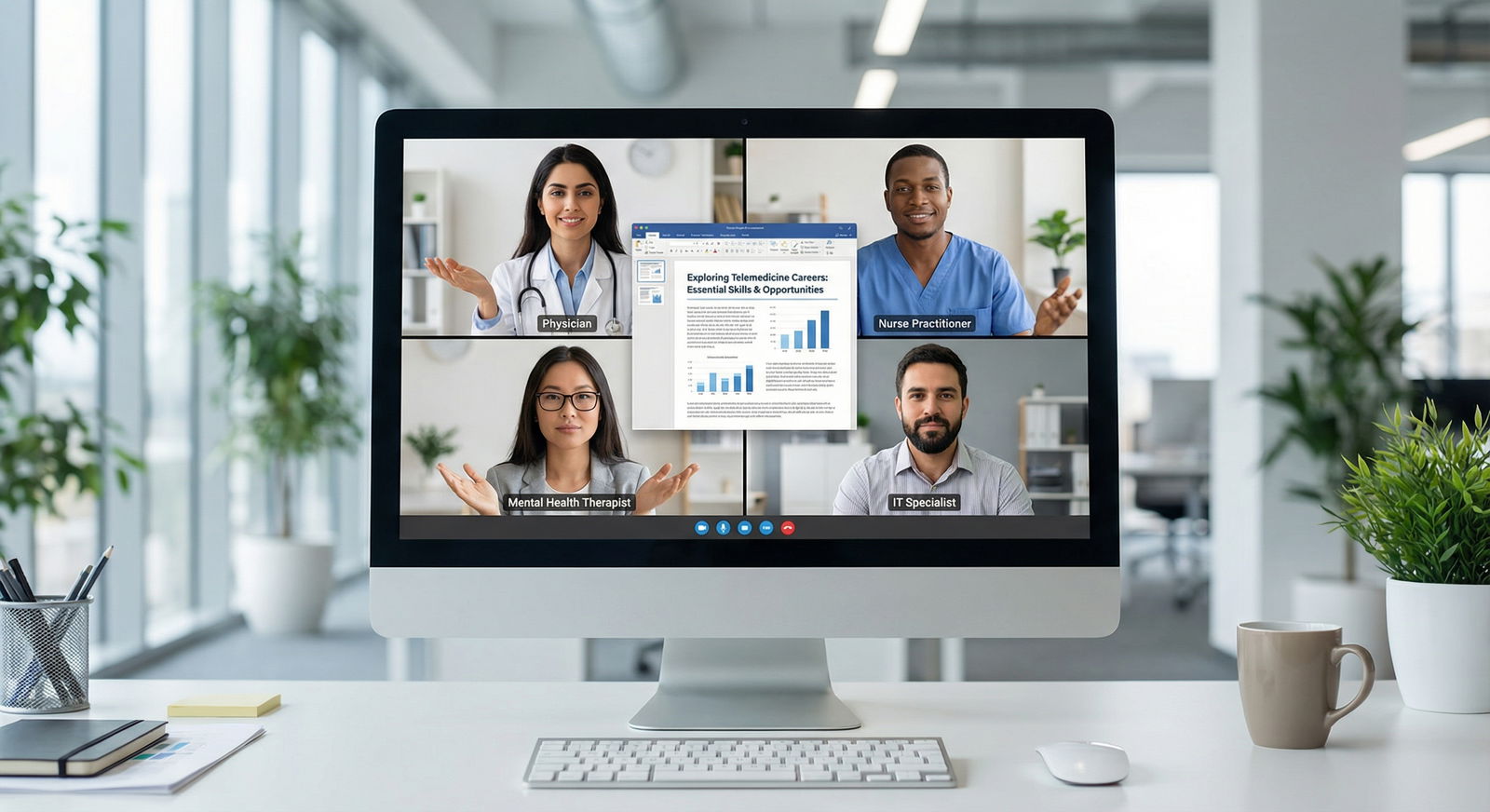
Core Skills and Qualifications for a Telemedicine Career
Whether you aim to work full‑time in telemedicine or integrate it into a hybrid practice, you will need a combination of clinical competence, digital fluency, and interpersonal skills tailored to remote care.
Technical and Digital Skills
1. Telehealth Platform Proficiency
You should be comfortable with:
- Video visit platforms (e.g., Epic-integrated tools, Zoom for Healthcare, Doxy.me, Amwell, Teladoc)
- Secure messaging systems and patient portals
- Electronic health records (EHRs) optimized for virtual care workflows
Actionable step:
Ask during job interviews which telehealth platforms are in use and whether there’s structured onboarding and simulation training.
2. Basic Troubleshooting and Digital Resilience
Even as a clinician, you need enough tech literacy to:
- Guide patients through simple connection problems
- Adjust audio/video settings quickly
- Switch to backup modalities (phone, messaging) when necessary
- Document and report recurring technical issues to IT teams
Being calm and solution‑oriented when tech fails is part of providing excellent virtual care.
Communication and “Webside Manner”
3. Clear, Structured Remote Communication
Telemedicine reduces nonverbal cues and physical exam components, which makes communication skills critical:
- Use deliberate eye contact (look at the camera, not the screen, at key moments).
- Speak clearly, summarize plans, and confirm understanding.
- Use teach‑back techniques: “Can you tell me in your own words what the next steps are?”
These skills support not only rapport but also safety and reduced medicolegal risk.
4. Demonstrating Empathy Through a Screen
Patients may worry remote care is “colder” or less attentive. Counter this by:
- Starting visits with a brief personal check‑in about how they’re managing in their environment.
- Explicitly acknowledging emotions or stressors: “I can see this has been really frustrating.”
- Allowing brief pauses rather than rushing; silence can be more noticeable on video, so use it intentionally.
Clinical and Regulatory Knowledge
5. Strong Clinical Foundations Adapted to Virtual Settings
You must be able to:
- Recognize which conditions are appropriate for telehealth vs. which require in‑person evaluation.
- Perform modified virtual exams (e.g., guided self‑exam, patient‑reported vitals, functional assessments over video).
- Understand red flags that mandate escalation to urgent or emergency care.
Many organizations will provide telehealth triage protocols—learn and use them consistently.
6. Familiarity With Telehealth Regulations and Ethics
Key domains include:
- Licensing and practice location: Typically, you must be licensed in the state where the patient is physically located at the time of the visit.
- Reimbursement and billing: Know which visit types are billable, how to document appropriately, and any payer‑specific requirements.
- Privacy and security: HIPAA (or local equivalent) compliance, secure platforms, and best practices for protecting patient data.
Staying current matters; telehealth rules are still evolving at federal, state, and institutional levels.
Interpersonal, Organizational, and Professional Skills
7. Adaptability and Continuous Learning
Telemedicine systems, clinical guidelines, and reimbursement models change frequently. Successful telehealth clinicians:
- Embrace new tools and practice models
- Participate in ongoing training and quality improvement initiatives
- Reflect on patient feedback to refine their virtual style
8. Time Management and Productivity
Virtual clinics can be high‑volume and fast‑paced. You’ll need to:
- Manage back‑to‑back visits while maintaining quality and attention.
- Build in buffers for documentation, messaging, and follow‑ups.
- Develop personal systems to track labs, imaging, and referrals in a remote setting.
Educational Pathways and Career Entry Points
Most clinicians enter telemedicine after establishing core training in their primary discipline, then layering on telehealth‑specific skills and experiences.
Foundational Training by Role
Physicians (MD/DO)
Complete medical school and residency (and fellowship if applicable). Many specialties now incorporate telehealth rotations or electives—seek these out when possible.Advanced practice providers (NPs, PAs)
Graduate from accredited programs and obtain state licensure. Telehealth is especially active in primary care, urgent care, and behavioral health.Nurses (RNs, LPNs)
Work in triage, care coordination, remote monitoring, and telehealth call centers. Strong phone/video triage skills are an asset.Behavioral health professionals
Psychologists, psychiatrists, social workers, and counselors are in particularly high demand for virtual services.Non‑clinical professionals
Degrees in health informatics, health administration, IT, or public health can lead to telehealth operations, implementation, or analytics careers.
Telehealth‑Specific Education and Certifications
You can strengthen your telehealth profile with:
Telehealth Certificate Programs
Offered by organizations such as the Telehealth Certification Institute and some universities; often cover regulations, best practices, and technology.Health informatics and digital health courses
Platforms like Coursera, edX, and university extension programs provide training in data, EHR optimization, and digital care design.CME/CE focused on telemedicine
Specialty societies and telehealth organizations frequently host webinars and courses on virtual care in specific disciplines.
Including these certifications on your CV signals intentional Career Development in telemedicine and can distinguish you for leadership tracks.
Practical Steps to Build and Advance Your Telemedicine Career
1. Clarify Your Telemedicine Career Goals
Ask yourself:
- Do you want telemedicine to be a supplement (e.g., extra shifts, hybrid model) or your primary clinical practice?
- Which patient populations and conditions are you passionate about managing virtually?
- Are you more drawn to direct clinical care, operations, informatics, or digital health innovation?
Your answers will shape whether you look for hospital/health‑system roles, national telehealth companies, startups, or academic positions.
2. Gain Hands‑On Experience Early
Actionable strategies:
Leverage residency or fellowship opportunities
Volunteer to pilot virtual follow‑up clinics, chronic disease management programs, or tele‑consult services.Take part‑time telehealth shifts
Where contractually and legally permitted, moonlight with reputable telehealth platforms to build experience.Participate in telehealth quality projects
Help design or evaluate telehealth workflows, satisfaction surveys, or outcome metrics in your department.
Each of these can become a strong talking point in job interviews and a foundation for leadership.
3. Build a Telehealth‑Focused Professional Network
Networking is critical in this relatively young field:
- Join organizations like the American Telemedicine Association (ATA) and your specialty society’s telehealth interest group.
- Attend virtual and in‑person conferences on telehealth, digital health, and health informatics.
- Engage on LinkedIn:
- Follow telehealth leaders and digital health companies.
- Share brief reflections on virtual care experiences (without PHI).
- Join targeted groups (e.g., “Telehealth Clinicians,” “Digital Health & Innovation”).
Many telemedicine roles, especially in startups, are filled through networks and referrals rather than traditional job postings.
4. Understand Business Models and Compensation Structures
Telemedicine compensation can differ from traditional employment:
Employment vs. independent contractor
Some national platforms use 1099 contracts; health systems may offer W‑2 employed positions with benefits.Per‑visit, per‑hour, or salaried models
Understand how visit volume, case mix, and scheduling affect your income and workload.Incentives and metrics
You may be evaluated on patient satisfaction scores, visit volume, documentation timeliness, and quality indicators.
Before accepting a telemedicine role, clarify malpractice coverage, licensing support, technology stipends, and expectations for off‑visit tasks (messaging, prior auths, etc.).
5. Stay Current With Evolving Telehealth Policies
Policies affecting telemedicine continue to change at federal, state, and payer levels:
- Track updates from:
- State medical boards or nursing boards
- CMS (in the U.S.) and other national health authorities
- Professional societies’ telehealth policy briefings
- Confirm whether:
- Interstate licensure compacts apply to your discipline
- Specific waivers are temporary or permanent
- Audio‑only visits are reimbursable and under what conditions
Being conversant in these topics will position you as a knowledgeable resource in your organization.
Common Challenges in Telemedicine and How to Navigate Them
Telemedicine offers powerful benefits but is not without challenges. Being prepared will make your transition smoother.
Technology and Access Barriers
- Patient‑side obstacles: Limited internet, outdated devices, low digital literacy.
- Clinician‑side frustrations: Laggy platforms, integration problems with EHR, insufficient IT support.
Mitigation strategies:
- Advocate for pre‑visit tech checks and patient onboarding support.
- Develop simple scripts to quickly troubleshoot common issues.
- Have a clear, documented backup plan (e.g., transitioning to phone visits when video fails).
Clinical Limitations and Safety Concerns
Not every case is appropriate for virtual care. Challenges include:
- Limited physical exam
- Difficulty assessing subtle nonverbal cues or environmental factors
- Managing high‑acuity or complex patients remotely
Best practices:
- Use standardized protocols to determine when in‑person care or ED referral is necessary.
- Document your reasoning for telehealth appropriateness and any limitations discussed with the patient.
- When in doubt, err on the side of safety.
Patient Engagement and Trust
Some patients may:
- Be skeptical that virtual care is “real” medicine.
- Worry about privacy or data security.
- Miss the interpersonal aspects of in‑person visits.
Approaches that help:
- Clearly explain when telemedicine is appropriate and when it is not.
- Reassure patients about platform security and data protection.
- Offer hybrid options (mixing in‑person and virtual visits) when feasible.
Clinician Well‑Being and Work Boundaries
Remote Work can blur boundaries between professional and personal life:
- Risk of longer screen‑time hours and message overload
- Temptation to check charts or respond to messages around the clock
Protect yourself by:
- Setting clear work hours and communication boundaries.
- Using ergonomically sound setups (chair, lighting, screen height).
- Seeking support from your organization to manage realistic panel sizes and expectations.
Key Resources to Accelerate Your Telemedicine Career
Leveraging reputable resources can significantly shorten your learning curve and improve your competitiveness.
Online Courses and Certification Programs
Telehealth Certification Institute
Structured training for clinicians on best practices, legal considerations, and clinical protocols in telemedicine.Coursera, edX, and similar platforms
Courses on digital health, health informatics, AI in healthcare, and virtual care design.Specialty society webinars
Many offer telehealth‑specific CME tailored to your clinical field (e.g., tele‑dermatology, tele‑cardiology).
Professional Organizations and Consortia
American Telemedicine Association (ATA)
Offers guidelines, policy updates, conference opportunities, and networking.National Consortium of Telehealth Resource Centers (U.S.)
Provides technical assistance, implementation guidance, and educational materials for organizations and individuals.Specialty‑specific telehealth groups
Many U.S. and international specialty societies now have telehealth committees or interest groups.
Job Search and Networking Platforms
LinkedIn
- Follow telehealth organizations and digital health companies.
- Join niche groups and engage in conversations about telehealth innovation.
Industry job boards
- Telehealth‑focused sites (e.g., Telehealth Jobs, some sections of Health eCareers).
- Health system career pages advertising virtual or hybrid roles.
Academic centers and innovation hubs
University‑affiliated digital health labs often post fellowships, research roles, and clinician‑innovator positions.
Telemedicine Career FAQ
1. Is telemedicine a stable long‑term career option, or is it a temporary trend?
Telemedicine has moved beyond a temporary pandemic workaround. Most major health systems, payers, and regulators now treat virtual care as a permanent component of care delivery. While specific reimbursement and regulatory details will continue to evolve, virtual and hybrid care models are here to stay. Building Telehealth Skills now is an investment in long‑term Career Development, not a short‑lived niche.
2. Can I build a full‑time clinical career entirely through telemedicine?
In many specialties—especially primary care, urgent care, psychiatry, and behavioral health—a full‑time telemedicine practice is feasible. Many clinicians choose hybrid models (part in‑person, part virtual) to maintain hands‑on skills and flexibility. The right mix depends on your specialty, patient population, and personal preferences, but entirely Remote Work–based clinical careers are increasingly common.
3. What are the most important first steps if I’m still in residency or training?
Focus on:
- Clinical excellence in your chosen specialty—this remains your foundation.
- Exposure to virtual care: seek telehealth electives, quality improvement projects, or research.
- Skill‑building in communication, digital literacy, and basic telehealth regulations.
- Networking with faculty and organizations active in virtual care so you are on their radar for future roles.
Even small steps, like observing telehealth clinics or helping develop patient education materials for virtual visits, can be valuable.
4. How do I choose a reputable telemedicine employer or platform?
Evaluate potential employers by asking:
- What is the clinical model (visit length, case mix, triage protocols)?
- How are clinicians compensated and evaluated (volume metrics vs. quality metrics)?
- What support exists for malpractice coverage, licensing, credentialing, and IT issues?
- Are there opportunities for Career Development, leadership, or involvement in quality and innovation?
Speak with current or former clinicians at the organization when possible, and be cautious of companies that emphasize volume over quality or lack transparency.
5. How can I maintain high‑quality care and avoid burnout in a virtual‑only role?
- Set clear boundaries around working hours and after‑hours communication.
- Use evidence‑based protocols and decision support tools to standardize high‑quality care.
- Ensure you have adequate tech support and reasonable visit lengths.
- Seek peer connection through virtual case conferences, telehealth communities, and local professional networks to counter isolation.
- Periodically reassess your mix of virtual and in‑person work to ensure it aligns with your professional and personal goals.
A career in telemedicine sits at the intersection of clinical practice, technology, and innovation. By building strong clinical foundations, developing targeted Telehealth Skills, and strategically leveraging Remote Work opportunities, you can craft a flexible, impactful, and future‑ready path within modern Healthcare Careers.