
Telemedicine companies don’t care how “busy” you feel. They care how you perform on very specific metrics.
If you’re thinking about (or already in) a telemedicine job post-residency, you need to understand this: your performance is measured far more like a call center than a traditional clinic. That’s not good or bad by itself—but it is very different. And if you don’t know the rules, you will get blindsided.
Let me walk you through how telemedicine employers actually measure you, what they watch behind the scenes, and which numbers can quietly kill your contract or unlock big bonuses.
1. The Core Performance Buckets Telemedicine Employers Track
Most telemedicine platforms, whether it’s Teladoc, Amwell, MDLive, Ro, Hims/Hers, Oscar, or a health system’s own virtual clinic, use variations of the same core buckets:
- Volume and efficiency
- Quality and safety
- Patient experience
- Reliability and professionalism
- Financial impact
Each company will dress this up with different dashboards and buzzwords, but under the hood it’s some version of those five.
Here’s the high-level comparison so you see how this differs from brick-and-mortar work:
| Area | In-Person Clinic Focus | Telemedicine Focus |
|---|---|---|
| Volume | RVUs/clinic slots | Visits per hour / shift |
| Access | Panel size / wait time | Queue time / response time |
| Documentation | Note completeness | Note speed + template adherence |
| Quality/Safety | Chart review / peer review | Protocol adherence + audits |
| Patient Experience | Press Ganey, complaints | App ratings, NPS, chat feedback |
If you’re used to “as long as I show up, see my patients, and don’t make big mistakes, I’m fine,” telemedicine will feel like stepping onto a factory floor where every step is timed.
2. Volume & Efficiency: How Much You Do and How Fast
This is the first thing most employers look at. They hired you to move a queue.
Common metrics here:
- Visits per hour (VPH) or encounters per shift
- Average handle time (AHT) – total time per encounter, including charting
- Time to first response (for asynchronous / chat-based care)
- Queue time – how long patients wait before seeing you
What this looks like in real life
On a synchronous platform (live video/phone):
- You might be expected to average 3–4 visits per hour for straightforward urgent care.
- For mental health or longer visits, maybe 1–2 per hour.
- Some high-volume platforms will love you if you can safely push 5–6 basic visits/hour.
On async/chat platforms (e.g., e-visits, DTC prescription platforms):
- They’ll measure how quickly you pick up new cases (response time).
- How many you close per hour.
- How many linger past their “SLA” (service level agreement), like “respond within 15 minutes/30 minutes/4 hours.”
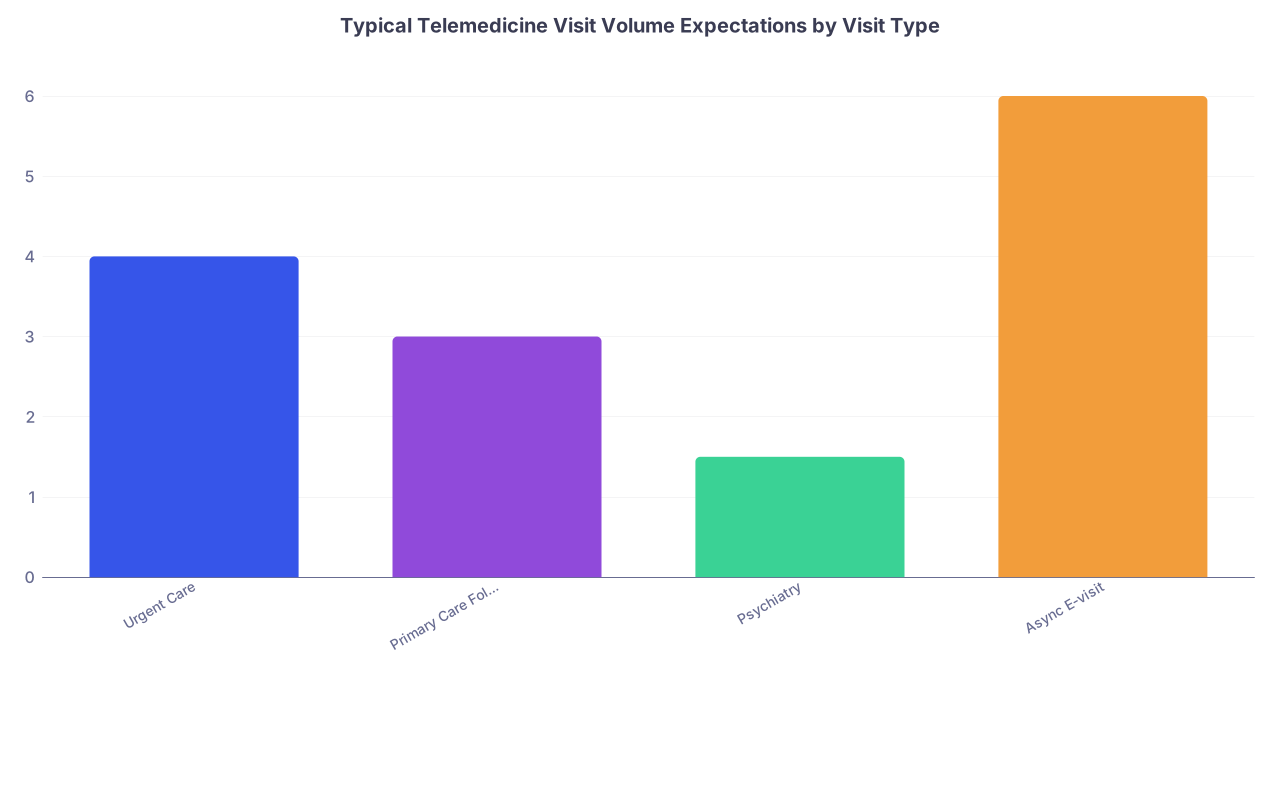
| Category | Value |
|---|---|
| Urgent Care | 4 |
| Primary Care Follow-up | 3 |
| Psychiatry | 1.5 |
| Async E-visit | 6 |
Why this matters
- Pay: Some platforms tie bonuses to hitting certain VPH or response time thresholds.
- Shifts: High-efficiency physicians tend to get priority for better shifts and more hours.
- Contract renewal: If your numbers are consistently low compared to peers, you’re on the short list when they “right-size” the workforce.
What they don’t tell you: Almost no one cares how many complex social issues you juggled in that 20-minute visit. The system sees “20 minutes for uncomplicated UTI = inefficient.”
Your job is to learn where you can be ruthlessly efficient (simple, protocol-driven cases) so you have bandwidth for the occasional complex scenario without tanking your averages.
3. Quality & Safety: Are You Practicing Safe, Defensible Medicine?
Here’s where a lot of new telemedicine docs get anxious. You’re moving fast, limited exam, high uncertainty. Employers know that. So they build quality proxies.
What they actually track:
- Protocol or guideline adherence
- Audit results (random chart reviews)
- “Red flag” miss rates (e.g., chest pain, SOB, neuro deficits, pregnancy-related concerns)
- Controlled substance / antibiotic prescribing patterns
- Escalation/ED referral appropriateness
How this works behind the scenes
Most platforms run periodic audits. A clinical lead or committee pulls a batch of your charts and checks:
- Did you ask the required screening questions (documented)?
- Did you rule out obvious red flags that should trigger ED/urgent in-person care?
- Did your plan align with their internal guidelines/pathways?
On high-liability topics (opioids, benzos, ADHD meds, hair loss meds with lab requirements, weight loss meds), they may run automated reports and flag outliers.
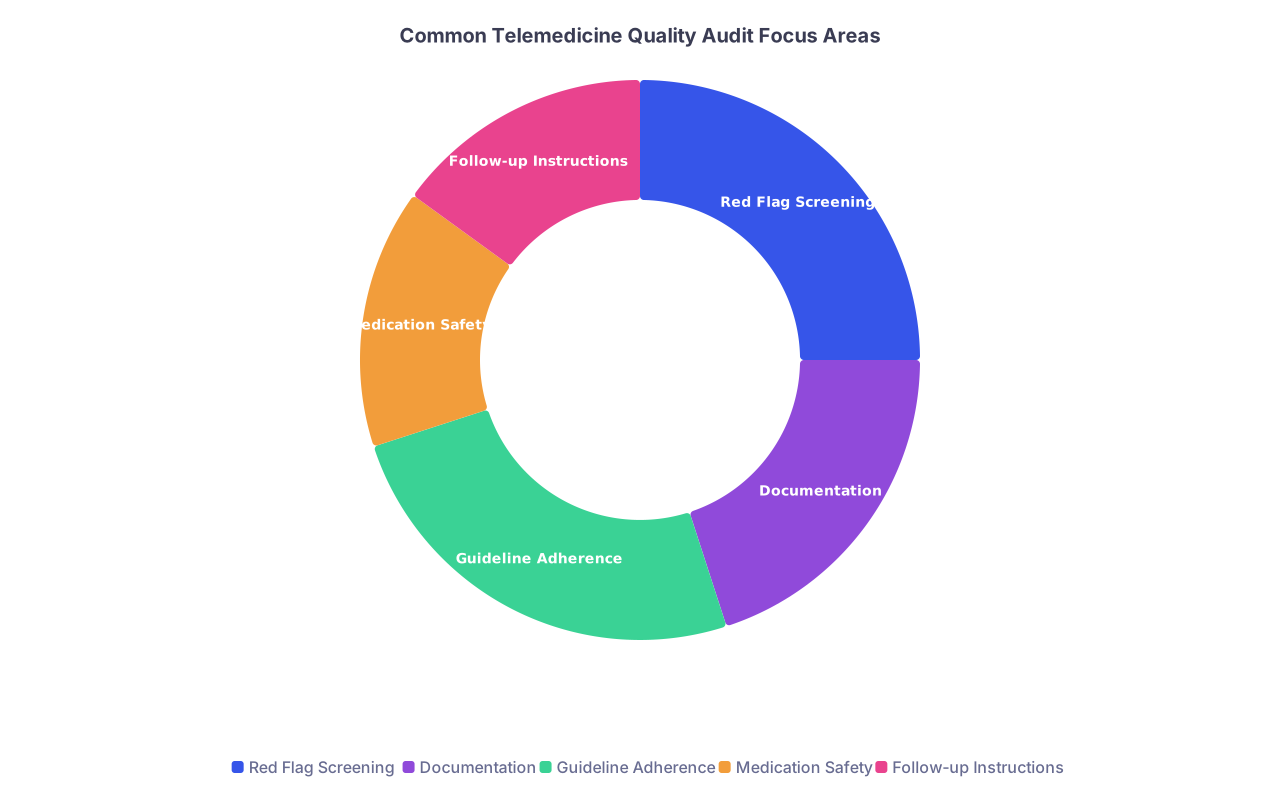
| Category | Value |
|---|---|
| Red Flag Screening | 25 |
| Documentation | 20 |
| Guideline Adherence | 25 |
| Medication Safety | 15 |
| Follow-up Instructions | 15 |
What gets you in trouble:
- Repeatedly treating high-risk complaints virtually that clearly need in-person evaluation.
- Inconsistent documentation of ruling out red flags.
- Being a clear outlier in antibiotic or controlled substance prescribing.
- Sloppy notes that don’t support your decision-making.
What protects your job and license:
- Short, structured templates that always cover the critical elements.
- Liberal use of safety-net instructions: specific red-flags and time-bound follow-up.
- Low threshold to escalate to in-person care when truly needed (and documenting why).
4. Patient Experience: What Your Patients Actually Say About You
If telemedicine is the product, then you are part of the customer experience. Companies track this aggressively because happy patients = repeat visits + good app store ratings + better contracts with employers and payers.
Metrics you’ll see:
- Star ratings (often a 1–5 scale after each visit)
- Net Promoter Score (NPS) – “How likely are you to recommend us to a friend?”
- Free-text feedback summaries
- Complaint rates or “escalations” (patients asking to speak to a supervisor or file a complaint)

What moves these scores
The truth: small behaviors matter more than clinical genius.
Things that consistently boost ratings:
- Joining on time, or at least acknowledging if you’re running a bit late.
- A quick, clear introduction: who you are, what you can/can’t do via telehealth.
- A sentence that shows you read their chart or intake: “I see you’ve had similar sinus infections before.”
- Clear, jargon-free plan: “Here’s what I’m going to do today, and what I want you to watch for next.”
- Not sounding rushed, even if you are.
Things that tank ratings fast:
- Appearing distracted (typing loudly, eyes off-camera constantly).
- Saying “we can’t do that by telehealth” without offering any helpful alternative.
- Dismissing their concerns because “this is minor.”
- Short, “transactional” encounters on sensitive topics (mental health, ED, weight loss).
Most platforms will average your patient ratings and benchmark you against other physicians. Fall below a certain threshold consistently, and you’ll get coached. Stay there, and your shifts or contract can be at risk.
5. Reliability & Professionalism: Do You Show Up and Follow the Rules?
Telemedicine gives you more flexibility. It also gives employers more ways to monitor reliability.
They track:
- On-time start for scheduled shifts
- Early log-offs or leaving the queue without notice
- No-shows for scheduled video visits
- Response times to platform messages/inbox
- Documentation completion time (closing notes same day vs days later)

| Step | Description |
|---|---|
| Step 1 | Schedule Assigned |
| Step 2 | Full shift worked |
| Step 3 | Late or missed |
| Step 4 | Good reliability score |
| Step 5 | Flag by scheduler |
| Step 6 | Coaching or warning |
| Step 7 | Shift reduction or contract risk |
| Step 8 | On time login |
| Step 9 | Improvement |
This is the stuff clinicians underestimate. I’ve seen excellent docs lose hours because:
- They constantly log in 5–10 minutes late “because it’s just remote.”
- They bail early on slow shifts without clearing it.
- They ignore inbox tasks, refill requests, or internal messages.
Most systems have log data for every login, logout, and activity. Argue with them and you’ll lose—because they have the timestamps.
If you want to be in the “trusted core” group that gets good shifts and more opportunities, be boringly reliable. That alone sets you above a surprising number of colleagues.
6. Financial Metrics: Are You Worth What They Pay You?
Even if no one says it out loud, every employer is doing this math: revenue you generate – what they pay you – overhead = margin.
They’ll look at:
- Completed visits vs scheduled/assigned visits
- Billing level distribution (for insurance-based models)
- Use of billable add-ons (prolonged services, care management, etc., where allowed)
- Refill and follow-up visit patterns (are you driving unnecessary repeats?)
- Refund rates or “dissatisfied – no charge” encounters
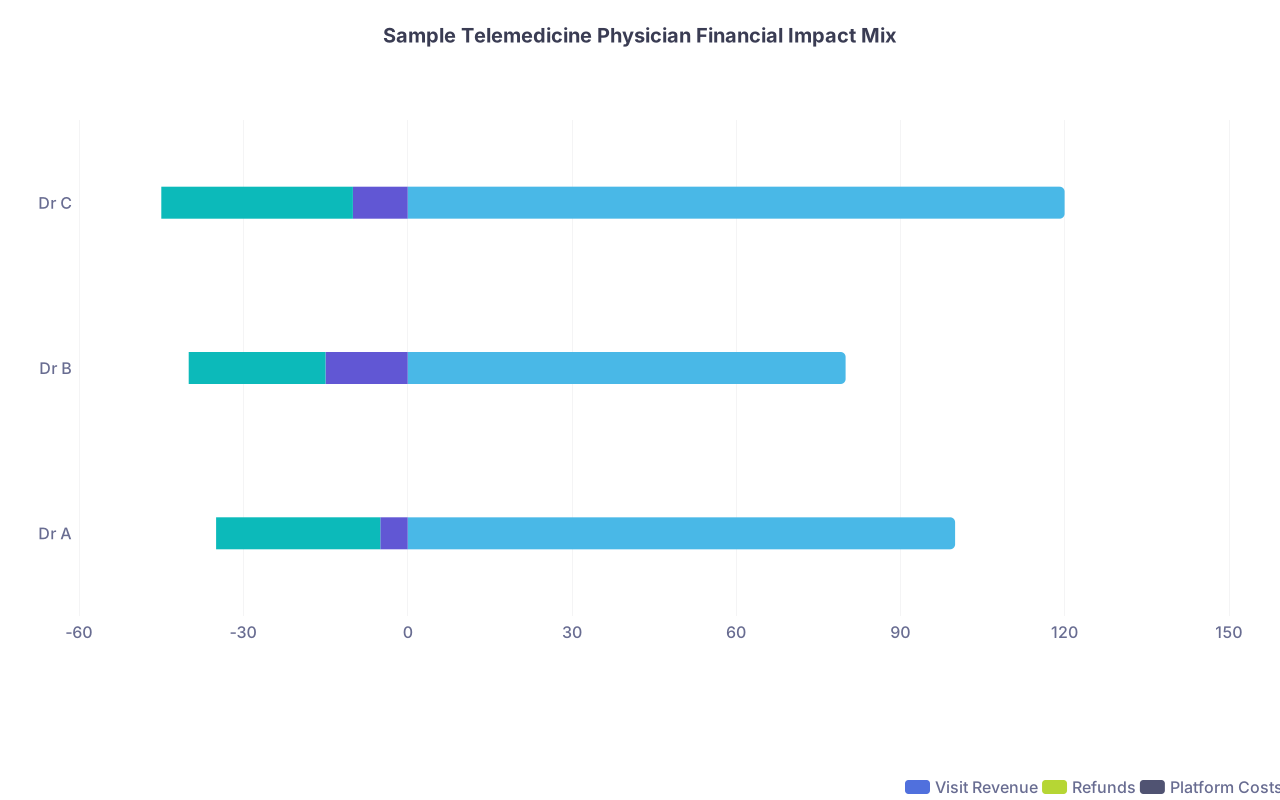
| Category | Visit Revenue | Refunds | Platform Costs |
|---|---|---|---|
| Dr A | 100 | -5 | -30 |
| Dr B | 80 | -15 | -25 |
| Dr C | 120 | -10 | -35 |
You won’t always see these numbers, but leadership is.
Things that quietly help you:
- Closing visits efficiently (you can see more patients per paid hour).
- Avoiding unnecessary “free follow-ups” for issues that could’ve been handled properly the first time.
- Keeping refund/complaint rates low by setting clear expectations.
Things that hurt:
- Stretching simple encounters into long visits without any added value.
- Overloading the system with conservative but unnecessary follow-ups (“come back in 2 days for everything”).
- High no-show / patient abandonment on your schedule because you’re chronically late.
7. The Data Dashboard: What You Might Actually See
Many telemedicine employers give you some kind of provider dashboard—sometimes detailed, sometimes basic. You might see:
- Your average visits/hour
- Your patient rating (e.g., 4.8/5 over last 30 days)
- Your total visits, cancellations, and no-shows
- Your on-time percentage for shifts
- Quality alerts or feedback summaries
Some will also show you how you compare to the “network average” or top performers. That can be motivating or annoying, depending on how competitive you are.
8. How to Not Just Survive but Actually Do Well
You’re not trying to game the system; you’re trying to practice good medicine in a very metrics-driven environment. Here’s the playbook I’ve seen work.
Pick 2–3 numbers to own.
Don’t obsess over everything. Focus on:- Visits/hour or response time
- Patient rating
- Reliability (on-time, low missed visits)
Build templates and phrases that save you time.
- Structured ROS for common complaints (UTI, URI, rash, anxiety).
- Standard safety-net instructions you tweak slightly.
- Clear, one-paragraph patient education blurbs you can reuse.
Use your judgment for escalation—and document it.
- When in doubt, recommend in-person eval and be specific: where, when, why.
- Document the red flags you reviewed, not just “no red flags.”
Protect your ratings without overservicing.
- Be very human in the first 60 seconds. That alone boosts scores.
- Explain limitations honestly but pair it with a solution: “I can’t safely do X here, but here’s what I recommend instead.”
Treat telemedicine like a serious job, not a side hustle you casually log into.
- Be on time.
- Communicate clearly if you need to drop a shift or step away.
- Close your notes promptly.

If you do those, you’ll look very good on the dashboards that matter.
9. Red Flags: Signs Your Performance Is on Their Radar
If any of these start happening, it’s a warning shot:
- You get an email about “opportunities for efficiency improvement” with screenshots of your metrics.
- Scheduler suddenly cuts your available shifts without clear explanation.
- You’re asked to join a call with a “clinical quality lead” about your documentation or prescribing.
- Your access to higher-risk visit types (e.g., ADHD, weight loss, mental health) quietly disappears.
Don’t ignore these. Ask for specific data, ask what targets they expect, and create a simple, written plan to improve over 30–60 days. Then execute.
FAQs
1. What’s a “good” visits-per-hour number for telemedicine?
For straightforward urgent care-style video visits, 3–4 visits per hour is typically considered solid. Some platforms push for 5–6 on very simple, protocol-driven cases, but that’s the upper end. For mental health, complex primary care, or multi-issue visits, 1–2 per hour is more realistic. The key is: are you at least in the middle of the pack compared to your peers on the same platform and visit type?
2. How much do my patient star ratings really matter?
A lot. If you’re consistently below ~4.5/5 while others are around 4.7–4.9, you’ll stand out—in a bad way. Ratings affect contract renewals, access to preferred shifts, and sometimes bonuses. But they’re also moderately forgiving; one or two bad weeks won’t sink you if your long-term average is strong. The danger is chronic low ratings with no improvement after feedback.
3. Can I get fired from a telemedicine job for being “too slow”?
Yes. They won’t usually say “you’re too slow,” but they’ll call it “not meeting productivity expectations” or “not the right fit for our model.” If your visits/hour or response times are well below network averages, and your quality/patient experience isn’t exceptional enough to offset it, they’ll stop offering shifts or terminate the contract. It’s harsh but common in high-volume, low-margin platforms.
4. How closely do they monitor my prescribing, especially for controlled substances?
Very closely. Most platforms run regular reports on controlled meds, antibiotics, and certain high-liability categories (ADHD meds, weight loss drugs, benzos). If you’re an outlier, expect a chart review and sometimes direct questioning about your rationale. Repeated deviation from company protocols is the fastest way to lose telemedicine work—and draw unwanted board attention.
5. Do telemedicine employers factor in case complexity when judging my performance?
Only a little, and less than you’d like. Some systems differentiate visit types (e.g., urgent care vs behavioral health vs chronic care), and they may benchmark you separately. But within a category, they’re largely looking at raw numbers: time per visit, closure rates, ratings, and quality flags. If you constantly take extra time for complex cases, you’ll need very strong quality and patient-experience metrics to justify it.
6. What’s one thing I can do this week to improve my telemedicine performance?
Open your last 10 telemedicine notes and build 3–5 smart templates out of them—for your most common complaints (UTI, URI, rash, anxiety, med refill). Bake in red-flag screening, key exam elements, and safety-net instructions. Use those templates on your next shift. You’ll speed up documentation, reduce missed elements in audits, and free up mental energy to connect better with patients.
Open your last telemedicine performance email or portal right now. Pick one metric—visits per hour, rating, or on-time starts—and write down a concrete target for your next five shifts. Then adjust how you work to hit that number.