
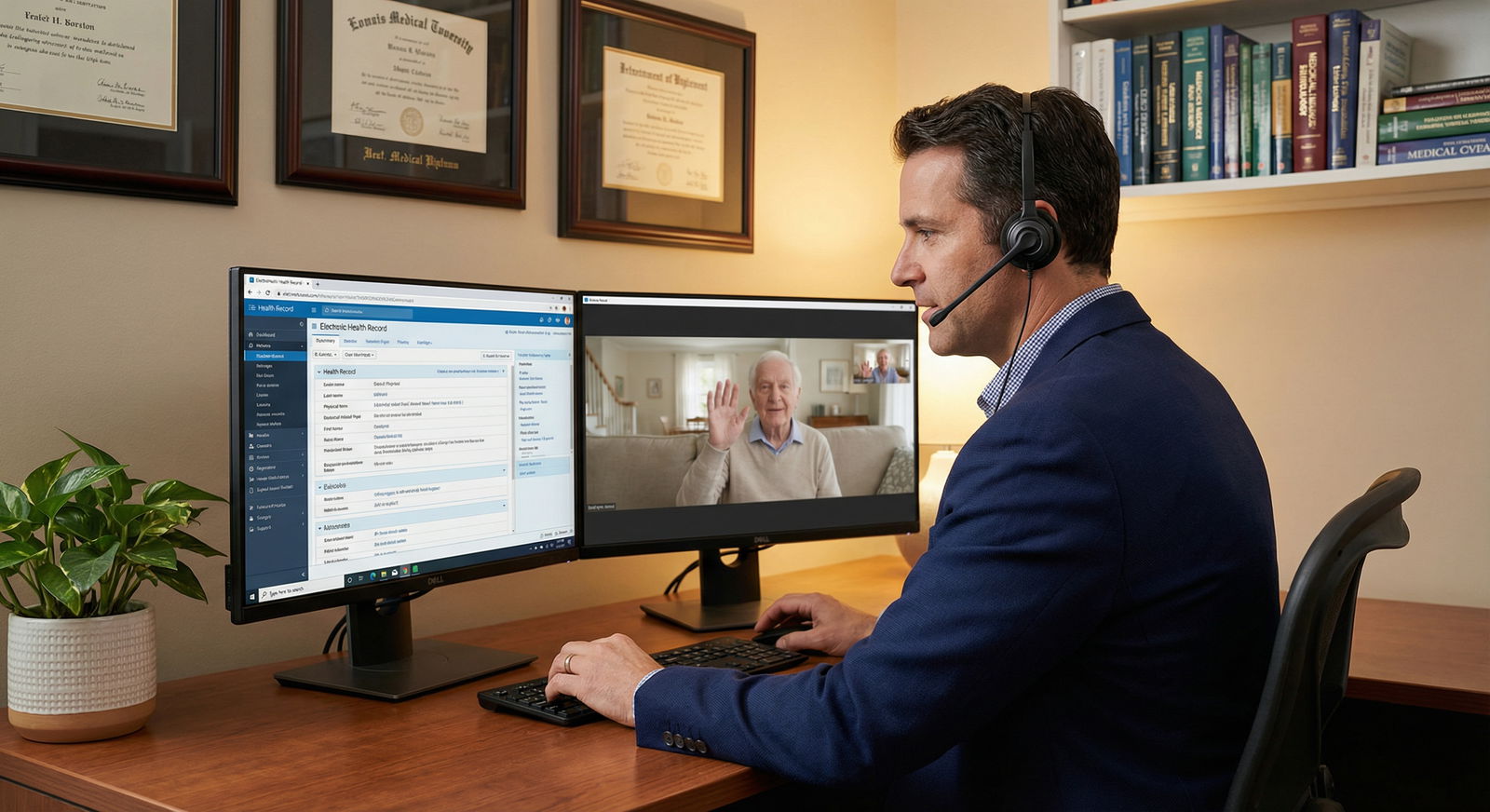
Introduction: Telemedicine as a Core Career Path in Modern Healthcare
Telemedicine is no longer a niche add-on to traditional practice; it is a core component of modern healthcare delivery and a major pathway in today’s healthcare careers. Accelerated by recent global health crises, remote care has moved from “emerging trend” to “standard of care” in many specialties and health systems worldwide.
For residents, fellows, and early‑career clinicians, this shift brings new opportunities—and new expectations. Employers increasingly seek providers who can deliver safe, efficient, patient-centered Remote Care across video, phone, and asynchronous platforms. To succeed, you’ll need a distinct blend of clinical skills, digital fluency, and communication expertise.
This expanded guide explores the essential skills for a successful telemedicine career after residency. It preserves the core insights of the original article while providing more depth, practical examples, and actionable strategies you can apply immediately in your training or job search.
Understanding Telemedicine in Today’s Healthcare Careers
What Is Telemedicine in Practical Terms?
Telemedicine is the provision of clinical care at a distance using telecommunications technology. It can involve:
Live video visits (synchronous care)
Example: A family medicine physician managing follow-up visits for chronic disease via secure video.Store-and-forward consultations (asynchronous care)
Example: A dermatologist reviewing uploaded skin images and sending back a treatment plan.Remote patient monitoring (RPM)
Example: A cardiologist interpreting continuous data from Bluetooth-enabled BP cuffs or wearable heart rhythm monitors.Mobile health (mHealth) and digital therapeutics
Example: Behavioral health apps that track mood and deliver cognitive behavioral therapy modules, integrated into the clinician’s care plan.
Telemedicine is not a different kind of medicine—it is core clinical work delivered through different channels. Your foundational clinical reasoning and patient safety responsibilities remain unchanged; what changes is how you gather data, communicate, document, and follow up.
Why Telemedicine Matters for Post‑Residency and the Job Market
Telemedicine is now embedded across care settings, and many employers will expect you to be telehealth-competent from day one. Key benefits include:
Improved access and health equity
- Rural patients can see specialists without traveling hours.
- Patients with mobility issues, caregiving responsibilities, or limited transportation can still receive timely care.
Operational efficiency and flexibility
- Hybrid schedules with blocks of Remote Care can reduce no‑show rates and optimize clinician time.
- Telemedicine allows flexible part-time work, cross-state collaborations (where licensure permits), and portfolio careers.
Expanded geographical reach
- Specialists can consult across regions and health systems.
- Health organizations can staff after-hours or urgent care virtually without requiring on-site presence everywhere.
However, thriving in a telemedicine-based role requires more than standard clinical training. The following competencies are increasingly being used as hiring criteria in telehealth-focused Healthcare Careers.
Core Technical Skills for Telemedicine Success
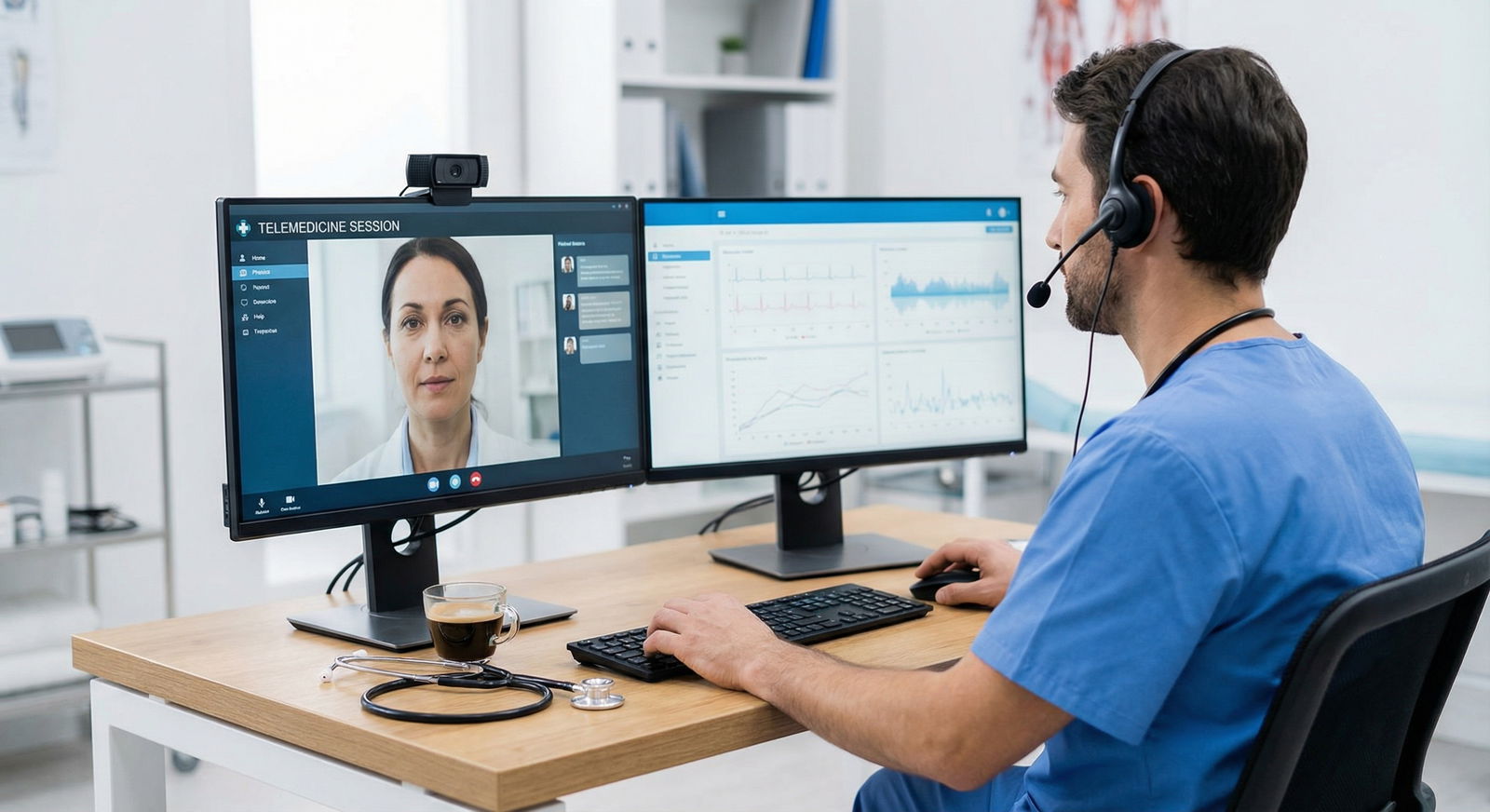
Mastering Telehealth Platforms and Clinical Technology
To deliver seamless Remote Care, you must be comfortable with the digital tools that connect you to patients and care teams.
Telehealth Video Platforms
Common platforms include Doxy.me, Teladoc, Amwell, Zoom for Healthcare, and proprietary health system tools. For each platform you use, you should know how to:
- Launch and join visits quickly
- Use virtual waiting rooms, breakout rooms, or handoff features (if available)
- Share screens to review imaging, lab results, or educational material
- Send secure chat messages, e-prescriptions, or orders through integrated tools
- Check audio, video, and connectivity before and during visits
Actionable tip: Before your first clinic block, schedule “mock visits” with a colleague to rehearse video setup, screen sharing, and workflow. Time yourself from log-in to note completion to identify bottlenecks.
Electronic Health Records (EHR) in a Remote Workflow
Telemedicine workflows often feel more fragmented than in-person care. Efficient use of EHR systems like Epic, Cerner, or Athenahealth is critical:
- Build telemedicine-specific templates for common complaints (URI, follow-up for HTN/DM, anxiety, dermatologic rashes).
- Use smart phrases or macros for standardized telehealth documentation, including consent, limitations of virtual assessment, and safety planning.
- Learn to toggle quickly between patient video, chart review, and order entry without losing presence or eye contact.
Example: A post-residency primary care physician creates a “Virtual HTN F/U” template that prompts them to document home BP readings, medication reconciliation, adherence barriers, and red-flag symptoms that would require an in-person evaluation.
Remote Monitoring and Consumer Health Devices
Modern telemedicine increasingly includes data from:
- Bluetooth-enabled BP cuffs, glucometers, oximeters
- Wearable trackers for heart rate, rhythm, sleep, or activity
- Digital scales for heart failure or weight management programs
To use these effectively:
- Understand accuracy limitations and device variability.
- Develop structured protocols for responding to alerts or abnormal data.
- Educate patients about proper use and data transmission (e.g., measuring BP after 5 minutes of rest, not just when they feel ill).
Basic Tech Support and Troubleshooting
You don’t have to be IT, but you should be able to:
- Walk a patient through checking microphone, camera, and internet connection
- Suggest low-tech alternatives (phone visit, sending photos through the portal) when video fails
- Quickly switch platforms (e.g., video to telephone) while maintaining rapport and safety
Telemedicine interview tip: Many employers will ask how you handle dropped connections or platform downtime. Prepare a concise answer that shows you have a backup plan and can preserve Patient Communication and safety even in imperfect conditions.
Advanced Communication and “Webside Manner”
Telemedicine compresses what you know about bedside manner into a smaller sensory window. High-level Patient Communication skills are therefore foundational.
Verbal Communication: Precision and Clarity at a Distance
Set expectations at the start:
“We have 20 minutes together today. I’d like to focus on your blood pressure and the headaches you mentioned. If new issues come up, we’ll make a follow-up plan.”Use plain language and teach-back:
Avoid jargon where possible. After explanations, ask:
“Just to be sure I explained this clearly, how would you describe our plan in your own words?”Structure your questioning:
Use more open-ended questions early (“Tell me what’s been happening”) followed by targeted closed-ended questions to refine your differential when you cannot rely on a physical exam.
Non-Verbal Communication in a Virtual Setting
Even through a screen, non-verbal cues significantly shape the patient experience:
- Camera positioning: Align your webcam near eye level and look into it when speaking to simulate eye contact.
- Body language: Sit upright, avoid multitasking on other screens, and nod or lean in slightly to convey engagement.
- Lighting and background: Ensure your face is well lit; keep your background professional and uncluttered. Small details communicate credibility.
Actionable exercise: Record a simulated visit (with consent) and review your posture, eye contact, and verbal tics. Adjust accordingly.
Deep Listening in Remote Care
Because you may miss subtle physical cues, active listening becomes even more critical:
- Allow pauses and silence; do not rush to fill them.
- Reflect feelings and content: “It sounds like you’re not just in pain, you’re also worried about what this might mean for your job.”
- Summarize frequently: “Let me recap to be sure I’m understanding you correctly…”
Strong listening is a major differentiator in telemedicine careers where patient satisfaction, net promoter scores, and online reviews can significantly impact your reputation and contract renewals.
Human Skills: Empathy, Cultural Competence, and Patient Education
Compassion and Empathy Through a Screen
Patients may worry remote care will feel cold or transactional. Your role is to prove the opposite.
Address the emotional context, not just the symptom list.
Example: “You’ve been dealing with this alone at home for weeks. That sounds exhausting.”Normalize help-seeking in remote care:
“A lot of people aren’t sure if it’s appropriate to call about this over video. I’m glad you reached out early—this is exactly what telemedicine is for.”Be explicit about what you can do via telemedicine:
Highlight what can be addressed remotely and when you’ll escalate to in-person or emergency care.
Cultural Competence in a Wider Virtual Catchment Area
Telemedicine often expands your patient panel far beyond your local community. Cultural competence becomes even more important:
- Be aware of language barriers and routinely offer professional interpreters, not just family members.
- Ask about health beliefs and home remedies in a non-judgmental way.
- Adapt care plans to patients’ access, literacy, and digital comfort levels.
Example: For a patient with limited digital literacy, you might demonstrate how to join a visit step-by-step and follow up with a simple PDF with screenshots in their preferred language.
Patient Education Tailored to Remote Care
Education is central to telemedicine visits:
- Use screen sharing to review imaging, lab trends, or reputable visual aids.
- Provide written summaries via the portal, including warning signs that require urgent in-person evaluation.
- Direct patients to vetted online resources, avoiding misinformation.
Actionable tip: Build a personal library of patient handouts and trusted websites (CDC, NIH, specialty societies). Organize them by condition in your own reference system so you can share them quickly during visits.
Operational Excellence: Time Management, Organization, and Adaptability
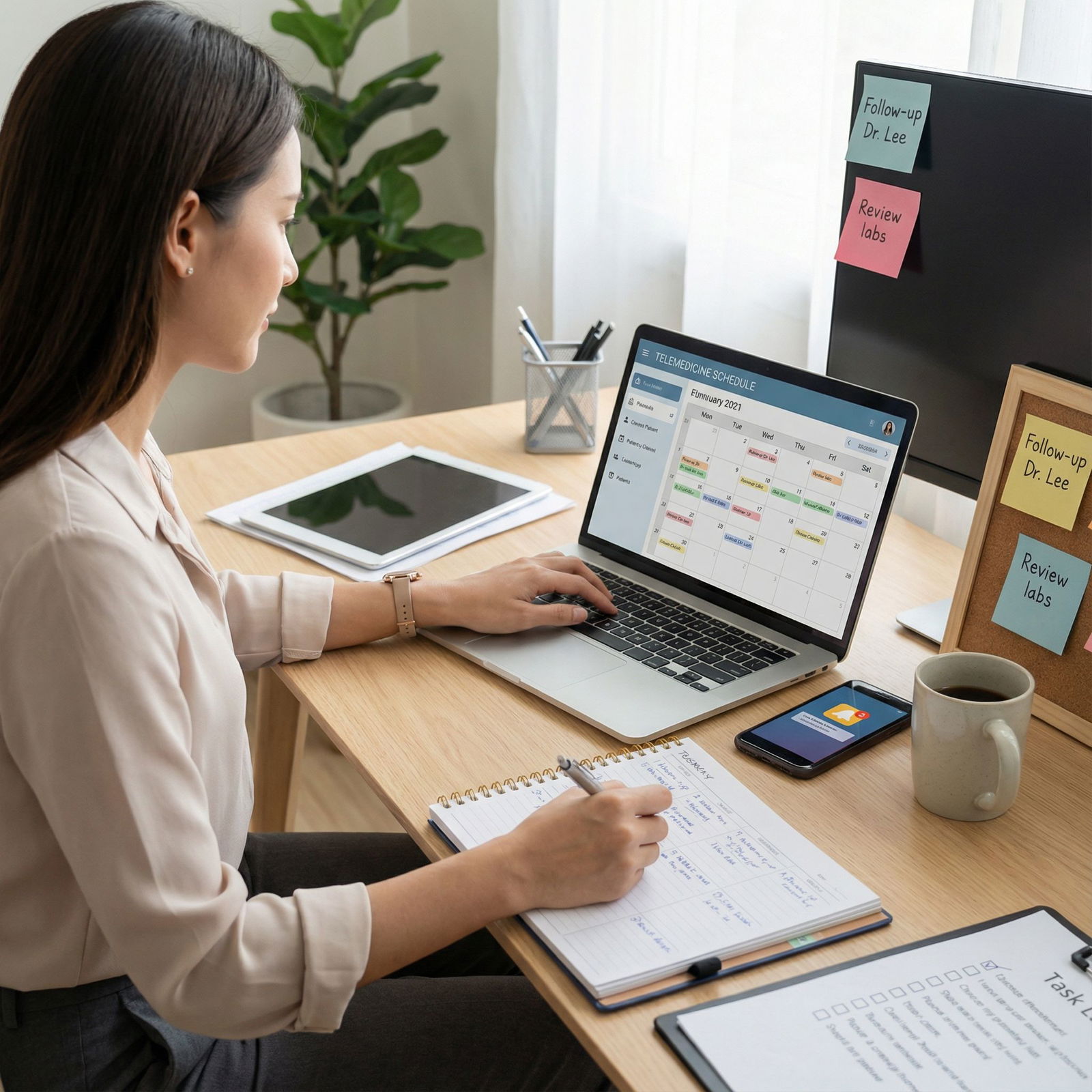
Time Management in High-Volume Telemedicine Clinics
Remote clinics can be deceptively demanding. When you are not walking between rooms, patients can be scheduled back-to-back with minimal buffer.
To stay efficient:
- Use structured visit templates to avoid missing key elements.
- Reserve short blocks between sessions for documentation and inbox review.
- Develop a standard approach to triaging: what can be safely handled via video, what must become an in-person appointment, and what needs urgent escalation.
Example: A telehealth urgent care physician uses a color-coded schedule: green for straightforward issues, yellow for potentially complex or multi-issue visits, and red for scheduled follow-ups requiring extended time.
Organization Across Digital Channels
In telemedicine, information can come through video, phone, secure messaging, remote monitoring dashboards, and EHR inboxes. To avoid burnout and errors:
- Consolidate your task list each morning: refills, result reviews, patient messages, scheduled tele-visits.
- Use EHR tasking rules to delegate appropriately to nurses, MAs, or pharmacists.
- Set clear response expectations in your after-visit summary (e.g., “Portal messages will be answered within 2 business days”).
Adaptability and Problem-Solving in a Rapidly Changing Field
Regulations, reimbursement, and technology in telemedicine change frequently. To remain competitive:
- Subscribe to telehealth newsletters (professional societies, health systems, or policy organizations).
- Participate in continuing education focused on digital health, telepsychiatry, or virtual chronic disease management.
- Develop a habit of post-visit reflection: What worked? What didn’t? How can I handle similar cases better next time?
Interview-ready example: Be prepared to describe a time when you adapted quickly to a new telehealth platform or workflow and how you ensured patient care continuity.
Ethics, Compliance, and Team-Based Telehealth Practice
Legal, Regulatory, and Ethical Considerations
A sophisticated understanding of ethics and compliance is non-negotiable in telemedicine careers.
Key domains include:
Privacy and Security (e.g., HIPAA in the U.S.)
- Use only approved platforms and encrypted messaging.
- Avoid conducting visits in public spaces or on unsecured networks.
Licensure and jurisdiction issues
- Know where your patient is physically located and whether your license and malpractice coverage apply there.
- Stay updated on evolving cross-state or cross-border telehealth compacts.
Informed consent for telemedicine
- Explain how telemedicine works, its limitations (e.g., no hands-on exam), and alternatives.
- Document consent explicitly—many EHRs have built-in phrases for this.
Clinical appropriateness
- Know when telemedicine is not enough: red flags that demand immediate in-person assessment or emergency services.
- Develop clear protocols for sending patients to urgent care, ED, or specialty follow-up.
Interprofessional Collaboration in Remote Care
Effective telemedicine is rarely a solo activity. You’ll often collaborate with:
- Nurses and MAs who pre-chart, collect vitals, and perform remote rooming
- Pharmacists who manage complex medication regimens and adherence
- Behavioral health providers integrated into primary care telehealth visits
- Specialists who provide e-consults or joint video visits
Best practices:
- Use shared documentation with clear responsibilities.
- Communicate asynchronously through EHR messaging, but schedule synchronous huddles when needed.
- Align on shared care plans so patients receive consistent messages from the entire team.
Real-World Telemedicine Career Scenarios
Case Study 1: The Efficient Telehealth Nurse
Julia, a registered nurse working in a large health system’s telemedicine triage and chronic care program, manages high patient volume while maintaining quality.
Her key strategies:
- She uses color-coded task lists in the EHR to separate urgent callbacks, routine follow-ups, and education sessions.
- She creates standardized triage scripts for common complaints like cough or abdominal pain, ensuring comprehensive and consistent assessments.
- She schedules virtual check-ins with complex heart failure patients, incorporating remote weight and BP data, which has led to fewer ED visits and hospitalizations.
Her combination of technical proficiency, time management, and patient education skills has made her indispensable to the care team and a leader in the system’s telehealth expansion.
Case Study 2: The Compassionate Telemedicine Physician
Dr. Mike, a family medicine physician, balances high productivity with deeply patient-centered care in his hybrid clinic.
Recently, a patient logged on to discuss a new chronic diagnosis and appeared visibly distressed. During the video visit:
Dr. Mike explicitly acknowledged the emotional impact:
“Receiving this diagnosis is a lot to take in. Tell me what’s worrying you most right now.”He used screen sharing to walk through lab trends and treatment options, checking understanding frequently.
He arranged a warm handoff to an embedded tele-behavioral health clinician and scheduled a follow-up video visit in one week.
The patient later reported feeling “seen and supported” despite never having met Dr. Mike in person. This is a concrete example of how empathy, clear communication, and coordinated care can flourish even in a virtual setting.
Building and Advancing Your Telemedicine Career
For residents and early-career clinicians considering telemedicine-focused Healthcare Careers, here are practical next steps:
- Seek electives or rotations in telehealth clinics during residency.
- Ask mentors about hybrid positions that include both in-person and remote care.
- Highlight telemedicine experience and skills explicitly on your CV and in interviews (platforms used, visit types, patient satisfaction outcomes).
- Consider additional training in clinical informatics, digital health, or health systems leadership if you’re interested in shaping telemedicine programs rather than only practicing within them.
Telemedicine expertise is increasingly a differentiator in the POST_RESIDENCY_AND_JOB_MARKET phase—and a powerful way to design a flexible, impactful career.
FAQ: Developing Essential Skills for a Telemedicine Career
1. How do I gain telemedicine experience during residency or fellowship?
Look for rotations that include virtual visits, triage, or remote monitoring programs. If your institution has limited formal opportunities, ask attending physicians if you can observe or participate in their telehealth sessions. You can also volunteer for quality improvement projects focused on telemedicine workflows or patient education materials for Remote Care.
2. Which clinical skills translate least easily to telemedicine, and how do I compensate?
Hands-on components of the physical exam (e.g., auscultation, detailed neurologic testing) are most limited. To compensate, you’ll rely more heavily on history, patient-performed maneuvers (e.g., palpating their own abdomen, range-of-motion tests), prior records, and close follow-up. You must maintain a low threshold for in-person exam or referral when findings are unclear or concerning.
3. What are employers looking for in telemedicine job candidates?
Common priorities include: comfort with technology; strong communication and documentation skills; experience with EHRs and telehealth platforms; reliability in remote work settings; awareness of legal and ethical considerations; and data showing patient satisfaction, efficiency, or quality outcomes. Being able to talk concretely about your telemedicine workflows and problem-solving will strengthen your applications.
4. How can I avoid burnout when doing high-volume remote care?
Set clear boundaries for your schedule and inbox coverage, use efficient templates, and collaborate with support staff for triage and follow-up. Maintain ergonomic and visual comfort in your workspace, and build intentional screen-free breaks into your day. Many clinicians also find that mixing telemedicine with in-person care helps preserve variety and connection.
5. Is telemedicine a viable long-term career path, or just a temporary trend?
Telemedicine has become structurally integrated into healthcare delivery and reimbursement models. While regulations and specific platforms will continue to evolve, virtual care is now a permanent component of many specialties—primary care, psychiatry, dermatology, endocrinology, and more. Developing robust telemedicine skills positions you well for a wide range of future leadership and clinical roles in digital health.
By cultivating technical proficiency, advanced Patient Communication, empathy, adaptability, and strong organizational habits, you can build a resilient, rewarding telemedicine career that enhances access and quality for patients—wherever they are.


