
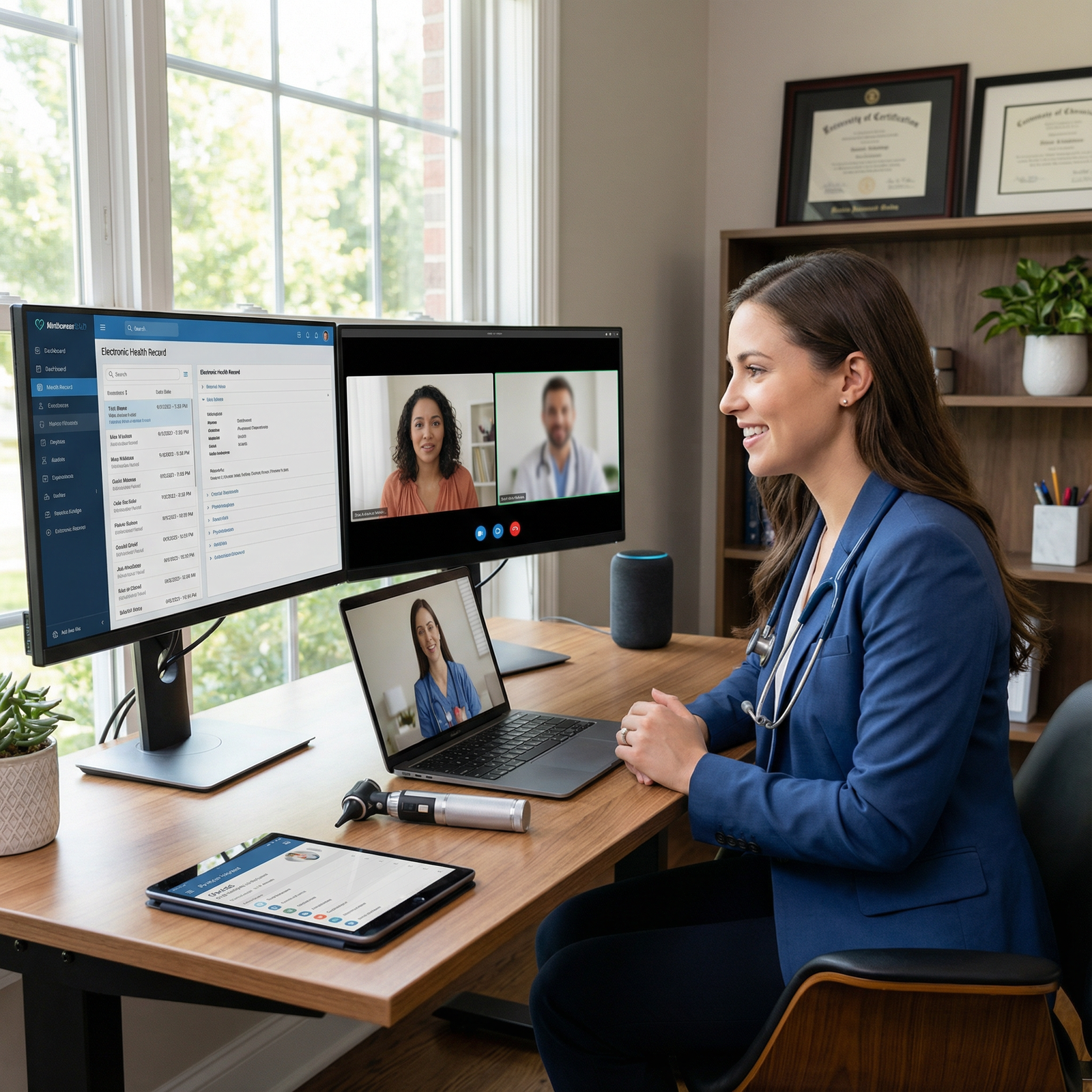
Exploring the Rise of Telemedicine Careers: A New Era for Healthcare Professionals
Telemedicine has moved from a niche service to a core pillar of modern healthcare delivery. For residents, fellows, and early-career clinicians planning their next steps, Telemedicine and Telehealth are no longer “optional extras” — they are central to how care is delivered, reimbursed, and evaluated.
This shift is creating a distinct category of Telemedicine careers at the intersection of clinical practice and Digital Health. Whether you envision a full-time virtual practice or a hybrid role that blends in-person and Remote Patient Care, understanding this landscape is now essential for long-term career planning.
This enhanced guide walks through what telemedicine really is today, where the jobs are, which skills matter most, and how to strategically position yourself in the post-residency job market.
Understanding Telemedicine in Modern Practice
Telemedicine is more than just video visits. It is an integrated model of remote diagnosis, consultation, and ongoing management using telecommunications and digital technology. It sits within the broader field of Digital Health, which includes telehealth, remote monitoring, virtual triage, AI decision support, and more.
Core Modalities of Telemedicine and Telehealth
Telemedicine encounters typically involve one or more of the following components:
Video Conferencing (Synchronous Telehealth)
- Real-time, face-to-face consultations using secure platforms.
- Used for acute complaints, chronic disease follow-up, behavioral health, and postoperative checks.
- Enables visual assessment (e.g., respiratory effort, rash, neurologic exam elements) while preserving the doctor–patient relationship.
Mobile Health (mHealth) Applications
- Smartphone apps that allow patients to:
- Schedule telehealth appointments
- Upload photos, logs, and home-monitoring data
- Complete screening questionnaires or outcome measures
- Access personalized education and self-management tools
- Clinicians may monitor dashboards or receive alerts when patients cross defined clinical thresholds.
- Smartphone apps that allow patients to:
Wearables and Remote Patient Monitoring (RPM)
- Devices such as:
- Blood pressure cuffs
- Glucose meters and continuous glucose monitors
- Pulse oximeters
- Weight scales and activity trackers
- Data are streamed to clinicians or care teams, enabling proactive management of conditions like heart failure, diabetes, and COPD.
- Devices such as:
Asynchronous (Store-and-Forward) Communication
- Clinicians review information and respond later, rather than in real time:
- Secure messaging within patient portals
- E-consults between primary care and specialists
- Image-based dermatology consults
- Particularly useful for triage, simple medication questions, or follow-up that doesn’t require a live video encounter.
- Clinicians review information and respond later, rather than in real time:
Telephone-Based Telehealth
- Audio-only visits remain important for patients with limited technology access or poor broadband connectivity.
- Some payers now reimburse audio-only visits when video isn’t feasible, especially in underserved and rural populations.
Together, these components allow clinicians to manage a significant portion of routine and chronic care virtually, freeing in-person capacity for complex or procedural needs.
Why Telemedicine Careers Are Growing So Quickly
The surge in Telemedicine careers is not a temporary response to COVID-19; it reflects deep structural changes in how healthcare systems, patients, and payers think about Remote Patient Care.
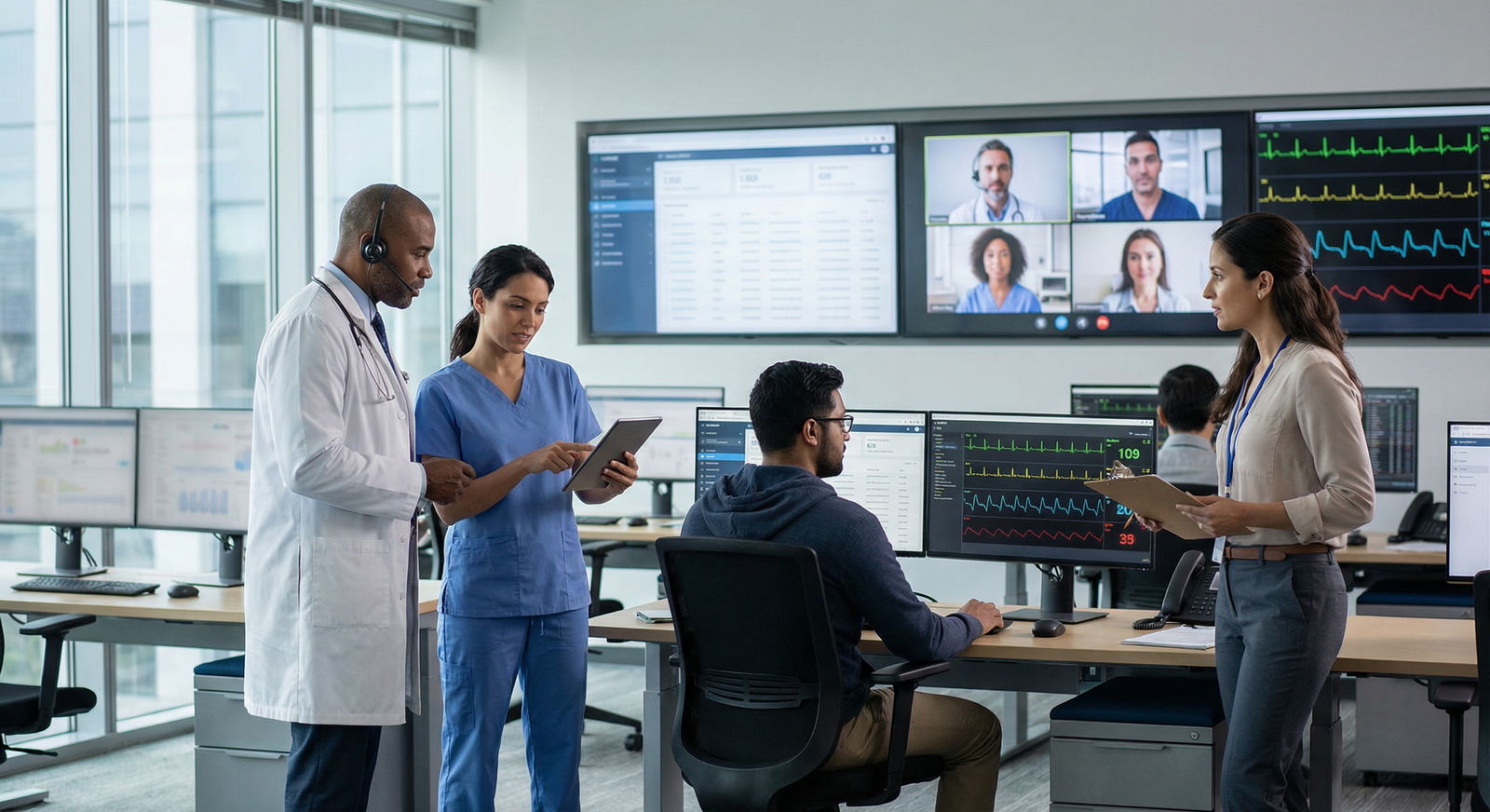
1. A Lasting Increase in Demand for Remote Care
The COVID-19 pandemic forced a rapid adoption of telemedicine across nearly every specialty. While in-person volumes have rebounded, patients and systems have recognized clear advantages of Telehealth:
- Patients value convenience, reduced travel, and decreased exposure risk.
- Health systems see improved access and better panel management.
- Payers increasingly support telemedicine when it demonstrably improves quality and lowers total cost of care.
Result: Many organizations now embed telemedicine targets into strategic plans and hire clinicians specifically for virtual services, including after-hours coverage, urgent care teletriage, and virtual chronic care management.
2. Flexibility and Lifestyle Benefits for Clinicians
For residents entering the job market, telemedicine can be a powerful tool to shape your career around your life:
- Customizable scheduling: Virtual shifts can often be stacked or distributed according to personal needs (e.g., part-time work, academic days, childcare).
- Work-from-anywhere opportunities: Some telehealth employers allow clinicians to practice from home, provided they are licensed in the patient’s state.
- Reduced commute and on-site stressors: Less time spent in traffic and fewer issues with physical clinic logistics.
Many physicians and advanced practice providers now blend in-person clinical duties with one or more telehealth roles, creating diversified income streams and buffering against local market volatility.
3. Economic Efficiency and New Reimbursement Models
Telemedicine can create efficiencies for both clinicians and systems:
- Lower overhead for independent practitioners or small groups (smaller physical footprint, reduced staffing needs).
- Ability to see more follow-ups or lower-acuity visits virtually, increasing panel capacity.
- Evolving reimbursement models, including:
- Parity laws in some states requiring equal payment for virtual and in-person visits
- RPM and chronic care management (CCM) codes
- Value-based care arrangements that reward outcomes rather than volume
For early-career clinicians, familiarity with these models makes you more attractive to employers who are redesigning care pathways around cost-effective, tech-enabled services.
4. Rapid Technological Advancements in Digital Health
Advances in broadband connectivity, cloud computing, and EHR integration have made telemedicine more reliable and user-friendly:
- Integrated EHR–telehealth platforms with one-click video initiation
- AI-assisted triage and documentation tools
- Standardized decision-support for chronic disease pathways
Healthcare systems increasingly need clinicians who are not only comfortable using these tools, but who can also give feedback, help optimize workflows, and participate in innovation initiatives.
Types of Telemedicine Careers Across the Care Team
Telemedicine isn’t just for physicians. It has created a broad spectrum of Healthcare Careers spanning clinical care, operations, technology, and leadership. Below are key roles that residents and new graduates might consider.
1. Telehealth Physician
Telehealth physicians deliver clinical care primarily or partially through virtual platforms. Typical responsibilities include:
- Conducting video or phone visits for acute and chronic conditions
- Reviewing home-monitoring data and adjusting treatment plans
- Providing after-hours or weekend coverage for health systems
- Participating in e-consult services as specialty support for PCPs
Common arenas:
- Virtual urgent care and primary care
- Tele-psychiatry, tele-neurology, tele-dermatology
- Postoperative and transitional care follow-up
- Night coverage for hospital-at-home or observation programs
For post-residency physicians, this can be a full-time job with a national telehealth company or a part-time adjunct to an on-site academic or community role.
2. Telehealth Nurse (RN, LPN/LVN)
Telehealth nurses are central to virtual care workflows:
- Performing remote triage and symptom assessment
- Providing chronic disease education and self-management coaching
- Monitoring RPM dashboards and escalating concerns to providers
- Coordinating follow-up appointments and ensuring care plan adherence
Experienced nurses may lead virtual care teams, train new staff in telehealth protocols, and develop patient education content tailored to digital platforms.
3. Tele-Therapist and Behavioral Health Specialists
Behavioral health has seen some of the most dramatic telehealth adoption:
- Psychiatrists, psychologists, social workers, and counselors provide therapy, medication management, and group sessions virtually.
- Tele-mental health improves access for rural populations, students, active-duty military, and patients with mobility or transportation challenges.
Residents in psychiatry or psychology trainees can position themselves for hybrid practices that combine in-person and remote care, including work with digital mental health startups.
4. Tele-Pharmacist
Tele-pharmacists support patients and prescribers through remote services such as:
- Medication counseling and adherence support via video or phone
- Comprehensive medication reviews for complex or polypharmacy patients
- Collaborative practice with physicians in chronic disease clinics
- Remote verification for rural or 24-hour pharmacies
Some health systems now integrate tele-pharmacy into hospital discharge planning and ambulatory chronic disease programs.
5. Health Informatics Specialist in Telemedicine
Health informatics professionals bridge clinical care, IT, and analytics:
- Designing and optimizing telemedicine platforms and workflows
- Ensuring interoperability between EHRs, RPM devices, and patient apps
- Building dashboards for quality metrics, utilization, and outcomes
- Supporting compliance with privacy and security regulations
Clinicians with interests in data science, quality improvement, or IT can transition into informatics roles that maintain partial clinical practice while driving Digital Health innovation.
6. Telehealth Coordinator and Program Manager
Telehealth coordinators oversee day-to-day operations:
- Scheduling and managing virtual clinics
- Training staff on telehealth tools and etiquette
- Troubleshooting technology issues and coordinating with IT
- Monitoring performance metrics, no-show rates, and patient satisfaction
At larger organizations, these roles may evolve into telehealth program manager, director of virtual care, or system-level leadership positions.
Essential Skills for Succeeding in Telemedicine Careers
While core clinical competencies remain foundational, virtual care requires additional skills and sensitivities that may not be fully taught in traditional training.
1. Technical Proficiency and Digital Literacy
You do not need to be an engineer, but you do need to be comfortable with:
- Video conferencing platforms and their security features
- EHR-integrated telehealth modules
- Remote monitoring dashboards and data interpretation
- Basic troubleshooting (audio, video, connectivity, device setup)
Actionable tip for residents:
Seek elective time or QI projects involving telehealth implementation. Document this experience on your CV — employers value clinicians who can help improve or scale digital programs.
2. Advanced Communication Skills in a Virtual Environment
Telemedicine compresses nonverbal cues and can amplify small lapses in communication. Effective clinicians:
- Speak clearly, slowly, and avoid jargon when possible
- Use deliberate eye contact by looking at the camera periodically
- Verbally summarize patient concerns and care plans
- Check for understanding more frequently than in person
Structured communication frameworks (e.g., teach-back method, SBAR) are especially useful in Remote Patient Care.
3. Digital Empathy and “Webside Manner”
Empathy must be conveyed through a screen:
- Start visits by acknowledging the virtual format (“I know it can be strange to meet this way; we’ll go step-by-step together.”).
- Attend to background, lighting, and camera angle to appear approachable and professional.
- Allow pauses and silence so patients feel heard, not rushed.
Training yourself to consciously project warmth and attentiveness through digital channels is a differentiator in telemedicine careers.
4. Clinical Judgment with Limited Physical Examination
Telemedicine often limits hands-on exams and point-of-care testing:
- Develop strategies for “proxy exams” (e.g., patient-assisted musculoskeletal maneuvers, parent-assisted pediatric assessments).
- Know clearly which conditions are appropriate for telehealth and when escalation to in-person or ED evaluation is mandatory.
- Use high-quality history-taking and available data (RPM, prior labs, images) to compensate for physical limitations.
Many systems provide telehealth-specific triage protocols; contribute to refining these as you gain experience.
5. Regulatory, Ethical, and Documentation Awareness
Telemedicine crosses multiple regulatory domains:
- Licensing: Typically must be licensed in the state where the patient is located during the visit.
- Reimbursement: Know payer-specific rules for telehealth vs. in-person billing, time-based codes, and RPM/CCM codes.
- Privacy and Security: Use HIPAA-compliant platforms; understand data-sharing and consent requirements.
- Documentation: Note modality (video/phone), patient location, and any limitations to exam or clinical decision-making.
For residents, exposure to these issues during training makes you more “practice-ready” for telemedicine roles.
Benefits of Telemedicine Careers for Healthcare Professionals
Telemedicine offers numerous advantages that align with the priorities of many early-career clinicians.
1. Improved Work–Life Balance and Burnout Prevention
Key lifestyle benefits include:
- Remote work options on some or all clinical days
- More control over shift timing and duration
- Reduced commuting and associated stress
- Potential for part-time or locum-style telehealth shifts alongside other professional activities (research, teaching, entrepreneurship)
For those juggling family responsibilities or dual-career households, Telemedicine can be an important tool for crafting a sustainable schedule.
2. Expanded Patient Reach and Impact
Telehealth dismantles geographic barriers:
- Care for patients in rural or underserved regions without relocating
- Provide culturally and linguistically concordant care across wide regions
- Participate in global health projects using teleconsultation and e-learning
Residents and fellows passionate about equity and access can leverage telehealth to reach populations who rarely see specialists locally.
3. Economic Advantages and Career Flexibility
While compensation varies widely by specialty and employer, telemedicine may offer:
- Competitive pay for high-volume virtual shifts
- Reduced personal expenses (transportation, clothing, meals)
- Opportunities to diversify income streams (e.g., part-time telepsychiatry plus academic appointment)
Additionally, developing telehealth expertise can open paths into leadership, consulting, and Digital Health startups.
4. Continuous Learning and Innovation
Telemedicine sits at the intersection of medicine, technology, and systems design:
- Exposure to cutting-edge tools such as AI triage, predictive analytics, and remote diagnostics
- Opportunities to collaborate with engineers, UX designers, and data scientists
- Involvement in pilot projects, research, and implementation science focused on virtual care models
For clinicians interested in innovation, telehealth can be an ideal platform for scholarly work and career advancement.
5. Enhanced Job Security in a Changing Healthcare Market
As health systems, payers, and patients increasingly expect remote options, clinicians experienced in telemedicine are better insulated against disruptions:
- Health crises (e.g., pandemics, natural disasters) that limit in-person care
- Market shifts that favor value-based, tech-enabled models
- Geographic shifts — licensure in multiple states can smooth transitions if you relocate
Remote Patient Care skills are becoming a core competency rather than a niche asset.
Challenges and Realities of Telemedicine Careers
Despite its advantages, telemedicine is not without drawbacks. Understanding these challenges helps you make informed career decisions and prepare proactively.
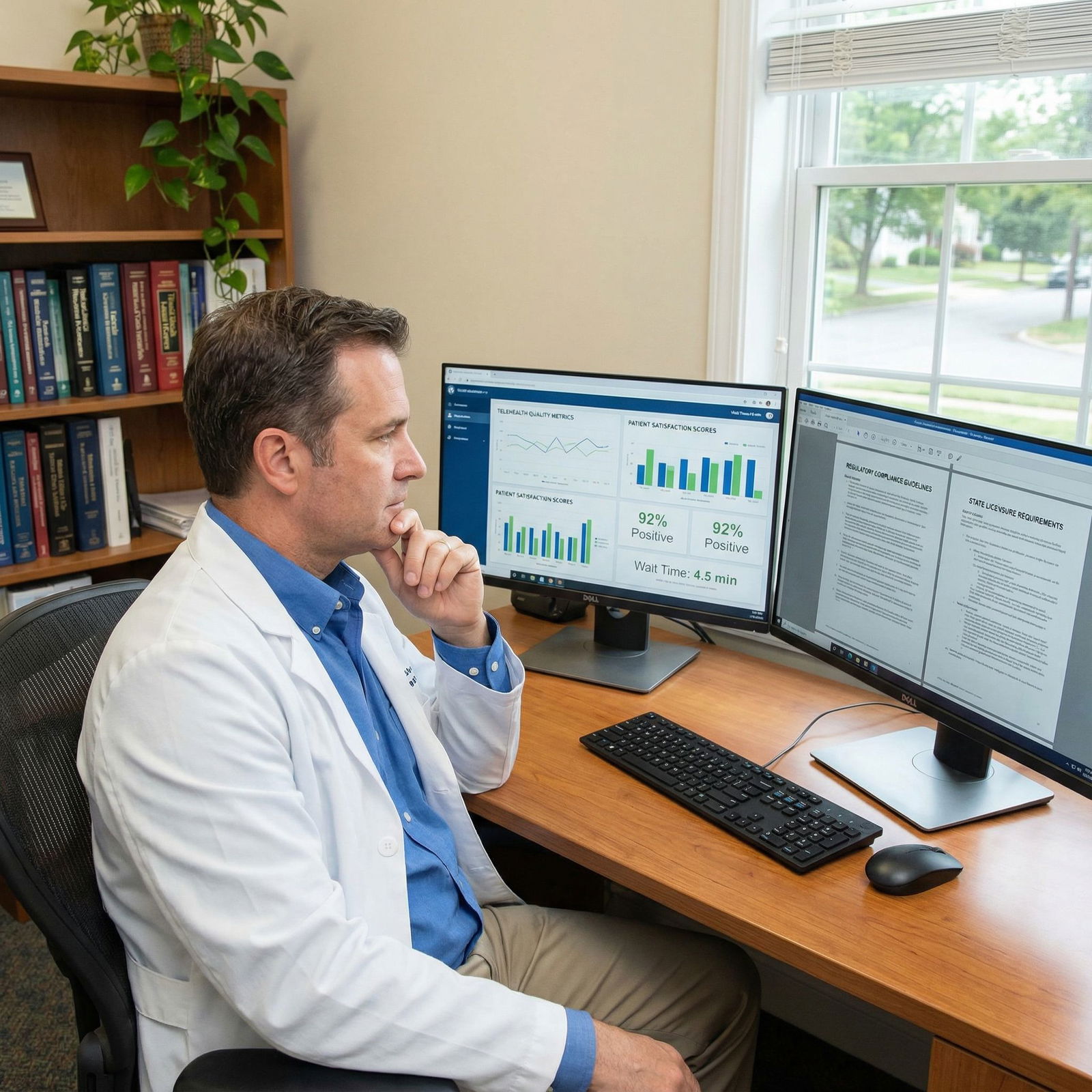
1. Building and Maintaining Patient Trust Virtually
Some patients may initially perceive virtual care as impersonal or lower quality:
- It may take extra effort to convey attentiveness and thoroughness.
- Clinicians must be explicit about what can and cannot be safely managed remotely.
- Patients with prior negative experiences may be skeptical of telehealth.
Over time, consistent, reliable virtual care can build strong trust—but it rarely happens automatically.
2. Technology Dependence and Digital Divide
Effective telemedicine depends on:
- Stable internet and device access
- Patient comfort with basic technology
- Reliable and user-friendly platforms
Populations most in need of healthcare (elderly, low-income, rural) may have limited access to broadband, devices, or tech literacy. Clinicians must:
- Adapt communication to varying levels of digital comfort
- Collaborate with organizations to provide tech support and alternative options
- Advocate for policies and infrastructure that reduce the digital divide
3. Complex and Evolving Regulatory Landscape
Regulation of telemedicine is highly dynamic:
- Emergency waivers during COVID-19 are sunsetting or being restructured.
- State-by-state variability in licensing, prescribing (especially controlled substances), and parity laws continues.
- Cross-border practice (including international telehealth) has additional legal layers.
Clinicians considering multi-state or national telehealth positions should:
- Maintain up-to-date knowledge of licensing requirements
- Work closely with compliance teams or legal counsel
- Routinely review organizational policies and payer updates
4. Limited Physical Exam and Diagnostic Constraints
Even with creative proxy exams, telemedicine cannot fully replace in-person evaluation:
- Some conditions require palpation, auscultation, or immediate testing.
- Imaging, labs, and procedures still require in-person visits.
- There is a risk of over- or under-triage if limitations are not clearly recognized.
Successful telemedicine clinicians develop safe triage thresholds, communicate them clearly to patients, and embrace hybrid models that coordinate seamlessly with brick-and-mortar facilities.
Positioning Yourself for a Telemedicine Career After Residency
For residents, fellows, and early-career professionals, telemedicine should be considered an integral part of career planning rather than a backup option.
Practical Steps to Get Started
Seek Telehealth Exposure During Training
- Electives in telemedicine clinics
- Quality improvement projects focused on virtual workflows
- Research on telehealth outcomes, access, or patient satisfaction
Highlight Relevant Skills on Your CV and in Interviews
- Comfort with EHR and digital platforms
- Experience with remote patient monitoring or patient portals
- Participation in telehealth initiatives, committees, or protocols
Network with Digital Health Leaders
- Join your institution’s virtual care task force or workgroup
- Engage with professional societies’ telehealth sections
- Attend telemedicine and Digital Health conferences or webinars
Consider Multi-State Licensure
- Particularly if you are interested in national telehealth companies
- Explore expedited licensure options (e.g., Interstate Medical Licensure Compact where available)
Taking these steps positions you competitively in a job market where hybrid and fully remote care roles are increasingly common.
Frequently Asked Questions About Telemedicine Careers
1. Which specialties are best suited for telemedicine careers?
Telemedicine is particularly well-developed in:
- Primary care, internal medicine, family medicine, pediatrics
- Psychiatry and other behavioral health fields
- Dermatology (especially asynchronous, image-based care)
- Endocrinology, cardiology, and pulmonary medicine using RPM
- Urgent care and low-acuity triage
Procedural specialties can also integrate telehealth for preoperative counseling, postoperative follow-up, and longitudinal management.
2. Can new graduates or residents work in telemedicine right away?
Yes, many telehealth employers hire new graduates, especially in primary care and behavioral health. However:
- Some require a minimum number of years of post-training experience.
- For complex or high-risk telehealth roles (e.g., tele-ICU), prior in-person experience is usually essential.
- Demonstrating telehealth exposure, digital literacy, and comfort with independent decision-making will strengthen your application.
3. How does compensation in telemedicine compare to traditional clinical roles?
Compensation varies by specialty, setting, and employment model:
- Some full-time telemedicine roles offer salaries comparable to or slightly below in-person positions, with lifestyle advantages.
- Others are volume-based (per-visit or per-hour) and can be lucrative in high-demand areas (e.g., telepsychiatry, off-hours urgent care).
- Hybrid roles may combine a base salary with productivity or telehealth-specific incentives.
When evaluating offers, consider benefits, schedule control, malpractice coverage, and long-term growth opportunities, not just hourly rates.
4. What should I look for when evaluating a telemedicine employer or contract?
Key factors include:
- Clinical scope and protocols: Are expectations clear about what is appropriate for virtual care?
- Technology and support: Is the platform reliable? Is there IT/helpdesk support for clinicians and patients?
- Licensure and credentialing: Who pays for licenses, DEA registration, and credentialing fees?
- Malpractice coverage: Does it explicitly cover telemedicine across all licensed states?
- Scheduling and productivity expectations: How are no-shows handled? What is the expected pace per hour?
- Quality metrics: How are clinicians evaluated (e.g., patient satisfaction, readmissions, adherence to protocols)?
5. Is telemedicine likely to remain a core part of healthcare in the future?
Yes. While specific regulations and reimbursement mechanisms will evolve, multiple trends support sustained growth:
- Patient demand for convenient, on-demand access to care
- Payer and system interest in cost-effective management of chronic disease
- Expansion of Remote Patient Care programs and hospital-at-home models
- Integration of telehealth into value-based care, population health, and Digital Health strategies
Telemedicine is now embedded in how health systems plan capacity, design care pathways, and invest in technology. Clinicians who embrace and help shape this evolution are well-positioned for resilient and impactful careers.
The rise of telemedicine careers represents a fundamental shift in how healthcare professionals can practice, grow, and lead. For residency graduates and early-career clinicians, fluency in Telemedicine and Digital Health is rapidly becoming as essential as any traditional clinical skill — and it offers powerful opportunities to align your career with your values, your lifestyle, and the evolving needs of patients everywhere.


