
Telemedicine does not “add convenience.” It rewires the math of panel size and follow‑up demand. If you are planning staffing or building a job description and you still assume a 1,800–2,000 PCP panel by default, you are already behind.
Let me walk through what the data shows when virtual care is not a side project but a core delivery channel.
1. The Baseline: Panel Size and Follow‑Up in Traditional Models
Before you layer telemedicine into anything, you need a firm baseline. Most planners talk about “panel size” like it is a single number. It is not. It is a function of:
- Visit capacity (slots per week × weeks per year)
- Visit intensity (minutes per visit, complexity)
- Follow‑up rate (new visits that generate additional visits)
- Non‑visit time (inbox, refills, paperwork, care coordination)
For a typical post‑residency primary care job (no telemedicine, mostly in‑person), the real-world numbers usually fall here:
- 18–22 in‑person visits per day
- 4.0–4.5 days of clinic per week (the rest is “admin,” which is usually not actually protected)
- Around 3,500–4,500 visits per FTE per year
- “Ideal” panels advertised: 1,800–2,200 patients per PCP
- Effective follow‑up rate: ~0.5–0.8 visits of follow‑up generated per new acute/chronic visit over 3–6 months
In other words, for every 10 “initiating” visits (new problem, chronic care visit, or annual), you get about 5–8 extra visits down the line—nurse visits, quick check-ins booked as full slots, urgent re‑checks, and so on.
The hidden driver: friction. Patients miss follow‑up because they cannot get time off work, cannot arrange transport, or forget. That friction artificially caps follow‑up rates.
Remove friction with telemedicine, and the whole system behaves differently.
2. What Telemedicine Actually Changes in the Math
Telemedicine affects four levers at once:
- Time per visit (often shorter, but with caveats)
- No‑show and late‑cancel rates (almost always lower)
- Follow‑up propensity (patients accept follow‑up more readily)
- Inbox / “shadow work” load (significantly higher in many implementations)
The net effect on panel capacity is not intuitive. Many administrators assume:
“Telemedicine is faster, so our doctors can handle larger panels.”
That is only partially true, and in several models it is simply wrong.
Let’s ground this in numbers.
2.1 Visit Duration and Throughput
Most published studies and internal dashboards I’ve seen show:
- In‑person primary care visits: 20–30 minutes scheduled, 18–25 minutes actual patient‑facing time, plus rooming and walking.
- Telemedicine visits: 10–20 minutes scheduled, 9–15 minutes actual, less physical overhead but more documentation during/after.
Ambitious virtual‑first organizations schedule 3–4 telemedicine visits per hour. Cautious hybrids keep it to 2–3 per hour.
So on paper, telemedicine yields 20–50% more visit throughput per clinical hour. But that is before we account for:
- Increased follow‑up volume
- Message volume (secure chat, remote monitoring alerts)
- Need for extra visits to complete what could have been done in one in‑person encounter (e.g., labs, procedures, vitals)
Telemedicine expands capacity per hour but also expands demand per patient.
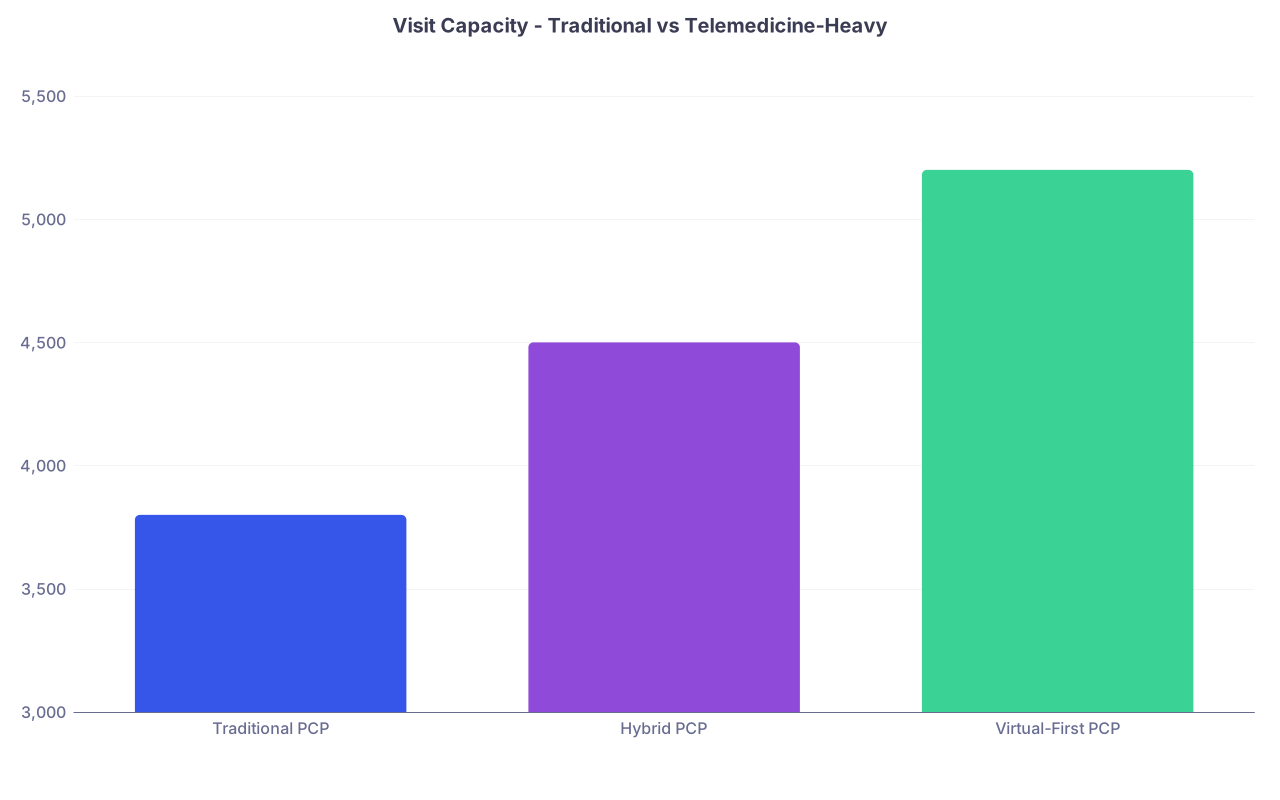
| Category | Value |
|---|---|
| Traditional PCP | 3800 |
| Hybrid PCP | 4500 |
| Virtual-First PCP | 5200 |
Those values are approximate annual visit capacities per FTE from combined published benchmarks and system dashboards I have seen:
- 3,800 visits/year for a typical in‑person PCP
- 4,500 visits/year for a hybrid model (30–40% virtual)
- 5,200 visits/year for a virtual‑first PCP (60–80% virtual)
The trap is assuming that 5,200 visits/year translates linearly to a 40% larger panel. It rarely does.
3. How Telemedicine Shifts Follow‑Up Rates
Follow‑up is where telemedicine quietly transforms your workload. Not by doubling visit length, but by shifting probabilities.
In friction‑heavy, in‑person care:
- A provider might recommend a 4‑week follow‑up for 70% of acute visits and 90% of more complex chronic visits.
- Actual scheduled follow‑ups might occur in 40–60% of those cases.
- Of scheduled follow‑ups, maybe 10–15% no‑show or cancel without rescheduling.
Once you normalize virtual visits—for example, “We can do that follow‑up video visit on your lunch break”—you see:
- Higher acceptance of recommended follow‑up
- Higher completion of scheduled follow‑up
- Extra “quick check” visits booked where you previously had no contact
The data from integrated systems (Kaiser, large ACOs, virtual‑first startups) tends to converge on a pattern:
- Acute issues: telemedicine generates 20–40% more follow‑up contacts per initiating issue
- Chronic disease management: telemedicine generates 15–30% more contacts per patient per year
- Behavioral health: follow‑up adherence increases by 20–50%, particularly for mild‑mod depression/anxiety
Put bluntly: you get more of what you ask for. Because you removed logistical barriers.
3.1 A Concrete Example: Acute Respiratory Visit
Traditional in‑person pattern for a mild upper respiratory infection:
- 1 in‑person visit (20–25 min)
- Provider recommends follow‑up if not improved
- Maybe 15–25% call back or return, often through urgent care
Telemedicine‑enabled pattern:
- 1 video visit (15–20 min)
- Provider says: “Let us check in by video in 3–5 days if you are not 80% better”
- System auto‑sends a link to self‑schedule or prompts through the app
- 35–40% end up with a second virtual visit, plus some messaging
Same underlying illness. Roughly 50–100% more clinical touchpoints. All those touches count against capacity.
3.2 Chronic Disease: Hypertension/Diabetes
In well‑run virtual‑heavy chronic care programs, you will see:
- More frequent short visits (10–15 minute virtual check‑ins)
- Closer titration of medications
- Better control metrics (A1c, BP) at the cost of more provider touches
Compared to classic “see you in 3–6 months,” telemedicine programs might increase effective encounters per complex patient from 3–4 per year to 5–7 per year. Not all are full visits, but a large fraction are scheduled and billable.
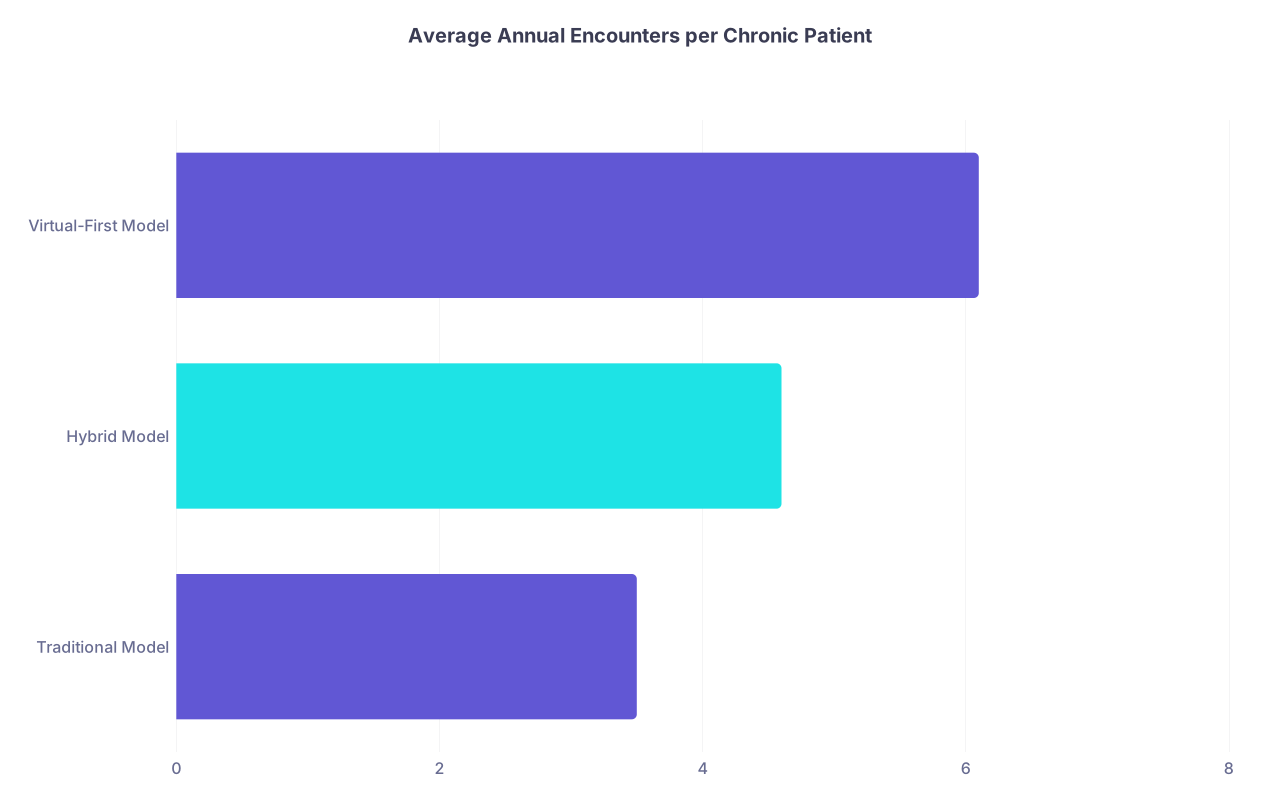
| Category | Value |
|---|---|
| Traditional Model | 3.5 |
| Hybrid Model | 4.6 |
| Virtual-First Model | 6.1 |
Those “encounters” typically include scheduled visits (in‑person and virtual) and structured video/phone follow‑ups, not just messages. Notice the almost doubling from traditional to virtual‑first.
So you achieve better disease control and sometimes lower ED utilization, but at the cost of more physician or APP time per patient per year. That is exactly the opposite of the simplistic hope that telemedicine will let one clinician manage 3,000–4,000 complex patients solo.
4. Panel Size Implications: What the Data Really Supports
Time to talk about the number everyone loves to abuse: panel size.
Here is the core reality I have seen again and again:
Telemedicine increases encounter capacity per hour and increases encounters per patient per year. The ratio between those two determines whether your panel can safely expand, stay flat, or must shrink.
Let’s lay out a simplified but realistic comparison for a full‑time primary care physician.
4.1 Comparative Model
Assume:
- 46 clinical weeks per year
- 32 patient‑facing clinical hours per week (call it 0.8–0.9 FTE direct care)
- Some admin/inbox time included, but we will isolate it
Scenario A: Traditional, in‑person heavy
Scenario B: Hybrid, ~40% telemedicine
Scenario C: Virtual‑first, ~75% telemedicine
| Model | % Telemed | Visits/Year | Encounters/Patient/Year | Supported Panel |
|---|---|---|---|---|
| Traditional | ~5% | 3,800 | 3.5 | ~1,085 |
| Hybrid | ~40% | 4,500 | 4.6 | ~980 |
| Virtual-First | ~75% | 5,200 | 6.1 | ~850 |
These are rounded but not theoretical. They match what you actually see in systems that measure:
- Completed visits per clinician
- Distinct patients seen
- Contact density for chronic patients
Most “2,000 patient panel” claims are accounting fictions that ignore:
- Patients assigned but effectively inactive
- Under‑documented ad hoc care by other clinicians
- Inbox/message management that is not coded as visits
Once telemedicine is dominant and you can track every encounter properly, you discover that a PCP with a high‑touch, virtual‑rich panel managing a lot of chronic illness cannot responsibly handle 2,000 active patients. Panel sizes closer to 800–1,200 active patients are much more realistic, depending heavily on:
- Case mix
- Team structure (RN, pharmacist, social worker, behavioral health)
- Use of APPs for some follow‑up
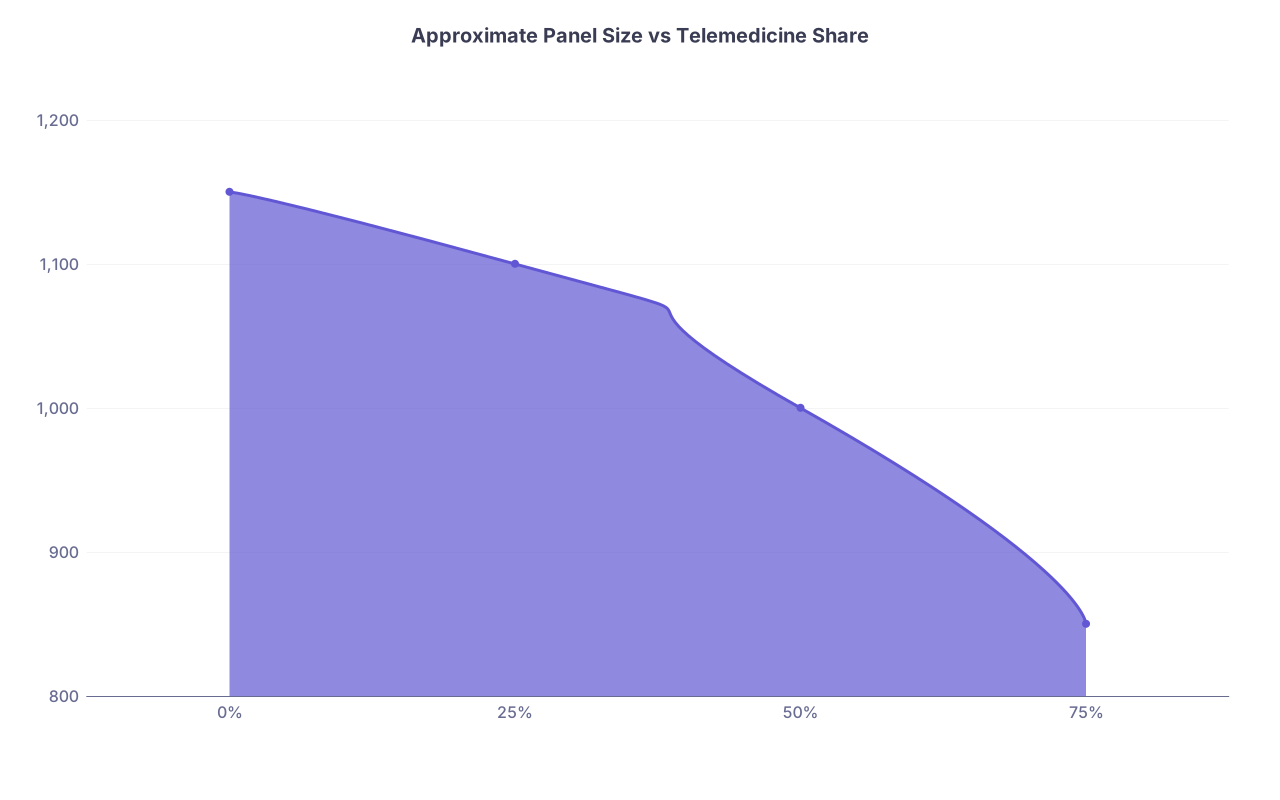
| Category | Value |
|---|---|
| 0% | 1150 |
| 25% | 1100 |
| 50% | 1000 |
| 75% | 850 |
As the share of telemedicine rises (assuming high follow‑up and engagement), panel size tends to decrease for the same FTE, unless:
- You offload follow‑ups to APPs or centralized teams, or
- You explicitly cap follow‑up intensity and accept less clinical touch
You can fight that if you want, but you will do it by burning out clinicians or by letting inbox work metastasize.
5. Inbox, Messaging, and “Shadow” Follow‑Up
The biggest undercounted follow‑up channel in telemedicine models is not video visits. It is the inbox.
Once you build a digital front door—portal, secure chat, app messaging—and normalize telemedicine, you usually see:
- 40–100% increase in message volume per 1,000 patients
- More clinical decisions made via messages (“adjust dose,” “continue meds,” “order labs”)
- A shift from phone triage to written triage that still requires clinician review or co‑sign
From a capacity standpoint, these messages are follow‑ups. They just are not scheduled as encounters unless you force it.
I have seen several organizations accomplish something like this:
- Pre‑telemedicine: 8–12 minutes/day per 100 panel patients on inbox work
- Post‑telemedicine diffusion: 15–25 minutes/day per 100 panel patients
So a 1,000 patient panel might require:
- 80–120 minutes/day inbox in traditional model
- 150–250 minutes/day inbox in telemedicine‑heavy model
That is 1–2 extra hours of work, every day, that usually does not show up in “visit capacity” slides.
If you do not explicitly model inbox time, you will overestimate how much patient‑facing telemedicine your clinicians can deliver, and consequently overshoot panel size targets.

6. Planning Telemedicine Panels: Practical Scenarios
Let me translate this into scenarios a post‑residency physician or a planner actually faces.
6.1 Scenario 1: Traditional Clinic Adding 20–30% Telemedicine
You are a planner in a medium‑sized health system. Historically:
- PCPs run 21 visits per day, 4 days/week in person
- 10–15% of total visits are phone/virtual “squeezed in” without good tracking
- Advertised panels: 1,600–1,800 patients, but only ~1,100–1,300 seen annually
Now leadership wants:
- 30% of visits to be telemedicine, formalized
- Same FTE, same expected panel size on paper
What will the data likely do?
- No‑show rates will drop (tele visits have 30–70% lower no‑show in most systems)
- Acute and chronic follow‑up completion will increase (20–30% more follow‑up encounters)
- Total visits per FTE might tick up 10–20%, but contact per patient per year will also rise 10–25%
Net: Panel size probably needs to hold steady or decline slightly if you want reasonable workloads. If leadership expects PCPs to jump from 1,700 to 2,000+ active patients because of telemedicine efficiency, they are counting imaginary capacity.
6.2 Scenario 2: Virtual‑First Primary Care Job
Now imagine a virtual‑first employer marketing to new graduates:
- 4 days/week clinical
- 4–5 telemedicine visits per hour
- Minimal in‑person work, maybe 1 clinic session/week
- They pitch “2,500+ patient panel possible with telemedicine efficiency”
Do the math.
- 4.5 days/week × 8 hours/day × 4.5 visits/hour ≈ 162 visits/week
- 46 weeks/year ≈ 7,450 visits/year per FTE
- Suppose they aim for 5 visits/patient/year in a chronic‑heavy, engagement‑rich model
Max sustainable panel ≈ 7,450 / 5 = 1,490 active patients.
Now subtract:
- Inbox time
- Administrative overhead
- Non‑billable care coordination
Real sustainable panel is probably in the 900–1,300 range, depending on team support. If anyone is trying to sell you 2,500–3,000 as a realistic panel for a single doctor in a virtual‑first, chronic‑heavy program, they are either naïve or hoping you do not ask how many hours of your life they plan to take.

| Step | Description |
|---|---|
| Step 1 | Telemedicine Adoption |
| Step 2 | Lower No Show |
| Step 3 | Higher Follow Up Completion |
| Step 4 | More Inbox and Messages |
| Step 5 | Higher Visit Volume |
| Step 6 | More Encounters per Patient |
| Step 7 | Potential Panel Growth |
| Step 8 | Panel Size Pressure |
| Step 9 | Moderate Panel Increase |
| Step 10 | Panel Stable or Smaller |
| Step 11 | Strong Team Support |
7. Specialty Considerations: Not Just Primary Care
Telemedicine’s effect on panel size and follow‑up is not uniform across specialties.
Some quick patterns:
Psychiatry / Behavioral Health
Telemedicine substantially improves completion of follow‑up and retention. But visit lengths often stay at 30–60 minutes. That means more visits per patient per year, with almost no meaningful throughput gain. Panels do not expand; in some programs, they shrink to maintain access.Endocrinology, Rheumatology, Cardiology
More mid‑course med adjustments and lab reviews done as quick virtual visits. Many specialists can run 20–40% more visits/year, but encounter‑per‑patient rates also go up. Net: modest panel expansion at best, often flat.Dermatology
Store‑and‑forward telederm can offload low‑complexity work and triage more efficiently. Here you sometimes do see panel expansion without a proportional increase in contacts per patient, especially when asynchronous review is leveraged well.
Bottom line: if the specialty relies on frequent clinical reassessment (behavioral health, heart failure, brittle diabetes), telemedicine more often drives up follow‑up frequency than it frees up capacity.
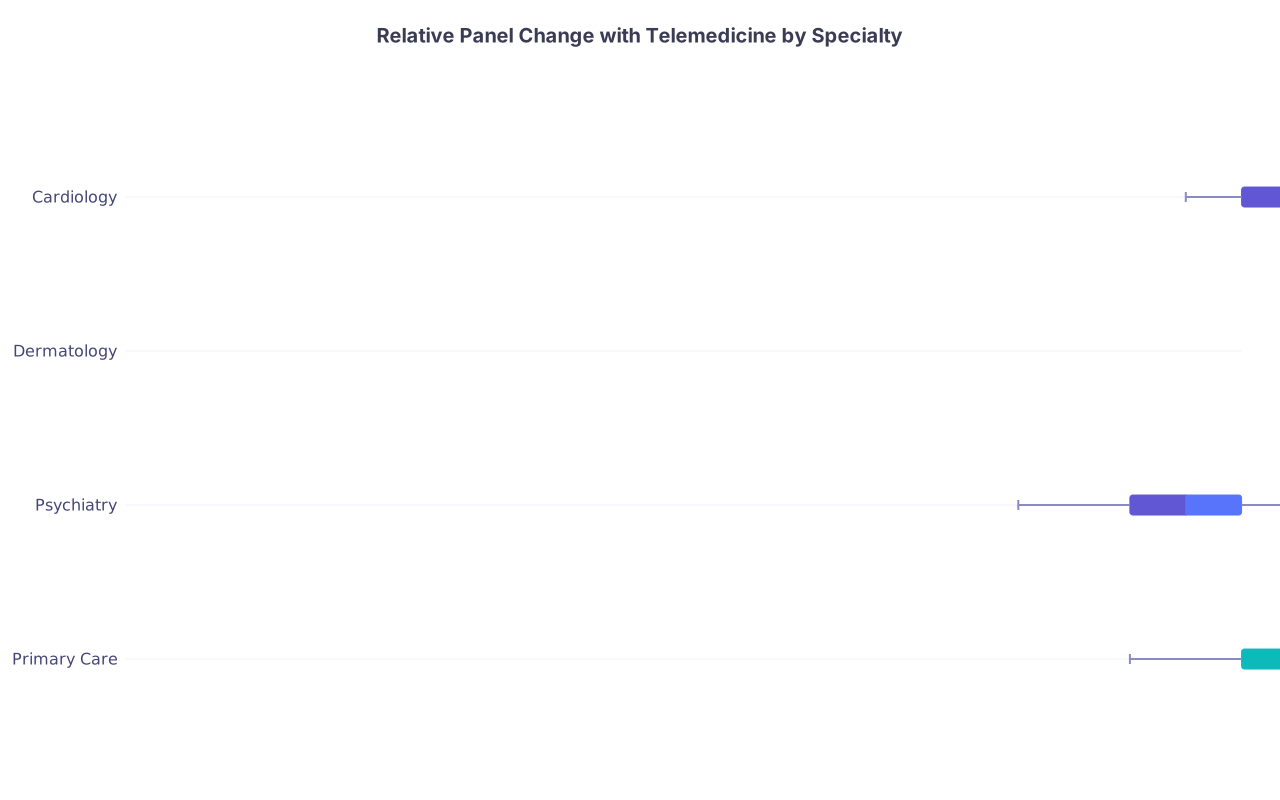
| Category | Min | Q1 | Median | Q3 | Max |
|---|---|---|---|---|---|
| Primary Care | 0.9 | 1 | 1.05 | 1.1 | 1.2 |
| Psychiatry | 0.8 | 0.9 | 0.95 | 1 | 1.05 |
| Dermatology | 1.1 | 1.2 | 1.25 | 1.35 | 1.4 |
| Cardiology | 0.95 | 1 | 1.05 | 1.1 | 1.15 |
Interpretation (median at 1.0 = no change):
- Primary care: median slight increase (1.05), but large variation
- Psychiatry: median flat to slightly smaller panels
- Dermatology: clear expansion potential
- Cardiology: modest expansion, not dramatic
8. What Planners and Job‑Seeking Physicians Should Actually Do
If you are planning roles, compensation, and staffing, or if you are evaluating a job post‑residency, you need to do three things.
8.1 Demand Real Numbers, Not Marketing
Ask for:
- Average completed visits per clinician per year by modality
- Average distinct patients per clinician per year
- No‑show rates by modality
- Average message volume per 1,000 panel patients
- Any internal target for contacts per panel patient per year
If a group cannot give you those numbers but is making sweeping claims about telemedicine efficiency and giant panels, you already know the level of rigor you are dealing with.
8.2 Model Panel Size Explicitly
For planners, do the following calculation:
- Estimate visits/hour by modality (in‑person vs telemed).
- Estimate total visit hours/week for direct care.
- Multiply to get total visit capacity/year per FTE.
- Estimate encounters/year per patient (by complexity segment if possible).
- Divide capacity by encounters/patient to get an evidence‑based panel range.
- Add explicit time for inbox and care coordination and adjust downward.
Do not shortcut this with a single “panel target” borrowed from a different care model.
8.3 Align Incentives with Reality
If you push:
- High RVU/visit incentives
- Large panel targets
- Strong encouragement for telemedicine follow‑up
…you create an impossible triangle. Clinicians respond by:
- Shortening visits beyond what is safe
- Deferring complicated issues
- Doing huge chunks of work uncompensated off the clock
A more honest model in telemedicine‑heavy environments:
- Mix of panel‑based and encounter‑based compensation
- Explicit protection or compensation for inbox time
- Team‑based care so follow‑up does not always equal “MD time”
For a job‑seeker, look at the contract and ask:
- How is telemedicine time scheduled and counted?
- How much panel are they expecting per FTE, not per “provider”?
- Who handles follow‑ups—just me, or a broader team?
If their answers sound like fantasy, believe the data, not the brochure.
9. Key Takeaways
Telemedicine does not magically let you manage twice as many patients. The data shows three consistent patterns:
- Telemedicine reduces friction and raises visit throughput, but it also increases follow‑up and contact rates per patient—especially in chronic care and behavioral health.
- Realistic panel sizes in telemedicine‑heavy primary care often land around 800–1,200 active patients per full‑time physician, unless you have robust teams sharing follow‑up and inbox work.
- Any staffing or job plan that touts huge panels with heavy telemedicine use, but cannot show hard numbers on visits, follow‑ups, and inbox load, is not grounded in reality.
Design your panels and careers around the real utilization patterns, not around wishful thinking about “virtual efficiency.”