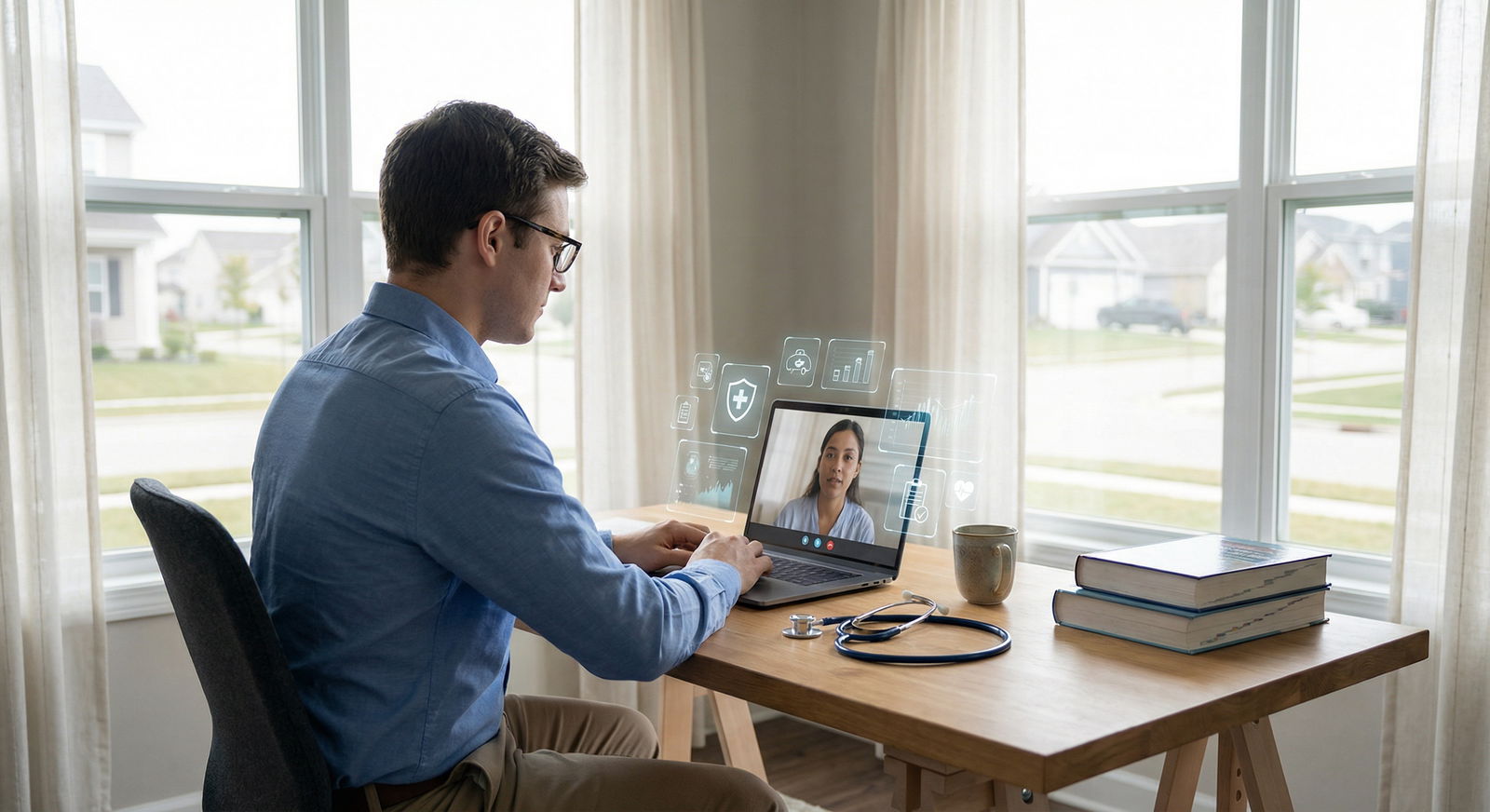
Introduction: Telemedicine Careers After Residency
Telemedicine has moved from a niche service to a mainstream pillar of modern healthcare, especially in the years following the COVID-19 pandemic. For many physicians, nurse practitioners, PAs, and other clinicians finishing residency or training, telemedicine is no longer just a side option—it’s a serious career pathway within the broader landscape of Healthcare Careers.
As Technology in Healthcare evolves, remote care models are expanding across specialties: primary care, urgent care, psychiatry, dermatology, cardiology follow-up, and more. Telemedicine offers new ways to practice medicine that emphasize Remote Work, flexibility, and patient access. At the same time, it brings distinct clinical, legal, and professional challenges.
If you’re considering telemedicine as part of your post‑residency plan—either full-time or as a supplement to in‑person practice—it’s crucial to understand both the advantages and drawbacks. This guide walks through what telemedicine entails, the real-world pros and cons of working in telemedicine, and practical points to consider before you commit.
What Is Telemedicine in Today’s Job Market?
Telemedicine refers to the remote diagnosis, management, and treatment of patients using telecommunications technology. It sits within the broader field of “telehealth,” which can also include remote patient monitoring, digital health apps, and asynchronous communications (e.g., store-and-forward dermatology).
For clinicians, a telemedicine job generally means you are delivering care without sharing physical space with the patient, using secure, HIPAA-compliant platforms. Depending on the employer or platform, this may involve:
- Real-time video visits
- Phone-only visits
- Secure messaging or chat
- Asynchronous review of images, labs, or questionnaires
- Remote monitoring dashboards
Typical Telemedicine Services Clinicians Provide
Telemedicine roles can vary widely, but common services include:
- Acute/urgent care: Minor infections, rashes, medication refills, basic triage
- Chronic disease management: Hypertension, diabetes, COPD, heart failure follow-up
- Behavioral and mental health: Psychiatry consults, therapy sessions, medication management
- Subspecialty follow-up: Cardiology, endocrinology, oncology survivorship care
- Postoperative and post-discharge check-ins: Wound checks, symptom monitoring
- Preventive care: Screening, counseling, medication management, lifestyle interventions
Key Technologies Used in Telemedicine
Understanding core technologies is essential if you’re planning a career in telemedicine:
Video Conferencing Platforms
Dedicated telehealth platforms (e.g., Doximity, Amwell, Teladoc, or health system–specific tools) support:- HD video/audio
- Built-in documentation templates
- E-prescribing
- Integration with EHRs Consumer tools (like Zoom or FaceTime) are typically not compliant unless configured properly with business associate agreements and security features.
Remote Patient Monitoring (RPM)
Devices and platforms that transmit real‑time or periodic data to clinicians, such as:- Blood pressure cuffs
- Continuous glucose monitors
- Pulse oximeters
- Scales for heart failure patients
RPM is often paired with telemedicine visits to adjust treatment plans based on objective data.
Mobile Health (mHealth) Apps and Portals
Apps and patient portals allow:- Symptom tracking and logs
- Secure messaging
- Appointment scheduling
- Automated reminders and education
Many telemedicine workflows depend on patients completing pre-visit questionnaires or uploading photos via these tools.
Clinical Decision Support and AI Tools
Increasingly, telemedicine platforms incorporate:- Triage algorithms
- Risk scores (e.g., for sepsis, cardiac risk)
- Draft visit notes or templates
These tools can support efficiency but also require oversight and clinical judgment.
For clinicians exiting residency, proficiency with these technologies is becoming a core competency, not an optional skill.

The Pros of Working in Telemedicine
Telemedicine careers can be incredibly attractive, particularly for early‑career clinicians navigating the POST_RESIDENCY_AND_JOB_MARKET phase. Below are major benefits, with practical implications and examples.
1. Flexibility and Remote Work Options
One of the strongest draws of telemedicine in Healthcare Careers is flexibility.
Location flexibility
- Many telemedicine roles are fully remote, allowing you to:
- Work from home or a private office
- Live in a lower cost-of-living area while serving patients in a different region
- Maintain continuity of work during relocations (e.g., partner’s job move, fellowship transitions)
Schedule flexibility
- Positions may offer:
- Part‑time, PRN, or per‑diem telemedicine shifts
- Evenings and weekends (often with pay differentials)
- The ability to stack shorter shifts around other commitments
- For new attendings, telemedicine can:
- Supplement income while building an in‑person practice
- Create time for academic projects, research, or exam prep
Actionable tip: When interviewing, ask specifically about schedule control (self-scheduling vs assigned shifts), minimum hours, and expectations for weekend/holiday coverage.
2. Increased Patient Access and Equity
Telemedicine is a powerful tool to improve Patient Access, especially for:
- Rural communities with limited specialists
- Patients with mobility challenges or chronic disabilities
- Individuals with limited transportation options or childcare
- Patients who cannot easily take time off work
Impact on outcomes
Better access can translate into:
- Earlier evaluation of concerning symptoms (e.g., chest pain triage, depression screening)
- More consistent follow-up for chronic conditions
- Reduced no‑show rates compared to in‑person visits
Examples:
- A psychiatrist licensed in multiple states provides care in areas with severe psychiatrist shortages.
- An endocrine specialist runs telemedicine clinics for diabetes management in rural regions where the nearest endocrinologist is hours away.
For many clinicians, this ability to serve underserved populations is a core reason to choose telemedicine.
3. More Efficient Use of Time
Telemedicine can streamline the clinical day in meaningful ways.
Reduced friction around each visit
- No physical exam room turnover
- Less time walking between rooms
- Shorter “check-in” processes
- Fewer late arrivals due to transportation or parking issues
Potential for higher visit density
- Shorter visits for focused problems
- Asynchronous reviews (e.g., reviewing photos or messages between live visits)
- Ability to manage documentation in real time during the visit
For example, a 4‑hour telemedicine block may allow you to see substantially more straightforward follow-up visits than a traditional clinic with rooming and turnover time.
Caveat: Efficiency gains depend on:
- Platform usability
- Support staff availability
- Whether you’re expected to handle all tech issues and intake yourself
4. Expanded Professional and Income Opportunities
As Technology in Healthcare evolves, telemedicine is opening up multiple career paths:
Clinical roles
- Full-time telemedicine physician or APP
- Part-time telepsychiatry, tele-urgent care, or tele-derm alongside brick‑and‑mortar practice
Non-clinical or hybrid roles
- Medical leadership within telehealth companies (medical director roles)
- Clinical content development (protocols, guidelines, triage pathways)
- Quality improvement and virtual care operations
- Health informatics roles optimizing telehealth workflows
Entrepreneurial paths
- Launching a virtual direct-pay or concierge practice
- Building niche telemedicine services (e.g., fertility coaching, obesity medicine, headache management)
- Partnering with digital health startups
Telemedicine experience on your CV signals adaptability, comfort with Technology in Healthcare, and familiarity with remote workflows—skills that are increasingly sought after by health systems, payers, and digital health companies.
5. Lower Overhead Costs and Practice Flexibility
For clinicians looking to build their own practice, telemedicine can dramatically reduce overhead:
- No or smaller physical office space
- Lower staffing needs (depending on your model)
- Reduced costs for waiting room, exam tables, and certain equipment
- Potentially simplified logistics (e.g., fewer issues with parking, cleaning, maintenance)
This can support:
- More competitive pricing for cash-pay patients
- Potential for better margins per visit
- Ability to pilot a practice model without major capital investment
Note: You still need to budget for:
- Telehealth platform fees
- EHR costs
- Malpractice coverage tailored to telemedicine
- Secure IT infrastructure and cybersecurity measures
The Cons and Challenges of Telemedicine Work
Despite its benefits, telemedicine brings real limitations and risks. Recognizing these early will help you decide whether and how to incorporate telehealth into your career.
1. Risk of Impersonal or Fragmented Patient Interactions
Delivering care through a screen can affect the therapeutic relationship.
Potential issues:
- Harder to read non-verbal cues or perform narrative-based assessments
- Difficulty building rapport with new patients in short telehealth visits
- Patients may perceive visits as more transactional or “quick fixes”
Clinical implications:
- Subtle signs of distress or cognitive impairment may be missed
- Sensitive conversations (e.g., breaking bad news, discussing prognosis) may feel less humane or more challenging
Strategies to mitigate:
- Use intentional communication techniques:
- Maintain eye contact with the camera, not just the screen
- Start with a brief personal check-in
- Explicitly validate patient concerns
- Reserve in-person visits for:
- Complex diagnostic evaluations
- Sensitive or high-stakes discussions when feasible
If relationship-centered care is your primary professional satisfaction driver, consider telemedicine as a complement rather than a complete replacement for in‑person practice.
2. Technological Barriers and Digital Divide
Telemedicine depends on reliable Technology in Healthcare, and not all patients—or clinicians—have equal access or familiarity.
Common challenges:
- Poor internet connectivity (especially in rural or low-income areas)
- Patients without smartphones, cameras, or private spaces
- Low digital literacy (difficulty downloading apps, logging in, or navigating portals)
- Audio/video glitches leading to frequent rescheduling or incomplete visits
These issues can:
- Frustrate patients and clinicians
- Disrupt clinic flow and productivity metrics
- Worsen access for those already disadvantaged (digital divide)
Clinician-facing challenges:
- Learning new platforms and EHR integrations
- Managing multiple systems (e.g., telehealth platform + EMR + messaging tool)
- Dealing with tech failures mid-visit
Actionable tips:
- Advocate for pre-visit tech checks or support staff to assist patients
- Have backup workflows (e.g., converting to phone visit when video fails, if allowed)
- Maintain a simple “telehealth script” to guide patients through common troubleshooting steps
3. Limited Scope of Care and Clinical Constraints
Telemedicine is powerful, but not universal.
Limitations include:
- Inability to perform a hands-on physical exam
- Challenges in evaluating:
- Abdominal pain
- Focal neurological deficits
- Certain musculoskeletal injuries
- Difficulty managing unstable or high-acuity conditions remotely
In some specialties, telemedicine works best for:
- Follow-up visits rather than initial diagnostic workups
- Medication management and results review
- Education and counseling
Clinical risk:
There is a real danger of over-reliance on telemedicine when in‑person evaluation is necessary. Risk management requires a low threshold for:
- Referring to urgent care or emergency department
- Scheduling an in-person exam
- Ordering adjunctive testing before final diagnosis
Best practice: Many systems adopt clear triage protocols that specify which symptoms or red flags mandate in-person assessment. When joining a telemedicine organization, review these carefully and ensure they align with your clinical judgment.
4. Compliance, Licensing, and Legal Complexity
Telemedicine is governed by a patchwork of regulations that frequently evolve.
Key legal and regulatory areas to understand:
Licensure
- In many jurisdictions, you must be licensed in the state where the patient is located at the time of the visit.
- Multi-state licensure (e.g., via the Interstate Medical Licensure Compact in the U.S.) is often necessary for national telemedicine roles.
Scope of practice
- Nurse practitioners, PAs, and other clinicians must follow state-specific regulations about supervision, collaboration, and prescriptive authority.
Privacy and security (e.g., HIPAA in the U.S.)
- Platforms must be compliant with privacy regulations.
- You must ensure a private, secure environment—no public spaces, care with screen sharing, and appropriate data handling.
Prescribing regulations
- Tele-prescribing controlled substances may be restricted or require an in‑person exam (e.g., Ryan Haight Act rules in the U.S., with evolving exceptions).
- State and federal regulations change; staying updated is essential.
Malpractice coverage
- Not all standard malpractice policies automatically cover telemedicine or multi-state practice.
- Tailored telehealth endorsements may be needed.
Non-compliance can lead to serious consequences: fines, licensure action, loss of privileges, or contract termination. A telemedicine career requires ongoing engagement with regulatory updates, especially as temporary pandemic-era flexibilities are revised or expire.
5. Work–Life Balance and Professional Boundaries
Although Remote Work is a key perk, telemedicine can blur boundaries between personal and professional life.
Common pitfalls:
- “Always on” culture with after-hours messages and expectations
- Taking calls from home without clear separation, leading to emotional spillover
- Difficulty “logging off” from a home-based office
- Pressure to pick up extra shifts because it’s easy to do from home
Over time, this can lead to burnout similar to, or worse than, traditional practice.
Boundary strategies:
- Create a dedicated workspace in your home with a door you can close.
- Set explicit start and end times for telemedicine sessions.
- Clarify with employers or patients:
- How after-hours messages are handled
- Whether asynchronous tasks count as work time
- What turnaround times are expected
If you’re early in your career, be especially mindful of workload creep—telemedicine can make it deceptively easy to overcommit.
Practical Considerations Before Choosing a Telemedicine Career
Beyond general pros and cons, there are career-planning details worth weighing, especially in the POST_RESIDENCY_AND_JOB_MARKET stage.
1. Fit With Your Specialty and Career Goals
Ask yourself:
Does my specialty lend itself well to remote care?
- High fit: psychiatry, primary care, endocrinology, dermatology (with store-and-forward), sleep medicine
- Moderate fit: cardiology follow-up, oncology survivorship, GI follow-up
- Limited fit: surgical specialties, emergency medicine (except for triage or post-op/ED follow-up roles)
Do I value:
- Longitudinal relationships (more feasible in ongoing tele-primary care models)
- High visit volumes and quick problem-focused encounters (common in tele-urgent care)
- Complex diagnostics (often best in-person with access to full testing)
Where do I want to be in 5–10 years?
- Leadership in virtual care?
- Hybrid role in academic medicine?
- Entrepreneur in digital health?
Your telemedicine involvement should support—not limit—long-term professional development.
2. Compensation, Productivity, and Benefits
Telemedicine compensation models vary:
- Hourly rate (with or without productivity bonuses)
- Per-visit payment (RVU-based or flat fee)
- Salary with telemedicine as part of job description
- Independent contractor arrangements (no benefits, higher nominal rates)
Clarify:
- Are you paid for no-shows or only completed visits?
- Are non-visit tasks (documentation, message management, forms) compensated?
- Are you considered an employee or contractor (impacting taxes, benefits, and job security)?
- How are malpractice, licensing fees, and equipment handled?
Compare telemedicine offers with in-person opportunities, accounting for:
- Lack of commute (time and cost savings)
- Potential need for your own health insurance and retirement planning (for 1099 roles)
- Long-term financial growth (e.g., partnership tracks, academic tracks vs pure telehealth)
3. Training, Onboarding, and Ongoing Support
Strong telemedicine employers invest in:
- Training on:
- Telehealth etiquette and best practices
- Platform navigation
- Tele-specific documentation and coding
- Clinical protocols and escalation pathways
- Tech support for both clinicians and patients
- Clear guidance on what conditions are appropriate for telehealth
If onboarding is minimal and expectations are unclear, that’s a red flag—especially for new graduates.
4. Professional Isolation and Team Culture
Remote work can limit informal support that residents are used to—no hallway curbside consults, no team rooms, fewer in‑person mentoring relationships.
Mitigation strategies:
Join telemedicine teams that:
- Offer regular case conferences
- Provide access to virtual colleagues (e.g., Slack channels, team chats, video huddles)
- Support mentorship or professional development
Maintain in‑person connections via:
- Local professional societies
- Hospital privileges (even part-time)
- Academic affiliations or teaching roles
A pure telemedicine path can be fulfilling, but you’ll need to be intentional about your professional community.
FAQs About Telemedicine Careers for Clinicians
1. Is telemedicine suitable for all healthcare professionals?
Not all roles or specialties translate equally well to telemedicine. It is particularly suitable for:
- Primary care physicians and APPs
- Psychiatrists and therapists
- Endocrinologists, rheumatologists, and other cognitive subspecialists
- Dermatologists using store-and-forward models
- Hospitalists doing post-discharge follow-up
Procedural specialties and acute care roles may have more limited options. Assess the proportion of your work that is cognitive, counseling-based, or follow-up oriented—those components are most amenable to telehealth.
2. What training or certifications do I need to practice telemedicine?
Requirements vary by country, state, and employer. Common expectations include:
- Active, unrestricted license in each state or region where your patients are located
- Standard board certification or eligibility in your specialty
- Familiarity with privacy regulations (e.g., HIPAA in the U.S.)
- Employer- or system-specific telehealth training
Optional but valuable:
- CME courses focused on telemedicine best practices
- Training in virtual communication skills and remote exam techniques
- Familiarity with digital health regulations and coding updates
Check with your state medical board and potential employers to confirm any telemedicine-specific requirements.
3. Can telemedicine replace traditional in-person healthcare completely?
Telemedicine is best viewed as a powerful complement—not a full replacement—for in‑person care. It works particularly well for:
- Follow-up visits
- Routine chronic disease management
- Behavioral health and counseling
- Triage and initial screening
However, many situations still require physical exams, procedures, imaging, or immediate intervention that cannot be safely provided remotely. Hybrid models that blend virtual and in-person care are likely to dominate the future.
4. Are there financial advantages to practicing telemedicine?
Telemedicine can be financially attractive, depending on the model:
- Lower overhead if you run your own telepractice
- Greater scheduling flexibility to pick up additional shifts
- Potential for competitive rates in high-demand specialties (e.g., psychiatry, urgent care)
However, consider:
- Variability in reimbursement between payers and states
- Potential unpaid time for documentation or asynchronous work
- Lack of traditional benefits for contractor roles
- Costs of multi-state licensure, malpractice, and telehealth infrastructure
Before committing, model your anticipated income, benefits, and expenses compared to traditional positions.
5. How do patients generally feel about telemedicine?
Overall, patient satisfaction with telemedicine is high, especially around:
- Convenience (no travel, less time off work)
- Faster access to care
- Comfort of being seen in their own environment
However:
- Some patients still prefer in-person visits, especially for sensitive issues or complex problems.
- Older adults or those with limited tech literacy may find telemedicine challenging unless they receive adequate support.
- Privacy concerns may arise if patients lack a private space at home.
Clinicians who explain telemedicine’s strengths and limits clearly, and who offer hybrid options when possible, tend to see strong engagement and satisfaction.
Telemedicine is reshaping Healthcare Careers in profound ways. As you plan your path after residency or advanced training, weigh these pros and cons against your clinical interests, personal priorities, and long-term goals. Used thoughtfully, telemedicine can enhance your practice, expand your reach, and create a more flexible, sustainable career—without losing sight of the human connection at the heart of medicine.