How Telemedicine Is Reshaping the Healthcare Job Market
Introduction: Telemedicine and the New Healthcare Workforce
Telemedicine has moved from the fringe to the forefront of healthcare delivery. What began as a convenient add‑on to in‑person care has become a core pillar of many health systems’ strategies—especially after the COVID‑19 pandemic accelerated adoption across every specialty.
For residents, fellows, and early‑career clinicians planning their next steps, this shift has major implications. Telemedicine is changing where care happens, how it’s delivered, and who is needed to deliver it. That means substantial new Healthcare Jobs, evolving expectations for traditional clinical roles, and a growing demand for hybrid skill sets that combine clinical expertise with digital fluency.
In this article, we’ll explore:
- What telemedicine actually encompasses in modern practice
- How it is driving Job Creation and new career paths
- Ways existing clinicians can adapt their careers to Remote Healthcare
- Core skills required to thrive in telehealth environments
- Practical challenges to integrating telemedicine into everyday work
- Actionable tips for residency graduates and early‑career providers planning their Career Development around telehealth
Understanding these dynamics is now essential for anyone planning to enter or advance in the healthcare job market.
What Is Telemedicine? Beyond Video Visits
Telemedicine today is much more than a video chat between a patient and a clinician. It’s an integrated system of technologies, workflows, and data streams that support care at a distance. As a subset of broader “digital health,” telemedicine typically includes:
Core Components of Telemedicine
Synchronous video consultations
Real‑time video visits between patients and clinicians (or between clinicians for e‑consults), used in primary care, psychiatry, dermatology, cardiology follow‑up, and more.Telephone and audio‑only visits
Especially important for patients without broadband access or devices capable of video; increasingly recognized for reimbursement in many regions.Mobile health (mHealth) applications
Smartphone apps for chronic disease management (e.g., diabetes, hypertension, heart failure), medication reminders, mental health support, and post‑operative monitoring.Remote patient monitoring (RPM)
Use of connected devices (e.g., blood pressure cuffs, glucometers, pulse oximeters, wearables) to collect physiologic data from patients at home and transmit it to care teams.Asynchronous telehealth (store‑and‑forward)
Secure messaging, email, image uploads, and e‑consult platforms (e.g., a PCP sends dermatology photos and a brief note for a specialist’s review).Virtual triage and chatbots
AI‑assisted tools that help patients navigate symptoms, determine urgency, and route to appropriate services (video visit, urgent care, ER, self‑care).
Benefits for Patients and Systems
Telemedicine is reshaping care delivery by:
- Expanding access to specialists for rural, remote, and underserved communities
- Reducing barriers like transportation, mobility limitations, work schedules, and childcare
- Supporting continuity of care for chronic disease management between in‑person visits
- Improving efficiency through better triage and targeted in‑person scheduling
- Boosting patient satisfaction by offering convenience and flexibility
From a workforce perspective, these changes are directly altering how clinicians work and what organizations look for when hiring.
Telemedicine and Job Creation: New and Evolving Roles
Telemedicine is not only transforming care delivery—it is actively creating new Healthcare Jobs and reshaping existing ones. Health systems, startups, and payers now hire specifically for telehealth‑focused roles that barely existed a decade ago.
1. Emerging Job Titles in Telehealth
These positions are growing rapidly across hospitals, health systems, and virtual‑first companies:
Telehealth Coordinators and Program Managers
What they do:
Oversee telemedicine service lines, coordinate scheduling and workflows, liaise between clinicians and IT, ensure regulatory compliance, and monitor quality metrics.Where they work:
Large hospital systems, academic centers, multi‑site practices, FQHCs, and telehealth platforms.Ideal background:
Nursing, practice management, health administration, or operations with strong digital literacy.
Health Informatics and Telehealth Analytics Specialists
What they do:
Use data analytics to optimize telehealth programs—tracking access, readmissions, patient outcomes, wait times, and utilization patterns. Help design decision support tools and dashboards.Where they work:
Health systems, payers, health IT vendors, remote monitoring companies, digital health startups.Ideal background:
Clinical degree plus training in biostatistics, informatics, or public health; or data scientists with healthcare experience.
Remote Patient Monitoring (RPM) Technicians and Nurses
What they do:
Set up home‑based devices, monitor incoming data streams, triage alerts, and escalate to clinicians when thresholds are exceeded. Educate patients on device use and respond to technical issues.Where they work:
Cardiology and pulmonology clinics, population health departments, home health agencies, RPM vendors.Ideal background:
Nursing, respiratory therapy, medical assisting, or allied health with strong comfort in technology.
Telepsychologists, Telepsychiatrists, and Teletherapists
What they do:
Provide mental health care entirely or predominantly through virtual platforms—individual therapy, medication management, group therapy, and collaborative care support.Where they work:
Virtual‑only behavioral health companies, health systems, university counseling centers, private practices, employer benefit programs.Ideal background:
Psychiatry, psychology, social work, psychiatric nursing—clinicians comfortable with rapport‑building via video and managing risk remotely.
Patient Navigators and Virtual Care Concierges
What they do:
Support patients in accessing telehealth services: technology onboarding, appointment reminders, portal registration, benefits verification, language support, and follow‑up coordination.Where they work:
Integrated delivery systems, primary care networks, community clinics, telehealth vendors.Ideal background:
Community health workers, medical assistants, social workers, or call‑center professionals with strong communication and cultural competence.
2. Expanded Opportunities for Existing Clinicians
Traditional clinical roles are also evolving as telemedicine becomes routine rather than exceptional.
Physicians: Hybrid and Remote Practice Models
Expanded patient reach:
Physicians can now see patients across wider geographic areas (within licensing constraints), including rural and underserved populations.Hybrid job structures:
Many roles now offer mixed schedules—e.g., three clinic days in person and two days of Remote Healthcare from home or a satellite site.Tele‑friendly specialties:
- Psychiatry and psychology
- Primary care (adult and pediatric)
- Endocrinology and diabetes management
- Rheumatology
- Dermatology (store‑and‑forward plus live video)
- Sleep medicine and some cardiology follow‑up
New career models:
Some physicians choose fully remote telehealth employment with national platforms, offering flexible hours, multiple state licenses, and work‑from‑home arrangements.
Nurses: Central to Virtual Care Delivery
Nurses are increasingly at the center of telemedicine workflows:
- Conducting initial virtual triage via phone or video
- Running nurse‑led telehealth follow‑up clinics (e.g., heart failure, anticoagulation, wound checks)
- Monitoring RPM dashboards and escalating clinical concerns
- Providing education and self‑management coaching via secure messaging or video
- Serving as telehealth super‑users who support other staff with platform navigation
For nurses, telemedicine expands career options—especially for those seeking roles that are less physically demanding or more schedule‑flexible (e.g., evenings from home).
Pharmacists: Expanding Into Remote Clinical Services
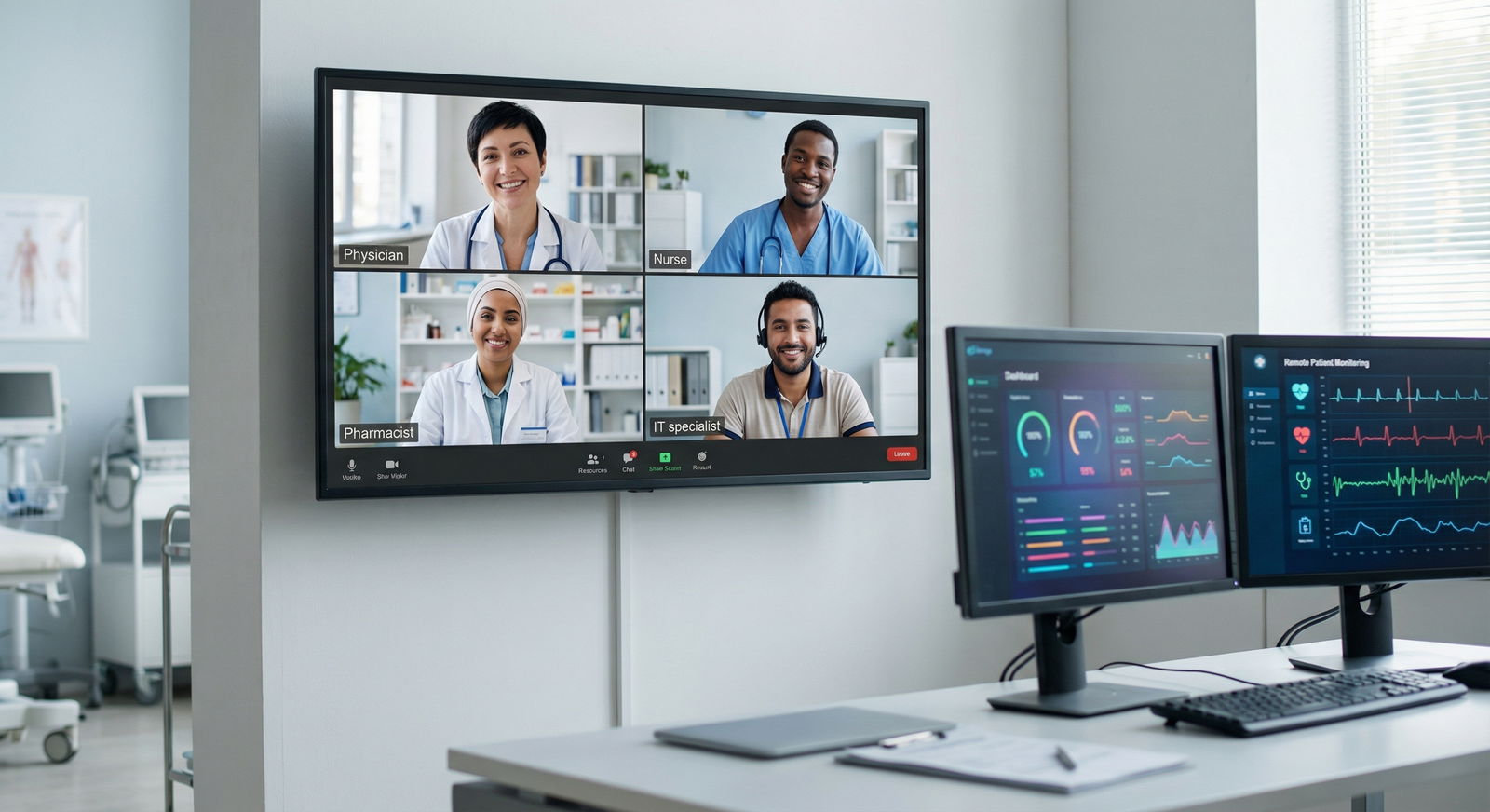
Telehealth has enabled pharmacists to become more visible members of the virtual care team:
- Offering medication therapy management via video or phone
- Participating in remote interdisciplinary rounds
- Delivering chronic disease medication counseling and adherence support
- Overseeing home delivery and mail‑order programs with telepharmacy check‑ins
- Supporting anticoagulation, HIV care, transplant medicine, and oncology through virtual consults
This creates new niches for clinical pharmacists interested in ambulatory care and population health roles that are not bound to a physical pharmacy.
Skills Needed to Thrive in Telehealth Careers
As telemedicine reshapes the healthcare job market, employers are prioritizing a blend of clinical excellence and digital fluency. Early‑career professionals can differentiate themselves by intentionally developing these competencies.
1. Technical Proficiency and Digital Literacy
- Comfort navigating video platforms, EHR‑integrated telehealth modules, and RPM dashboards
- Basic troubleshooting skills for audio, video, and connectivity problems
- Understanding of patient‑facing tools (portals, apps, remote devices) to provide effective support
- Familiarity with secure communication platforms and HIPAA‑compliant messaging
Actionable tip:
During residency or early practice, ask to be trained as a “super‑user” for your institution’s telehealth platform. This is an asset on your CV for telemedicine‑focused Healthcare Jobs.
2. Advanced Communication Skills for Virtual Encounters
Virtual consultations require adjustments to traditional bedside manner:
- More deliberate eye contact (looking at the camera rather than only the screen)
- Clear verbal explanations, since nonverbal cues may be reduced or distorted
- Structured visit flow to compensate for lack of physical presence
- Frequent summarizing and “teach‑back” to ensure understanding
- Tactful management of interruptions, distractions, or multi‑tasking on the patient’s side
Practice strategy:
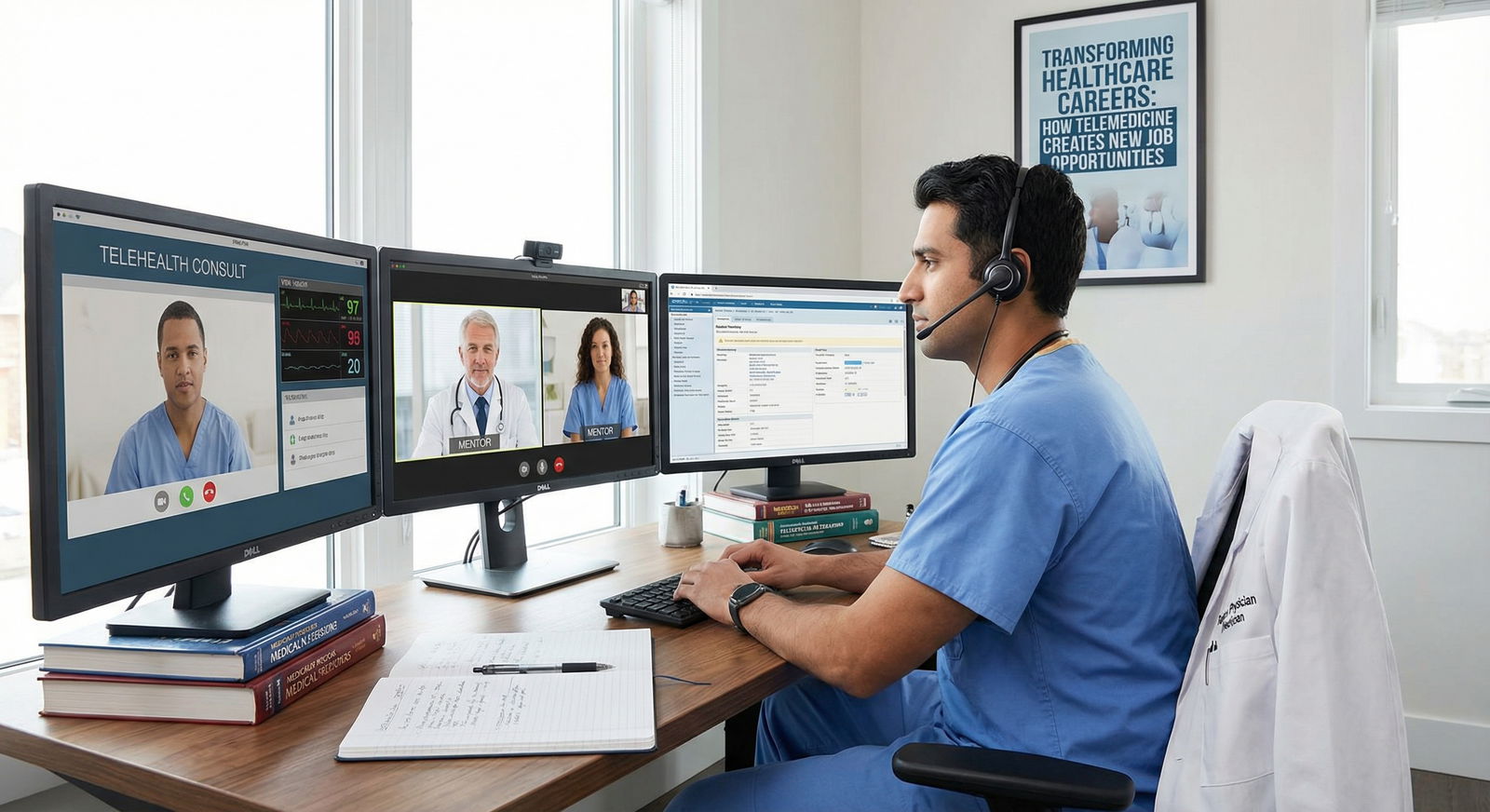
Record mock telemedicine encounters (with consent) and review with a mentor to refine virtual communication style.
3. Data Management, Analytics, and Privacy Awareness
- Understanding how telehealth data integrates with the EHR and population health tools
- Interpreting trends from RPM devices rather than relying on single measurements
- Awareness of data privacy, cybersecurity, and regulatory frameworks (HIPAA, GDPR where applicable)
- Ability to use dashboards for proactive outreach (e.g., high‑risk patient lists, abnormal values)
Clinicians who can use telehealth data to drive proactive, population‑level interventions are increasingly valued in leadership and quality roles.
4. Adaptability, Systems Thinking, and Continuous Learning
Digital health evolves rapidly. New platforms, AI decision support tools, and reimbursement rules appear yearly. To stay relevant, telehealth professionals must:
- Embrace iterative changes in workflows and technology
- Participate in ongoing training and quality improvement initiatives
- Think in systems: how does telehealth integrate with in‑person care, lab workflows, imaging, and community resources?
- Remain open to new care models (e.g., hospital‑at‑home, virtual urgent care, digital front doors)
Consider formal coursework or certificates in health informatics, quality improvement, or telemedicine operations as part of your Career Development plan.
5. Cultural Competence and Digital Equity Awareness
Telemedicine dissolves geographic barriers but can exacerbate inequities if not thoughtfully implemented. Cultural and digital competence are essential:
- Awareness of language needs and integration of interpreters into virtual visits
- Understanding that not all patients have smartphones, stable broadband, or digital literacy
- Adapting communication style for cultural norms, health beliefs, and generational differences
- Advocating for device lending programs, community Wi‑Fi access, and alternative visit types (phone, community‑based hubs)
Being able to deliver equitable remote healthcare is an increasingly important professional competency.
Challenges in Telemedicine Workforce Integration
Despite its promise, telemedicine introduces real challenges for clinicians, health systems, and patients. Understanding these early in your career can help you navigate and influence future policy and practice.
1. Regulatory, Licensing, and Reimbursement Complexity
State licensing:
In many countries (including the U.S.), clinicians must hold a license in the state where the patient is located. Interstate compacts have helped but do not fully solve mobility issues.Scope of practice:
Rules governing what nurses, PAs, pharmacists, and other professionals can do via telehealth vary widely across jurisdictions.Reimbursement variability:
Payment parity for telehealth vs. in‑person services differs among payers and regions. Some temporary pandemic waivers are still in flux.Legal risk and malpractice:
Standards of care for telehealth are still evolving in case law; documentation and clinical judgment require special care when exams are limited.
Career impact:
For telemedicine‑heavy roles, multi‑state licensure, familiarity with telehealth regulations, and experience documenting virtual encounters are strong differentiators.
2. Technology Barriers and the Digital Divide
Not all patients can easily access virtual care:
- Limited broadband or unstable internet connections
- Lack of compatible devices (smartphones, tablets, computers)
- Low digital literacy or discomfort with technology
- Privacy concerns for patients in crowded homes or shared living spaces
Clinicians often need to:
- Offer alternative visit formats (e.g., telephone instead of video)
- Allocate more time for patient onboarding and technology coaching
- Advocate for institutional investments in patient‑facing tech support
3. Patient and Provider Acceptance
Patient hesitancy:
Some patients doubt the quality of virtual care, particularly for physical exam‑heavy specialties. Others worry about privacy or simply prefer face‑to‑face interactions.Provider fatigue and skepticism:
Clinicians may experience “Zoom fatigue,” workflow frustration, or concerns about reduced diagnostic confidence without hands‑on evaluation.Professional identity:
Some providers worry that telehealth diminishes the “human touch” or that virtual‑only roles will feel disconnected from team‑based care.
Addressing these concerns requires thoughtful design of hybrid models, strong institutional support, and attention to clinician well‑being in virtual environments.
Case Study: Telemedicine Adoption During the COVID‑19 Pandemic
The COVID‑19 pandemic provided a real‑time stress test of telemedicine’s capacity and workforce implications.
Rapid Scale‑Up and Workforce Shifts
During early 2020:
- Many health systems reported >1,000% increases in telehealth visits within weeks.
- Ambulatory clinics converted entire schedules to virtual formats almost overnight.
- Elective in‑person visits were postponed; telehealth became the main avenue for routine care.
This abrupt transition led to:
Hiring surges for:
- Telehealth navigators and patient support staff
- IT help desk professionals specializing in virtual care
- Contract telehealth physicians and advanced practice providers
Redeployment of existing staff:
- Outpatient nurses moved into tele‑triage and RPM oversight
- Specialists conducted virtual consults across hospital systems, reducing unnecessary transfers or admissions
Policy flexibility:
- Temporary waivers for cross‑state practice in some regions
- Expanded coverage for audio‑only visits
- Relaxed site‑of‑service rules, enabling home‑based care reimbursement
Lasting Impact on the Job Market
While some emergency measures have been rolled back, several shifts appear durable:
- Patients and clinicians now expect telemedicine options as part of standard care.
- Many organizations have formalized hybrid telehealth‑in‑person staffing models.
- Large virtual‑first companies (e.g., telehealth platforms and digital health startups) have expanded recruitment for remote clinicians, informaticians, and operations roles.
Companies like Teladoc Health reported dramatic volume growth (e.g., 92% increase in telehealth visits from 2019 to 2020), signaling long‑term investor and employer interest. This growth has translated into stable pipelines of remote and hybrid positions, including night and weekend coverage roles that fit specific lifestyle or scheduling needs.
For residents and recent graduates, the key takeaway is that comfort with telehealth is no longer a “nice‑to‑have”—it is a core competency that will influence hiring decisions, career flexibility, and leadership opportunities.
Practical Career Development Tips for Residents and New Graduates
To align your Career Development with the evolving telemedicine landscape, consider the following concrete steps:
During Training (Medical School, Residency, Fellowship)
Seek telehealth electives or rotations
Ask program leadership about virtual care experiences: outpatient teleclinics, RPM programs, or digital health quality projects.Volunteer for telehealth QI or workflow projects
Help refine virtual visit templates, patient education materials, or triage algorithms; these are excellent CV items.Document telehealth competencies
Track your number and type of virtual visits, exposure to RPM, and participation in digital tools; mention these in applications and interviews.
Early Career: Building a Telehealth‑Ready CV
Highlight:
- Experience with specific EHRs and telehealth platforms
- Involvement in digital health initiatives (e.g., protocol design, data analysis)
- Completed CME or certificates in telemedicine, informatics, or population health
Consider dual roles:
- Combining in‑person clinical practice with part‑time telehealth work
- Exploring remote consulting, second‑opinion services, or after‑hours coverage
Long‑Term Strategy: Positioning for Leadership
- Pursue formal education (MPH, MHA, or certificate programs) with a focus on digital health or health systems innovation.
- Get involved in telehealth committees or working groups within your institution or professional societies.
- Develop expertise in a niche area (e.g., telebehavioral health, hospital‑at‑home, pediatric telemedicine, rural virtual care networks).
Professionals who can bridge clinical insight with virtual care operations will be particularly well‑positioned for leadership roles in the next decade.
FAQ: Telemedicine Careers and the Evolving Healthcare Job Market
Q1: What specific Healthcare Jobs are most likely to grow because of telemedicine?
A1: Roles with strong growth potential include telehealth coordinators and program managers, remote patient monitoring nurses and technicians, virtual triage nurses, telepsychiatrists and teletherapists, health informatics and telehealth analytics specialists, and patient navigators for virtual care. In addition, many traditional clinician roles (physicians, NPs, PAs, pharmacists) now include telehealth components or fully remote positions.
Q2: How can I make myself competitive for telemedicine‑focused roles after residency or fellowship?
A2: Emphasize your experience with virtual visits, comfort using EHRs and telehealth platforms, and any participation in digital health quality improvement projects. Seek CME or certificate courses in telemedicine, telepsychiatry, or health informatics. Where possible, gain exposure to remote patient monitoring, asynchronous e‑consults, and population health tools. In interviews, discuss concrete examples of how you adapted clinical workflows to virtual settings.
Q3: Are fully remote telemedicine jobs sustainable long‑term, or will most roles be hybrid?
A3: Both models are likely to coexist. Behavioral health, primary care follow‑up, chronic disease management, and some specialty consults can be effectively delivered remotely, supporting fully virtual roles. However, many health systems are prioritizing hybrid models that combine in‑person and virtual care to maintain comprehensive physical exams, procedural services, and team integration. Your optimal balance will depend on specialty, personal preferences, and regional regulations.
Q4: What are the main legal and regulatory issues I should understand before taking a telemedicine job?
A4: Key areas include state or regional licensing requirements (especially if seeing patients across borders), scope‑of‑practice rules for your profession, telehealth reimbursement policies for major payers in your region, and malpractice coverage for virtual care. You should also understand privacy laws (e.g., HIPAA) and how they apply to video, messaging, and remote monitoring data. Many employers provide training, but independent awareness is essential.
Q5: How can telemedicine be used to reduce, rather than worsen, healthcare inequities?
A5: Telemedicine can improve access for rural, mobility‑limited, and underserved patients, but only if digital barriers are addressed. Strategies include offering phone visits as alternatives to video when needed, partnering with community organizations to provide device and Wi‑Fi access, integrating interpreters into virtual workflows, designing culturally tailored patient education, and monitoring equity metrics (e.g., telehealth utilization by language, income, or geography). Clinicians who advocate for these measures and adapt their communication styles are key to ensuring equitable Remote Healthcare.
Telemedicine is no longer a temporary solution—it is a structural force reshaping how care is delivered and how healthcare careers evolve. Understanding its implications for Job Creation, practice models, and required skills will help you navigate the post‑residency job market with confidence and position yourself at the forefront of modern care.