
What if the only thing standing between you and a flexible, high-paying telemedicine role is… a terrible onboarding process you accidentally flunk?
I’ve watched solid clinicians—smart internists, ER docs, seasoned family physicians—get quietly dropped from telemedicine rosters before they ever saw their first patient. Not because they were unsafe. Not because they were incompetent.
Because they underestimated onboarding.
Telemedicine companies will never send you a nice email saying, “You failed onboarding.” They just stop moving you forward, cancel your orientation slot, or “pause your application for now.” Same result: you’re out.
Let’s walk through the mistakes that kill telemedicine opportunities—and how to avoid being that story.
1. Misreading the Power Dynamics: “It’s Just a Side Gig, Right?”
The first and most common mistake: treating telemedicine onboarding like a casual moonlighting signup instead of a full-blown credentialing and compliance process.
You think:
- “It’s remote urgent care, how serious can it be?”
- “They’re desperate for docs; they’ll work with me.”
- “I’ll figure it out as I go.”
They think:
- “We can replace you with 50 other board-certified physicians… by Friday.”
Telemedicine platforms, especially the bigger players (Teladoc, Amwell, MDLive, etc.), have:
- Corporate legal teams
- Strict payer and state compliance requirements
- Standardized workflows that do not care how good you are in person
If you walk in with a “whatever, it’s just online visits” energy, they notice. And you get sorted into the pile of “too much effort, not worth it.”
Red flags you’re making this mistake:
- You skim onboarding emails instead of reading every line
- You assume you can “clarify later” instead of asking before deadlines
- You think of them as a locums agency instead of a regulated care platform
Treat telemedicine onboarding like credentialing for a hospital you actually want. Because functionally, that’s exactly what it is.
2. Documentation Sloppiness: Death by a Thousand Incomplete Forms
The fastest way to quietly fail onboarding? Sloppy paperwork.
I’ve seen physicians stall out for months because they:
- Uploaded a blurry license copy
- Missed one malpractice certificate from three jobs ago
- Ignored a request for clarification on one minor malpractice claim
- Entered inconsistent employment dates across forms
The onboarding team will not chase you indefinitely. They’ll send a couple of reminders, then move on to the next applicant who replies in 24 hours with clean documents.
| Area | High-Risk Habit | Safe Habit |
|---|---|---|
| License copies | Cropped photos, glare, partial pages | Full-page, clear PDFs |
| Work history | Rough guesses, inconsistent dates | Matched to CV + old contracts/paystubs |
| Malpractice | “N/A” for everything | Full disclosure with brief explanations |
| Response time | Reply in 5–10 days | Reply within 24–48 hours |
Don’t make these errors:
- Uploading photos from your phone without checking readability
- Leaving “explain gaps” sections empty
- Hiding malpractice history (“It was minor, they don’t need to know” – wrong)
- Reusing an old CV with out-of-date info that doesn’t match your applications
If anything on your application forces them to think, “We need to verify this,” you just slowed yourself way down. Enough slowdowns and you’re effectively dead in the water.
3. Underestimating Tech Requirements: “I’ll Just Use My Laptop”
Telemedicine is medicine plus IT. If you treat the tech as an afterthought, you will look unprofessional before you ever see a patient.
I’ve watched onboarding sessions where half the cohort can’t:
- Get their audio to work
- Use the screen-share function
- Log in with the correct browser
- Maintain a stable connection for a 60-minute orientation
Those people don’t get priority shifts or fast credentialing. Sometimes, they just don’t get invited back.
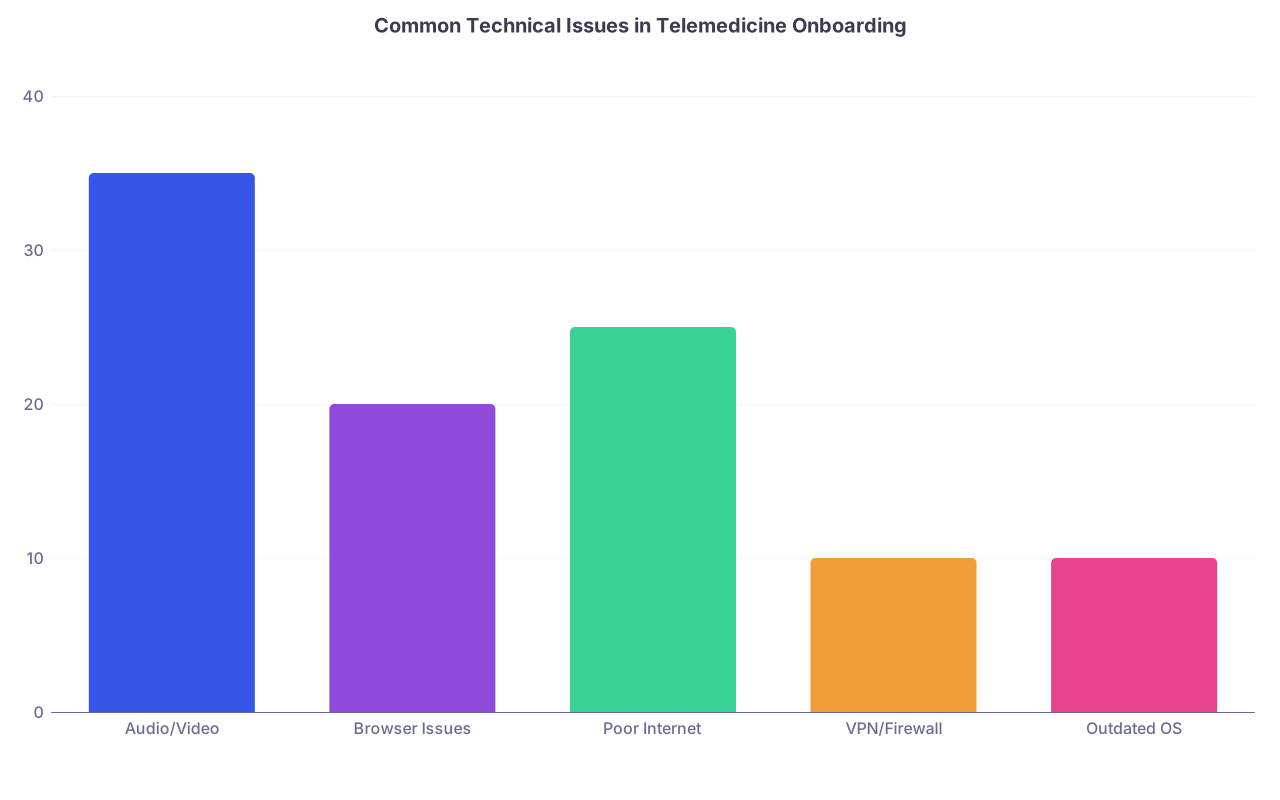
| Category | Value |
|---|---|
| Audio/Video | 35 |
| Browser Issues | 20 |
| Poor Internet | 25 |
| VPN/Firewall | 10 |
| Outdated OS | 10 |
Bare minimum tech you actually need (not the sugar-coated version in the brochure):
- Wired internet connection, not just “good Wi-Fi.” Telemedicine platforms hate unstable connections.
- Decent camera and microphone. Built-in laptop mic in a noisy kitchen? That’s how you get flagged as “unprofessional experience.”
- Updated browser and OS. Old MacOS or an un-updated Chrome version will break their video platform.
- Quiet, private space. “I’ll see a few patients from the call room” is a compliance nightmare.
Big mistake: waiting until 5 minutes before your first orientation session to test the platform.
Instead:
- Log in at least 2–3 days before
- Run their official system check if they provide one
- Do a test video call with a friend using the same setup you plan to use for real visits
If you can’t get through an hour on Zoom or their proprietary platform without glitches, they notice. They don’t want that headache scaled to 30 patients a day.
4. Not Respecting State Licensing & Credentialing Timelines
Another silent killer: pretending state licensing is just a formality you’ll “take care of as we go.”
Telemedicine is extremely sensitive to:
- State-specific licensing
- Prescribing laws (especially controlled substances)
- Telehealth-specific rules (e.g., audio-only vs video, initial visit constraints)
Many physicians blow themselves up by:
- Applying to programs in states where they “plan to apply for a license later”
- Underestimating how long new state licenses actually take
- Assuming the employer will “handle all of that” (some help, many don’t)
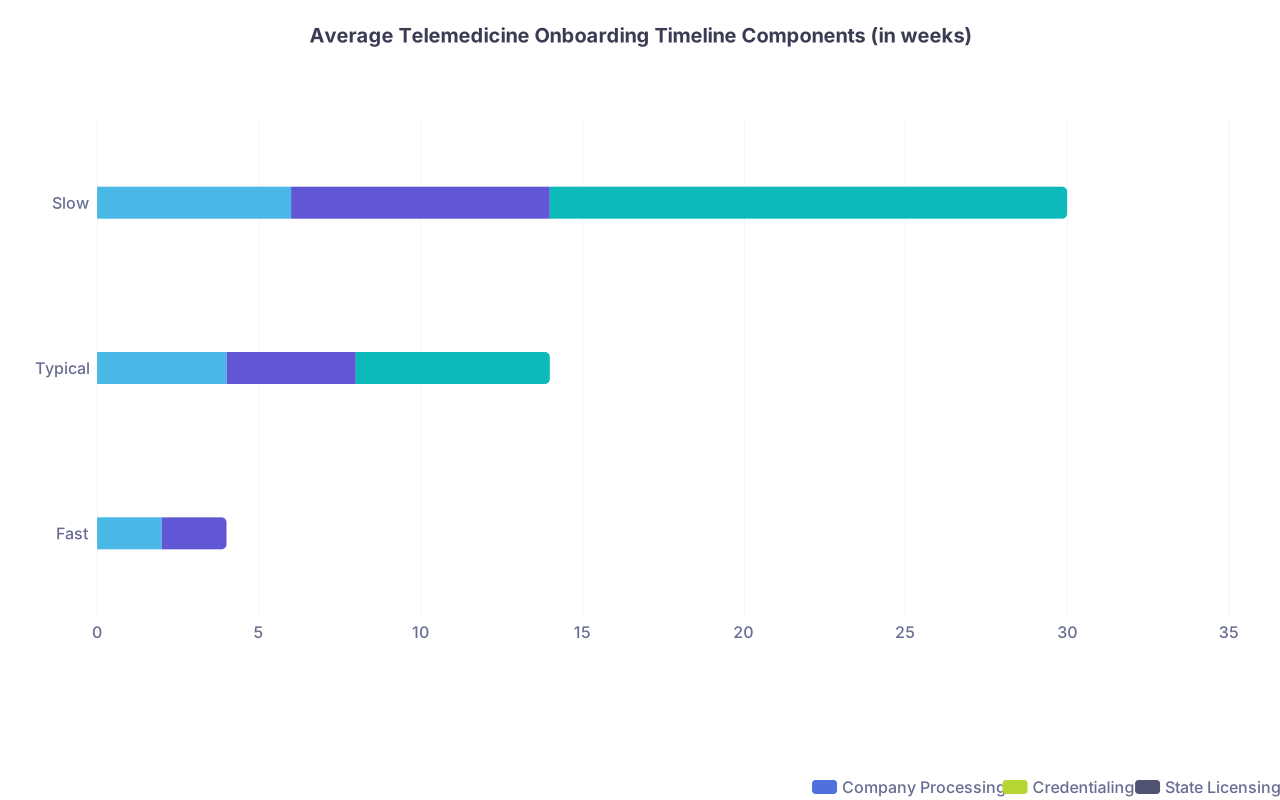
| Category | Company Processing | Credentialing | State Licensing |
|---|---|---|---|
| Fast | 2 | 2 | 0 |
| Typical | 4 | 4 | 6 |
| Slow | 6 | 8 | 16 |
What happens in real life:
- You accept an offer that “requires 3 active state licenses”
- You currently have 1
- You drag your feet on the other 2
- By the time you’re finally licensed, they’ve already filled their panel quota
Avoid this:
- Do not apply to multi-state telemedicine roles if you’re not willing to aggressively pursue additional licenses.
- Before you interview, know:
- Which licenses you currently hold
- Which states they truly need
- Rough processing times for those boards
- If you promise you’ll apply “this week,” actually file the application that week. They can tell when months have passed and your state license is still “pending.”
You don’t get points for intention. Only for completed licenses visible in their system.
5. Blowing Off Training Modules and Policies
This one is painful because it feels trivial—but it’s a frequent cause of onboarding failure.
You’re sent:
- Mandatory HIPAA training modules
- Platform-specific workflows (e-prescribing, documentation templates, routing)
- Policy documents (no prescribing of X, Y, Z; escalation criteria; coverage hours)
You think:
- “I’ll just click through and skim”
- “It’s probably just generic HIPAA stuff”
- “I’ve been a doctor for years, I know how to chart”
Then you:
- Fail their post-module quiz (yes, they track that)
- Violate a prescribing policy in a mock scenario
- Ask “basic” questions during orientation that are clearly covered in the documents they already sent
They infer: You’re not detail-oriented. Or worse—that you’re a risk.
I’ve literally sat in onboarding sessions where:
- One physician says, “So… can we prescribe SSRIs?”
- The policy slide deck—sent 3 days earlier—had an entire page with “Allowed/Not Allowed” medications.
Guess who gets fast-tracked and who quietly gets deprioritized.
Don’t make this mistake:
- Schedule time on your calendar for modules and policies like you would for a clinic.
- Take notes—old-school. Write down:
- Restricted meds
- Visit time expectations
- Documentation requirements
- Escalation/ED referral thresholds
- Don’t assume your hospital habits will translate. Telemedicine platforms often have very specific:
- CTAs in notes
- Macro expectations
- Time-to-close-encounter rules
If you blow off the written material, you look like a liability before you ever see a patient.
6. Acting Like a Lone Wolf Instead of a Team Member
Here’s where a lot of experienced attendings get burned: attitude.
Telemedicine is highly protocolized. Many physicians who are used to autonomy in private practice hate that. They roll their eyes during onboarding. They argue about policies during Q&A. They send snarky emails about “cookbook medicine.”
Those people don’t get renewed, even if they technically “pass” onboarding.
Signals that get you mentally blacklisted:
- “I don’t really agree with that, I’ll probably do what I think is best.”
- “In my practice I ignore those guidelines, they’re too conservative.”
- “I’m not going to ask every patient that, it’s overkill.”
Platforms want:
- Standardization
- Predictability
- Defensive practice that will hold up if something goes sideways legally
They do not want renegade clinicians who will go off-script in ways that create audit nightmares.

If your attitude during onboarding is:
- Cooperative
- Curious (without being combative)
- Respectful of their constraints
You get mentally categorized as “easy to work with.” Which translates to:
- Faster responses
- More shifts
- Less scrutiny
If your vibe is “I know better,” you might still get on the roster. But when anything tightens—credentialing, volume, audits—your name is on the short list to cut.
7. Ignoring the Business Model: Misaligned Expectations
Another common way to fail telemedicine onboarding is more subtle: you sign up for a role that does not match your tolerance for:
- Volume
- Pay structure
- Schedule control
Then you drop out or underperform before you’re even fully integrated.
I’ve seen this repeatedly:
- Physician expects $180/hour equivalent
- Telemed company pays per-visit, with variable demand
- They onboard, see the pay reality, mentally check out, stop engaging
- Company senses the lack of commitment and simply stops investing in them
| Pay Model | Common Pitfall | Risk Level |
|---|---|---|
| Per-visit | Overestimation of volume | High |
| Per-hour (low) | Underestimating non-clinical work | Medium |
| Hybrid (base + RVU) | Misreading incentive structure | Medium |
| Flat per-shift | Ignoring no-show/low volume risk | Medium |
You cannot treat telemedicine onboarding like “I’ll see if I like it later.” They are investing:
- Credentialing time and money
- IT setup
- Training resources
If you bail or disengage, you quickly get labelled as unreliable. That reputation can follow you—these companies talk.
How to avoid this:
- Before you sign anything, demand clarity on:
- Pay structure (per-visit, per-hour, hybrid)
- Historical volumes during the hours you want to work
- Minimum hours or shift commitments
- Do the math brutally:
- If volume is low, what’s your realistic hourly?
- Can you tolerate a few low-volume months?
- Only proceed with onboarding if you’re actually prepared to live with those numbers. Not “if everything goes perfectly.”
Being honest with yourself upfront is the cheapest way to avoid being the person who wastes everyone’s time and quietly gets frozen out.
8. No System for Deadlines, Emails, and Logins
You know what kills more telemedicine onboarding than clinical skill? Inbox chaos.
Typical sequence:
- You start onboarding with one company
- Then another offer comes in, you start that too
- Now you’re tracking:
- 3 portals
- 4 sets of login credentials
- 15+ training modules
- 10 different “due by Friday” style emails over a couple of weeks
If your system is “I’ll just search my inbox,” you will miss something important. Guaranteed.

| Step | Description |
|---|---|
| Step 1 | Offer Accepted |
| Step 2 | Multiple Portals Created |
| Step 3 | Training Emails Sent |
| Step 4 | Deadlines Overlap |
| Step 5 | Missed Deadlines |
| Step 6 | Onboarded Successfully |
| Step 7 | Application Paused |
| Step 8 | Organized System |
I’ve seen physicians lose opportunities because:
- One mandatory live training was missed (buried in email)
- They never activated their 2FA on time
- They let a DocuSign offer expire without noticing
The company reads that as:
- “Not reliable”
- “Disorganized”
- “Too much overhead to maintain”
Set up a system, or you’re gambling your chances on luck.
Bare-minimum system:
- Create a dedicated folder in your email: “Telemed – [Company Name]”
- As soon as you get a new email, drag it in there
- Use a simple tracking doc (Google Sheet, Apple Notes, whatever) with:
- Company name
- Portal URL
- Username
- Deadlines for each item (modules, forms, live trainings)
- For anything with a hard date:
- Put it on your calendar with alerts
If this sounds tedious, telemedicine may not be for you. Remote work without organizational discipline is how you become the bottleneck no one wants.
9. Being Clueless About Privacy/Environment Requirements
This one gets doctors in trouble even after they technically “pass” onboarding.
Telemedicine companies expect:
- HIPAA-compliant environment
- No background noise or random people walking through
- Screen privacy (no shared monitors in open spaces)
- Headphones or at least not blaring audio on speakers
Yet I’ve watched:
- A physician do training from a café, with people clearly visible behind them
- Someone take onboarding calls from a shared resident workroom
- A doc chart from a kitchen with family traffic in the background
They think: “It’s just onboarding, not patient care yet.”
The company thinks: “If this is their standard now, what will they do with live patients?”

Get this through your head: onboarding is your audition. They are evaluating:
- Your professionalism
- Your judgment
- Your ability to handle remote privacy obligations
Do not:
- Take any telemedicine-related calls or training from public or semi-public spaces
- Use speakerphone or loud speakers when PHI might be mentioned
- Let others see your screen when it shows any system screenshots, test cases, or training materials involving patient scenarios
Even if you’re not yet handling real patients, your choices communicate how seriously you take privacy. That matters a lot more in a virtual environment than many clinicians realize.
10. Trying to Do Too Much at Once: Overcommitting Platforms and Hours
Final big mistake: onboarding with multiple telemedicine companies at the same time without a plan.
I’ve met physicians who were:
- Onboarding with 3–4 companies simultaneously
- Still working a full-time in-person job
- Studying for boards or managing family obligations
They thought:
- “I’ll see which one I like best.”
- “More options is always better.”
- “I’ll just say yes to everything and sort it out later.”
What actually happened:
- They missed deadlines with at least one company
- Double-booked training sessions
- Failed to complete all modules for one or two of them
- Developed a reputation for flakiness at exactly the moment they were trying to impress new employers
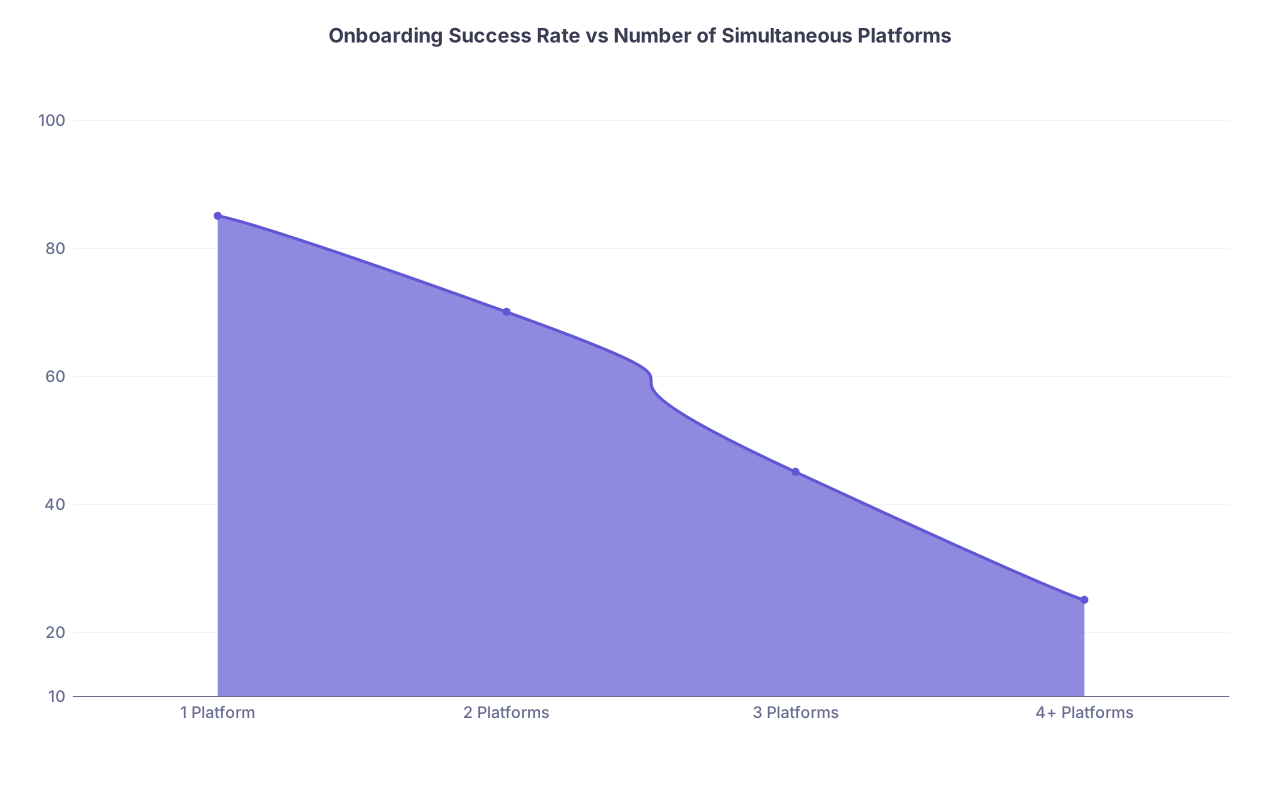
| Category | Value |
|---|---|
| 1 Platform | 85 |
| 2 Platforms | 70 |
| 3 Platforms | 45 |
| 4+ Platforms | 25 |
Here’s the ugly truth: more than 2 concurrent onboarding processes is where most people start dropping balls. Badly.
Smarter approach:
- Identify your top 1–2 platforms based on:
- Pay structure
- Clinical fit (urgent care, chronic disease, specialty, etc.)
- Schedule flexibility
- Commit fully to those until:
- You’re fully onboarded
- You’ve actually done at least a few weeks of shifts
- Only then consider adding a second or third platform if you still want more variety
Onboarding is a finite but heavy lift. Spreading yourself too thin almost guarantees you’ll fail somewhere, and that failure is not invisible.
Two or Three Things to Remember
Telemedicine onboarding is not “just forms and a quick training.” It’s a full credentialing and compliance process where your reliability, tech competence, and professionalism are being judged from day one.
Most failures aren’t dramatic—they’re quiet: missed deadlines, sloppy documentation, ignored policies, or visible disorganization. The company simply stops investing in you.
Treat onboarding like a high-stakes audition: read every email, control your tech and environment, respect timelines, and only commit to platforms and licenses you’re actually prepared to follow through on.