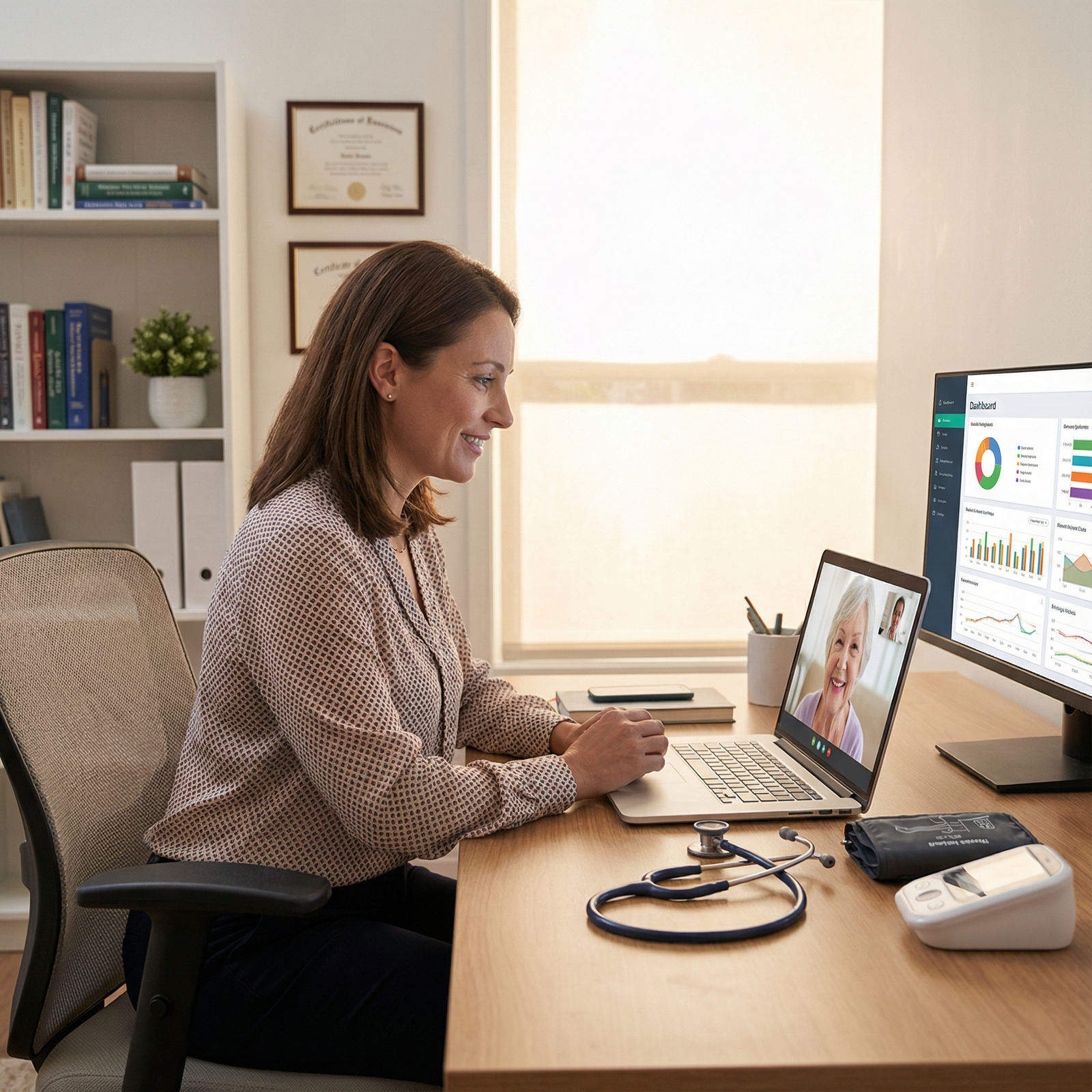
It’s 8:45 p.m. You’re on your fifth telemedicine visit of the evening after a full clinic day. Your Wi‑Fi’s a little shaky, the hospital’s video platform “updated” again, and you’re already 12 minutes behind. You click “Join Visit.”
Patient pops on, grainy camera, kids yelling in the background. You say, “Can you hear me?” They squint, fiddle with their phone, and just as they answer—your audio cuts out.
Fifteen minutes later, they’re annoyed, you’re exhausted, and Press Ganey is about to get a survey from someone who felt rushed, confused, and not cared for—even though you clinically did everything right.
That’s what this is about. Not clinical mistakes. Tech mistakes. The stuff that silently guts your patient satisfaction scores in telemedicine, especially once you’re out of residency and your name (and bonus) are attached to those numbers.
Let me walk you through the biggest landmines I’ve watched physicians step on again and again.
1. Treating Telemedicine Like “Phone with Video” Instead of a Clinical Encounter
If you treat telemedicine as a downgraded clinic visit, patients feel it immediately. And they punish you for it on scores.
The mistake usually looks like this:
- You log in from a cluttered office or call room.
- You glance sideways at another monitor while they’re talking.
- You start the visit with “So, what’s going on?” while clearly still clicking through the chart.
Patients may not know the CPT code, but they absolutely recognize “afterthought energy.”
What this does:
- They feel like you’re distracted.
- They assume you’re doing “real doctoring” somewhere else and they got the discount version.
- They interpret every delay and glitch as you not valuing their time.
What to do instead (or you will pay for it in surveys):
Set up a dedicated “visit posture” for telemedicine:
- Neutral, non-distracting background. Not your unmade call-room bed. Not a hallway.
- Camera at eye level. Looking down at a laptop screen on your lap screams “I’m multitasking.”
- Open the chart before you click “Join.” Do not make the first 60 seconds of a visit about you scrolling.
And for the love of patient satisfaction, stop doing:
- “Hold on, let me just finish this message…”
- “Sorry, I’m on another screen.”
Once is human. Patterns look like you simply don’t care.
2. Underestimating How Much Technical Setup Affects the “Caring” Perception
Here’s the nasty truth: patients equate tech smoothness with competence and caring. If the platform is glitchy, they don’t just think, “The software is bad.” They think, “This doctor/clinic doesn’t know what they’re doing.”
Common self-inflicted wounds:
- Logging in right at the visit time, then waiting for the platform to update.
- Not testing camera/mic after a software change.
- Using some cheap Bluetooth earbuds that randomly disconnect.
Every time you say, “Let me log out and back in” or “Maybe try closing the app?” you’re burning through their patience and goodwill. They’ll remember the friction much more than the perfect dosing of lisinopril you prescribed.
Do this before you learn the hard way:
- Weekly 2-minute tech check: open the platform, confirm camera/mic, do a quick self-test.
- Hard rule: wired internet > Wi‑Fi if at all possible. If not, sit where your signal is strongest and never move during visits.
- Have a backup plan clearly communicated by your practice: “If we get disconnected, I will immediately call you at this number.” Then follow through within 1–2 minutes, not 10.
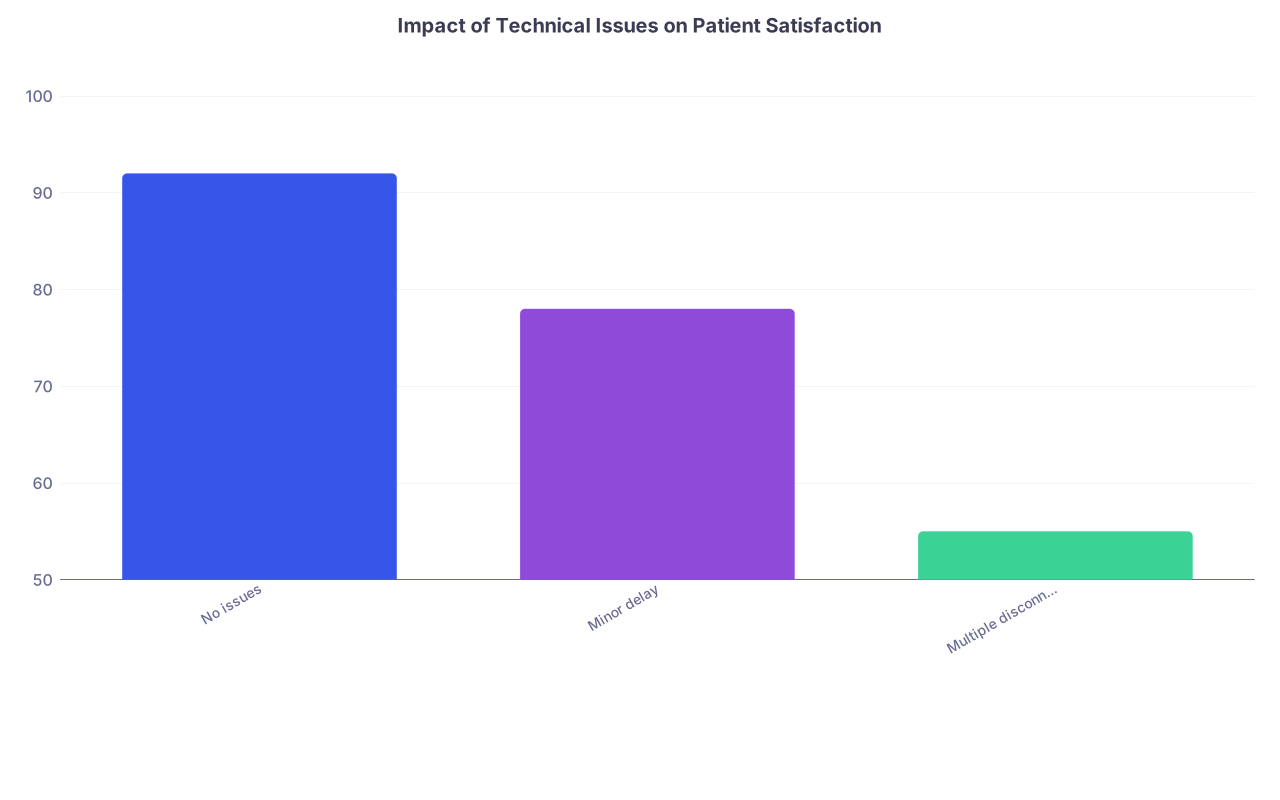
| Category | Value |
|---|---|
| No issues | 92 |
| Minor delay | 78 |
| Multiple disconnects | 55 |
I’ve seen patient satisfaction drop 30+ points between “smooth video” and “we disconnected twice.” And that’s with the same physician and same clinical care.
3. Ignoring Audio Quality (The Silent Killer of Satisfaction)
Physicians obsess over video. Patients care more about audio.
If your face is a little grainy but your voice is crystal clear, most patients roll with it. If your audio cuts in and out, echoes, or sounds like you’re at the bottom of a well—your satisfaction scores are in jeopardy.
Common mistakes:
- Using the laptop’s built-in mic in a noisy environment.
- Sitting too far from the mic.
- Having a fan/AC vent blowing directly into it.
- Choosing AirPods or other Bluetooth devices that frequently drop, especially on older laptops.
What patients experience:
- They strain to hear you.
- They’re embarrassed to keep saying “Sorry, could you repeat that?”
- They leave the visit unclear on the plan—but too drained to admit it.
That confusion becomes:
- “Doctor didn’t explain things well.”
- “I didn’t feel like my concerns were fully addressed.”
- “I left not understanding what I was supposed to do.”
If you’re serious about scores:
- Get a simple wired headset or a decent USB mic. No drama, no dropped Bluetooth.
- Turn off or move away from noisy fans, open windows on busy streets, or shared office chatter.
- Ask once at the start: “Can you hear me clearly?” and actually fix it if they say no.
Do not plow ahead with, “It might be your connection,” then rush through the plan. That reads as dismissive and lazy.
4. Rushing Because “It’s Just Telemedicine”
Telehealth visits feel shorter. So physicians subconsciously treat them that way.
Here’s how that backfires:
- You interrupt earlier. (There’s data on this—doctors interrupt patients quickly even in-person. Telemed often makes this worse.)
- You skip the recap: no teach-back, no “So let me summarize.”
- You don’t leave space at the end for “What other questions do you have?”
Patients already worry telemedicine is a “lite” version. When you rush, it confirms their suspicion.
Big mistake: stacking telemedicine visits back-to-back with zero padding, especially after clinic. You’re mentally done, but the platform keeps feeding you patients like an assembly line.
You need deliberate guardrails:
- Build 2–3 minute buffers every few visits, especially in the evening blocks.
- Have a scripted close you always hit:
“Let me quickly summarize what we’re doing today…”
“What questions do you still have?”
“Tell me what you’ll do if X gets worse.” - Resist the “drive-thru” vibe. Patients can smell it.
Your admin might love 15 visits in 3 hours. Your scores won’t.
5. Multitasking on Screen (Patients Notice More Than You Think)
I’ve watched attendings try to handle:
- In-basket messages
- Resident questions on chat
- Order signatures
…all during telehealth sessions. They think they’re being “efficient.” From the patient’s perspective, it’s incredibly obvious.
Tells that you’re multitasking:
- Your eyes constantly dart to the side.
- Keyboard clacking while the patient talks.
- Delayed responses because you’re reading something else.
- That telltale reflection of another window in your glasses. Patients notice.
This almost always leads to:
- “Doctor didn’t seem fully engaged.”
- “I felt rushed.”
- “They weren’t really listening to me.”
And if you’re in an employed model, guess what? Those exact phrases show up in your feedback reports.
If you must chart during the visit:
- Narrate it: “I’m typing what you’re telling me so I don’t miss anything—you may hear me clicking.”
- Keep your eyes mostly near the camera, not glued to another monitor.
- Do not read email, sign refills, or DM a colleague while a patient is talking. That’s not efficiency. That’s laziness disguised as multitasking.
6. Clumsy Workflows for Prescriptions, Labs, and Follow-up
Patients judge the whole telemedicine experience, not just the 12 minutes you were on screen.
Where physicians silently blow their scores:
- Saying “I’ll send that prescription right after this visit,” then forgetting until the next day.
- Ordering labs or imaging that don’t route correctly, so the patient shows up and the front desk says, “We don’t see any orders.”
- Giving vague follow-up instructions: “Just call the office if it’s not better,” with no specifics.
Every one of those friction points gets mentally lumped into: “My telemedicine experience was bad.”
You need brutally tight workflows here:
- Prescriptions: do them during the visit whenever possible, then say, “I’ve just sent that to your pharmacy. They usually have it ready within X hours.”
- Labs/imaging: confirm the location and tell them: “The order is in your chart now under X. You can go to Y site. If anyone says they don’t see it, have them look under [test name].”
- Follow-up: specify exactly—“I want to see you again by video in 2 weeks,” or “If not improving within 48 hours, schedule another telehealth visit or go to urgent care.”
Vague = anxious and confused = lower scores.

| Step | Description |
|---|---|
| Step 1 | Start Telemed Visit |
| Step 2 | History and Exam |
| Step 3 | Confirm with Patient |
| Step 4 | Place RX Labs Imaging |
| Step 5 | Forget After Visit |
| Step 6 | Patient Frustration |
| Step 7 | Low Satisfaction Score |
| Step 8 | Orders Needed |
| Step 9 | Order Completed Now |
The mistake is not “forgetting once.” It’s not designing your visit flow to prevent forgetting.
7. Poor Use of Patient Portal and Messaging Tools
Post-residency, you’ll quickly learn: your portal behavior is visible and judged.
Two extremes that damage satisfaction:
- You ignore portal messages tied to telemed visits, or respond days later.
- You overuse portal messages as a substitute for proper follow-up visits, leading patients to feel like they’re patching their own care together.
Patients often assume:
- “If I saw you by video, I should be able to clarify simple things without a new visit.”
- “If the instructions were unclear, you should help me fix it.”
Score-killing mistakes:
- Not addressing follow-up questions from earlier that day’s visit.
- One-line, cryptic portal responses that generate more confusion.
- “Please schedule a visit” as the default reflex—even for a 10-second clarification that obviously came from your rushed explanation.
You need a rule-of-thumb:
- Clarifying something you explained poorly? Fix it in the portal, gracefully, no drama.
- New symptoms, new problem, or clinical decision-making beyond a quick yes/no? That’s a new visit.
Say it clearly at the end of the visit:
- “If you get home and realize you’re not sure about the dose or timing, send me a portal message and I’ll clarify.”
- “If anything new or worse happens, book another video visit—don’t just message, because I’ll want to talk to you properly.”
That phrase “talk to you properly” matters. It signals you respect them enough not to half-manage them in a message thread.
8. Bad Virtual “Bedside Manner” (Eye Contact, Body Language, Tone)
Telemedicine exaggerates your non-verbal weaknesses. Whatever patients tolerated in person often becomes unbearable on screen.
What tanks satisfaction fast:
- No eye contact. Staring at the keyboard or notes the entire time.
- Flat, monotone voice. On video, you come across as disinterested.
- Terrible lighting that makes your face hard to read or your expressions seem harsh.
Patients want:
- To feel “seen” and heard.
- To feel that you’re not in a rush to get off the call.
- Reassurance—not just via words but your facial expression and tone.
Specific mistakes:
- Sitting with a bright light or window behind you so your face is in shadow.
- Positioning the camera at an odd angle (up your nose, low on the desk).
- Talking too fast because you’re behind or uncomfortable with silence.
Fixes that directly raise satisfaction:
- Light your face from the front (small desk lamp, ring light if you must).
- Put the camera near the center of where you’re looking at the patient’s video. If you chart on a different monitor, move those windows closer to the camera.
- Consciously slow your speech by about 10–15%, especially when explaining plans.
And occasionally say something human:
- “I know doing this by video can feel a bit impersonal, but I want to make sure we get this right for you.”
Patients forgive a lot of tech when they sense sincere effort.
9. Not Screening Appropriately for Telemedicine vs In-Person
You are going to get blamed for other people’s bad scheduling decisions.
If the wrong patients end up in telemedicine visits, your satisfaction scores will suffer, even if you perform perfectly.
Common train wrecks:
- Complex, multi-symptom, undifferentiated complaints booked as 15-minute video follow-ups.
- Patients expecting procedures (joint injections, Pap smears, wound care) who get told, “Oh, we can’t do that today, this is telemedicine.”
- First visits for chronic complex disease with no records, no vitals, no labs—by video only.
These go sideways fast:
- Patients feel “bait and switched.”
- They conclude telemedicine is useless.
- They give you poor satisfaction scores for “not doing anything,” even if you explain why.
You must be willing to draw a line:
- Give feedback to scheduling and leadership: “These types of visits should not be booked to telemedicine. It makes us look incompetent and upsets patients.”
- At the start of a clearly misbooked visit, be direct but kind: “I can see why they scheduled this by video, but to really address this safely, we’re going to need an in-person visit. Let me explain why and help you get that set up quickly.”
Key: own the navigation, not just the refusal. If you simply say, “We can’t do that here; call the office,” your score is toast.
| Scenario | Best Modality |
|---|---|
| Simple medication refill | Telemedicine |
| New chest pain | In-person |
| Stable chronic disease follow-up | Telemedicine |
| New undiagnosed abdominal pain | In-person |
| Rash with good camera & history | Telemedicine |
Misalignment here is a silent satisfaction killer.
10. Failing to Own the Tech Limitations Honestly
Patients know tech isn’t perfect. What they don’t forgive is being gaslit about it.
Bad moves:
- Pretending their poor video quality is “fine” when you clearly can’t see the rash, wound, or swelling.
- Doing a half-baked remote exam, then giving overly confident assurances.
- Blaming everything on “the system” without taking any responsibility.
You’ll see this play out like:
- “It looks okay from what I can tell” when, truthfully, you can’t tell much.
- “Well, this is how telemedicine works” when patients are frustrated about not getting imaging, hands-on exam, etc.
If a limitation exists, admit it and then lead:
- “On video, I can’t safely assess X the way I would in person. Here’s what we can do today, and here’s what we need to do in person.”
- “If this were my family member, I would want them seen in person for this specific concern.”
That last line is powerful. It both validates their concern and anchors your recommendation in genuine care. Patients respect honesty about limitations more than forced optimism.
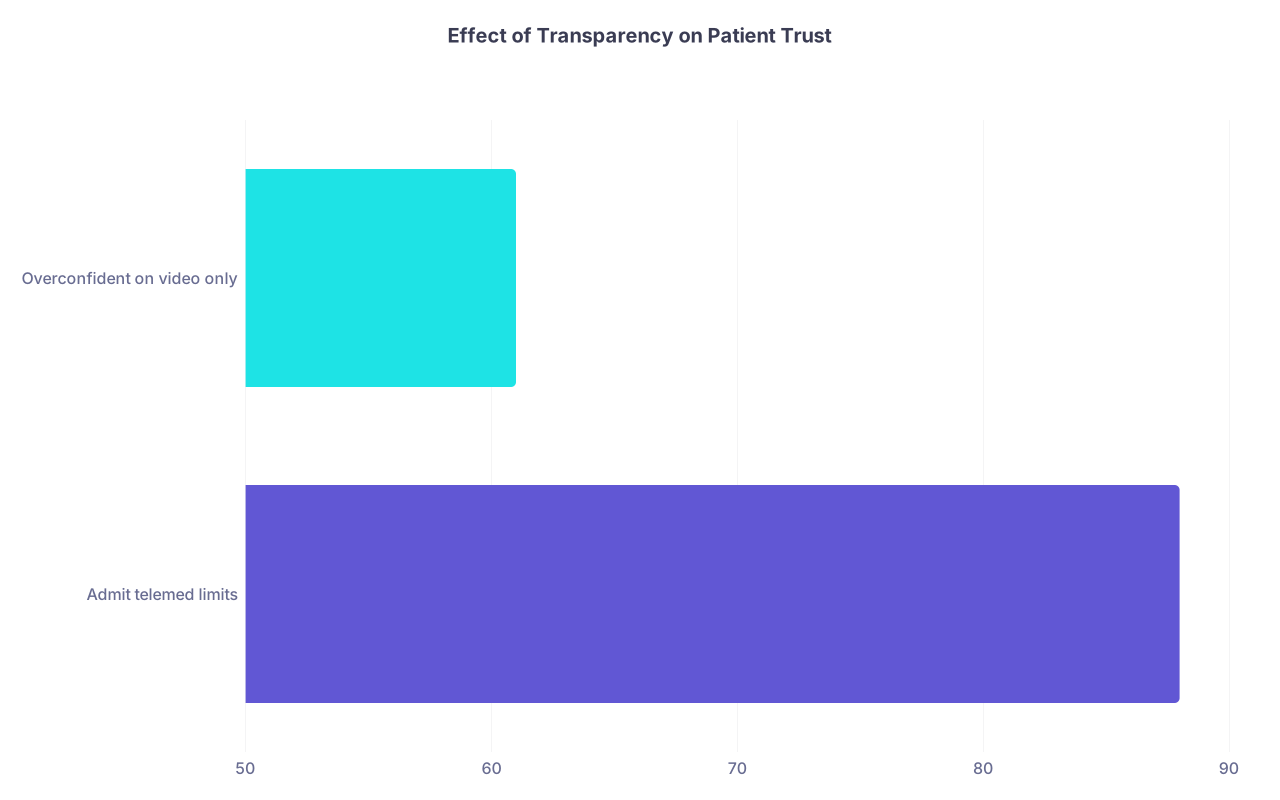
| Category | Value |
|---|---|
| Admit telemed limits | 88 |
| Overconfident on video only | 61 |
Trust drives satisfaction. Overpromising on what telemedicine can do destroys both.
11. Not Realizing Telemedicine Scores Follow You in the Job Market
Post-residency, many physicians still treat telemedicine like a side gig. That’s a mistake.
Your telehealth satisfaction metrics:
- Go into performance reviews.
- Affect RVU/bonus models in many systems.
- End up as part of your story when you apply for new positions, especially remote/hybrid roles.
Hiring committees increasingly ask:
- “How comfortable are you with telehealth?”
- “How have your patient satisfaction scores been with virtual care?”
If your data show:
- High no-show or early disconnect rates
- Lower patient satisfaction on telehealth vs in-person
- Frequent complaints about “doctor seemed rushed” or “nothing was done”
…you look like someone who never adapted to where care is heading.
Ironically, it is often easier to shine in telemedicine if you avoid the mistakes above:
- Tech-smooth visits stand out because so many others are sloppy.
- Thoughtful follow-up and clear communication get mentioned by name in surveys.
- Patients remember the doctor who made a tech-heavy process feel human and simple.
12. The Three Tech Habits That Protect Your Scores Long-Term
If you remember nothing else, lock down these habits so your telemedicine work doesn’t quietly tank your reputation and your paychecks.
Treat telemedicine as real medicine, not a downgraded side channel.
Set up a professional environment, start on time when possible, and act like this visit matters as much as the one you drove in for.Design your workflow so tech never overshadows care.
Pre-visit tech checks, clear backup plans for disconnects, prescriptions and orders placed during the visit, and precise follow-up instructions. Friction is what patients remember.Make your humanity louder than the technology.
Strong audio, decent lighting, real eye contact, explicit empathy, and honest admission of what video can and cannot do. Patients will forgive quirks in the platform. They don’t forgive feeling ignored, rushed, or misled.
Avoid these mistakes, and telemedicine stops being a liability for your patient satisfaction scores—and becomes one of the easiest places to excel while everyone else keeps blaming “the system.”