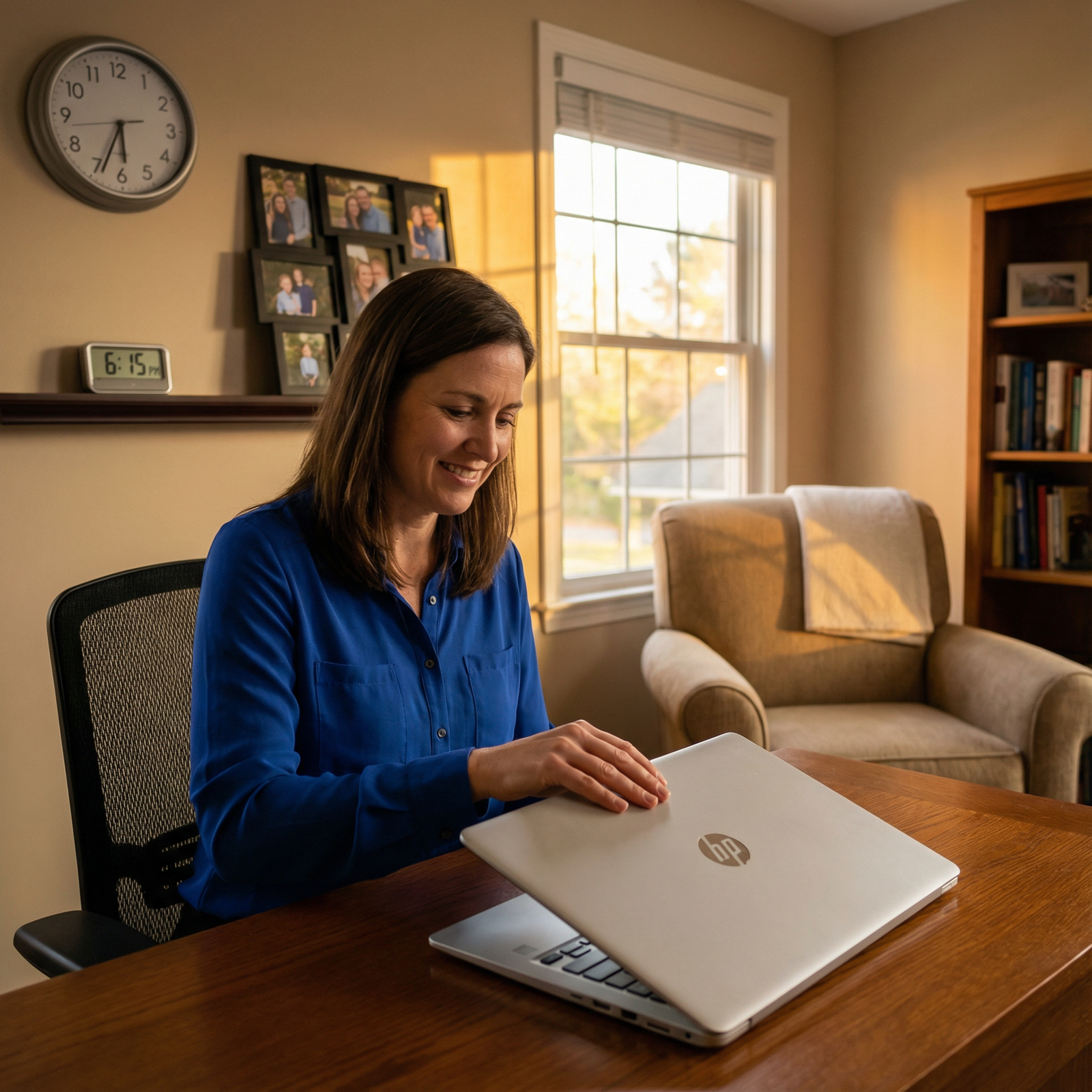
The fastest way to get reported in telemedicine is to forget that the screen does not protect you. It exposes you.
You’re not less regulated because you’re at home. You’re more visible, more recorded, and easier to complain about. Patients capture screenshots, record calls, and send angry emails to medical boards. Platforms will drop you long before anyone “investigates” your side if they smell risk.
This is not about being paranoid. It is about not being naive.
Let’s walk through the boundary and privacy mistakes I see telemedicine physicians make again and again—often in their first 6–12 months after residency—then wonder why their contract vanished overnight.
1. Treating Telemedicine Like Casual Chat Instead of a Clinical Encounter
The most common mistake: you let the informality of video bleed into your professional boundaries.
You’re sitting in a hoodie, they’re on their couch, the vibe feels like FaceTime. And suddenly you’re saying things you would never say in a clinic room.
I’ve seen reports triggered by:
- “You look great—hard to believe you have depression.”
- “If I weren’t your doctor…”
- “You can always message me anytime; I’ll take care of you.”
- “Let’s just keep this between us so your family doesn’t get upset.”
On video, that kind of comment sounds flirtatious, dismissive, or conspiratorial. And it’s often recorded. Screen-captured. Sent to support or the board with, “This made me uncomfortable.”
Do not make this mistake: do not confuse convenience with informality.
Your rules:
- Speak as if the visit is being reviewed by a medical board panel tomorrow.
- Avoid comments about appearance that aren’t clinically relevant. “You look pale,” fine. “You’re gorgeous,” absolutely not.
- Never use pet names (hon, sweetie, dear). You’re not their bartender.
- Don’t ask personal questions unrelated to care “because you’re curious.” On video, that looks creepy fast.
A good internal test: If this line appears in a complaint letter surrounded by quotation marks, does it read badly out of context? If yes, don’t say it.
2. Sloppy Backgrounds and Eavesdroppers: Privacy Violations You Don’t Notice
You’d be shocked how many physicians get flagged because someone else’s information or voice was present in the encounter.
I’ve seen all of these:
- Another patient’s name on a sticky note on the wall behind you.
- A whiteboard with first and last names, phone numbers, or diagnoses visible on camera.
- Family members sitting off-screen but clearly audible.
- A partner walking through in a towel during a visit.
- The TV blaring news headlines while you’re discussing mental health.
You are legally responsible for that space. Even if it’s your bedroom.
Do not make this mistake: assuming HIPAA only lives “inside the EMR.”
Lock down your environment:
- Private room. Door closed. No one else listening. If someone must be present (e.g., interpreter, chaperone), you introduce them explicitly.
- Nothing on the wall with PHI—no schedules, no lists, no patient phone numbers.
- Headphones always. Speaker audio alone is a privacy trap; anyone in your home can overhear.
- No smart speakers listening if you can avoid it. Alexa, Google Home, etc. may be listening in—yes, some compliance teams care about that.
Patients complain when they feel exposed or disrespected. “I could hear people laughing in the background.” “I think his wife was listening to everything.”
Those are exactly the kind of “soft” privacy violations that turn into platform reviews and board notes.
3. Letting Patients Record You Without Thinking Three Steps Ahead
Many states allow patients to record encounters without telling you. Some don’t. Either way, assume you’re being recorded.
Here’s where doctors get destroyed:
- They give off-the-cuff advice that sounds cavalier on replay. “Sure, just double it, you’ll be fine.”
- They share personal opinions about other doctors, employers, or “people like you.”
- They make jokes that land horribly when replayed out of context.
Do not make this mistake: behaving differently once you realize a patient is recording.
The worst move is snapping: “Stop recording me right now, that’s illegal.” If you’re wrong on the law, you just added fuel to a complaint about your “aggressive behavior.”
Better approach:
- Calm, neutral: “You’re welcome to keep notes. Just know this visit is part of your medical record either way.”
- If your organization has a policy: “Our policy requires that any recordings be discussed and documented. Let me check how to proceed so we stay within policy.”
But the real fix is upstream: never say anything on a telemedicine call that you’d be afraid to see in front of a medical board or licensing committee. Because one day, you might.
4. Blurring Professional vs Personal Contact: “Just Text Me If You Need Anything”
This is where post-residency doctors often carry over bad habits from “doing favors” for friends or family.
In telemedicine, these “favors” are land mines:
- Giving out your personal cell number.
- Telling a patient to DM you on social media if they need a refill.
- Adding a patient on Instagram or Facebook.
- Replying to patient messages at 2 a.m. from your personal email.
Once you cross that line, you’ve effectively erased the professional boundary. If that relationship goes sideways—and some will—you now have a complaint that includes screenshots of personal messages that were never logged, triaged, or documented.
Do not make this mistake: thinking you are “going above and beyond” by being 24/7 accessible.
You’re not being helpful. You’re being untraceable.
Rules to protect you:
- All communication stays on the platform or sanctioned channels (official portal, call-back line).
- No social media connections with patients. Period.
- No discussing care in personal email or text, even if they have your number from somewhere else (e.g., you used to know them socially).
- If someone you know becomes your patient, document the dual relationship and follow your employer’s policy, or refer them to another clinician.
If a patient screens you and says, “Can I just text you directly next time?” your line is: “For your safety and privacy, I need to keep all medical communication on this system so it’s documented and secure.”
Say it like you mean it. Because you should.
5. Handling Sensitive Topics Without Chaperones or Structure
In person, you’re used to certain rituals: chaperones for sensitive exams, doors closed, proper draping. Telemedicine erases that structure, and people get careless.
I’ve seen complaints in telehealth dashboards saying:
- “He asked me to lift my shirt higher for the camera; it felt inappropriate.”
- “She asked about my sex life in a way that seemed judgmental and personal.”
- “I was in my car, but he didn’t ask if I was alone before talking about trauma.”
Do not make this mistake: forgetting that context is everything online.
You must:
- Ask explicitly: “Are you in a private place where you feel comfortable talking about sensitive or personal topics?”
- For any visual exam involving chest, abdomen, groin area: explain exactly why, what you need to see, and offer alternatives (in-person follow-up, deferring, or only doing partial visual exam).
- Never pressure a patient to expose more of their body on camera. If they’re hesitant, that’s your stop sign.
- Document that you offered options and what the patient chose.
If you’re doing tele-psychiatry or anything involving trauma, domestic violence, or sexual health, you must double-check safety and privacy at the start of every visit. “Is it safe to talk right now?” is not optional. Patients get reported for not asking that, especially if an abuser is later discovered to have been in the same room.
6. Location, Licensure, and Lying by Omission
Here’s a boundary that doesn’t feel like a boundary at first: geographic.
Many telemedicine docs get sloppy with the “where are you located today?” question. Or they never ask it at all.
Then this happens:
- You’re licensed in State A.
- Patient created an account in State A but is currently visiting State B.
- You prescribe or give advice you’re not licensed to give to a patient physically in State B.
- Something goes wrong, and the complaint goes to State B’s board. Now you have a cross-state problem.
Do not make this mistake: assuming the platform “handles the legal stuff.”
Always:
- Confirm where the patient is physically located at the start of the visit.
- Document it clearly in the note.
- If they’re outside your licensed states: stop. “I’m licensed in [X states], and because you’re currently in [State Y], I’m not legally able to treat you today. Let me help you find an appropriate resource.”
If your employer is pushing you to “just see them anyway,” understand this: when the board comes, it’s your license, not your employer’s reputation, on the line.
7. Casual Documentation That Looks Like You Don’t Care
Telemedicine notes are often shorter. That’s fine. But too many are careless.
Things I’ve personally seen in actual telehealth notes that trigger risk reviews:
- “Pt wanted Adderall refill, I declined, they were upset.”
- “Seemed sketchy. Possibly drug-seeking.”
- “I don’t believe patient story.”
- No documentation of discussion of side effects for controlled substances.
- No mention of safety plan after a suicidal comment on video.
Do not make this mistake: writing how you talk in your head.
You’re creating a permanent record that can be subpoenaed.
Your documentation must show:
- That you understood and respected the complaint.
- That you considered red flags, even if you ruled them out.
- That you gave clear instructions: “We discussed X; I advised Y; the patient agreed (or declined).”
- That you addressed safety and follow-up.
Also, telemedicine audits love timestamps. If a visit was 5 minutes and you changed 4 controlled substance prescriptions, you’re already on thin ice. Sloppy notes make it look worse.
8. Ignoring Platform Policies About Messaging, Photos, and File Sharing
Every telemedicine platform has a Terms of Use and internal policy manual you probably never read past page 3. That’s where a lot of people hang themselves.
Red flags:
- Reviewing patient genital photos sent through insecure channels or in violation of platform rules.
- Accepting non-urgent messages after hours and replying without triaging appropriately.
- Using off-platform tools (WhatsApp, iMessage) to send lab orders or results “because it’s easier.”
Do not make this mistake: thinking “But the patient wanted it that way” is a defense.
It’s not. You’re the professional. You’re responsible for maintaining boundary and privacy standards, even when patients push against them.
You should know:
- Whether the platform allows you to receive photos, and under what conditions.
- How after-hours messages are supposed to be routed and documented.
- What your responsibility is for urgent messages that land in your inbox while you’re off shift (usually: none, if the system is set up correctly—but you have to follow that design).
| Risky Behavior | Safer Alternative |
|---|---|
| Giving personal phone/email | Use only platform messaging or clinic lines |
| Allowing patient to send photos directly to your phone | Require uploads via secure portal only |
| Discussing results over unsecured video app | Use HIPAA-compliant platform or phone through clinic system |
| Responding to off-hours messages ad hoc | Follow defined coverage and escalation protocols |
| Ignoring platform policy documents | Review and clarify gray areas with compliance |
9. Poor Consent and Expectation Setting in the First 60 Seconds
Your first minute sets the legal and psychological frame. Too many telemedicine docs jump straight to, “So what brings you in today?” and skip the structure.
You need a quick, consistent opening that covers:
- Who you are (name, role, specialty).
- That this is a medical visit (not just friendly advice).
- Any important limits (e.g., “I cannot prescribe certain medications on this platform,” “This is not an emergency service,” “We may need to convert to in-person for some issues.”)
- A check on privacy: “Are you in a place where you can talk openly?”
Do not make this mistake: leaving patients to assume this is the same as an urgent care clinic where “anything goes.”
Patients file complaints when expectations and reality clash—“I booked a visit and the doctor refused to prescribe what I needed,” with no documentation that expectations were set up front.
A 30-second script saves you:
“Hi, I’m Dr. Smith, an internal medicine physician. This is a telemedicine visit, which means I can evaluate many issues and in some cases prescribe, but not everything can be safely managed by video. If we hit something that needs in-person care, I’ll explain why and help with next steps. Are you in a private place where you feel comfortable talking about your health today?”
Short. Clear. Protective.
10. Over-Disclosure About Yourself: Turning the Visit Into Therapy for the Doctor
Video makes it weirdly tempting to overshare. You’re both at home, kids maybe in the background, someone’s dog barks. You’re human. They’re human. And suddenly you’re telling a depressed patient how burned out you are, how broken the system is, or how your own anxiety is terrible.
This can definitely be boundary-violating, and yes, it gets reported.
I’ve seen chart complaints quoting doctors:
- “I’m on meds too; it’s all a mess, honestly.”
- “Yeah, this company doesn’t care about you or me.”
- “I’m going through a divorce right now, so I get it.”
Do not make this mistake: using patient time to process your own life or vent about your employer.
Tiny, purposeful self-disclosure can be clinically useful. But it should always be in the service of the patient’s goals, not your emotional release.
If you catch yourself saying “I” more than “you” for more than a sentence or two, you’ve probably crossed the line.
11. Ignoring Your Own Fatigue and Emotional Boundaries
This one is subtle but deadly.
Telemedicine volume can be brutal. Twenty, thirty, forty short visits in a shift. If you are even slightly burned out, your tone changes. You get curt. You rush. You stop doing the privacy check. You snap when someone asks for a controlled substance. You argue instead of explaining.
Patients report tone as much as content.
Complaints frequently start with: “The doctor was rude,” “I felt dismissed,” “They didn’t care,” and then the story spirals into allegations of unprofessional behavior or boundary violations.
Do not make this mistake: ignoring how your state affects your boundary-keeping.
If you’re exhausted, you cut corners—on empathy, on consent, on how you say no.
Sometimes the most protective move is turning down extra shifts, logging off on time, or asking your group to adjust volume targets. Yes, that might hit your income in the short term. Losing your telemedicine contract—or worse, facing a board complaint—hits harder.
Use simple guardrails:
- Micro-pauses between visits. One deep breath, one quick mental reset.
- A stock, calm script for saying no to inappropriate requests (controlled substances, off-label weirdness, endless refills): repeat it exactly every time so you don’t improvise something snarky when tired.
- If you feel irritated or angry, slow down your speech and lower your volume—you can be firm without being sharp.
12. Forgetting Telemedicine Is Permanent Evidence
Clinic visits are ephemeral. Telemedicine visits often are not. Audio, video, chat logs, time stamps—many platforms store it all.
That means:
- Your passing comment lives forever.
- Your eye roll (yes, patients notice) becomes “The doctor mocked me.”
- Your sarcasm is preserved, even if you thought it was clearly a joke.
Do not make this mistake: assuming that because “everybody does it” on a busy platform, it must be safe.
You’ll hear colleagues say, “Oh, I just say X and people stop complaining.” Maybe they’ve just not had the wrong patient yet. Or the right attorney.
Assume:
- The visit can be replayed to you, paused at the worst possible frame.
- Your words will be quoted back with zero context.
- Your notes will be cross-checked against what actually happened.
That assumption makes you more careful in the right ways.
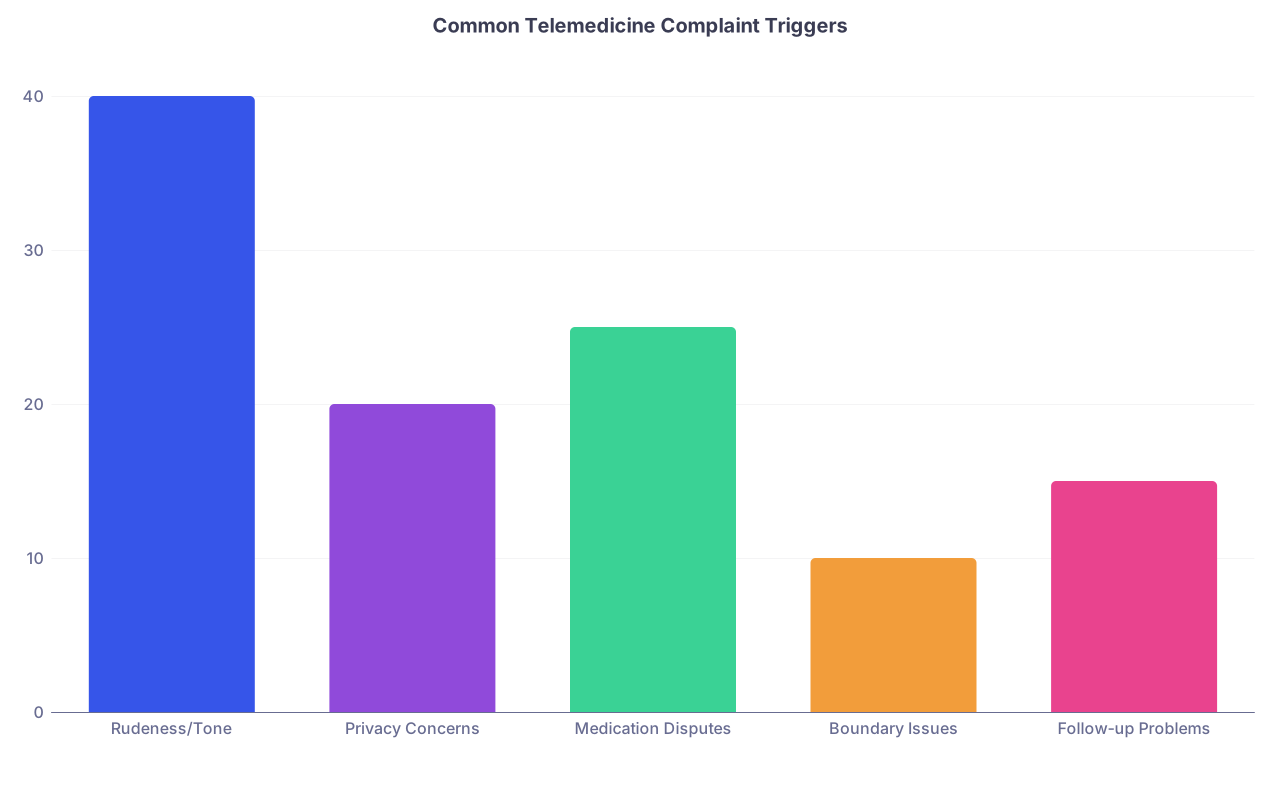
| Category | Value |
|---|---|
| Rudeness/Tone | 40 |
| Privacy Concerns | 20 |
| Medication Disputes | 25 |
| Boundary Issues | 10 |
| Follow-up Problems | 15 |

| Step | Description |
|---|---|
| Step 1 | Start Visit |
| Step 2 | Confirm identity and location |
| Step 3 | Check privacy of patient setting |
| Step 4 | Set expectations and limits |
| Step 5 | Clinical history and exam |
| Step 6 | Discuss plan and safety |
| Step 7 | Clarify follow up and channels |
| Step 8 | Complete clear documentation |
The Short Version: Boundaries and Privacy Keep You Employable
If you remember nothing else, keep these three points:
- Telemedicine isn’t casual care. Maintain clinic-level professionalism in language, tone, and structure, even if the patient is in pajamas on their couch.
- Your environment and communication channels are part of medical privacy. Closed door, headphones, no personal contact info, no off-platform chats. Ever.
- Assume everything is recorded and reviewable. Speak, prescribe, and document like a complaint panel will see it all—because one day, they might.
Do not wait for a warning email or a board letter to tighten your boundaries. By the time you get that, you’re already defending yourself.