Last winter, I watched a hospitalist who’d gone “80% remote” walk into the same hospital where she’d once been a star. Three years earlier, nurses lined up to ask for her on service. That morning, two charge nurses looked right past her at the workstation and whispered, “She still works here?”
If you think going remote is just about lifestyle and income, you’re missing the part program directors, CMOs, and chiefs talk about behind closed doors: what it quietly does to your reputation in the local hospital ecosystem. Not tomorrow. Over 6–24 months.
Let me walk you through what actually happens to your name, your “brand,” once you move most of your clinical life to a screen.
The Two Parallel Careers You Don’t Realize You’re Building
By the time you’re post‑residency, you’re not just building a CV. You’re building a story people tell about you when you’re not in the room.
Here’s the part nobody spells out: once you start doing a lot of remote work—telehospitalist, remote ED coverage, tele-ICU, tele-psych—your career forks. On paper you have one job. In reality, you’re building two parallel reputations:
- Your remote reputation (among whoever runs the tele group or health system)
- Your local reputation (among attendings, nurses, admins in the region where you live)
Those two do not behave the same way. And they do not age the same way.
The remote side is pretty straightforward: if you show up, staff the shifts, keep your metrics in range, you’re “reliable.” That’s a commodity.
The local side is more fragile. It runs on three currencies: memory, presence, and politics. Remote work quietly erodes all three unless you’re deliberate.
What Hospital Leaders Actually Think When They Hear “Mostly Remote”
I’ve sat in too many division meetings where someone’s name comes up and the room does a half-shrug. Let me translate the facial expressions you’ll never see.
When a CMO, service line chief, or long-standing attending hears that you’re mostly remote, a few reflexive assumptions fire off:
- You’re less invested in the hospital’s long‑term trajectory
- You’re less available to help during crises or staffing disasters
- You’re not someone to put forward for high-visibility roles (medical director, committee chair, QI lead)
- You’re… replaceable
They won’t say that to your face. But they will say versions of this to each other:
“Yeah, he does some telehospitalist thing now. Hard to know if he’s really ‘ours’ anymore.”
“She’s great, but she’s mostly remote. We need someone we can pull into meetings, onsite stuff.”
“Honestly, if we’re grooming a future section chief, it should be someone actually in the building.”
Here’s the core truth: local hospitals value people they can see, tap on the shoulder, and throw into opportunities on short notice. Remote physicians feel… abstract.
Not because you’re less skilled. Because you’re less present.
How Your Name Fades From the Local Narrative
Nobody wakes up and decides, “Let’s forget about Dr. X.” It happens by drift.
Picture this: you used to round in person 15 shifts a month. Nurses saw you on A4. The ED knew how you signed your notes. The case manager knew you’d always answer your phone. Your name was in the OR board chatter, the census huddles, the hallway griping.
Then you switch. Now you’re remote 10–14 shifts a month, maybe do one weekend a month in person “to keep a foot in the door.”
Here’s what happens, step by step.
Months 0–3: The Courtesy Period
Everyone still talks about you like you’re “one of us, just mostly remote now.”
- Nurses say, “When’s she on again? She was always so responsive.”
- Admins think, “She might be a good fit for that new committee once we stabilize staffing.”
- ED docs remember you as solid backup.
You’re operating on stored reputation from your in‑person years. You’re living off history.
Months 4–12: The Substitution Phase
This is where you lose ground you don’t feel… yet.
- The new hospitalist who joined last year becomes the “go‑to” on the schedule
- The CMO needs someone for a QI project; you come up, then someone says, “He’s mostly remote now.” The opportunity lands on someone else.
- That research‑minded colleague gets pulled into a system-level initiative because “she’s here all the time; easy to grab.”
Meanwhile, you’re sitting at home, doing good telemedicine work, with no idea these micro-decisions are happening.
Two or three such decisions a quarter. After a year, you’ve been quietly bypassed 8–12 times.
Years 2–3: The Re-categorization
This is when your identity in the local system actually shifts. And this is the part people don’t believe until it’s already happened.
You are no longer “a hospitalist at X.”
You are “that tele doc who sometimes helps locally.”
People will say things like:
“Is she credentialed here or with that tele group?”
“Does he still have privileges? I never see him.”
Your default category changes. Once that happens, it’s very hard to reverse without a deliberate push.
The “Remote = Less Serious” Bias Nobody Admits Out Loud
There’s a quiet hierarchy in hospital medicine that no one publishes on the website.
In a lot of institutions, the ladder looks something like this:
| Role Type | How Leadership Often Perceives It |
|---|---|
| Onsite subspecialist doing cases | Essential / hard to replace |
| Core inpatient / ED clinicians | Backbone of operations |
| Hybrid onsite + remote | Useful but not central |
| Fully remote covering multiple sites | Flexible, transactional staff |
| Per diem / occasional remote | Stopgap, not long-term players |
Nobody’s going to say “you’re less serious because you’re remote.” But when it comes to:
- Who gets nominated for medical director roles
- Who gets groomed for VPMA / CMO tracks
- Who gets pulled into early conversations about a service redesign
Remote-heavy docs are not the first call. Sometimes not even top five.
Is this always rational? No. Plenty of remote physicians are more reliable and data-driven than the people wandering around the hallways. But reputations are built on perceived commitment and presence, not fairness.
Where Remote Work Helps Your Reputation Locally
Remote isn’t all downside. Used strategically, it can boost your standing—if you’re smart about it.
There are three scenarios where I’ve watched remote work actually enhance a physician’s local reputation.
1. The Specialist Who Extends Reach
Think of tele-stroke, tele-ICU, tele-psych.
When you’re the person providing real-time subspecialty support to multiple smaller hospitals in the system, you can become “the expert behind the curtain.” Locally, if you still appear in person sometimes, your halo effect grows.
The hospital tells the story: “We have system-wide tele-stroke coverage led by Dr. Y here at Main.” Suddenly you’re attached to a system capability, not just a body on the floor.
2. The Disaster Firefighter
Some telehospitalists become legends internally because they’re the ones who step into absolute chaos: surges, snowstorms, holiday disasters.
You know the call: “We’re drowning at the community site, need remote coverage now.” If you’re the one who says yes, calmly handles 22 admissions overnight while the onsite ED is melting down, word travels.
But here’s the trick: that reputation doesn’t stay local unless you have periodic in-person interactions where people actually attach the story to your face.
3. The Data and Workflow Nerd
Tele work forces you into the EHR. People who lean into that can own metrics, throughput, and documentation quality in a way onsite-only docs rarely do.
I’ve seen remote docs turn into the “wRVU and documentation whisperer” for the whole group, helping local colleagues:
- Clean up notes
- Optimize coding
- Streamline order sets
That can raise your stock with the CFO and CMO. Again, though: you need some in-person footprint or at least real-time presence in meetings to convert that into local capital.
The Three Silent Reputation Killers in Remote Work
When your practice goes remote-heavy, there are three big, reputation‑rotting forces most people don’t see until long after the damage is done.
1. Invisible Wins
In the hospital, people see you handling the angry family in 415, hear you talking through a tough case at the nurses’ station, watch you scrub in to help with a central line.
Remotely, your best work lives in the chart and a video screen. No drama. No theatre. No hallway observers.
You can be doing heroic cognitive work—catching early sepsis, preventing admissions, steering goals-of-care conversations—but it’s quiet. And quiet wins don’t spread.
2. Asymmetric Blame
When things go wrong remotely, blame has a face: yours.
“Tele doc didn’t call back fast enough.”
“Remote attending refused admission.”
“Family was upset they never saw ‘a real doctor.’”
When things go well remotely, credit diffuses:
- “The nurse did great.”
- “Case management pulled off a miracle.”
- “The ED team handled it.”
I have sat in morbidity and mortality conferences where a telehospitalist’s name shows up in three problem cases. Meanwhile, nobody brings up the 200 cases that went smoothly because of that same person. That’s reputational gravity, and it pulls hard.
3. Relationship Decay With Nursing
If you think your reputation is built only with physicians and administration, you’ve not been paying attention.
Nurses shape the narrative about you more than you realize. They’re the ones who say:
“She always calls back.”
“He explains things clearly.”
“She backs us up with families.”
Or: “He never comes in person.” “She’s rude on the phone.” “He doesn’t listen.”
Remote work weakens your ability to build those quiet alliances. When you’re a voice on the other end of a phone, you’re less human. Less protected when something goes wrong. And much easier to throw under the bus.
How Different Groups at a Hospital Start to See You
Different players at your local hospital see your remote shift through very different lenses. Understanding that helps you decide how much you want to lean into—or away from—remote work.
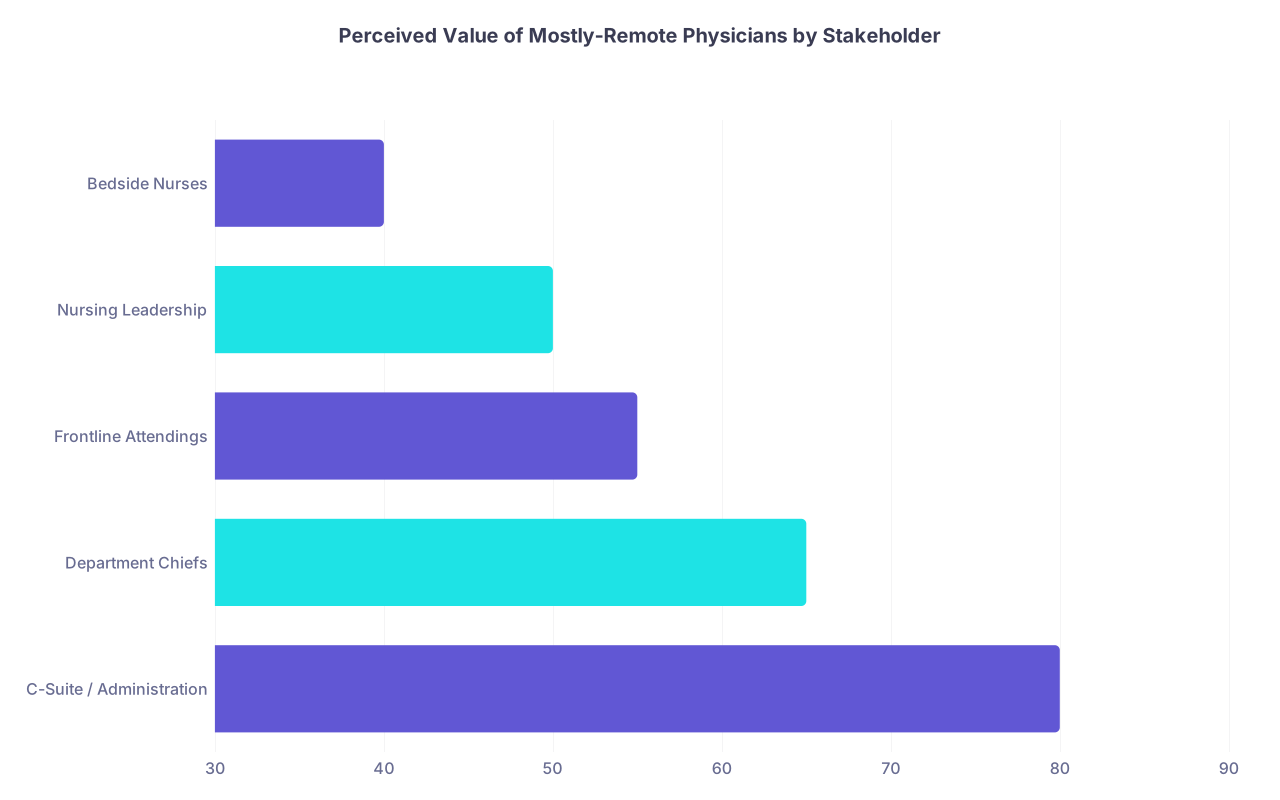
| Category | Value |
|---|---|
| C-Suite / Administration | 80 |
| Department Chiefs | 65 |
| Frontline Attendings | 55 |
| Nursing Leadership | 50 |
| Bedside Nurses | 40 |
That chart is not a peer-reviewed study. It’s the rough mental numbers I’d assign from what I’ve heard in those backroom conversations.
- C‑suite likes flexible bodies they can deploy across sites. You’re a system asset.
- Chiefs are split: they appreciate coverage, but they hesitate to invest leadership capital in someone not physically embedded.
- Frontline attendings often feel both envy (“nice to be home”) and resentment (“we’re the ones stuck here overnight”).
- Nursing leadership and bedside nurses trust you only to the degree they experience you as accessible and realistic.
Your job, if you go remote-heavy and still care about local reputation, is to push those numbers up with deliberate effort.
How to Go Remote Without Torching Your Local Reputation
You can absolutely build a strong, respected career with a lot of remote work. But you do not get that outcome by default. You get it by design.
Think of it as building a “local presence strategy” layered on top of your tele work.
1. Maintain a Non‑Trivial Onsite Footprint
Remote full-time with “occasional PRN” on site is the fastest way to become a rumor instead of a colleague.
If you care about local reputation and future leadership options, aim for something like:
- 3–4 in‑person days per month at one primary hospital,
- Or 1 full week every 6–8 weeks where you’re visibly embedded on a team.
During those windows, don’t just show up and churn notes. Walk the units. Eat in the cafeteria. Stick around for huddles. Make yourself physically memorable.

| Step | Description |
|---|---|
| Step 1 | Mostly Remote Schedule |
| Step 2 | Set Monthly Onsite Days |
| Step 3 | Join Key Meetings In Person |
| Step 4 | Take Visible Roles Onsite |
| Step 5 | Focus Only On Remote Metrics |
| Step 6 | Want Strong Local Reputation |
2. Anchor Yourself in Committees or Projects That Require Your Name
You need something local that ties your name to progress, not just coverage.
This might be:
- A sepsis pathway redesign committee
- A documentation and coding optimization group
- A tele-expansion planning task force where your remote expertise is actually an asset
The catch: you must show up consistently. Miss a couple meetings, and they’ll mentally move you to the “remote and unreliable” bucket.
3. Create Direct Channels With Nursing and ED
Do not let your only interaction with nurses be through the main operator or generic callback chains.
Set up:
- A direct nurse line for your tele shifts where they know they’ll get you or your partner
- A pattern of using video, not just audio, when discussing tough cases or family dynamics
- Periodic huddles or in‑service sessions (even on Zoom) where you’re teaching or reviewing cases with local staff
That builds emotional equity. So when something goes sideways, people say, “No, she’s solid, something else must have been off,” instead of, “Yeah, that remote doc again.”
4. Make Your Wins Visible, Not Just Documented
You have to fight the invisible‑win problem.
When you:
- Prevent an unnecessary transfer
- Help clear a dangerous ED board backup
- Resolve a complex disposition with social work
Tell the right people. Brief, non‑braggy updates. A two-line email to the chief, a quick note in a huddle: “We were able to avoid shipping three borderline cases out last night using tele coverage.”
Is it annoying to self‑advocate? Sometimes. But if you don’t, your biggest contributions evaporate into the ether.
The Hiring and Future Job Market Angle
Now let’s talk about the part you really care about but probably haven’t framed right: how remote-heavy practice looks when you apply for your next job.
I’ve sat on hiring committees flipping through CVs of candidates who’ve been doing almost all telemedicine for 3–5 years. The same doubts always come up:
- “Are their bedside skills rusty?”
- “Can they handle an unstructured, high-acuity in-person environment?”
- “Are they going to bail to another remote gig if we bring them in?”
- “Why didn’t they have any leadership roles if they’ve been out this long?”
If you want to remain competitive for solid, in-person or leadership positions later, you need to preempt those concerns.
That means:
- Keeping at least some continuous in-person work on the CV, not a big blank space
- Accumulating titles or roles that show you weren’t just collecting shifts (committee work, project leads, chief of tele-something)
- Getting letters from local people (not just tele admins) who can speak to your judgment and team behavior
The unspoken red flag: “Person who disappeared into telemedicine for 7 years and now wants back in.” That file gets a lot more scrutiny than you think.
A Quick Reality Check: Money vs Reputation
Let’s be honest. A lot of you eye remote work for two reasons:
- Schedule control
- Money (especially multiple state licenses, nocturnist tele gigs, etc.)
That’s legitimate. But you should walk into it understanding the trade.
Remote-heavy work tends to maximize income and flexibility today at the cost of lowering your ceiling for local prestige and leadership later—unless you actively protect that second track.
Here’s the rough tradeoff I see most often:
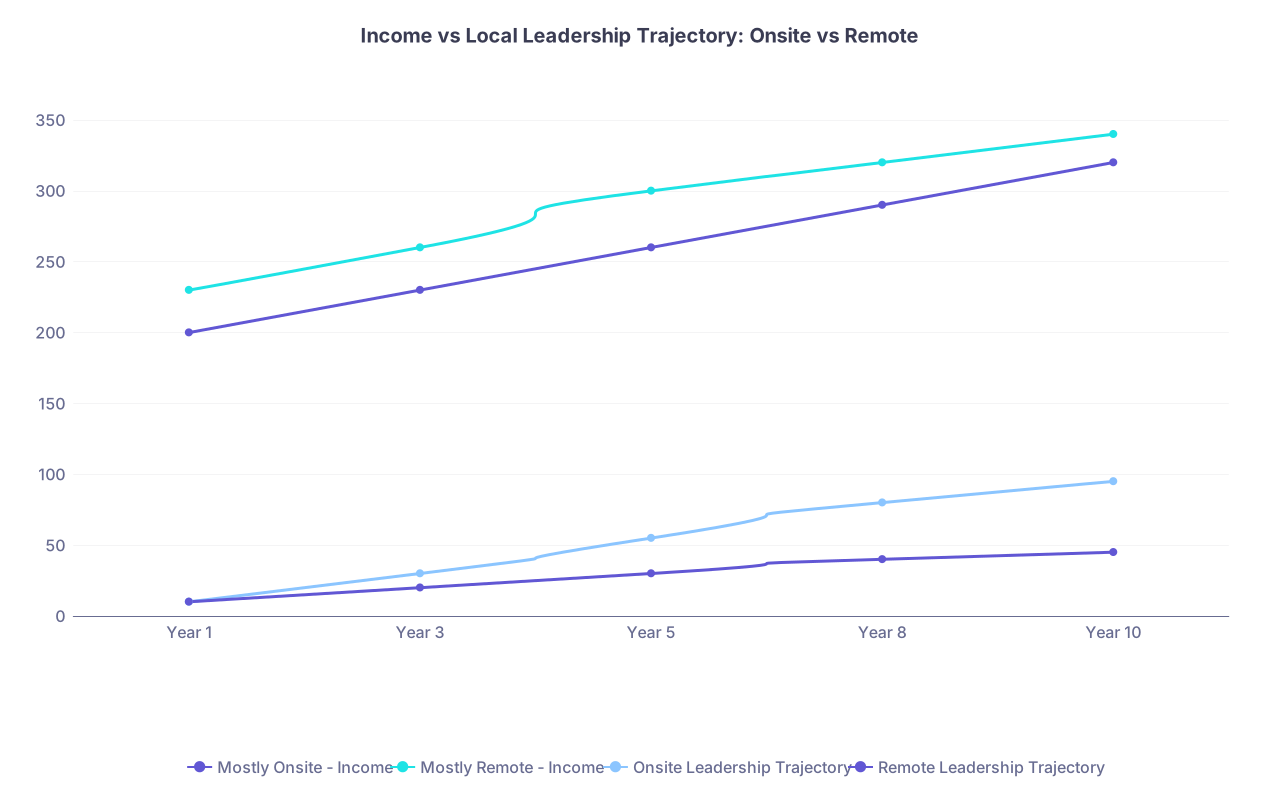
| Category | Mostly Onsite - Income | Mostly Remote - Income | Onsite Leadership Trajectory | Remote Leadership Trajectory |
|---|---|---|---|---|
| Year 1 | 200 | 230 | 10 | 10 |
| Year 3 | 230 | 260 | 30 | 20 |
| Year 5 | 260 | 300 | 55 | 30 |
| Year 8 | 290 | 320 | 80 | 40 |
| Year 10 | 320 | 340 | 95 | 45 |
Numbers are illustrative. The pattern isn’t.
Remote often pays more earlier and caps softer later. Onsite leadership tends to be slower burn but opens bigger doors down the line.
Neither path is “right.” What’s dumb is drifting into remote without realizing which capital you’re spending.
FAQs
1. If I go fully remote for a few years, can I realistically come back to a strong local role?
Yes, but not passively. If you disappear fully remote for 3–5 years with no onsite work and no visible leadership or project roles, you’ll be treated as a lateral hire who needs to re‑prove themselves. To make a real comeback, you’d want:
- Recent in-person clinical time (even part-time) in the 12–18 months before applying
- Concrete evidence of systems thinking or leadership from your tele role (protocol design, QI, metrics work)
- Strong references from people who know your current, not just past, bedside skills
Without that, you’re starting over reputationally, even if your CV looks senior on paper.
2. Does remote work hurt my chances at academic appointments or promotions?
It can, if your name isn’t tied to the physical institution. Promotion committees in academic centers care about three things: scholarly output, teaching, and service to the institution. Remote-only work disconnects you from bedside teaching, hallway consults, and day-to-day committee grind—all the small stuff that adds up to “service.” If academia is your goal, remote should be a supplement, not the backbone, unless your remote work itself is part of a defined academic telemedicine program with clear scholarly and teaching components.
3. How do I talk about my remote experience in interviews so it helps, not hurts, my image?
Frame it in terms of systems, scale, and skills, not just convenience. Talk about:
- Volume and diversity of cases across multiple sites
- How you learned to manage limited data and high uncertainty
- Any involvement in metrics, protocols, or tele-program design
Then immediately reassure them about in-person readiness: mention recent onsite work, comfort with procedures if relevant, and examples of collaborating with onsite teams. They need to hear that you didn’t “opt out” of real medicine; you learned a different angle on it.
4. Is there a “sweet spot” mix of remote and local work for reputation and lifestyle?
For most early- to mid-career physicians who still care about local options and leadership, the sweet spot I’ve seen is something like 50–70% remote, 30–50% in-person at a single “home” hospital or system. Enough onsite time that people know your face, give you roles, and see you as part of the fabric; enough remote time that you get the flexibility and income you want. The extreme mixes—95% onsite with miserable lifestyle, or 95% remote with no local anchor—are where people either burn out or find themselves boxed in later.
To boil it down:
Remote work changes how people talk about you when you are not in the building. It quietly shifts you from “core player” to “flexible asset” unless you work against that current. If you’re going to build a tele-heavy career, treat your local reputation as a separate, fragile project—one you maintain deliberately, not by accident.