
The default advice about telehealth licensing is terrible. “Get as many state licenses as you can.” That’s how you waste money, burn time, and still miss out on the best jobs.
You don’t need “as many as possible.” You need the right licenses for the kind of telehealth work you actually want to do.
Let’s break it down like a grown-up career decision, not a Reddit rumor thread.
The non-negotiable rule: Licensure is about the patient’s location, not yours
Here’s the hard line you can’t negotiate around:
You must be licensed in the state where the patient is physically located at the time of the visit.
Where you live doesn’t matter. Where your clinic is based doesn’t matter. Where your employer’s headquarters are doesn’t matter.
So the real question isn’t “How many licenses should I have?”
The real question is: “How many different states do I realistically need to see patients in?”
For most doctors, the honest answer is: far fewer than you think.
Start here: What kind of telehealth work are you actually planning?
Different telehealth setups require very different licensing strategies. If you skip this, you’ll make dumb, expensive choices.
1. Full-time employed telehealth (one main company)
Think: Teladoc, Amwell, Optum Virtual Care, large health systems’ virtual programs, Kaiser virtual, etc.
In this world:
- You’re usually hired with 1–3 existing state licenses (often just your home state).
- The employer often pays for and manages additional licenses as needed.
- They’ll usually tell you: “We need people in X, Y, Z states. If you have those already, great. If not, we’ll help you get them.”
For this path, you generally don’t need to walk in with 10 licenses.
You need:
- Your home state
- Maybe 1–2 high-demand states that make you more attractive (especially if they’re slow or painful to get, like CA, NY, or TX)
That’s it to start. The rest can be built once you’re hired.
2. High-volume urgent care / direct-to-consumer platforms
Think: 24/7 urgent care apps, asynchronous platforms, quick med refills, weight loss clinics, ED diversion programs.
These companies love clinicians with many licenses because their model depends on constant coverage across time zones and peak usage times.
Here’s the reality:
- For PRN or part-time roles, many platforms are thrilled if you have 3–5 solid licenses in decent-sized states.
- For high-priority / high-volume roles, they often prefer 8–15+ active licenses.
- But they also don’t want you to show up with a random collection of tiny states. They care about population coverage and demand.
For this path, the sweet spot after you’re sure about the work is often:
- Start: 2–4 licenses (home + 1–3 strategic states)
- Mature: 8–12 licenses if you like the work and want to maximize volume
You don’t start at 12. You grow into it as the income and workload justify it.
3. Private telehealth practice or niche specialty service
Think: your own virtual clinic in psych, ADHD, derm, obesity medicine, sleep, pain, etc.
Here, your decision is strategic:
- If you want to brand as “virtual practice in one state” (e.g., “Washington Online Psychiatry”), then:
- 1–3 licenses might be perfect.
- If you want to build a multi-state niche brand (e.g., “Online ADHD Clinic across the Southeast”), then:
- 3–7 licenses can be very powerful, especially in geographically clustered states.
You do not want 20 licenses for a solo or small practice unless you like paperwork and masochism.
4. Hybrid: in-person in one state + some telehealth on the side
Example: You’re in Arizona, employed in a clinic, and want to moonlight in telehealth.
In this case, your stack usually looks like:
- Your main state (where you already are)
- 1–2 nearby or high-yield states if a telehealth company specifically asks for them
So a normal number here is 1–3 licenses, not 10.
What’s “normal”? Realistic license counts for telehealth docs
Here’s how this tends to shake out in practice:
| Telehealth Setup | Common License Count |
|---|---|
| Full-time employed (single system) | 1–5 |
| High-volume urgent care / DTC | 5–15 |
| Solo/small private telehealth clinic | 1–7 |
| Hybrid in-person + side telehealth | 1–3 |
| “License collector” contractors | 15–25+ |
The “license collector” group includes people who’ve gone all-in on multi-platform contracting and often let employers pay and manage most renewals. That’s a very specific lifestyle and income strategy, and usually something you grow into, not something you start with.
The hidden costs of “more licenses”
Every license looks harmless by itself. Then renewal season hits.
Here’s what you’re signing up for every time you add a state:
- Initial application fees
- Fingerprinting, background checks, notarizations
- Annual or biennial license renewal fees
- CME expectations and audits
- Tracking expiration dates and requirements
- Credentialing updates with every company you work with
And your time is not free. I’ve seen people spend 20–30 hours a year just keeping 10–12 licenses current.
Let’s put some rough numbers on it.
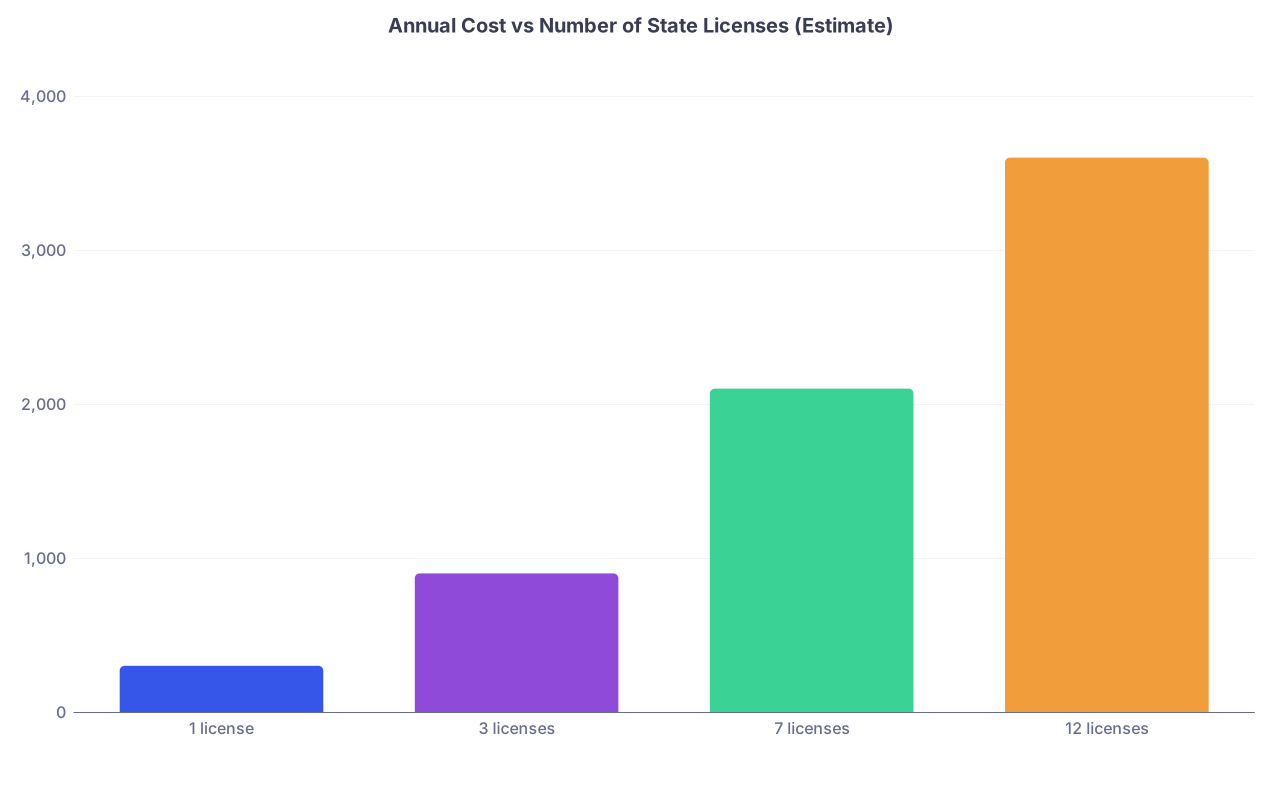
| Category | Value |
|---|---|
| 1 license | 300 |
| 3 licenses | 900 |
| 7 licenses | 2100 |
| 12 licenses | 3600 |
These are ballpark numbers (many states are $200–$500+ when you include fees and add-ons), and this doesn’t count your time.
If you’re not actually generating revenue from a state, that license is just an expensive ego trophy.
How to choose the right states (instead of random ones)
Stop thinking, “Which states are easy?”
Start thinking, “Which states will actually make me more employable and profitable?”
Here’s a much better decision framework.
Step 1: Anchor with your home state
You almost always want and need:
- Your primary state of residence
- Any state where you already have a physical practice or job
No debate there.
Step 2: Add high-yield states based on your goals
Pick 2–4 additional states based on:
- Population size + telehealth demand
Big population states that are often useful:- California, Texas, Florida, New York, Pennsylvania, Illinois, Ohio, Georgia, North Carolina, Michigan
- Regulatory friendliness to telehealth
Some states are chronically annoying for certain telepsychiatry, controlled substances, or async care models. - Employer demand
Ask companies directly: “Which states are you currently short on?” Common answers:- TX, FL, CA, NY, NJ, PA, AZ, WA, CO
- Your specialty
- Psych: big urban states + states with limited in-person access
- Peds: states with lots of families and strong Medicaid telehealth coverage
- Weight loss/HRT: states open to telehealth prescribing

| Step | Description |
|---|---|
| Step 1 | Define telehealth goal |
| Step 2 | Home state + 1 to 3 key states |
| Step 3 | Start with 3 to 5, grow to 8 to 12 |
| Step 4 | 1 to 7 clustered states |
| Step 5 | Hybrid side gig |
| Step 6 | 1 to 3 total licenses |
| Step 7 | Full time with one employer |
| Step 8 | High volume contractor |
| Step 9 | Own small practice |
What about the Interstate Medical Licensure Compact (IMLC)?
The IMLC is useful. It’s also oversold.
If your home state participates and you qualify, the Compact can:
- Speed up getting multiple licenses
- Simplify some paperwork
- Help you scale from, say, 3 to 10 states faster
But:
- You still pay every state’s full license fee
- You still manage renewals individually
- Some big states aren’t in the Compact
- It doesn’t magically create job offers if your specialty or experience isn’t what companies want
Use the Compact if you decide multi-state work is part of your strategy. Don’t get 10 licenses just because the button is there.
So… how many licenses do you actually need?
Let’s tie this down with specifics.
If you want: A stable, full-time, employed telehealth job
Target: 2–5 licenses, phased.
- Today:
- Get/keep your home state.
- Add 1–2 high-demand states your target employer mentions.
- After hire:
- Let the employer guide and fund additional states as they need them.
You look serious, flexible, and employer-friendly without lighting money on fire.
If you want: Flexible multi-platform contracting and maximum income
Target after ramp-up: 8–12 licenses.
But do it in stages:
- Phase 1 (months 0–6):
- 3–5 licenses: home + 2–4 high-yield states.
- Prove to yourself you like this work and the pay-per-hour or per-encounter makes sense.
- Phase 2 (months 6–18):
- Add more states only if additional platforms or shifts are actually available and you’re hitting your income targets.
- Phase 3:
- Maintain 8–12 that are genuinely pulling their weight.
- Drop dead weight states when renewals come due if they’re not producing.
This is how seasoned telehealth docs do it. Not by bragging about 20 licenses that they barely use.
If you want: A focused private telehealth practice
Target: 1–7 licenses, depending on your business model.
- If you’re new to running a business:
Start with 1–2 states (home + one logical neighbor or large-population state). - Once your practice is consistently full and profitable:
Add 1 state at a time based on patient demand and marketing plans. - Don’t expand faster than your infrastructure: scheduling, EMR, billing, malpractice, workflows.
More geography doesn’t fix a weak practice model.
If you want: Just a little extra telehealth moonlighting
Target: 1–3 licenses.
- Your home state is often enough for some platforms.
- Maybe add one big state that a specific company really wants (they’ll tell you).
If you’re only planning to work 4–8 telehealth hours a week, you don’t need 10 licenses. You just don’t.
Malpractice and administrative load: your quiet limiting factors
Most people forget this part when they’re fantasizing about income.
More licenses means:
- Your malpractice policy has to cover all those states
- Every telehealth platform has to credential you in every state separately
- Every change—address, name, DEA, board certification—gets multiplied by however many states you hold
Then one day you’re spending an entire weekend filling out state renewal forms and wondering why you thought 14 licenses was a good life choice.
Think in terms of total admin burden you’re willing to accept each year. For many sane people, that caps around 5–8 licenses unless they’ve outsourced the whole thing or their employer does it.
A quick reality check: pay vs. license count
Here’s the rough pattern I’ve seen over and over:
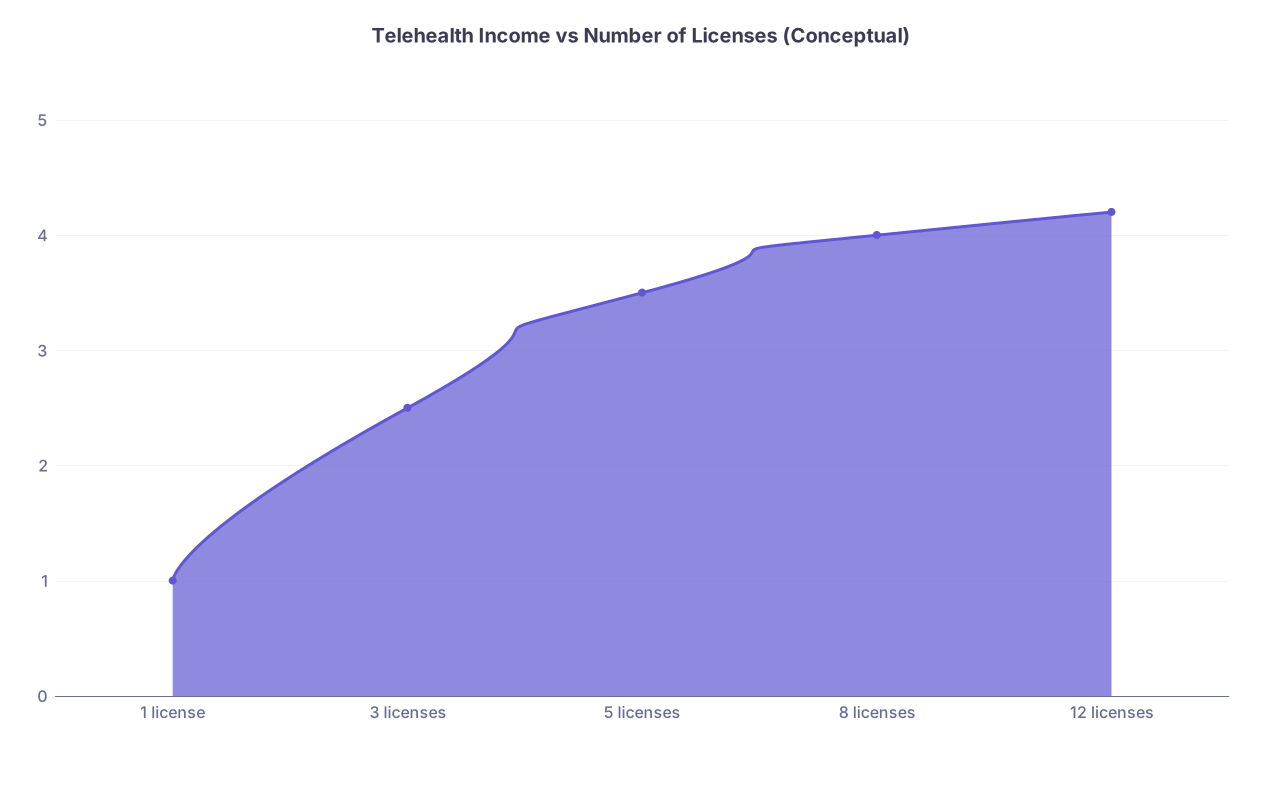
| Category | Value |
|---|---|
| 1 license | 1 |
| 3 licenses | 2.5 |
| 5 licenses | 3.5 |
| 8 licenses | 4 |
| 12 licenses | 4.2 |
Not scientific, but representative:
- Going from 1 to 3–5 licenses usually brings a big jump in opportunity and income.
- Going from 5 to 8 helps if you’re in a strong contractor or multi-platform role.
- Beyond 8–10, you hit diminishing returns hard unless you’re extremely intentional.
So no, more doesn’t always mean more money.
The bottom line
You don’t need 10+ state licenses to have a strong telehealth career. That’s hype.
You need:
- Your home state, plus
- A small, strategic set of additional states that match:
- Your telehealth model (employed vs contractor vs private practice)
- Your specialty
- Actual employer demand and patient volume
For most post-residency physicians:
- 2–5 licenses is plenty to land excellent full-time or hybrid telehealth roles.
- 5–10 licenses makes sense only once the work and income justify the overhead.
- Anything beyond that should be a conscious business decision, not FOMO.
Do this today
Open a notes app and write down three things:
- The exact telehealth setup you want in the next 12 months (employed/contractor/private).
- Your current licenses (state + expiration date).
- 3–5 target states that realistically fit your plan (based on employer needs, population, and your specialty).
Then make one decision: Which single state license—if any—actually makes sense to pursue next?
If you can’t explain in one sentence how that state will lead to real patients or a real job, don’t apply for it yet.