
The worst telemedicine mistake new attendings make? Jumping in with no strategy: either dabbling with 2 random platforms or quitting a stable job for a tele gig they barely understand.
You’re not choosing “telemedicine or real medicine.” You’re choosing how telemedicine fits into your career and income after residency. And yes, there’s a right way to test it as a side gig and a right way to go all‑in.
Let’s break it down like a grown‑up decision, not a Reddit thread.
The Core Question: Side Gig vs All‑In
Here’s the blunt answer:
- If you’re within your first 2–3 years out of residency → you should almost always start telemedicine as a side gig.
- Going all‑in on telemedicine right after residency only makes sense if:
- You have clear financial runway (6–12 months), and
- You understand the telemedicine business model, not just the clinical work, and
- You have a strong reason: lifestyle, geography, family, entrepreneurship, or burnout from brick‑and‑mortar.
Telemedicine is not magically more “flexible” or “easier.” It just trades one set of constraints (call, in‑person volume, commute) for another (platform rules, RVU or per‑visit pay, algorithmic scheduling, sometimes brutal volume).
So your actual question is:
“Should I use telemedicine to supplement and experiment, or as my primary career structure right away?”
For most people? Start with supplement and experiment.
How Telemedicine Really Pays (And Why It Matters to This Decision)
You can’t decide side gig vs all‑in until you understand how the money actually works.
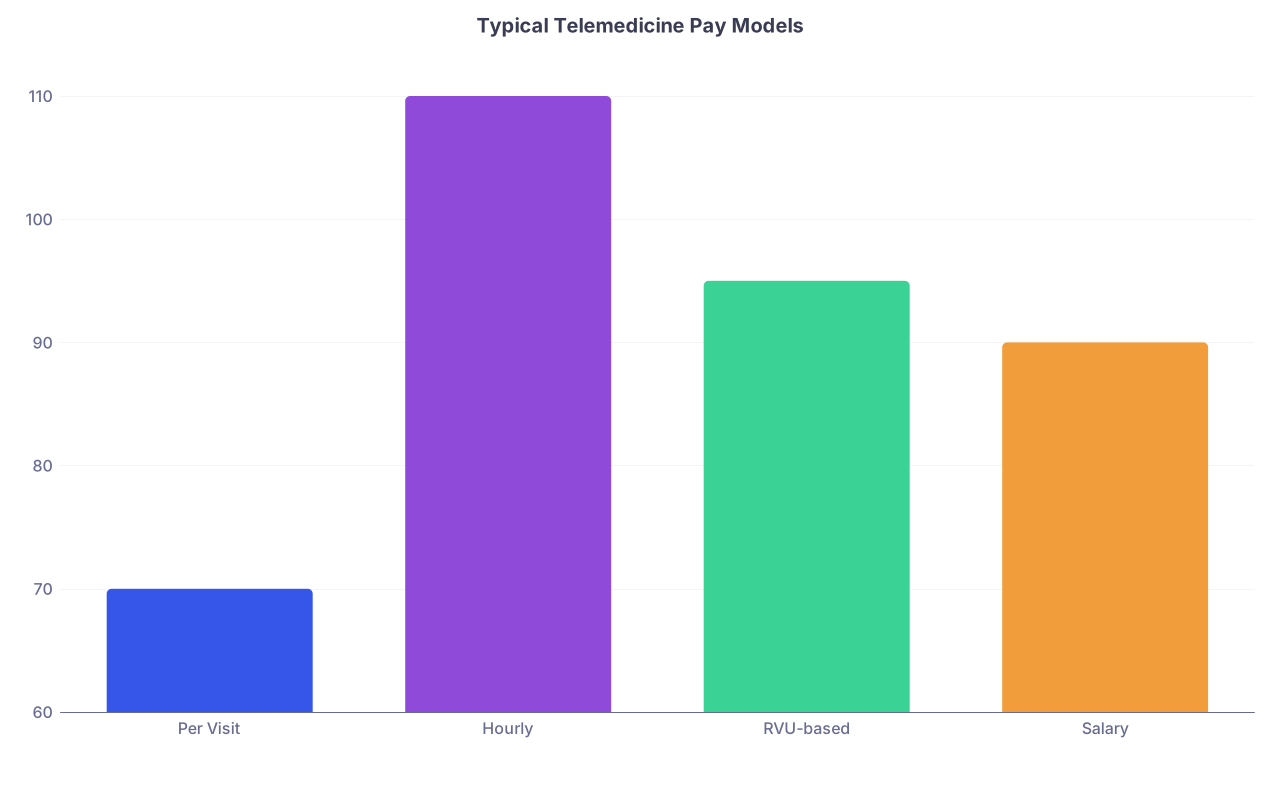
| Category | Value |
|---|---|
| Per Visit | 70 |
| Hourly | 110 |
| RVU-based | 95 |
| Salary | 90 |
Values are rough per‑hour effective ranges (USD) for primary care/urgent care–type telemedicine if you’re reasonably efficient.
Common models:
Per‑visit (e.g., $25–$40 per simple visit, $50–$80 for longer/complex)
- Great if you’re fast, terrible if volume drops.
- Platforms may batch short visits; “10 quick colds” can turn into charting hell.
Hourly (e.g., $90–$140/hr for IM/FM/EM tele urgent care)
- More predictable, lower stress.
- They can control your schedule, cut hours if volume is low.
RVU‑based
- Similar to clinic work; your coding and efficiency matter.
- Common in virtual specialty consults and large health systems.
Salaried tele jobs
- Usually health systems or larger groups.
- More stability, often more admin/emails/messaging.
Here’s the key: The pay looks comparable to a clinic job on paper, but:
- You’re often 1099 (no benefits, no retirement match, you pay both sides of FICA).
- Work can be feast‑or‑famine depending on the platform and season.
- Some platforms oversubscribe clinicians → you’ll sit logged in with few visits.
That’s why going all‑in right away can be risky until you’ve tested actual volume and pay with your own numbers, not marketing copy.
When Telemedicine Makes Sense as a Side Gig
Telemedicine is a fantastic side gig in three scenarios:
- You want to boost income to crush loans / build savings.
- You’re sampling different career models before committing to one.
- You want to gradually pivot to location‑flexible work (move states, travel more, be home with kids, etc.).
Use a side gig to answer real questions with data:
- How many patients per hour can you comfortably and safely see?
- What does your real after‑tax, after‑malpractice, after‑charting‑time pay per hour look like?
- Do you actually like staring at a screen for hours, managing care with incomplete data?
Here’s what a smart side‑gig setup often looks like in the first 1–2 years post‑residency:
| Work Type | Weekly Hours | Notes |
|---|---|---|
| Clinic / Hospital Job | 32–40 | Primary income, benefits |
| Telemedicine (1 platform) | 4–8 | Weeknights or 1 weekend day |
| Telemedicine (backup) | 0–4 | Only during surge/slow weeks |
Notice I said 1 main platform, backup optional. The worst move is signing up for 7 platforms, onboarding for months, then realizing 2 of them are garbage and 3 never give you volume.
Side Gig: Pros and Cons
Upsides of starting as a side gig:
- You keep your W‑2 stability (benefits, base salary).
- You learn:
- Which platforms pay you consistently.
- Which workflows you hate.
- How much televolume you can tolerate without burning out.
- You get optionality:
- You can ramp up tele if your main job becomes toxic.
- Or drop tele if you’re fried.
Downsides:
- Time. Your evenings/weekends get eaten.
- Risk of overworking yourself early in your attending years.
- You might under‑sample tele if you only do 2 hours a week; you need enough exposure to judge it fairly.
If your question is “I just finished residency and want to see what telemedicine is like,” the answer is simple: side gig first. No debate.
When It’s Reasonable to Go All‑In on Telemedicine After Residency
Now let’s talk about the minority of you for whom going all‑in is actually rational.
These are the people I’ve seen make full‑time tele work right out of training:
Geography‑driven
You need or want to live somewhere with limited in‑person jobs (rural area, overseas spouse, frequent moving with military family), and tele is the only way to match your training and desired income.Lifestyle non‑negotiables
You’re absolutely done with nights/weekends/holidays in the hospital. Or you have caregiving responsibilities that require true location flexibility.Entrepreneurial bent
You’re not just working on a platform — you’re building:- A direct‑to‑consumer niche tele practice (e.g., ADHD, obesity, men’s health, perinatal mental health).
- A B2B tele service for employers/clinics. This is more startup life than “job.” Different risk profile.
You’ve already test‑driven tele as a resident or moonlighter
And you know:- Your realistic volume.
- Your preferred schedule.
- Your tolerance for screen‑based care.
If you’re going to go all‑in, you must treat it like a serious business decision, not “I’ll just log on and see patients from the couch.”
Here’s what responsible “all‑in” looks like:

| Step | Description |
|---|---|
| Step 1 | Residency Done |
| Step 2 | Start Tele as Side Gig |
| Step 3 | Delay All In, Build Savings |
| Step 4 | Keep Hybrid Model |
| Step 5 | Plan Full Time Tele Strategy |
| Step 6 | Tested Tele Side Gig 3-6 months |
| Step 7 | Savings 6-12 months expenses |
| Step 8 | Clear Reason for Full Time Tele |
If you can’t honestly check those boxes, you’re gambling.
Hybrid Might Be the Sweet Spot (At Least for a While)
Most physicians who end up happy with telemedicine don’t live at the extremes. They land in some version of hybrid practice:
- 0.5–0.7 FTE in‑person (clinic or hospital)
- 0.3–0.5 FTE telemedicine (platforms or your own tele clinic)
This gives you:
- A base salary + benefits anchor
- Real‑world clinical contact (procedures, physical exams, team interactions)
- Tele flexibility for extra income, experimentation, or geographic planning
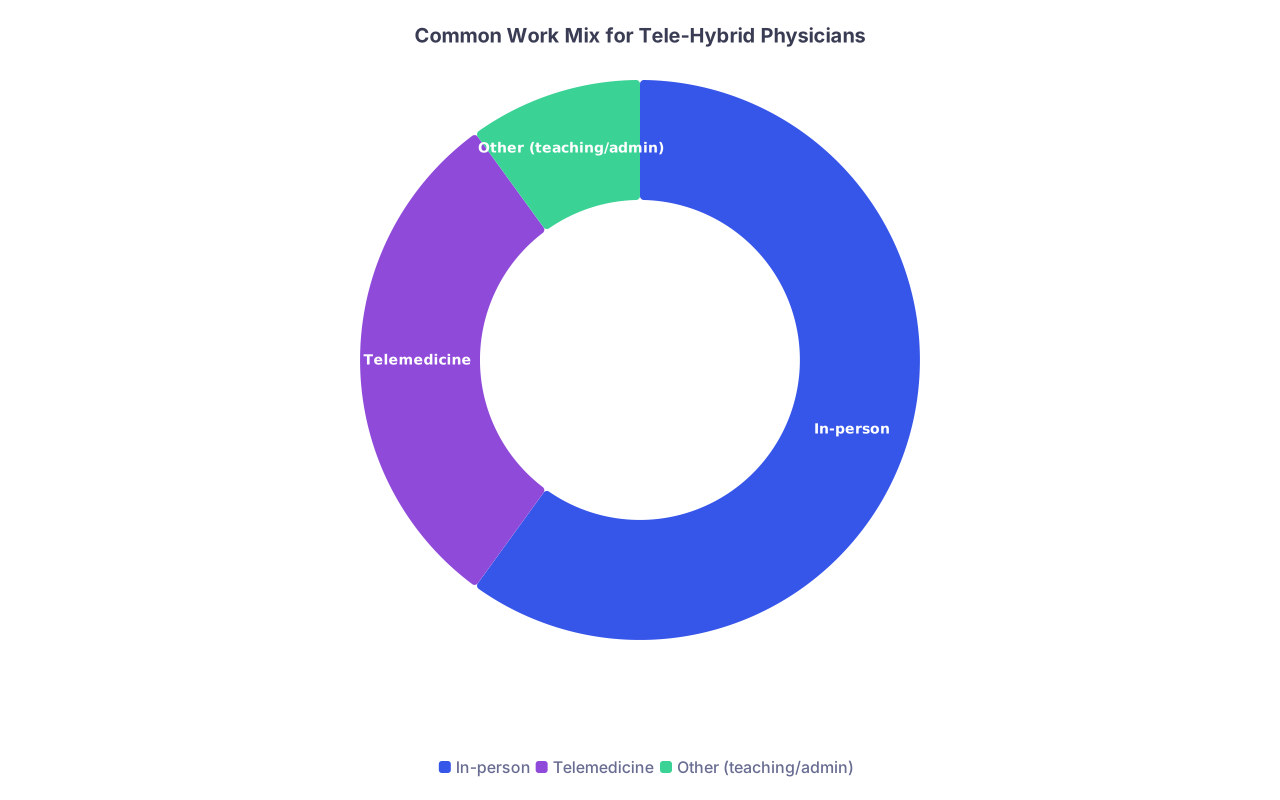
| Category | Value |
|---|---|
| In-person | 60 |
| Telemedicine | 30 |
| Other (teaching/admin) | 10 |
Hybrid also lowers one subtle but real risk of going all‑in on tele: clinical deskilling.
In pure tele urgent care, you’ll see a ton of rashes, UTIs, URIs, med refills. Useful, sure. But you’re not doing procedures. You’re not examining complex patients head‑to‑toe. 5 years of that and your comfort level with hands‑on medicine can fade. Hybrid keeps your skills sharper and your options open.
If you’re even 20% unsure about your long‑term direction, hybrid beats going all‑in early.
Concrete Decision Framework: What Should You Do?
Let’s stop hand‑waving and put this into a checklist.
You should start telemedicine as a side gig if:
- You’re ≤3 years out of residency.
- You don’t have 6–12 months of living expenses saved.
- You’re still figuring out your preferred specialty niche or practice style.
- You rely on health insurance/benefits through your employer (family, chronic conditions).
- You’ve never done substantial tele work before.
Your next steps:
- Pick 1–2 reputable tele platforms that fit your specialty (e.g., Teladoc, Amwell, MDLive, PlushCare, Hims/Hers, Ro-type platforms, or a health system’s teleprogram).
- Start with 4–8 hours a week for 3–6 months.
- Track:
- Visits per hour
- Effective hourly pay after charting
- How drained or energized you feel after a shift
- Decide:
- Tele is just a money booster → keep side gig.
- Tele feels like your future → start planning a hybrid or all‑in path intentionally.
You can consider going all‑in on telemedicine if:
- You already tried tele for at least a few months and liked it.
- You have financial runway (6–12 months of expenses in cash or ultra‑safe assets).
- You have a specific plan, not just vibes:
- Full‑time with a specific platform or group that has guaranteed hours
- Or your own niche tele practice with a business model, not just a logo
- You’re okay taking on:
- 1099 complexity (taxes, retirement, malpractice, benefits)
- Income variability
- The possibility you’ll pivot again in 1–3 years
And even then, I’d still strongly consider hybrid for at least the first year.
Red Flags: When You’re About to Make a Bad Move
I’ve seen people crash doing this wrong. Pattern is always the same.
Watch for these warning signs:
“I hate my current job, so I’ll just quit and do telemedicine full time.”
Translation: You’re running away from something, not toward a defined plan.“This platform recruiter promised I’ll make $300k working from home.”
Translation: They showed you the math for their top 5% volume outliers.“I don’t really understand how they get patients, but they said volume is great.”
Translation: You’re trusting marketing, not your own data.“I’ll figure out the taxes, retirement accounts, and malpractice later.”
Translation: You’re about to bleed money and stress on the backend.
Fix: Slow down. Do 3–6 months of part‑time first, even if you’re 100% sure you’ll love it. Experience humbles everyone.
A Simple Telemedicine Career Roadmap After Residency
If I were advising a brand‑new attending who’s tele‑curious, here’s the rough path:
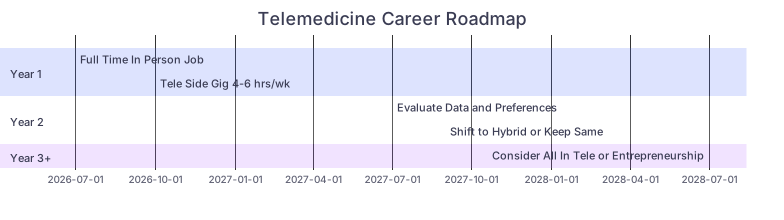
| Task | Details |
|---|---|
| Year 1: Full Time In Person Job | a1, 2026-07, 12m |
| Year 1: Tele Side Gig 4-6 hrs/wk | a2, 2026-10, 9m |
| Year 2: Evaluate Data and Preferences | b1, 2027-07, 2m |
| Year 2: Shift to Hybrid or Keep Same | b2, 2027-09, 10m |
| Year 3+: Consider All In Tele or Entrepreneurship | c1, 2028-07, 12m |
Year 1: Stability + experimentation.
Year 2: Adjust based on what you actually like and what actually pays.
Year 3+: If tele is clearly your lane, that’s when going all‑in starts to look smart, not impulsive.
FAQs
1. Can you realistically make $250k–$300k doing only telemedicine?
Yes, but not casually and not for everyone. You’ll need:
- High volume (often 4+ visits/hr in urgent care style work, or strong RVUs in specialty tele).
- Multiple state licenses, ideally in high‑demand states.
- Good schedule coverage (nights/weekends can pay more). Most docs land lower unless they really optimize and tolerate high volume.
2. Is telemedicine bad for your clinical skills if you do it full time?
It can be, depending on your field. If you do only low‑acuity urgent care tele for years, your procedural and complex in‑person assessment skills will dull. That’s why I like:
- Hybrid models (some in‑person clinical time)
- Or tele roles that include more complex care (specialty consults, longitudinal primary care) if you’re full time.
3. Do I need multiple state licenses before I start?
No. Start with your home state and see if you even like tele work. Once you’re sure, then:
- Ask your tele employers which states are most useful.
- Let platforms pay for and manage additional licenses when possible. Don’t drop $5k+ on 8 licenses before you’ve done a single shift.
4. Which specialties are best suited for full‑time telemedicine?
Most common:
- Family medicine / internal medicine
- Emergency medicine / urgent care
- Psychiatry
- Endocrinology, rheumatology, some neurology (consult/second‑opinion models) Psych and primary care are especially strong because they translate cleanly to virtual and have recurring demand.
5. Bottom line: should I start telemedicine as a side gig or go all‑in?
If you’re asking this question and you’re newly out of residency, start as a side gig. Use 3–6 months of real experience to:
- Test your income potential
- See if you like the work
- Decide if hybrid or all‑in makes sense later
Going all‑in without that data is a career and financial gamble you don’t need to take.
Key takeaways:
- Telemedicine is a great tool, not a magic escape hatch.
- New attendings should almost always start as a side gig, then move to hybrid or full‑time once they have data.
- If you ever go all‑in, treat it like a business decision: savings, clear plan, and eyes wide open.