
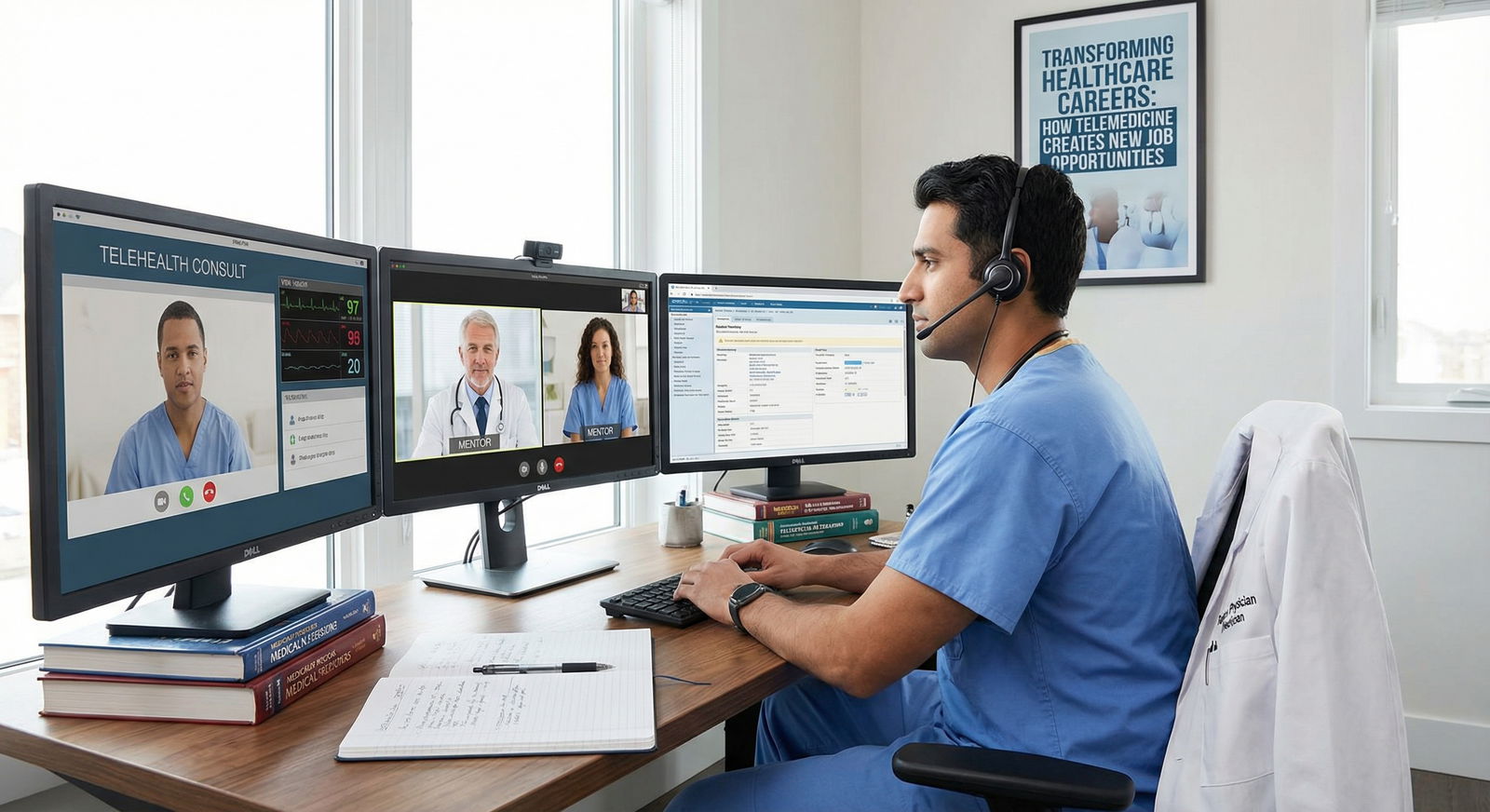
What if I told you you can build real telemedicine income as a proceduralist—but only if you stop pretending the clinic visit is the “product”?
Let’s cut straight to it: telemedicine and procedural specialties have a complicated relationship. If you’re a surgeon, interventionalist, GI, cardiologist, anesthesiologist, etc., your value is tied to your hands and your ability to do things to patients—not just talk to them.
So the question isn’t “Can I do telemedicine as a proceduralist?”
The question is “Where in my workflow does telemedicine make sense—and where is it a waste of time or revenue?”
The core truth: telemedicine is great for decisions, terrible for doing
Telemedicine works where the decision is the product:
Should we operate? Which procedure? How soon? Do we change the stent? Repeat the scope? Order the CT?
Telemedicine breaks down where you actually have to touch someone, adjust equipment, or respond minute‑to‑minute in a procedure room.
So here’s the quick map:
| Phase of Care | Telemedicine Fit | Why It Works / Fails |
|---|---|---|
| New patient triage | Strong | History-heavy, low-touch decisions |
| Pre-op / pre-procedure | Moderate–Strong | Education, consent, optimization |
| Intra-procedure | Weak–Niche only | Hands-on, real-time, liability issues |
| Post-op early followup | Moderate | Wound checks, symptom review, med changes |
| Long-term surveillance | Strong | Imaging/lab review, risk management |
Now let’s walk through how this actually plays out specialty by specialty, and then we’ll talk logistics, pay, and what not to waste your time on.
Where telemedicine works extremely well for procedural physicians
These are the zones where you can safely lean in, build revenue, and actually improve your lifestyle without sabotaging your OR schedule.
1. Triage and surgical decision-making
You don’t need hands-on contact to decide:
- Does this gallbladder need surgery now, later, or never?
- Does this spinal stenosis patient need decompression or just PT and injections first?
- Does this AFib patient need ablation vs meds vs just better follow-up?
If you have prior records, imaging, and labs, 80–90% of the decision can be made via video.
Think of use cases like:
- A neurosurgeon reviewing an outside MRI to see if someone is a surgical candidate
- An orthopedic surgeon triaging knee pain referrals to decide MRI vs injections vs OR
- An interventional cardiologist reviewing cath/echo results for PCI vs CABG vs meds
You’re not trying to do a full neuro exam through the webcam. You’re answering a narrow, high-value question: “Do you need a procedure and what kind?”
This is also where second-opinion work lives, and that’s often highly billable, self-pay-friendly, and often doable in evenings or between cases.
2. Pre-op and pre-procedure work that doesn’t require a physical exam
A lot of what you do before a procedure is cognitive and educational, not physical:
- Explaining the procedure, risks, alternatives
- Answering questions from patients and families (often multiple states away)
- Reviewing med lists, stopping anticoagulants or GLP‑1s, adjusting insulin
- Making anesthesia and perioperative risk decisions, sometimes in collaboration
- Confirming indications and reviewing imaging
You still need a physical exam somewhere in the chain.
But it doesn’t have to be you, and it doesn’t have to be in the same visit.
Models that work:
- Local PCP or NP does the physical. You do tele pre-op counseling and decision-making.
- In large systems, nurse or APP does in-person intake, vitals, wound checks; you jump in via video for the high-level decision.
- For endoscopy, cath, EP: often imaging + labs + focused history is enough for many cases, especially if you already know the patient.
This can be structured as:
- Tele-only pre-op for established patients
- “Hybrid” visits: RN/APP in room, you on video, especially for outreach clinics or satellite sites
Is it billable? Yes, and in many systems it’s RVU-generating just like in-person visits.
3. Post-op and post-procedure care that’s more about monitoring than touching
Early post-op visits and long-term follow-ups are often ideal for telemedicine if you structure them right.
Strong candidates:
- Surgical wound checks where the incision can be clearly visualized on video and the patient can describe pain, drainage, fever
- GI post-endoscopy follow-up to discuss biopsy results and next steps
- Post-PCI, post-TAVR, post-ablation follow-up after patients are clinically stable
- Pain/procedure follow-ups where the main question is: “Are we repeating this or escalating?”
You avoid:
- Dragging stable patients hours into clinic for a 5–10 minute conversation
- Wasted clinic slots on low-yield visits that could’ve been virtual
- Overcrowding your schedule while still meeting quality and continuity metrics
You still bring people in when something looks off on video—erythema, dehiscence, possible infection, new neuro deficits, etc.
4. Chronic disease and surveillance tied to your procedure
Proceduralists forget this: you don’t just do “one and done” procedures. You often own the long tail of surveillance.
Good telemedicine fits:
- GI: Barrett’s surveillance planning, colonoscopy recall intervals, chronic IBD management between scopes
- Cardiology/EP: AFib burden review with remote monitoring, ICD/CRT follow-up, med adjustments after interventions
- Vascular: duplex scan reviews, PAD symptom review, stent surveillance
- Pain: response to RFA, stim trials, escalation to pump vs surgery
What makes this efficient is having the data (labs, imaging, device downloads) available in advance. Then the visit becomes a focused decision discussion rather than data collection.
5. Second opinions, especially across geography
Telemedicine was basically built for second opinions in procedural fields:
- “My surgeon recommended fusion. Do I really need it?”
- “They told me to get my colon removed. Are there options?”
- “My cardiologist is pushing for TAVR. Is that reasonable at my age?”
These are high-trust, high-value conversations. They’re almost entirely cognitive. And they’re often cash-pay or out-of-network in a way patients understand.
As a proceduralist, this is one of the most intellectually satisfying and schedule-flexible telemedicine niches you can build post-residency.
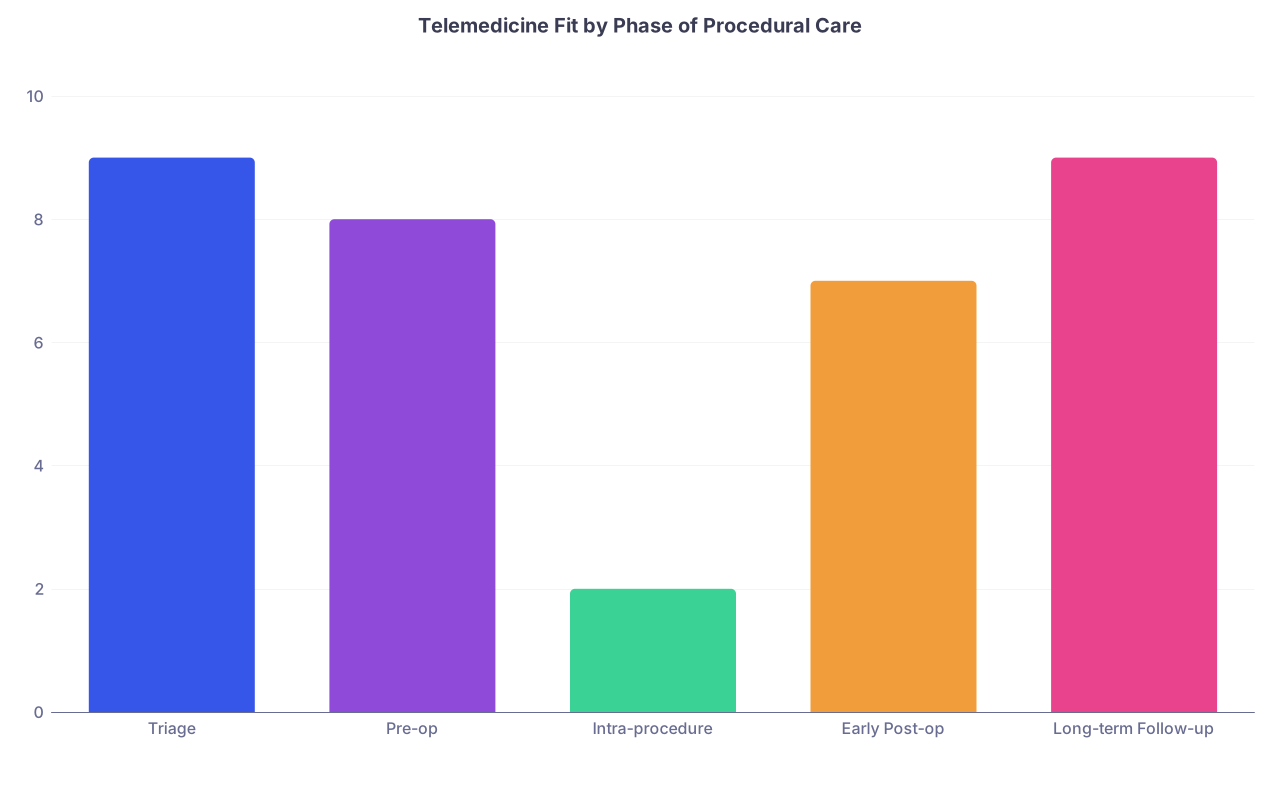
| Category | Value |
|---|---|
| Triage | 9 |
| Pre-op | 8 |
| Intra-procedure | 2 |
| Early Post-op | 7 |
| Long-term Follow-up | 9 |
Where telemedicine doesn’t work (or is mostly hype) for proceduralists
Here’s where people get suckered by buzzwords and end up frustrated.
1. Actually doing the procedure “remotely”
You’ll hear about:
- Remote robotic surgery across continents
- “Tele-endoscopy”
- Remote interventional supervision
In real life, outside of PR pieces and a few guarded pilots, this is not where most careers are headed right now.
Barriers:
- Latency and reliability: you can’t lag during a dissection or a stent deployment
- Liability: who’s responsible if the feed drops during a complication?
- Credentialing and privileging across sites and states
- Team training: local staff still need real hands and immediate judgment
There are niche environments (large academic systems, DoD, extremely remote areas) where tele-mentoring or remote guidance works: experienced surgeon on video, local surgeon doing the hands-on work.
But “I sit at home and run a cath lab via telemedicine” is not a realistic job for 2024–2026 for 99.9% of people.
2. Replacing all physical exams with video
Some specialties can get away with minimal exam in certain contexts. Procedural fields… less so.
If any of these are true, you still need in-person at some point:
- Surgical risk depends heavily on airway, body habitus, frailty
- You need to assess pulses, masses, hernias, joint stability, neuro deficits
- You’re working in a medico-legal minefield (e.g., spine surgery, chronic pain, neurosurgery)
Yes, you can screen by video. No, you shouldn’t treat it like a complete substitute where fine physical findings really matter.
A workable compromise post-residency:
- Use tele for initial decision-making and education
- Bring them in for a targeted exam immediately pre-op or in a shorter in-person slot
- Use APPs locally when you’re doing remote outreach
3. High-acuity or rapidly evolving situations
You don’t want to be doing this via tele:
- Evaluating suspected compartment syndrome
- New post-op chest pain and dyspnea with possible PE or MI
- Acute neuro deficits post-spine or neuro procedure (unless you’re running a proper telestroke-like setup with real infrastructure)
Telemedicine is fantastic for scheduled, semi-stable, or chronic issues. It’s poor for “I might need to take you directly to the OR/cath lab now” unless you’re integrated with the on-site team.
4. High-volume, low-complexity tele clinics that cannibalize OR time
This is a subtle trap.
Systems see your RVU productivity per hour in clinic and decide: “Let’s add a bunch of tele slots—it’s easy!”
But if:
- Every added tele slot delays your block time, or
- The payer mix is worse, or
- These visits don’t actually lead to procedures
…you’ve just traded high-value OR time for mediocre-margin video visits.
As a proceduralist, your leverage is in the procedure room. Use telemedicine to fill that pipeline efficiently, not to drown yourself in low-yield visits.
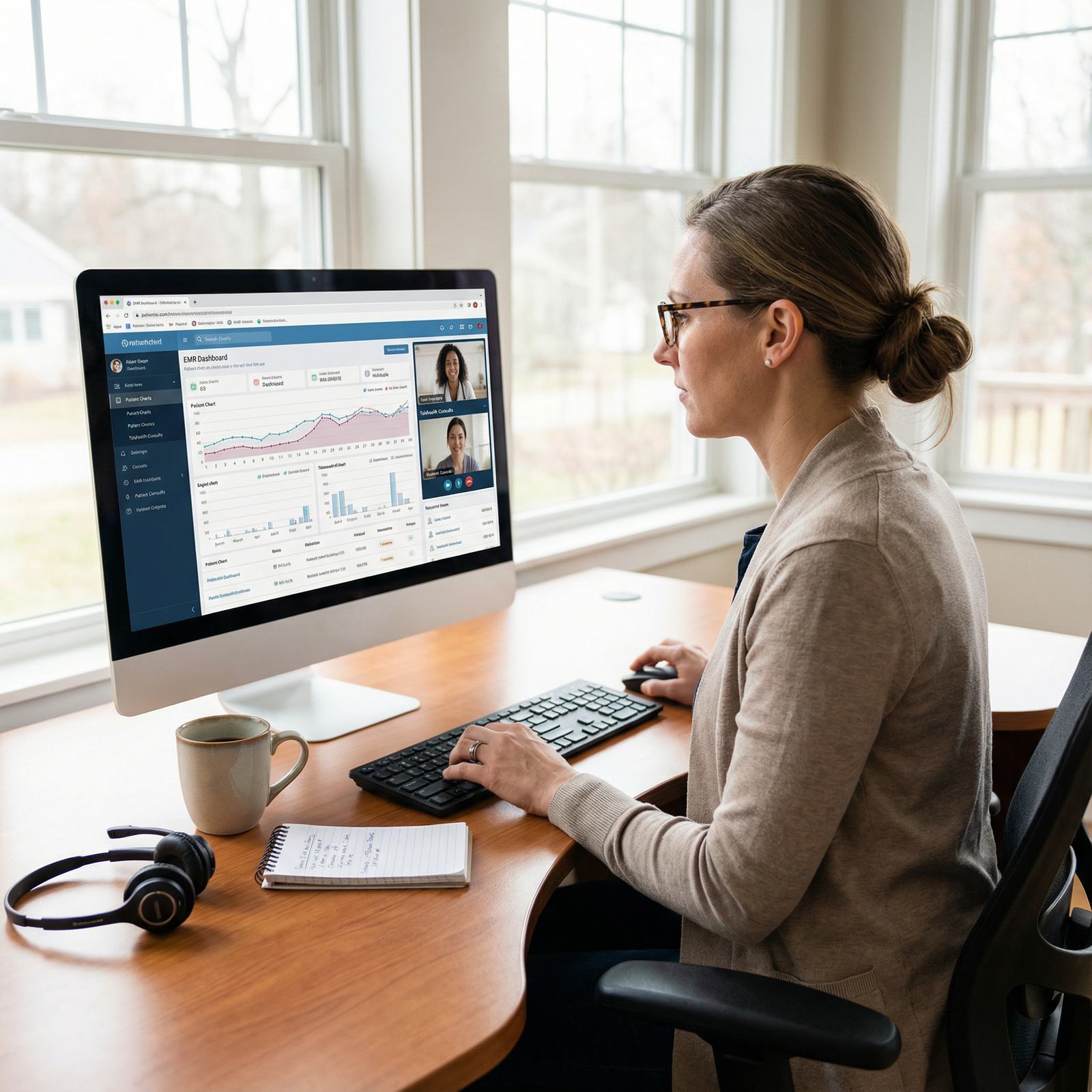
Best procedural specialties for telemedicine work (post-residency)
Let’s be blunt. Some procedural fields get more telemedicine upside than others.
| Specialty | Telemedicine Potential | Where It Works Best |
|---|---|---|
| Interventional Cardiology/EP | High | Follow-up, device checks, triage |
| GI / Endoscopy | High | Triage, results, chronic disease |
| General Surgery | Moderate–High | Triage, pre-op, post-op |
| Orthopedics | Moderate | Triage, post-op, chronic follow-up |
| Neurosurgery/Spine | Moderate | Second opinions, triage |
| Pain/Anesthesia | High (Pain) / Low (OR Anes) | Chronic follow-up, med mgmt |
Quick takes:
- GI: Goldmine for tele follow-up and chronic disease. Many systems already pay well for virtual IBD, liver, GERD clinics.
- Interventional cardiology / EP: Remote monitoring, device clinics, AFib follow-up → perfect tele fit.
- Pain: Huge tele upside for med adjustments, follow-up, and decision-making. Procedures stay in person.
- General surgery: Solid use for pre-op and post-op, especially for patients traveling long distances.
- Orthopedics / Spine / Neurosurgery: Best played for triage and second opinions, with clear under-promise on the exam quality.
- Anesthesia (pure OR): There’s very little purely tele-only work apart from pre-anesthesia evaluations that are usually integrated into local systems.
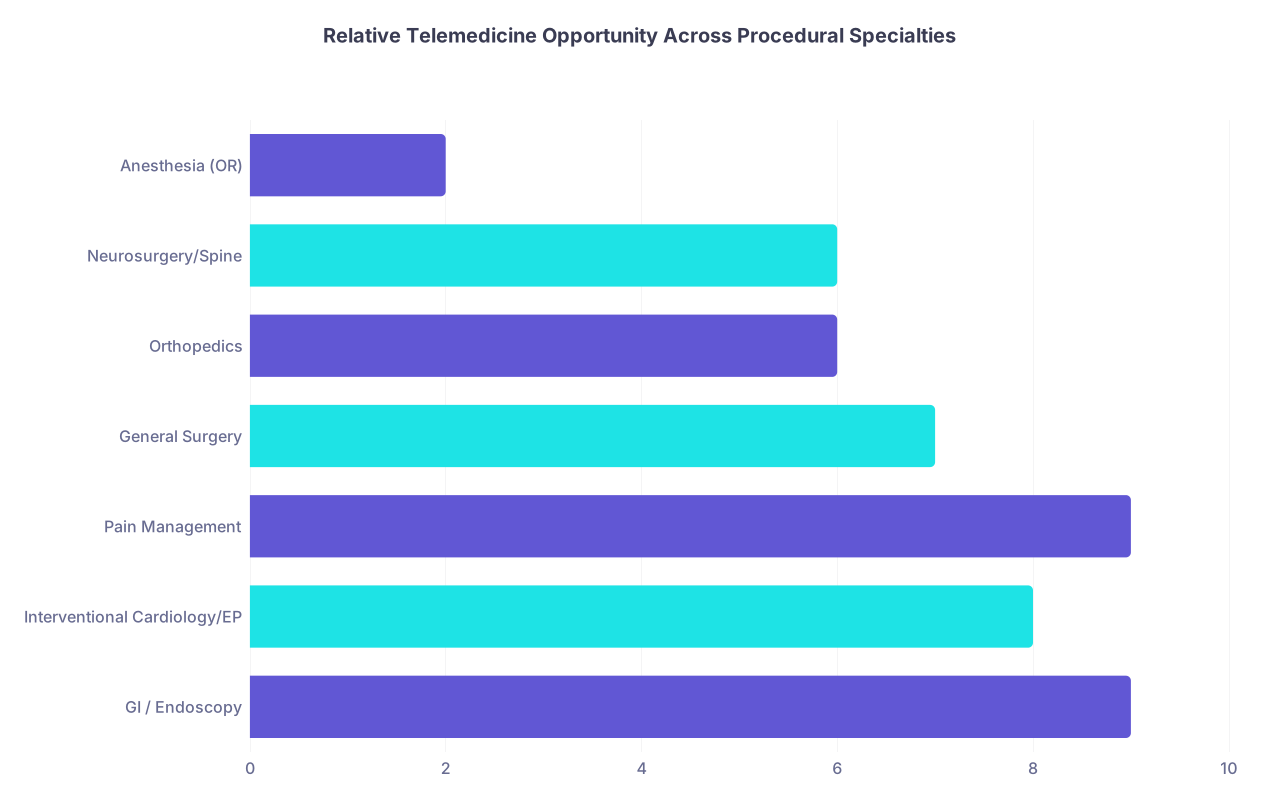
| Category | Value |
|---|---|
| GI / Endoscopy | 9 |
| Interventional Cardiology/EP | 8 |
| Pain Management | 9 |
| General Surgery | 7 |
| Orthopedics | 6 |
| Neurosurgery/Spine | 6 |
| Anesthesia (OR) | 2 |
Career and business angles: how to actually make this work
Here’s what matters when you’re planning post-residency or early-career.
1. Decide what you’re optimizing for
Be honest: is your goal…
- Extra income on your schedule?
- Geographic flexibility (travel, spouse job, kids)?
- Cutting down clinic time while preserving OR time?
- Building a niche second-opinion brand?
Telemedicine will look very different in each scenario.
Example paths:
- Interventional cardiologist: full-time brick-and-mortar, 0.2–0.3 FTE of tele follow-up and out-of-state second opinions.
- GI: employed job plus a side LLC offering cash-pay tele second opinions on complex IBD/Barrett’s.
- Spine surgeon: in-system tele triage clinic for rural satellites 1–2 half days/week; high-yield OR cases funneled to you.
2. Understand the state and licensing mess
If you’re doing tele across state lines, you’re dealing with:
- State medical licensure (consider IMLC if you qualify)
- Payer rules about where the “patient” and “provider” are at time of visit
- Malpractice coverage that explicitly includes telemedicine and multi-state work
Don’t assume your current malpractice automatically covers multi-state tele second opinions. It often doesn’t without explicit endorsement.
3. Don’t rely purely on big telemedicine platforms
For proceduralists, most large direct-to-consumer telehealth platforms are poorly aligned with your skill set. They’re built for:
- Primary care
- Urgent care
- Dermatology
- Mental health
Instead:
- Look for hospital/health system jobs with built-in tele components
- Build your own narrow tele niche (second opinions, chronic follow-up programs)
- Partner with specialty practices that want you to handle satellite/remote tele clinics
You want telemedicine that feeds your procedural work or pays you properly for high-level decision-making—not low-margin urgent care scripts.

| Step | Description |
|---|---|
| Step 1 | Identify Visit Type |
| Step 2 | Tele OK - Triage or Second Opinion |
| Step 3 | In Person or Hybrid Visit |
| Step 4 | Tele OK - Follow Up or Results |
| Step 5 | Prefer In Person Evaluation |
| Step 6 | New or Established? |
| Step 7 | Needs physical exam for decision? |
| Step 8 | Acute change or stable? |
4. Reimbursement reality check
Telemedicine pay is still volatile. Some quick principles:
- Synchronous video visits often pay similarly to in-person in many systems, especially for established patients.
- Audio-only pays less or not at all in many markets.
- Remote patient monitoring (RPM) and chronic care management (CCM) codes can be lucrative, especially in cardiology/EP and pain, but require infrastructure and staff.
- Cash-pay second opinions can command strong rates if you’re clear, niche, and good.
Your job: match high-complexity cognitive work to tele visits. Don’t waste tele slots on vague, low-acuity, low-complexity problems that get you low RVUs and high frustration.

So, is telemedicine “compatible” with procedural careers?
Yes—with guardrails.
Telemedicine is compatible with procedural specialties when:
- The core task is deciding, not doing
- The physical exam either isn’t critical or is done by someone else locally
- The visit clearly fits triage, pre-op counseling, post-op follow-up, surveillance, or second opinions
- It supports, rather than competes with, your procedural schedule
It’s a bad fit when:
- You’re trying to replace essential hands-on examination
- You’re dreaming of fully remote “hands-free” procedural practice
- You’re locking yourself into low-ROI tele clinics that steal time from the OR
If you treat your mind as the telemedicine product and your hands as the in-person product—and you design your career around letting each do what it’s best at—you’ll be fine.
If you try to make telemedicine something it isn’t, you’ll just end up irritated and underpaid.
FAQ: Telemedicine for Procedural Specialists
Can I realistically have a fully remote career as a procedural specialist?
Not in the pure sense. If your specialty is built on doing procedures (surgery, caths, scopes, injections), you’re not going fully remote and keeping your procedural skills sharp. What you can do is build a significant tele component focused on triage, second opinions, and long-term follow-ups—potentially enough to go part-time procedural and part-time tele decision-maker. Completely abandoning the procedural side is possible, but then you’re essentially functioning as a cognitive specialist in a procedural field.Does telemedicine actually pay enough to matter for a surgeon or interventionalist?
It can, if you use it for high-level work. A block of tele visits focused on second opinions, complex decision-making, or device/chronic follow-up can generate solid RVUs in a short window. But if you’re using tele for low-complexity, quick “check-ins” that don’t convert to procedures, you’ll almost always make less than you would in the OR or procedure room. The money is there, but only if you’re picky about what you schedule.What kind of telemedicine work should I avoid as a proceduralist?
Avoid generic urgent care tele gigs—they don’t leverage your training, pay modestly, and can conflict with your main job. Also avoid tele setups that demand a lot of time for low-complexity visits with poor payer mix, especially if they occur during your block time. And steer clear of anyone promising “remote surgery jobs” that sound like sci-fi; you’ll usually find vague details, heavy legal risk, and minimal real-world volume.Can I safely do pre-op evaluations by telemedicine only?
Not completely. You can do a lot of the cognitive heavy lifting—history, consent, med optimization, risk discussion—via tele. But someone still needs to lay hands on the patient: airway assessment, vitals, targeted exam. That can be you (in a shorter in-person visit) or a local PCP/APP in a shared-care model. Pure tele-only pre-op with zero in-person contact isn’t a safe or defensible default for most procedural cases.If I want to build a tele-based second-opinion practice, where do I start?
Pick a narrow niche where you’re especially strong—e.g., redo spine surgery, complex IBD, recurrent AFib ablation, high-risk bariatric redo. Get your licensing and malpractice correctly set up for tele and multi-state work. Create a clear, patient-friendly offer (what’s included, what it costs, what you don’t do—no prescriptions, no assuming full care). Then partner with referring clinicians or build a simple online presence where patients can self-refer. Keep it lean and high-touch, not high-volume.What’s one red flag that a telemedicine opportunity isn’t worth it for a proceduralist?
If the opportunity has you doing large volumes of low-acuity visits without any clear link to procedures, advanced decision-making, or good compensation, that’s a red flag. Another one: they’re vague about malpractice coverage and licensing responsibility, or they’re pushing you into states where you’re not clearly licensed. If they can’t answer “How will I be paid, for what CPT work, and who covers my risk?” in one conversation, walk away.
Open your calendar right now and block one half‑day next month for tele-only work—then decide exactly which one part of your current practice (triage, post-op, or second opinions) you’ll convert to video instead of in-person.


