The brutal truth: yes, you can combine locums and telemedicine—and either build the best lifestyle of your career or torch yourself in 6 months. It depends entirely on how you structure it.
You’re not asking a theoretical question. You’re asking, “Can I stitch together flexibility, good money, and some control… without ending up exhausted, resentful, and clinically sloppy?” Let’s answer that directly.
Short Answer: Yes, But Only With Real Boundaries
Here’s the core reality:
- Locums + telemedicine can absolutely work.
- It can pay extremely well and give you geographic and schedule flexibility.
- It will burn you out fast if:
- you treat telemed as “just a few extra shifts” on top of a full locums load
- you let agencies or platforms control your calendar
- you don’t protect deep time off
Think of it as building a portfolio career. Not a side hustle slapped on top of a full-time job.
The physicians I’ve seen succeed with this combo all do the same three things:
- They design the year first, then the work.
- They cap clinical hours ruthlessly.
- They say no a lot more than residents and new attendings are trained to.
Let’s break it down into the parts that actually matter.
How Locums and Telemedicine Actually Fit Together
You have three main levers: time, place, and intensity. Get these wrong and you’re toast.
Common workable patterns
These are combinations I’ve seen work without long-term burnout:
Telemed as primary, locums as “sprints”
- Telemedicine: 10–20 hours/week steady
- Locums: 1–2 weeks every 1–2 months
- Use locums for higher-income bursts, specific locations, or procedures you still want to keep.
Locums as primary, telemed as “glue”
- Locums: 2–3 weeks/month
- Telemedicine: 2–4 short shifts/month between assignments
- Telemed here fills income gaps and keeps you clinically warm when you’re home.
Seasonal rotation
- Heavy locums blocks during certain months (e.g., winter hospitalist coverage)
- Telemed only during lighter seasons or specific days
- This is where you can design true off-seasons.
What doesn’t work long-term:
- Working full-time locums (e.g., 7-on/7-off high-acuity) then stacking 4–6 telemed shifts on your “off” week every single month.
- Accepting every “urgent” or last-minute locums need while already committed to telemedicine blocks.
- Running multiple telemed platforms plus locums simultaneously with no clear priority hierarchy.
How Many Hours Before You Burn Out?
Let’s put some rough numbers to it. Because hand-wavy “watch your wellness” advice is useless.
For most outpatient or lower-acuity specialties, a sustainable combined clinical workload (locums + telemed) for an early-career attending tends to be:
- 30–40 clinical hours/week average over a year
- 40+ is possible for short periods. You pay for it later.
- 50–60+ for months on end? That’s when people start making charting mistakes and dreading logging in.
Locums hours are not equal to telemed hours. A 12‑hour inpatient locums shift with admissions, codes, and overnight calls hits different than a 12‑hour low-acuity telemed day with reasonable pacing.
So you need to think in “load,” not just hours.
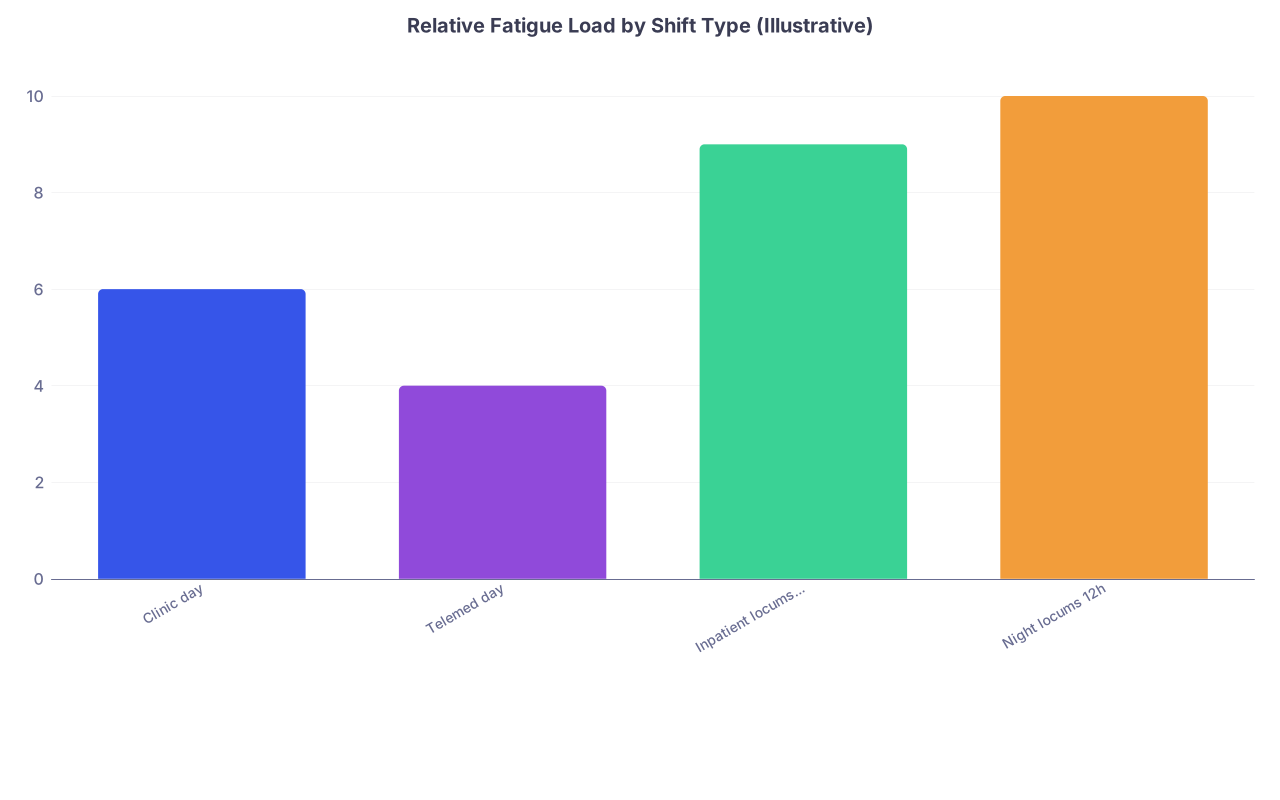
| Category | Value |
|---|---|
| Clinic day | 6 |
| Telemed day | 4 |
| Inpatient locums 12h | 9 |
| Night locums 12h | 10 |
If we pretend “10” is absolute exhaustion, you get the idea:
- 3 days of heavy inpatient locums + 1 full telemed day in the same week is already a high-load week.
- Stack that 4 weeks in a row and you’re in the danger zone.
A practical rule of thumb I like:
- If a week includes 3+ intense in-person shifts, cap telemed that week at 1 light day or 2 short sessions.
- And build 1 genuinely light week every 6–8 weeks with either zero or minimal clinical work.
Best Ways to Combine Locums + Telemed (Without Losing Your Mind)
1. Design your year first, not your weeks
Instead of asking “Can I fit this telemed contract in next month?” start with:
- How many weeks this year do you want:
- Fully off?
- Locums-heavy?
- Telemed-heavy?
- How much income do you actually need vs “would be nice”?
Sketch something like:
| Period | Focus | Expected Hours/Week |
|---|---|---|
| Jan–Mar | Locums-heavy | 40–45 |
| Apr | Light mix | 20–25 |
| May–Jun | Telemed-heavy | 25–30 |
| Jul (2 weeks) | Off | 0 |
| Aug–Oct | Mixed | 30–35 |
| Nov–Dec | Light mix | 20–25 |
Then evaluate offers against this template. If a contract blows up your design, you either renegotiate it or walk away.
2. Protect non-clinical days like surgery
Don’t “just squeeze in” a telemed shift on what was supposed to be a recovery day from call.
Protect:
- 1 full day/week with no patient care, no charting catch-up, no credentialing forms.
- At least 1 long weekend off (Thu–Sun or Fri–Mon) every 6–8 weeks.
- Some true vacations where you are not bringing your telemed laptop at all.
Burnout isn’t just about total hours. It’s about never truly being off.
Choosing the Right Telemedicine Work to Pair with Locums
Not all telemed gigs are compatible with a locums lifestyle. Some are perfect; some are a trap.
Look for telemed roles that:
- Allow block scheduling weeks in advance
(e.g., “I’m available these 3 days next month,” not “sign up for recurring weekly shifts forever.”) - Don’t require fixed weekly minimums that eat into your locums flexibility
- Have predictable volumes and fair escalation pathways
- Are asynchronous (store-and-forward, e-consults, message-based) if your locums work is intense
Ideal combos:
- Hospitalist locums + asynchronous urgent care telemed 1–2 days on off weeks
- EM locums + low-acuity primary care telemed a few mornings per week
- Outpatient locums + subspecialty e-consults on flexible timelines
Telemed arrangements that usually clash with locums:
- Rigid “every Monday and Wednesday afternoon” requirements
- High-penalty contracts for canceling shifts (locums will blow up your schedule)
- Roles that assume you’re at home with rock-solid internet and a protected office every day
Locums Realities That Change the Equation
Locums work brings its own chaos: travel, onboarding, new EMRs, different teams every time. When you combine that with telemed, here’s where physicians get blindsided:
Hidden admin load
- Travel logistics, onboarding modules, new credentialing packets
- Telemed platforms with their own training, QI modules, messaging expectations
Cognitive switching costs
- Bouncing between 4 EMRs in 2 months
- Different telemed platforms, different protocols, different formularies
Time zone stupidity
- Locums in Mountain time, telemed in Eastern, you live in Pacific
- People underestimate how draining chronic time zone math is
Build in buffer days:
- Day before starting a new locums site: no telemed.
- Day after travel home: either off or extremely light asynchronous work only.
Concrete Example Schedules That Actually Work
Here are two realistic setups I’ve seen sustain for >1 year without burnout.
Example 1: Hospitalist Locums + Urgent Care Telemed
- Locums: 7-on/7-off inpatient at a community hospital
- Telemed: Urgent care video visits on off weeks
Structure:
- On week: 7 days of 12‑hour shifts, no telemed at all
- Off week:
- Mon: OFF (sleep, decompress)
- Tue–Thu: Telemed 4–5 hours each morning, afternoons off
- Fri–Sun: Off or 1 optional short telemed block if you feel good
Why this works:
- Your brain gets one job at a time.
- You truly rest 2–3 days of your off week.
- Telemed is meaningful income but not dominating.
Example 2: Outpatient Locums + Subspecialty E-Consults
- Locums: Outpatient rheum or endocrine 3 days/week, month-to-month contracts
- Telemed: Asynchronous subspecialty consults you can complete within 24–72 hours
Structure:
- Mon–Wed: Clinic locums 8–5
- Thu: 4–5 hours of e-consults, admin, rest
- Fri: Off or 2–3 hours of e-consults in the morning
- Weekends: Protected off unless you want rare catch-up
Why this works:
- No real-time telemed obligations, so travel + schedule shifts are manageable.
- Completely cancellable or pausable if you take a 2–3 week locums block somewhere else.
Money: When Does the Combo Actually Make Sense?
If you’re going to increase complexity and fatigue risk, you should be getting a clear benefit out of it. That usually means one of three things:
- You’re trying to hit a specific near-term goal
(pay off loans in 2–3 years, build a house down payment, fund a long sabbatical) - You’re testing different career paths
(seeing what you enjoy: rural hospitalist locums vs tele-urgent care vs e-consults) - You’re building multiple income streams slowly with a plan to ramp one down later
What’s dumb:
- Piling telemed on top of locums “because the shifts are just sitting there” with no clear financial or career objective.
- Working 55+ hours weekly combined when you already hit your financial targets months ago.
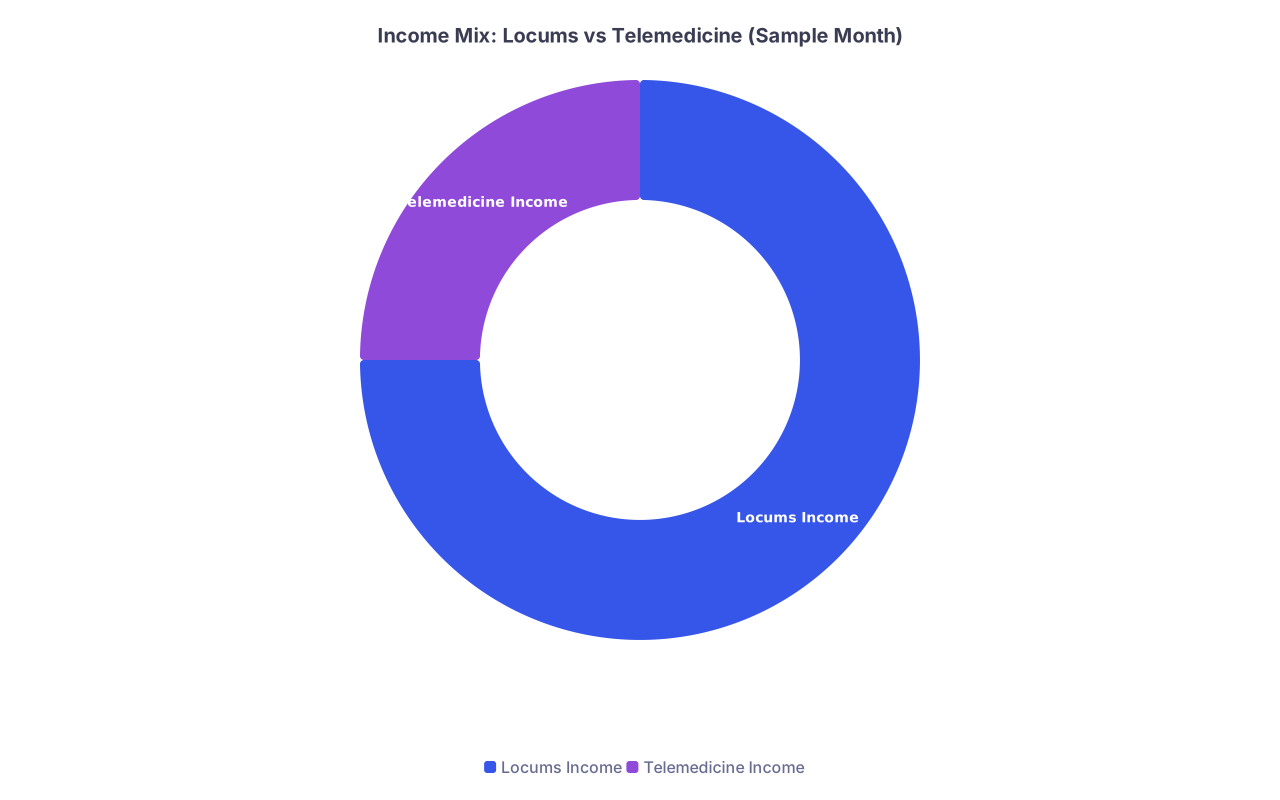
| Category | Value |
|---|---|
| Locums Income | 18000 |
| Telemedicine Income | 6000 |
This kind of ratio (e.g., 70–80% locums, 20–30% telemed) is common and usually sustainable if you respect your limits.
Red Flags That You’re About to Burn Out
I’ve watched people miss these early signs and pay for it later:
- You start scheduling telemed shifts before you get your locums schedule, then constantly reschedule.
- You’re charting at midnight post-call because you promised to do a telemed block “just this once.”
- You feel low-level dread before logging into either job.
- Days off aren’t really off—they’re “admin and catch-up” days.
- You’ve forgotten when your last 4–5 day completely work-free stretch was.
If 2–3 of those sound familiar, the answer isn’t another productivity hack. It’s cutting clinical hours for at least 4–8 weeks and re-architecting your schedule.
Practical Rules to Keep You Sane
Let me simplify this into blunt rules:
- Never schedule telemed the day after a run of nights or an intense new locums start.
- Always block at least 1 full day per week with zero patient care.
- Cap average combined hours at 40/week over a quarter unless you have a short-term, time-limited reason.
- Fewer platforms is better. One locums agency you trust + one solid telemed employer beats 3 of each.
- If you notice yourself fantasizing about quitting everything and working at a coffee shop, reduce by 25–30% immediately for 1–2 months.
How to Start Combining Them Safely
If you’re just out of residency or early in this experiment, don’t go all in on both at once.
Start like this:
- Do 3–6 months of locums only first to understand:
- Your realistic tolerance for travel and new environments
- The true fatigue curve of different sites and schedules
- Then layer in a small, flexible telemed commitment:
- 1–2 short shifts/week or a low-volume asynchronous role
- Reassess after 6–8 weeks
- Adjust upward only if:
- You’re not dreading work
- You’re still sleeping, exercising, and seeing actual humans you care about
- Your charts are closed and your care quality hasn’t slipped
Think of it as progressive overload in the gym. You don’t max everything your first week.

| Step | Description |
|---|---|
| Step 1 | Current locums schedule stable for 3 months |
| Step 2 | Add 1 small telemed role |
| Step 3 | Reduce locums or defer telemed |
| Step 4 | Consider gradual increase |
| Step 5 | Cut back to prior level |
| Step 6 | Feeling rested most weeks |
| Step 7 | After 6-8 weeks still OK? |

FAQs
1. Is it realistic to do full-time locums and full-time telemedicine at the same time?
No. Not long-term, not without serious damage. You can run both full-tilt for a short, clearly defined period (a few months) with a hard end date and a recovery block scheduled. But as an ongoing lifestyle, full-time + full-time is a fast track to burnout and errors.
2. Can I do telemedicine during my locums shifts if I have downtime?
Usually no, and you shouldn’t try. Most facilities explicitly prohibit outside work during shifts, especially clinical work using their time and network. Even if not banned, ethically and practically, your attention belongs to the patients you’re being paid to manage. If you have enough downtime to consider telemed, consider catching up on notes or resting instead.
3. How many telemedicine platforms should I work with if I’m also doing locums?
For most people, 1–2 is the sweet spot. One main platform that fits your schedule and pays reasonably, and maybe a backup with highly flexible shifts if you want optional extra work. More than 2 and you add a ton of admin overhead, emails, metrics dashboards, and policy variations that drain you more than they pay.
4. What specialties combine best with telemedicine plus locums?
The combo tends to work best in:
- Hospitalist medicine with off-week tele-urgent care
- EM with intermittent tele-urgent care or triage
- Primary care, psych, derm, rheum, endocrine with e-consults or video visits Surgical fields have a harder time making telemed meaningful clinically, so they often lean more on locums alone or a different kind of nonclinical side work.
5. What’s the biggest mistake physicians make when trying to combine both?
They treat telemed as “just a few easy extra hours” instead of real work. So they stack it on top of already full locums blocks, never protect recovery time, and never redesign their schedule once they realize they’re tired. The smarter move is to decide which is primary in each season of your year, and keep the other clearly secondary with hard limits.
Key takeaways:
You absolutely can combine locums and telemedicine without burning out—if you design your year first, cap your total clinical load, and protect real off time. The combo works best when one role is primary and the other is a flexible supplement, not when both are run at full throttle all the time.