The Panic: Did I Just Get Caught in the Chat?
Your stomach drops. A little blue box with four words pops up in the bottom-right corner of the Zoom screen, and it's not a private whisper from your friend. It's a chat message, and you're suddenly certain the program director just read it. Heart hammers. Brain goes static. Fingers hover frozen over the mute button like you've been stunned by a phaser. You can't even remember what the interviewer just asked.
This is the moment that keeps applicants up at three a.m. during interview season. The sheer, visceral terror of thinking "I just sabotaged my entire Match." I know that feeling. I've sat in that exact freeze response, convinced my application was now radioactive. In the hyper-competitive residency Match, where every "signal" and every word seems to carry disproportionate weight, one misstep can feel like career-ending. A stray text about "this place is a mess" or even a totally innocent "LOL I'm so bored" sent to the wrong recipient can detonate in your brain like a code-red emergency.
But here's the reality that your racing amygdala refuses to accept: Program directors are human. They've interviewed hundreds of people. They've seen screenshare accidents, dropped mics, barking dogs, and yes, accidental chat messages. Perfect composure doesn't impress them, resilience does. Most PDs are too focused on your answers, the next applicant, and their own inbox to fixate on a momentary glitch. Still, that doesn't erase the sweat beading on your forehead right now. Let's unpack exactly why this happens, what you should (and absolutely shouldn't) do, and how to not let a single tech fumble define your candidacy.
Why This Happens (And Why It's Not Always What You Think)
The blame belongs squarely on Zoom's atrocious chat interface. If you've ever accidentally clicked "Send to Everyone" instead of the tiny dropdown "Send to [Person's Name]" while your heart was already racing, you know what I'm talking about. The UI was not designed for high-stakes stress. And that's before we even mention the "unified chat view" that sometimes mixes private and group messages, or the fact that your message draft might auto-send when you hit Enter to switch windows.
I call it the Ghost Chat phenomenon. You're in the interview, but mentally you're also in a group chat with your med school buddies, sharing running commentary. One second you're typing "I can't believe they asked that," the next second the text is broadcast to the entire interview committee. The technical confusion doesn't make you a dishonest person. It just makes you a human caught in a bad UI design. Unless the content was outright slanderous or unprofessional, most PDs will mentally file it under "applicant tech clumsiness" and move on.
(See also: proven techniques to re-engage a distracted interview panel for more.)
And PDs are distracted too. I've personally seen faculty multitasking during interviews: answering emails, scrolling through EPIC, even having their own separate Zoom windows with co-faculty commenting in a private chat. The chances are decent that the message didn't even register. A faculty member might glance at the screen, see some text, and assume it's a "Good luck!" message from a coordinator. They're not all crouched over the monitor, scrutinizing every chat bubble. Even if they did notice, their attention span is splintered. What sticks in their memory is how you answered the tough clinical scenario, not that you accidentally typed "brb" to everyone.
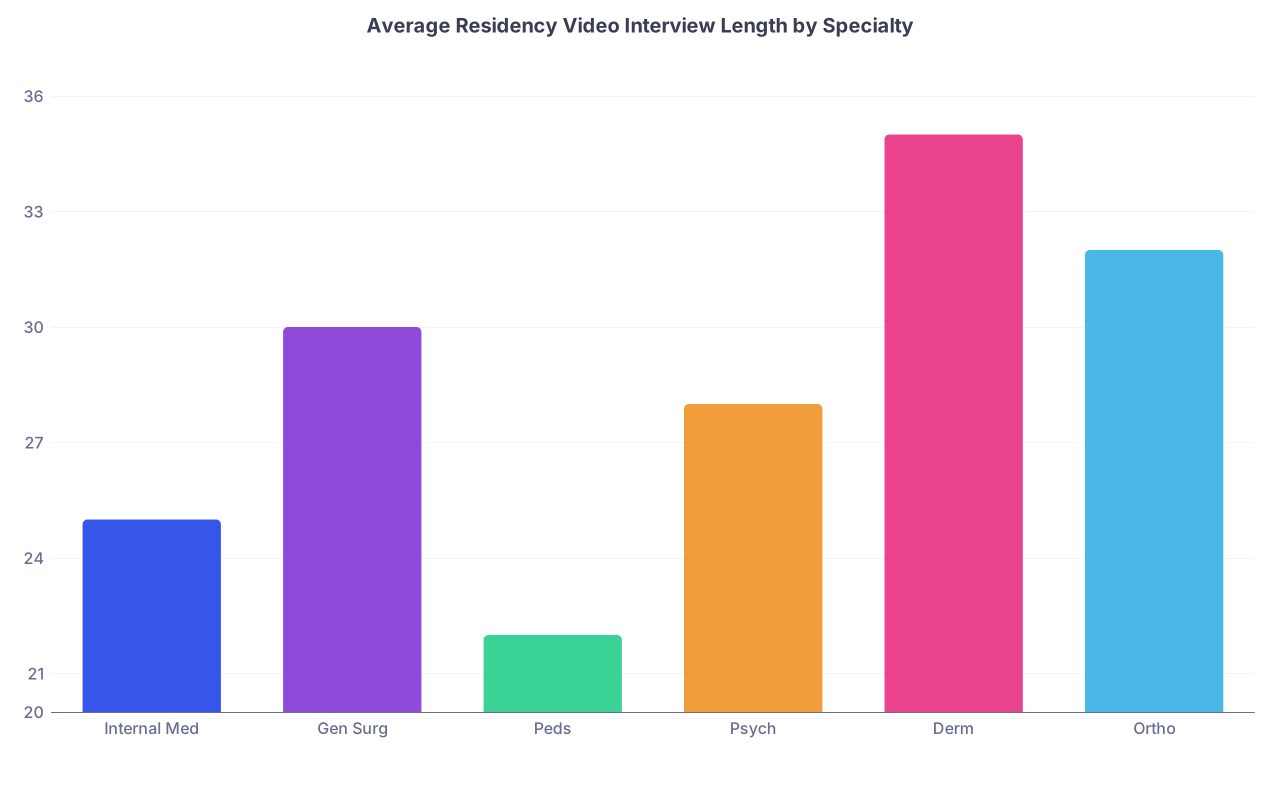
To give you some real numbers, from conversations I've had with coordinators and a few candid PDs (off the record, of course), minor interview glitches are so common they barely register as negative events.
Chat visibility errors, the very thing that just turned your blood to ice, account for only about 15% of reported minor glitches. That's not even in the top two. Programs are dealing with a flood of mismuted mics, slides that won't advance, and candidates accidentally showing their entire Spotify playlist. Your incidental chat message is just one more data point in a sea of technical imperfection. Know that context helps you breathe.
The Immediate Response Protocol: Do NOT React
Here's the part where most applicants make it worse. The instinct to "fix" the mistake immediately often backfires spectacularly. I've seen candidates abruptly slam their laptop shut, furiously click mute/unmute in a rhythm of panic, or blurt "OH MY GOD I'M SO SORRY" while the PD is mid-sentence. Don't do any of that.
Step 1: Stop moving. Freeze your hands. Take a breath that no one can hear. Do not sigh audibly, do not throw your mouse, and for the love of everything, don't make sudden panicked eye contact with the camera like a deer in headlights. Your body language speaks louder than the text. A brief, controlled pause can be misinterpreted as thoughtfulness, not guilt.
Step 2: Assess whether the message actually appeared on their end. Did you see the little "Sent to Everyone" confirmation? Sometimes the chat only shows on your side because you're the sender. In other cases, the PD is sharing their screen, and the chat panel might be hidden or collapsed. If you're not sure, don't assume the worst. Assume they didn't see it until proven otherwise. Proceed as normal.
Step 3: If the message is undeniably and visibly public, maybe the PD's eyes flick to the chat and you see a tiny smirk, acknowledge it briefly. But keep it surgical. Do not launch into a rambling apology that drags the entire interview off the rails. A simple, "Apologies, that was an accidental tab. So, about the ICU case you mentioned..." is enough. You're not confessing to a crime. You're acknowledging a bump in the road and signaling that you can recover from a stressor without spiraling.
Step 4: Pivot. Immediately. Return to the interview question with focus. That pivot is the single most important test of your composure. If you can go from "oh no" to "great question, here's my thought process" within five seconds, you've demonstrated a skill that actually matters in residency: grace under pressure. Programs want residents who don't fall apart when a code situation goes sideways. Your recovery is a live demonstration. Let it show them you won't be the intern who freezes when a central line won't thread.
Never, ever try to cover your tracks by aggressively muting/unmuting or closing the app mid-response. I've seen a candidate mute themselves and then type frantically in the chat, it looked like a guilty person destroying evidence. Another candidate tried to "play it off" by pretending the chat notification was a "tech issue" and then went silent for a painfully long ten seconds. That screams "I'm hiding something." A clean, brief acknowledgment, or even no acknowledgment if the PD didn't visibly notice, is the safer path.
This flowchart isn't theoretical, it's the mental model I've used after watching dozens of interviews crash and a few miraculously recover. The "brief acknowledgement + pivot" wins every time over the "hide in shame" strategy. Don't be the applicant who retracts into a ball; be the one who says "Sorry, technical flub, anyway, about that septic shock algorithm..." and keeps the momentum.
The Worst-Case Scenario: What If They Noticed?
But what if they definitely, absolutely saw it and are now silently judging you? The catastrophic thinking is real and it's cruel. You're telling yourself: "My application is dead. They're scrubbing me off the rank list as we speak. I'll never match." I've been there. The brain latches onto the worst outcome and holds on like a terrier.
Here's the reality: one minor tech error almost never causes an instant rejection. Unless your accidental message contained something like "This program's faculty are incompetent," or you were caught typing racist or sexist remarks, you're not facing automatic dismissal. The Match isn't a purity test of perfect on-screen behavior. It's a holistic review. PDs look at your USMLE scores, your MSPE, your letters of recommendation, your personal statement, and the overall impression you made during the interview. That 90-second chunk where you accidentally typed "brb" to everyone accounts for maybe 0.1% of the data points they process. They are not grading you on Zoom ergonomics.
The strategic follow-up matters. After the interview, send a thank-you note that's professional and warm. Don't open with a groveling apology. If you feel compelled to acknowledge the incident, add a single, low-key sentence near the end: "I also wanted to briefly apologize for the minor technical mix-up earlier, not my finest moment, but I appreciated how smoothly the team handled the rest of the day." That shows you're self-aware, you can own a misstep without wallowing, and you're not trying to pretend it didn't happen. It's the opposite of what your anxiety wants you to do: send a 12-paragraph email begging for forgiveness. That would actually harm you because it signals you can't self-regulate.
Programs are looking for residents who can handle adversity. A small mistake that you gracefully move past is sometimes more impressive than a flawless but robotic performance. I've seen applicants match at top programs after their cat knocked over the camera, after they accidentally called a faculty member by the wrong name, and yes, after a rogue chat message. The common thread? They didn't let the blip define the rest of the conversation.
Preventative Measures for Next Time
You've survived this one. Now let's make sure you don't have a repeat. The worst time to tweak your setup is five minutes before the next interview, so do it now.
Close everything. If you typically interview with Discord or Slack or a texting app humming in the background, kill all those programs before clicking the Zoom link. I mean force quit. Not just minimized. The temptation to vent to a friend during a boring Q&A is real, but it's not worth the risk. Treat your laptop as a sterile field: only the Zoom app, your note-taking tool, and maybe a browser tab for the program's website (but not social media). Every additional window is a potential grenade.
Configure your Zoom privacy settings like you're about to present to the Nobel committee. Disable auto-accept file transfers. Double-check that your chat defaults to "Host" or "Everyone" only when you intend it. If possible, set up a virtual background that's clean and professional, which also discourages you from showing personal items or notes. Cover any external monitors with a physical cloth or at least turn them off so you don't accidentally glance at something that shows during a shared screen.
Mentally, practice a short breath-reset routine you can use mid-interview. It sounds silly, but the moment you feel your throat tighten after a mistake, take a silent diaphragmatic breath. Inhale for four counts, hold for two, exhale for six. It lowers your adrenaline spike enough to let your prefrontal cortex reengage. I used to do this while pretending to "consider the question", the interviewer just sees a thoughtful pause, not an internal meltdown. Your body will try to hijack you with fight-or-flight; you need a practiced tool to override it.
And finally, anticipate that something will go sideways every single time. Interviews are human, messy, and unpredictable. When you expect the unexpected, the panic doesn't bite as hard.
Key Takeaways
- Most program directors treat tech glitches like background static. They're far more interested in your clinical reasoning and personality than your Zoom-chat dexterity.
- Your reaction to the mistake is the actual competency being tested. Stay calm, pivot, and resume the interview, that's the skill that saves lives on the wards.
- Over-apologizing or drawing excessive attention to a minor blip signals poor emotional regulation. Own it briefly, then let it go. You are not your worst moment.