
A disappointing ERAS cycle doesn't end your residency plans. It moves your deadline, and deadlines I can work with. What I can't work with is panic. Every season I watch applicants burn the first two months doing one of two things: blast-emailing programs with no story, or going quiet and hoping interviews materialize. Neither works.
Here's the timeline I hand my advisees instead: seven steps across six months, from ERAS snapshot to a backup specialty plan that survives interview scrutiny. Follow it in order. Skipping ahead is how you end up with a beautifully formatted application for the wrong specialty.
This article is for educational purposes only. It is not financial advice, not legal advice, and not tax advice. Figures vary by individual circumstances, so consult a qualified professional before acting.
Month 0 (Weeks 1-4), Stabilize Your ERAS Output and Start the Backup Timeline
First 48 hours: pull your ERAS status snapshot, program statuses, interview invites, rejections, submissions, and save screenshots and PDFs. Do this before anything else. Memory edits itself. Three months from now you'll swear a program ghosted you when it actually rejected you in October. Data first, feelings later.
Week 1: write a one-page "ERAS forensics" summary. Two columns: signals that helped (scores, rotation grades, letters) versus signals that lagged (specialty-specific requirements, geography logic, competitiveness, internship match fit). Be brutal. This page drives every decision after it.
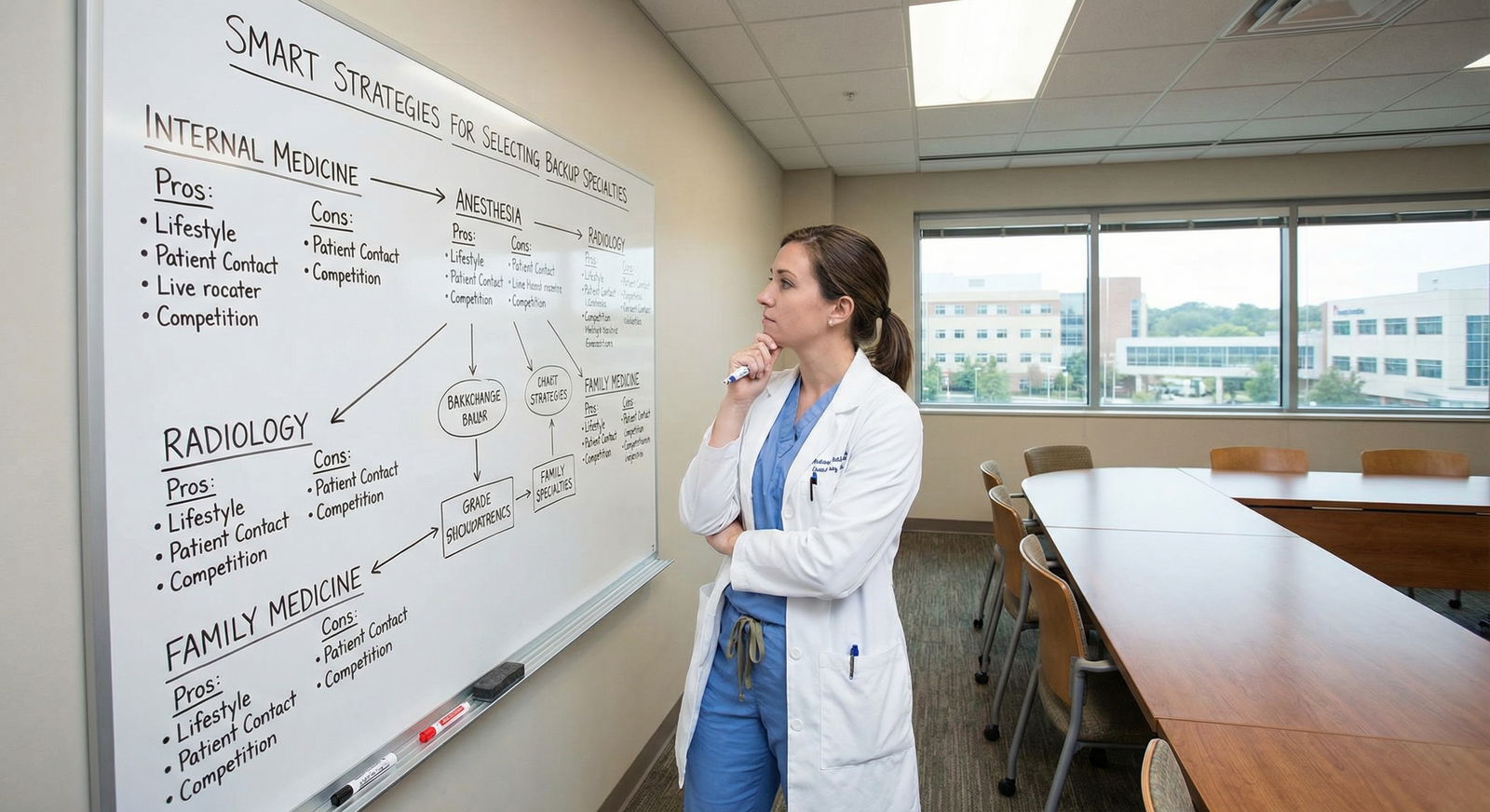
Week 2: pick your backup lane(s) with a 3-axis filter:
- Feasibility, requirements and timing you can actually meet.
- Compatibility, real past exposure or interest, not vibes.
- Competitiveness, gaps you can still close fast.
A specialty you love that requires research you can't produce in twelve weeks is not a backup. It's a fantasy with extra steps.
Week 3: draft 2-3 positioning statements, what you're pivoting toward and why you're credible. Two sentences each. If you can't say it in two sentences, you don't believe it yet, and neither will an interviewer.
Week 4: build your contact map, program directors, specialty advisors, research and clinical mentors, and book your first outreach slots for next month.
At this point you should not have emailed a single program. Outreach without a narrative is spam.
Month 1 (Weeks 5-8), Translate Your Story for the New Specialty and Fix the Application "Fit"
Days 1-3: collect the backup specialty's actual requirements, board prerequisites, electives, research expectations, visa considerations, and compare them against your real profile. Not the profile you wish you had.
Days 4-7: rebuild your CV bullets and construct a specialty-alignment grid: experience → skill gained → relevance to the backup specialty → evidence you can show. Hard rule: if a row ends with no evidence, it doesn't go in the application.
Week 6: rewrite personal statement themes for each lane. Draft separate versions, then finalize only the one you'll actually submit. Do not shotgun three statements into one cycle. Coordinators notice. Programs talk to each other more than applicants think.
Week 7: request targeted letters, one from a clinician who can attest specialty fit, one showing trajectory and improvement, and a research letter if the specialty expects it. Ask specifically: "Can you speak to my work on X?" A vague request gets a vague letter, and vague letters are worse than none.
Week 8: pre-check everything, CV formatting, date consistency, transcript labeling, one-click document readiness. When a program says "send your materials," you should respond in hours, not after a lost weekend of reformatting.
Month 2 (Weeks 9-12), Close Gaps Fast: Research, Rotations, and Strength Signals
Week 9: choose 1-2 "fast signals" you can genuinely earn in 8-12 weeks, an observership, a structured case review project, a poster abstract, a small but real role in an ongoing study.
Week 10: secure the exposure. Email rotation coordinators and elective schedulers; ask for shadowing blocks tied to the procedures and settings your backup specialty actually involves.
Week 11: produce a measurable output, an abstract draft, a poster outline, a research summary memo you can reuse in interviews and application updates. One real poster beats three CV lines claiming "strong interest in research." Reviewers read that phrase as "no research."
Week 12: send your updated alignment grid and backup narrative to two mentors. Ask for critique on credibility and specificity, not encouragement.
Month 3 (Weeks 13-16), Program Strategy: Build a Target List and a Communication Cadence
Week 13: build a tiered target list, reach, fit, safety, based on your profile against each program's typical applicant mix: geography, competitiveness, class size.
Week 14: for every program, write two notes: "why I fit" and "why I'm different," backed by evidence, relevant clinical exposure, methods alignment, mentor connections.
Week 15: set your communication cadence: one short email to program leadership every 10-14 days, only when you have new value, a letter update, a research output, a completed rotation. New value or silence. Those are your two options. The "just checking in" email gets you quietly downgraded; I've watched it happen.
Week 16: draft your interview and supplemental FAQs for the backup specialty: training rationale, timeline constraints, and how you'll handle the learning curve.
Tier selection comes from requirement match plus competitiveness, a "safety" program where you don't meet the stated requirements isn't safe. It's a rejection you'll pay a fee for.
Month 4 (Weeks 17-20), Interview Readiness for the Backup Specialty (Day-by-Day Practice Plan)
Week 17, day 1: write 10 specialty-specific story beats, the clinical moment that pulled you in, the mentor who changed your trajectory, skills you've practiced, evidence of growth.
Day 2: convert each beat into a 60-second answer using one structure: context → action → result → why this specialty.
Week 18, days 3-4: drill the screening questions: "Why this specialty?" "What changed?" "How will you catch up?" "Tell me about a challenge." That second one ends more pivot applicants than any board score. Answer it with direction, not regret, "here's what I moved toward," never "here's what went wrong."
Week 19, day 5: run a 10-minute mock panel with a mentor. Day 6: record yourself, revise, and cut every phrase that sounds like an apology. Recording yourself is miserable. Do it anyway.
Week 20, day 7: assemble your short-notice documentation folder, CV, research abstracts, letter confirmations, rotation certificates where applicable.

Month 5 (Weeks 21-24), Optimize Your Submission Strategy and Manage Uncertainty
Week 21: verify what you can still update, supplemental materials, specialty-specific statements, added recommendations, research updates, without creating inconsistencies with what's already submitted.
Week 22: set a weekly metric: outreach attempts, mentor check-ins completed, prep sessions done. Track completions, not emotions. Feelings lie about progress; tallies don't.
Week 23: build contingency plans. If interviews don't convert, decide now whether you'll shift within the specialty cluster or broaden to adjacent options. Deciding mid-panic is how people make it worse.
Week 24: run a consistency audit across CV, statement, and interview answers, dates, titles, claims. Mismatched dates are how honest applicants look careless.
Month 6 (Weeks 25-26+), Lock the Plan, Keep Professional Momentum, and Follow Through
Week 25: confirm the final plan in writing: which specialty, which programs, your strongest evidence, your remaining risks. Written down, not held in your head, where it quietly reshapes itself under stress.
Weeks 25-26: continue value-add updates only. Publication submitted, poster accepted, rotation completed, letter added. Nothing else goes out.
Week 26+: hold a professional routine, steady prep, consistent follow-ups, and respectful closure when programs don't respond. No trailing "just bumping this to the top of your inbox" emails. Ever.
Endgame: treat every interview as data. After each one, write five bullets, what worked, what confused them, what you'll adjust next time.
Your Next Four Moves, Starting Today
- Pull your ERAS snapshot and save it somewhere you can't avoid.
- Open a blank page titled "ERAS forensics" and write for 30 minutes, helped versus lagged.
- List three candidate backup specialties and score each 1-10 on feasibility, compatibility, and competitiveness. Lowest total loses.
- Block Friday afternoon for your contact map.
Two rules govern everything above: treat this as a project with a clock, and make every touchpoint, email, update, interview answer, value-based and consistent with your documents. Six months from now you'll have either a rebuilt plan or a very organized set of excuses. Start the clock.