It is July 1st. You just started your MS3 or early MS4 year. Everyone around you sounds certain: “I am 100% ortho,” “I am for sure EM,” “I am definitely peds.” You are… 70% sure. Maybe 60%. You like one specialty, but you can already see the risk: scores are borderline, research is thin, geographic needs are tight.
You have one year to set up a rotation schedule that maximizes your main choice and quietly builds a real backup. Not a fake “I could always do FM” line. An actual, defensible second path that you could submit in ERAS without it looking like a last‑minute panic.
Here is how to plan that year. Month by month and then week by week.
Big-Picture: Where You Need to Be and When
Before we go month-by-month, you need the anchor points. This is the skeleton everything hangs on.
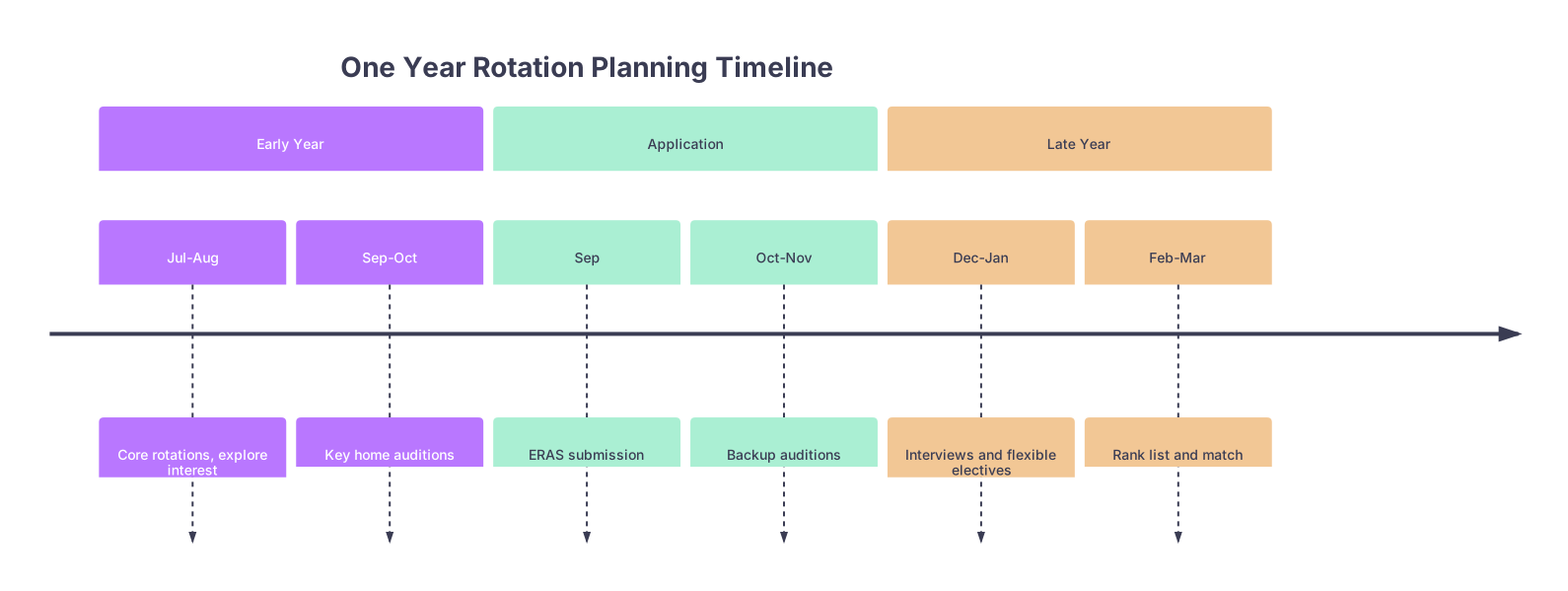
| Period | Event |
|---|---|
| Early Year - Jul-Aug | Core rotations, explore interest |
| Early Year - Sep-Oct | Key home auditions |
| Application - Sep | ERAS submission |
| Application - Oct-Nov | Backup auditions |
| Late Year - Dec-Jan | Interviews and flexible electives |
| Late Year - Feb-Mar | Rank list and match |
At a high level, your year needs to:
- Prove commitment and competence in your primary specialty.
- Quietly create a coherent story for a secondary specialty you could pivot to.
- Leave enough flexibility to react if your first-choice plan starts to crack (poor SLOEs, weak home feedback, limited interview invites).
For most students, the realistic backup “families” look something like this:
| Primary Interest | Realistic Backups |
|---|---|
| Ortho, Neurosurg | General Surgery, IM |
| EM | IM, Anesthesia, FM |
| Derm, Rad Onc | IM, Pathology |
| Anesthesia | IM, EM |
| Competitive IM subs (GI, Cards) | General IM, Hospitalist track |
| OB/GYN | FM with OB, IM |
If your primary and backup are in totally different galaxies (e.g., Plastics and Child Psychiatry) you will need to be even more intentional with rotation sequencing.
12–9 Months Before ERAS: Clarify Primary vs. Backup (July–September)
You are here: early MS3 / late MS3 depending on your curriculum. At this point you should be:
- Narrowing to 1–2 likely primary specialties.
- Defining 1–2 realistic backup choices that share some overlap.
- Mapping your school’s rotation lottery / scheduling rules.
Step 1: Reality-check your competitiveness (right now)
Do this before you “fall in love” with a specialty on Instagram.
At this point you should:
- Pull your Step 1 (and Step 2 practice if available).
- List your:
- Class rank / quartile.
- Research output in the target field.
- Home program strength (big academic vs small community).
Then compare to realistic expectations.
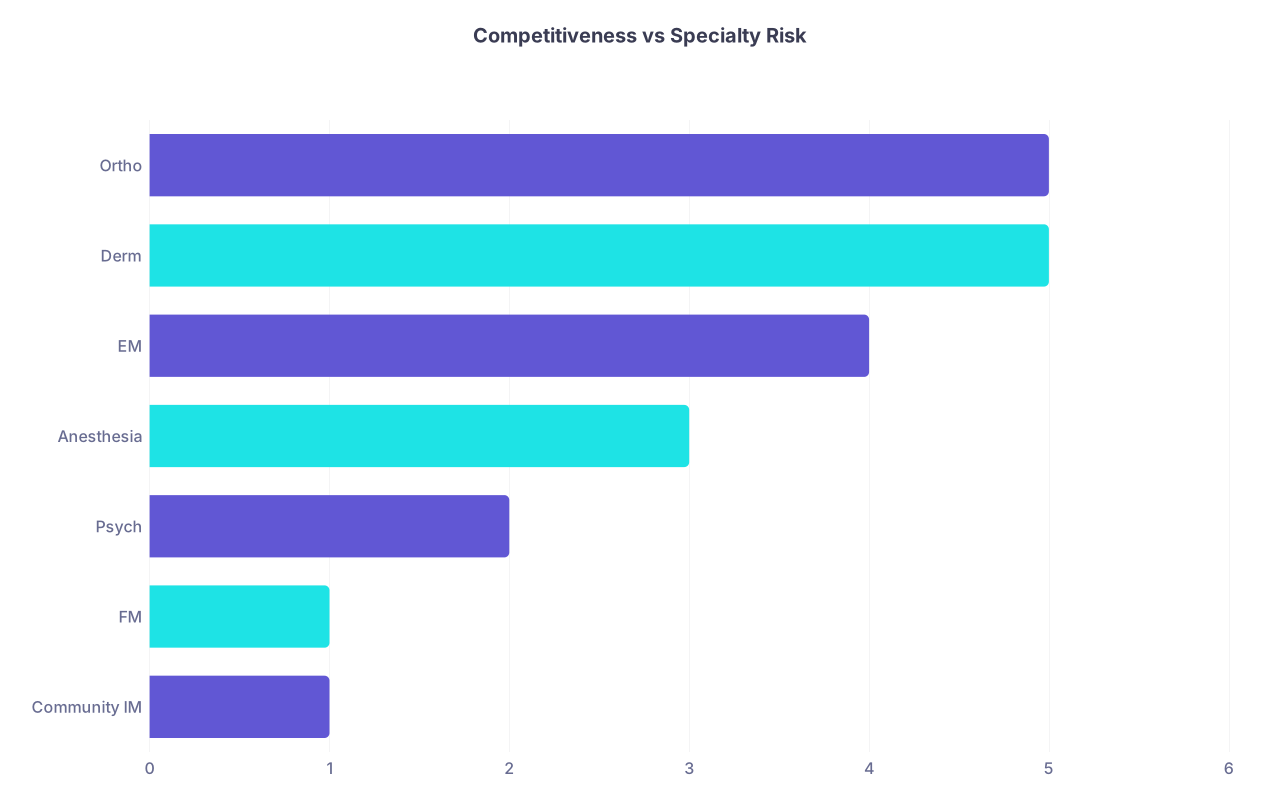
| Category | Value |
|---|---|
| Community IM | 1 |
| FM | 1 |
| Psych | 2 |
| Anesthesia | 3 |
| EM | 4 |
| Derm | 5 |
| Ortho | 5 |
Scale: 1 = low risk, 5 = very high risk for average applicant.
If your numbers sit near average or below for a high-risk specialty (Derm, Ortho, ENT, Plastics), you do not “sort of” need a backup. You absolutely need one, and you need to build it into your rotations from the start.
Step 2: Define your backup family, not a random backup
At this point you should pick something that:
- Shares skills with your primary (procedures, acuity, age group).
- Has some overlap in letters and clinical experiences.
- Is actually acceptable to you. Not a specialty you secretly hate.
Example pairings that play nicely:
- EM primary / IM backup.
- Ortho primary / General Surgery or IM backup.
- Anesthesia primary / IM or EM backup.
- OB/GYN primary / FM with OB backup.
Terrible pairing: Derm primary / Neurosurgery backup. Nobody believes that.
9–6 Months Before ERAS: Build the Rotation Blueprint (October–December)
Now you are getting into the critical planning window. This is where you actually assign months.
Your goals:
- Early exposure and strong letters in your primary.
- Credible exposure and at least one letter in your backup.
- Enough flexibility blocks to pivot if something goes wrong.
Rough structure of the year
Think of your fourth year in thirds.
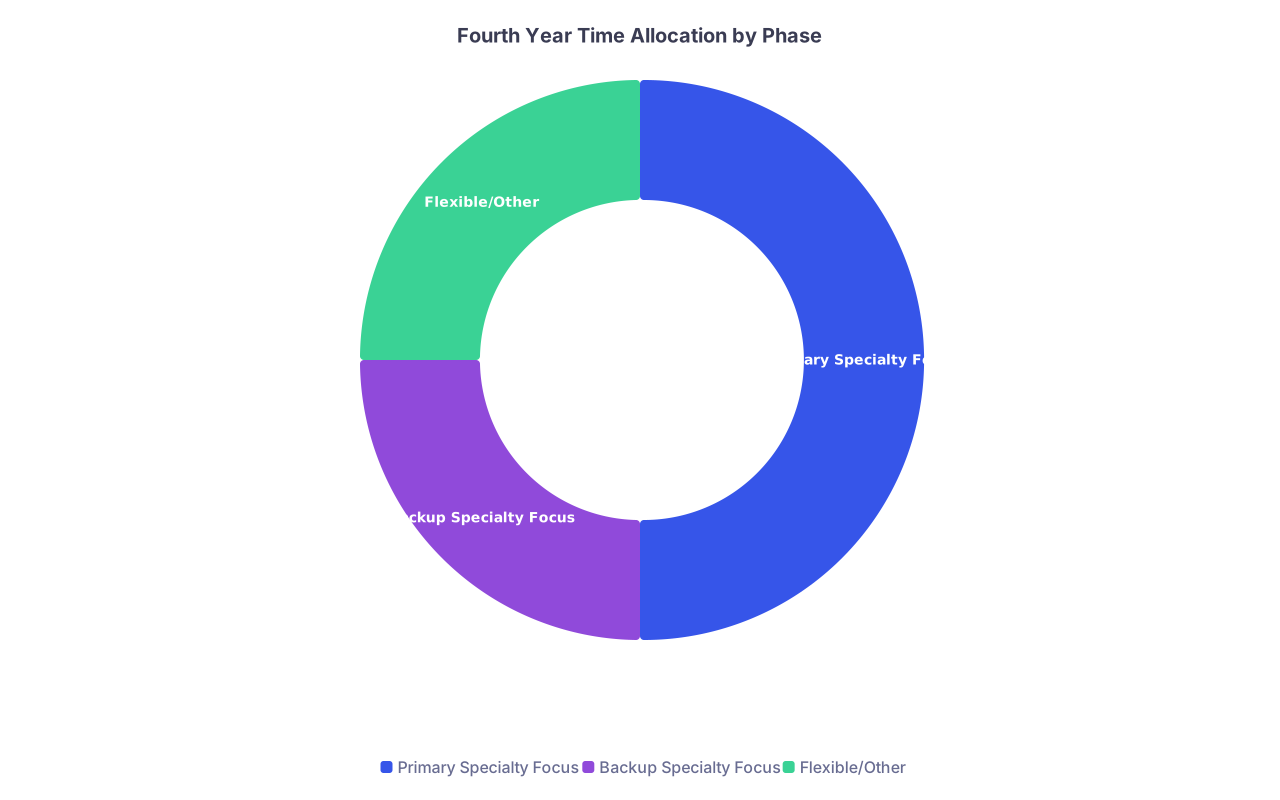
| Category | Value |
|---|---|
| Primary Specialty Focus | 50 |
| Backup Specialty Focus | 25 |
| Flexible/Other | 25 |
First third (Jul–Sep)
- Heavy primary specialty focus.
- One early backup exposure if possible.
Middle third (Oct–Dec)
- Mix of primary + backup “auditions.”
- ERAS already submitted, but your performance here still affects:
- New letters.
- Program phone calls.
- Interview impressions.
Final third (Jan–Mar)
- Lighter, flexible:
- Interviews.
- Easy electives.
- Something that keeps procedural/clinical skills warm.
Month-by-Month: The One-Year Lookahead
Assuming ERAS submission in mid-September and Match in March.
March–April (18–17 weeks before ERAS)
You might still be an MS3 finishing cores.
At this point you should:
- Meet with your dean / advising office and say clearly:
- “Primary: ____”
- “Backup: ____”
- Ask directly:
- How many away rotations can I do?
- When do I have to lock in my schedule?
- What are the policies on changing rotations late?
Start a very simple spreadsheet:
Columns:
- Month
- Rotation
- Primary or Backup?
- LOR potential? (Y/N)
- Location (Home / Away / Affiliated)
Do not overcomplicate it. You just need a one-page view of the year.
May (16–15 weeks before ERAS)
Now you convert plans into real requests.
At this point you should:
- Submit away rotation applications (VSLO) for your primary specialty if you are going to do them.
- Reserve at least:
- 2 blocks for primary “audition” experiences.
- 1 block for backup exposure / letter.
- Protect a Step 2 CK study period if not yet taken.
A good skeleton schedule by month might look like this:
| Month | Rotation | Track |
|---|---|---|
| July | Primary at home | Primary |
| August | Primary away | Primary |
| September | Backup at home/away | Backup |
| October | Primary or backup away | Flexible |
| November | Backup or IM sub-I | Backup |
| December | Light elective / interview | Flexible |
July–September: Front-load Primary, Start Backup
Now we are inside the year.
July: Home Primary Rotation
At this point you should be:
- On a home primary specialty rotation or sub-I if possible.
- Acting like every day is an audition.
Your goals for this month:
- Identify 1–2 attendings who:
- Actually know your name.
- Have seen you present, manage patients, and improve.
- Ask them (toward the end of the month):
- “Do you feel comfortable writing me a strong letter for [specialty]?”
If they hesitate, you have your first data point: your primary may not be as secure as you thought.
August: Away Rotation (Primary)
If you are in anything moderately competitive, you want at least one away rotation early.
At this point you should:
- Use the away rotation both as:
- An audition.
- A calibration of competitiveness.
Pay attention to:
- How you compare to other rotators: are you average, top, or struggling?
- Faculty comments: “You work hard” is neutral; “I would rank you highly” is what you want to hear.
By the end of August, you should know:
- Do I have at least one strong home letter?
- Do I have, or will I have, a strong away letter?
- Does my faculty feedback in this field match a realistic shot at this specialty?
If any answer is “no” or “I am not sure,” your backup planning moves from “optional” to “urgent.”
September: Backup Rotation + ERAS Submission
This is crunch time.
At this point you should:
- Be on a rotation that supports your backup:
- Example: EM primary / IM backup → September IM sub-I.
- Ortho primary / IM backup → September IM or General Surgery sub-I.
- Submit ERAS with:
- 2–3 letters for primary.
- 1 letter for backup (even if you do not use it yet).
Do not wait until October to start backup letters. If interviews go badly, you will be glad you already have something.
October–November: Live Testing Your Backup Plan
ERAS is out. Interview invitations are starting (or not starting). This is where the one-year lookahead pays off.
Early October: First Wave of Interview Invites
At this point you should:
- Track:
- Number of primary specialty invites.
- Type of programs: academic vs community, geography.
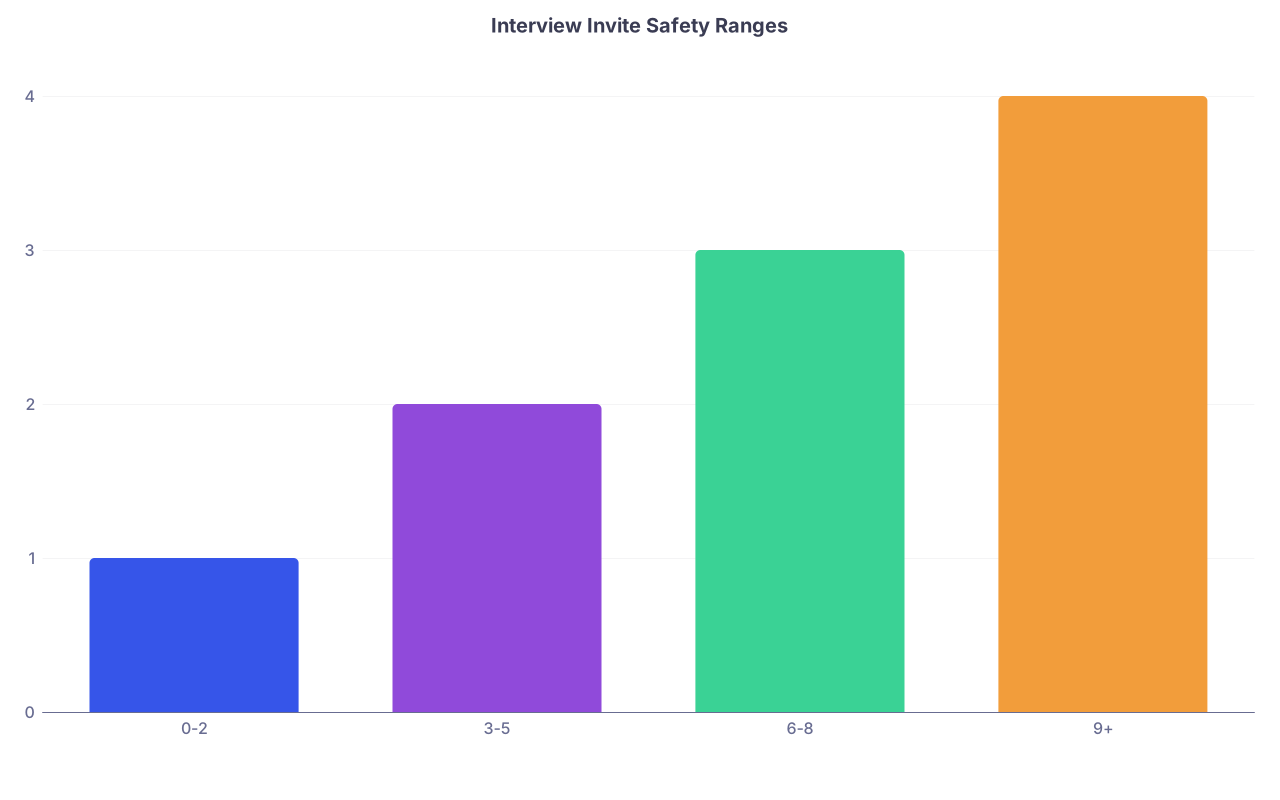
Rough guide:
- If you applied broadly to a moderately competitive specialty and by late October you have:
- 0–2 interviews → red flag.
- 3–5 interviews → borderline.
- 7+ interviews → usually safe.
| Category | Value |
|---|---|
| 0-2 | 1 |
| 3-5 | 2 |
| 6-8 | 3 |
| 9+ | 4 |
Category rating: 1 = very unsafe, 4 = very safe (rough heuristic).
Mid October: Decide on How Hard to Lean into Backup
If your primary specialty interview count looks weak by mid to late October, you cannot just hope. You need to activate the backup rotation plan.
At this point you should consider:
- Adding / keeping:
- A dedicated sub-I or elective in the backup specialty in October or November.
- Contacting:
- Backup specialty program directors at your home institution:
- “I am applying [primary], but I am also very interested in [backup]. I am on your service this month—would it be possible to discuss my situation and whether applying to [backup] is realistic?”
- Backup specialty program directors at your home institution:
You are not the first person to do this. Most PDs have seen this movie.
November: Backup Consolidation Month
By November you know where things stand.
At this point you should:
- Be on:
- An IM sub-I or similar if your backup is medicine-adjacent.
- A strong elective in the backup with opportunities to shine.
Goals this month:
- Secure 1–2 backup letters:
- Ask faculty directly whether they can support an application in [backup].
- Make your CV coherent:
- Add a small project, QI idea, or case presentation relevant to backup specialty if possible.
Even if you ultimately match primary, having an IM sub-I and letter will never hurt your career. The risk is low. The upside is high.
December–January: Interviews + Keeping Skills Warm
By now, you are either:
- Traveling constantly for interviews.
- Or checking your email too often, wondering if you will get more.
Either way, the rotation calendar still matters.
December: Lighter Electives
At this point you should:
- Be on:
- A light elective or research month.
- Something that allows schedule flexibility for interviews.
Bad choices for December:
- Heavy ICU months where missing days for interviews is disruptive.
- New, high-stakes audition rotations in yet another field.
Reason: December is not the time to “add a third backup.” It is the time to perform well on interviews and not burn bridges.
January: Reality Check and Contingency Mentality
If by January you:
- Have almost no primary specialty interviews.
- Have a reasonable set for backup.
Then mentally, you should:
- Shift your identity toward “I am likely going into [backup].”
- Prepare to explain:
- Why you considered [backup] seriously all along.
- Which rotations sparked that interest.
Half of this work was done months ago when you built the schedule that made your story credible.
Parallel Track: Day-to-Day on Rotations (Primary and Backup)
Rotation planning is useless if you underperform. On every primary and backup rotation, your weekly and daily approach needs to reflect the possibility that you may need letters from these people.
Weekly rhythm on a primary or backup audition
At this point each week you should:
- Identify 1–2 attendings who see you regularly.
- Ask for feedback explicitly:
- “Is there anything specific I can improve on to function more like an intern on this service?”
- Adjust quickly and visibly based on that feedback.
I have watched this happen: Students who ask for feedback in week 1–2 and actually change can flip “average” impressions into “I would rank this person.”
Daily checklist on any high-value rotation
Each day you should:
- Know your patients cold.
- Volunteer for at least one unassigned task:
- Call a consultant.
- Update families.
- Follow-up on a lab/image.
- Communicate your career interest without overselling:
- “I am leaning toward EM, but I am also seriously considering IM as a backup and want to be strong clinically regardless.”
Faculty will store that sentence. When they later write your letter, your backup does not look like a panicked flip.
Integrating Primary and Backup in ERAS
You do not need two different lives. You need one narrative flexible enough to cover both.
How to handle personal statements
At this point (pre-submission) you should:
- Write:
- One primary specialty personal statement.
- One backup specialty personal statement.
- Use:
- Primary PS for primary programs.
- Backup PS for backup programs.
Do not send a generic “I love everything” PS to anyone. It reads weak everywhere.
Letters: who sees what?
Strategy that usually works:
- 2–3 letters clearly from primary.
- 1–2 letters that are acceptable for both (e.g., IM, ICU, Sub-I).
- 1 dedicated backup letter sent only to backup programs.
Most application systems let you choose which letters go to which program. Use that.
Red Flags and When to Pivot Hard
Some situations require you to move faster.
You should seriously prioritize your backup if:
- Your home program PD in primary tells you directly:
- “I think you would have a hard time matching in this field.”
- You fail or barely pass a primary specialty rotation.
- You receive explicitly weak or non-committal feedback on your away rotation.
If any of those happen by August–September:
- Move a backup rotation earlier if possible.
- Double your backup application list.
- Tell your dean you want an honest, backup-first rank meeting.
Waiting until January to accept this reality is how people scramble into a specialty they barely understand. Or do not match at all.
Quick Visual: One-Year Primary vs Backup Planning Example
Let us put a realistic example together.
You: EM primary, IM backup. Step 1 pass, Step 2 predicted 235, average research.

Plan:
- July: EM at home → EM letter.
- August: EM away → EM letter, reality-check competitiveness.
- September: IM sub-I (home) → IM letter.
- October: EM or IM at affiliated site → whichever needs strengthening.
- November: IM ward month or ICU → consolidate backup.
- December: Light elective or research → interview flexibility.
- January: Non-intensive elective → additional interviews, decompress.
- February–March: Required rotations + rank list.
Result:
- If EM interviews look decent → rank EM programs + a few IM “safeties.”
- If EM interviews are weak → lean heavily into IM, use EM story as interest in acute care, not failed dream.
Tools That Actually Help (and What to Ignore)
What helps:
- A simple year-at-a-glance calendar on paper or a whiteboard.
- One spreadsheet listing:
- Rotations.
- Which specialty they support.
- Letter potential.
What does not help:
- Overbuilt Notion setups with 20 tags and zero decisions.
- Waiting for “perfect clarity” on what you love. It rarely comes. Performance and realism should guide you as much as passion.
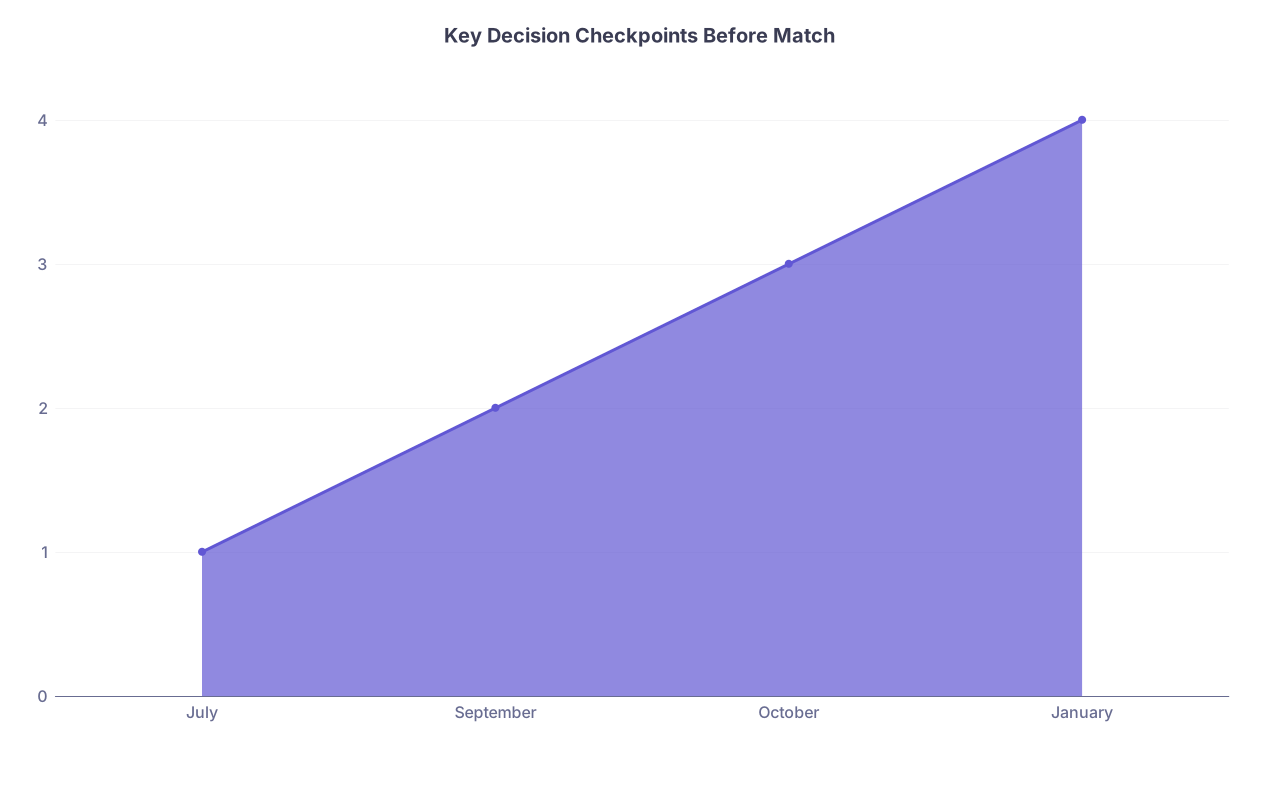
Final Checkpoints by Time
| Category | Value |
|---|---|
| July | 1 |
| September | 2 |
| October | 3 |
| January | 4 |
Scale:
1 = just exploring
2 = commit to primary + backup
3 = adjust based on interview data
4 = finalize identity and rank list
By:
- July: You should have a declared primary and a plausible backup family.
- September: You should have at least one real backup letter and ERAS submitted with both tracks primed.
- Late October: You should have looked at interview numbers and consciously decided how much to lean into backup.
- January: You should no longer be “seeing what happens.” You should know which specialty you are actually ranking as your main path.

Key Takeaways
- Plan your year so your backup is built in from the start: at least one real rotation and one letter in a plausible secondary specialty before ERAS.
- Use early rotations (July–September) to test competitiveness in your primary; use October–November to strengthen or pivot to backup based on interview reality.
- Keep your rotation story coherent: overlapping skills, shared letters, and a believable narrative so that either primary or backup looks intentional, not desperate.