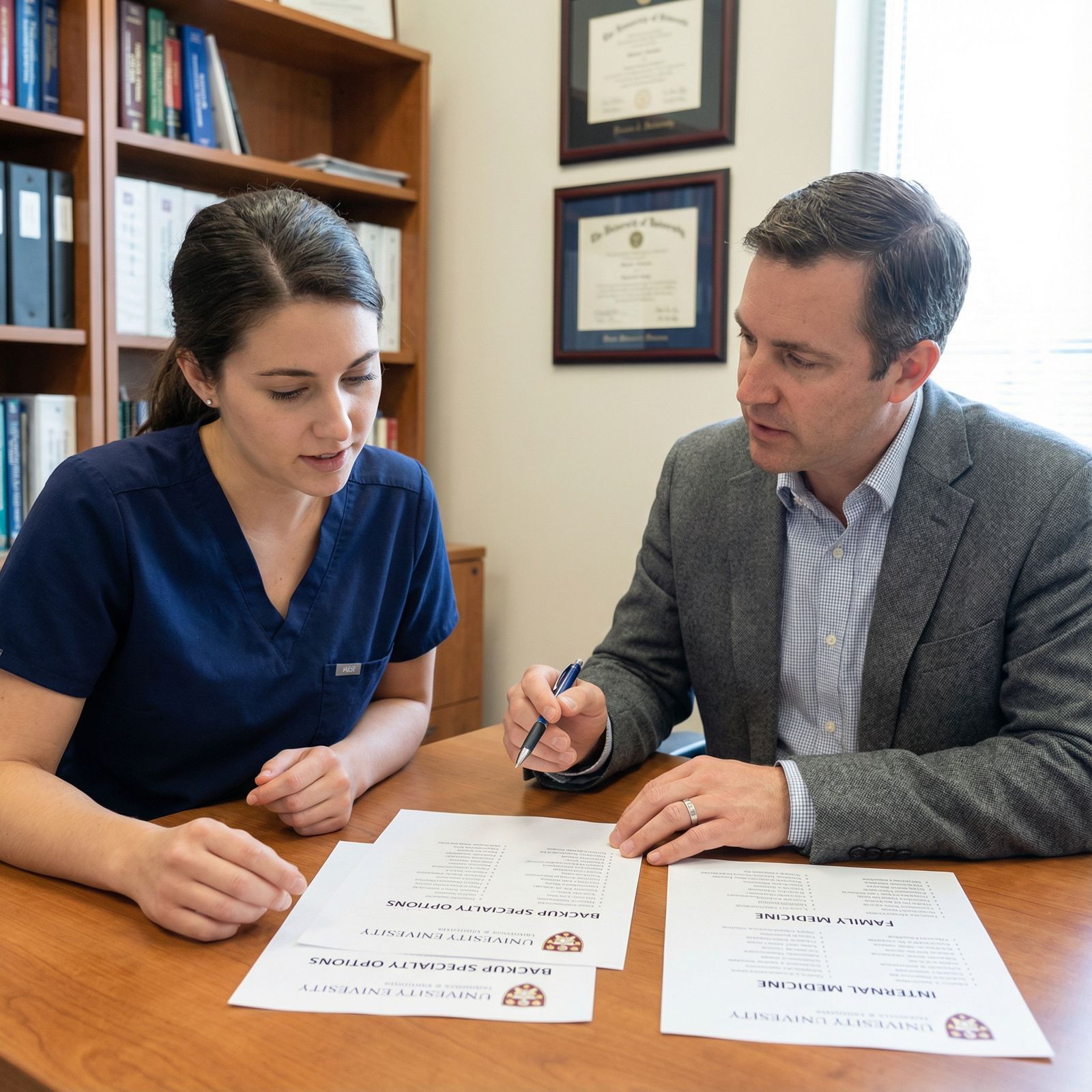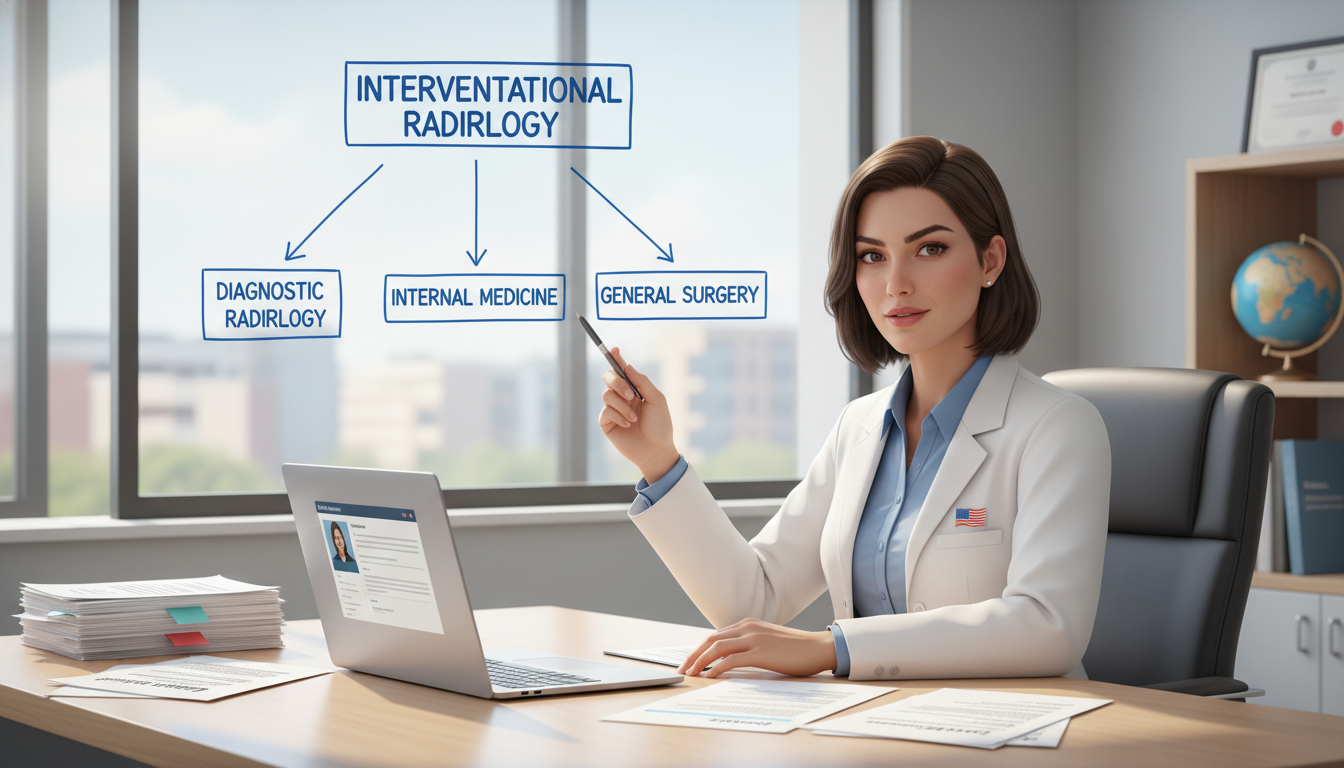
Why Backup Specialty Planning Matters for a US Citizen IMG in Plastic Surgery
For a US citizen IMG, plastic surgery is one of the most competitive—if not the most competitive—residency fields. As an American studying abroad, you face the same passionate interest in the specialty as US MD/DO graduates, but with additional structural hurdles:
- Fewer programs historically interviewing IMGs
- Heavy emphasis on research and home-institution connections
- Limited access to US-based plastic surgery rotations early in training
- Variable perception of international schools
Because of this, applying to plastic surgery with no backup plan is particularly high‑risk if you are a US citizen IMG. Thoughtful backup specialty planning:
- Maximizes your chances of matching somewhere on your first try
- Protects your long‑term career and financial stability
- Can still keep doors open to plastic surgery–related work in the future
- Reduces anxiety during the application year by giving you a structured Plan B
This article is written specifically for the US citizen IMG aiming for an integrated plastic surgery residency. We will walk through how to:
- Assess your competitiveness honestly
- Understand what makes a rational “plan B specialty”
- Identify specific backup specialties that align with plastics interests
- Strategize dual applying without sabotaging your plastics application
- Execute a realistic, data‑driven, multi‑year plan
Throughout, we’ll keep the focus on your situation as a US citizen IMG and the realities of the integrated plastics match.
Step 1: Reality Check – Understanding Your Position as a US Citizen IMG
Before designing a backup plan, you need a clear, data‑driven understanding of your chances as a primary plastic surgery applicant.
Competitiveness of Integrated Plastic Surgery
Integrated plastic surgery is among the most competitive specialties in the NRMP match:
- Low overall match rate
- Historically low IMG representation
- Programs that strongly favor home and US MD students
While the exact numbers change annually, the pattern stays: integrated plastics has one of the lowest match rates for IMGs of any specialty.
As a US citizen IMG, you sit in a “middle category”:
- You are a US citizen (which helps for visas and perceived cultural fit)
- But your degree is from a non‑US/Canadian school (which can be a disadvantage at many programs)
Core Competitiveness Factors
When honestly evaluating your chances, consider these core elements:
USMLE/COMLEX Scores (or Step/Level Performance)
- Step 2 CK now carries more weight with Step 1 pass/fail.
- For integrated plastics, successful applicants usually have significantly above-average Step 2 CK scores.
- As a US citizen IMG, a strong Step 2 (e.g., 250+ range) can partially offset your school’s lesser name recognition.
Plastic Surgery–Specific Research
- Multiple plastics-related publications, abstracts, posters, or book chapters are common among matched applicants.
- Dedicated research years in the US at reputable institutions greatly strengthen your application.
- Being “research heavy” is especially important for IMGs to overcome systemic bias.
Letters of Recommendation (LORs)
- Strong letters from US plastic surgeons who are known in the field are powerful.
- Ideally, at least 2–3 letters from plastic surgery faculty who have directly supervised you.
- A supportive departmental chair or program director letter can be pivotal.
Clinical Rotations and Away Electives
- US clinical experience in plastic surgery (sub‑internships, visiting electives) is almost mandatory.
- Performance on these rotations can lead to powerful advocacy from faculty.
School Reputation and Networks
- Some international schools have long‑standing relationships with US programs.
- Program familiarity with your school can slightly improve your odds.
When Is a Backup Plan Non‑Negotiable?
As a US citizen IMG, you should almost always develop a backup specialty strategy. However, it becomes absolutely critical if any of the following are true:
- Step 2 CK below the typical plastics applicant average
- Limited plastics-specific research or no US-based research year
- No US plastic surgery rotations or only a single short exposure
- Limited or generic letters from non-plastics faculty
- Late decision to pursue plastics with little time to build the profile
Even if you are a strong candidate (high scores, research year, multiple US rotations), the integrated plastics match is so selective that a backup plan still makes sense.
Step 2: Defining a “Smart” Backup Specialty for Plastics Applicants
Many applicants vaguely talk about having a “backup specialty,” but a smart backup strategy is concrete, aligned with your interests, and logistically feasible.
Core Principles of a Good Plan B Specialty
A solid backup or plan B specialty for a plastic surgery applicant should:
Overlap in Skills, Interests, or Future Practice
- Shared emphasis on procedures, anatomy, aesthetics, or reconstructive principles
- Similar patient populations (surgical, operative, hospital-based)
Be More Attainable Statistically
- Higher match rate for US citizen IMGs
- More programs with a history of interviewing or matching IMGs
Allow Future Alignment With Plastics-Related Work
- Possibility of collaboration with plastic surgeons
- Opportunities for cosmetic or reconstructive procedures within the scope of that specialty
- Potential for lateral career moves, fellowships, or academic collaboration
Be a Field You Could Genuinely Be Happy In
- You should not pick a specialty you would dread practicing long term.
- You must be able to articulate sincere interest in that specialty during interviews.
Red Flags in Backup Specialty Planning
Avoid common mistakes:
- Choosing a backup specialty solely because it is “easy” to match
- You might end up in a career you strongly dislike.
- Picking a specialty with zero overlap with plastics
- This makes your application narrative weaker and future plastics-adjacent involvement harder.
- Underestimating how much effort the backup specialty application requires
- Dual applying residency means real, separate work: tailored personal statements, letters, and program lists.
Step 3: Common Backup Options for Plastics – Pros and Cons for US Citizen IMGs
Here we’ll walk through realistic plan B specialties that US citizen IMG plastic surgery applicants often consider, focusing on how they align with your goals and their practicality.
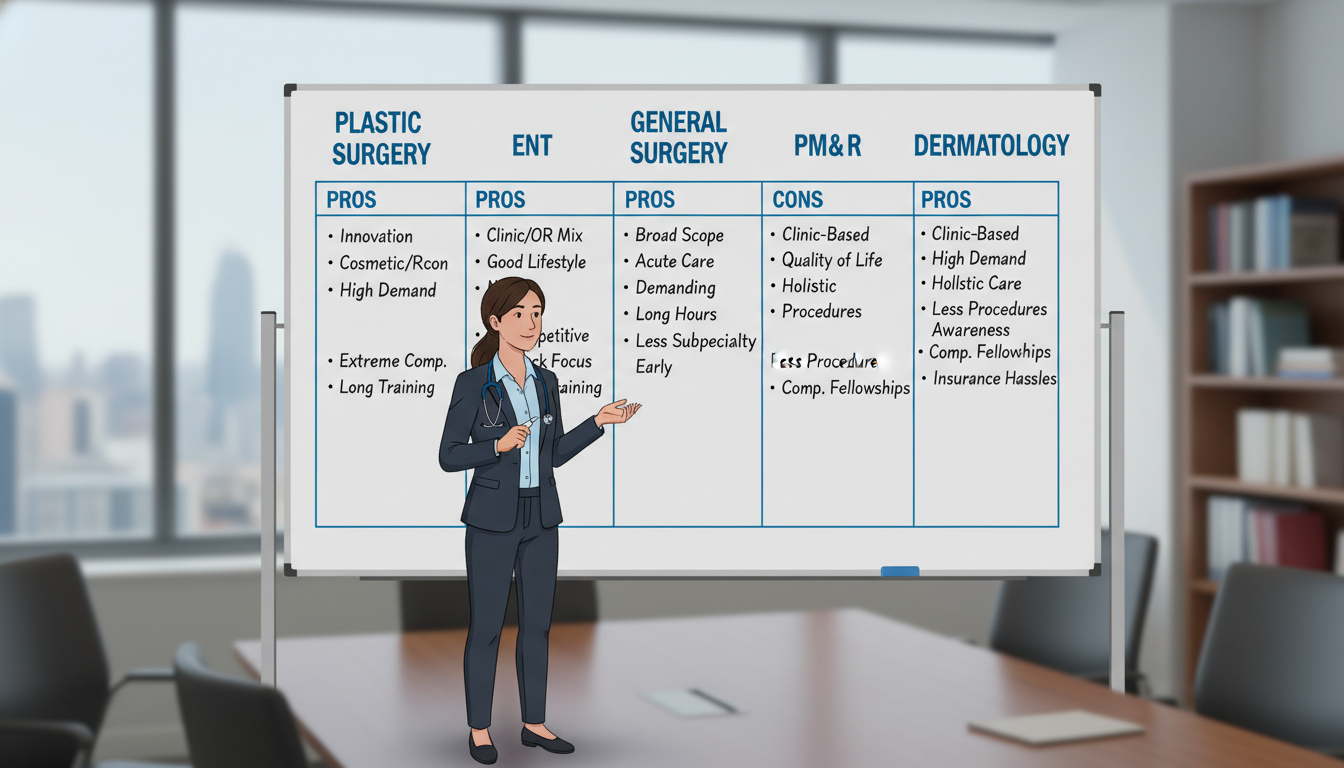
1. General Surgery
Why it’s popular as a backup:
General surgery is the most traditional backup option for aspiring plastic surgeons.
Pros:
- High overlap in operative skills and anatomy
- Surgical mindset, OR comfort, perioperative care.
- Pathway to Independent Plastic Surgery
- Some plastic surgery training programs require or favor prior general surgery.
- You may later apply to independent plastic surgery fellowships after completing general surgery.
- Broader range of programs
- More programs and more total positions compared to plastics.
- Some general surgery programs are more open to US citizen IMGs.
Cons:
- Still competitive at higher-tier programs.
- Long, demanding training (usually 5 years; more with fellowships).
- Independent plastics pathway is itself competitive and not guaranteed.
- Lifestyle and culture of general surgery may differ from your primary interest in aesthetics or microsurgery.
Best fit for:
- US citizen IMG who genuinely likes surgery in a broad sense and could be satisfied long-term in general surgery or related fellowships (e.g., surgical oncology, trauma, minimally invasive).
2. Otolaryngology (ENT)
Why it’s considered:
ENT has significant overlap with facial plastics and reconstructive procedures.
Pros:
- Strong overlap in head and neck anatomy, microsurgery, and reconstructive principles.
- Pathway to facial plastic and reconstructive surgery fellowships.
- Offers a mix of clinic and OR, including cosmetic and reconstructive work.
Cons:
- ENT is itself very competitive and also not IMG-friendly overall.
- As a US citizen IMG, using ENT as your main backup may not substantially reduce your risk of going unmatched.
- Fewer programs open to IMGs compared with general surgery.
Best fit for:
- Exceptionally strong US citizen IMG (top scores, strong research, US ENT rotations) who is sincerely interested in ENT and can accept similar competitiveness to plastics.
3. General Surgery → Independent Plastic Surgery Track
This is not a separate specialty but a strategy:
- Step 1: Match into general surgery (your immediate residency goal).
- Step 2: During or after general surgery, apply to independent plastic surgery programs.
Pros:
- Allows you to continue pursuing plastics within an established surgical pathway.
- Independent plastics programs may value strong overall surgical training and operative skills.
- You can build a plastics research portfolio during general surgery residency.
Cons:
- Very long training route (5+ years general surgery plus 2–3+ years plastics).
- Independent plastics spots are limited and competitive.
- Your future plastics match is not guaranteed; you must be happy with general surgery as a stand‑alone career.
Best fit for:
- Applicants who view themselves as surgeons first and are comfortable with a longer training path and the possibility of remaining in general surgery.
4. Physical Medicine & Rehabilitation (PM&R)
Why it’s interesting for some plastics-minded applicants: PM&R offers non‑operative but anatomy- and function‑focused work, with possible overlap in hand, burn, and neuro-rehabilitation.
Pros:
- Historically more IMG-friendly than many surgical subspecialties (though this varies by program and year).
- Work-life balance is often better compared with surgical fields.
- Involvement in hand function, burn rehab, amputee care, nerve injuries—areas where plastics and PM&R intersect.
- Interdisciplinary team environment with opportunities to collaborate with plastic and orthopedic surgeons.
Cons:
- Less direct operating room involvement; fewer aesthetic/cosmetic opportunities within the specialty itself.
- Requires a genuine mental shift from “operative primary doctor” to “rehabilitation, function, and quality of life” focus.
- Some plastics‑focused applicants may feel this is too far from their core interests.
Best fit for:
- Applicants who value anatomy, function, and long‑term patient relationships and can see a meaningful career in rehabilitation medicine, especially in hand or neurorehabilitation.
5. Dermatology
Why it’s appealing to some plastics applicants: Dermatology includes procedural aesthetics (injectables, lasers), cutaneous oncology, and reconstructive work with flaps and grafts—especially in Mohs surgery.
Pros:
- Strong overlap with aesthetics (cosmetics, injectables, lasers).
- High outpatient and clinic focus; attractive lifestyle.
- Opportunities for procedural and minor surgical work (especially with a surgical dermatology/Mohs or cosmetic fellowship).
- Private practice potential and strong earning potential.
Cons:
- Extremely competitive, similar to or even exceeding plastics in some years.
- Many dermatology programs are not IMG-inclusive, especially for US citizen IMG applicants.
- Using dermatology as your only backup may fail to significantly reduce your risk of going unmatched.
Best fit for:
- Exceptionally strong academic US citizen IMG with a robust dermatology portfolio (research, derm rotations) who would be truly happy in derm whether or not they do cosmetic work.
6. Other Possible Plan B Specialties
While less common as direct plastics backups, some US citizen IMGs consider:
- Anesthesiology
- More IMG-friendly in many cycles.
- Good income, OR environment, but much less overlap with plastics content.
- Internal Medicine → Hospitalist/Critical Care
- Often used as a safety net but with minimal plastics overlap.
- Fits applicants who are open to a non-surgical career.
These are more “safety net” than “alignment” specialties. You should only choose them if you can genuinely see yourself in these fields and your primary goal is to avoid going unmatched at all costs.
Step 4: How to Dual Apply Without Torpedoing Your Plastics Application
Dual applying residency (integrated plastics + a backup specialty) can be effective—but only if carefully executed. The main risk is signaling ambiguity or lack of commitment to programs in either specialty.

1. Separate Personal Statements
You must create distinct, tailored personal statements:
- Plastic surgery personal statement
- Deep, authentic narrative about your passion for plastics.
- Emphasize research, artistic or reconstructive interests, mentors, and clear career vision.
- Backup specialty personal statement
- Sincere explanation of what drew you to that field.
- Avoid copy‑pasting plastics language (“I have always wanted to be a plastic surgeon”) into your backup statement.
- Highlight overlap with plastics only if it makes sense and does not sound like the backup is your second choice.
2. Manage Your Letters of Recommendation
LORs can easily expose your dual applying if mismanaged.
- For plastic surgery applications
- Use plastic surgery–specific letters and your strongest surgical mentors.
- For your backup specialty
- Obtain at least 1–2 letters from faculty within that specialty, if possible.
- If you must use a general surgery or subspecialty letter, ensure it speaks to broad qualities (teamwork, skill, work ethic) rather than “lifelong passion for plastic surgery.”
Practical tip:
If you are dual applying plastics + general surgery, some letters can safely be used for both; many general surgeons understand that plastics‑bound applicants may use general surgery as a parallel path. Still, consider custom LOR assignments via ERAS to match each specialty’s expectations.
3. Program Signaling and Preferences
If you are in an era with limited “signals” or preference signaling (like tokens), you need to:
- Use signals on your top plastic surgery programs where you think you are most competitive.
- Apply more broadly to your backup specialty with fewer or no signals unless permitted/encouraged.
Do not spread your limited signals so thin between plastics and backup that your core plastics list becomes under-signaled.
4. Time and Logistics Management
Dual applying doubles your workload. Create a timeline and checklist:
- Draft both personal statements early.
- Request letters for both specialties early, especially from busy surgeons.
- Build and refine two separate program lists (plastics and backup) with attention to:
- IMG-friendliness
- Geography
- Training environment and culture
Use spreadsheets or software to track:
- Who each letter is going to
- Which PS is assigned to which program
- Interview offers and dates for both specialties
5. How to Talk About Dual Applying in Interviews
You might get asked directly, “Are you applying to any other specialties?”
In plastic surgery interviews
- Many expect that applicants may also apply to general surgery, especially IMGs.
- You can be honest but emphasize that plastics is your clear first choice.
- Frame general surgery (or other backup) as a route that still lets you serve similar patients and possibly pursue plastic surgery in the future.
In backup specialty interviews
- Focus on what genuinely attracts you to that specialty.
- Avoid describing it as purely a “backup.”
- It’s acceptable to say you considered plastics but discovered how strongly you align with this specialty’s patient population, procedures, or lifestyle.
Step 5: Building a Multi‑Year Strategy If You Don’t Match Plastics
If you go unmatched in integrated plastics, your response in the following 1–2 years can make or break your long‑term trajectory.
Option A: Dedicated Research Year(s) in Plastic Surgery
For a US citizen IMG who still wants to pursue integrated plastics, a research year may be the most rational step:
Advantages:
- Strengthens your academic record and CV.
- Allows you to build relationships with US faculty who can advocate for you.
- Gives time to re-take or improve Step 2 CK (if still allowed and appropriate) or take Step 3.
- May open the door to a future independent plastics fellowship if you later match into general surgery.
Risks:
- No income or limited income; adds to debt.
- No guarantee of matching plastics on the next attempt.
- You are delaying your overall career progress.
Option B: Match into Your Backup Specialty and Keep Plastics-Related Goals Alive
If you choose to pivot and successfully match into a backup or plan B specialty, you can still:
- Focus your practice on areas that interface with plastics:
- General surgery → breast, trauma, oncologic reconstructions
- ENT → facial surgery, head and neck reconstructions
- PM&R → hand rehabilitation, nerve injury, amputation care
- Dermatology → Mohs surgery, cosmetic procedures
- Collaborate with plastic surgeons in your hospital or region.
- Continue research focused on plastic surgery–related topics.
- Consider post-residency fellowships or private practice settings with procedural/esthetic options.
Option C: Reapply to Integrated Plastics Without a Backup
This is generally high risk, especially for a US citizen IMG, unless:
- Your first application cycle was very weak and your current improvements are substantial (high‑impact research, vastly improved US experiences, new powerful letters).
- You have strong financial and emotional support to handle another possible unmatched outcome.
For most, integrating a backup plan—either via dual applying or via a pivot to a related specialty—is safer.
Practical Example: A Sample Strategy for an American Studying Abroad
Consider a US citizen IMG (American studying abroad) in their final year:
- Step 1: Pass
- Step 2 CK: 250s
- One dedicated plastics research year at a US institution with two pending publications
- Two US plastics sub‑internships with strong verbal feedback
- 3 letters from plastic surgeons, 1 from a general surgeon
A realistic, balanced plan might look like:
Primary target: Integrated plastic surgery
- Apply broadly to all programs known to consider IMGs.
- Use signals/tokens on a subset of programs where you have connections or did away rotations.
Backup specialty: General Surgery
- Apply to a wide range of general surgery programs, prioritizing those:
- With prior IMG matches
- In locations you would accept living for 5+ years
- Use a separate general surgery personal statement emphasizing:
- Your interest in complex surgical care
- Long-term possibility of surgical subspecialization (not necessarily explicitly plastics)
- Ask your general surgery letter writer to focus on your broad surgical potential.
- Apply to a wide range of general surgery programs, prioritizing those:
Interview season:
- Attend all plastic surgery interviews offered.
- Also attend general surgery interviews, especially at programs that:
- Have independent plastic surgery fellowships
- Are connected to strong plastic surgery departments
Rank list:
- Rank all integrated plastics programs you interview at, in genuine order of preference.
- Next, rank general surgery programs where you would be content if plastics does not work out.
This example preserves a strong shot at plastics while having a robust, realistic backup specialty that aligns with long‑term goals.
Frequently Asked Questions (FAQ)
1. As a US citizen IMG, do I have to dual apply if I’m going for plastic surgery?
You are not obligated to dual apply, but for a US citizen IMG, not having a backup plan is high‑risk. The integrated plastics match has low IMG representation, and even strong applicants can go unmatched. Dual applying or at least having a well‑planned “Plan B specialty” significantly increases the chance that you match into some residency while still preserving a path toward plastics‑adjacent practice.
2. What is the best backup specialty for an aspiring plastic surgeon?
There is no universal “best” backup specialty, but common rational choices include:
- General surgery – most classic backup; strong skills overlap; potential path to independent plastics.
- ENT – strong facial and reconstructive overlap but still highly competitive.
- PM&R – function and anatomy-focused; more IMG‑friendly in many years; less OR time.
- Dermatology – overlapping aesthetics but extremely competitive and not reliably IMG‑friendly.
The right plan B specialty depends on your scores, experiences, and what you could realistically enjoy as a long‑term career.
3. If I match into general surgery, how realistic is it to later do plastic surgery?
Matching general surgery then independent plastics is a feasible but competitive pathway. To maximize your chances:
- Match into a strong general surgery program with an affiliated plastics division if possible.
- Seek plastics mentorship and research during general surgery residency.
- Build an operative track record, academic productivity, and strong letters.
- Apply broadly to independent plastics programs.
However, because independent plastics spots are limited, you must be willing to build a satisfying career in general surgery alone if plastics does not materialize.
4. Will programs look down on me if they know I have a backup specialty?
Most program directors understand that plastic surgery is extremely competitive and that applicants—especially US citizen IMGs—may use a plan B specialty or dual applying strategy. Issues arise only if:
- Your application appears unfocused or inconsistent.
- Your personal statement clearly labels their specialty as a “backup.”
- Your letters or interviews suggest you are not genuinely interested in their field.
As long as you present a sincere commitment to each specialty during those specific interactions and maintain a coherent narrative, dual applying is generally accepted and often expected.
Thoughtful backup specialty planning does not mean giving up on your dream of plastic surgery. Instead, it protects your future, expands your options, and positions you to build a meaningful, satisfying career—whether you match plastics on your first attempt, take a longer route through another specialty, or ultimately discover your ideal fit in your plan B specialty.