Discover effective strategies to research backup specialties in medicine and make informed, strategic decisions for your residency applications and long-term career.
Understanding Backup Specialties in the Residency Application Process
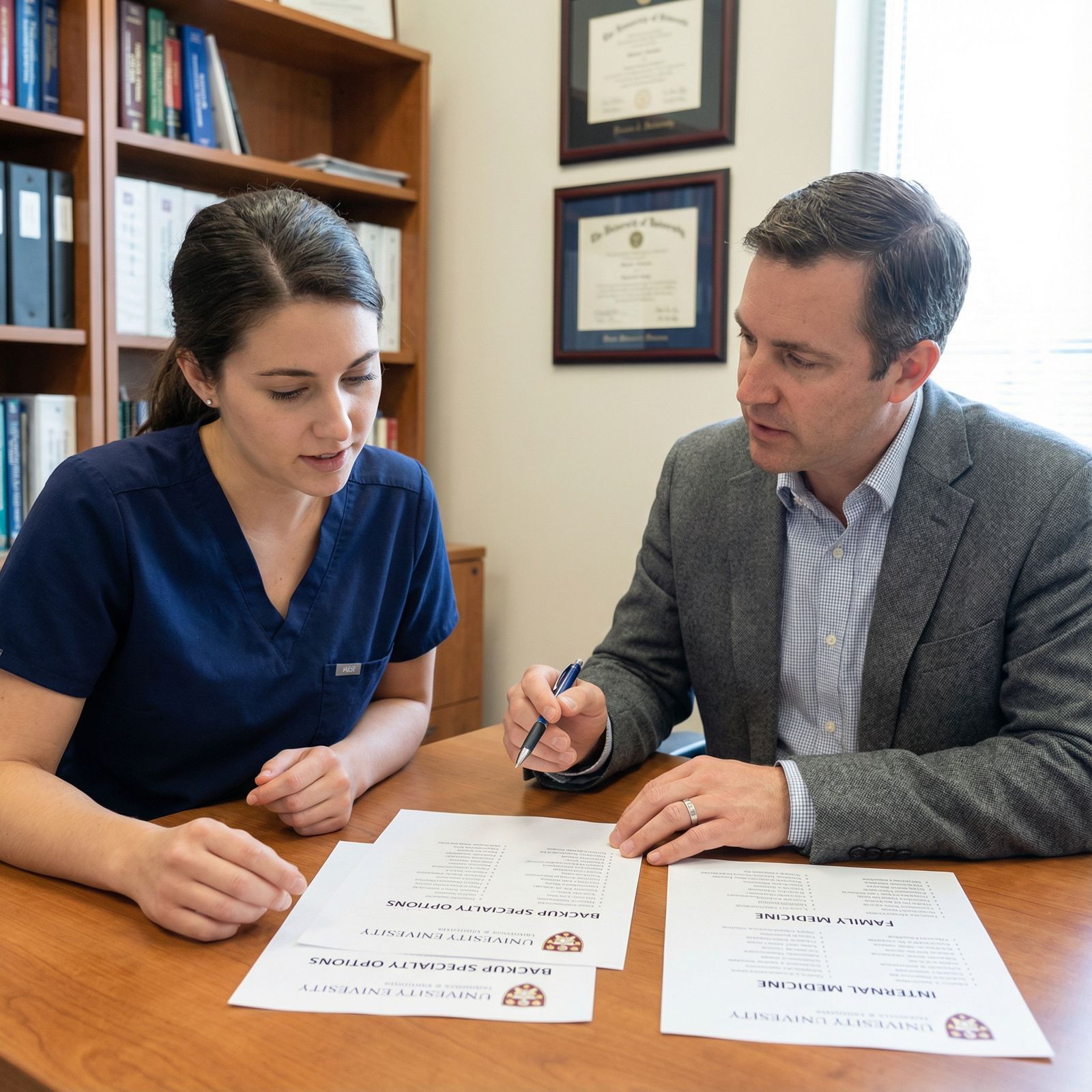
Residency Applications are increasingly competitive, and even strong candidates can experience an unexpected outcome in the Match. Thoughtful planning for backup specialties is not about “settling”; it is about risk management, self-awareness, and flexibility within your medical career.
A backup specialty is an alternative field (or set of fields) you are genuinely willing to pursue if you do not match into your primary choice. When researched and selected well, backup specialties:
- Align with your core interests, strengths, and values
- Offer viable match opportunities given your academic profile
- Still provide meaningful, satisfying work and growth
- Allow flexibility for later fellowship or career transitions
This guide walks you through a structured, step-by-step approach to Career Research for backup specialties, focusing on:
- Setting clear goals and constraints
- Using high-yield, credible resources
- Networking in Medicine and leveraging mentors
- Evaluating fit with your personality and lifestyle
- Iteratively refining your choices and application strategy
Step 1: Clarify Your Goals and Constraints Before You Research
Before opening a single residency website, you need a clear framework for what you want. Without this, it’s easy to get overwhelmed by information and influenced by others’ priorities instead of your own.
Key Dimensions to Clarify
Use these questions as your starting checklist.
1. Clinical Interests and Type of Work
- Do you prefer procedural vs. cognitive specialties?
- Inpatient vs. outpatient care? Or a mix?
- Longitudinal relationships (e.g., family medicine, pediatrics) vs. episodic care (e.g., emergency medicine, anesthesia)?
- Do you enjoy acute, fast-paced decision-making or slow, complex diagnostic puzzles?
Examples:
- If you love procedures but aren’t competitive for general surgery, you might explore anesthesiology, interventional radiology tracks, PM&R with interventional pain, or even certain internal medicine subspecialty pathways as long-term goals.
- If you enjoy continuity and primary prevention but worry about the competitiveness of pediatrics in your region, family medicine or med-peds might be logical backups.
2. Lifestyle and Work–Life Balance
Be honest about what you can sustain long-term:
- How important is predictable scheduling?
- Are nights, weekends, and heavy call acceptable or a deal breaker?
- Do you value geographic flexibility (jobs in urban vs. rural areas)?
- How much does location matter for your support system or partner’s career?
Many backup-friendly specialties (e.g., family medicine, psychiatry, pathology) can offer:
- More predictable hours in many practice settings
- Flexibility in outpatient, academic, or telemedicine roles
- Reasonable geographic distribution of jobs in various regions
3. Job Market, Stability, and Financial Considerations
While salary shouldn’t be the only factor, it’s reasonable to consider:
- Projected demand and job availability in your desired region
- Loan burden and financial goals
- Opportunities for part-time work or portfolio careers (clinical + teaching + admin)
Primary care specialties, psychiatry, and certain hospital-based specialties often have robust job markets, making them appealing as backup specialties.
4. Objective Competitiveness
Backup planning must be grounded in realism:
- USMLE/COMLEX scores or pass/fail outcomes and number of attempts
- Clerkship grades, class rank, AOA/Gold Humanism status (if applicable)
- Research output, leadership, and extracurriculars
- Red flags (gaps, professionalism issues, exam failures)
Your backup fields should be more attainable than your primary specialty given your profile—not equally or more competitive.
Action Steps
- Write a one-page “career priorities” document:
- Top 5 must-haves (e.g., geographic flexibility, continuity of care, opportunities for teaching)
- Top 5 “nice-to-haves”
- Clear limits (e.g., “I am not willing to do q3 call long-term”)
- Use this as a filter for every specialty you research.
Step 2: Use High-Yield, Credible Resources to Explore Specialties
Once you know what you’re looking for, you can begin targeted Career Research. Your goal is to understand each potential backup specialty from multiple angles: training, day-to-day work, competitiveness, and long-term outlook.
1. Specialty Societies and Official Organizations
Official societies are among the most reliable sources for up-to-date information:
- Examples:
- American Academy of Family Physicians (AAFP)
- American College of Physicians (ACP)
- American Academy of Psychiatry and the Law (for psychiatry subspecialties)
- American Academy of Pediatrics (AAP)
- American College of Emergency Physicians (ACEP)
- What to look for:
- “Careers in [Specialty]” sections
- Recommended training pathways and fellowships
- Workforce and salary trends
- Practice settings (academic, private, rural, urban)
- Student/resident interest groups, mentorship programs, and scholarships
Action tip:
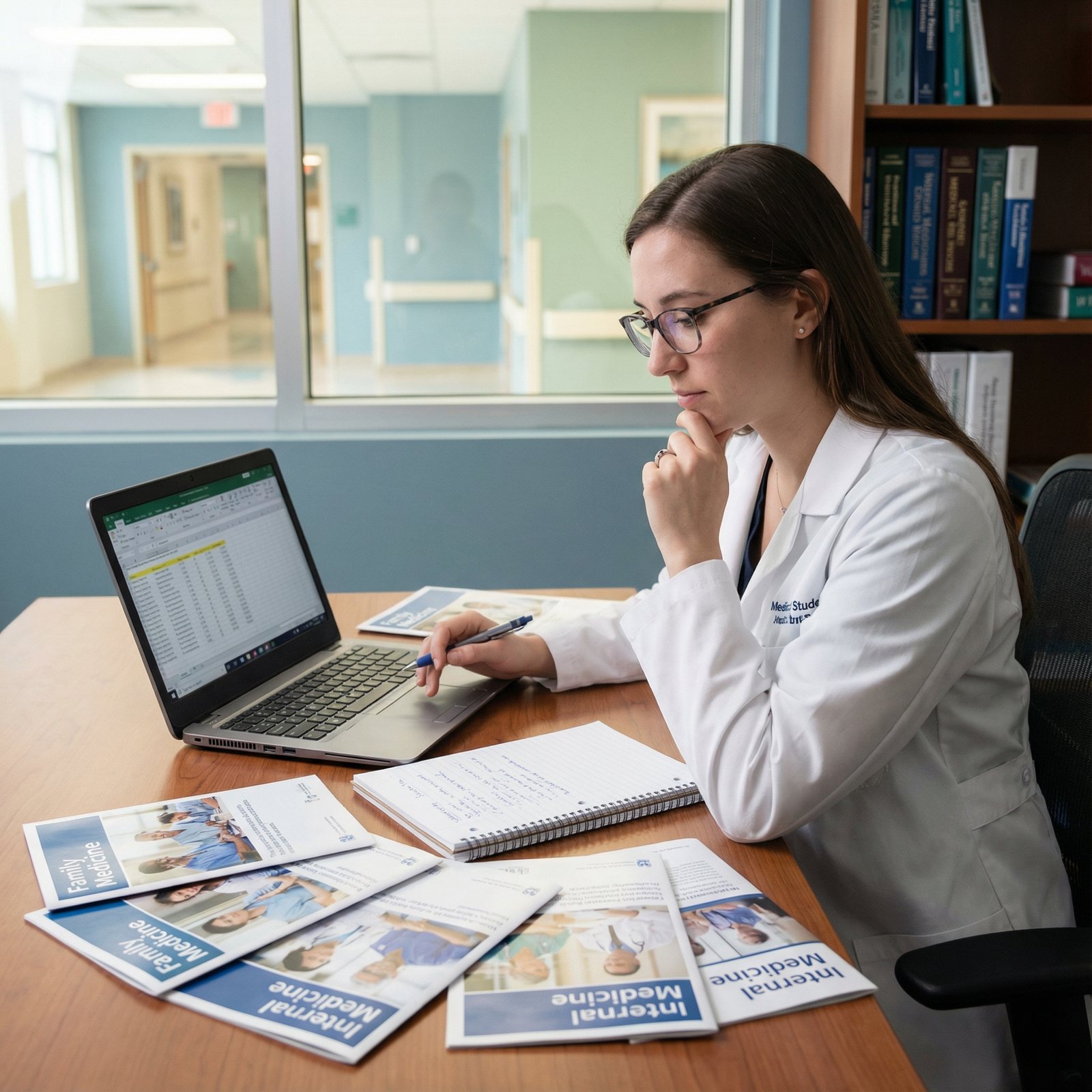
Make a simple comparison table (e.g., in Excel or Notion) with columns for:
- Length of training
- Required residency type
- Major subspecialties/fellowships
- Job market trends
- Lifestyle notes
Populate this for each candidate backup specialty.
2. Residency Program and Institutional Websites
Residency program websites help you see how training actually looks in real life.
Focus on:
- Curriculum: inpatient vs. outpatient balance, ICU time, electives
- Call structure: night float, weekends, frequency
- Resident profiles: backgrounds, interests, scholarly work
- Fellowship match lists: what doors open after the base residency?
- Any specific tracks:
- Primary care
- Research
- Global health
- Rural medicine
- Health policy or leadership
If you’re considering a specialty as a backup, ask:
- Does this training structure align with your non-negotiables (e.g., location constraints, academic interests)?
- Can you see yourself doing this day-to-day if it became your primary career?
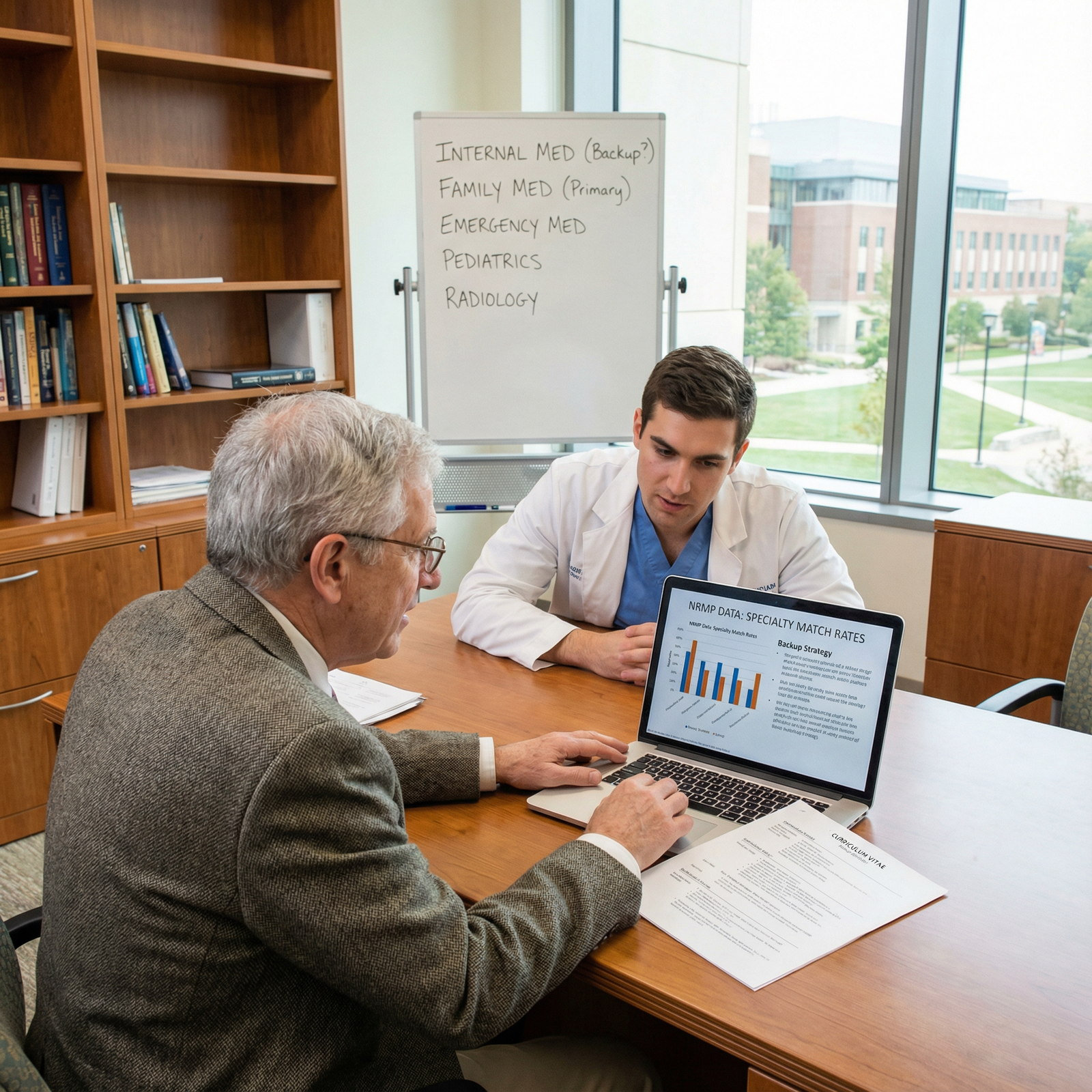
3. Match Data, NRMP/ERAS Reports, and Specialty Competitiveness
For Residency Applications, you must understand the numbers:
- NRMP “Charting Outcomes in the Match” (or equivalent data for your country)
- NRMP Program Director Survey by specialty
- Specialty-specific match reports and fill rates
Look for:
- Average test scores, number of programs ranked, and match rates for matched vs. unmatched applicants
- Percentage of IMG vs. US MD vs. DO in each specialty
- Trends: Is the specialty getting more or less competitive?
Your backup specialty should ideally:
- Have higher match rates than your primary specialty for applicants with your profile
- Be receptive to applicants from your degree pathway (MD/DO/IMG)
- Not be simultaneously “everyone’s backup,” where competition spikes (e.g., in some cycles, psychiatry or anesthesiology)
4. Medical Journals, Blogs, and Specialty-Specific Media
Go beyond statistics to understand what it actually feels like to practice:
- JAMA, NEJM, Lancet, and specialty journals for:
- Practice innovations
- Burnout and satisfaction studies
- Workforce analyses
- Blogs and podcasts hosted by specialists on:
- “Day in the life” narratives
- Reflections on career satisfaction
- Changes in reimbursement and policy that affect that field
As you read, ask:
Does this field’s culture, pace of change, and main clinical problems match your curiosity and values?
5. Online Communities and Forums (Use Critically)
Platforms like:
- Student Doctor Network (SDN)
- Reddit (e.g., r/medicalschool, r/residency, specialty subreddits)
- Specialty-specific Facebook or Discord groups
These can be helpful for:
- Understanding the hidden curriculum (what people don’t say in official brochures)
- Getting a sense of burnout, morale, and culture
- Gathering practical tips about applications
But remember:
- Voices online can be biased toward extremes (very satisfied or very burned out)
- Always cross-check with more objective sources and real-life conversations
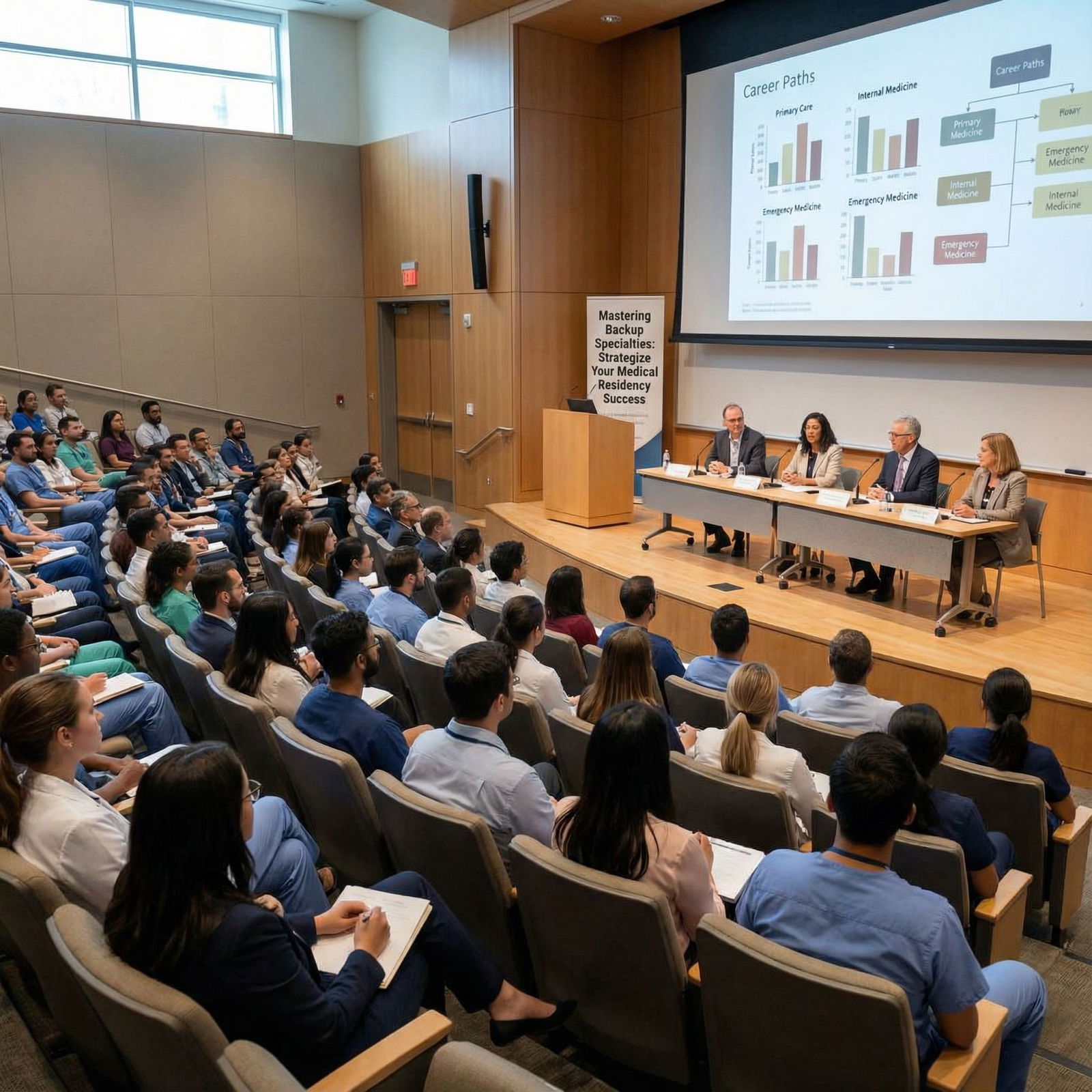
6. Conferences, Interest Groups, and Workshops
Conferences and local events are powerful tools for Networking in Medicine and immersive Career Research:
Attend national or regional specialty conferences:
- Look for “student day” or “resident track” sessions
- Visit poster sessions to understand current research directions
- Participate in hands-on workshops (e.g., ultrasound, procedures)
At your school or hospital:
- Join specialty interest groups
- Attend noon conferences or grand rounds in fields you’re considering
- Ask faculty about workshops or boot camps
Action tip:
Set a goal to attend at least one event or conference session (virtual or in-person) for each serious backup specialty before finalizing your list.
Step 3: Leverage Networking in Medicine for Real-World Insight
Data and websites are helpful, but your deepest insight into backup specialties comes from talking to people living those careers.
1. Informational Interviews with Residents and Attendings
Informational interviews are structured conversations—not job requests—aimed at learning.
Who to target:
- Residents at your institution in your potential backup fields
- Attendings who seem approachable and interested in teaching
- Alumni from your medical school who practice in those specialties
How to request:
- A brief, polite email:
- Introduce yourself and your current career considerations
- Mention specific reasons you’re interested in their specialty
- Ask for 20–30 minutes for an informational conversation (Zoom or in person)
Questions to ask:
- What initially attracted you to this specialty? Has that held true?
- What does a typical week look like in your practice setting?
- What are the most challenging aspects of your work—emotionally, intellectually, or logistically?
- What personality traits do you think do well or struggle in this field?
- How do you see this specialty evolving over the next 10–20 years?
- For applicants using this as a backup specialty, what should they be aware of?
Take brief notes after each conversation and synthesize themes across interviews.
2. Shadowing and Clinical Exposure
Nothing substitutes for seeing the work directly:
- Arrange shadowing blocks or elective rotations:
- Outpatient clinics
- OR days
- Inpatient consult services
- Pay attention to:
- The amount and nature of patient contact
- The role of technology, procedures, and documentation
- Team dynamics and interprofessional collaboration
- The emotional tone: Do people seem mostly energized, neutral, or exhausted?
After each experience, debrief with yourself:
- What parts of the day energized you?
- What parts drained you?
- Could you reasonably see yourself doing this for 20–30 years?
3. Finding and Using Mentors Strategically
Mentors are crucial in Networking in Medicine and in designing a realistic backup plan.
Types of mentors:
- Career mentors: Help you think through field selection and long-term goals
- Application mentors: Help shape your ERAS strategy, personal statements, and rank list
- Research mentors: Help you build niche expertise that may be transferrable across specialties (e.g., medical education research, QI, health policy)
How mentors can help with backup planning:
- Provide honest feedback on your competitiveness for your primary specialty
- Suggest realistic backup options that align with your interests
- Introduce you to colleagues in your backup fields
- Advise you on whether and how to dual-apply (e.g., applying to both internal medicine and family medicine, or anesthesiology and preliminary internal medicine)
Action tip:
Aim for at least one mentor in your primary specialty and one in a serious backup specialty to provide balanced perspectives.
Step 4: Evaluate Fit with Your Personality, Values, and Long-Term Vision
Researching backup specialties is not just about “where can I match?” but “where can I thrive?”

1. Use Structured Self-Assessment Tools (With Caution)
While no test can pick your specialty, structured tools can highlight patterns:
- Personality inventories: MBTI, Big Five-based tools
- Interest inventories like Holland Code (Realistic, Investigative, Social, etc.)
- Specialty-specific tools provided by some medical schools or career offices
Use these tools to:
- Generate ideas, not fixed answers
- Identify mismatches (e.g., highly social, team-oriented person considering a very solitary specialty)
Your school’s career counseling office may also offer:
- One-on-one career advising
- Specialty exploration workshops
- Mock interviews and CV review tailored to your chosen fields
2. Reflective Writing and Decision Frameworks
Turn your research into clear insights:
- For each candidate backup specialty, write:
- Why this specialty is on your list
- Pros (aligned with interests, lifestyle, job market)
- Cons or concerns (training length, competitiveness, emotional toll)
- Key open questions that require further research
Consider using frameworks like:
- Values ranking: Order your top 10 career values (e.g., autonomy, prestige, intellectual challenge, schedule flexibility) and score each specialty on how well it satisfies them.
- Best-case / worst-case analysis:
- Best-case scenario in this specialty: Does it excite you?
- Worst-case realistic scenario: Is it still acceptable?
3. Compare Primary and Backup Specialties Side by Side
Ask directly:
- If I matched into my backup specialty and never switched, could I build a meaningful career here?
- Would this field support:
- Future fellowships or niche practice areas I care about?
- Roles in teaching, research, or administration if that interests me?
- The life I want outside of medicine?
Good backup specialties are not consolation prizes; they are alternate paths to a fulfilling career.
Step 5: Embrace Iteration and Adjust Your Plan Over Time
Career Research is rarely linear. As you gather more data, your plan should evolve.
1. Expect to Revise Your Shortlist
It is normal to:
- Eliminate specialties that initially seemed appealing once you see the day-to-day reality
- Add new possibilities as mentors suggest alternatives you hadn’t considered
- Change your primary vs. backup ranking if you discover a better fit
Try to narrow to:
- 1 primary specialty (or 1–2 closely related, similarly competitive fields)
- 1–2 serious backup specialties that are:
- More attainable
- Genuinely acceptable
- Strategically chosen (e.g., overlapping prelim years or similar application materials)
2. Stay Informed as Medicine Evolves
Specialty competitiveness and job markets can shift within just a few application cycles.
Maintain ongoing learning by:
- Reviewing annual NRMP data
- Following specialty society workforce reports
- Staying in touch with residents and recent graduates who can report on real job prospects
3. Seek Ongoing Feedback
Regularly debrief with:
- Advisors in your dean’s office
- Faculty mentors in both primary and backup specialties
- Trusted peers in more advanced classes or in residency
Bring concrete data to these conversations:
- Your board scores and academic record
- Research and extracurriculars
- A draft list of programs and specialties you’re considering
Ask explicitly:
“Given my profile and priorities, does this backup specialty strategy seem appropriate and realistic?”
Frequently Asked Questions About Researching Backup Specialties
1. When should I start researching backup specialties?
Ideally, begin serious exploration by late third year or early fourth year, once you’ve had a range of core clerkships. You don’t need a complete backup plan that early, but you should:
- Notice which rotations you did and did not enjoy
- Track strengths and weaknesses in clinical evaluations
- Start preliminary reading on a few specialties that might serve as logical backups
By the time you finalize your ERAS application list, you should have:
- A primary specialty decision
- One or more thoroughly researched backup options
- A clear understanding of how you’ll allocate applications between them if needed
2. How many backup specialties should I consider?
Most students do well with:
- One primary specialty
- One serious backup specialty, occasionally two
Too many specialties can dilute your focus, confuse your personal narrative, and overcomplicate your application strategy. It’s better to have:
- One or two well-researched, realistic backups
- A strong, coherent story about why each is a good fit for you
3. Should I tell programs I’m using their specialty as a backup?
No. In your personal statements and interviews, you must present a genuine, positive rationale for that specialty as a viable career path. Programs want residents who are committed and enthusiastic, not applicants who view them purely as a fallback.
This is why deep, honest research is so important: you should only choose backup specialties that you can authentically imagine as your long-term home.
4. How does dual-applying work with backup specialties?
Dual-applying is when you submit Residency Applications to more than one specialty (e.g., OB/GYN and family medicine, or neurology and internal medicine). Consider dual-applying if:
- Your primary specialty is significantly more competitive than your profile
- Your advisors recommend it based on prior Match outcomes for similar students
- You have enough time and resources to tailor your application materials appropriately
Key points:
- Each specialty needs its own personal statement that reflects sincere interest.
- Your letters of recommendation should ideally be specialty-appropriate.
- Work closely with advisors to balance program numbers and avoid overextending yourself.
5. What if I don’t match even after planning a backup specialty?
If you go unmatched:
- Meet quickly with your dean’s office and mentors to review what happened.
- Participate in SOAP (or your country’s equivalent) strategically, guided by advisors.
- After Match week, conduct a structured post-mortem:
- What were the strengths and weaknesses of your application?
- Was your backup specialty truly more attainable?
- How can you strengthen your candidacy (research year, additional clinical exposure, exam retakes where applicable, improved letters)?
Backup specialty research is still valuable here: it gives you a better starting framework to decide whether to reapply in your original field, commit to a backup specialty more fully, or modify your approach.
By approaching backup specialty research systematically—clarifying your goals, leveraging high-quality resources, engaging in intentional Networking in Medicine, and reflecting honestly on your motivations—you transform uncertainty into a structured decision-making process. This not only makes your Residency Applications more strategic, but also increases the likelihood that, whichever path you ultimately match into, it will be one where you can build a satisfying, sustainable medical career.